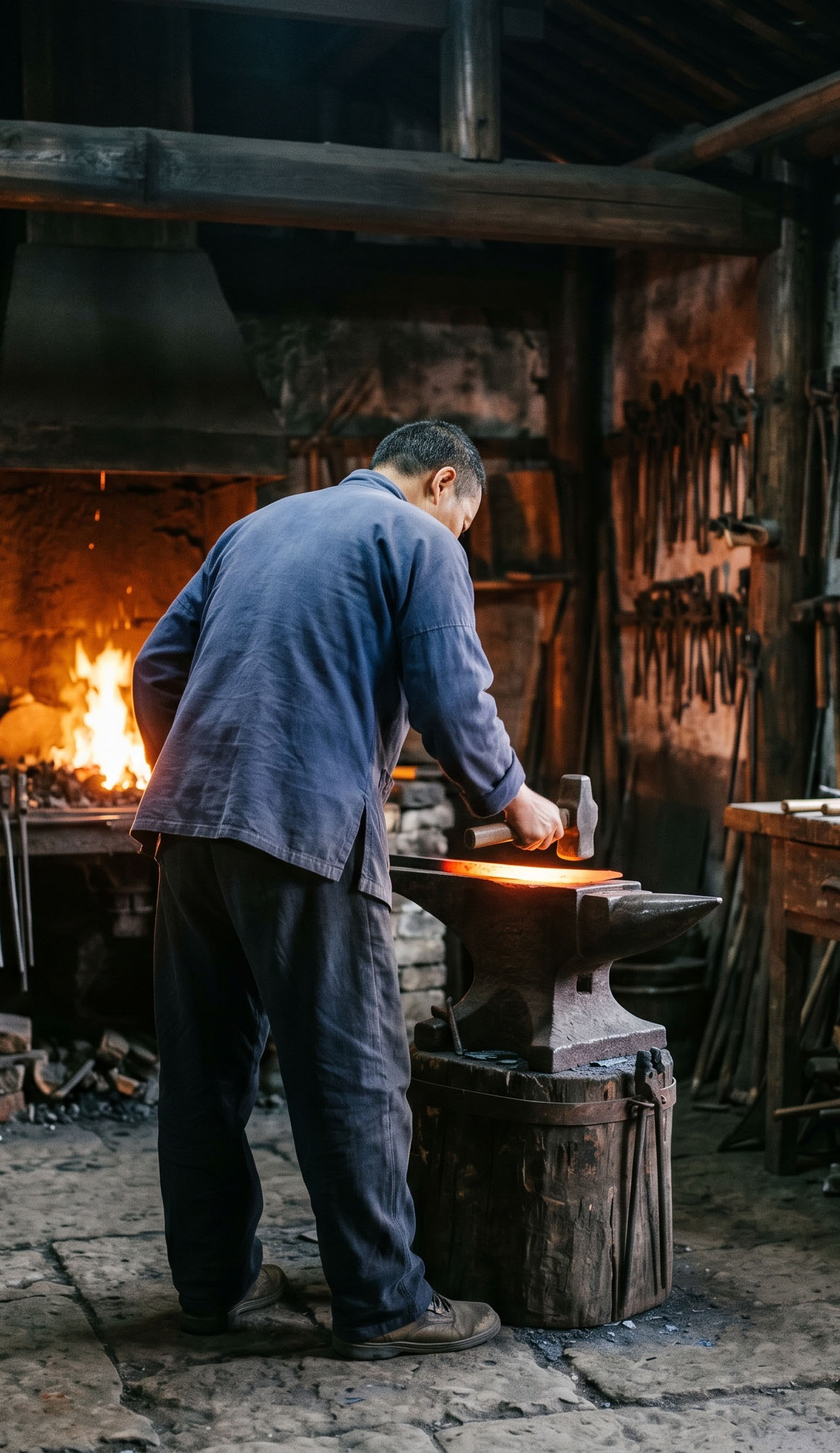



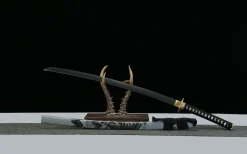


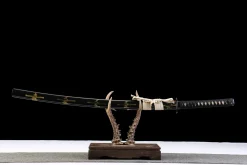


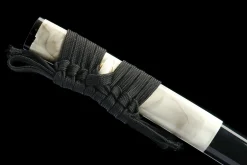
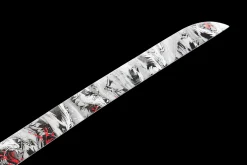
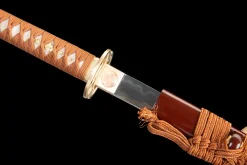
1065 carbon steel sits at a carbon content of 0.65% – high enough to take a proper edge, tough enough to absorb the shock of a hard cut without chipping. Every sword in this category is forged and heat treated in Longquan to HRC 55-58, which is the practical sweet spot for a blade that will be used, not just displayed. If you are buying your first functional katana or building a collection for regular cutting practice, this is where most people start.


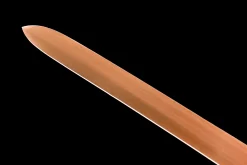


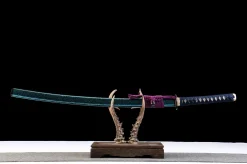





Why Choose 1065 Carbon Steel
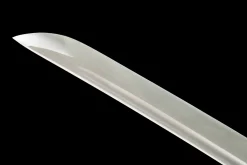
The number tells you the steel grade. 1065 means roughly 0.65% carbon by weight – enough to harden well under quenching, not so much that the blade becomes brittle under lateral stress. At HRC 55-58, you get a blade that will flex slightly before it fails, which matters when you are cutting through rolled tatami or bamboo and the angle is not perfect.
One thing beginners often overlook: 1065 is one of the easiest steels to resharpen at home. A decent whetstone and twenty minutes of work will bring the edge back after a heavy cutting session. Compare that to harder steels at HRC 60+ where you need diamond abrasives and more patience. The geometry holds, and the steel cooperates.
The honest trade-off is rust resistance. With 0.65% carbon and no chromium in the alloy, 1065 will surface-rust within days if you leave it unprotected. A thin coat of choji oil after every handling session is not optional – it is maintenance. Check our sword care guide for the exact routine we recommend.
How to Choose the Right 1065 Katana
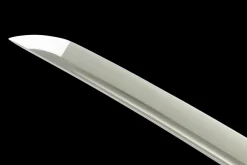
Check the blade geometry, not just the finish. Two swords can use identical 1065 steel and perform completely differently based on how the smith shaped the distal taper and set the edge bevel. Look at the thickness at the kissaki versus the base – a well-tapered blade cuts with noticeably less effort.
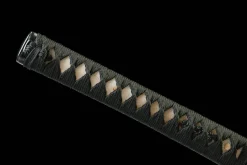
Match the tsuka length to your grip. A katana with a 28-30cm handle suits two-handed use for most adults. If you plan to practice with one hand, a shorter tsuka gives you more control. Read our buying guide for measurements by hand size.
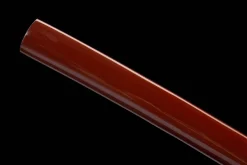
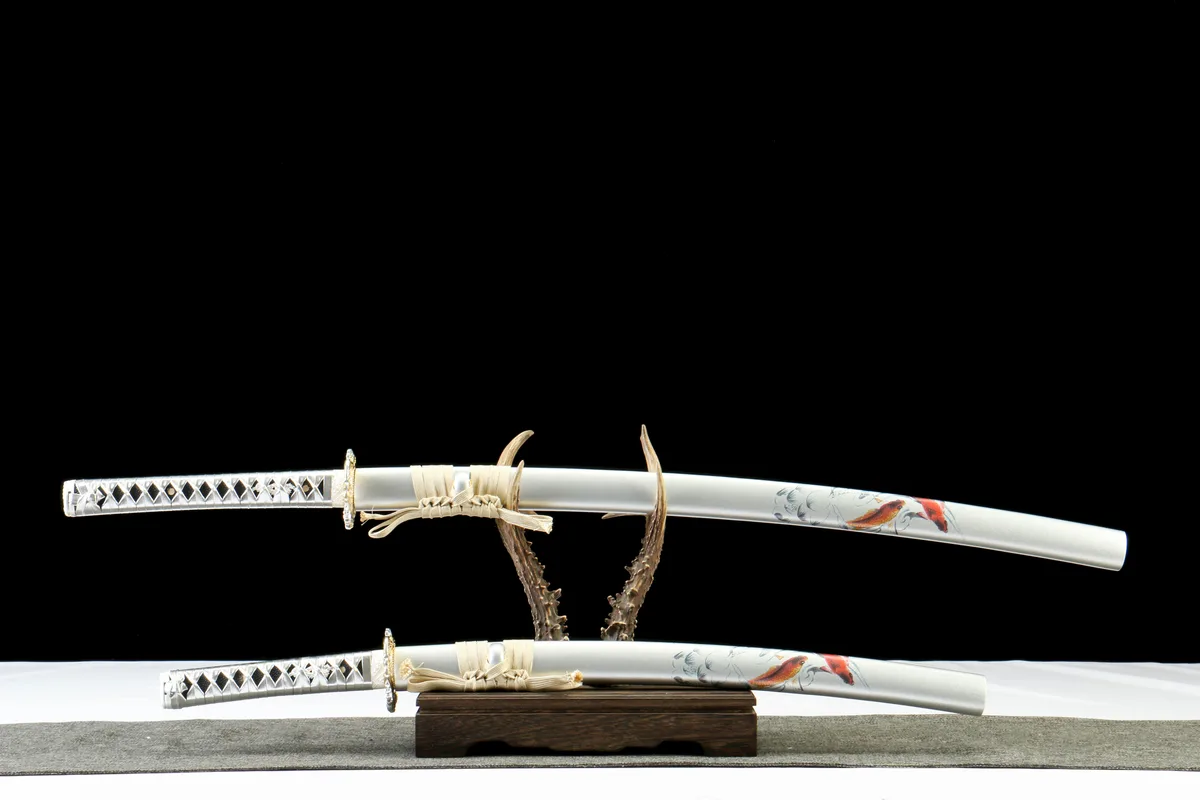
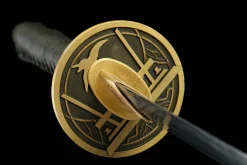
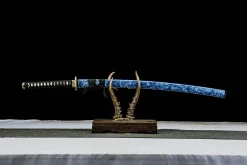
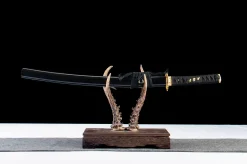
Decide on fittings before you order. The blade steel across this category is consistent. What varies is the tsuba material, the handle wrap, and the saya finish. These affect the total weight and balance point. A heavier brass tsuba shifts weight toward the guard, which changes how the sword tracks through a cut.
Budget for maintenance from day one. A bottle of choji oil costs less than $10 and will last a year of regular use. Buy it when you buy the sword. A blade that sits dry in its saya for three months will show rust at the habaki, and that is the hardest spot to clean without leaving marks.
Frequently Asked Questions
Is 1065 carbon steel good for real cutting?
Yes, and it is specifically well-suited to beginners who are learning to cut. The HRC 55-58 hardness means the edge is sharp and holds up through clean cuts, but the steel has enough toughness to forgive an off-angle strike that would chip a harder blade. We regularly see customers use these swords for tameshigiri practice on rolled tatami mats and bamboo without edge damage, provided they maintain proper technique.
How does 1065 steel compare to 1045 or 1095?
Carbon content goes up: 1045 at roughly 0.45%, 1065 at 0.65%, 1095 at 0.95%. More carbon means harder and sharper potential, but also more brittleness at the extreme. 1045 is softer and more flexible – it resists breaking but dulls faster. 1095 can reach HRC 60+ and holds an exceptional edge, but needs careful heat treatment and is less forgiving of abuse. 1065 sits between them and is the most practical choice for a sword that will see regular use rather than occasional display. See our buying guide for a full steel comparison.
How do I prevent rust on a 1065 carbon steel katana?
The process is straightforward but has to be consistent. After every handling session, wipe the blade down with a clean cloth to remove fingerprints – skin oils accelerate oxidation on bare carbon steel. Then apply a thin, even coat of choji oil using a cloth or oil paper, working from the base toward the kissaki. Store the sword horizontally or edge-up in the saya. If you live in a humid climate, check the blade monthly even when not in use. Full details are in our sword care guide.
What is the difference between the swords in this category?
The blade steel and heat treatment are consistent across all 10 swords – 1065 high carbon steel, HRC 55-58, forged in Longquan. What varies is everything around the blade: tsuba design and material, ito wrap color and pattern, saya finish, and overall aesthetic. Some have traditional plain finishes; others feature painted or lacquered sayas with specific themes. The fittings also affect weight distribution, so if balance matters to you, check the individual product specs for total weight and balance point measurements.
Can I sharpen a 1065 katana at home?
Yes, and this is one of the steel’s practical advantages. At HRC 55-58, 1065 responds well to standard water stones. A 1000-grit stone removes edge damage and resets the bevel; a 3000 or 6000-grit stone refines it to a clean working edge. You do not need diamond plates or professional equipment. The main thing to watch is maintaining a consistent angle along the entire edge length – especially through the curve near the kissaki, where beginners tend to lift the spine and round off the tip geometry.

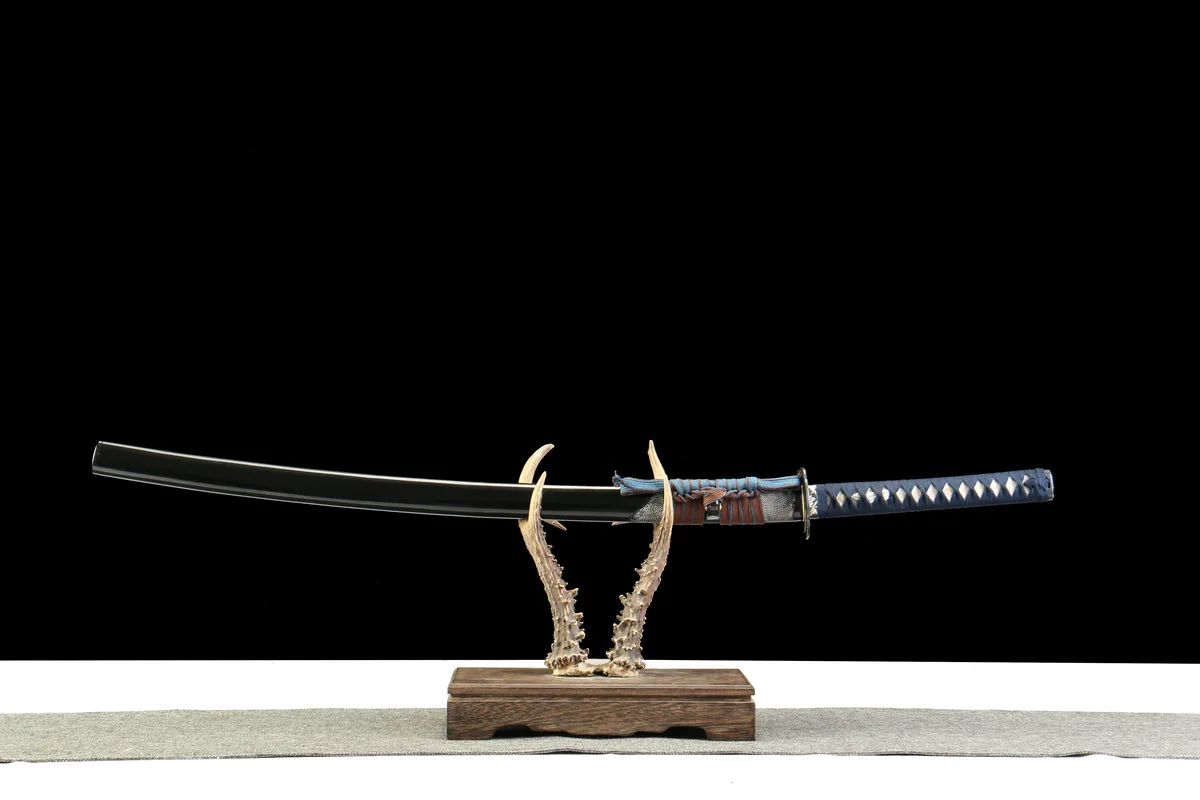
Grade 01 · 1065 Carbon Steel · HRC 54–58
1065 Carbon Steel Katana.
0.60–0.70% carbon. Tested hardness HRC 54–58. It flexes rather than chips under load, resharpens in minutes on a 1000-grit stone, and handles high-volume cutting without drama.
HRC 54–58
Working edge
8 / 10
Toughness rating
Training
Primary use
1065 Carbon Steel Blades.




Every grade. Every use case. All from Longquan.
Free worldwide shipping on orders over $500.