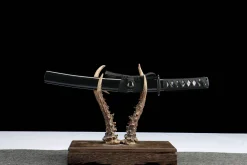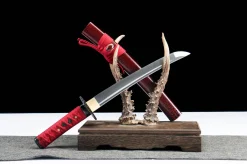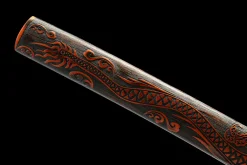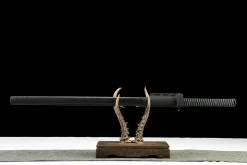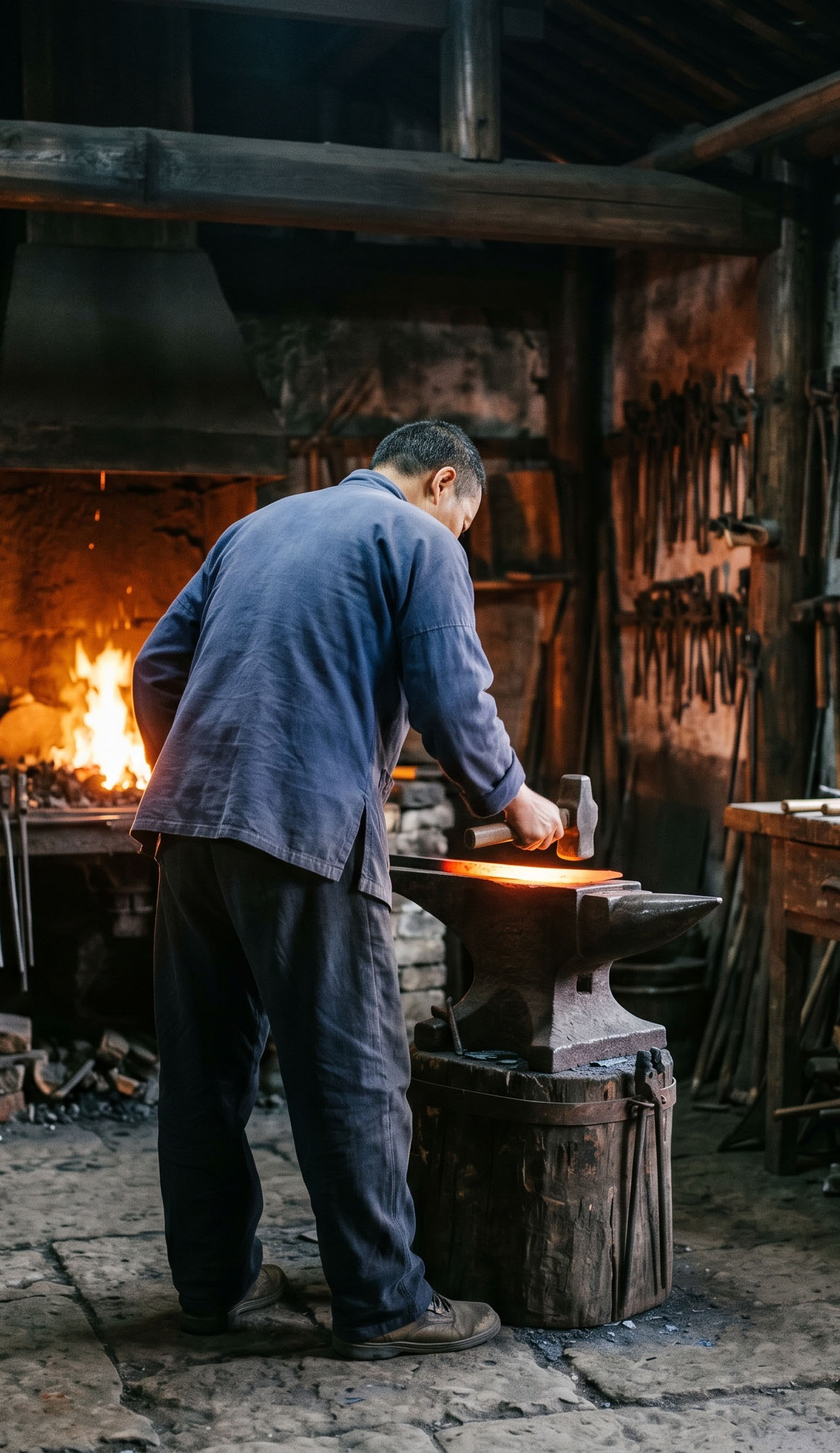
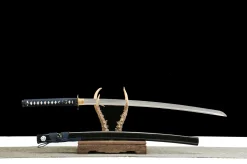
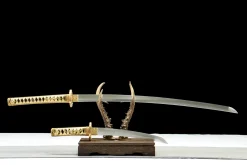
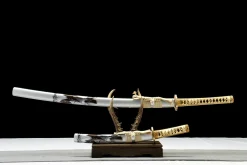
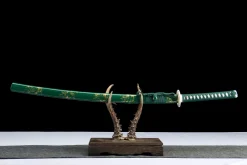
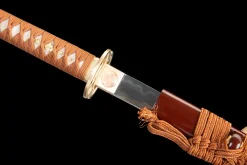
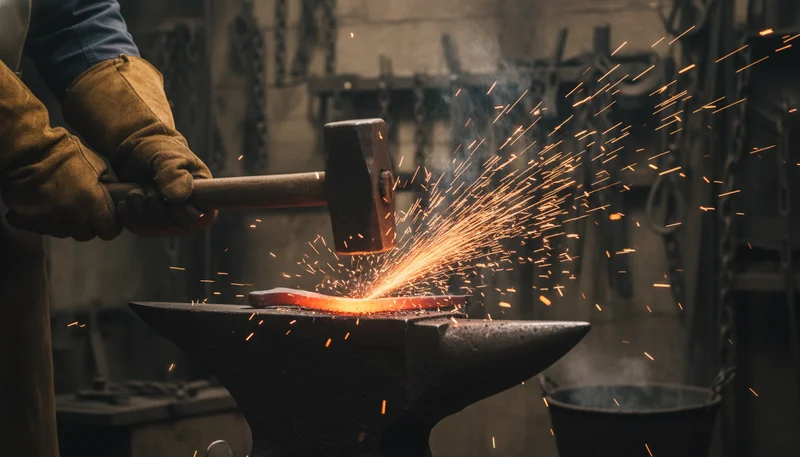
Every battle ready sword in this collection is made from T10 high carbon tool steel or a comparable high-performance alloy, heat treated to functional hardness and geometry-checked before it leaves Longquan. These are not decorative pieces. The edge geometry, spine thickness, and balance point on each blade are set with actual cutting use in mind, whether that is tameshigiri on tatami mats or serious practice under a qualified instructor. Browse our sword buying guide if you want to understand exactly what separates a cuttable blade from a display piece before you choose.

Why Choose a Battle Ready Sword

The phrase “battle ready” gets used loosely in this industry, so let us be specific about what it means here. Every blade in this category has a through-hardened or differentially hardened edge measuring HRC 58-62 at the cutting edge depending on the model, with a softer spine at HRC 40-45. That differential is not decorative. A blade that is uniformly hard at HRC 60 will snap under lateral stress. One that is softer throughout will fold on contact. The gradient is the engineering.

Most of the katana in this collection use T10 high carbon tool steel, which contains approximately 1.0% carbon and a small percentage of silicon. That composition gives a finer grain structure than the more common 1045 or 1060 carbon steels, which translates directly to a sharper and more durable edge geometry. Several blades here also carry clay tempering, the process of applying refractory clay to the spine before quenching, which produces the visible hamon , the temper line , and controls exactly where the hard and soft zones form.

One detail most buyers miss: on a properly clay-tempered T10 blade, the hamon is not painted or etched on after the fact. Look at the Silent Moment or the Autumn Moon Chill under raking light and you will see activity in the steel itself , nie, nioi, and boundary irregularities that are a direct record of how that blade cooled in the quench tank. No two come out identical.

How to Choose the Right Battle Ready Sword

1. Match the steel to your use case. T10 steel holds a finer edge than 1060 but requires more attentive maintenance. If the blade will see regular outdoor use or contact with moisture, factor in a consistent oiling schedule using choji oil. Our sword care guide covers the full maintenance process.

2. Understand what clay tempering adds , and costs. Differential hardening through clay tempering produces a functional hard edge and resilient spine, plus a genuine hamon. Blades without clay tempering, like the Dark Edge, are through-hardened and often more affordable, but the tempering process is simpler. Both are battle ready. They just have different metallurgical profiles.

3. Check the yokote. Several blades in this category are listed with a distinct yokote line, the boundary where the kissaki geometry separates from the main blade face. A clean, defined yokote is a sign of hand-finishing quality. It requires a separate polishing stage and indicates the smith did not rush the geometry of the point.

4. Consider blade length relative to your draw. Katana in this collection run standard nagasa lengths around 70-73cm. If you are practicing iai or drawing from a seated position, that length matters more than most people expect. The wakizashi options, like the Starlight Radiance and Dragon Ascendant, offer a shorter, more maneuverable alternative without sacrificing the T10 steel specification.

Frequently Asked Questions

In this collection, battle ready means the blade has been forged from high carbon steel (T10 or equivalent), heat treated to a functional hardness of HRC 58-62 at the edge, fitted with a full tang, and finished with an edge geometry suitable for cutting. The fittings , tsuba, handle, and habaki , are assembled to functional tolerances, not pressed together for display purposes. We do not use the term for wall-hanger blades with cast zinc fittings or stainless steel edges.
Sword ownership laws vary by country, region, and sometimes municipality. In most of the United States, Canada, and Australia, owning a katana for sport, collection, or martial arts practice is legal for adults. Some countries require permits or restrict blade length. It is your responsibility to check local regulations before purchasing. We can provide documentation of steel type and blade specifications for customs purposes if needed.
Both processes use T10 high carbon steel, but the heat treatment differs. Through-hardening heats the entire blade and quenches it uniformly, producing consistent hardness from edge to spine , typically HRC 58-60 throughout. Clay tempering applies a layer of refractory clay to the spine before quenching, which insulates that section and slows its cooling. The result is a harder edge (HRC 60-62) and a softer, more flexible spine (HRC 40-45). Clay-tempered blades also develop a natural hamon, the temper line visible on the blade surface. For cutting practice, both perform well. The clay-tempered option provides more resilience under lateral stress.
T10 steel is not stainless. It will oxidize if left unprotected. After each handling session, wipe the blade with a clean uchiko ball to remove fingerprint oils, then apply a thin coat of choji oil using a soft cloth, working from habaki to kissaki. Store the sword horizontally or edge-up in its saya. Do not store in a high-humidity environment. Check the blade for moisture every few weeks if it is in long-term storage. Our full sword care guide walks through the complete maintenance process step by step.
Yes. The blades in this category are built for functional use including tameshigiri on tatami omote or bamboo. That said, cutting practice puts real stress on a blade, and technique matters as much as steel quality. A poor cut angle on any sword , regardless of price , risks bending or damaging the blade. We recommend training under qualified instruction before attempting cutting practice, and starting with softer targets like rolled damp tatami mats before moving to harder materials.[/accordion-item
[/accordion-item] [/accordion]