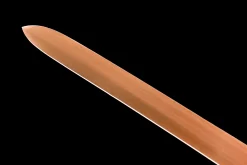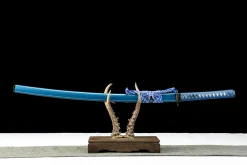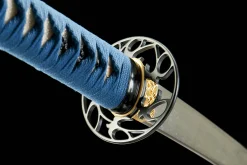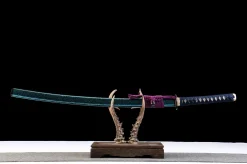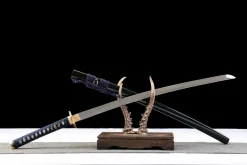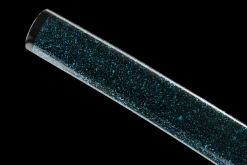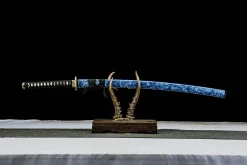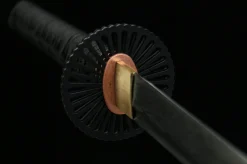




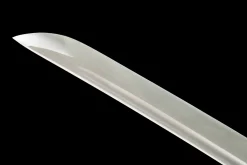
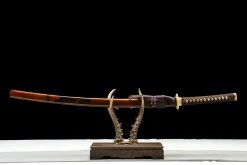
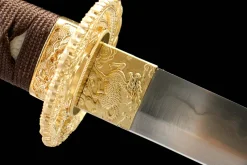


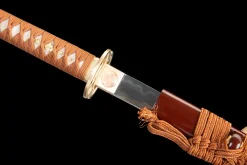

This is where you stop buying a sword and start owning one. Every blade in the $200, $500 range is hand-forged in Longquan from either T10 high carbon tool steel or pattern-welded Damascus, with heat treatment handled individually , not batch-processed. If you have been looking at cheaper options and something keeps nagging at you, this is probably why.
Browse our sword buying guide if you want to match steel type, blade geometry, and handle wrap to your actual use case before you decide.
Why Choose a Sword in This Price Range
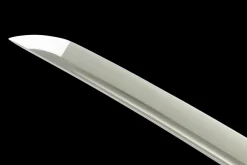
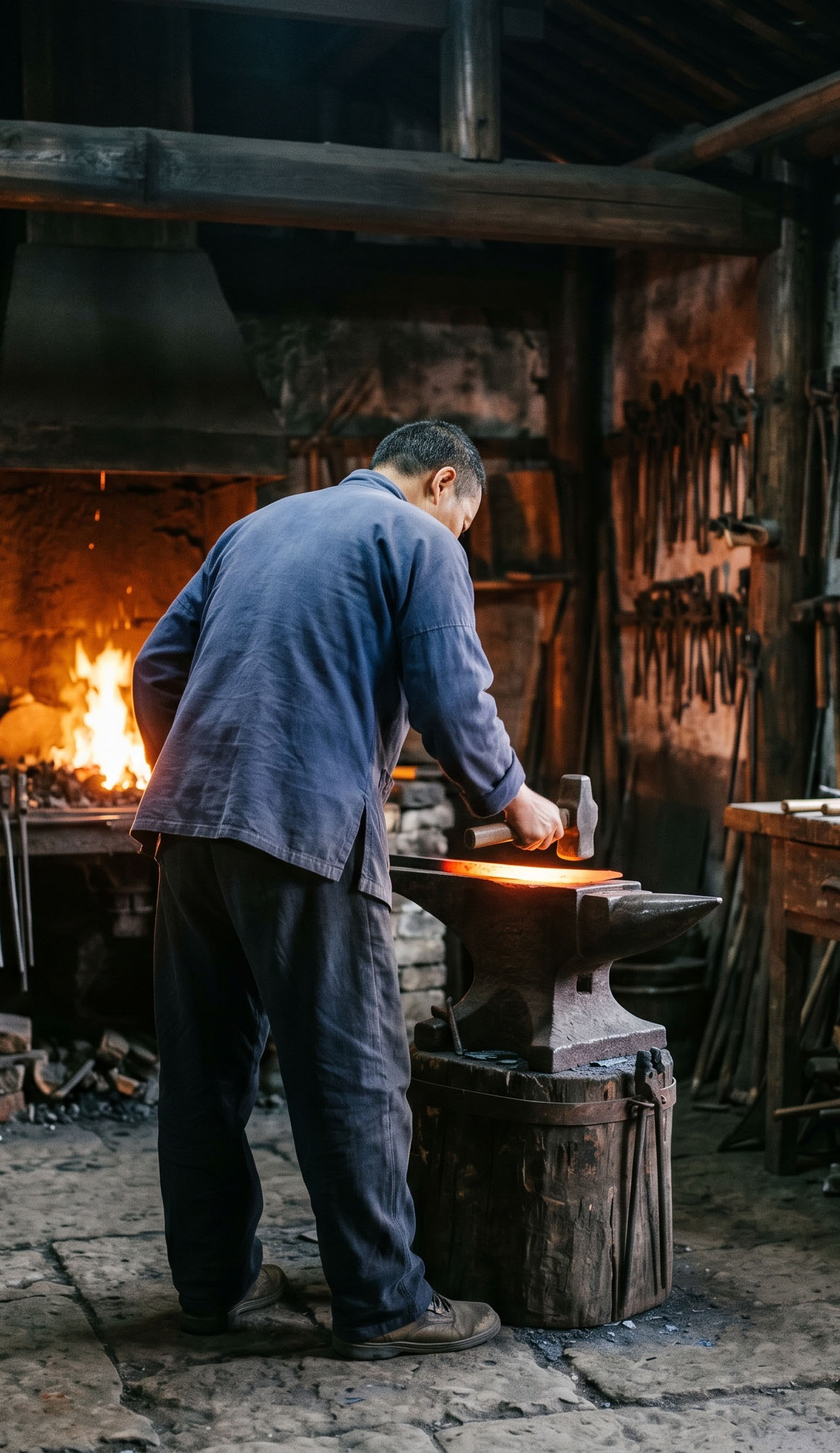
Below $200, the steel is usually 1045 or 1060 medium carbon, heat treated in bulk. That gets you a functional blade, but not a great one. At $200 and above, the economics change. Longquan smiths have the margin to use T10 tool steel , which sits at 0.95, 1.05% carbon content , and to clay-temper each blade individually in the forge. That process is slow. It cannot be rushed. The result is a hamon line that forms naturally at the transition between hard edge and softer spine, not etched or painted on afterward.
Several blades in this category use Damascus or pattern-welded steel instead. The Obsidian Dragon Soul and Shadow Warrior are twist-pattern Damascus , meaning the billet was twisted under the hammer before final shaping, which produces the characteristic flowing grain you see when the blade is polished. That pattern is structural, not decorative. The layers are real.
One thing worth knowing before you buy: T10 clay-tempered blades will show surface oxidation faster than stainless or mono-steel blades if you leave fingerprints on them. Wipe with choji oil after every handling session. Check our sword care guide for a full maintenance routine that takes less than five minutes.
How to Choose the Right Blade
Steel type first. T10 with clay tempering gives you a hard edge (HRC 58, 60 at the ha) and a tougher spine that absorbs impact without snapping. Damascus gives you grain pattern and a slightly different flex profile. Neither is universally better , it depends on what you’re doing with the blade.
Blade form second. This category includes tanto, wakizashi, and full katana lengths. The Ghost of Tsushima wakizashi runs shorter and is easier to handle in close drills. A full katana like the Shadow Carve Set gives you standard 70, 73cm nagasa and the full cutting arc.
Fittings matter more than most people think. Copper tsuba, genuine ray skin (samegawa) on the handle, and silk or cotton ito wrapping all affect grip security during cuts. The Crimson Moon uses gold and silver gilded fittings with copper , that combination holds up to handling better than zinc alloy alternatives common at lower price points.
Check the saya fit before storing. On a properly fitted blade, you will feel slight resistance at the habaki when you seat the sword. That friction seal keeps moisture out of the saya and off the blade. If it drops in too freely, the fit needs attention before long-term storage.
Frequently Asked Questions
What is the difference between T10 steel and Damascus steel in this price range?
T10 is a high carbon tool steel with 0.95, 1.05% carbon. It takes a very fine edge, holds it well under use, and responds reliably to clay tempering. The differential hardening process leaves the ha (edge) at approximately HRC 58, 60 and the mune (spine) softer, which is why T10 clay-tempered blades flex at the spine rather than snap under lateral stress.
Damascus or pattern-welded steel in this range is made by forge-welding multiple steel billets together and working them under the hammer until the layers consolidate. The twist-pattern Damascus used on the Obsidian Dragon Soul involves rotating the billet during forging, which produces the flowing grain visible after polishing. Both steels perform well , the choice usually comes down to whether you want the hamon of a clay-tempered T10 or the surface grain of Damascus.
Are these swords functional for cutting, or are they display pieces?
Every sword in this category is fully functional for tameshigiri and regular cutting practice. The blades are differentially heat treated, properly hardened at the edge, and mounted with full tang construction , meaning the tang runs the complete length of the handle and is pegged with a mekugi pin through the tsuka. That is not a display feature. Display swords use partial tangs or rat-tail tangs held with epoxy.
If you plan to use the blade for cutting, check the balance point before your first session. Most katana in this range are balanced 4, 6cm ahead of the tsuba. A forward-balanced blade accelerates through a cut more easily; a more neutral balance gives you better control in slower, precision cuts. Both setups are deliberate , neither is a flaw.
How do I maintain a T10 clay-tempered blade?
T10 is high carbon steel with no corrosion-resistant alloys. It will oxidize. Wipe the blade clean after every use with a soft cloth, then apply a thin coat of choji oil , mineral oil with a small percentage of clove oil, which also has mild antibacterial properties. Work from habaki to kissaki in one direction. Do not use kitchen oils; they go rancid and accelerate rust rather than prevent it.
Store the sword horizontally in the saya with the edge facing up. If you live in a humid climate, check the blade every 30 days and re-oil as needed. For full step-by-step instructions, see our sword care guide.
Before the final quench, the smith coats the blade’s spine with a thick layer of clay and leaves the edge either bare or thinly coated. When the blade goes into the water quench, the bare edge cools fast , fast enough to form martensite, which is hard but brittle. The clay-insulated spine cools slower and stays in a tougher crystalline structure. The boundary where those two zones meet is the hamon.
On a real clay-tempered blade, the hamon is not perfectly uniform.
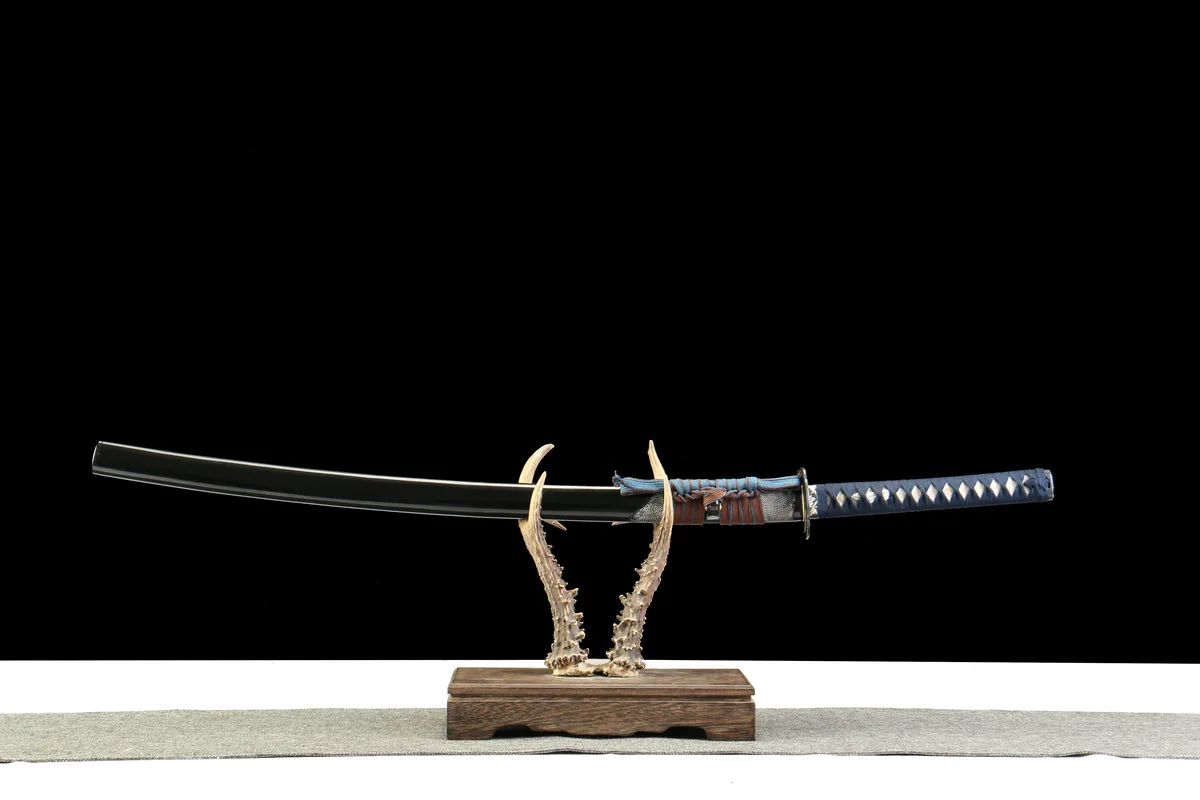
$200–$500 · Where Performance Begins
Swords $200 to $500.
Clay-tempered 1095 high carbon. Hand-polished hamon. Real hardwood sayas. At this tier, you are getting a blade that will outlast you — if you maintain it properly.
$200–$500 Blades.