


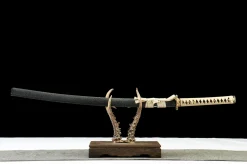


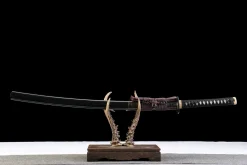


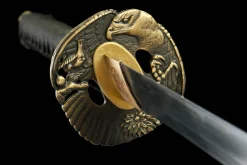

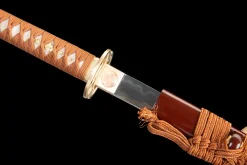

1095 high carbon steel sits at the sharper, harder end of the carbon steel spectrum. At 0.95% carbon content, it holds an edge longer than most mono-steels and responds to clay tempering with hamon activity that lower-carbon steels simply cannot match. Every sword in this category is hand-forged here in Longquan, heat treated to HRC 58-62, and finished by smiths who work this specific steel daily.
Why Choose 1095 High Carbon Steel
The 0.95% carbon content is the reason smiths reach for 1095 when edge retention matters most. Put it against 1065 under a microscope and you will see finer carbide distribution, which translates directly to a keener, longer-lasting edge. That same carbon density is what makes the hamon so readable after clay tempering. The boundary between hard edge and soft spine shows fine nie crystals and a clearly defined habuchi line, details that collectors look for and that lower-carbon steels rarely produce with the same clarity.
There is a tradeoff. Higher carbon means less flex before the steel reaches its limit. A 1095 blade handled with proper technique and maintained correctly will last decades. One that is used carelessly, or stored without oil in a humid environment, will show the consequences. This is not a beginner steel. It rewards people who understand what they are working with. For that reason, we recommend it to intermediate and advanced practitioners, serious collectors, and anyone buying a display-quality piece where visual sharpness of the hamon is a priority.
Every 1095 blade we ship has gone through a full normalizing cycle before the clay is applied. That step matters more than most buyers realize. Normalizing relieves internal stress from forging and gives the steel a uniform grain structure before quench. Skip it and you get unpredictable hardness distribution. We do not skip it.
How to Choose the Right 1095 Sword
- Finish type: Our 1095 blades come in two surface treatments. The Forged Steel (烤金) finish uses a heat-oxidation process that leaves a warm, amber-brown tone across the blade and makes surface grain visible to the eye. The Primordial Chaos (做旧) finish uses an acid-patina process that produces a darker, more irregular surface texture. Both protect against rust better than a bare polish, but neither replaces regular oiling.
- Hamon visibility: Clay-tempered 1095 produces a sharp, well-defined hamon. If a clear hamon line with visible nie activity is important to you, confirm the blade uses differential clay tempering rather than through-hardening. Our product listings specify this.
- Intended use: At HRC 58-62, these blades are functional cutters. They are not designed for heavy contact with hard targets like bone or green bamboo without a proper cutting technique. For tameshigiri practice, check our sword buying guide to match blade geometry to your cutting style.
- Maintenance commitment: 1095 rusts faster than stainless alternatives. Plan on wiping the blade with choji oil after every use and inspecting it monthly if stored long-term. Our sword care guide covers the exact process and products we use in-shop.
Frequently Asked Questions
Is 1095 high carbon steel good for a functional katana?
Yes, with one condition: it needs to be heat treated correctly. At HRC 58-62, a well-tempered 1095 blade holds an edge better than 1060 or 1065 and will handle controlled cutting practice without issue. The higher carbon content also means the blade is less forgiving of lateral stress than a lower-carbon steel, so technique matters. For a collector who cuts occasionally or an intermediate practitioner with proper form, 1095 is an excellent choice. We would not recommend it as a first sword for someone still developing their cutting mechanics. For that use case, take a look at our 1060 carbon steel options first.
How do I tell if a 1095 blade has been properly clay tempered?
A few things to check. First, look at the hamon line itself. On a properly clay-tempered 1095 blade, the boundary between the hard edge zone and the softer spine should be clearly visible and consistent along the length of the blade. You should be able to see fine crystalline activity (nie) within the hamon if you examine it under good light. Second, check the curvature. Clay tempering causes differential contraction during quench, which creates the sori (curve) naturally. A blade with artificial curvature and no visible hamon has likely been through-hardened and ground to shape, not traditionally tempered. Third, run your fingernail very lightly across the shinogi-ji and then the ha. The edge zone should feel noticeably harder. If you are uncertain about any blade you are considering, contact us directly and we will walk you through the specifics of that piece.
How often does a 1095 steel sword need to be oiled?
After every use, without exception. 1095 has no corrosion-resistant alloying elements, so fingerprints and humidity are enough to start surface rust within days. After handling or cutting, wipe the blade clean with a soft cloth, apply a thin coat of choji oil (or food-grade mineral oil as a substitute), and store it in a dry location. If the sword lives in a saya long-term, remove it every four to six weeks to inspect and re-oil. A humid storage environment shortens that interval. Brown surface spotting is early rust and can usually be removed with a light polishing cloth. Pitting means the process went too far. Our sword care guide covers the full maintenance routine in detail.
What is the difference between the 烤金 and 做旧 blade finishes?
Both are surface treatments applied after heat treatment and polishing, and both provide a degree of rust resistance beyond a bare mirror polish. The 烤金 (kaojin) finish uses controlled heat oxidation to create a warm, amber-to-brown tone that highlights the surface grain and hamon. It looks like a blade that has been worked and used, in the best sense. The 做旧 (zuojiu) finish uses an acid patina process to produce a darker, more irregular texture with deliberate variation across the surface. It has a rawer, older appearance. Neither finish is harder or softer than the other. The choice is purely about the aesthetic you want. Both finishes still require regular oiling for long-term care.
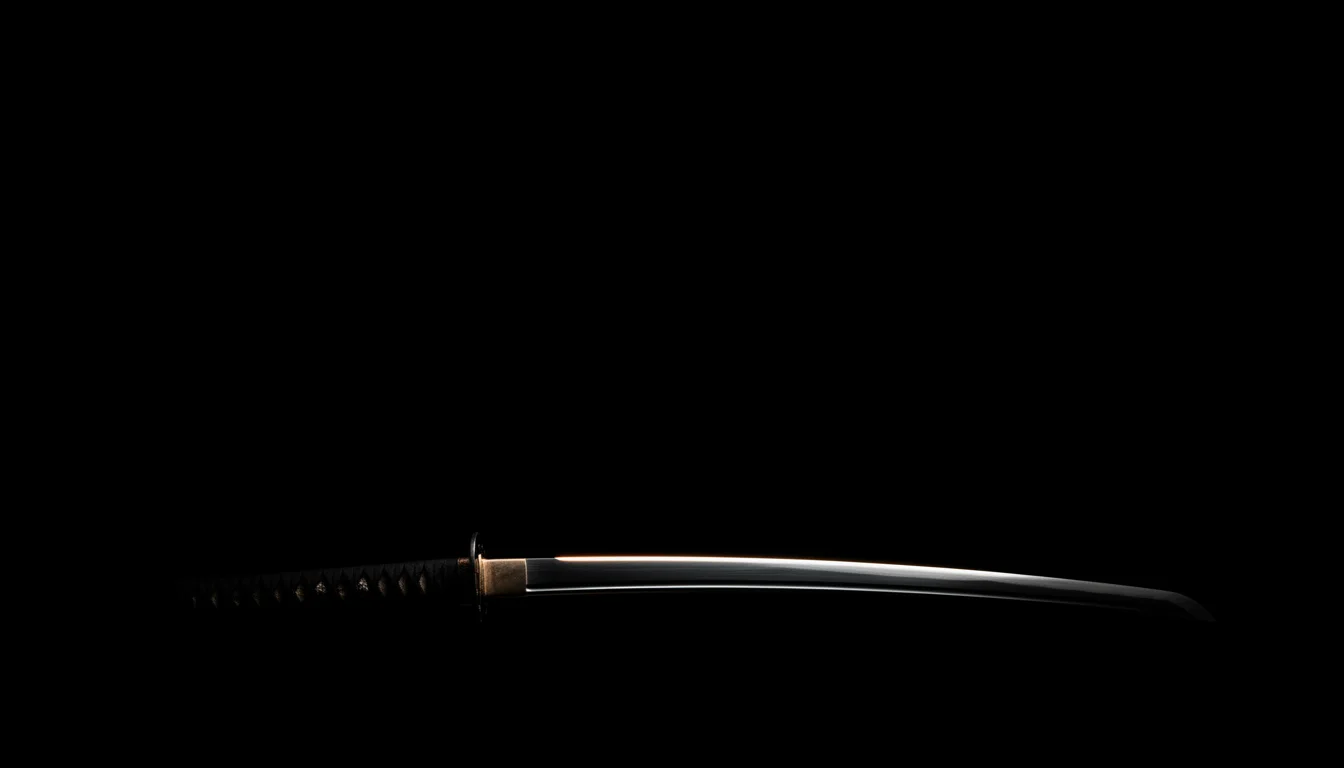

Grade 02 · 1095 High Carbon · HRC 58–62
1095 High Carbon Steel.
0.90–1.03% carbon. HRC 58–62 after clay tempering. The hamon you see on a 1095 blade is not cosmetic — it marks the actual hardness boundary between edge and spine.
HRC 58–62
Performance edge
9 / 10
Edge retention
Vivid hamon
Visual result
1095 High Carbon Blades.













Every grade. Every use case. All from Longquan.
Free worldwide shipping on orders over $500.