


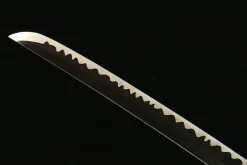
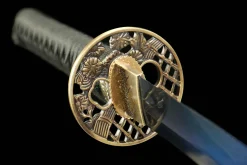
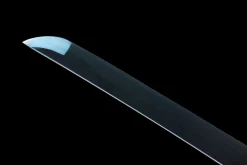


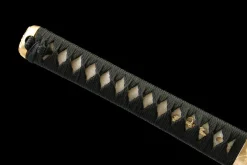
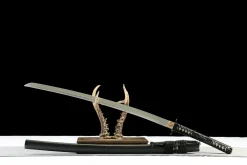

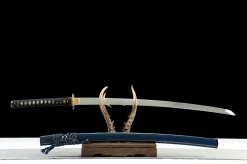

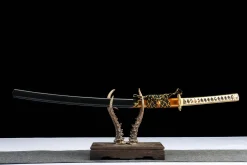
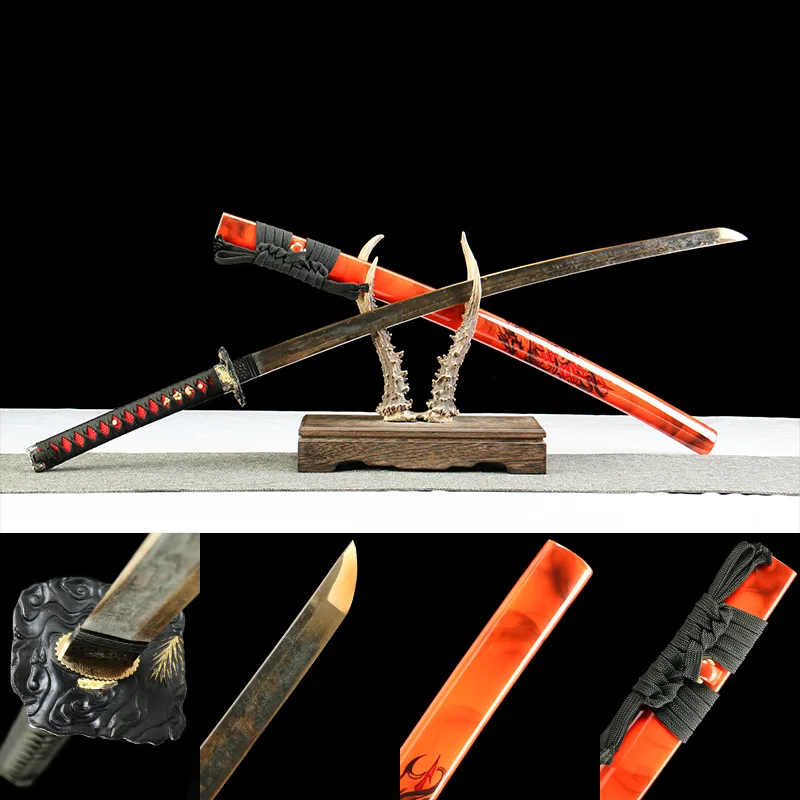





Primordial Chaos – Hand Forged 1095 High Carbon Steel Katana Sword
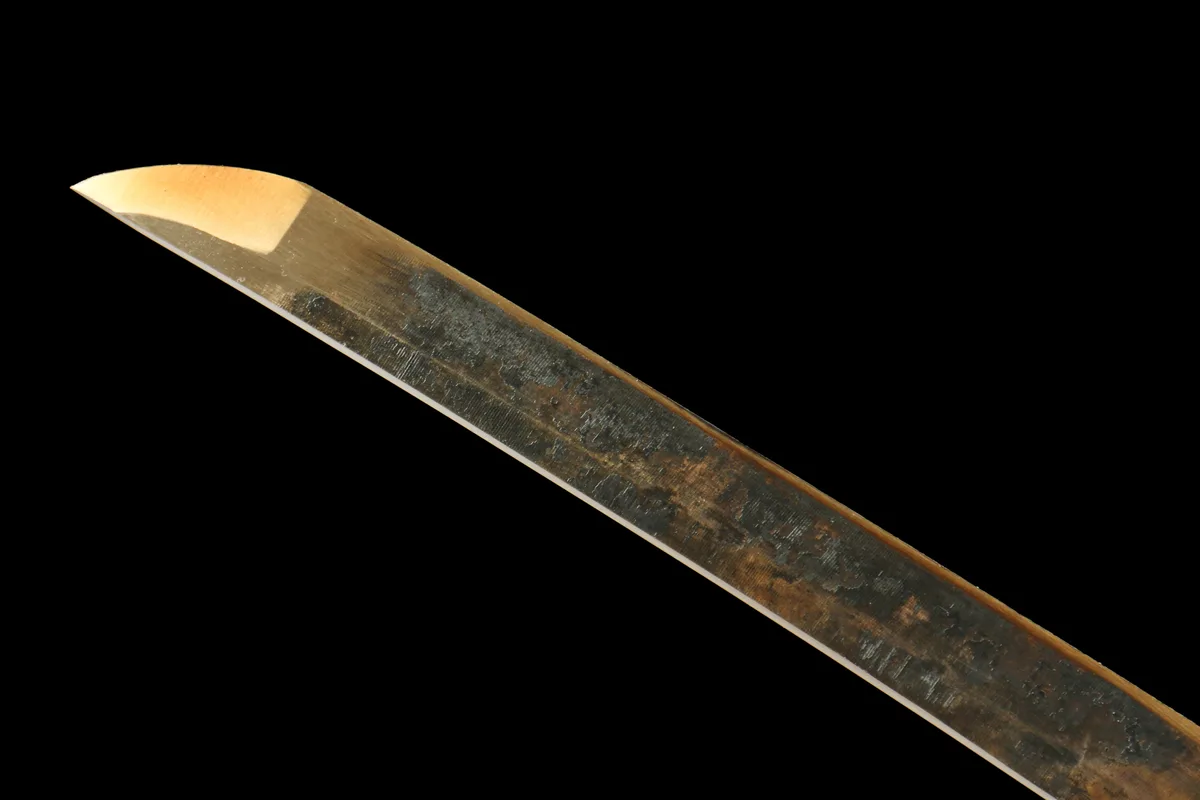
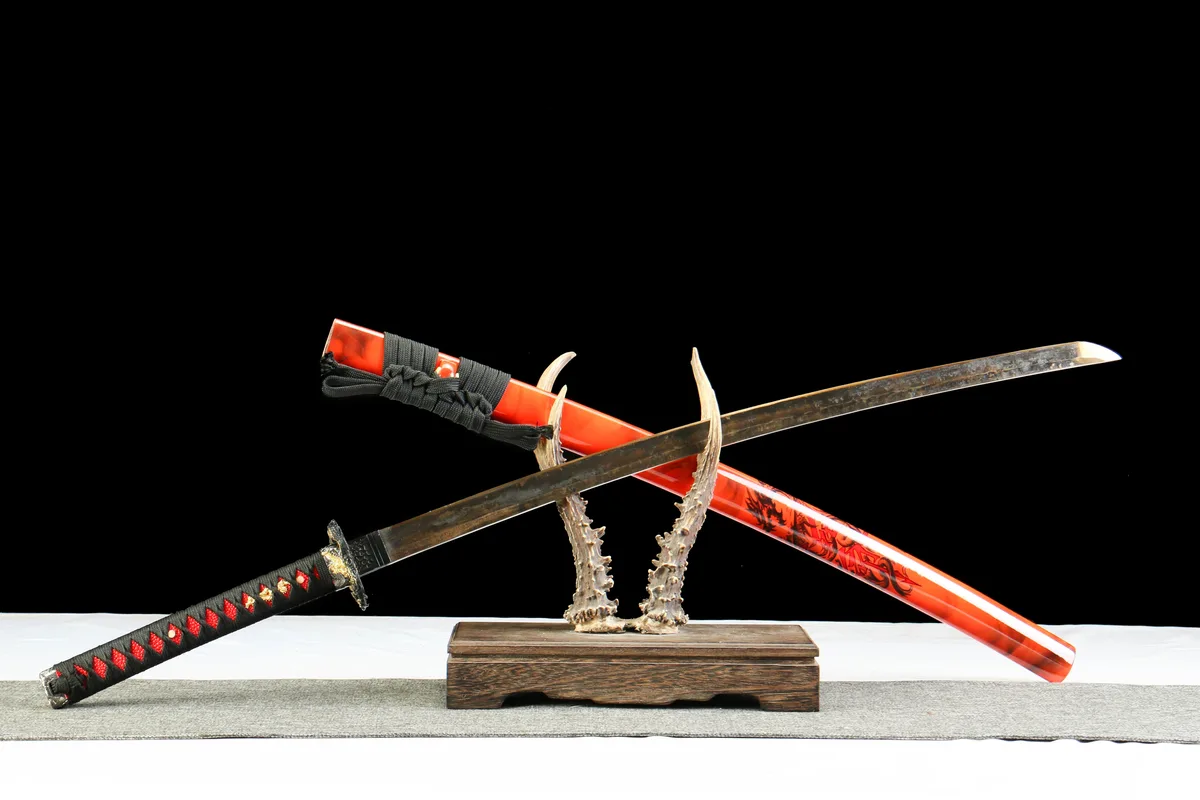
The Primordial Chaos (鸿蒙) is a mid-range katana unlike any other in this collection: its 1095 high carbon steel blade is treated to a deliberate zuò jiù (做旧) antiquing process that mimics the patinated, time-worn character of a sword recovered from centuries of history. This aged finish is not surface damage — it is a controlled oxidation layer that protects the high-carbon steel while giving the Primordial Chaos an unmistakable visual identity among swords of its class. For the collector who wants a functional katana that looks like it carries the weight of ages, this is the singular choice.
Specifications
| Blade Steel | 1095 High Carbon Steel (做旧 Antiqued Finish) |
| Total Length | 103.0 cm / 40.6 inches |
| Blade Length | 72.0 cm / 28.3 inches |
| Blade Width | 3.2 cm |
| Weight | 950 g / 33.5 oz (net) |
| Heat Treatment | Oil Quench & Temper |
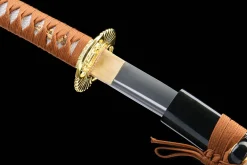
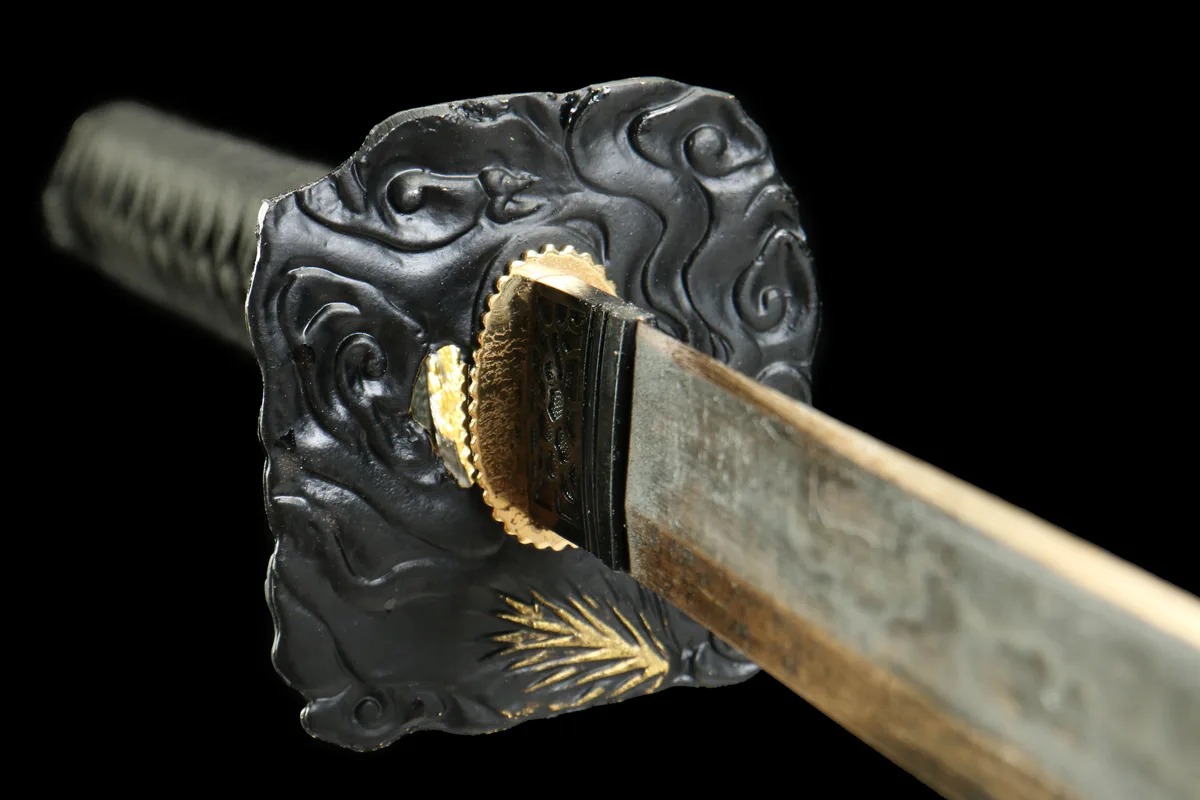
| Fittings | Zinc Alloy |
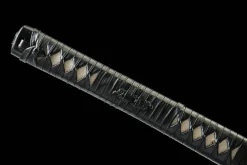
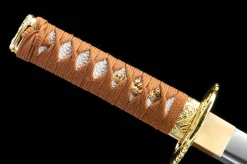
| Handle | Cotton Ito Wrap |
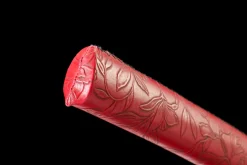
| Sheath | Green Bark Wood (Aohada) |
Craftsmanship & Materials
1095 is one of the highest-carbon mono-steels used in Japanese-style sword production, containing approximately 0.95% carbon — near the upper practical limit before carbide precipitation begins to compromise toughness. At this carbon level, the blade is capable of holding a razor-keen edge that lower-carbon alternatives simply cannot match; the trade-off is a steel that demands respect and consistent maintenance. Longquan’s smiths have worked with 1095 for generations and understand precisely how to normalise and oil-quench it to achieve a reliable balance between hardness and structural integrity.
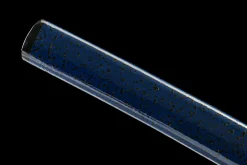
What makes the Primordial Chaos distinctly itself is the 做旧 antiquing treatment applied after heat treatment and polishing. In this controlled process, the blade surface is chemically aged to develop a rich, darkened patina with depth and tonal variation — echoing the look of historically excavated swords or well-aged heirloom pieces. The Chinese name 鸿蒙 references the primordial, undifferentiated state before creation itself, and that philosophical weight is carried in the blade’s appearance: dark, ancient, and somehow pre-civilisational. The patina also acts as a passive corrosion barrier, giving the 1095 steel a modest layer of additional protection against environmental moisture.
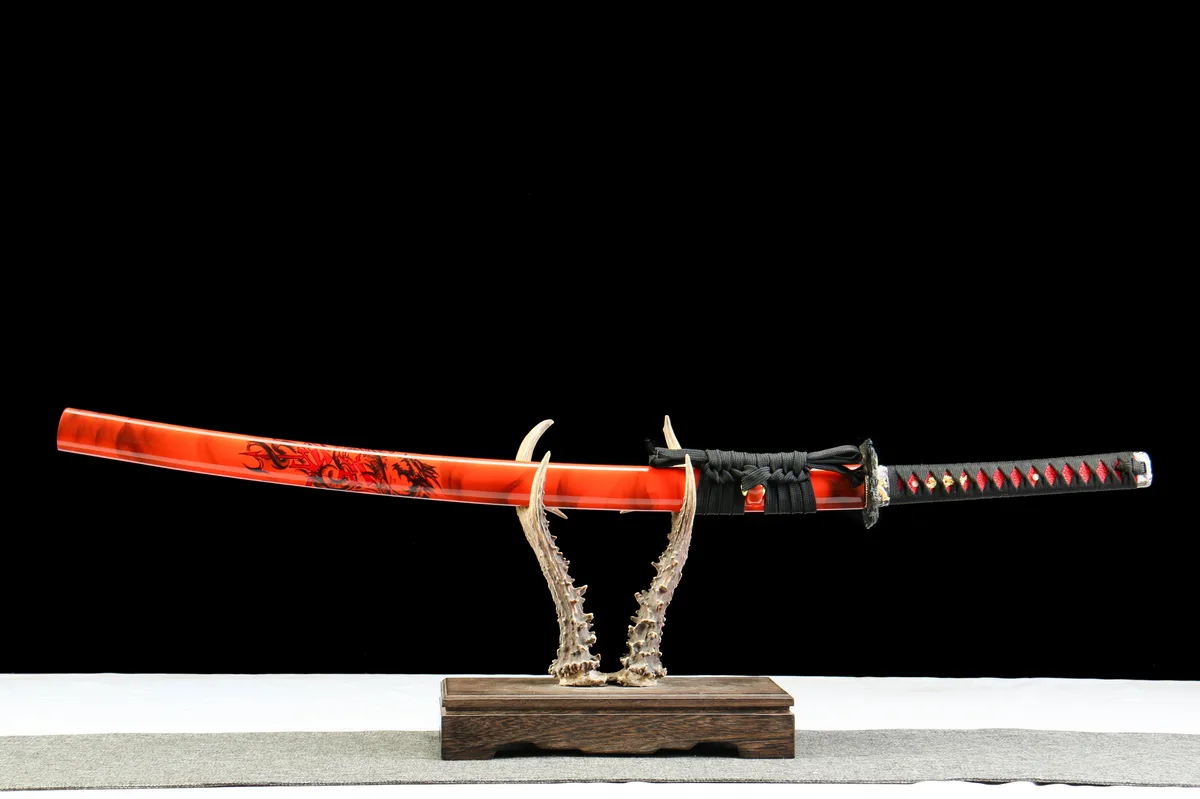
The shinogi-zukuri forging geometry provides the blade with the same functional ridgeline profile used in historical katana, while the green aohada saya creates a striking tonal contrast with the darkened steel. Removing the aged blade from the natural green wood sheath is a moment of genuine visual drama — old iron meeting living wood, as if time itself is being drawn.
Perfect For
- Historical authenticity enthusiasts and re-enactors who want a functional katana with a genuinely aged aesthetic rather than a bright, modern polish.
- Collectors focused on visual storytelling — the antiqued finish ensures the Primordial Chaos is an immediate conversation piece on any display stand or wall mount.
- Experienced practitioners seeking a high-carbon edge who appreciate 1095’s superior edge retention for precision cutting work and are committed to the extra maintenance it requires.
Care & Maintenance
The 做旧 antiqued patina on this 1095 blade is a living surface layer — preserve it by avoiding abrasive polishing compounds or uchiko powder applications that would strip the aged finish and expose bright steel beneath. Instead, maintain the blade with light applications of choji oil applied with a soft cotton cloth, which nourishes the patina while preventing active rust from forming beneath it. If small rust spots develop through the patina, remove them gently with fine (2000-grit) wet-dry paper used with oil, working only the affected area to blend with the surrounding antiqued finish.
Frequently Asked Questions
What is 1095 high carbon steel and how does it perform in a katana?
1095 high carbon steel contains approximately 0.95% carbon, making it one of the hardest and highest-performing carbon steels used in production katanas. It holds an exceptionally sharp edge and is favored by experienced cutters for demanding tameshigiri. The Primordial Chaos uses 1095 steel with an oil-quench treatment. The trade-off for its superior hardness is slightly less flexibility than lower-carbon steels, making proper technique and maintenance important for long-term performance.
What does the ‘antique finish’ (做旧) on the Primordial Chaos blade mean?
做旧 (zuò jiù) refers to an intentional antiquing or aged finish applied to the Primordial Chaos blade surface. This treatment gives the steel a weathered, darkened appearance that evokes centuries-old battle-worn swords rather than a polished modern look. It is an aesthetic process — not a functional coating — and suits the sword’s name, 鸿蒙 (Primordial Chaos), which references the formless state before creation in Chinese cosmology. The finish makes it visually distinctive among production katanas.
Is the Primordial Chaos katana battle ready?
Yes. The Primordial Chaos is a fully functional, battle-ready katana. Its 1095 high carbon steel blade — one of the best-performing carbon steels available at this price tier — combined with oil-quench heat treatment produces a hard, sharp cutting edge capable of serious tameshigiri. The shinogi-zukuri blade profile follows traditional katana geometry. At $170, buyers receive high-performing 1095 steel at a price typically associated with lower-grade steels.
Why choose the Primordial Chaos over other $170 katanas?
The Primordial Chaos offers 1095 high carbon steel — a premium blade steel not commonly found at $170 — combined with a unique antiqued blade finish that sets it apart visually. Its shinogi-zukuri profile and full functional construction make it suitable for serious cutting practice. While fittings are zinc alloy at this price point, the blade steel quality alone makes it competitive against katanas priced $50-$100 higher. It suits intermediate buyers who prioritize blade performance and distinctive aesthetics.
| Weight | 1.2 lbs |
|---|---|
| Dimensions | 103.0 × 3.2 × 0.7 in |
| Sword Type | Katana |
| Blade Steel | 1095 High Carbon Steel |
| Total Length | 103.0 cm |
| Blade Length | 72.0 cm |
| Heat Treatment | Oil Quench & Temper |
| Handle Wrap | Cotton Ito Wrap |
| Sheath Material | Green Bark Wood (Aohada) |
| Fittings | Zinc Alloy |
| Forging Style | Shinogi-Zukuri (Ridgeline) |
Related products


Damascus Steel
Crimson Flame (之烽) – Hand Forged Damascus Steel Katana Sword

Damascus Steel


1065 Carbon Steel


1065 Carbon Steel
1065 Carbon Steel
Carbon Steel

Anime & Pop Culture
Ghost of Tsushima – Hand Forged T10 Tool Steel Wakizashi Sword