
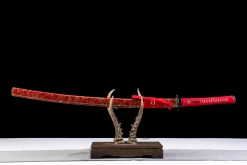
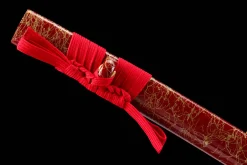

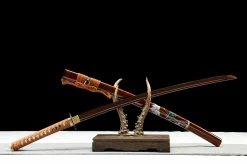
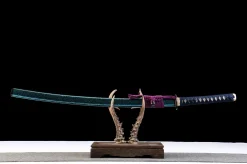



Dragon Blade Forge · Longquan, China
Three generations
Three generations
at the forge.
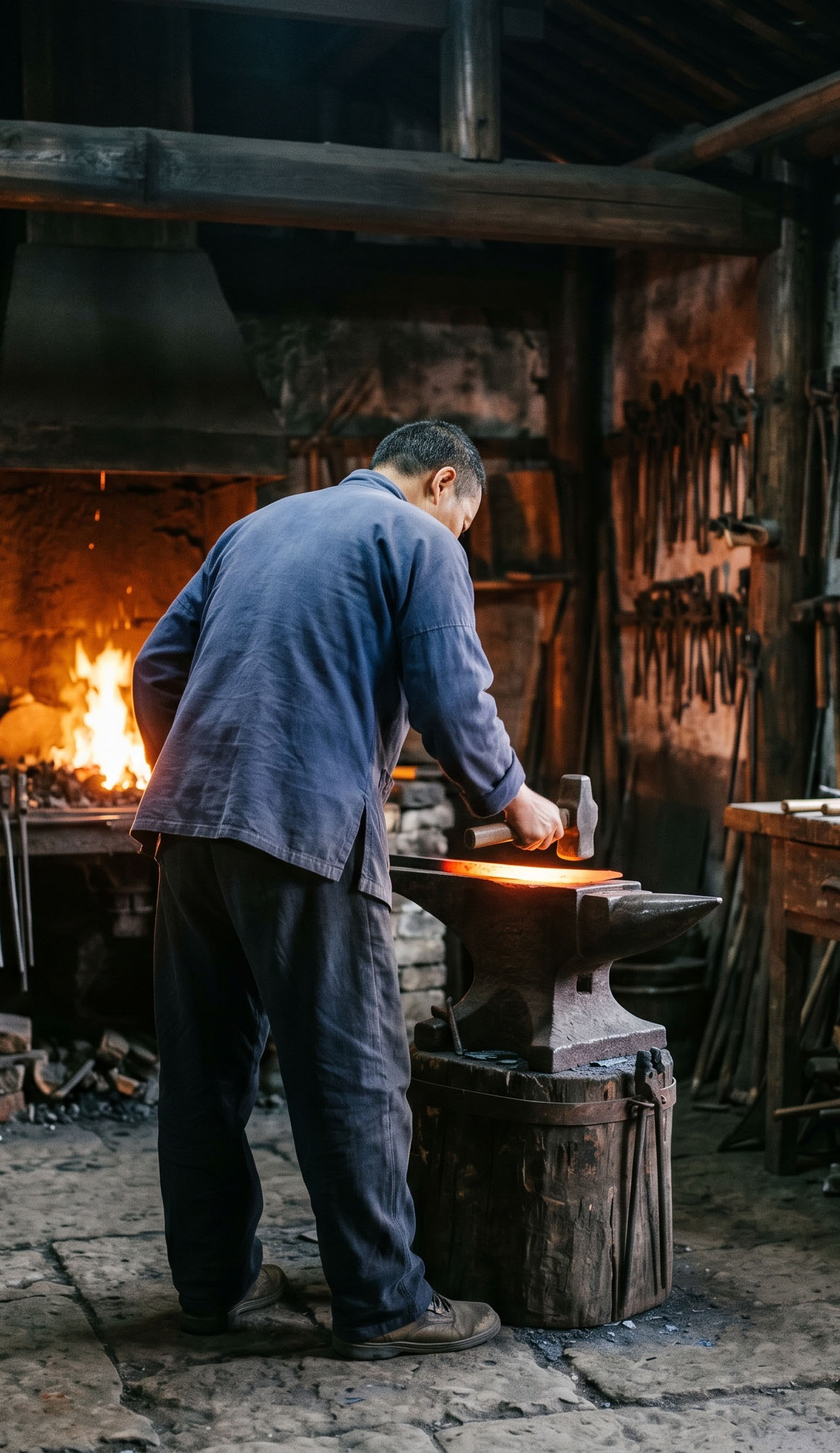
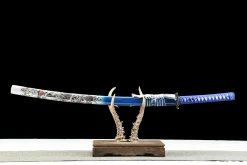
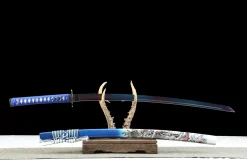
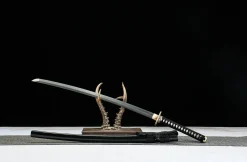
Forty years. Five smiths. No production line. Every blade hammered, ground, and signed by hand.
Our Story
Built on a
Built on a
single idea.
Get the best blades coming out of Longquan into the hands of buyers who understand what makes a sword worth owning. Not decorative wall pieces. Not factory reproductions. Real, hand-forged cutting swords made by smiths who have spent decades at the forge.
We work directly with a small group of smiths in the city. No middlemen, no wholesale catalogs. When a new blade arrives, one of our team handles it, tests the geometry, checks the hamon under magnification, and draws it from the saya a hundred times. If the habaki fit is loose — it goes back.
Every buyer gets the same detail: steel specification, hardness range, geometry, fittings material. You will never see us write “high quality steel” without telling you exactly which alloy and why we chose it for that blade.
40+
Years at the forge
3
Generations
5
Smiths

Longquan · Since 500 BC
2,600 years of blade mastery.
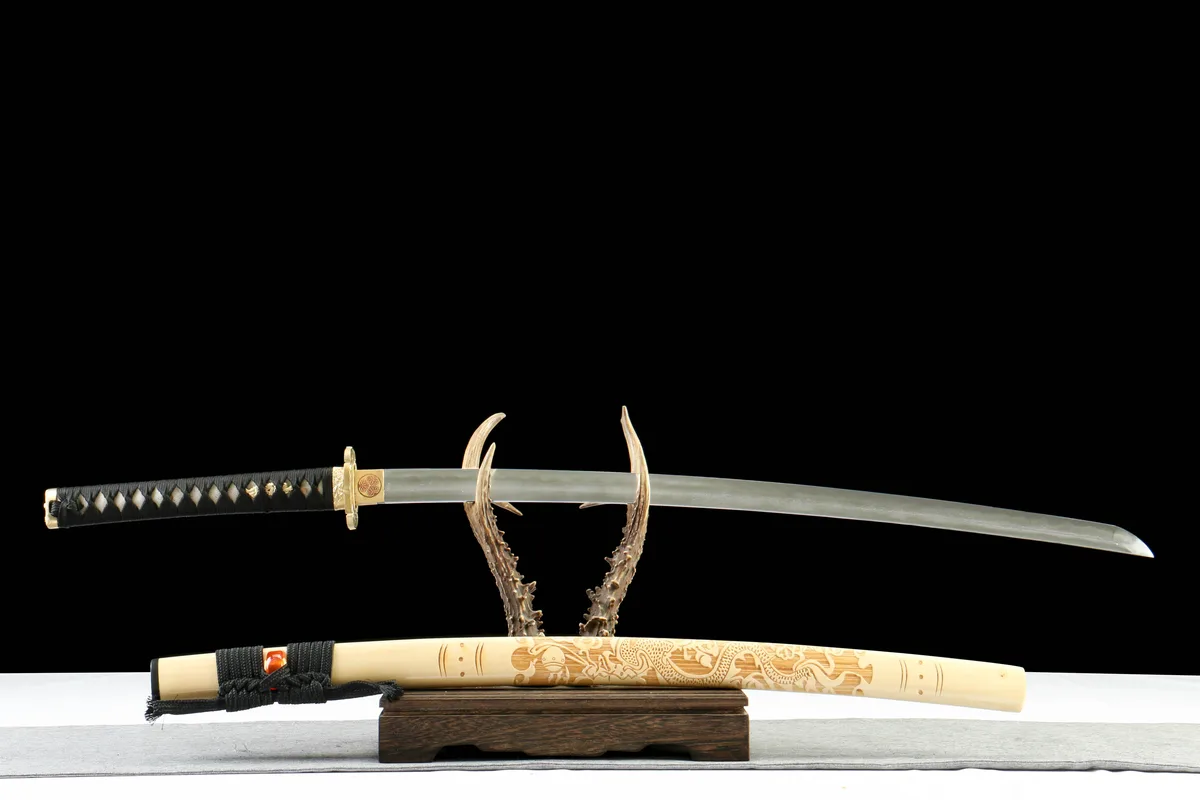
Longquan’s blade-making history begins around 510 BC with Ou Yezi, credited with forging five legendary swords during the Spring and Autumn period. The iron-rich soil of the surrounding mountains and the particular clarity of Ou Jiang river water — historically used in blade quenching — all point to the same place. That place is where our swords are still made today.
What Longquan contributes is deep material knowledge, hands trained across generations, and an environment where a smith can spend four hours on a single differential heat treatment because the infrastructure supports that level of attention. That history is not decorative context. It is the reason these blades perform the way they do.
500 BC
First Longquan blades
900 AD
Katana form emerges
1603
Daisho tradition
From forge to your door.

01Steel SelectionWe specify the alloy before forging begins. A functional cutter gets 1095 or T10 for edge retention above HRC 58. A training sword gets 9260 spring steel for toughness. The steel choice is the first decision and determines everything that follows.
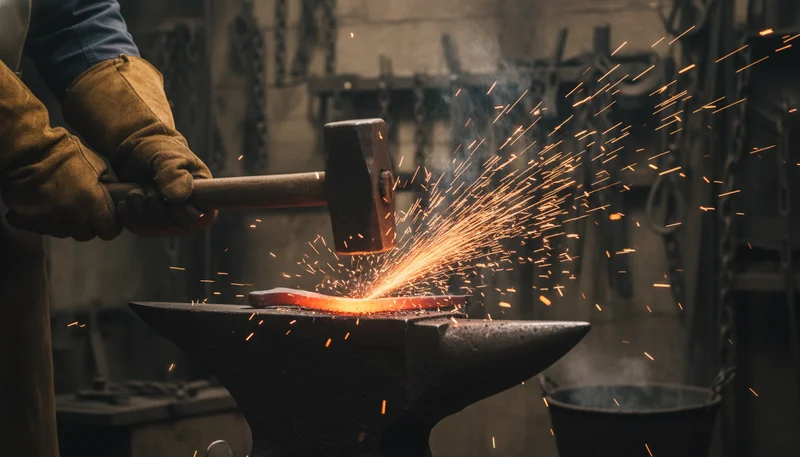
02Hand ForgingBillets are worked by hand at forge temperatures between 1,000 and 1,200°C. Damascus pieces go through a minimum of 13 folds, producing at least 8,192 visible layers. The smith shapes the geometry — kissaki profile, sori curve, shinogi ridge — through hammer work, not grinding.

03Heat TreatmentClay-tempered blades get a differential quench: harder edge around HRC 58-60, softer spine around HRC 40. The clay insulates the spine during quenching, producing the visible hamon line. This is a single-chance process — our smiths do not rush this step.

04Final InspectionEvery blade is drawn from the saya, checked for habaki fit, examined under magnification at the hamon, and measured at the nagasa, motohaba, and kasane. Fittings are tested for rattle. We ship roughly 95% of completed pieces. The rest are rejected or reworked.
What we stand behind.
Full Tang Construction
Every blade we sell runs full tang — steel extends the complete length of the handle, pegged through with a bamboo mekugi pin. No rat-tail tang, no threaded bolt construction. A blade that separates under cutting pressure is a safety failure, and we do not ship those.
100% Hand Forged
None of our katana come off a production line. Each one is worked by a named smith at a named forge in Longquan. We know who made every blade in our catalog. That traceability is how we maintain the rejection standard that keeps our return rate below 2%.
30-Day Guarantee
Thirty days from delivery. If a blade does not match its listed specifications, or if a fitting fails under normal use within that window, we replace or refund without argument. We stand behind the specifications we publish because we measure them ourselves before listing.