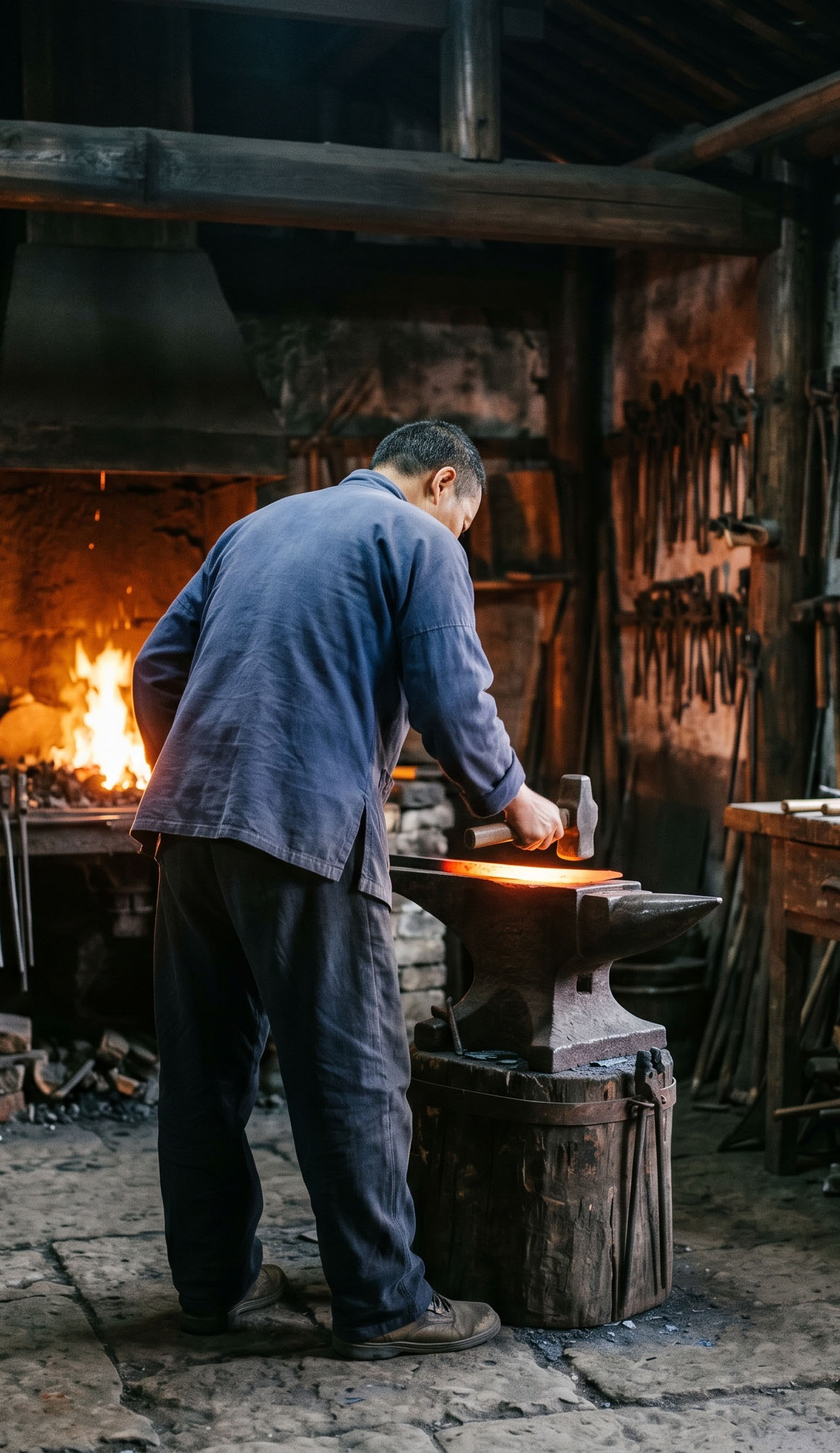




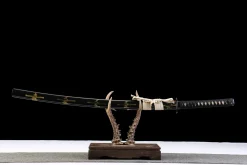


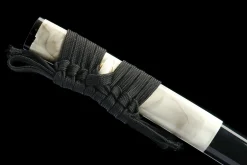
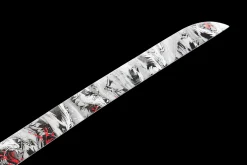
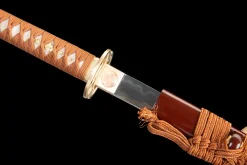
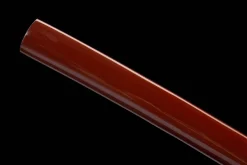
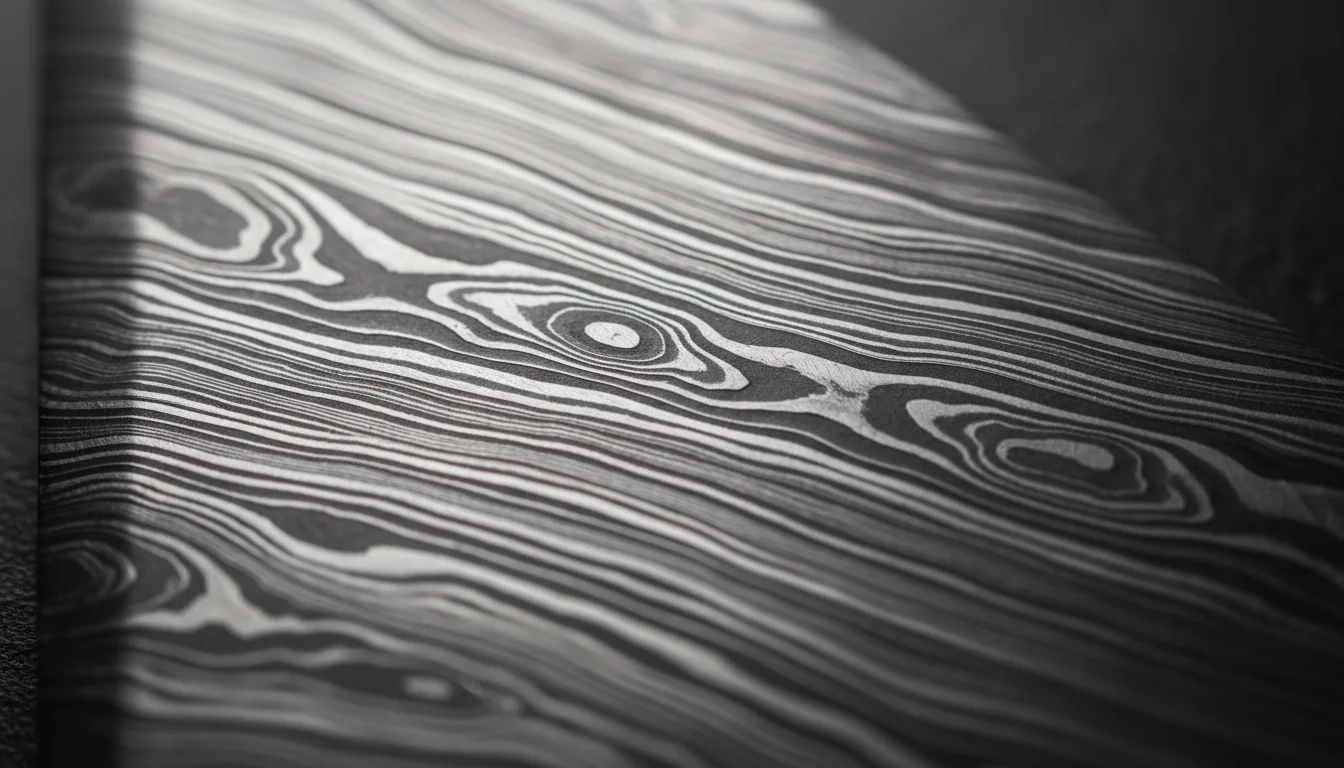
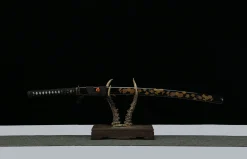
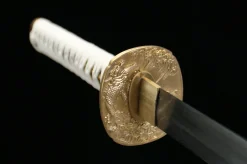
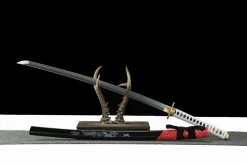
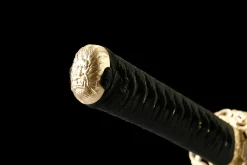
Damascus steel swords are built by forge-welding multiple steel billets together, folding the stack repeatedly until the layers number in the hundreds, then grinding and acid-etching the finished blade to reveal the grain. The pattern you see is not paint or coating. It is structural, locked into the steel itself, and it will be there as long as the blade exists. Every Damascus katana and Tang Dao in this collection was forged here in Longquan, hardened to HRC 56-60, and etched by hand.


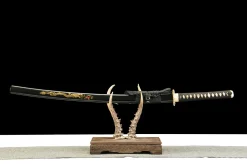

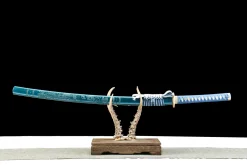
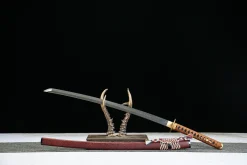
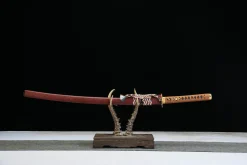
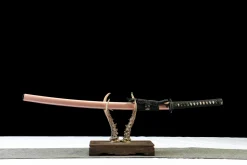

Why Choose Damascus Steel
The pattern-welding process combines two or more steels with different carbon content into a single billet. In our workshop, we typically pair a high-carbon steel with a softer iron-rich alloy. The high-carbon layers give the cutting edge its hardness. The lower-carbon layers add flex and resistance to brittle fracture. Fold the billet enough times, and you get a blade that behaves better than either steel would on its own.
What makes Damascus visually distinct is the acid etch at the end. High-carbon steel reacts faster to ferric chloride than low-carbon steel does, so the two materials darken at different rates. The result is contrast: dark bands against bright ones, flowing in whatever twist or ladder pattern the smith built into the billet. Our 天梯纹 (Tiān Tī Wén) pieces use a ladder pattern formed by grinding transverse grooves into the billet before the final weld, which creates that distinctive stacked-rung effect across the full length of the blade.
One thing buyers sometimes miss: the pattern depth changes with polishing. A high-polish finish will reduce contrast. A hand-rubbed or satin finish lets the layers read clearly. If the pattern matters to you, check the finish specification before ordering.
How to Choose a Damascus Sword
Layer count vs. pattern type. More layers do not automatically mean a better blade. A 200-layer twist pattern and a 500-layer ladder pattern involve completely different construction methods. Focus on whether the pattern style suits what you want, not just the number on the spec sheet.
Intended use. Most Damascus swords in this collection are built for display, collection, and occasional handling. The folding process creates a blade that is visually complex, but a mono-steel katana like T10 tool steel or 1095 high carbon will take more abuse in a cutting practice context. Be honest about how you plan to use the sword.
Pattern clarity. Ask yourself whether you are buying a 天梯纹 ladder pattern, a twist pattern, or a three-color fold like the 折叠三色纹 on Dark Passage. Each requires different steel combinations and different forging steps. Our buying guide breaks down the differences in more detail.
Maintenance commitment. Damascus steel requires more attentive care than monosteel. The etched surface can oxidize unevenly if left oiled improperly or stored in humidity. Keep the blade lightly oiled with choji or mineral oil, store horizontally, and check it seasonally. Our sword care guide covers the full routine.
Frequently Asked Questions
Is Damascus steel actually stronger than mono-steel?
Not inherently. The forge-welding process combines steels with different properties, which can produce a blade with good overall performance at HRC 56-60. But a well-made mono-steel blade from 1095 or T10 tool steel, clay tempered and properly heat treated, will outperform a poorly made Damascus blade every time. Damascus construction is not a shortcut to quality. It is a different construction method, and quality still depends on the smith’s execution. What Damascus does reliably is produce a blade that no mono-steel can replicate visually.
Will the pattern fade or wear off over time?
The pattern is structural, not surface-applied, so it cannot chip or peel. What it can do is lose contrast if the blade is polished aggressively. High-grit polishing removes the differential oxide layer that makes the layers visible. If you ever send a Damascus blade for sharpening, specify that you want a hand-rubbed or satin finish preserved, not a mirror polish. Light surface rust can also obscure the pattern temporarily. Clean it with 0000 steel wool and re-oil, and the grain will come back clearly.
How do I maintain the etch on a Damascus blade?
Keep a thin coat of choji oil or food-grade mineral oil on the blade at all times, applied with a soft cloth. Fingerprints are the main enemy: skin oils are mildly acidic and will cause uneven surface oxidation that muddies the pattern contrast. After handling, wipe the blade down before sheathing. Every six months, inspect for any rust spots and treat them early with light oil and 0000 steel wool before they spread. For a full maintenance walkthrough specific to etched blades, see our sword care guide.
What is the difference between 天梯纹, twist pattern, and 折叠三色纹?
It depends on the specific sword. Several blades in this category, including the Obsidian Dragon Soul and Deep Sea Gold, are built with full tangs and a geometry that can handle light to moderate cutting. That said, Damascus construction is more labor-intensive than mono-steel, and our Damascus pieces sit in the premium-to-luxury price range precisely because of that work. If your primary goal is high-volume cutting practice, a purpose-built carbon steel katana is the more practical choice. If you want a sword that performs and looks unlike anything else in your
These are three distinct construction methods. 天梯纹 (Tiān Tī Wén, ladder pattern) is made by grinding evenly spaced grooves across the face of the stacked billet before the final weld, which produces the characteristic horizontal-rung appearance. Twist pattern is made by twisting the billet along its axis under the hammer, then grinding flat, which reveals the spiral grain. 折叠三色纹 (three-color fold) uses three different steel alloys in the billet rather than two, producing a wider tonal range when etched. Each pattern requires a different billet construction, and each reads differently at different distances. A ladder pattern is dramatic at arm’s length. A twist pattern rewards close inspection.

Pattern-Welded · 40+ Layers · HRC 58–60
Damascus Pattern- Welded.
Alternating high and low carbon steel, forge-welded and folded, acid-etched to reveal the grain. HRC 58–60. No two blades share the same pattern — the layer structure is permanent and unrepeatable.
HRC 58–60
Performance range
40+ Layers
Minimum fold count
Unique
Every pattern
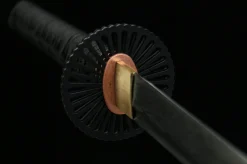
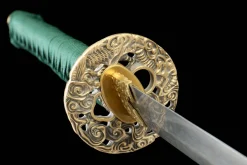
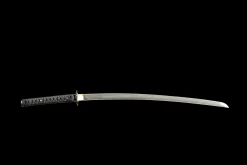
Damascus Pattern-Welded Blades.
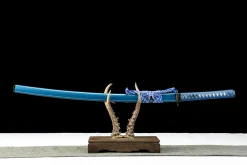
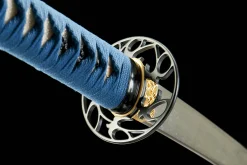

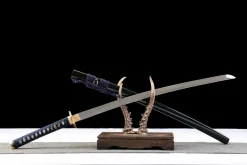





Every grade. Every use case. All from Longquan.
Free worldwide shipping on orders over $500.