







Care & Maintenance
How to Remove Rust from a Carbon Steel Sword

Carbon steel rusts. That is not a flaw in the material. It is simply the nature of high-carbon steel, which is exactly why it takes a sharper edge than stainless and holds it longer. The tradeoff is that 1095, T10, and their relatives need maintenance. Skip that maintenance, and rust sets in faster than most owners expect.
A fingerprint left on a bare blade can show surface rust within four to six hours in humid conditions. That is not an exaggeration. The salt and moisture in your skin are enough to start the oxidation process before you’ve put the sword back on the wall. Understanding that reality is the first step toward fixing the problem you already have, and preventing the next one.
This guide covers sword rust removal at every severity level, from light surface bloom to deep pitting. If you own any blade from our katana collection, the steps below apply directly to your steel.
Assessing the Damage
Before you reach for any product, look at what you’re actually dealing with. Hold the blade at a low angle under direct light. Good, raking light, the kind you’d use to check a polish job, reveals things that overhead fluorescents will completely hide.
What you’re looking for is texture. Light surface rust looks like a reddish-brown stain but the steel underneath is smooth when you run a fingernail across it. Moderate rust has a slightly rough, granular feel. Deep pitting means the rust has eaten into the steel itself, leaving actual craters you can feel and see clearly.
Also check the hamon line if your blade has one. Rust along the hamon is particularly frustrating because abrasive cleaning can blur or erase the temper line entirely. Any polished blade with visible hamon requires extra caution throughout this entire process. You can read more about why steel type matters for maintenance in our steel comparison guide.
Light Surface Rust
This is the most common situation and the easiest to fix. Light surface rust, sometimes called “bloom,” hasn’t penetrated the steel. It’s sitting on top of the existing oil layer, or on bare steel where the oil has worn thin.
What You Need
- Uchiko powder ball
- Rice paper or soft lint-free cloth
- Choji oil (camellia-based) or food-grade mineral oil
- Clean microfiber cloth
The Process
Tap the uchiko ball lightly along the blade surface. The fine abrasive powder it releases is gentle enough that it removes oxidation without scratching a polished finish, which is exactly why traditional sword polishers use it. Wipe the powder away with rice paper or a soft cloth, moving from the base toward the tip in a single direction. Never scrub back and forth.
Apply 2-3 drops of choji oil to a clean cloth, then spread a thin, even coat across the full blade surface. Thin matters here. Too much oil collects dust, and dust holds moisture against the steel. One light pass is enough. Then keep your bare fingers off the metal entirely, even after oiling.
One thing many new owners miss: check the mune (spine) as well as the flat faces. Rust often starts on the spine because it’s the surface people forget to oil.

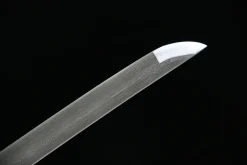
Silent Thunder
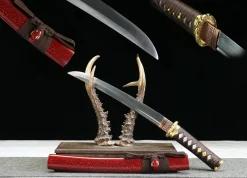
T10 high speed tool steel, clay tempered, with a visible hamon. $280.

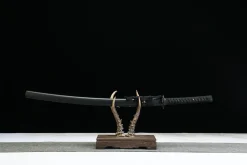
Dark Ravine
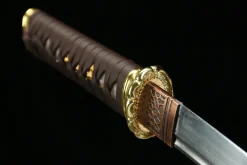
T10 high speed tool steel with full clay temper treatment. $340.

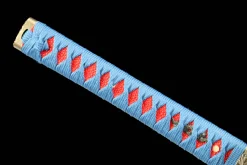
Ink Meteor
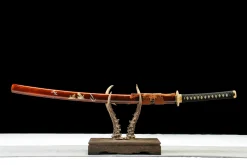
San-mai construction with layered steel cladding. $775.
Moderate Rust
Moderate rust has a granular texture you can feel. The oxidation has gone deeper than a simple bloom and won’t lift with uchiko powder alone. You need something with a bit more cutting power, but you still need to stay careful about what you’re putting against the steel.
What You Need
- 0000-grade steel wool (the finest grade available)
- Choji oil or mineral oil
- Uchiko powder ball
- Microfiber cloths
The Process
Apply a small amount of oil directly to the rusted area first. Let it sit for two to three minutes. Oil helps loosen the oxidation and reduces the scratch risk from the steel wool significantly.
Work with 0000 steel wool in light, circular motions over the rusted area only. Apply minimal pressure. You are not grinding metal. You are lifting loosened oxidation. When the brown color starts transferring to the wool, wipe the area clean and assess. Repeat if needed, but check your progress after every pass.
Once the rust is gone, follow up with the full uchiko and oil routine from the light rust section. The steel wool will leave microscopic scratches, and the uchiko helps smooth the surface before you seal it with oil.
Do not use WD-40 at any stage. It leaves a sticky residue that actually attracts dust and moisture over time, which is the opposite of what you want. Stick with choji or mineral oil throughout. This comes up in our full sword care guide as one of the most common maintenance mistakes we see.
Deep Pitting: When to Seek Professional Help
Deep pitting means the rust has removed material. There are actual craters in the steel surface, and no amount of uchiko or 0000 steel wool will restore a flat, polished surface. What you can do at home is stop the progression.
Clean out the pitted areas with a cotton swab dampened with oil. Remove as much loose oxidation as possible, then apply a protective oil coat over the entire blade. This stabilizes the situation. It does not fix it.
Restoration at this point means polishing, and traditional Japanese sword polishing is a professional skill that takes years to develop properly. A good sword polisher works through a progression of whetstones, starting coarse and finishing on finger stones so fine they cost more per gram than the steel they’re used on. If your blade has a hamon, an amateur polish will destroy it permanently.
For deeply pitted blades of significant value, contact us directly before attempting further cleaning. For working blades where aesthetics matter less than function, a professional polish is still the right call for structural integrity. Deep pitting creates stress concentration points that weaken the steel over time.
If you’re weighing whether a restoration is worth the cost against buying a new blade, our buying guide covers what to look for in a replacement, including which steel grades and construction methods to prioritize.
Preventing Future Rust
Prevention is faster than any cleaning process. A proper oiling takes four minutes. Removing moderate rust takes forty. The math is straightforward.
Oil the blade after every single handling session, without exception. The oil from your skin begins oxidation within hours, especially in warm or humid environments. Wipe from base to tip, apply 2-3 drops of choji oil on a cloth, spread thin, return to saya with the edge facing up.
If the sword is stored rather than displayed, pull it for inspection once a month. The wood of the saya absorbs oil over time, which means the blade dries out even while sheathed. A blade stored for three months in a saya without re-oiling will have a dry, vulnerable surface regardless of how well you oiled it going in.
Storage environment matters almost as much as oiling. Basements, garages, and bathrooms introduce humidity that accelerates oxidation even through an oil barrier. A controlled indoor space, ideally below 60% relative humidity, is the standard for long-term storage.
If you own a Damascus or pattern-welded blade, apply oil more generously than you would for monosteel. The layered structure has micro-channels between the steel layers where moisture can hide and cause corrosion that isn’t visible on the surface until it’s already progressed. Work the oil into the pattern grooves deliberately.
Frequently Asked Questions
Looking for a Blade Worth Maintaining?
