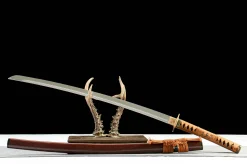
The Complete Sword Care Guide: How to Protect a Carbon Steel Blade for Decades

A blade that leaves our workshop in Longquan is already doing its part. The steel is properly heat treated, the edge is ground, the habaki fits snug. What happens next is entirely up to you.

Carbon steel rusts. That is not a flaw, it is a property of the material. High-carbon alloys like 1095 and T10 hold a sharper edge than stainless precisely because of their carbon content, and that same carbon makes them reactive to moisture and oxygen. Ignore a fingerprint on a bare blade for 48 hours in a humid room, and you will find a rust spot where the fingerprint was. This is not an exaggeration.

This guide covers everything: the tools, the process, the steel-specific differences, and the mistakes that destroy good blades. Read it once, follow it consistently, and your sword will outlast you.

, –

Why Sword Care Matters

Carbon steel starts oxidizing the moment it contacts moisture. At 60-70% relative humidity, a bare unprotected blade will show surface rust within 24 to 72 hours. In a coastal or basement environment, that window shrinks further. The iron in high-carbon steel reacts with water and oxygen to form iron oxide, and once that process starts in a pitted area, it continues beneath the surface even after you wipe the visible rust away.

The hamon on a clay-tempered blade is especially vulnerable. That transition zone between the hardened edge (typically HRC 58-62) and the softer spine (HRC 40-45) has a different crystalline structure, which means it responds to moisture slightly differently than the surrounding steel. Rust that forms along the hamon is harder to remove without damaging the visual contrast you paid for.

A good maintenance routine takes four minutes. A rust removal job, done properly without destroying the polish, takes hours. The math is straightforward.

, –

What You Need

, –

After Every Handling: The 5-Step Process

Step 1: Draw the Blade Carefully

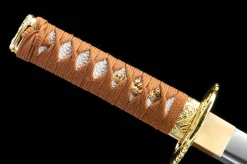
Remove the blade from its saya slowly, holding by the handle only. Never grip the blade, not even at the base near the habaki. Oil from your skin starts the oxidation process within hours. Even one light touch on a freshly cleaned blade is enough to leave a mark by the next morning.

Step 2: Wipe the Blade Clean

Using your first (cleaning) cloth, wipe from the base toward the tip in one smooth motion. Always wipe away from your body. Wipe both the flat and the back of the blade. This removes old oil, dust, and any residue from storage. If the blade has been in the saya for a month or more, the wooden scabbard will have absorbed a significant portion of the previous oil coat, so this step may produce very little residue on the cloth.

Step 3: Apply Uchiko (Monthly, or When Needed)

For routine after-handling care, you may skip this step if the blade looks clean. For monthly maintenance or if you see dullness or faint spots, lightly tap the uchiko ball along the blade at 5 to 6 cm intervals. Use rice paper to spread and buff the powder in light circular motions, then wipe the powder residue away completely before oiling. Leaving powder residue under oil traps abrasive particles against the steel.

Step 4: Apply 2-3 Drops of Choji Oil

Place 2-3 drops of choji oil on your clean application cloth. Spread a thin, even coat across the entire blade surface, both sides, including the back edge (mune) and the area around the habaki. The coat should be barely visible, not pooling. Too much oil is a real problem, it attracts dust, which then becomes a grinding paste on your blade during the next cleaning.

Step 5: Return to Saya Edge-Up

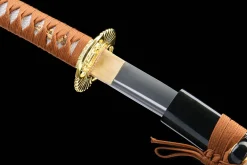
Guide the blade back into the saya gently, cutting edge facing upward. Edge-up is standard for Japanese swords and prevents the blade from resting on the cutting edge, which would eventually deform or nick the sharpened bevel. You will feel a slight resistance at the habaki as it seats. That fit is intentional.

, –

Monthly Maintenance

Even a sword sitting untouched in its saya needs attention once a month. Wood is hygroscopic, it absorbs and releases moisture with changes in humidity. The saya also slowly absorbs the oil from the blade surface. After 30 days, a blade that was well-oiled can be nearly bare in patches.

Pull the blade, do the full 5-step process including uchiko, and inspect closely under a good light source. Angle the blade to catch the light across the flat. You are looking for any dull or matte spots that break the consistent sheen of the oil coat. Those spots are where the oil has worn away, and they are the first place rust will form.

Check the habaki and the area just above it. This junction collects moisture from condensation and from repeated drawing and sheathing. A thin brown ring at the habaki is a common early sign of neglect. Catch it there before it spreads to the blade.

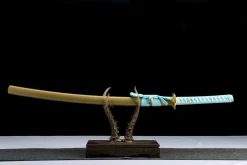
Also inspect the saya itself. If the interior smells musty or damp, remove the blade and let the saya air out in a dry room for 24 hours before returning the blade to it.

, –

Steel-Specific Care

1065 and 1095 Carbon Steel

These are the most common steels in our catalog. 1095 has slightly higher carbon content (0.95%) than 1065 (0.65%), which gives it a harder edge but also slightly more reactivity to moisture. Both follow the standard 5-step process. Both need oil after every handling without exception. For our buying guide on steel selection, see the full comparison.

T10 Tool Steel

T10 contains a small amount of silicon and tungsten, which improves wear resistance at the edge. The hardness after heat treatment typically runs HRC 60-62 at the edge, which is harder than standard 1095. Harder steel is also more brittle, so T10 blades should not be flexed or used for contact practice. Care is identical to 1095, but inspect more carefully for micro-chips along the edge during monthly maintenance, a magnifying glass helps here.

Damascus and Pattern-Welded Steel

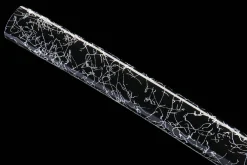
Damascus blades need more oil, not just a thin coat. The layered structure, whether 64 layers or 256, creates micro-channels between the folds where moisture can hide. Apply choji oil more generously than you would on a mono-steel blade, and work it into the pattern with a light buffing motion using rice paper. You are trying to get oil into those surface variations, not just on top of them.

If the pattern contrast appears dull, apply uchiko first, buff lightly, wipe completely clean, then oil. The uchiko removes the oxidized surface layer that blurs the contrast between the different steel alloys in the pattern. Never use abrasive cleaners or metal polish on Damascus. The pattern is surface depth, not deep engraving, and abrasives will flatten it permanently.

Spring Steel (65Mn)

65Mn spring steel is more corrosion-resistant than 1095 but not immune to rust. The main difference in care is that 65Mn blades are designed for flexibility and contact use, which means they are handled more often and need cleaning more often. After every training session or cutting practice, wipe and re-oil before sheathing. Sweat is particularly aggressive on carbon steel. Do not leave a 65Mn blade in a bag or case after use.

, –

Common Mistakes That Destroy Good Blades

Using WD-40. This is the most common mistake we hear about. WD-40 is a water-displacement spray designed for loosening bolts and protecting tools in the short term. On a polished sword blade, it leaves a sticky, waxy residue that attracts dust, traps moisture against the steel, and is genuinely difficult to remove completely without a solvent wipe. Use choji oil or food-grade mineral oil. Only those two.

Touching the blade with bare fingers after cleaning. Fingerprints are a salt and acid solution. On a freshly oiled blade, a fingerprint does not immediately burn through the oil coat. On a blade you just cleaned and forgot to re-oil, a fingerprint will leave a rust mark within 24 to 48 hours depending on humidity. Always handle by the handle. If you must touch the blade, wear nitrile gloves.

Humid storage. Basements, garages, bathrooms, and enclosed cases with poor ventilation are blade killers. A sword stored in a basement at 75% relative humidity with no oil coat will have visible rust within a week. Store blades in a dry interior room, ideally on a horizontal rack, in an environment with relative humidity between 40% and 55%.

Long-term storage in the saya without re-oiling. Wood absorbs oil slowly and steadily. A blade stored for three months without a monthly re-oil will be dry in patches. Pull every sword in storage once a month, inspect, and re-oil. This takes five minutes per blade. Missing this step is how people find rust damage on a sword they have not touched in six months.

Using abrasive materials to remove rust. Steel wool, sandpaper, and metal polish will remove rust and will also remove the polish, the hamon visibility, and the surface finish. If you find rust, use uchiko powder with rice paper for surface oxidation. For anything deeper, bring it to a professional polisher. A proper sword polish is a specialist skill, not a weekend project.

, –

Frequently Asked Questions

Once a month, minimum. The saya absorbs oil from the blade surface over time, and ambient humidity fluctuates seasonally. A blade that was well-oiled in October may have dry patches by November. Monthly inspection and re-oiling takes four minutes and prevents problems that take hours to fix.

No. Organic cooking oils go rancid. Rancid oil on a steel blade produces organic acids that actively corrode the metal, the opposite of what you want. The only acceptable substitutes for choji oil are food-grade mineral oil or pharmaceutical-grade paraffin oil. Both are stable, odorless, and will not degrade over time.

For light surface rust, surface oxidation with no pitting, apply uchiko powder with rice paper using light circular motions. Wipe clean, then oil. Repeat if needed. For rust with visible pitting or rust along the hamon, do not attempt to grind or sand it yourself. That level of correction requires a proper polish to avoid permanently damaging the blade geometry and finish. Contact us directly and we can advise on polishing options.

Only for transport. Bags and enclosed cases trap humidity unless they contain silica gel desiccant packs, which need replacing regularly. For long-term storage, a horizontal sword rack in a dry interior room with good air circulation is significantly better than any enclosed case. If you do use a case, place three or four fresh silica gel packets inside and check them every two months.

, –