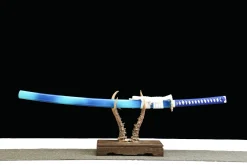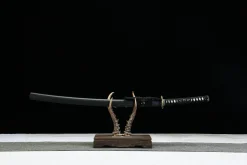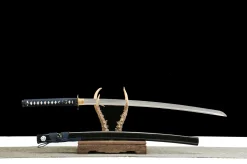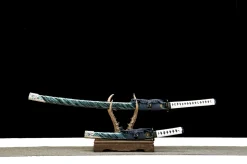











Autumn Moon Chill – Hand Forged T10 Tool Steel Katana Sword
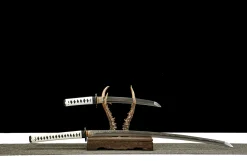
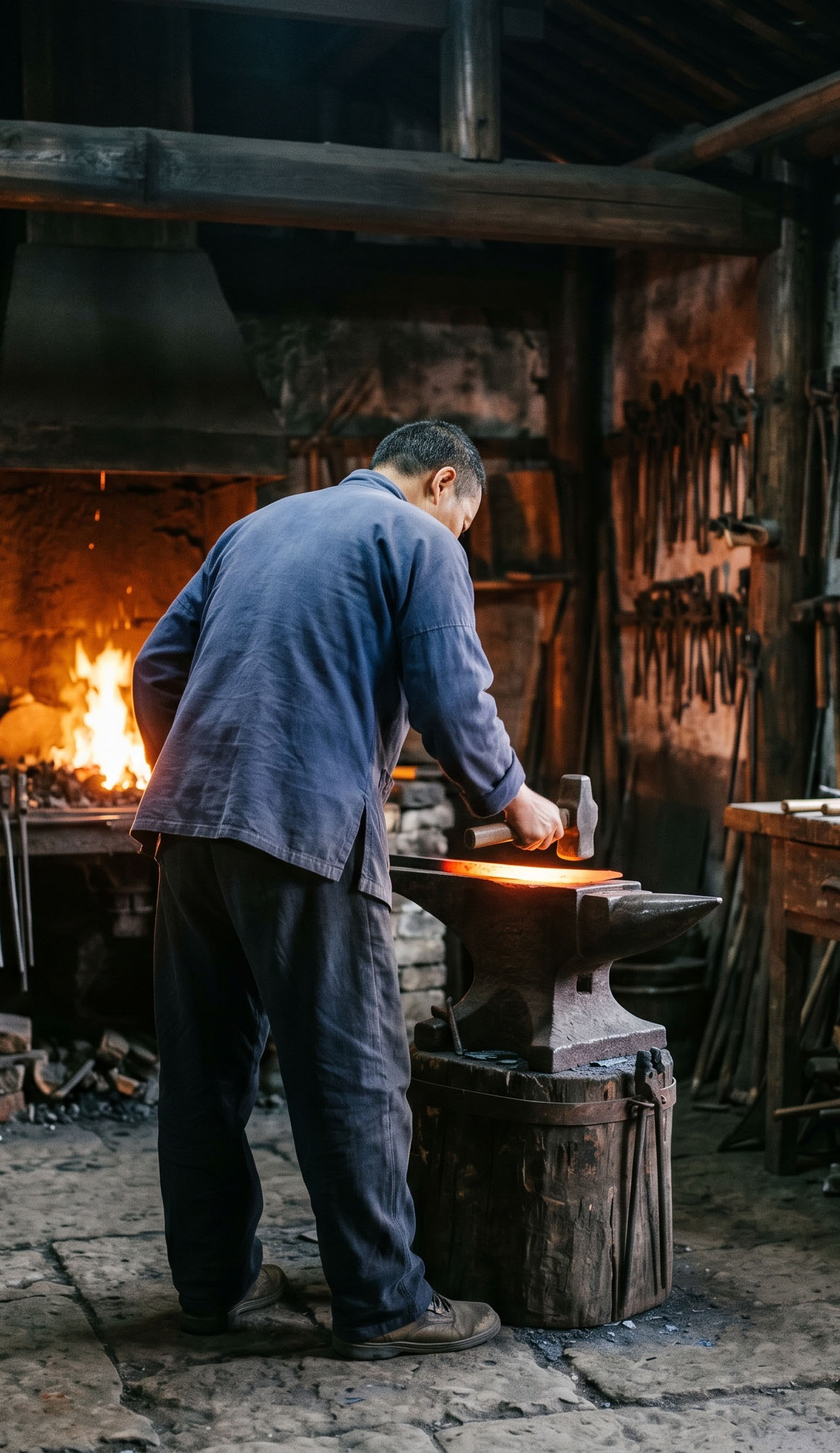
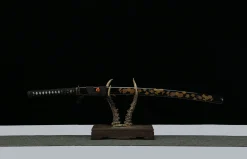
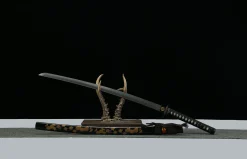
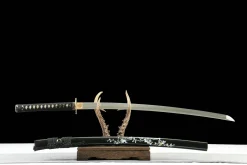
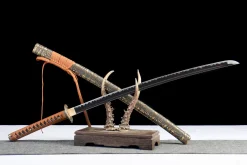
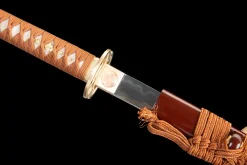
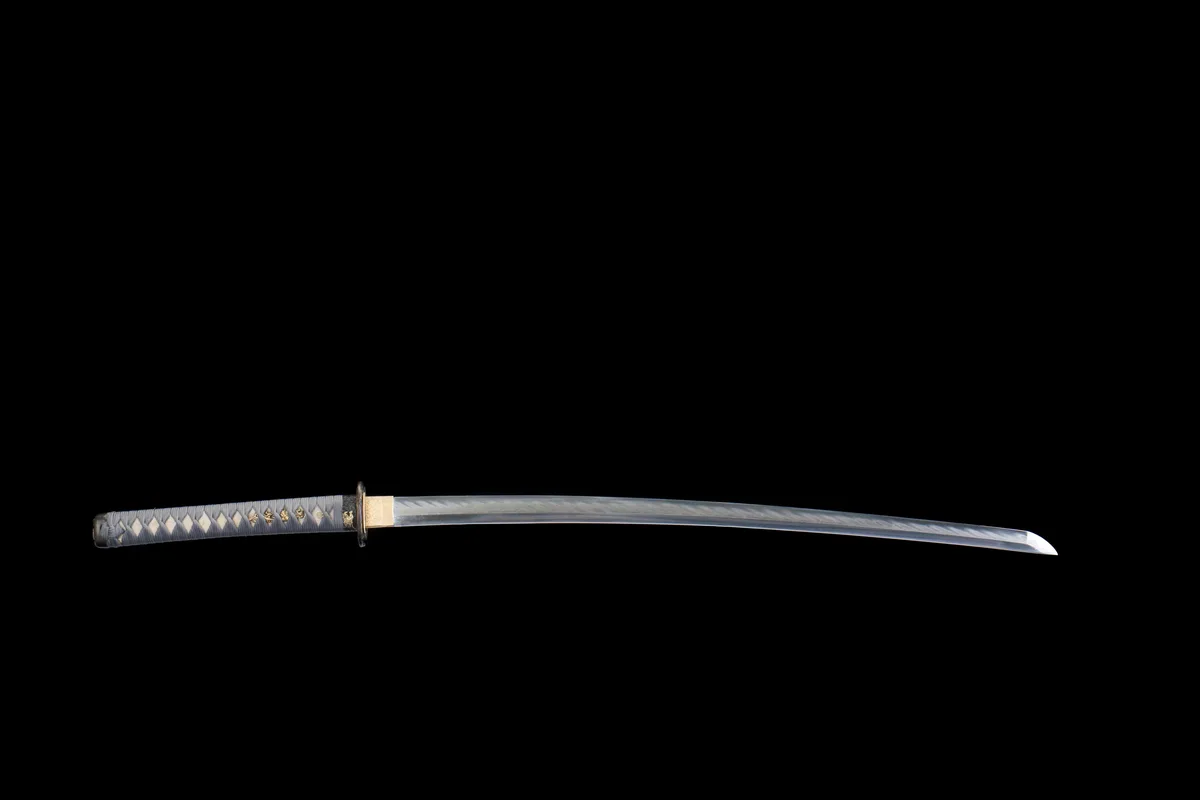
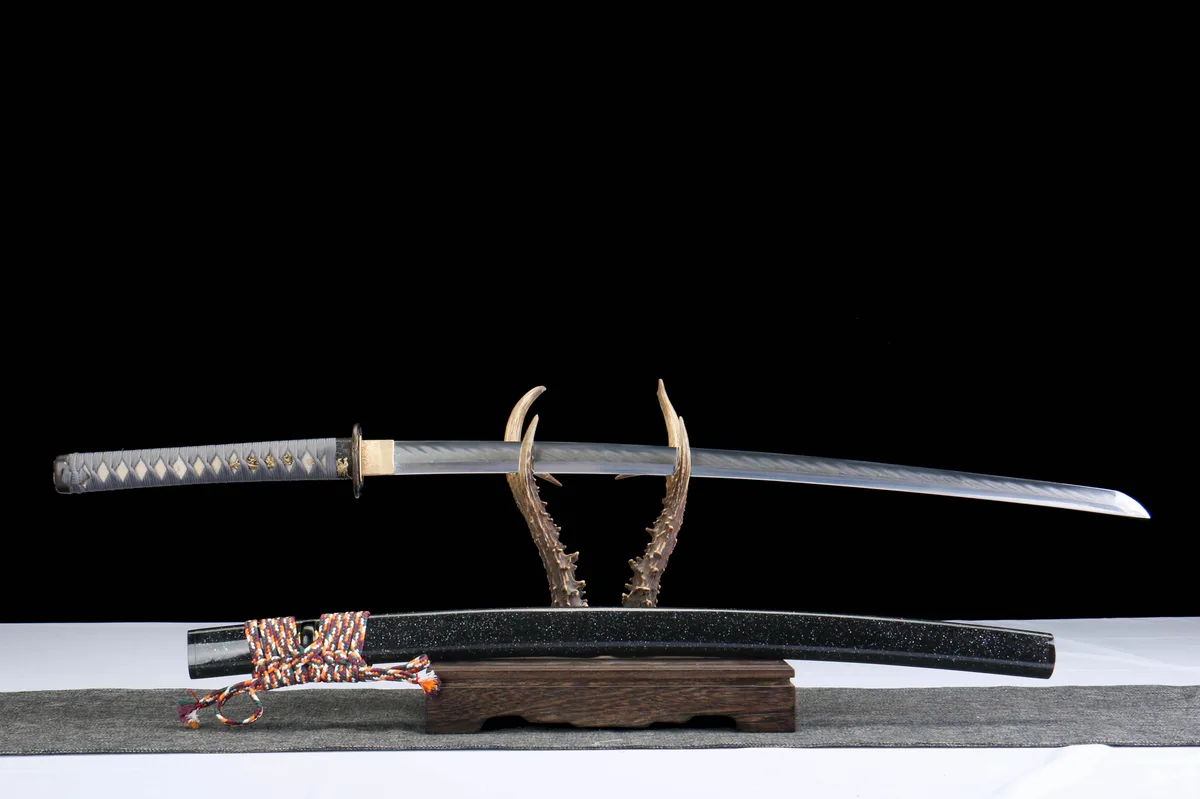
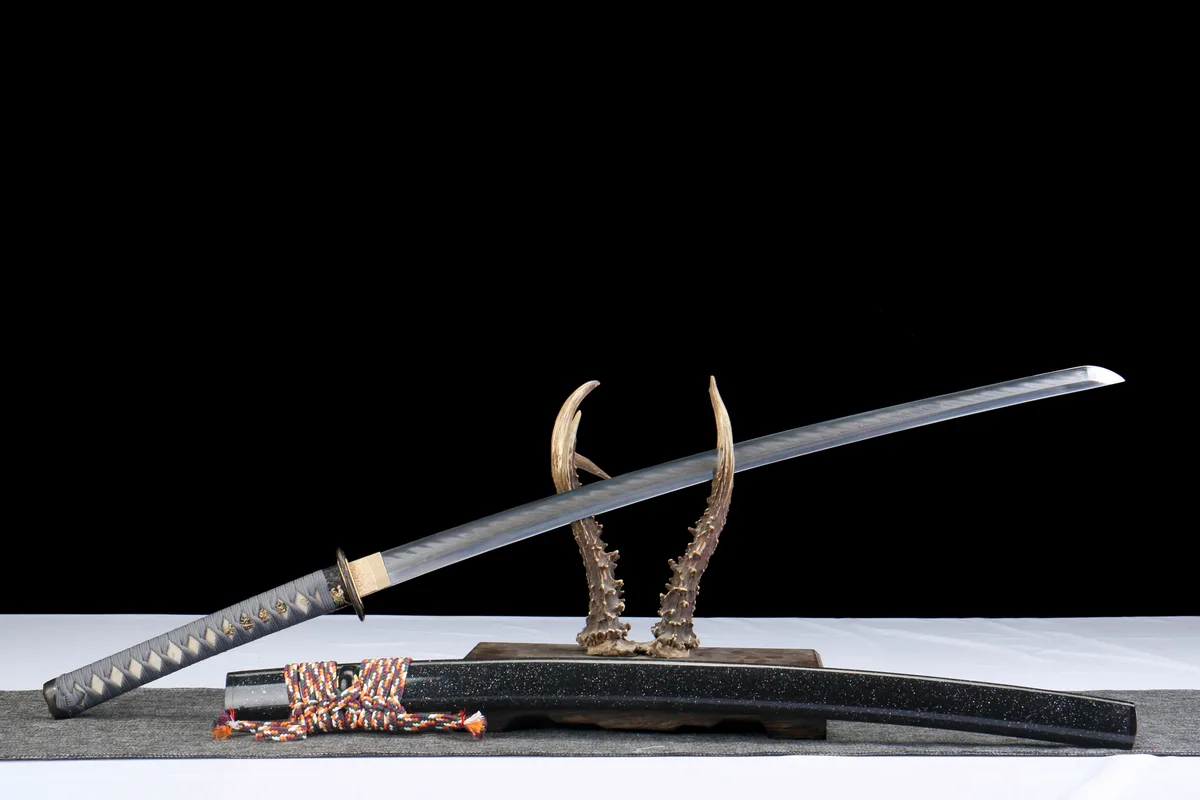
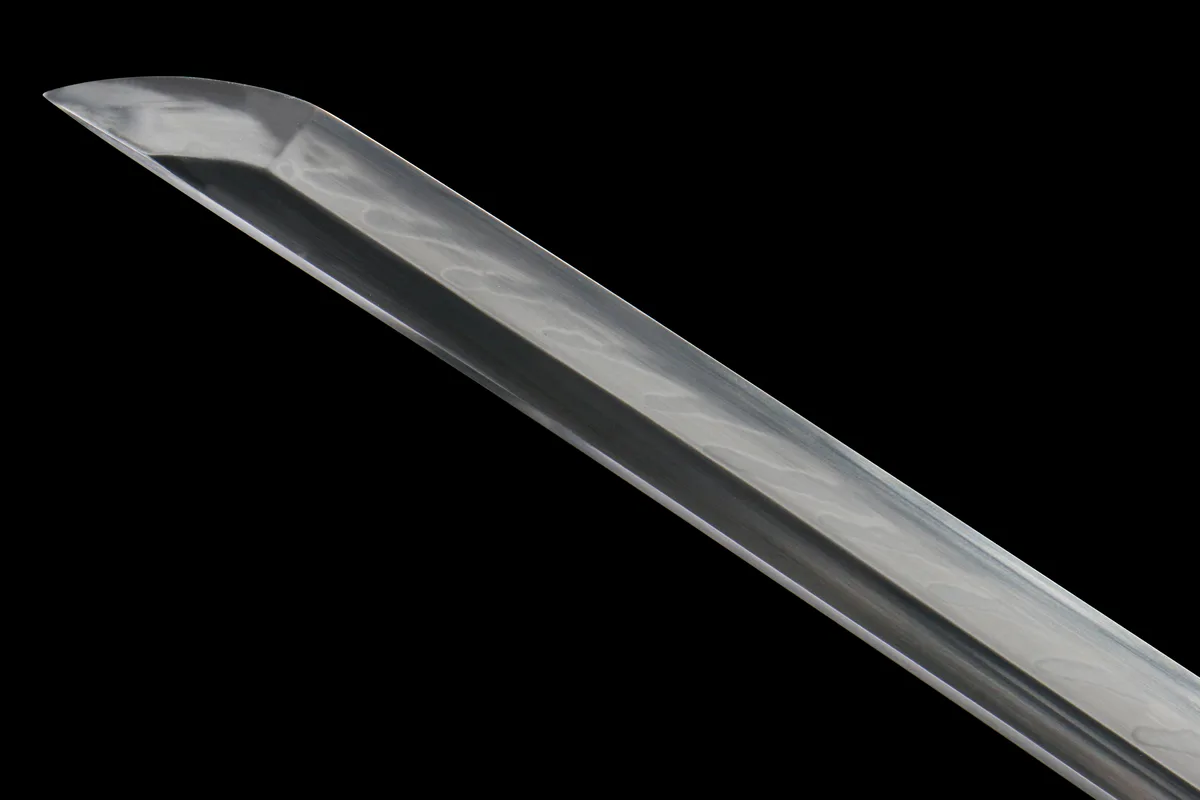
Hand-forged T10 Tool Steel katana (102cm total / 72cm blade), crafted in Longquan. Clay-tempered blade with a genuine hamon line — visible contrast between hardened edge and soft spine.
$1,949.99
Autumn Moon Chill – Hand Forged T10 Tool Steel Katana Sword
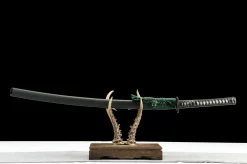
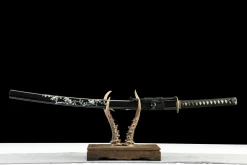
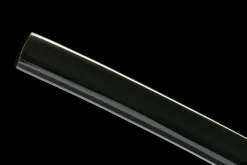
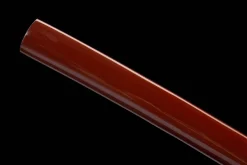
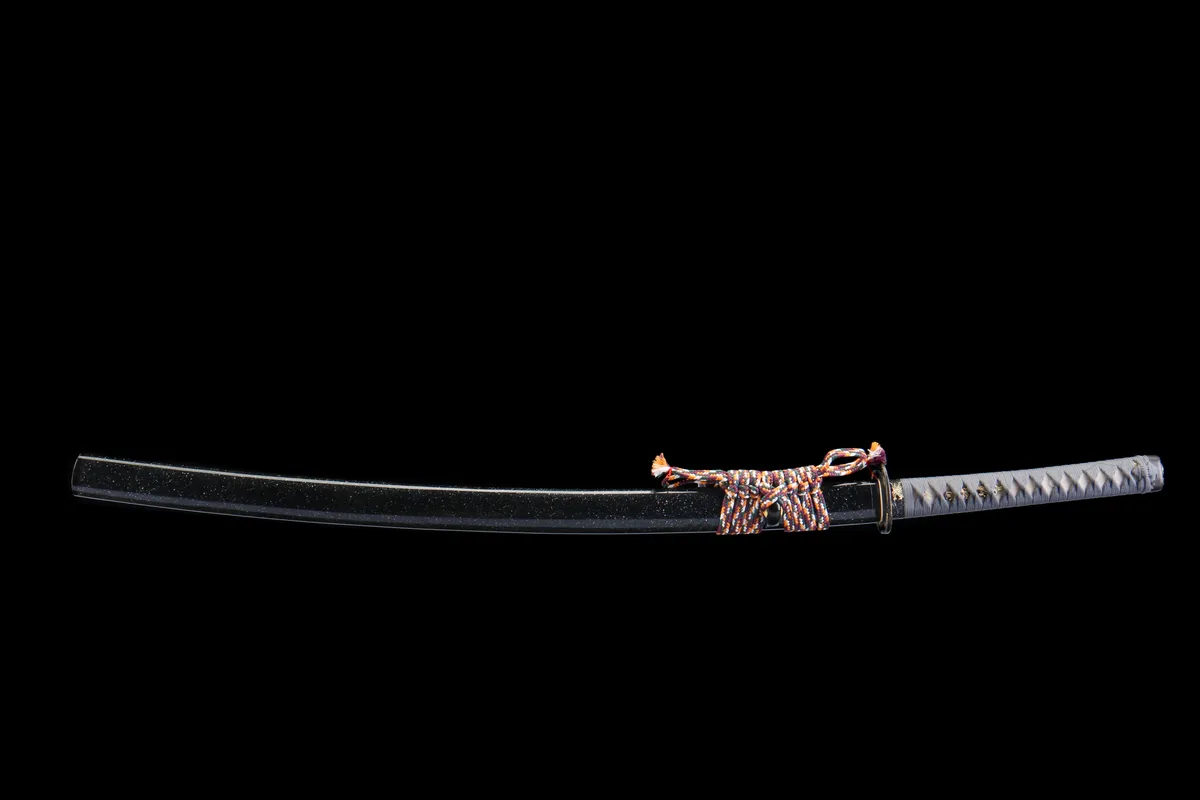
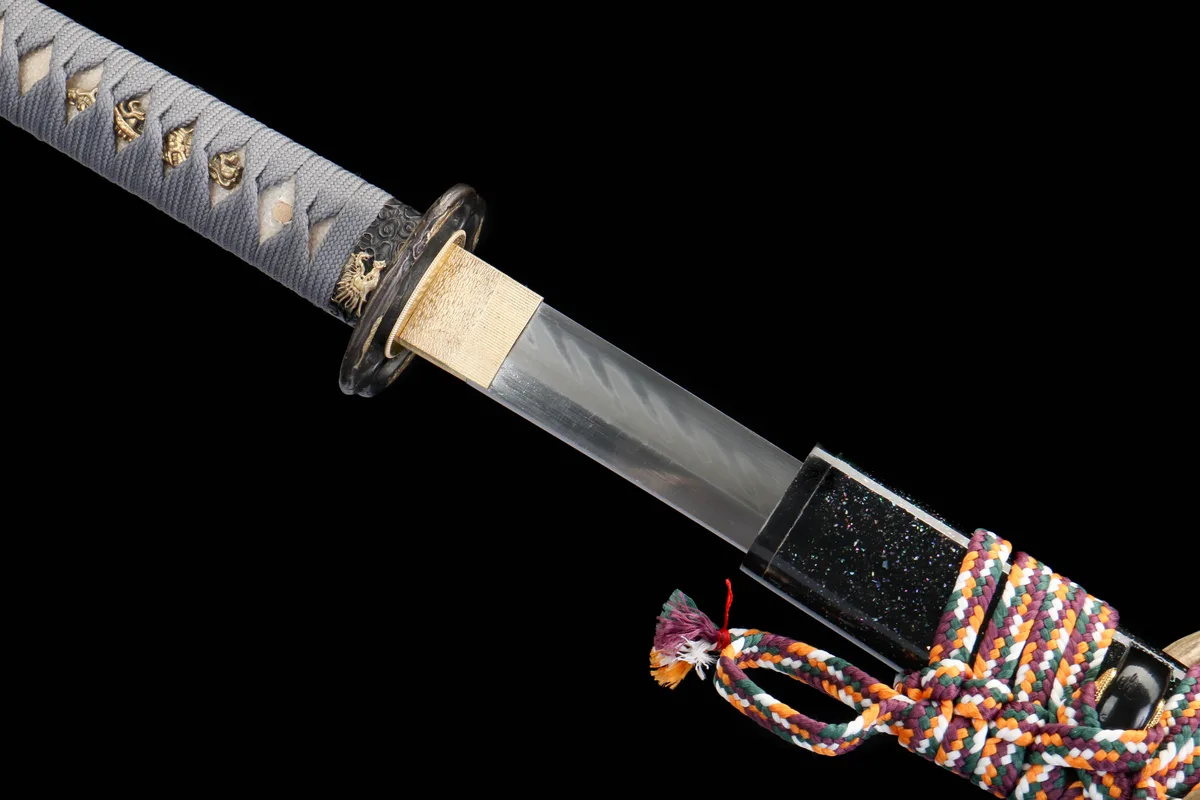
The Autumn Moon Chill arrives wearing its lacquerwork like armor – the 螺钿 (raden) inlay on the saya catching light and returning it fractured, iridescent, alive. Behind that surface lives a T10 tool steel blade that has been clay-tempered the traditional way: spine packed in clay, blade quenched into water, the differential cooling locking in a hard martensitic edge and a tough pearlitic spine in a single, irreversible moment. The yokote line – the crisp geometric boundary separating the blade’s tip plane from the main cutting surface – is cleanly defined, a detail that separates a blade finished with precision from one finished with speed.
Specifications
| Blade Steel | T10 High Speed Tool Steel, Clay Tempered |
| Total Length | 102.0 cm / 40.2 in |
| Blade Length | 72.0 cm / 28.3 in |
| Blade Width | 3.2 cm |
| Blade Thickness | 0.7 cm |
| Weight | 1040 g / 36.7 oz |
| Heat Treatment | Clay Tempering (Differential Hardening) |
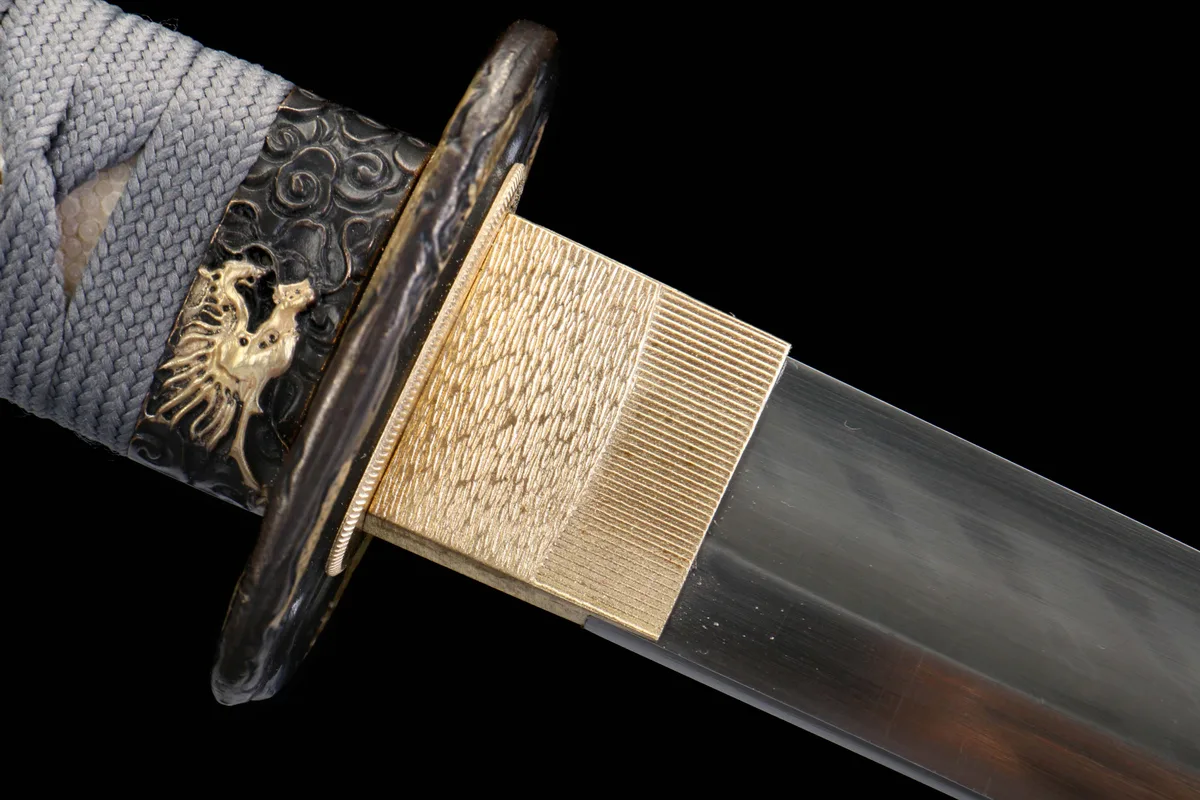
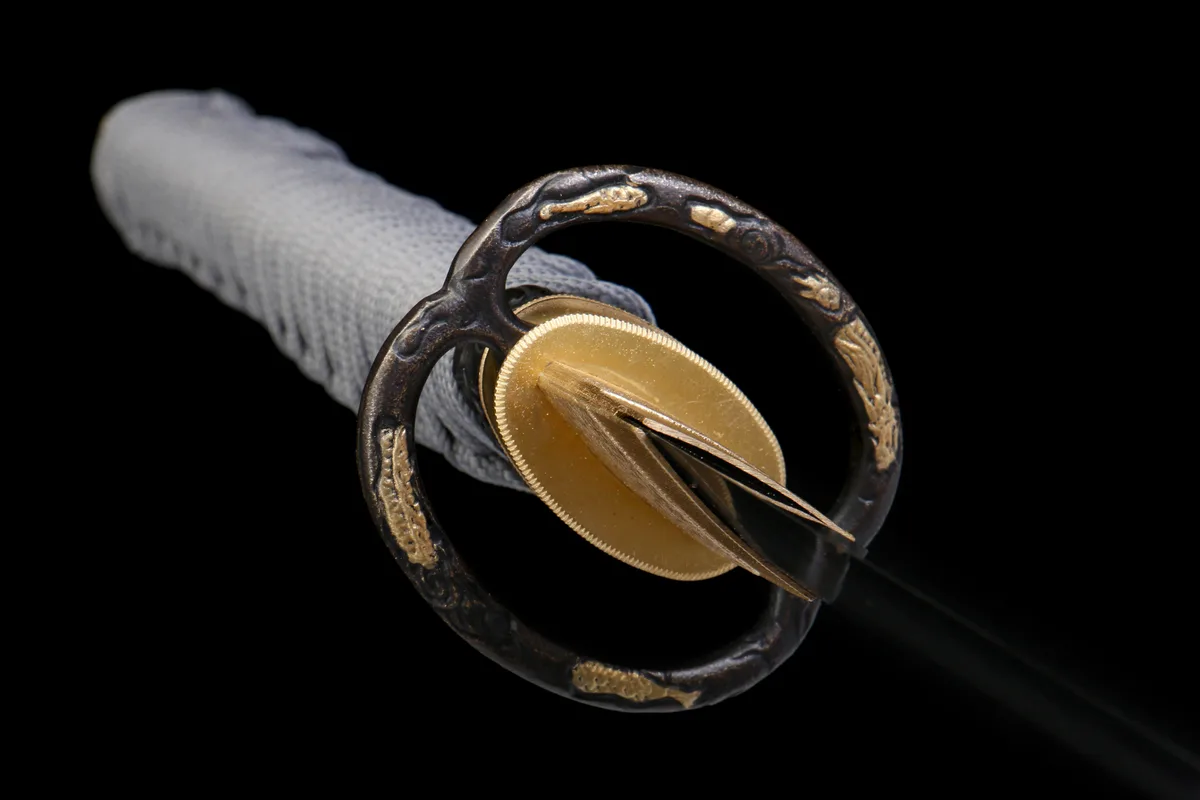
| Fittings | Copper, Gold and Silver Gilded (鎏金银) |
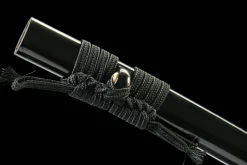
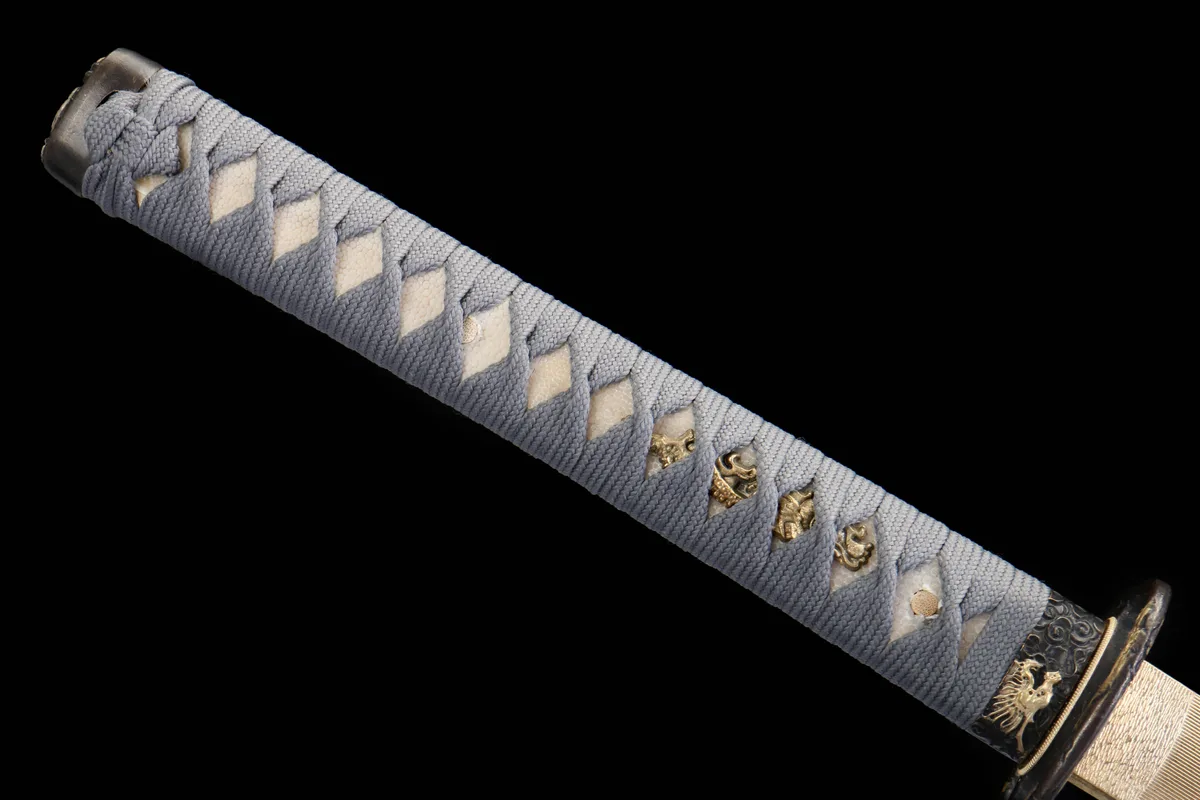
| Handle | Cotton Ito Wrap over Genuine Rayskin (Same) |
| Sheath | Lacquered Raden Shell Inlay Saya (大漆 螺钿鞘) |
The Steel
T10 tool steel carries a tungsten alloying element that standard high-carbon steels do not. That tungsten refines the carbide structure at the molecular level, translating in practice to a finer, more durable cutting edge and measurably better wear resistance under repeated stress. The clay tempering process creates what it has always created: a hamon – the temper line running the length of the blade that marks the boundary between hard and soft. On T10 in particular, that hamon tends toward activity. Expect nie (the granular crystalline activity visible within and along the temper line) and a habuchi (the hamon’s edge) that is neither a flat straight line nor a clean undulation, but something more turbulent – a boundary that seems to move as the blade moves under changing light. The shinogi-zukuri (shinogi-zukuri, or 鎬造) geometry – the classic ridgeline cross-section – is correctly formed here, with the blade’s geometry transitioning cleanly from the flat of the spine to the raised ridge and down through the cutting bevel.
The barb pattern referenced in the Chinese name (倒刺纹, or reverse-barb pattern) describes the grain pattern forged into this blade’s surface – a deliberate, directional texture that is visible before polish and ghosted faintly through it. This is not a decorative application. It is in the steel.
In Your Hands
The handle runs 27.0 cm – longer than a standard katana tsuka – referencing the Musashi (武藏) grip tradition that allows a more extended two-handed purchase. The cotton ito wrap crosses over genuine rayskin (same), and the texture under the palm is firm and nodular where the rayskin nodes press through the diamonds of the wrap. Drawing from the lacquered raden saya, there is the characteristic resistance of a well-fitted koiguchi (the mouth of the scabbard) followed by a clean release – the blade emerging under the gilded fittings and into the line of the hamon, which declares itself immediately in any available light.
Care
Wipe the blade clean after handling using a soft cloth and apply a light coat of choji oil (clove-based mineral oil) to prevent oxidation – T10’s higher carbon content makes it more reactive to humidity than stainless alternatives. Keep the lacquered raden saya away from prolonged direct sunlight, as UV exposure can dull the iridescent shell inlay over time. Re-tighten the mekugi (bamboo handle pin) periodically to ensure the blade remains firmly seated in the handle.
| Weight | 1.32 lbs |
|---|---|
| Dimensions | 102.0 × 3.2 × 0.7 in |
| Hamon | Real Hamon (Clay Tempered) |
| Blade Steel | T10 Tool Steel |
| Total Length | 102.0 cm |
| Blade Length | 72.0 cm |
| Heat Treatment | Clay Tempering (Differential Hardening) |
| Handle Wrap | Cotton Ito Wrap 真鱼皮 |
| Sheath Material | 大漆 螺钿鞘 |
| Fittings | 铜装鎏金银 |
| Forging Style | 鎬造 |
Related products