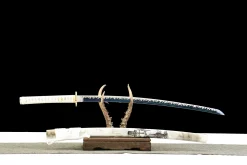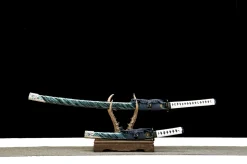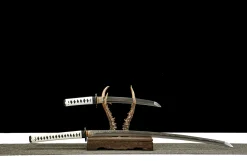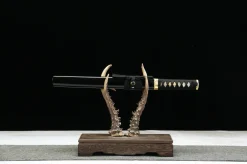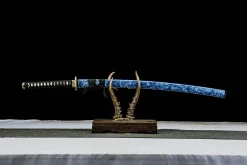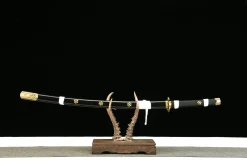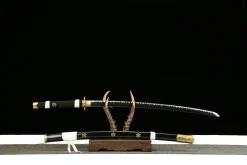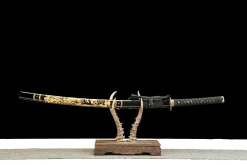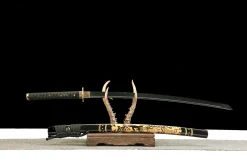


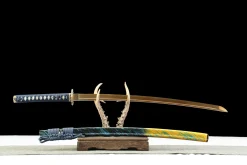
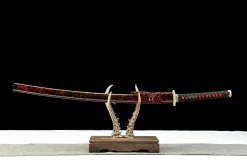

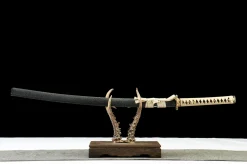


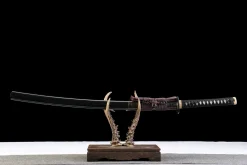








Azure Sky Gilt – Hand Forged T10 Tool Steel Katana Sword
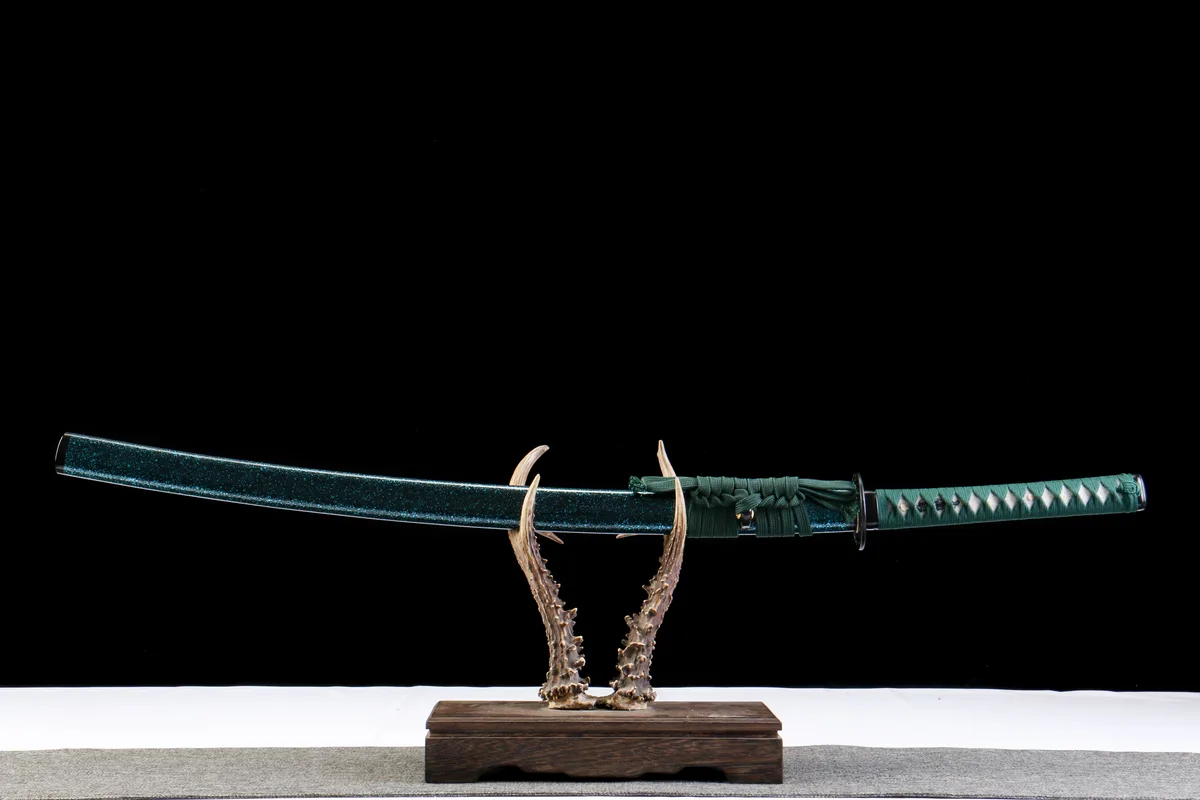
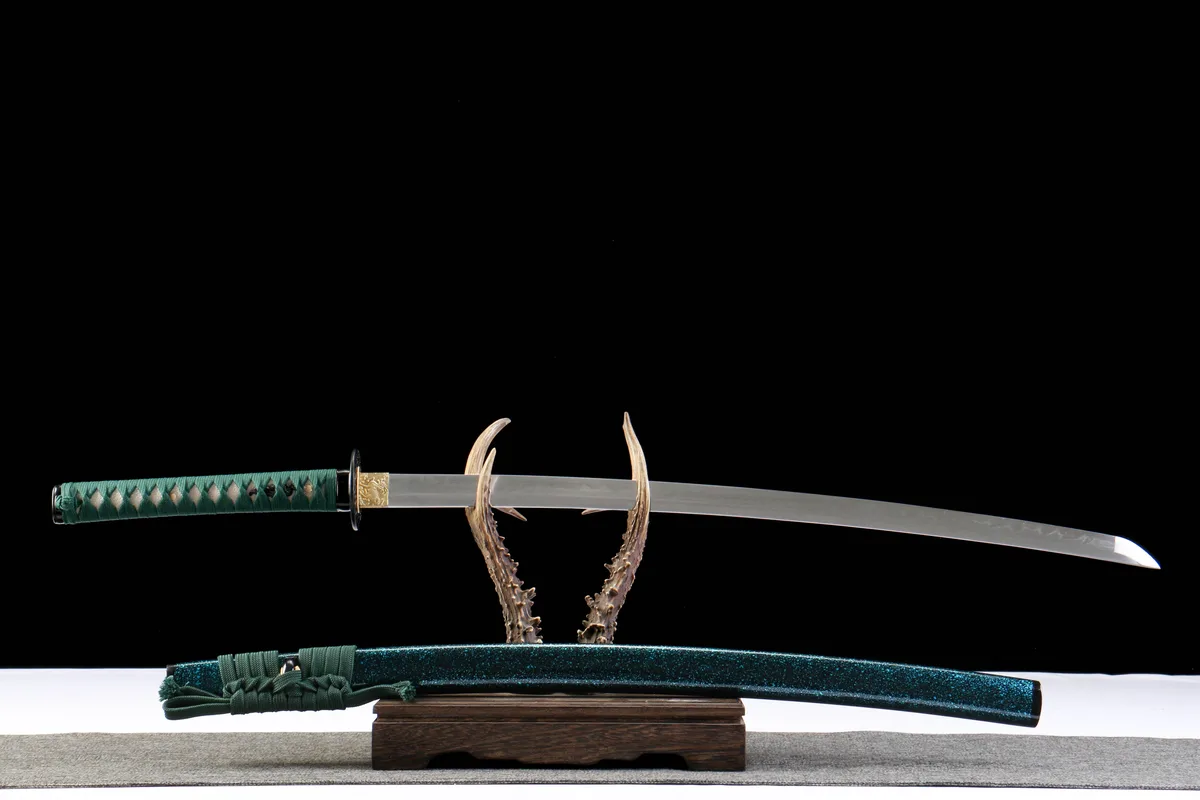
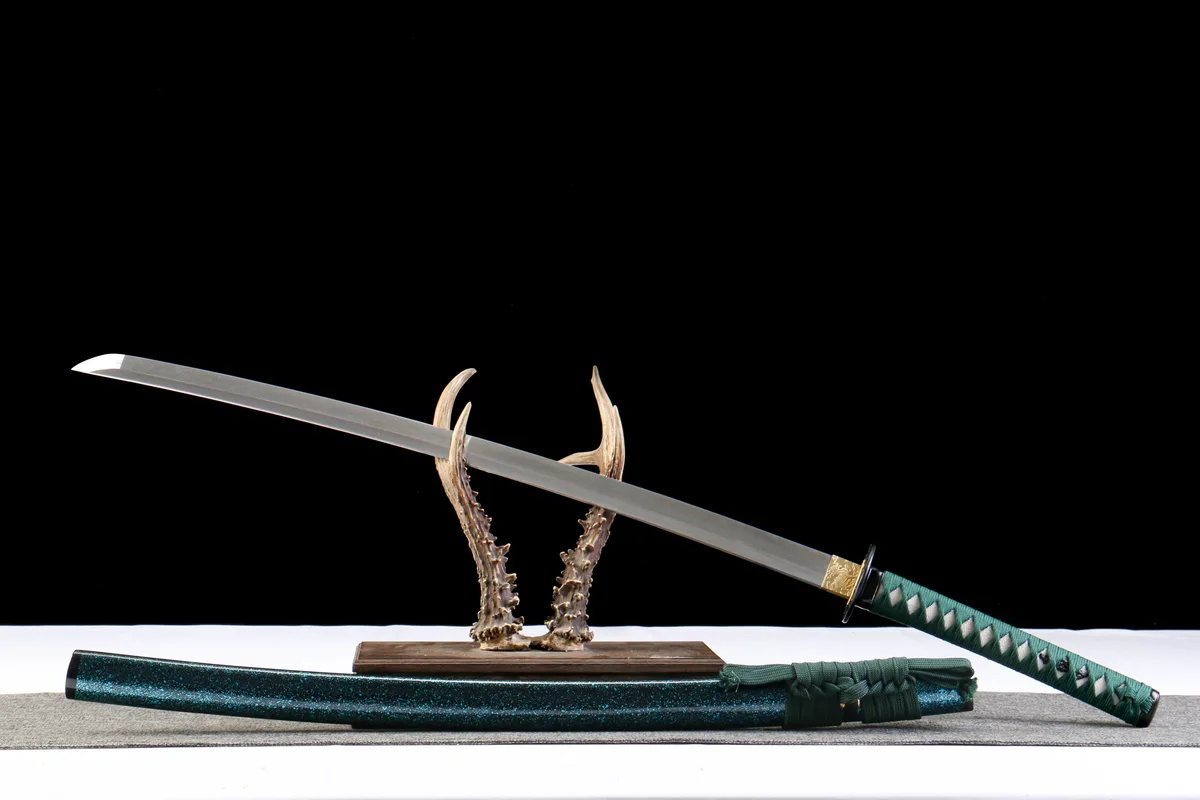
Hand-forged T10 Tool Steel katana (102cm total / 72cm blade), crafted in Longquan. Clay-tempered blade with a genuine hamon line — visible contrast between hardened edge and soft spine.
$479.99
Azure Sky Gilt – Hand Forged T10 Tool Steel Katana Sword
Three-color polishing (san-shoku togi) is a finishing discipline that most production swords never attempt. The Azure Sky Gilt undergoes this multi-stage process to separate the blade’s visual zones – the ji (body surface between the shinogi ridge and the hamon), the ha (edge region), and the shinogi-ji (flat above the ridge) – each receiving a different degree of polish so that light reads differently across the blade depending on the angle. In natural light the sword appears to hold multiple tones simultaneously. That optical effect is not an accident, and it cannot be faked.
Specifications
| Blade Steel | T10 High Speed Tool Steel |
| Total Length | 102.0 cm / 40.2 in |
| Blade Length | 72.0 cm / 28.3 in |
| Blade Width | 3.2 cm |
| Blade Thickness | 0.7 cm |
| Weight | 1040 g / 36.7 oz |
| Heat Treatment | Clay Tempering (Differential Hardening) |
| Fittings | Iron |
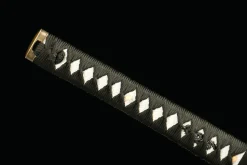
| Handle | Cotton Ito + Genuine Rayskin |
| Sheath | Hardwood, High-Gloss Lacquer |
Forged in Longquan
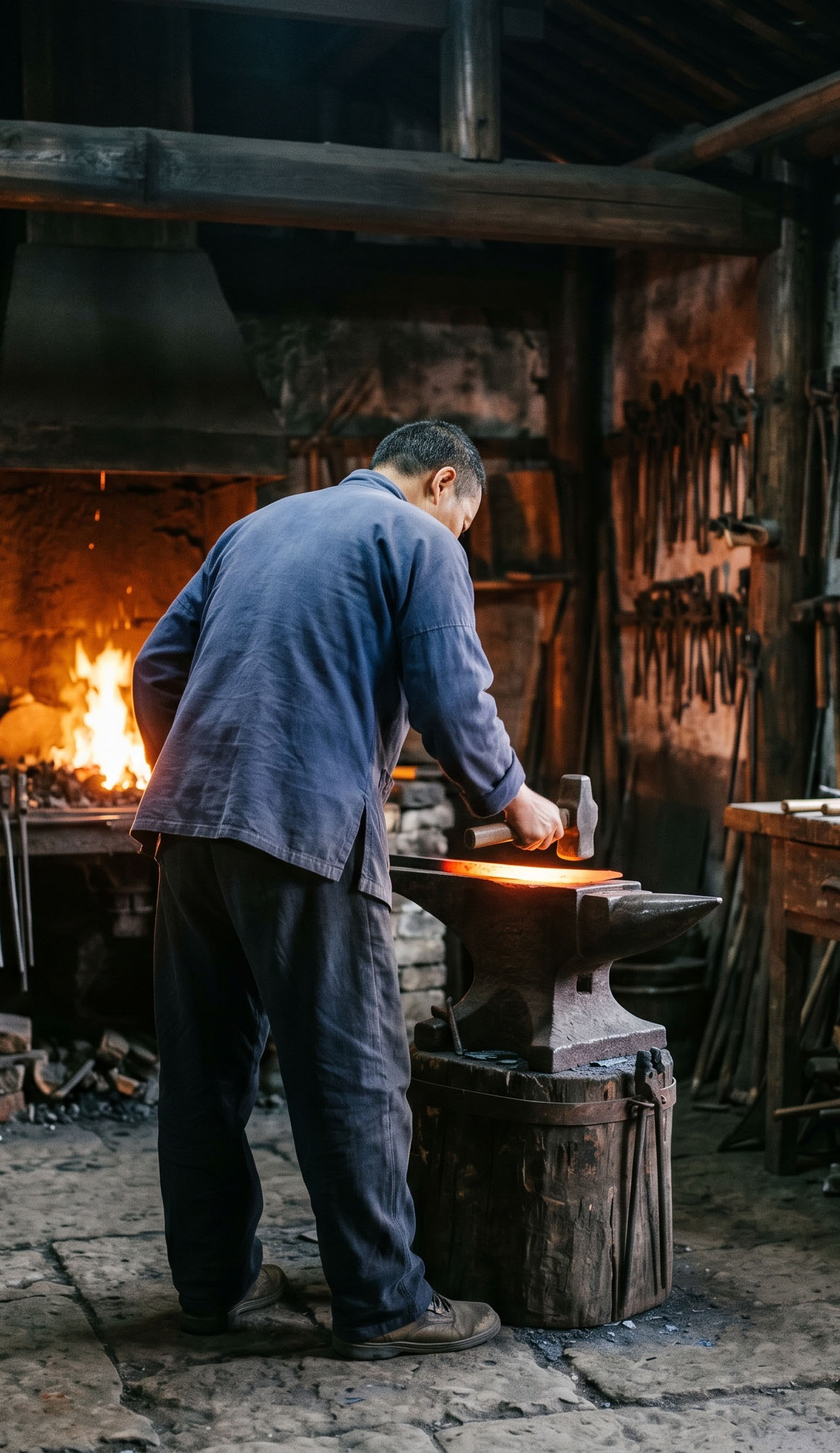
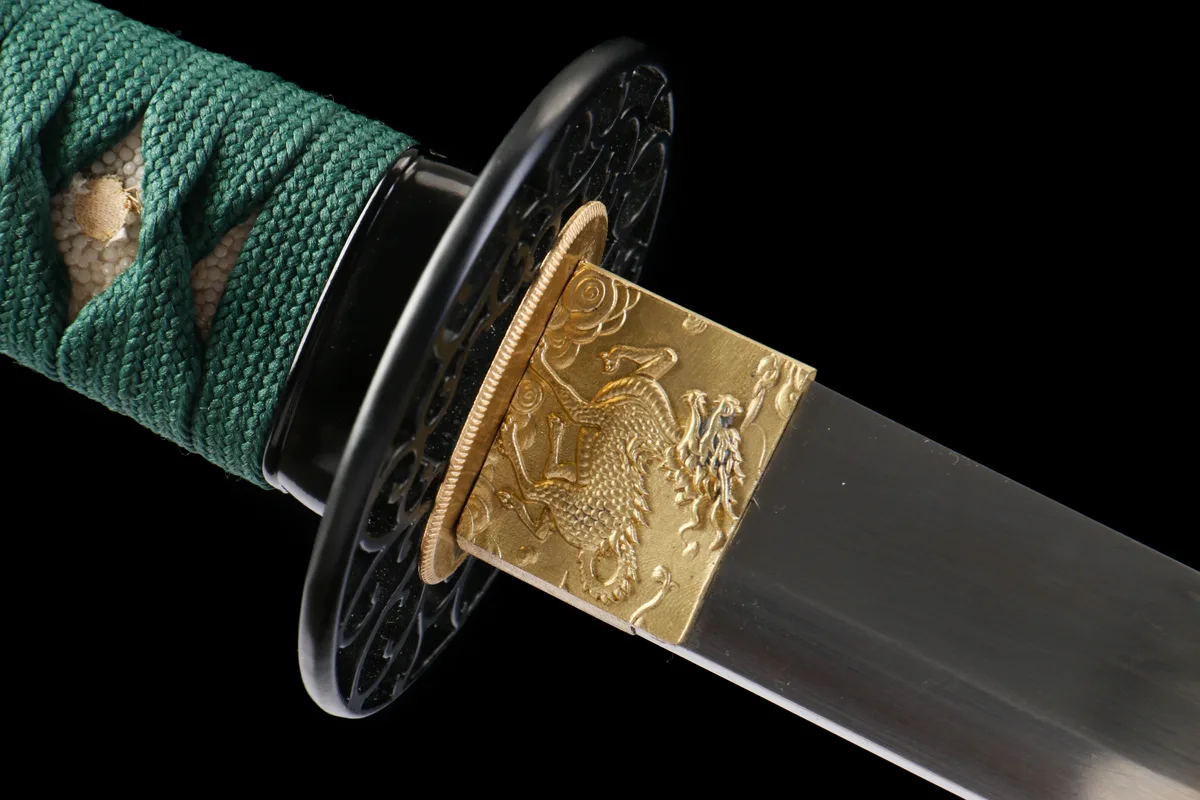
Longquan has been producing edged tools and swords for over 2,600 years – a continuous tradition that means the craftsmen here are not reconstructing a lost art but practicing one that never stopped. The Azure Sky Gilt is forged in shinogi-zukuri (classical ridge-line geometry) from T10 tool steel, a high-carbon alloy with tungsten addition that produces a denser, tighter grain than standard high-carbon steels. The blade is profiled, rough-ground, and prepared before clay is applied to the spine for differential hardening – a process called tsuchioki in Japanese tradition. When the steel is quenched, the clay-coated spine cools slowly and stays tough; the exposed edge cools fast and becomes hard. The boundary between these two zones is the hamon – the temper line – and on T10, that line comes alive with nie, the fine crystalline martensite activity visible under raking light.
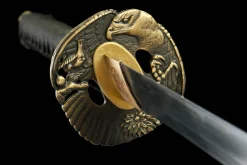
The “azure” in this blade’s name corresponds to the three-color polish finish applied after hardening. The ji zone takes on a subtly different reflective quality from the shinogi-ji, and the ha near the hamon shows its own character entirely. The gilt iron fittings complete the visual logic: restrained, dark, and uncompetitive with the blade’s surface complexity.
Weight, Balance, Draw
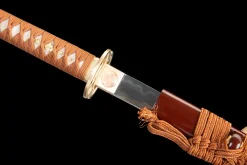
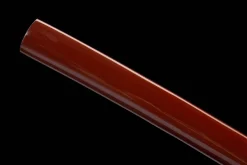
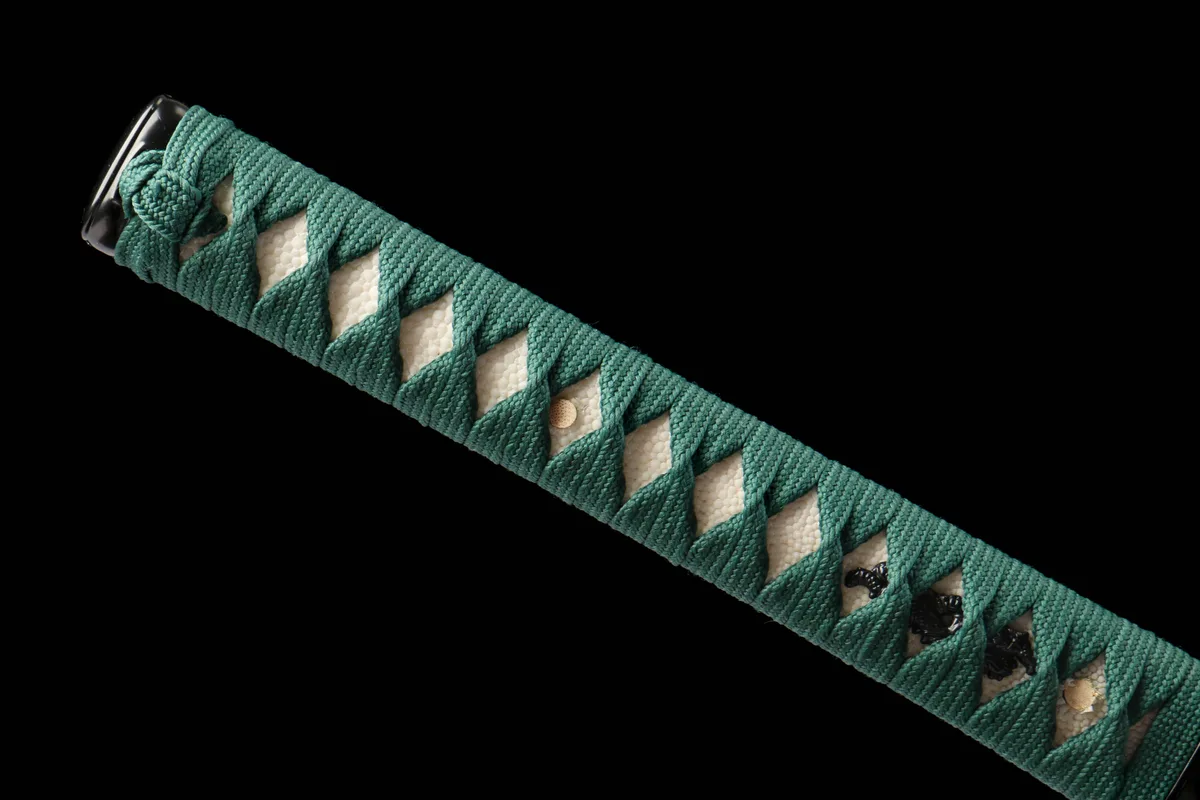
A 26 cm tsuka (handle) gives you substantial purchase – four fingers plus a natural thumb position that supports both wide and tight grip configurations. The genuine rayskin (same) under the cotton ito wrap provides a textured substrate that you can feel through the wrap itself, particularly at the open diamonds where the node relief presses through. At 72 cm, the blade sits at the longer end of the standard katana range, and the shinogi-zukuri profile keeps the cross-section efficient throughout the blade’s length. The high-gloss lacquer saya draws cleanly; there is no excessive tightness at the koiguchi (sheath mouth) and no play when the blade is fully seated.
Keeping It Sharp
Wipe the blade down after every session with a clean, dry cloth, working from mune to ha and from habaki (blade collar) toward the kissaki (tip). Follow with a thin application of choji oil – the traditional clove-mineral blend used for centuries in Japanese sword maintenance – to prevent surface oxidation. Avoid storing the blade in the saya for extended periods in high humidity without periodic oiling, as even lacquered hardwood can retain moisture.
| Weight | 1.32 lbs |
|---|---|
| Dimensions | 102.0 × 3.2 × 0.7 in |
| Hamon | Real Hamon (Clay Tempered) |
| Blade Steel | T10 Tool Steel |
| Total Length | 102.0 cm |
| Blade Length | 72.0 cm |
| Heat Treatment | Clay Tempering (Differential Hardening) |
| Handle Wrap | Cotton Ito + Genuine Rayskin |
| Sheath Material | Hardwood (High-Gloss Lacquer) |
| Fittings | Iron |
| Forging Style | 鎬造 |
Related products