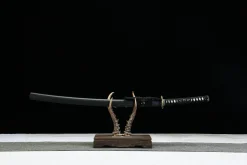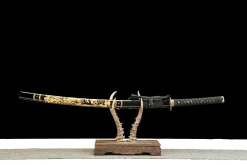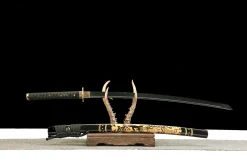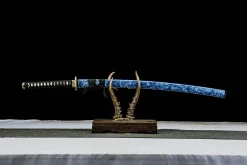
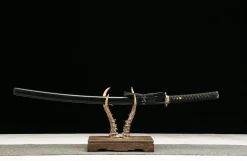
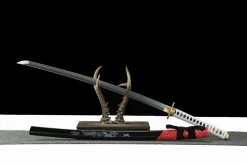









Azure Tide – Hand Forged 1065 Carbon Steel Katana Sword
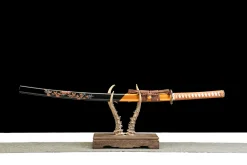
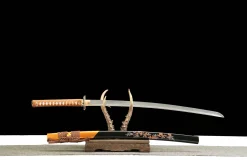
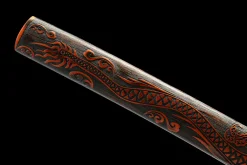
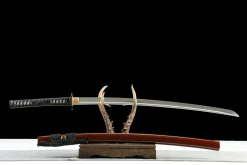
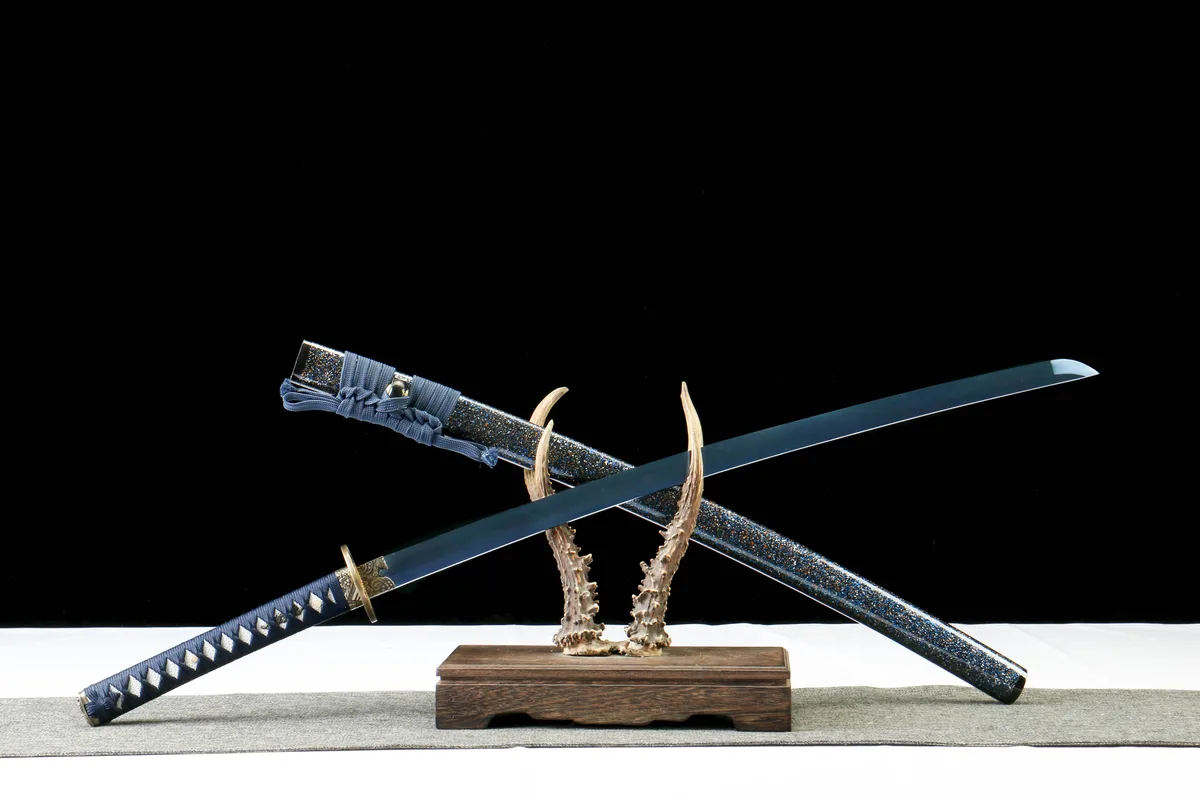
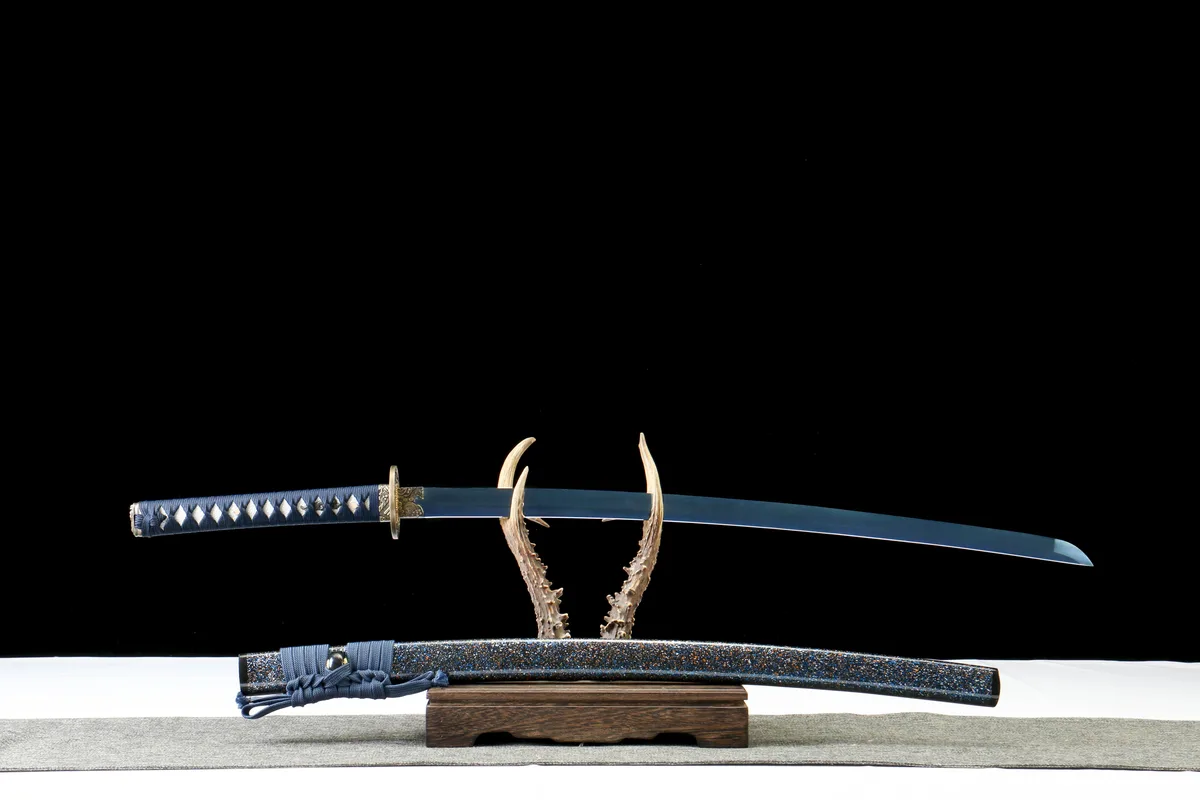
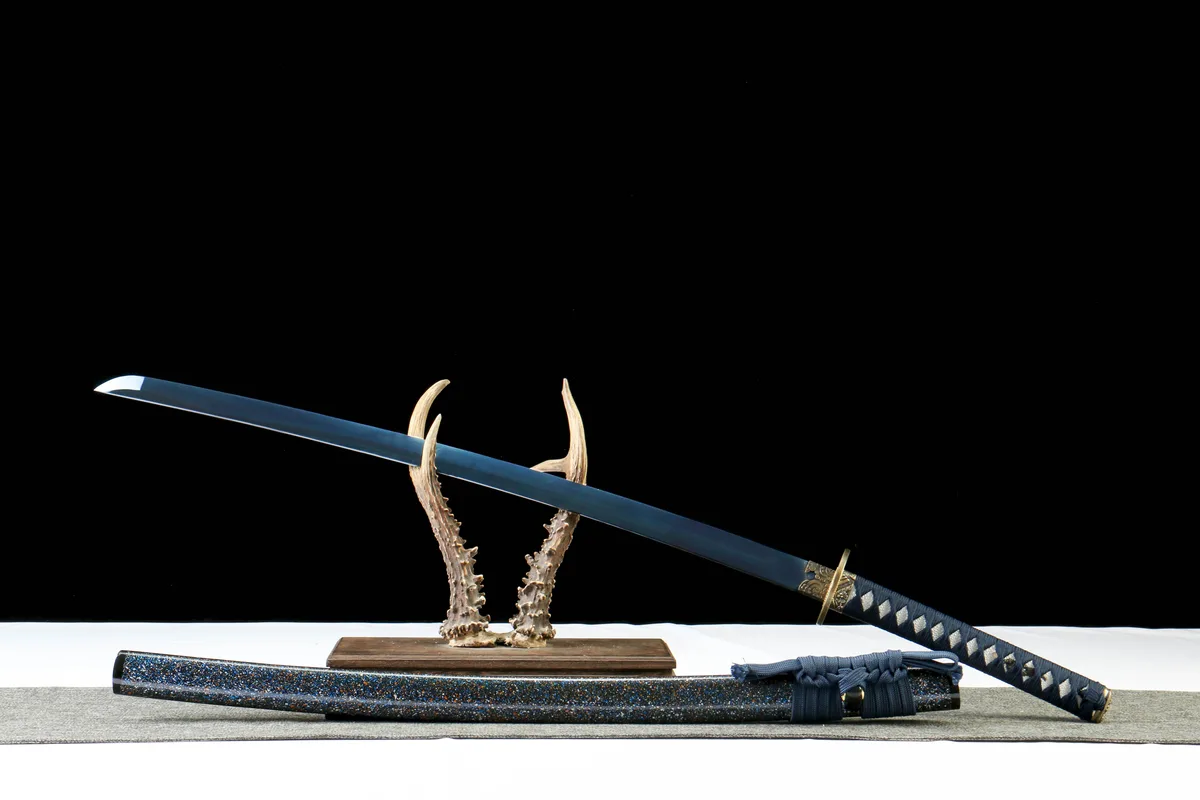
Hand-forged 1065 Carbon Steel katana (103cm total / 72cm blade), crafted in Longquan. Full-tang construction with traditional fittings and hand-lacquered saya.
$199.99
Azure Tide – Hand Forged 1065 Carbon Steel Katana Sword
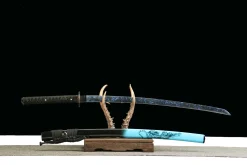
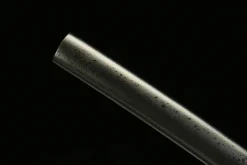
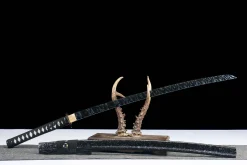
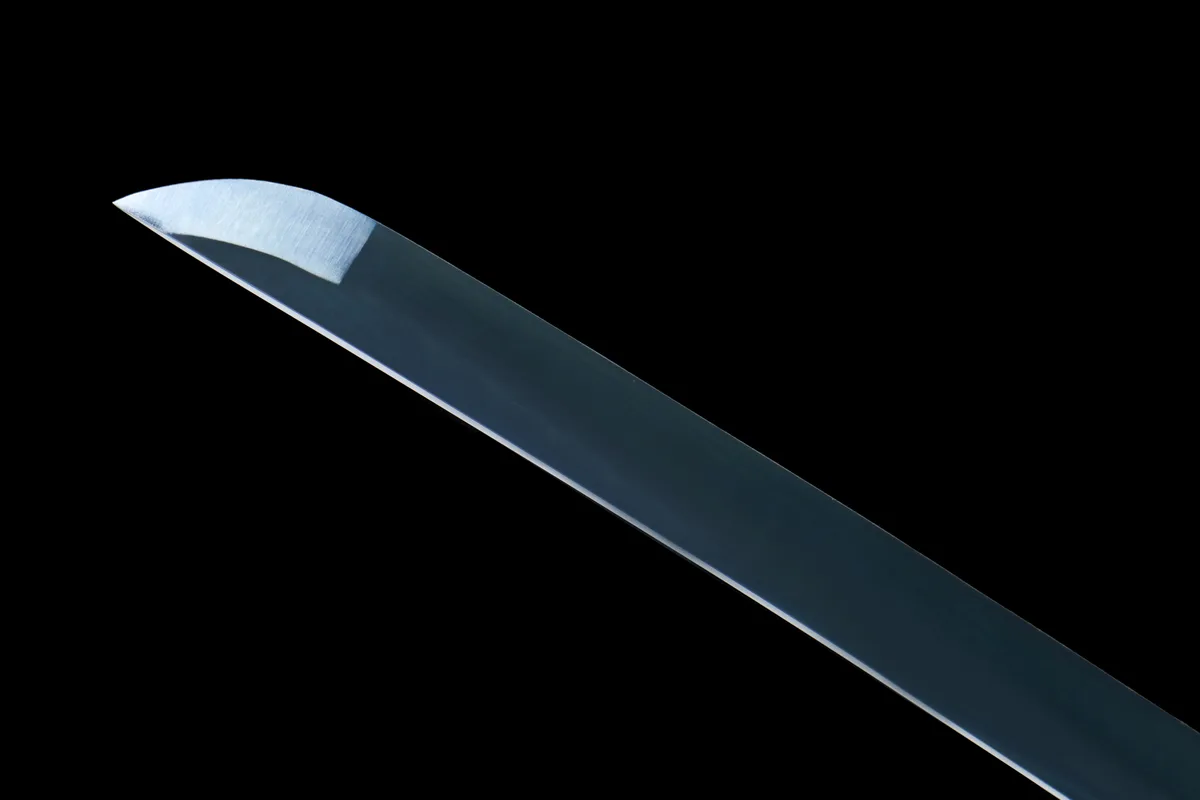
The 烤蓝 (baked-blue) finish on the Azure Tide / 苍海鸣涛 is not a cosmetic afterthought. It is a controlled thermal oxidation of the 1065 high carbon steel surface, producing a blue-to-black gradient that shifts in character with the light – deep cobalt under direct illumination, near-black in shadow. Underneath that finish is a blade built to work.
Specifications
| Blade Steel | 1065 High Carbon Steel (烤蓝 baked-blue finish) |
| Total Length | 103.0 cm / 40.6 in |
| Blade Length | 72.0 cm / 28.3 in |
| Blade Width | 3.2 cm |
| Weight | 950 g / 33.5 oz |
| Heat Treatment | Oil Quench & Temper |
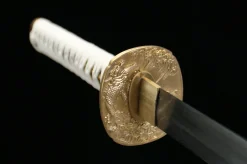
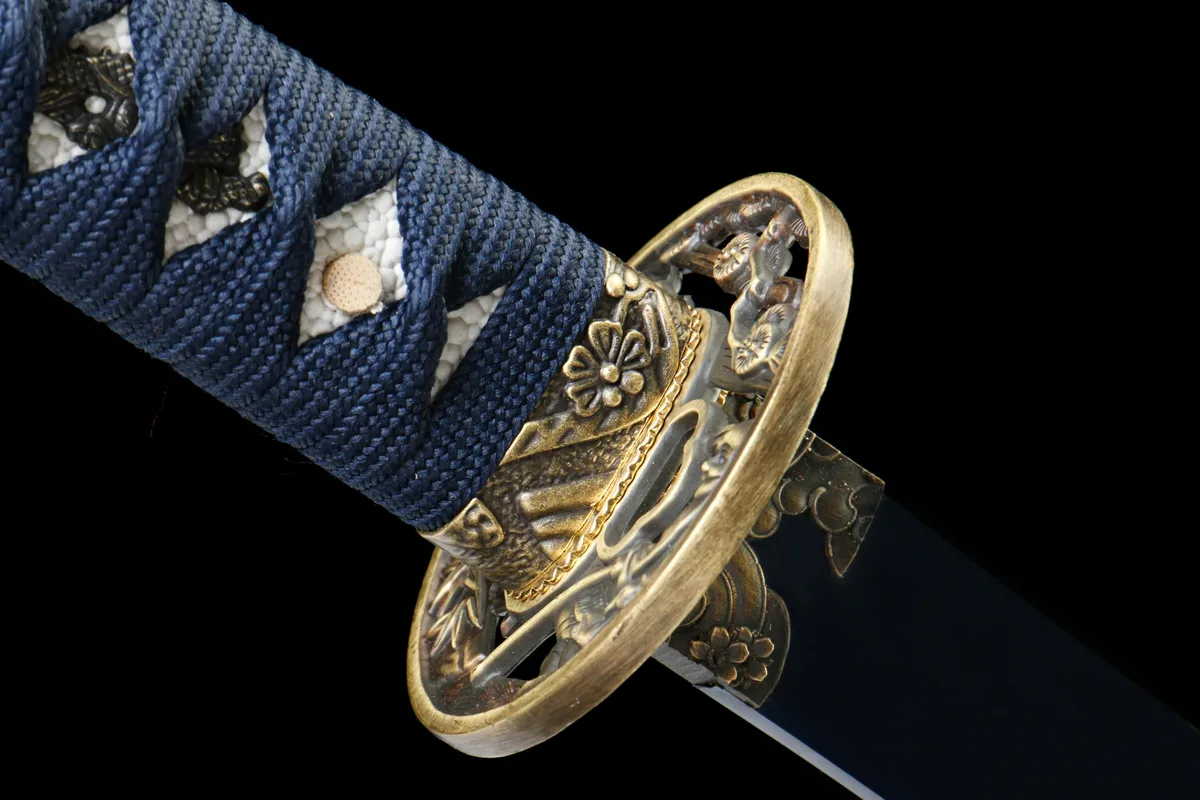
| Fittings | Zinc Alloy |
| Handle | Cotton Ito Wrap |
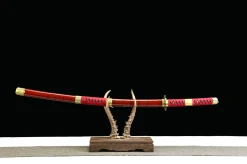
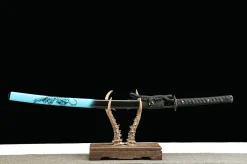
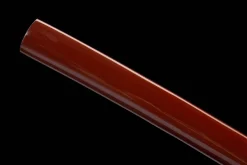
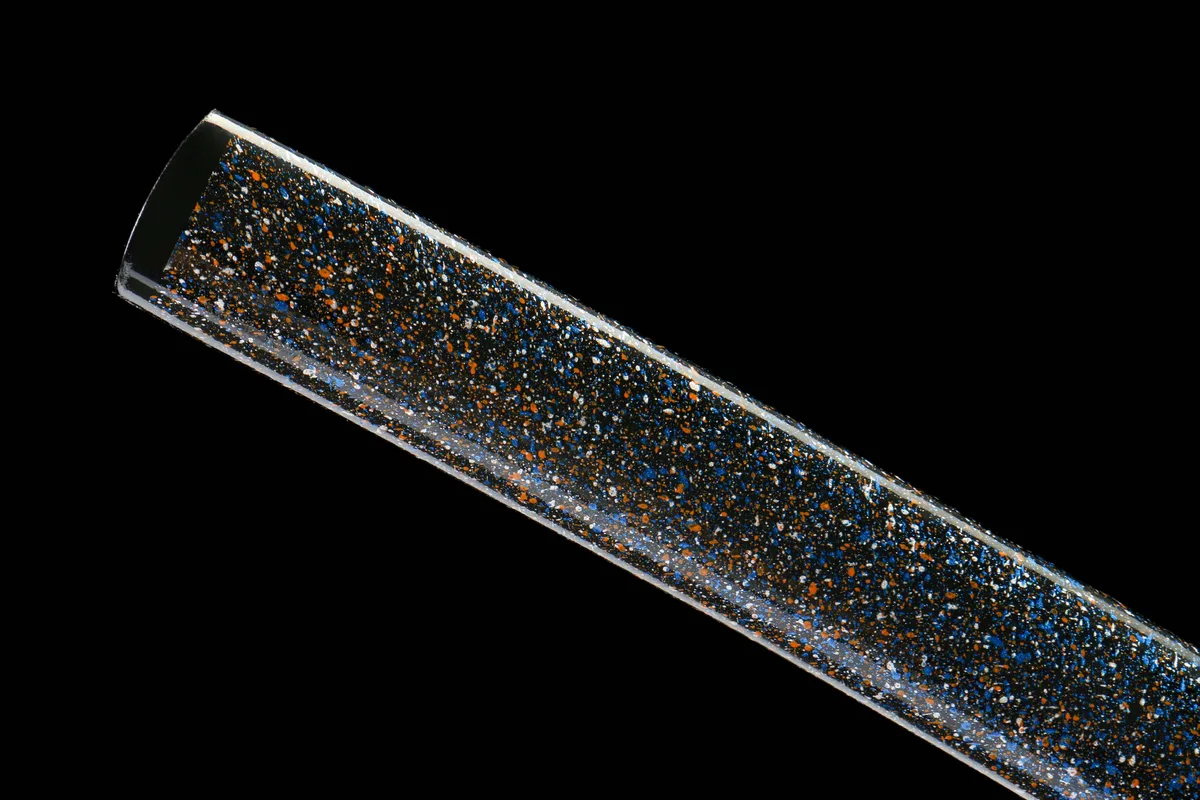
| Sheath | Green Bark Wood – Aohada |
What the Steel Does
1065 high carbon steel responds well to oil quench and temper. The resulting hardness – typically in the 58-60 HRC range for well-executed production at this carbon level – gives you an edge that holds its geometry through repeated cutting without the brittleness that comes from pushing past 62 HRC. The shinogi-zukuri (ridgeline) grind geometry reinforces this: the raised spine ridge stiffens the blade laterally, so the edge does not flex or roll under load. At 3.2 cm width and 0.7 cm spine thickness, the cross-section is robust without being sluggish through the cut.
The 烤蓝 surface oxidation provides a light degree of corrosion resistance compared to bare polished steel, but it is not a substitute for regular maintenance. It does, however, mean the blade arrives with a surface that is already sealed against the minor humidity exposure of normal handling and storage.
The Feel of It
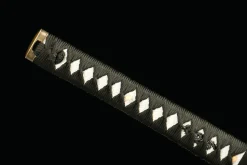
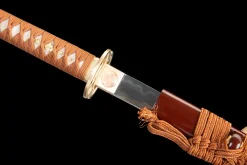
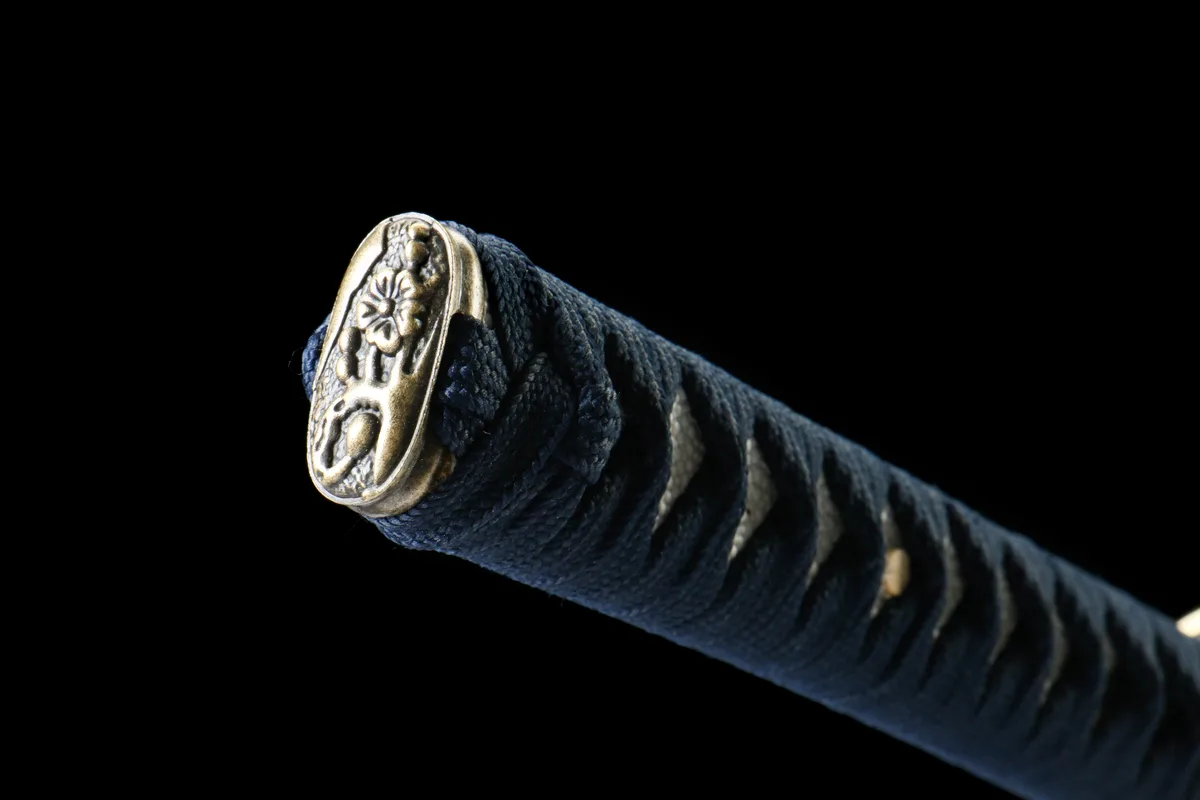
At 72 cm nagasa (blade length) with a 27 cm tsuka (handle), the proportions sit squarely in the classical katana range – enough blade to generate cutting arc, enough handle to anchor a two-hand grip with neither hand compromised. The cotton ito wrap, wound over same-kawa (rayskin) beneath, develops grip texture under pressure rather than losing it. Your fingers read the diamond-pattern nodes of the rayskin through the cotton during a sustained session – a tactile anchor that synthetic wraps cannot replicate. The Aohada (green bark wood) saya draws cleanly, the koiguchi (sheath mouth) fitting close enough to prevent rattle without dragging on the draw.
Maintenance Notes
Wipe the blade clean after every use and apply a thin coat of choji oil (clove-infused mineral oil, traditional for Japanese blades) or food-grade mineral oil before storage. The 烤蓝 oxidation layer will develop its own patina over time, which is characteristic of the finish. Store horizontally in the saya in a dry environment – humidity is the primary enemy of any high-carbon steel blade.
| Weight | 1.2 lbs |
|---|---|
| Dimensions | 103.0 × 3.2 × 0.7 in |
| Hamon | Decorative / Acid-Etched |
| Blade Steel | 1065 Carbon Steel |
| Total Length | 103.0 cm |
| Blade Length | 72.0 cm |
| Heat Treatment | Oil Quench & Temper |
| Handle Wrap | Cotton Ito Wrap |
| Sheath Material | Green Bark Wood (Aohada) |
| Fittings | Zinc Alloy |
| Forging Style | Shinogi-Zukuri (Ridgeline) |
Related products