




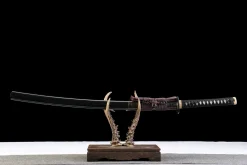



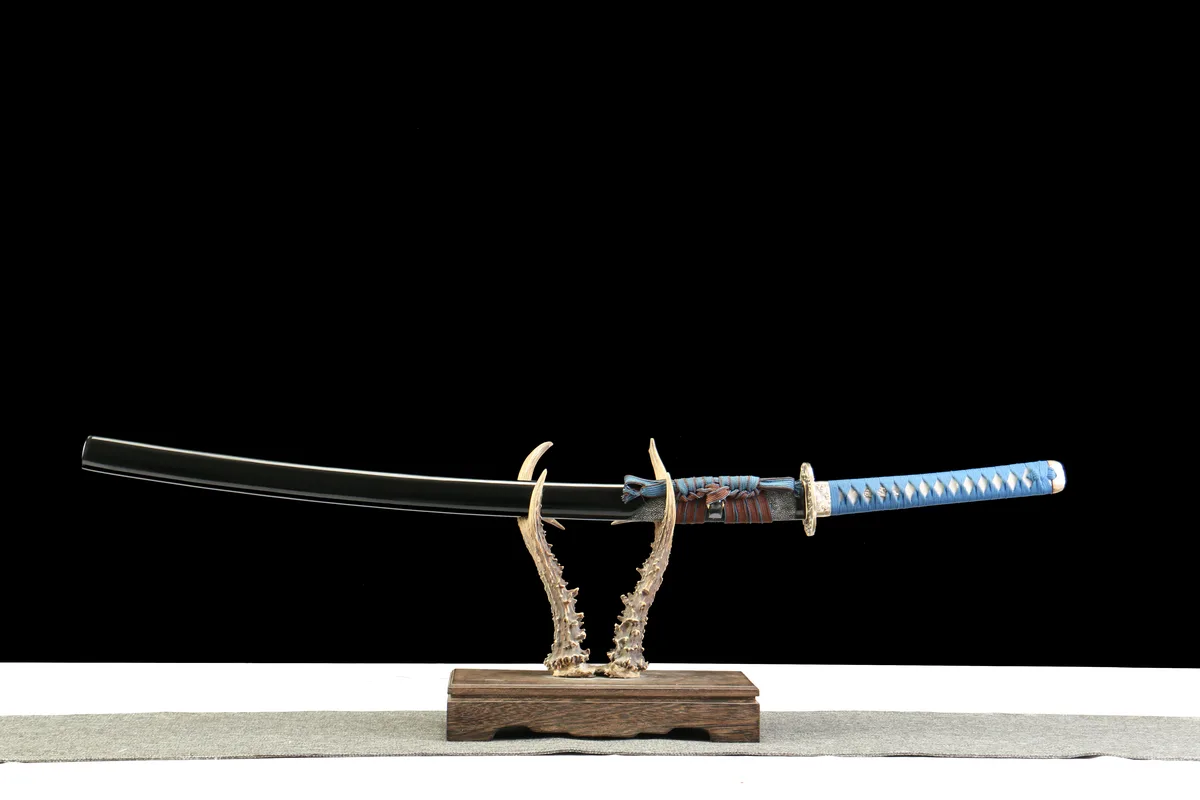
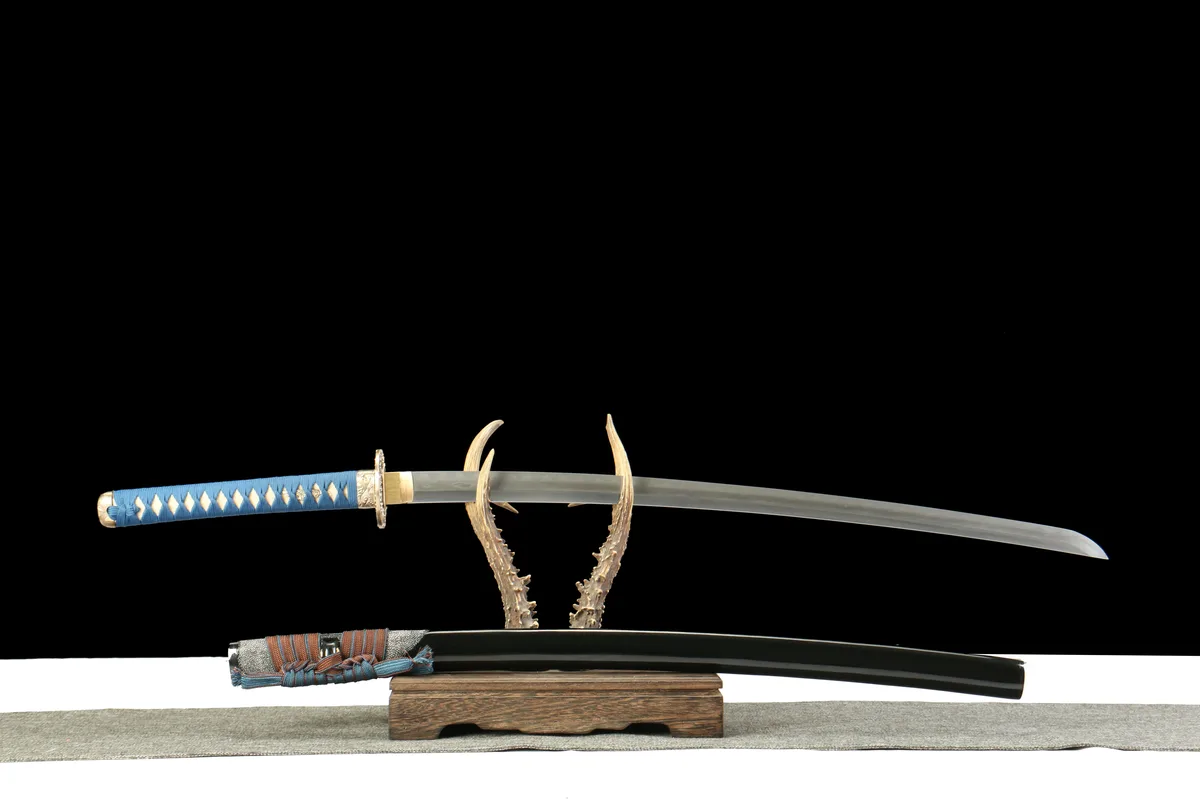
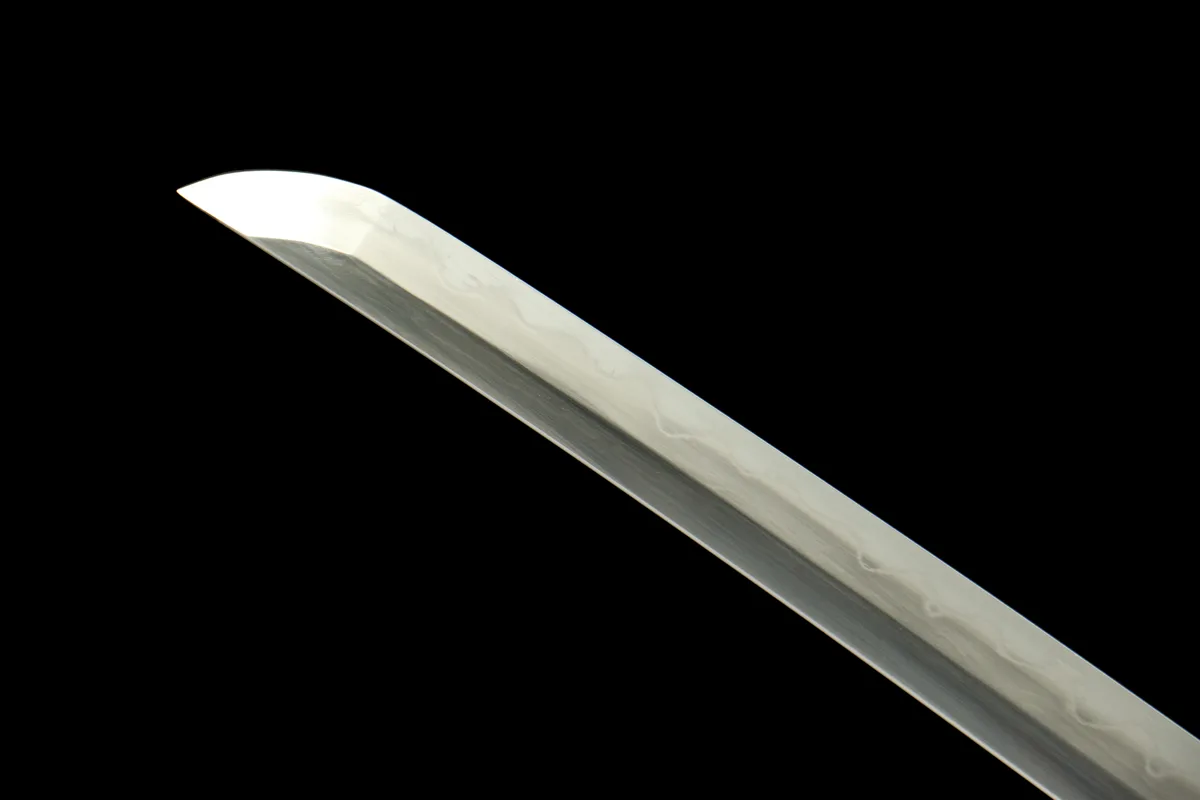
Azure Void – Hand Forged Artisan Hand-Forged Steel Katana Sword
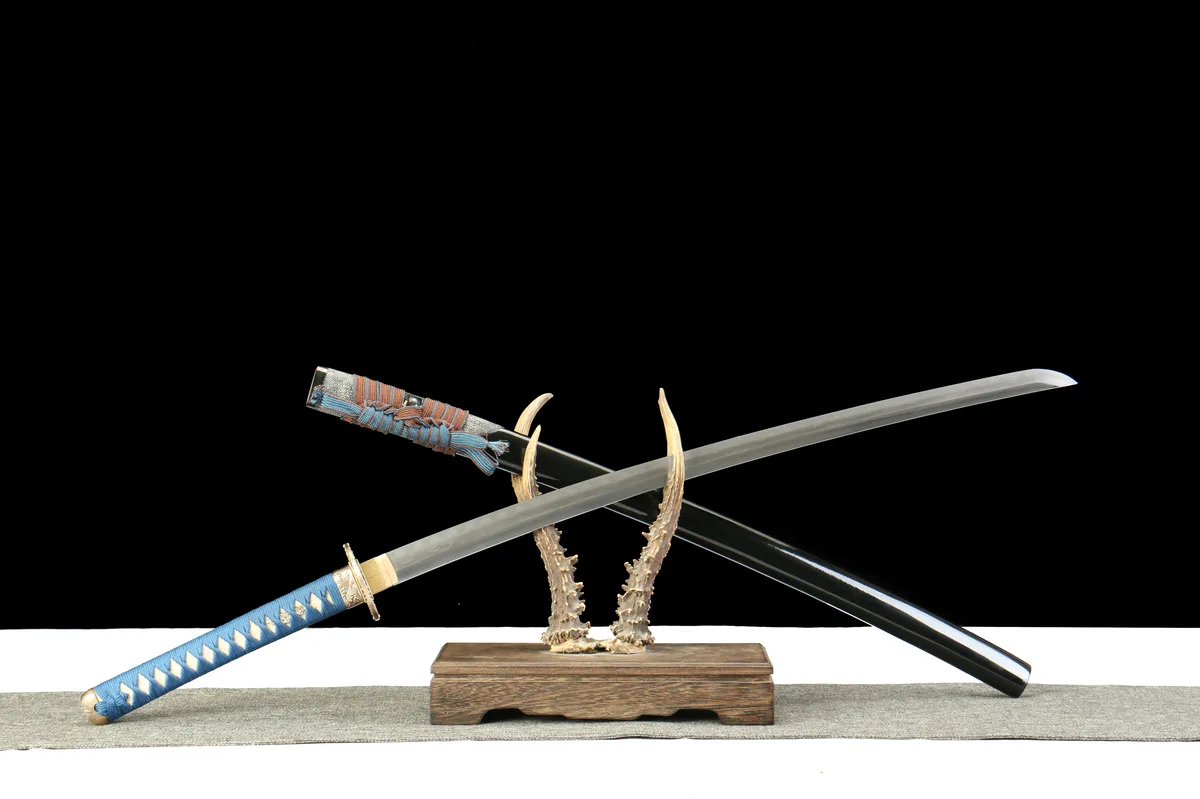
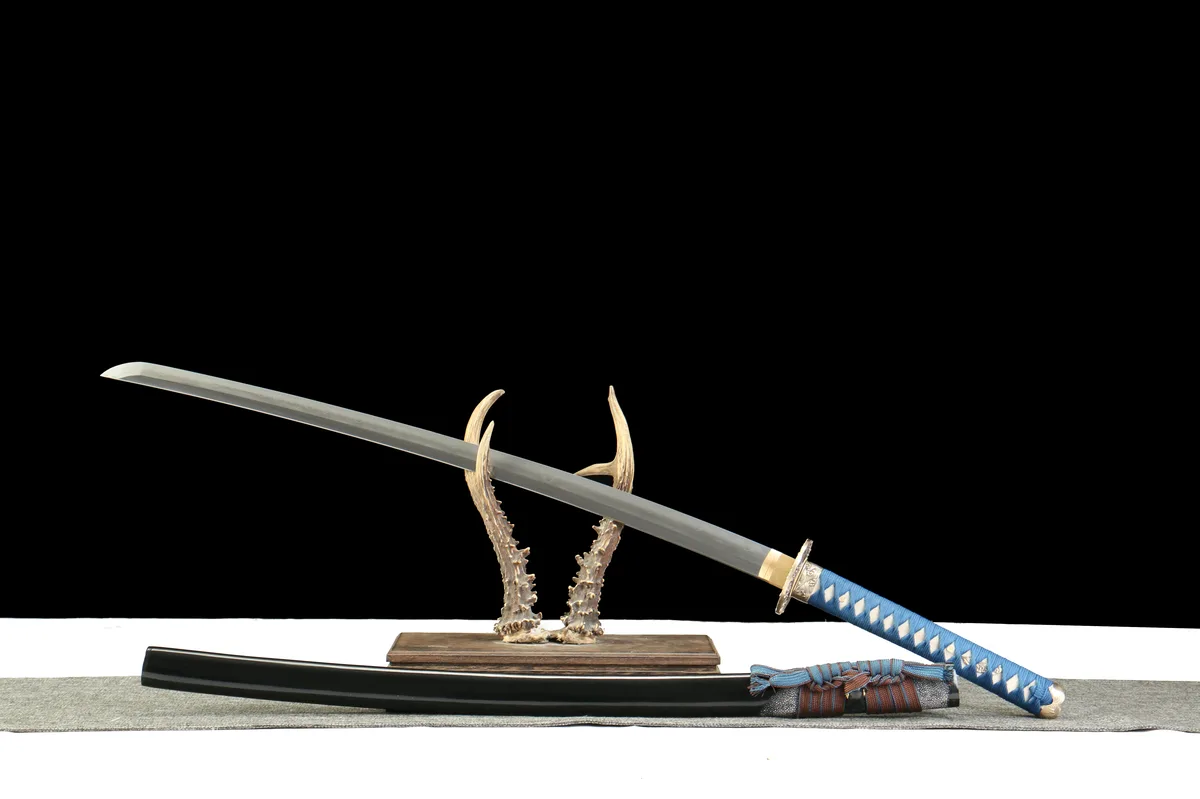
Hand-forged Artisan Hand-Forged Steel katana (103cm total / 72cm blade), crafted in Longquan. Full-tang construction with traditional fittings and hand-lacquered saya.
$3,149.99
Azure Void – Hand Forged Artisan Hand-Forged Steel Katana Sword
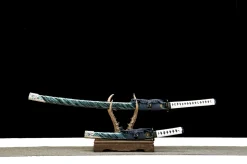
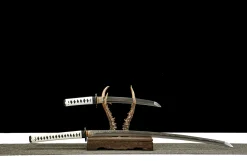
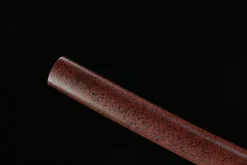
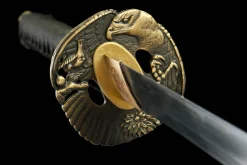
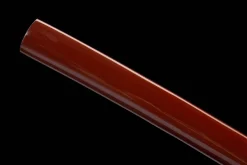
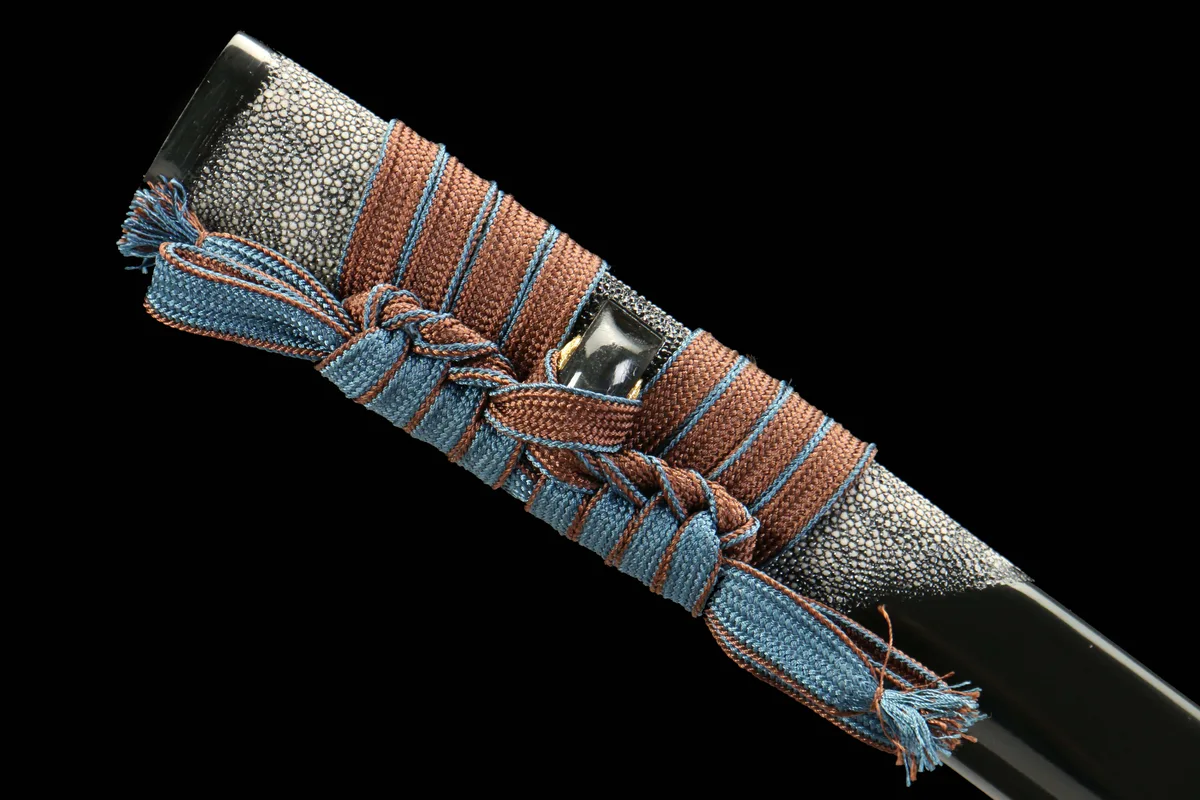
自炼钢 – forge-refined steel, worked and re-worked by hand until the smith decides it is ready – is not a specification you will find on a production catalogue sheet. It is a declaration of intent. The Azure Void, 青冥, is built on that declaration: a 72 cm shinogi-zukuri blade ground to a geometry that only emerges when a smith is answerable to no production schedule, only to the steel itself. The half-wrap rayskin saya, 半包鞘, leaves the upper portion of the sheath open to expose the raw texture of same – the grainy, calcified skin of the ray – against the polished copper fittings, and the visual tension in that contrast tells you, before you even draw the blade, that this piece was designed by someone who thinks about every surface.
Specifications
| Blade Steel | 自炼钢 (Forge-Refined Hand-Worked Steel) |
| Total Length | 103.0 cm / 40.6 in |
| Blade Length | 72.0 cm / 28.3 in |
| Blade Width | 3.2 cm |
| Blade Thickness | 0.7 cm |
| Weight | 950 g / 33.5 oz |
| Heat Treatment | Oil Quench & Temper |
| Fittings | Copper |
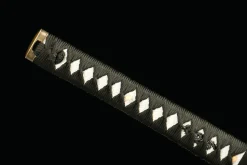
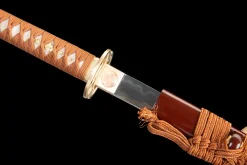
| Handle | Cotton Ito Wrap |
| Sheath | Rayskin (Same), Half-Wrap Saya (半包鞘) |
The Steel
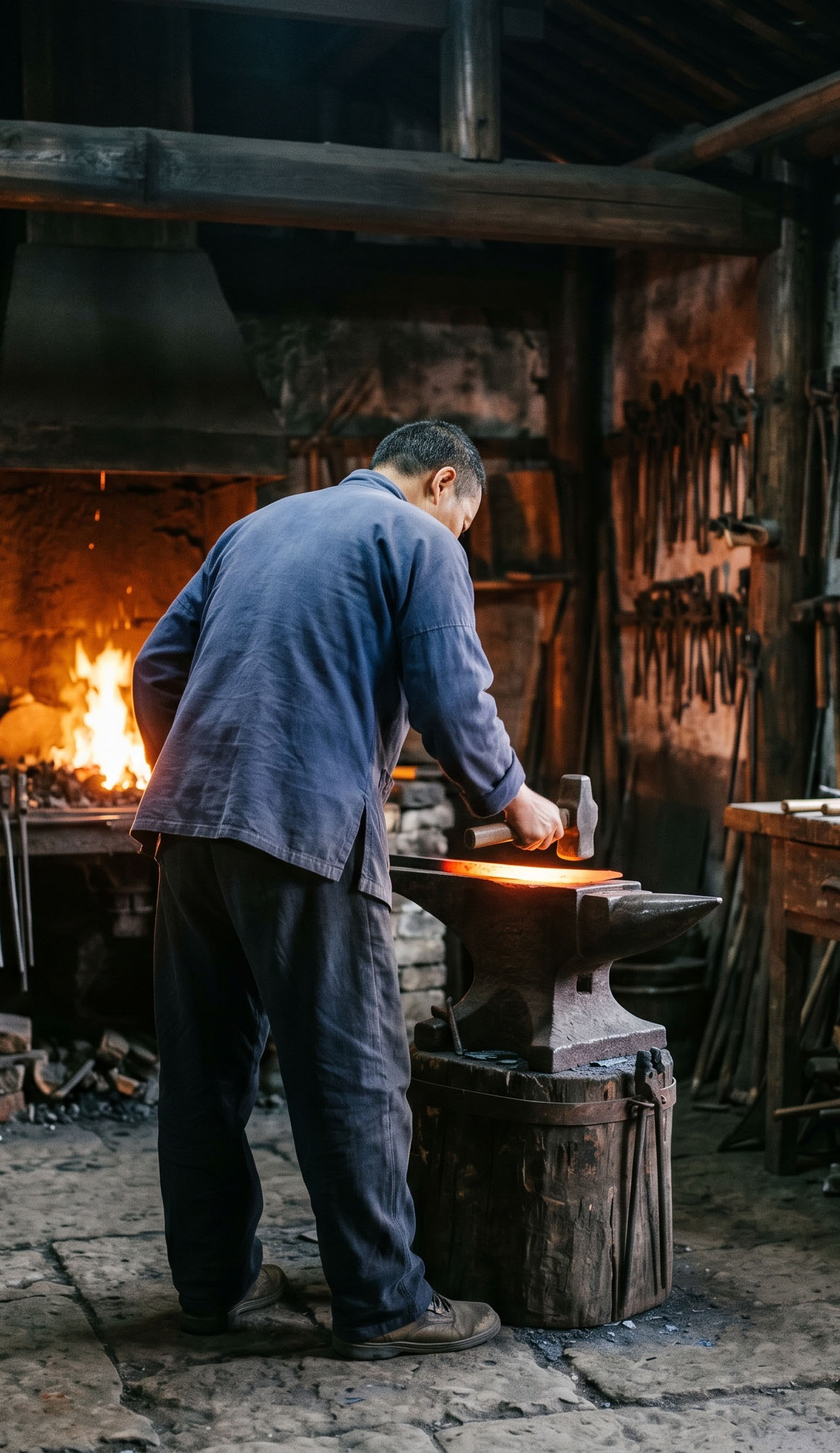
自炼钢 means the smith begins with raw material and refines it through repeated heating, folding, and consolidation until the carbon distribution satisfies his own standard – not a published specification. The result is a blade whose internal grain structure is the product of accumulated decisions rather than a mill certificate. Oil quenching arrests the transformation of austenite to martensite at a controlled rate, producing a blade that holds a working edge without the brittleness that water quenching introduces. The shinogi-zukuri profile – the classic ridgeline construction that defines the katana form – gives the 3.2 cm wide blade a cross-section that transitions from a thick spine at 0.7 cm down to a thin, acute edge bevel. That geometry is not decorative. It is the reason the blade moves through resistance the way it does.
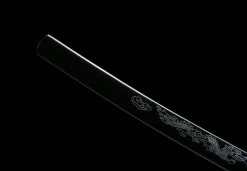
The oil-quenched surface of 自炼钢 reads differently from normalized or machine-ground steel. There is a depth to the finish, a subtle variation in how light rolls across the flat ji (the surface between the ridgeline and the edge) versus how it catches on the shinogi itself. This is steel that has been worked, and you can see it.
In Your Hands
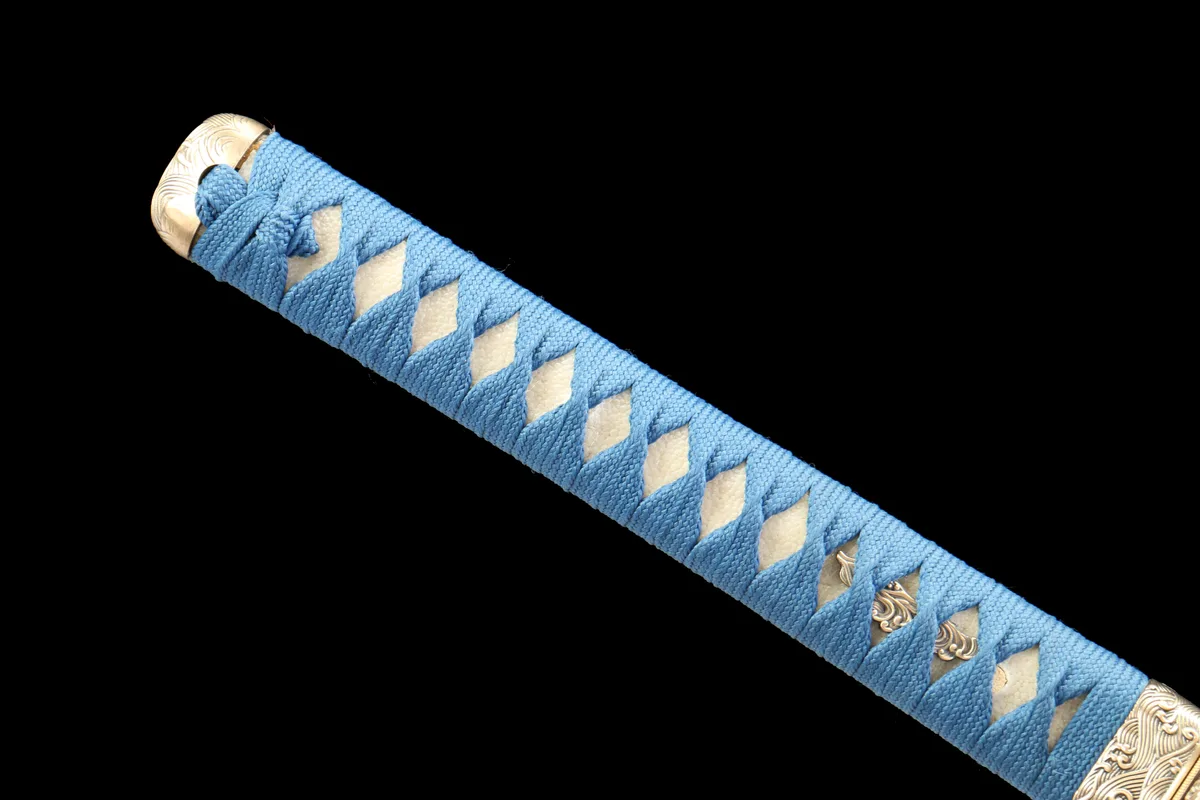
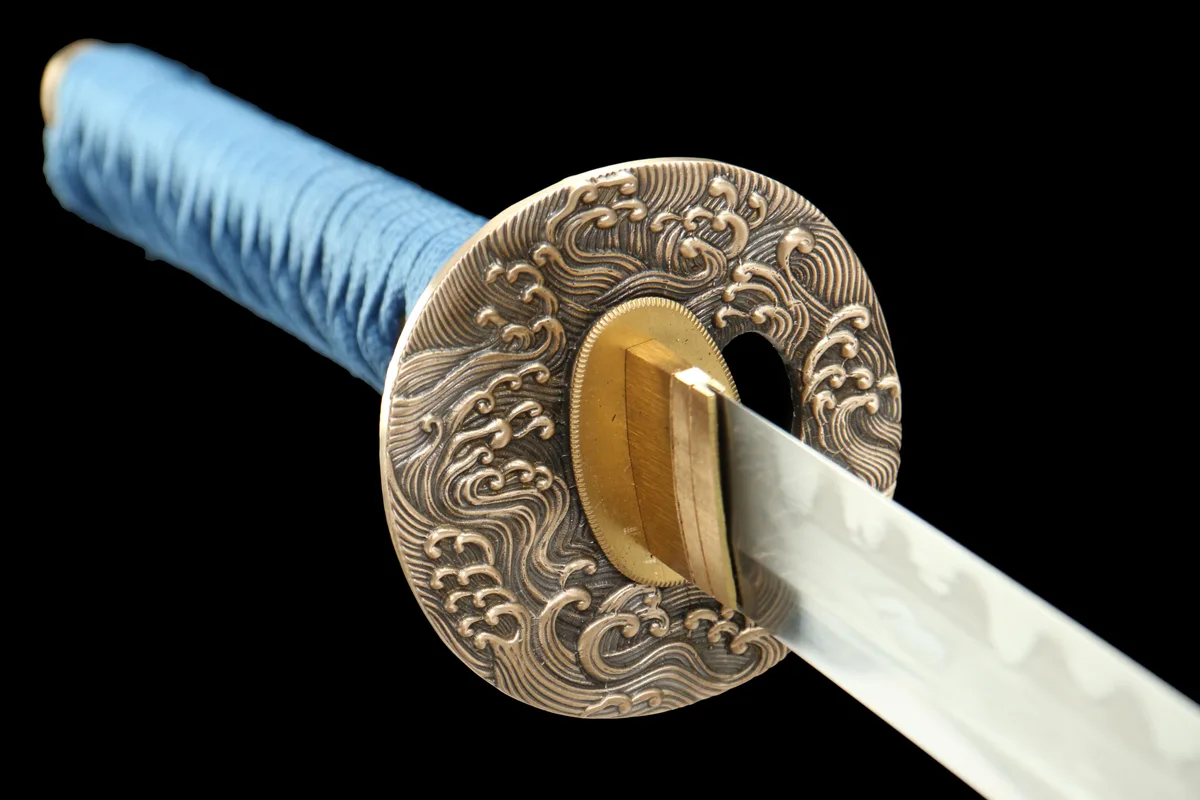
The 27 cm handle is wrapped in cotton ito – a tight, overlapping diamond pattern that seats the hand without slipping, even without the texture of silk. The draw from the half-wrap saya is clean: the exposed same at the upper saya means your thumb registers the rayskin’s granular surface as it presses the tsuba (the handguard) to release the blade, and that tactile cue is immediate and precise. The 72 cm blade length puts the point of percussive impact – the monouchi, the forward third of the blade – at a distance that rewards committed cuts with proper hip rotation. The copper fittings at the tsuba and fuchi (the collar at the base of the handle) carry a warm, oxidizing tone that will deepen with handling, moving toward a richer patina over time.
Care
Wipe the blade down after every handling session using a soft cloth and a light application of camellia oil (choji oil) to prevent oxidation on the hand-worked steel. The copper fittings will develop a natural patina – this is correct and expected, and should not be polished away. Store horizontally in the saya, edge upward, away from humidity fluctuations.
| Weight | 1.2 lbs |
|---|---|
| Dimensions | 103.0 × 3.2 × 0.7 in |
| Hamon | Decorative / Acid-Etched |
| Blade Steel | Artisan Hand-Forged Steel |
| Total Length | 103.0 cm |
| Blade Length | 72.0 cm |
| Heat Treatment | Oil Quench & Temper |
| Handle Wrap | Cotton Ito Wrap |
| Sheath Material | Rayskin (Same), (半包 鞘) |
| Fittings | Copper, (装) |
| Forging Style | Shinogi-Zukuri (Ridgeline) |
Related products