









Black Gold Brown Weave – Hand Forged T10 Tool Steel Katana Sword
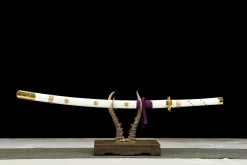
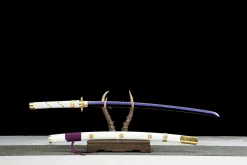
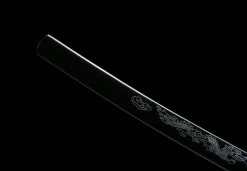
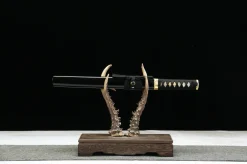
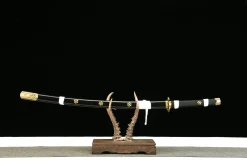
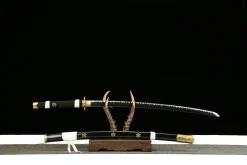
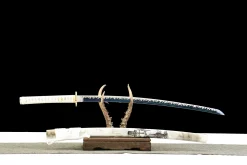
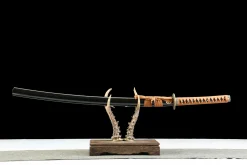
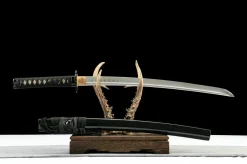
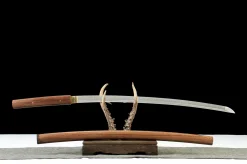
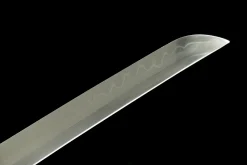
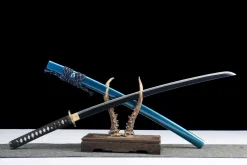
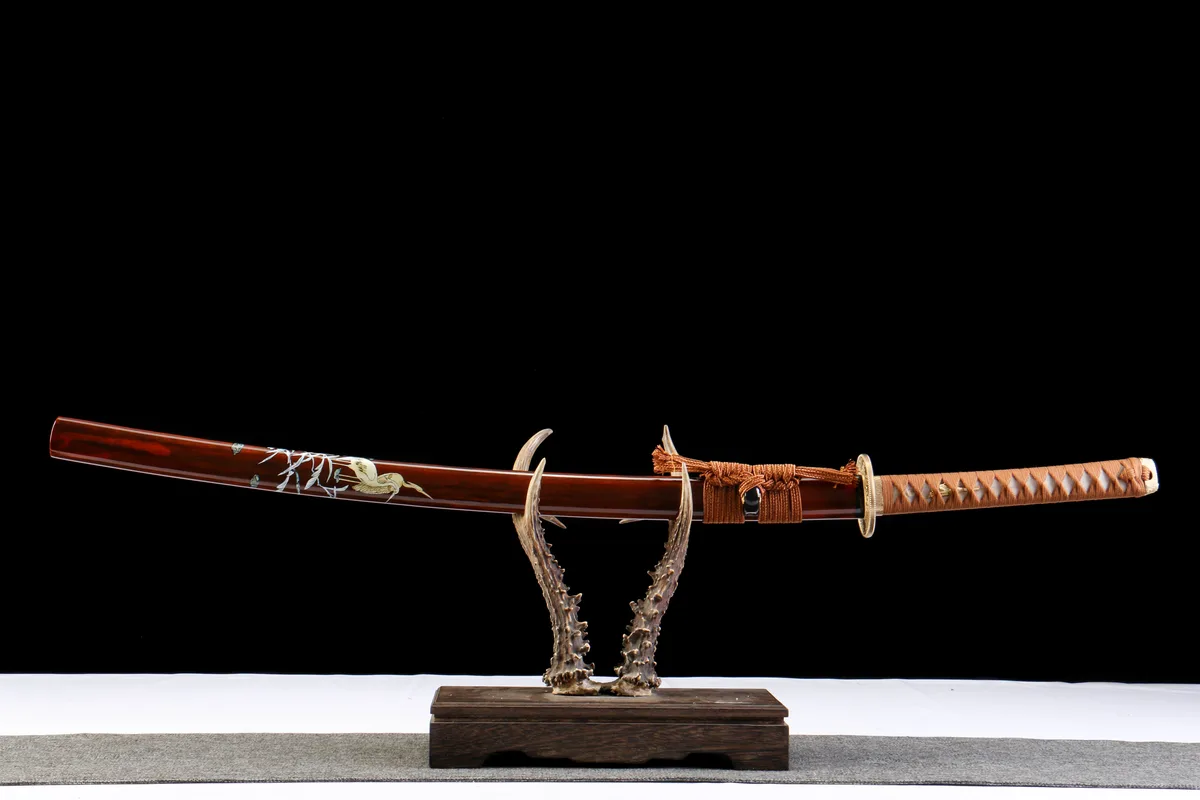
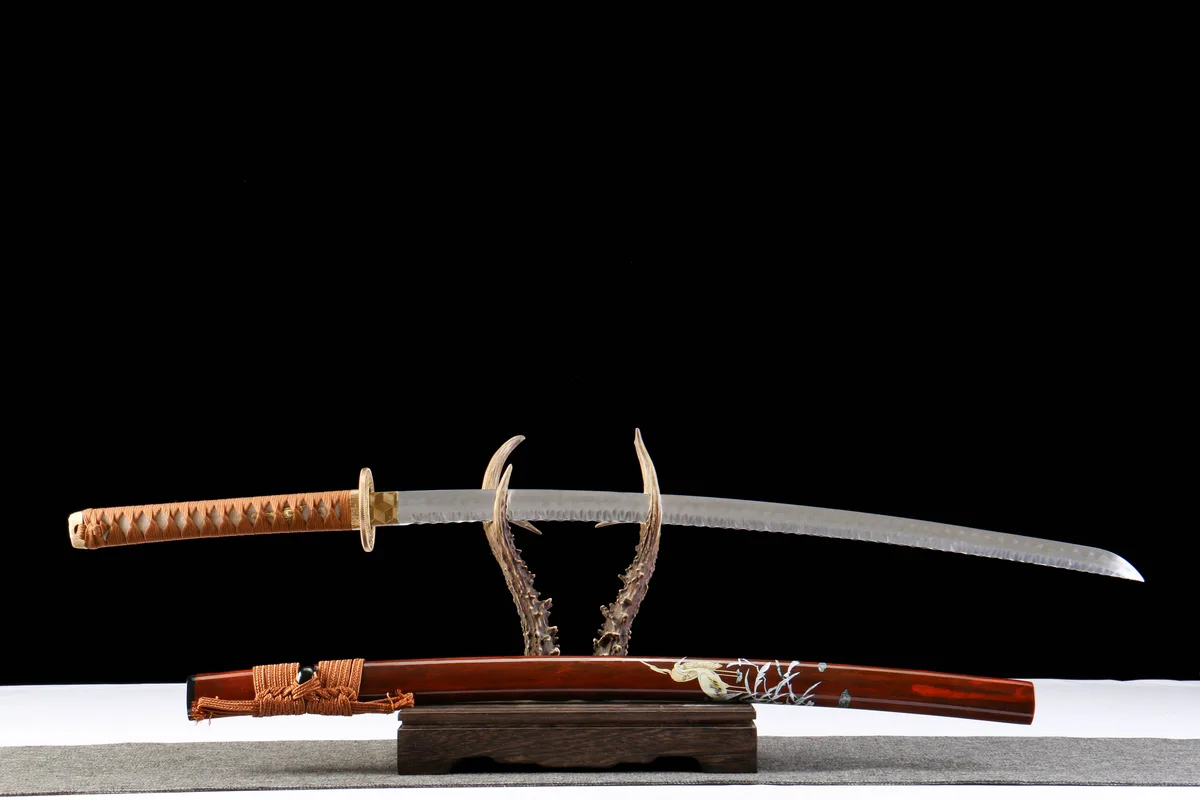
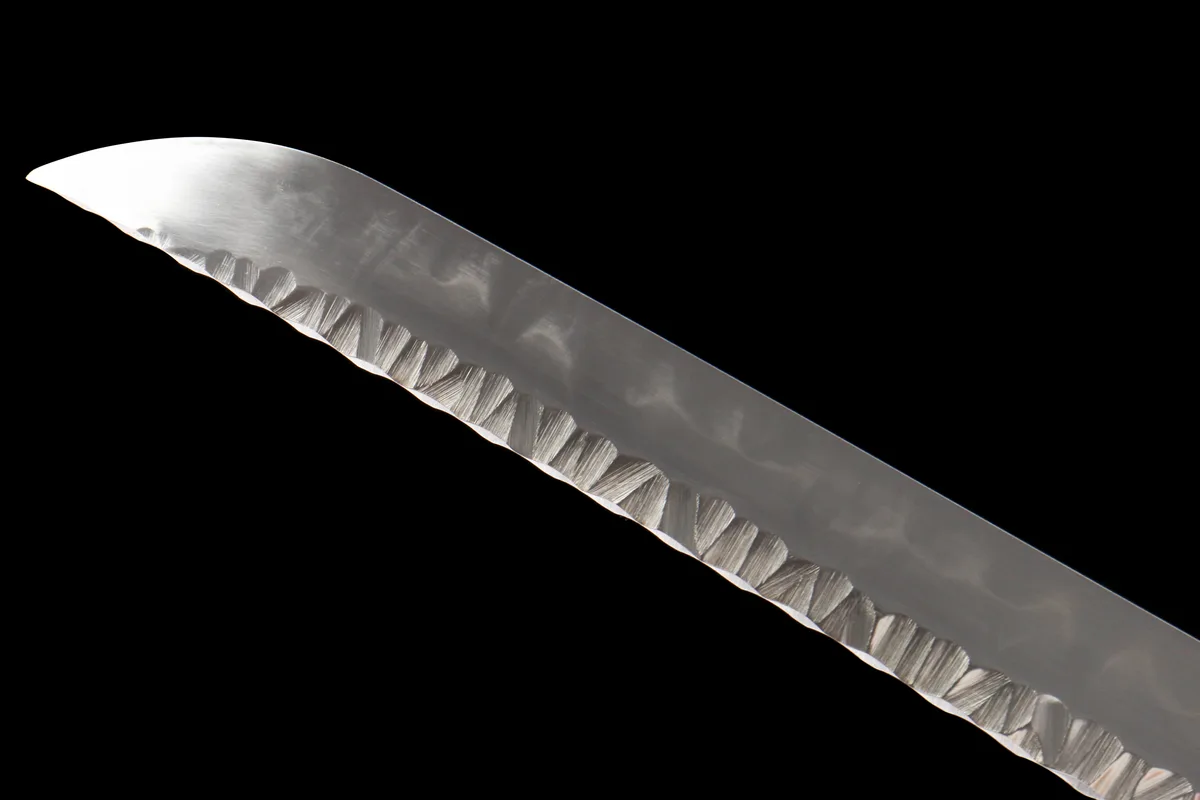
Hand-forged T10 Tool Steel katana (102cm total / 72cm blade), crafted in Longquan. Clay-tempered blade with a genuine hamon line — visible contrast between hardened edge and soft spine.
$599.99
Black Gold Brown Weave – Hand Forged T10 Tool Steel Katana Sword
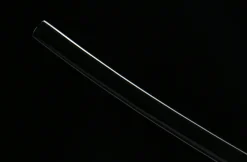
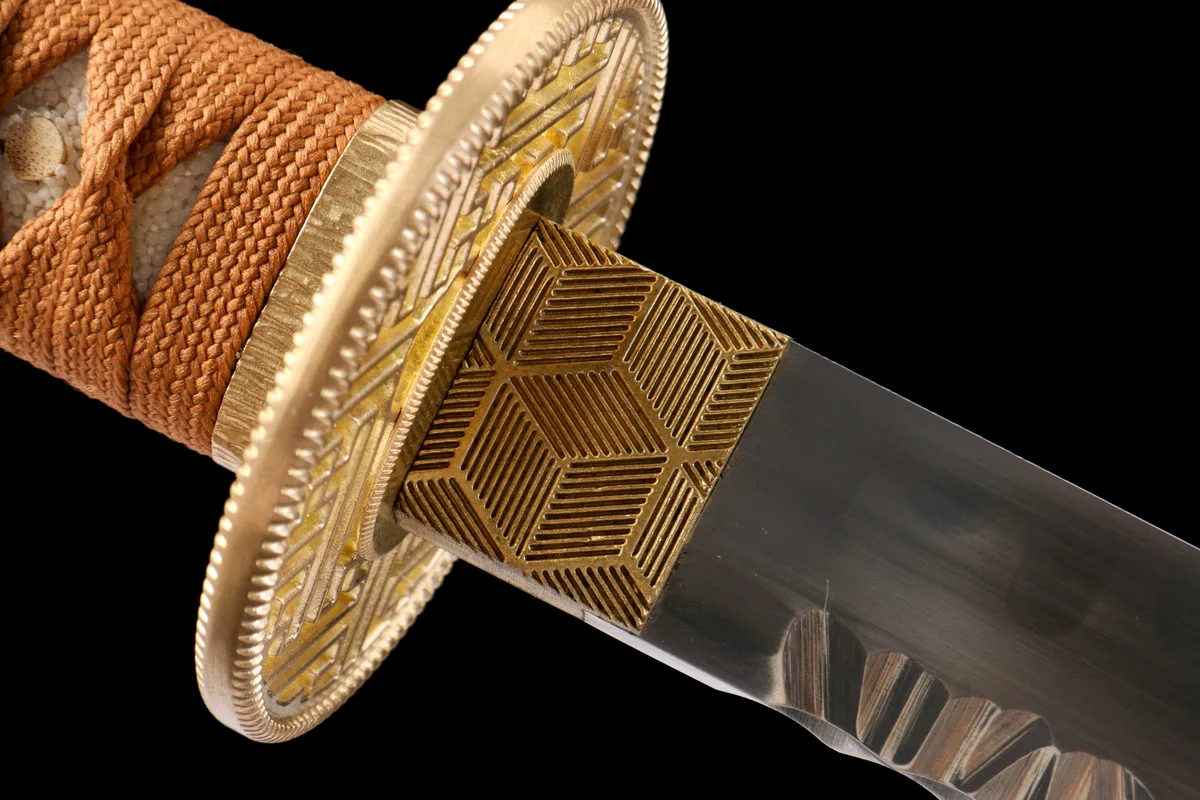
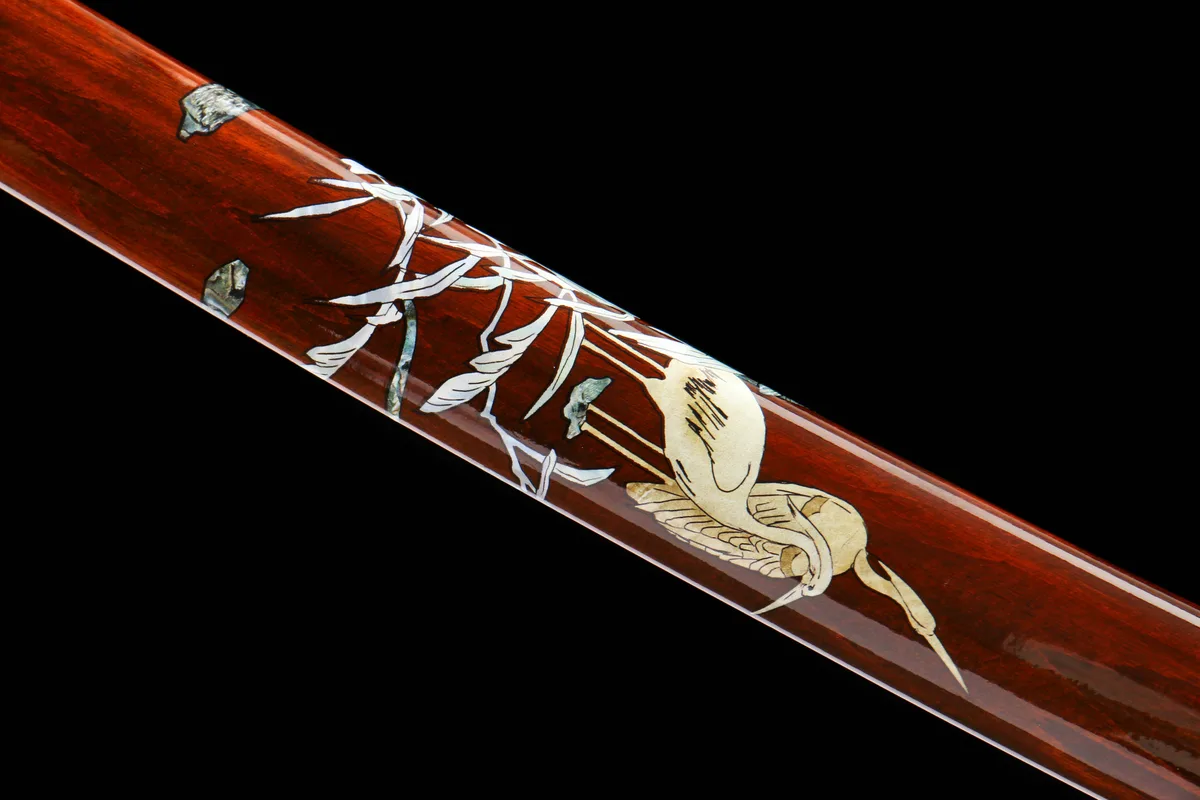
The hamon (temper line) on this blade was defined by the clay application before the smith touched the quench tank – a specific, intentional layering of refractory slip across a shinogi-zukuri (ridgeline) profile forged in T10 high speed tool steel. What emerged from the water is a blade surface that carries two stories simultaneously: the carved floral and bird motifs on the fittings above, and below, the geological record of differential hardening written in crystalline martensite at the habuchi (hamon boundary). The wan-zi (卍 – swastika-pattern, an ancient Buddhist and Taoist symbol of auspiciousness) carved into the fittings places this blade inside a specific craft tradition – one where the decorative and the functional are treated as inseparable disciplines.
Specifications
| Blade Steel | T10 High Speed Tool Steel |
| Total Length | 102.0 cm / 40.2 in |
| Blade Length | 72.0 cm / 28.3 in |
| Handle Length | 26.0 cm / 10.2 in |
| Blade Width | 3.2 cm |
| Blade Thickness | 0.7 cm |
| Weight | 1040 g / 36.7 oz |
| Heat Treatment | Clay Tempering (Differential Hardening) |
| Fittings | Copper (carved wan-zi and floral-bird motif) |
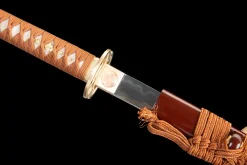
| Handle | Cotton Ito wrap over genuine rayskin (same) |
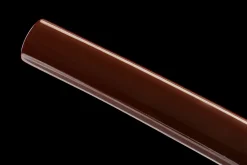
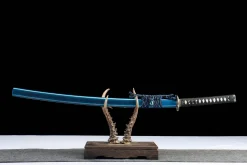
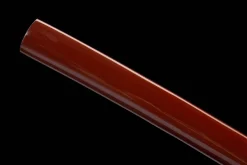
| Sheath | Hardwood, high-gloss lacquer |
Steel & Construction
T10 sits above standard high carbon alloys in abrasion resistance – approximately 1.0% carbon in a refined matrix with trace tungsten that pins carbide particles finely and evenly through the steel. That fine carbide distribution is what allows a polished T10 edge to maintain geometry under repeated stress rather than rolling or deforming. The clay tempering process – known in Japanese tradition as tsuchioki – applies a thick, insulating clay layer to the spine and a thin or absent layer near the edge. When quenched, the spine cools slowly into tough pearlite while the exposed edge hardens rapidly to martensite. The boundary between those two structures is the hamon, and on this blade it is real: verifiable under a loupe, active at the habuchi with nie (individual martensite crystals visible as bright grain in raking light), and varying in character along the length of the 72 cm blade in a way that no acid-etched imitation can replicate.
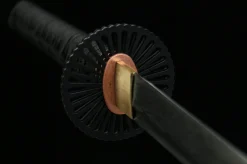
The copper fittings carry hand-carved wan-zi lattice and bird-and-flower motifs – patterns that require the carver to work in negative relief against a curved copper surface without machine assist on the fine detail passages. Against the high-gloss lacquer of the hardwood saya, the copper reads warm and dense. Against the polished blade face, it provides the contrast of worked metal against refined steel.
Handling
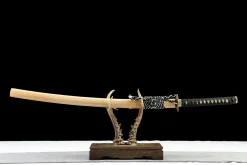
The 26 cm handle gives full two-hand control – cotton ito wrapped in the traditional diagonal cross pattern over genuine rayskin same, the raised nodes of the ray skin locking the wrap in place and transmitting grip texture through each contact point between your palm and the sword. The shinogi-zukuri profile lends the blade a laterally rigid, directionally decisive feel through each movement – the ridgeline distributes torsional stress efficiently, meaning the blade tracks straight where you point it. The high-gloss lacquer saya has a fitted koiguchi (sheath mouth) that yields cleanly on a deliberate draw, the hardwood interior keeping the blade in correct alignment through the full draw stroke.
Care Instructions
T10 requires consistent oil maintenance – apply food-grade mineral oil or traditional choji oil (clove-infused mineral oil) after every handling session and before any extended storage. Wipe the blade from the habaki (blade collar) toward the tip using a clean, lint-free cloth, always with the edge angled away from your wrist. The copper fittings will develop a natural patina over time; if you wish to preserve the original surface, a light wax coating applied with a cotton pad will slow oxidation without altering the carved detail.
| Weight | 1.32 lbs |
|---|---|
| Dimensions | 102.0 × 3.2 × 0.7 in |
| Hamon | Real Hamon (Clay Tempered) |
| Blade Steel | T10 Tool Steel |
| Total Length | 102.0 cm |
| Blade Length | 72.0 cm |
| Heat Treatment | Clay Tempering (Differential Hardening) |
| Handle Wrap | Cotton Ito + Genuine Rayskin |
| Sheath Material | Hardwood (High-Gloss Lacquer) |
| Fittings | Copper |
| Forging Style | Shinogi-Zukuri (Ridgeline) |
Related products