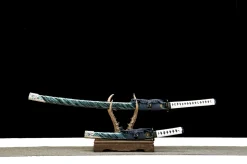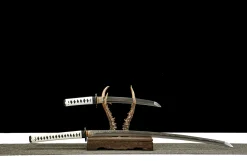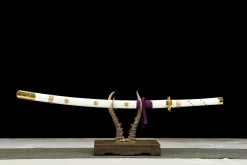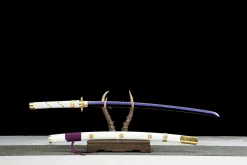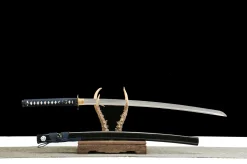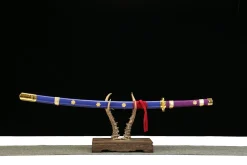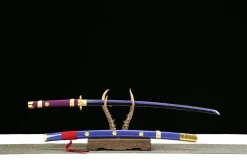











Black Gold Dragon – Hand Forged T10 Tool Steel Katana Sword
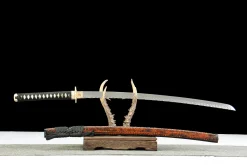
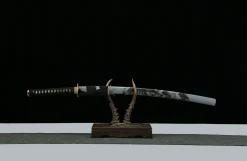
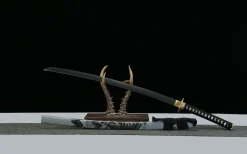
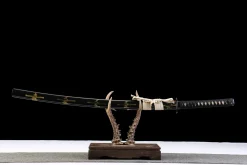
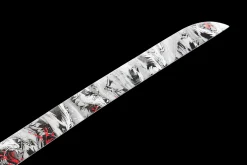
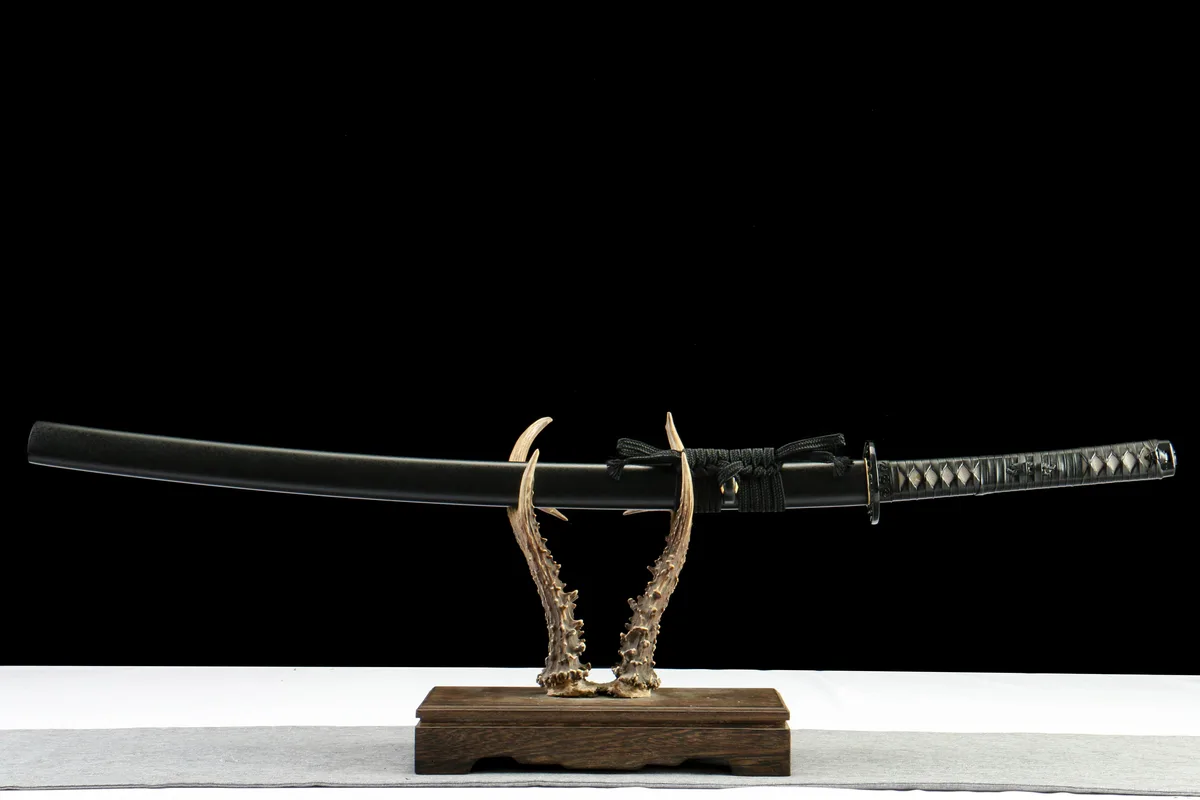
Hand-forged T10 Tool Steel katana (102cm total / 72cm blade), crafted in Longquan. Clay-tempered blade with a genuine hamon line — visible contrast between hardened edge and soft spine.
$409.99
Black Gold Dragon – Hand Forged T10 Tool Steel Katana Sword
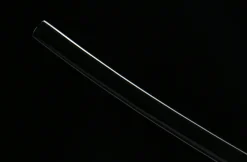
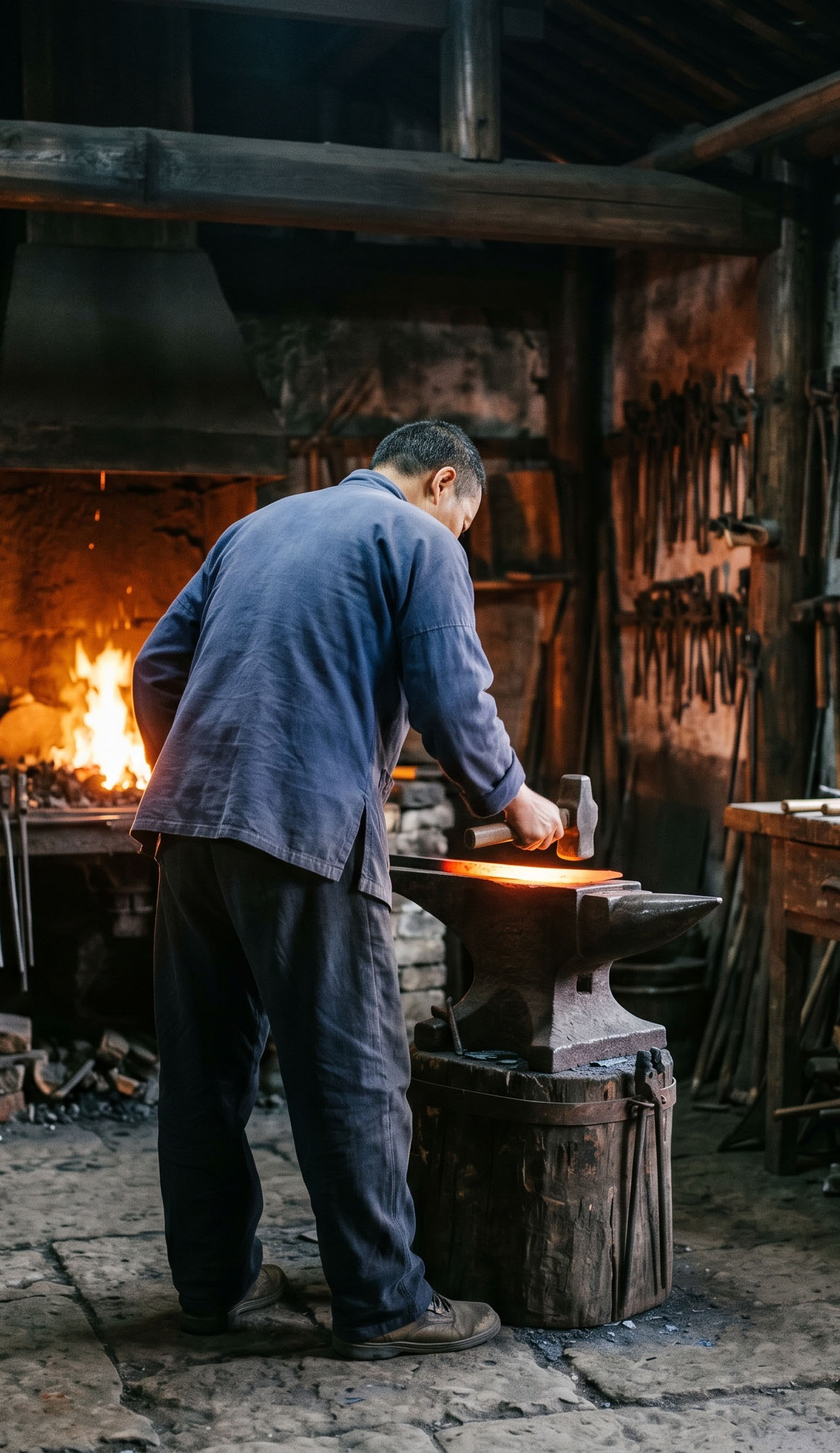
Most katana sold at this geometry are uniform-hardness blades. The Black Gold Dragon is not. It carries a real hamon – the visible boundary line between the hard edge steel and the softer spine – produced by the clay tempering process that has defined Japanese swordsmithing at its most serious for centuries. That line is not painted, etched, or polished in after the fact. It is a direct record of how this blade was made.
Specifications
| Blade Steel | T10 High Speed Tool Steel |
| Total Length | 102.0 cm / 40.2 in |
| Blade Length | 72.0 cm / 28.3 in |
| Blade Width | 3.2 cm |
| Blade Thickness | 0.7 cm |
| Weight | 1040 g / 36.7 oz |
| Heat Treatment | Clay Tempering – Differential Hardening |
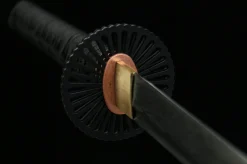
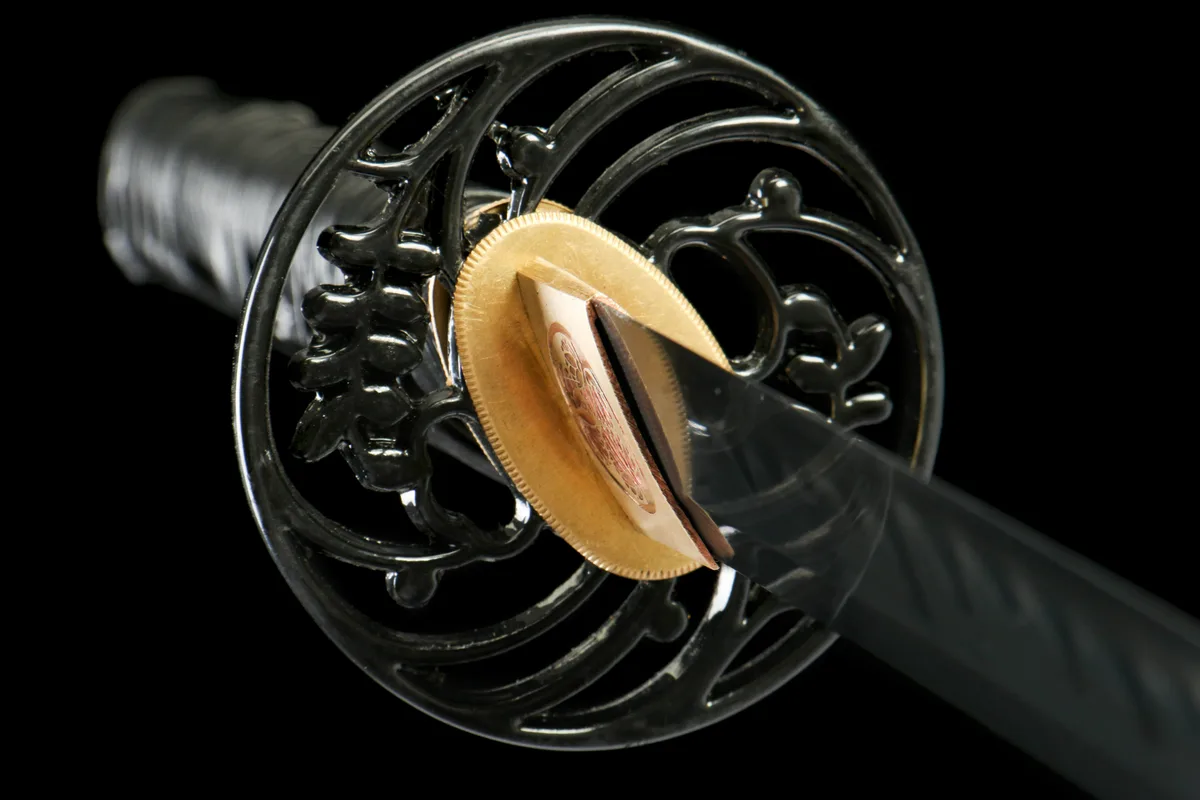
| Fittings | Zinc Alloy |
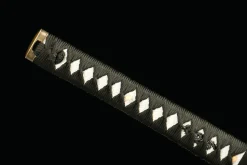
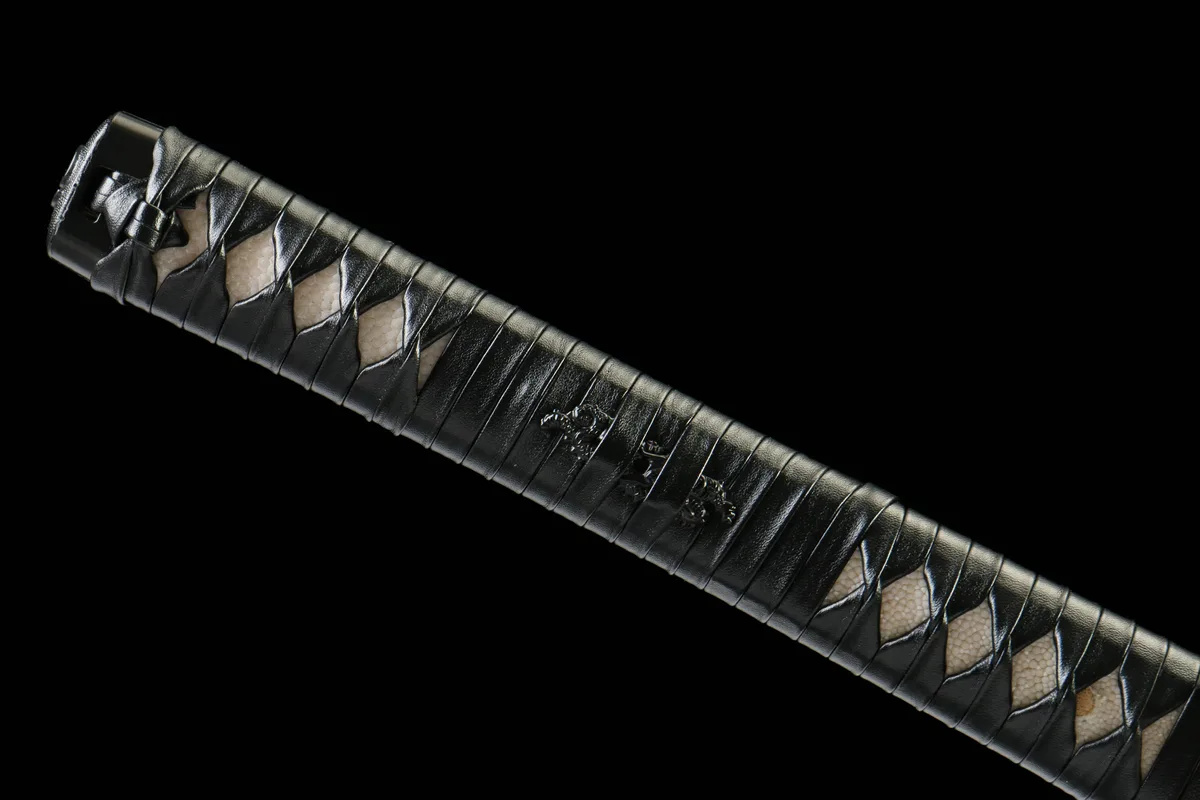
| Handle | Cotton Ito + Genuine Rayskin |
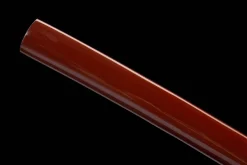
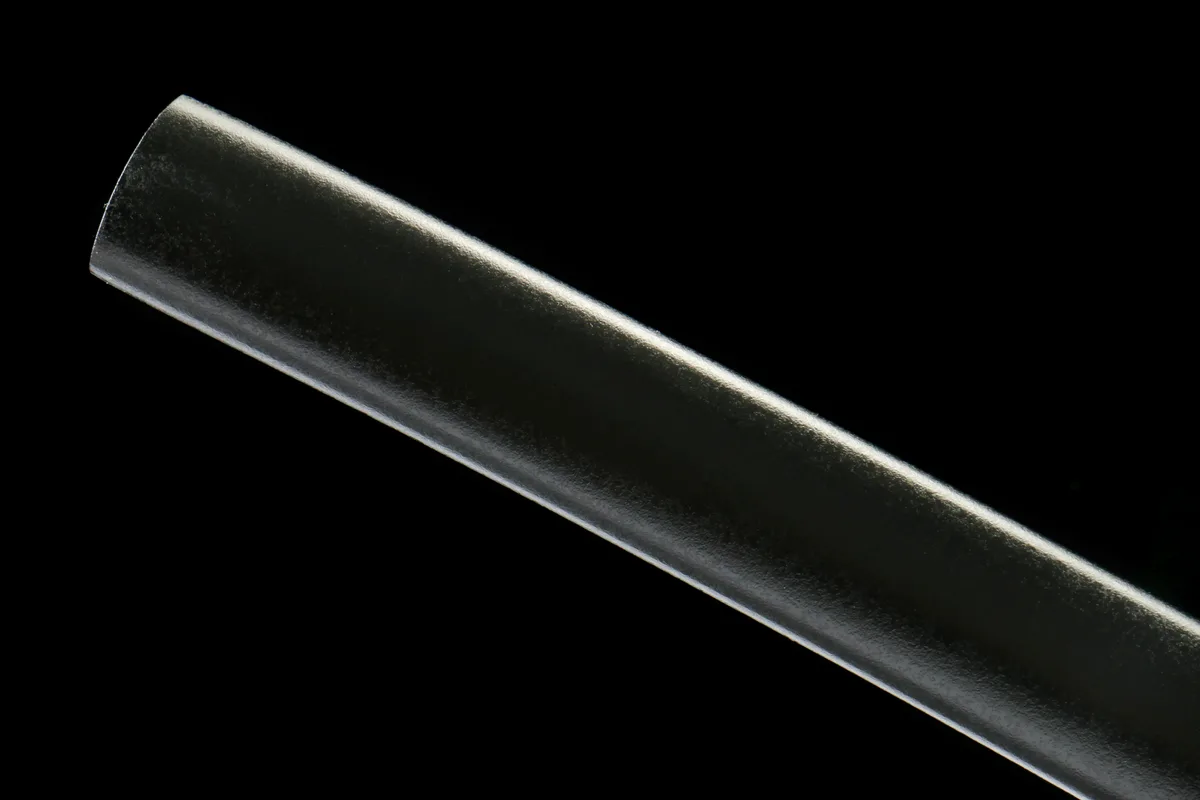
| Sheath | Hardwood, High-Gloss Black Lacquer |
Steel & Construction
T10 is a tungsten-alloyed high-speed tool steel. The tungsten content tightens the carbide grain structure, which allows the edge to achieve and sustain a finer polish than conventional carbon steels at equivalent hardness. In clay tempering, refractory clay is applied along the spine before the quench – the clay insulates the spine, slowing its cooling rate and keeping it relatively soft and tough, while the exposed edge quenches rapidly and achieves full hardness. The resulting blade is, in physical metallurgical terms, two different steels in one piece: a hard, wear-resistant edge capable of taking a razor geometry, and a resilient spine that absorbs impact rather than transmitting it as fracture.
The hamon on this blade – the habuchi, the transition zone between hard and soft steel – will show nie (small martensitic crystals visible as a fine glittering texture at the hamon boundary) when viewed under direct light at close range. No two clay-tempered blades produce identical hamon character. The line on this blade is singular. The shinogi-zukuri (ridgeline) forging profile reinforces the structural integrity of the geometry: the raised central ridge distributes stress load across both surface planes rather than concentrating it at the edge bevel.
Handling
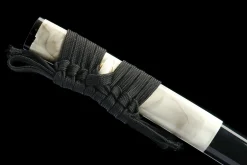
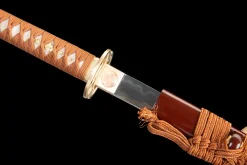
The 26 cm handle is substantial – long enough to keep a full two-handed grip without crowding the hands at the pommel, and wrapped in cotton ito over genuine rayskin (same) with the diamond pattern seated and tight. The rayskin nodes press through the wrap and lock the ito in position; there is no slip on this handle under extended grip pressure. The black lacquer saya draws cleanly, seating the blade with a secure fit that does not rattle. At 72 cm of blade on a 102 cm overall length, the draw is a full, committed motion that uses the entire length of the saya.
Care Instructions
T10 has excellent edge retention but is more susceptible to surface oxidation than stainless – wipe the blade clean immediately after handling and apply choji oil (traditional clove-based blade oil) before storage. Never store sheathed without oiling first. Inspect the hamon zone periodically; any surface rust appearing along the habuchi should be addressed immediately with uchiko powder (fine polishing powder) and a clean cloth before it has a chance to pit the steel.
| Weight | 1.32 lbs |
|---|---|
| Dimensions | 102.0 × 3.2 × 0.7 in |
| Hamon | Real Hamon (Clay Tempered) |
| Blade Steel | T10 Tool Steel |
| Total Length | 102.0 cm |
| Blade Length | 72.0 cm |
| Heat Treatment | Clay Tempering (Differential Hardening) |
| Handle Wrap | Cotton Ito + Genuine Rayskin |
| Sheath Material | Hardwood (High-Gloss Lacquer) |
| Fittings | Zinc Alloy |
| Forging Style | Shinogi-Zukuri (Ridgeline) |
Related products