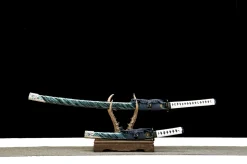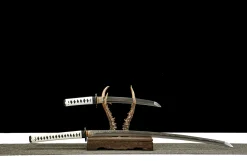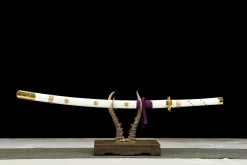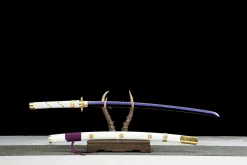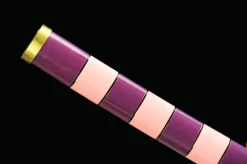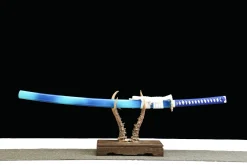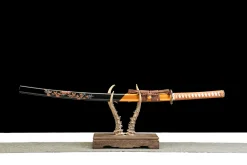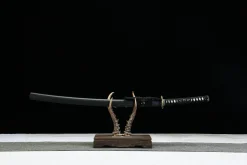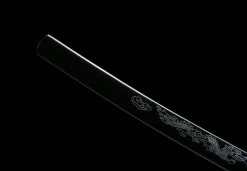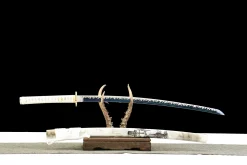

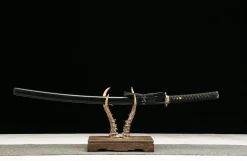
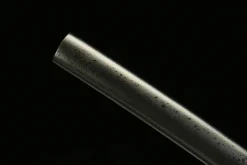
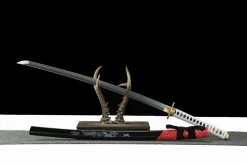
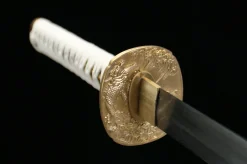









Black Gold Fan – Hand Forged 1065 Carbon Steel Wakizashi Sword
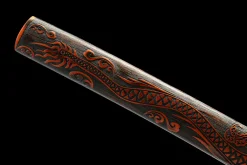
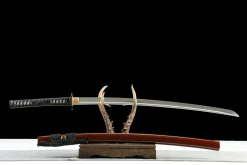
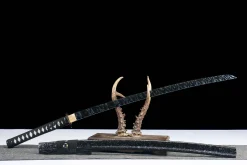
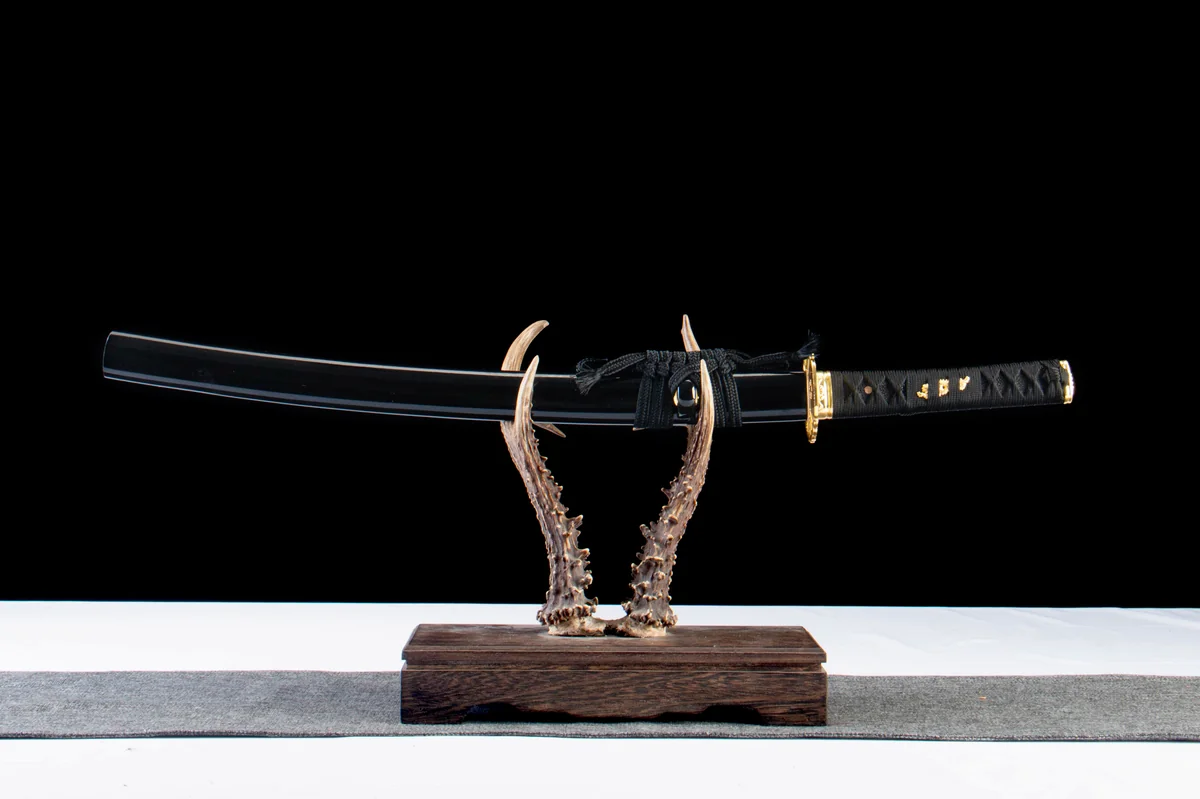
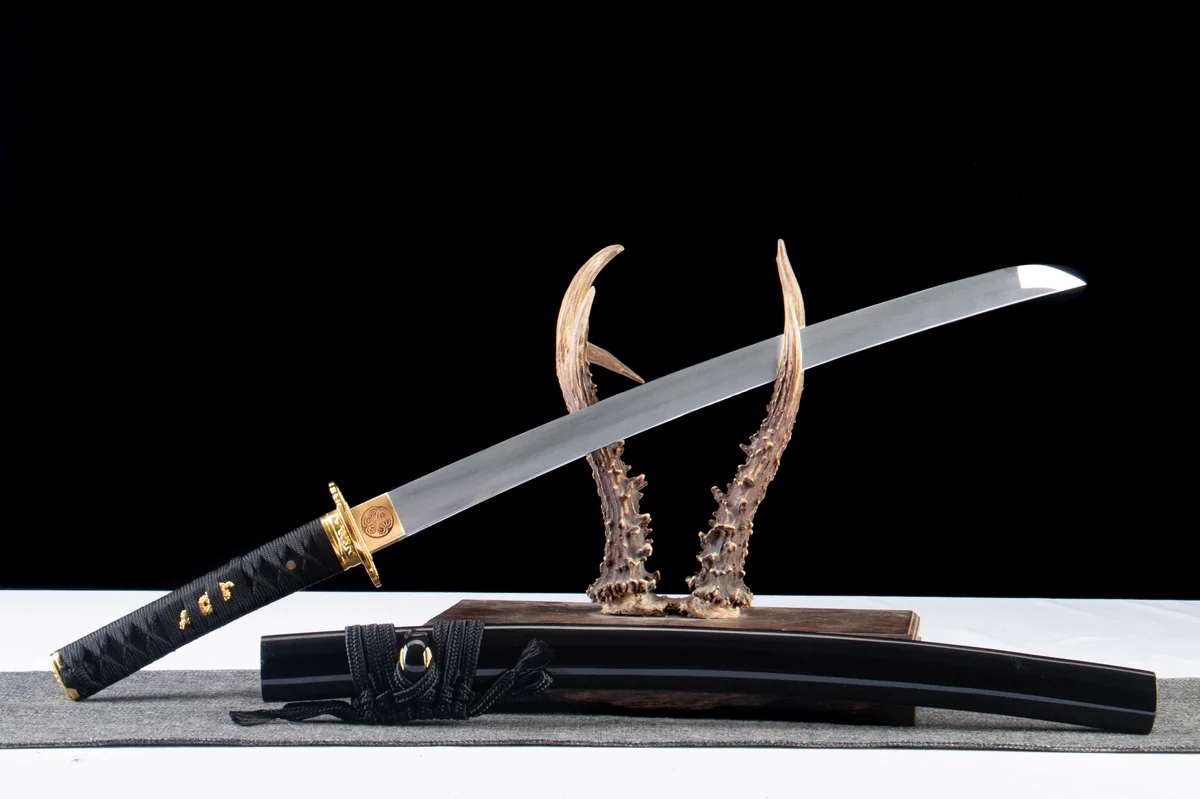
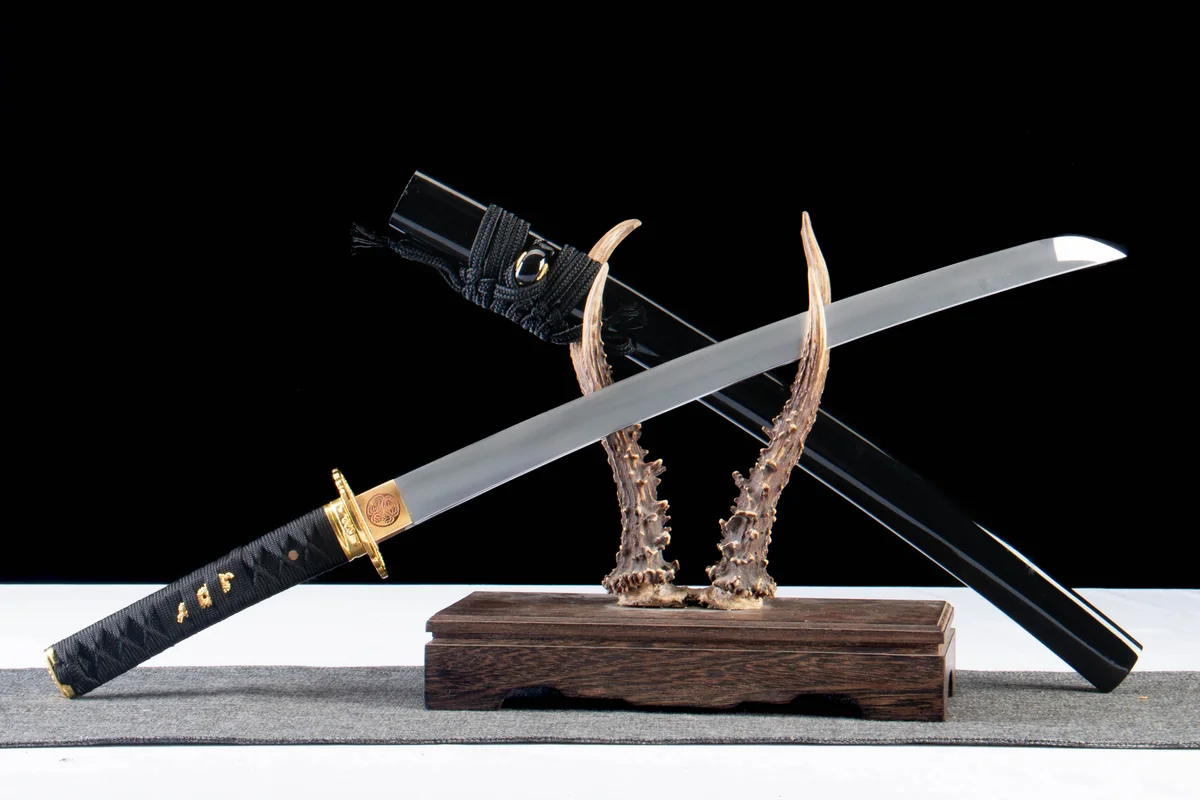
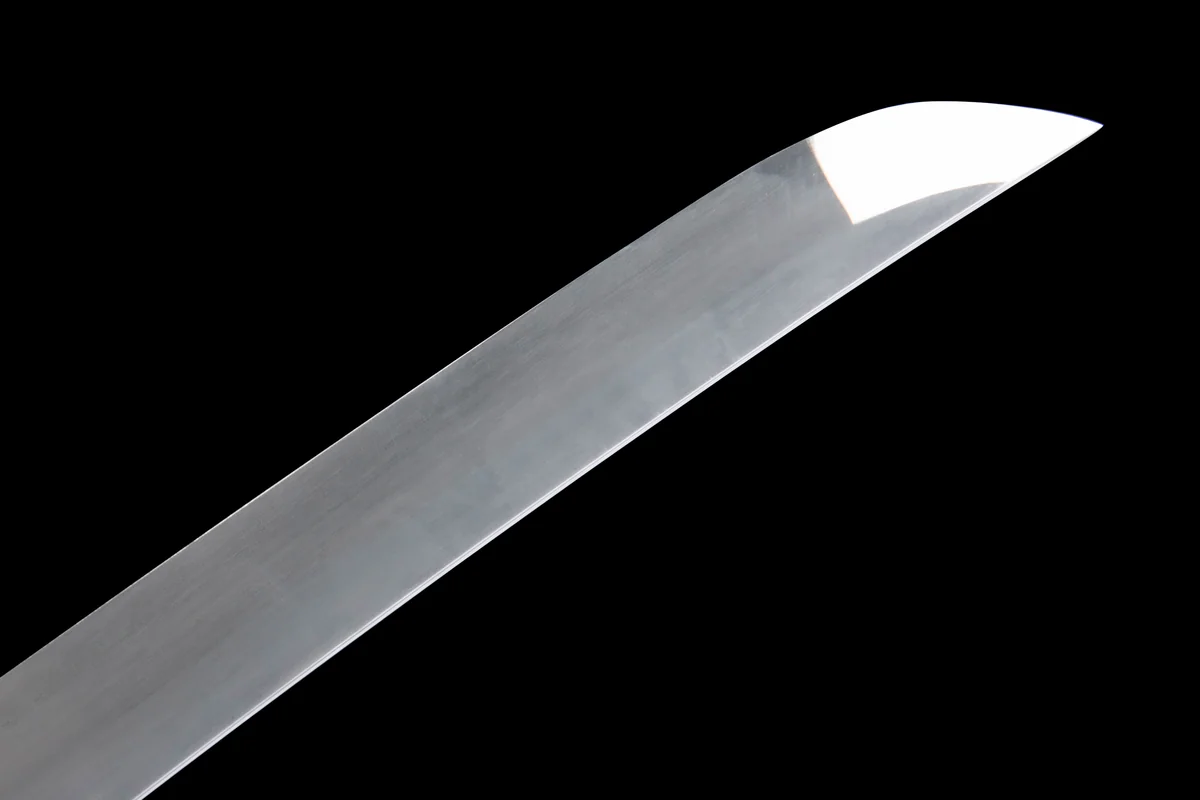
Hand-forged 1065 Carbon Steel wakizashi (80cm total / 52cm blade), crafted in Longquan. Full-tang construction with traditional fittings and hand-lacquered saya.
$199.99
Black Gold Fan – Hand Forged 1065 Carbon Steel Wakizashi Sword
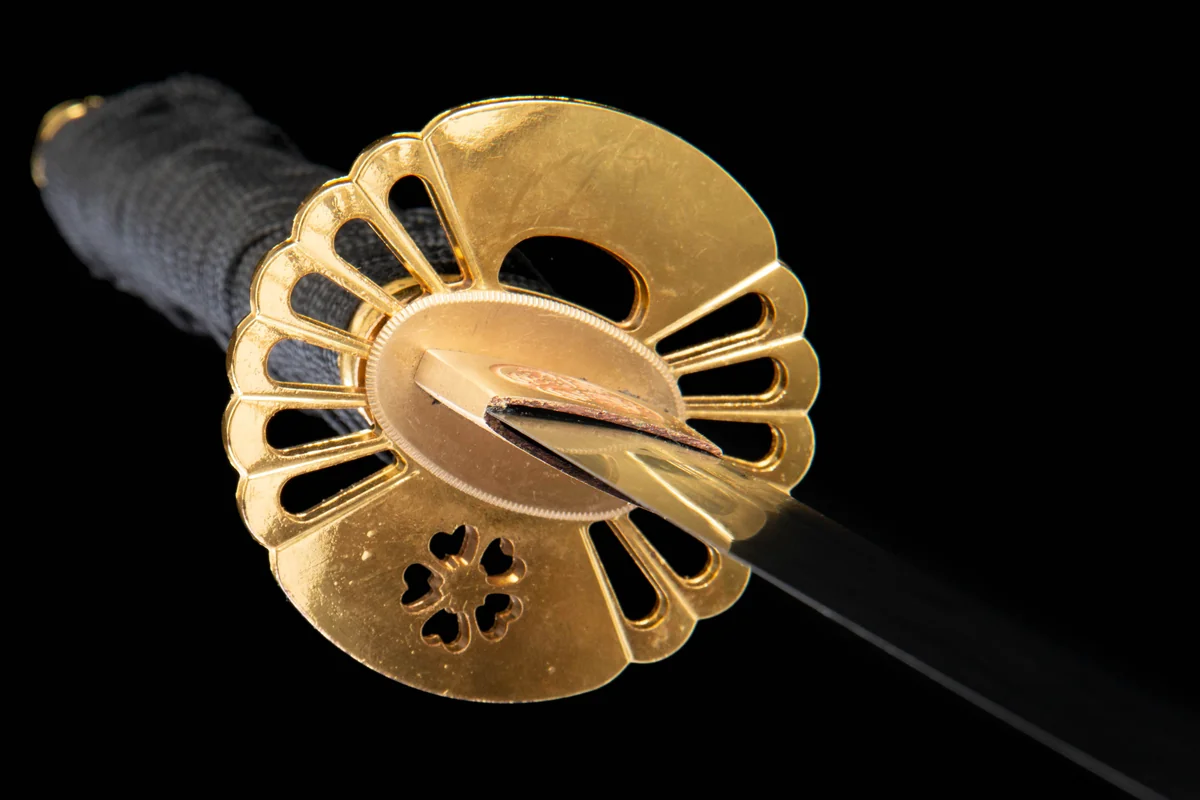
Black Gold Fan (黑金扇影) takes the image of a fan — the Japanese ōgi, symbol of authority and refinement — and renders it in the palette of night: black and gold, shadow and gleam. The fan’s shadow (扇影) falling across a blade is both a practical image and a poetic one. Hand-forged in Longquan from 1065 high carbon steel with the shinogi-zukuri profile, this wakizashi delivers the aesthetic at an accessible price.
Specifications
| Blade Steel | 1065 High Carbon Steel |
| Total Length | 80.0 cm / 31.5 in |
| Blade Length | 52.0 cm / 20.5 in |
| Handle Length | 21.0 cm / 8.3 in |
| Blade Width | 3.2 cm |
| Blade Thickness | 0.7 cm |
| Net Weight | 1000 g / 35.3 oz |
| Gross Weight | 1200 g / 42.3 oz |
| Heat Treatment | Oil Quench & Temper |
| Blade Profile | Shinogi-Zukuri (Ridged Profile) |
| Tang Construction | Full Tang (Nakago) |
| Fittings | Zinc Alloy Fittings |
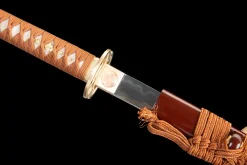
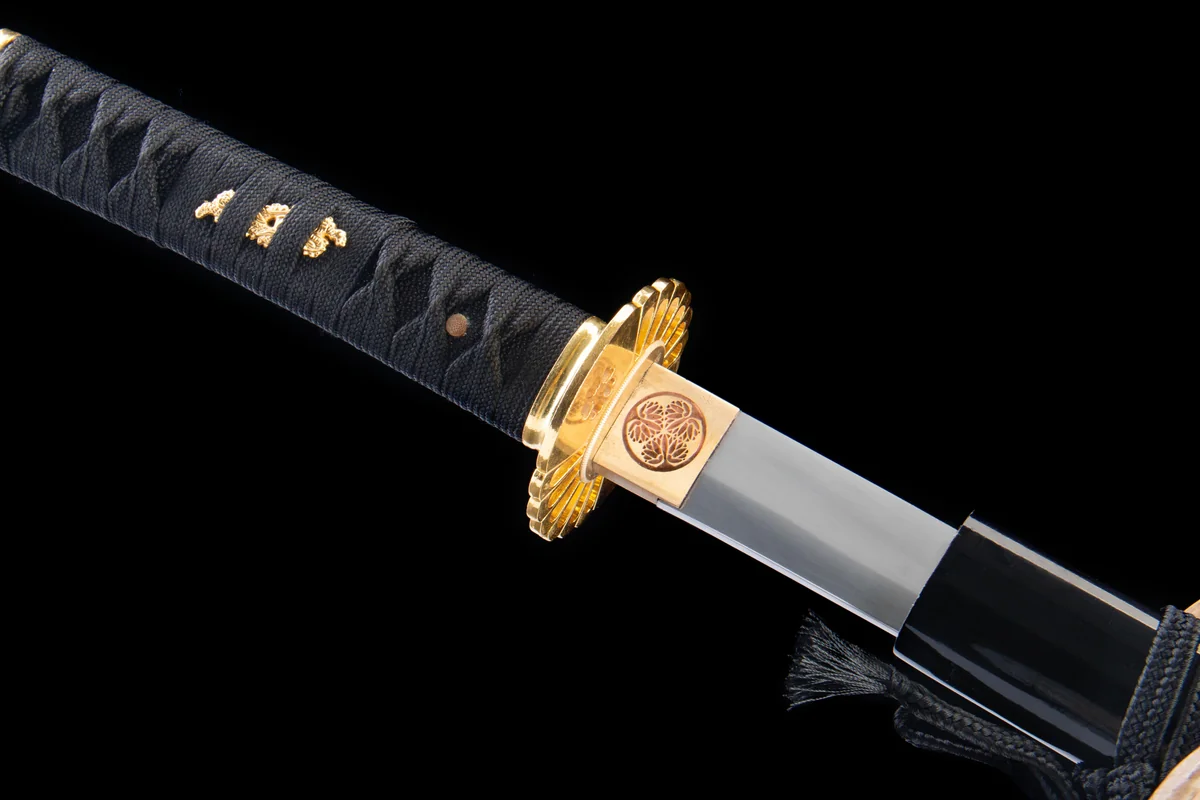
| Handle Wrap | Cotton Ito over Ray Skin (Same) |
What the Steel Does
1065 high carbon steel is honest in what it offers: a working alloy calibrated for edge performance and impact durability, not for visual drama or collector credentials. The 0.65% carbon content produces a blade that takes a proper edge on a waterstone and holds it through cutting sessions, while the oil quench and temper process distributes toughness through the cross-section so the blade bends rather than chips under lateral stress. Good 1065 is not about the alloy number — it is about consistent heat treatment and correct geometry, and both are correct here.
The shinogi-zukuri profile — the ridgeline that defines classical Japanese sword geometry — concentrates mass at the cutting edge, creates a structural spine along the flat, and allows the smith to grind in the specific edge angle that the blade’s intended use demands. Full-tang construction means the nakago runs straight from kissaki through the entire tsuka beneath the ito wrap — no joint, no separate handle piece attached with adhesive or mechanical fasteners. The mekugi (bamboo peg) through the tsuka locks the assembly. This is a functional build, constructed the way a blade meant to be used is constructed.
The Feel of It
The 21 cm tsuka (handle) is proportioned for close-range two-hand grip or extended single-hand control — the handling envelope the wakizashi occupies that neither the daito nor the tanto can match. Cotton ito over the ray skin foundation gives a positive grip surface that does not require readjustment during direction changes or transitions between grip styles. At 80 cm total and 52 cm blade, the wakizashi moves faster and with tighter arc geometry than a full katana: it is a different tool designed for a different operational space, not a shortened version of the longer sword.
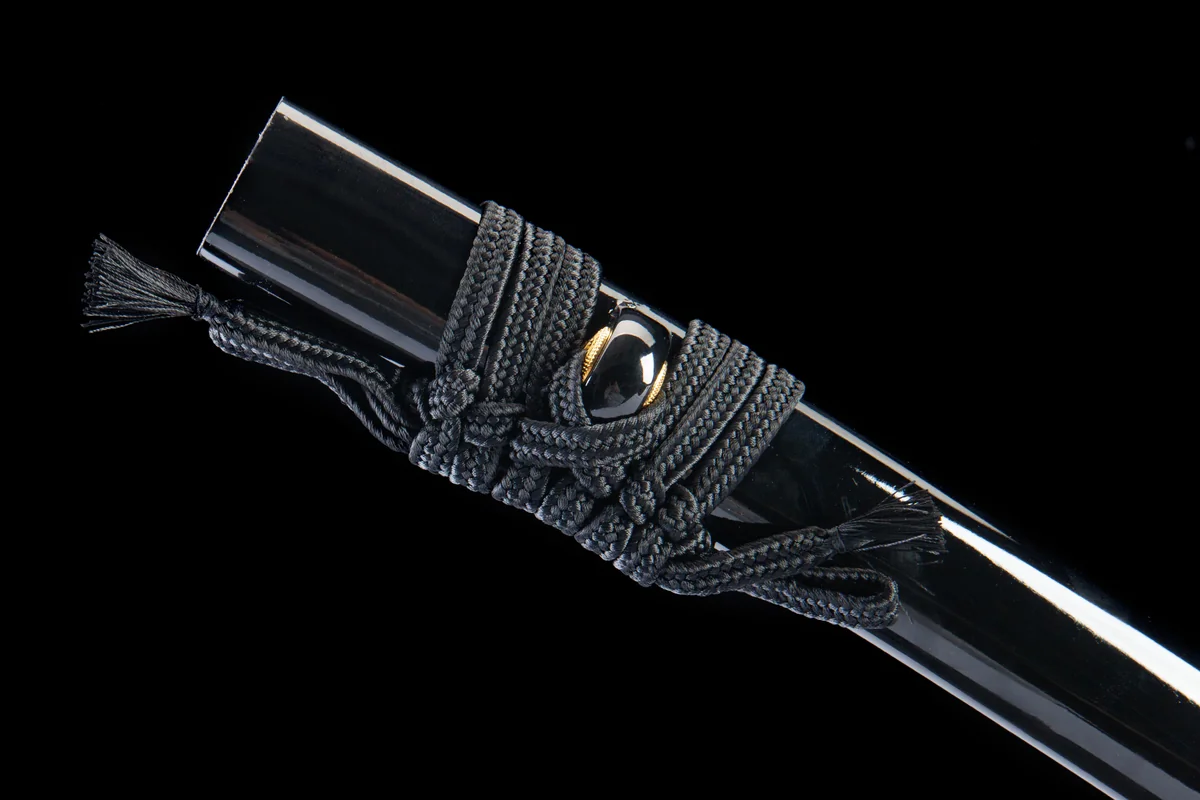
The saya draw is clean and snug — the koiguchi holds the blade without rattle and releases with intention rather than effort. At approximately 1,000g net weight, the balance favors the blade enough to cut with authority while keeping the overall mass in the range where the sword is genuinely maneuverable in close quarters. The wakizashi format was historically the indoor companion to the katana — shorter reach for confined spaces, faster transitions, the same quality of steel and construction as the longer blade. This piece preserves that intent: a wakizashi that performs like one rather than simply measuring like one.
Maintenance Notes
High carbon steel requires active oil maintenance — it will surface-oxidize in humid conditions if left dry, and a carbon steel blade without consistent oiling will show rust spots within weeks in a typical indoor environment. After every handling session, wipe the blade from habaki to kissaki with a clean cloth to remove fingerprint oils and moisture, then apply a thin, even coat of choji oil (traditional clove-infused mineral oil) or neutral camellia oil. Wipe down to a thin film — pooled oil is not more protective and attracts dust. Store horizontally in the saya in a stable, low-humidity environment away from prolonged direct sunlight.
Check the blade surface monthly even when the sword is not in active use — the habaki (blade collar) area is where moisture collects preferentially, and early surface oxidation caught at this stage cleans off with an oiled cloth. The cotton ito handle wrap should be kept dry; do not store the sword sheathed in a high-humidity environment without periodic inspection. The fittings are durable and do not require maintenance beyond keeping dry and free from cleaning chemicals.
| Weight | 1.2 lbs |
|---|---|
| Dimensions | 80.0 × 3.2 × 0.7 in |
| Hamon | Decorative / Acid-Etched |
| Blade Steel | 1065 Carbon Steel |
| Total Length | 80.0 cm |
| Blade Length | 52.0 cm |
| Heat Treatment | Temper |
| Handle Wrap | Cotton Ito Wrap 真鱼皮 |
| Sheath Material | 实木钢琴烤漆 |
| Fittings | Alloy |
| Forging Style | 鎬造 |
Related products