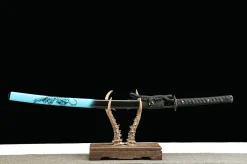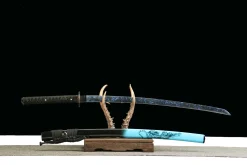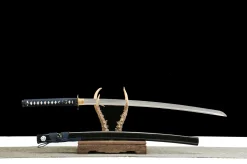
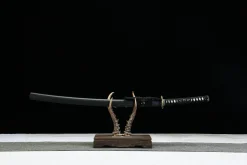

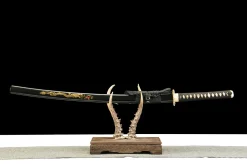

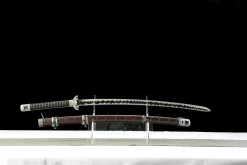






Black Iron – Hand Forged 1065 Carbon Steel Katana Sword
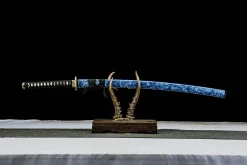
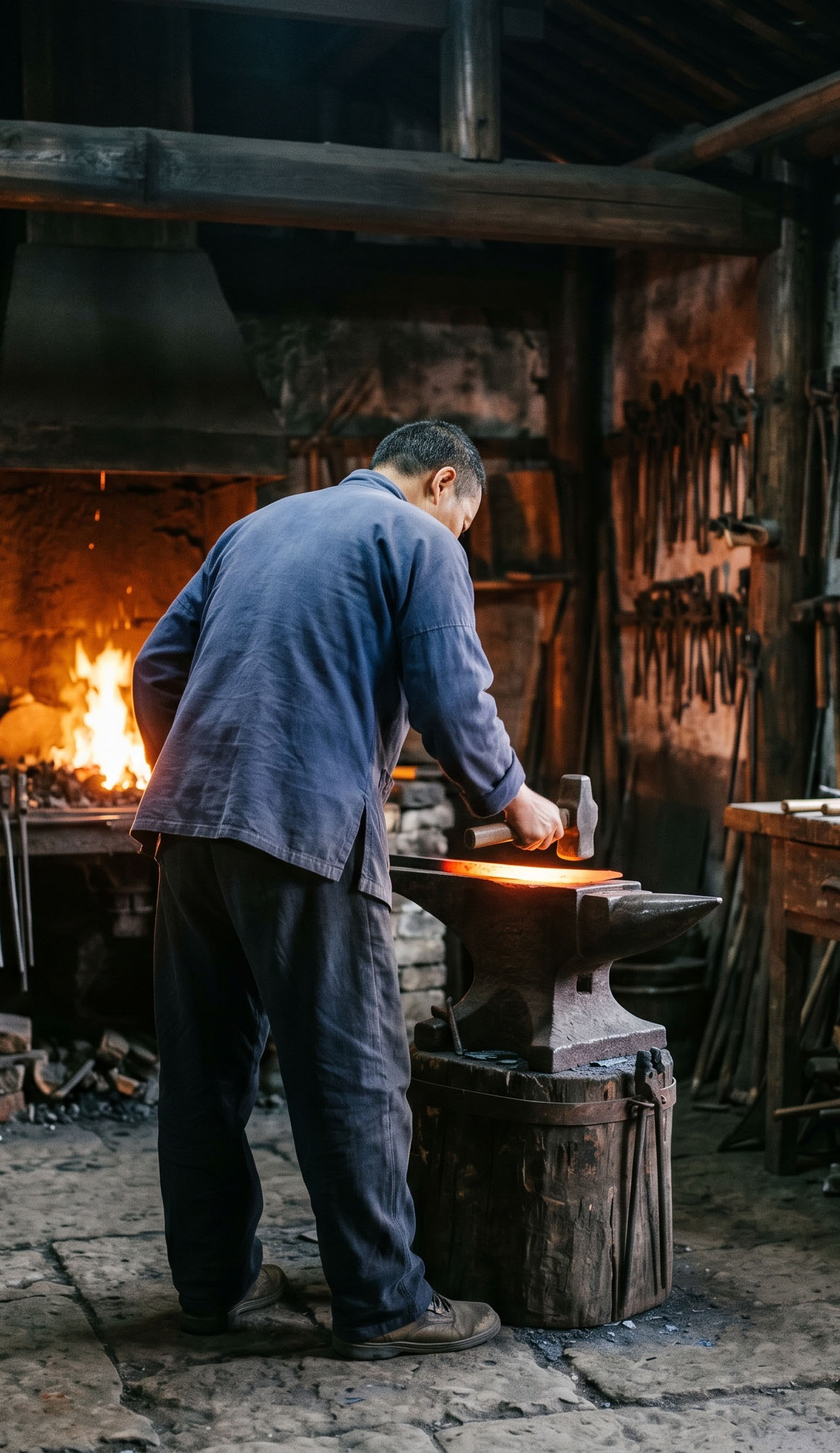
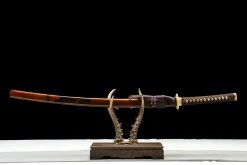
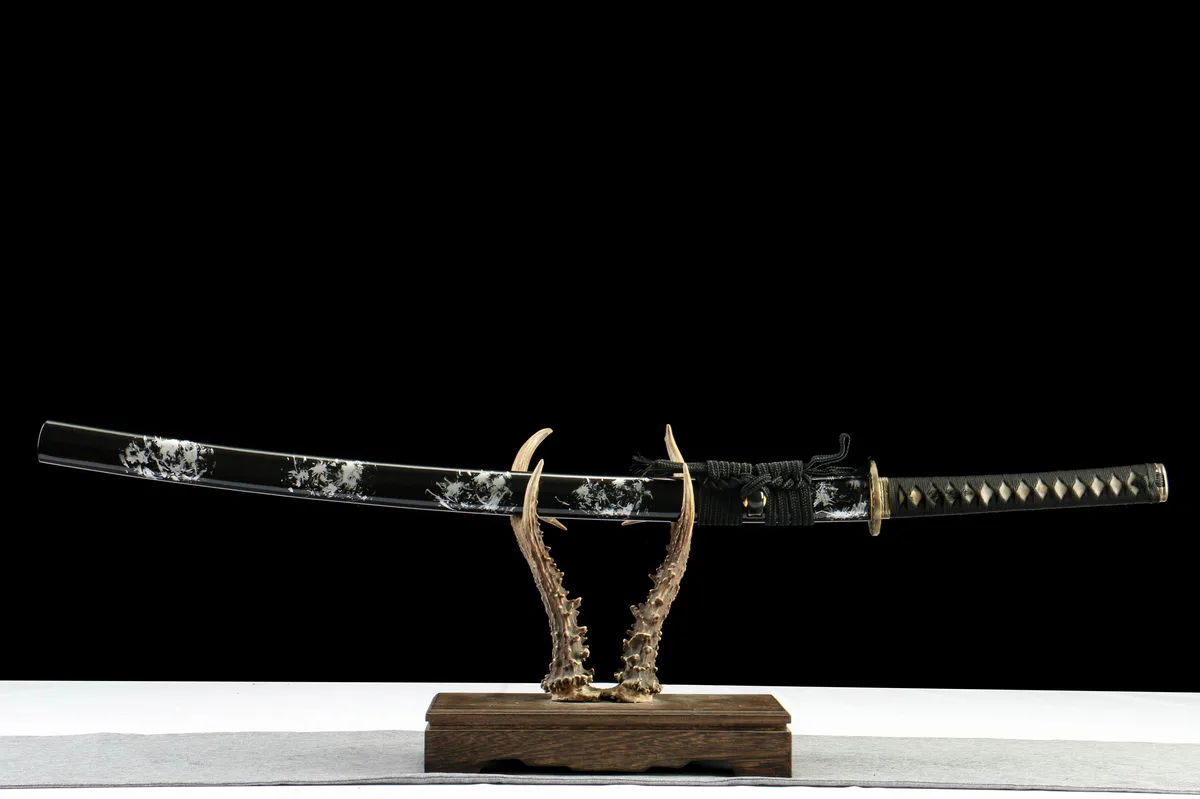
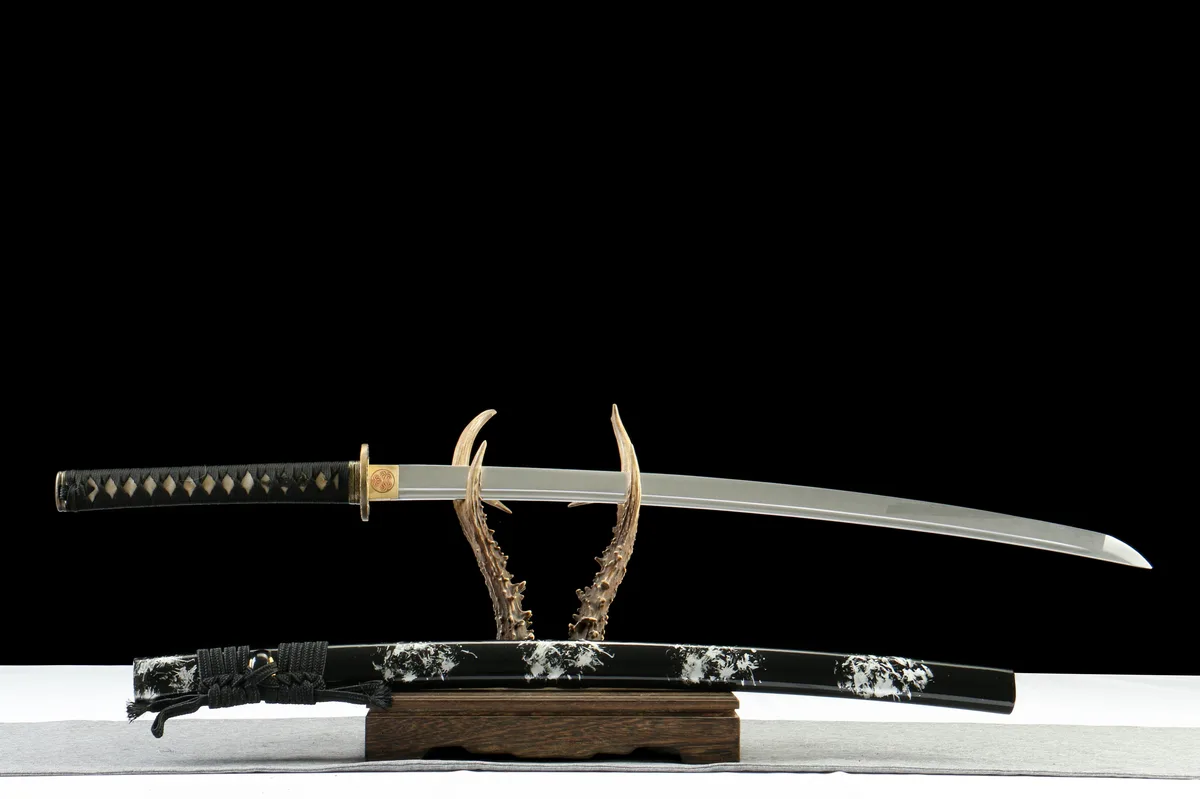
Hand-forged 1065 Carbon Steel katana (102cm total / 72cm blade), crafted in Longquan. Full-tang construction with traditional fittings and hand-lacquered saya.
$219.99
Black Iron – Hand Forged 1065 Carbon Steel Katana Sword
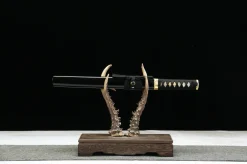
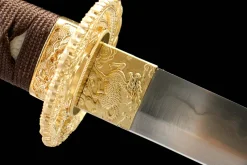
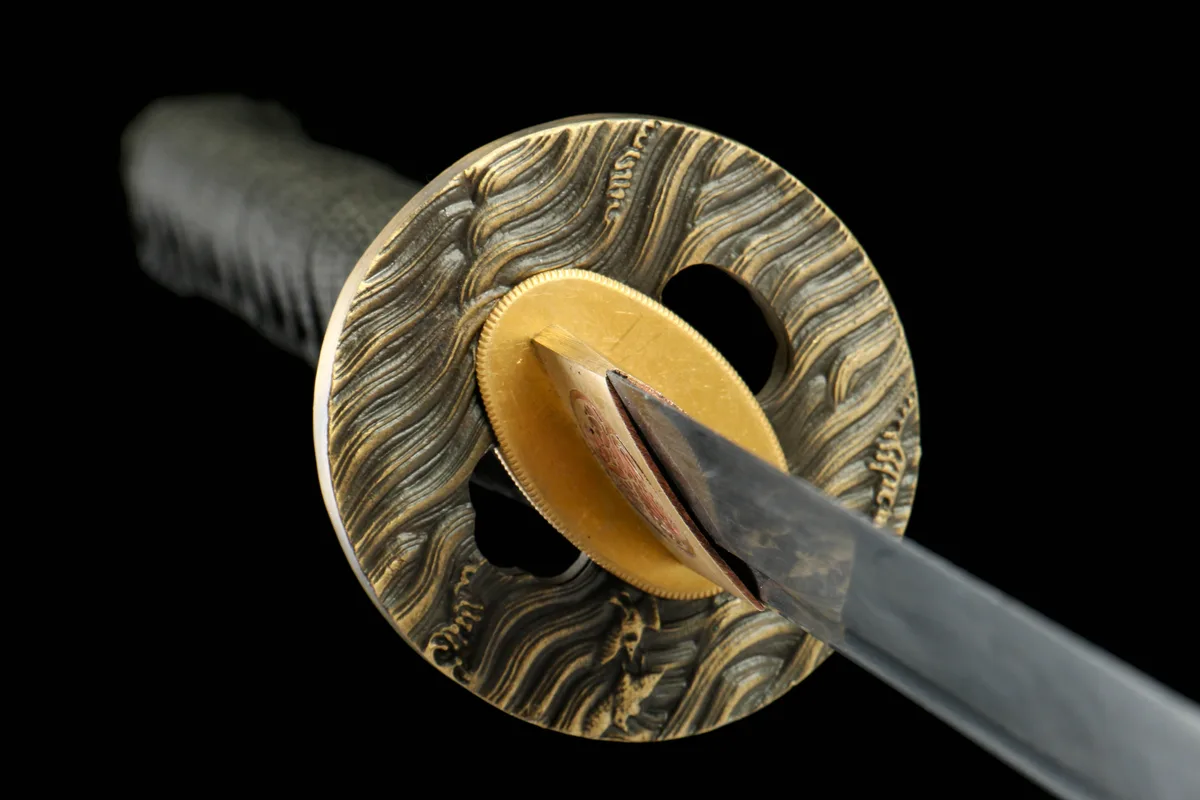
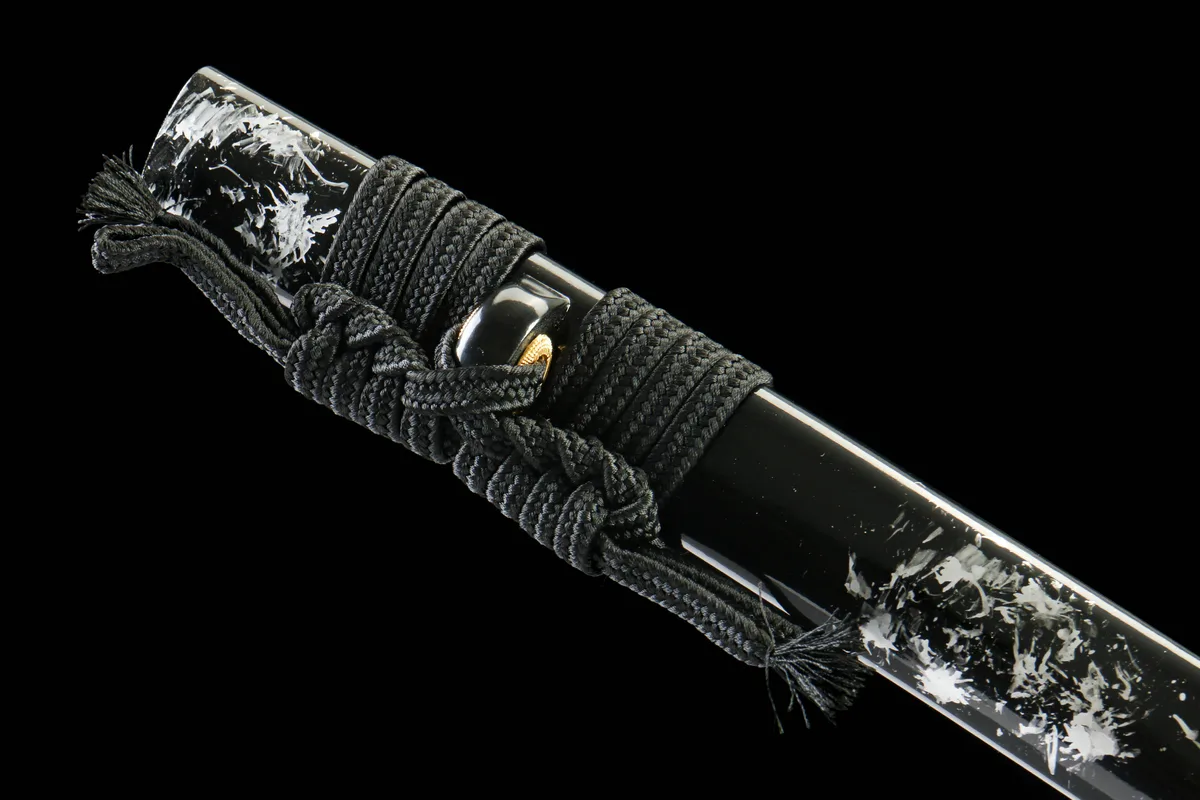
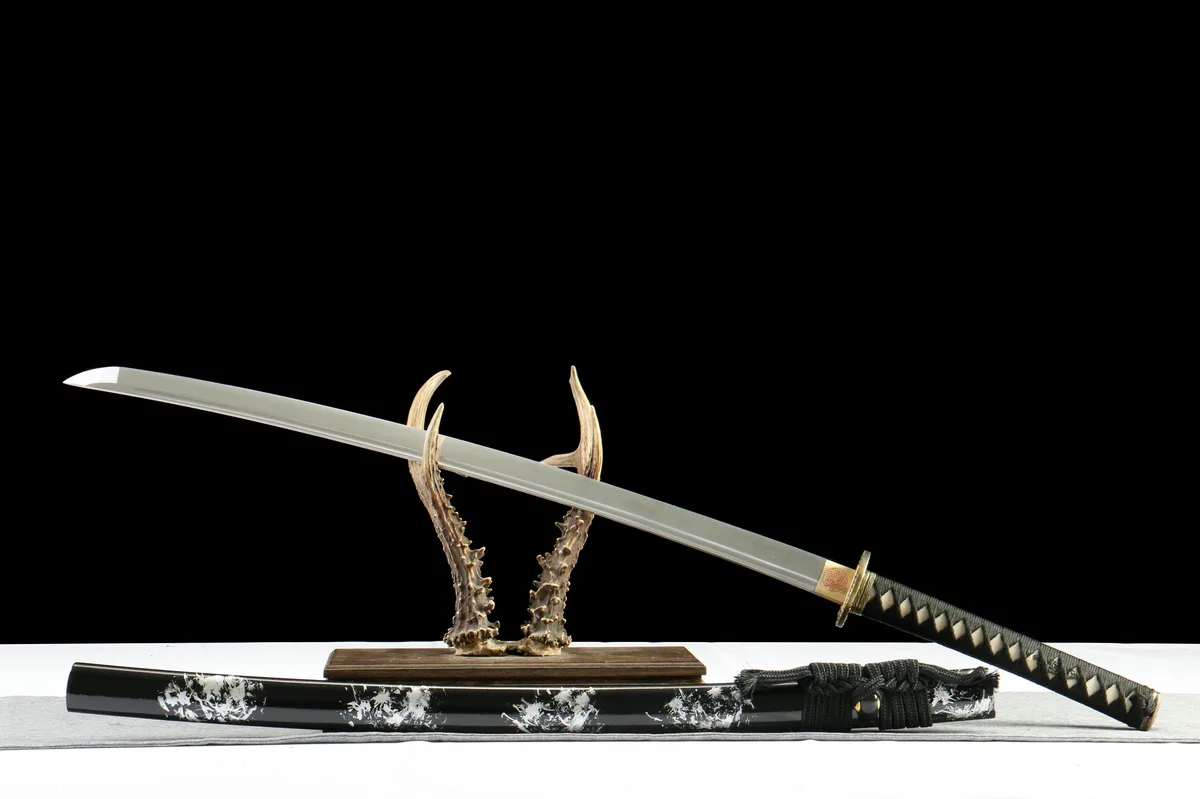
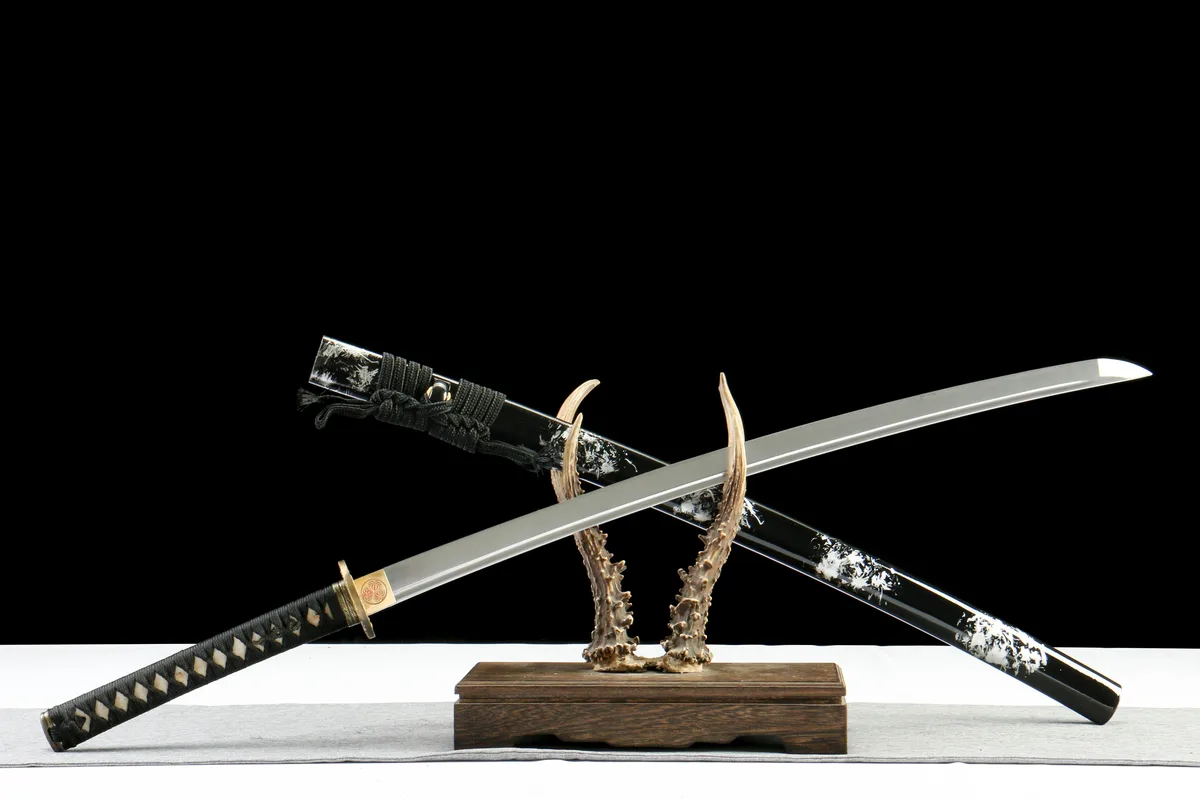
The Black Iron takes the standard functional katana build and changes what the eye lands on: the fittings carry a black-and-silver wave and floral pattern that runs as a continuous visual element from tsuba to kashira. Underneath the aesthetics is the same 1065 high carbon steel and proven shinogi-zukuri geometry that makes this format reliable under real use conditions. The visual work does not come at the expense of the blade.
Specifications
| Blade Steel | 1065 High Carbon Steel |
| Total Length | 102.0 cm / 40.2 in |
| Blade Length | 72.0 cm / 28.3 in |
| Blade Width | 3.2 cm |
| Blade Thickness | 0.7 cm |
| Weight | 1040 g / 36.7 oz |
| Heat Treatment | Controlled Furnace Tempering (Uniform Hardness) |
| Fittings | Zinc Alloy – Black and Silver Wave/Floral Pattern |
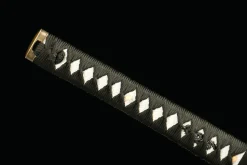
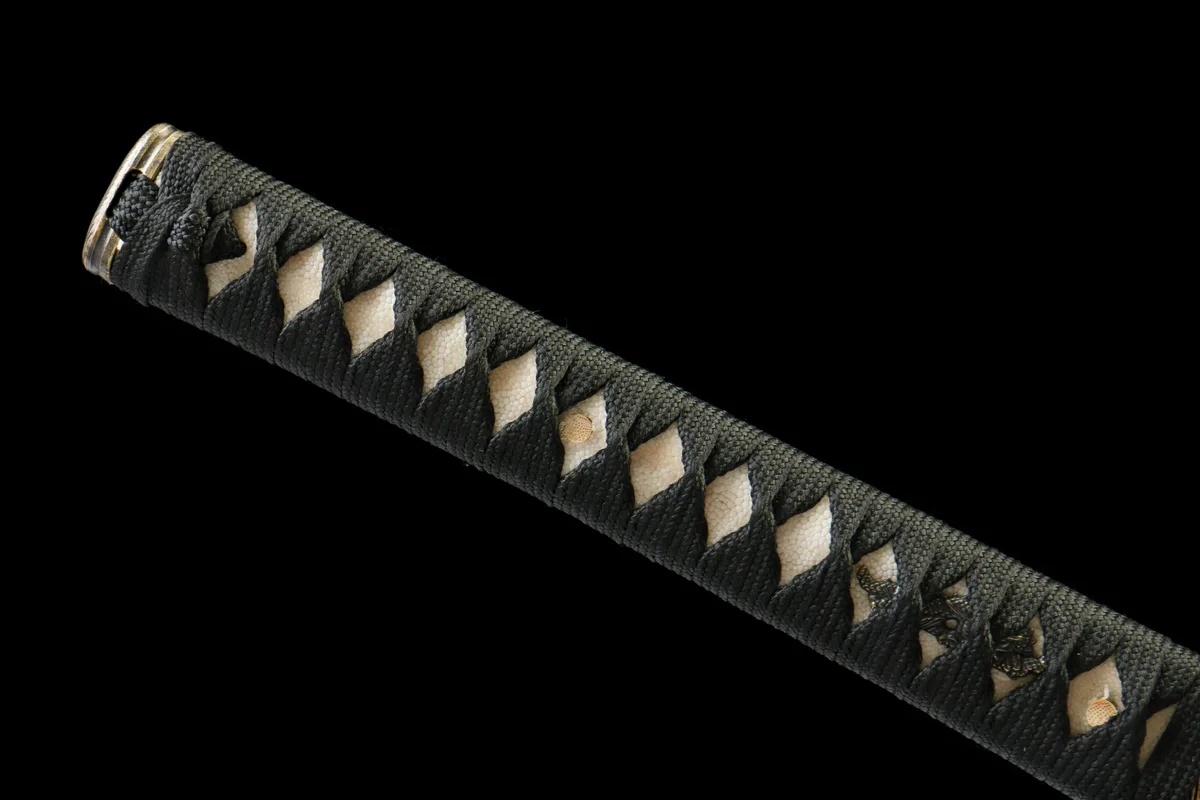
| Handle | Cotton Ito + Genuine Rayskin |
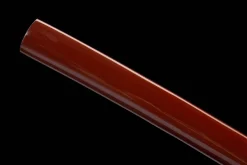
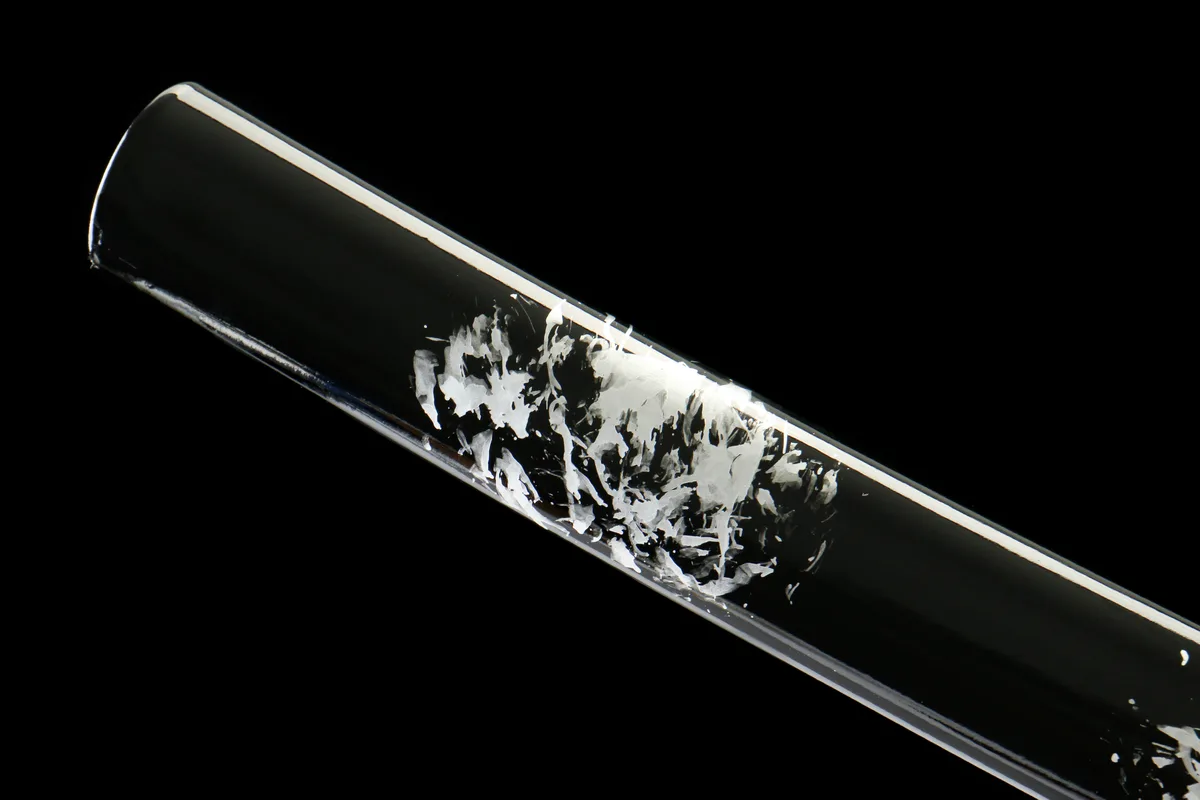
| Sheath | Hardwood, High-Gloss Lacquer |
What the Steel Does
1065 high carbon steel is selected for working katana because it occupies the right range on the hardness-toughness curve for a blade that will be used. Carbon content in the mid-to-high range produces a steel that can be hardened to hold a functional cutting edge without crossing into the brittleness zone where lateral stress causes fracture rather than flex. The controlled furnace tempering process used here – a uniform thermal cycle rather than differential treatment – ensures that the hardness is consistent across the entire blade. No soft spots, no hard spots, no surprises under load.
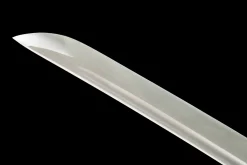
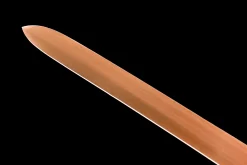
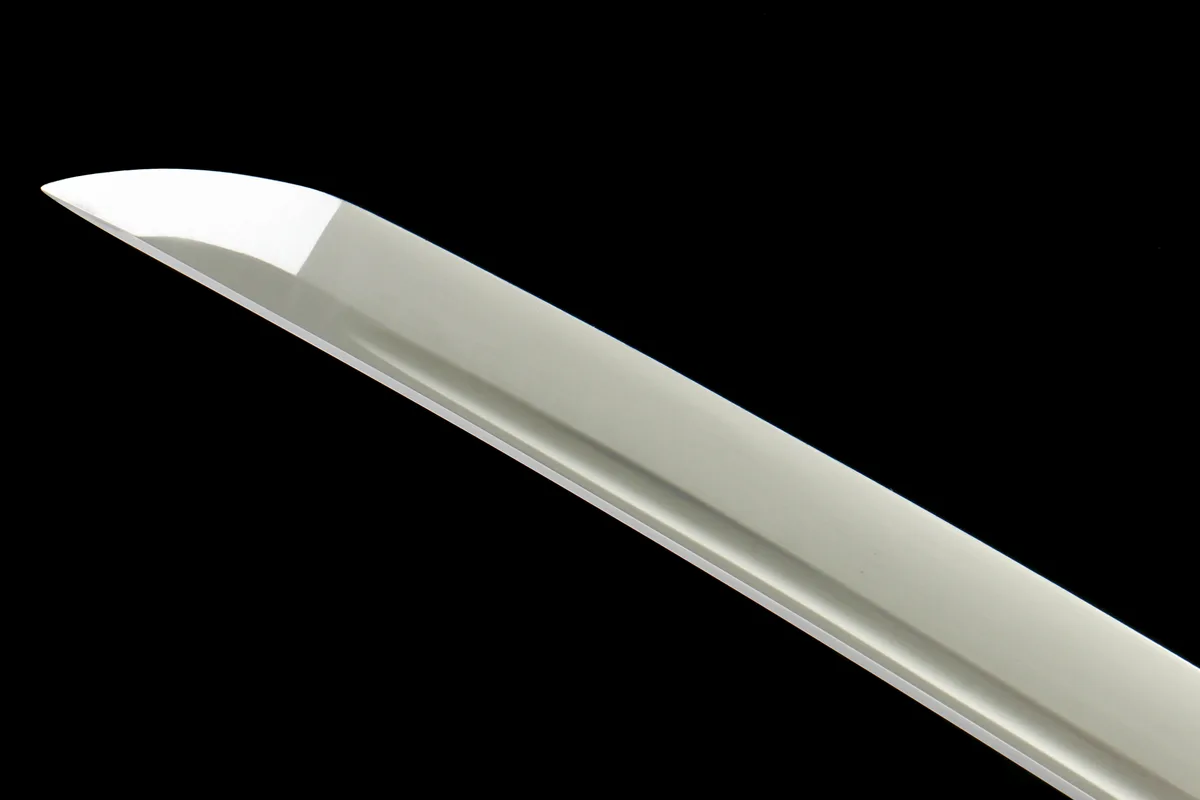
The shinogi-zukuri (ridgeline) profile is the right geometry for this steel. The raised shinogi line that runs from the yokote (the line separating point geometry from blade body) toward the handle divides the blade face into two planes – a flat upper surface toward the spine and a ground lower surface toward the edge – and that ridge actively reinforces the blade under impact, preventing the flexion that tends to develop in flat-ground blades of equivalent thickness.
The Feel of It
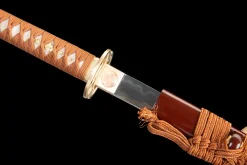
The 26 cm handle gives you a full two-handed grip, and the cotton ito wrap – seated over genuine rayskin (same) with its characteristic pebbly nodes – is tied in the standard diamond pattern with consistent tension across the full handle length. The rayskin grip does not shift. The high-gloss lacquer saya releases without drag on a clean, practiced draw. The wave and floral pattern on the fittings sits in your peripheral vision during grip – present but not distracting, a piece of craft you notice only when you look for it.
Maintenance Notes
Wipe the blade down with a clean cloth after every session and apply a light coat of choji oil before storage. The high-carbon steel will surface-rust if left oiled insufficiently, especially in humid environments. Check the bamboo mekugi (handle peg) periodically and replace it if cracking develops – a seated, solid handle is not optional on a working blade.
| Weight | 1.32 lbs |
|---|---|
| Dimensions | 102.0 × 3.2 × 0.7 in |
| Hamon | Decorative / Acid-Etched |
| Blade Steel | 1065 Carbon Steel |
| Total Length | 102.0 cm |
| Blade Length | 72.0 cm |
| Heat Treatment | 马沸炉 恒温热处理 |
| Handle Wrap | Cotton Ito + Genuine Rayskin |
| Sheath Material | Hardwood (High-Gloss Lacquer) |
| Fittings | Zinc Alloy |
| Forging Style | Shinogi-Zukuri (Ridgeline) |
Related products