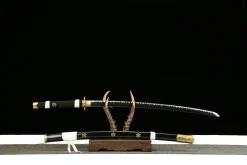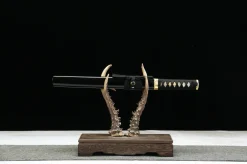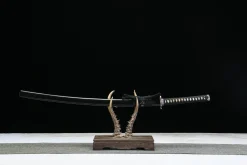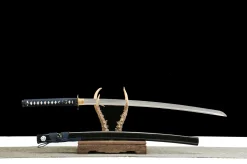


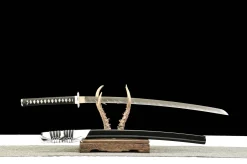

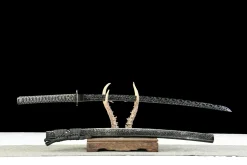



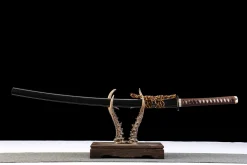


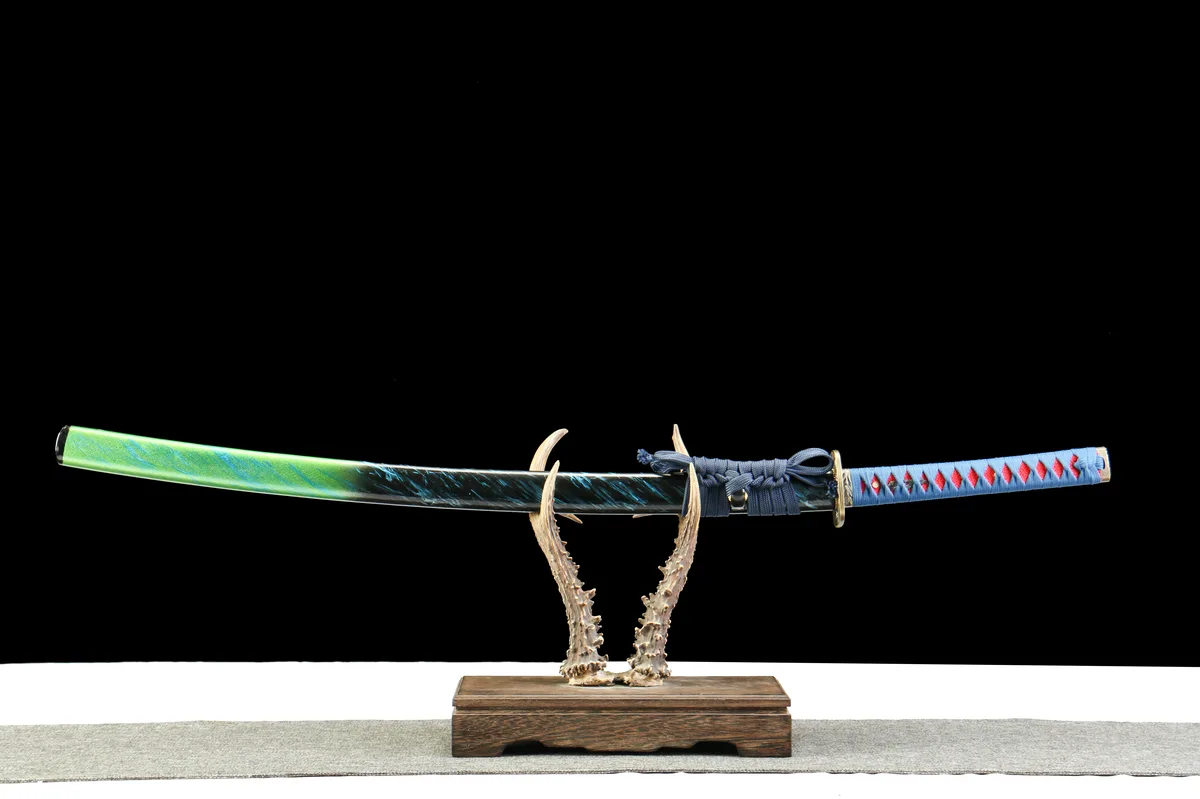



Blood Blossom – Hand Forged 1065 Carbon Steel Katana Sword
Hand-forged 1065 Carbon Steel katana (103cm total / 72cm blade), crafted in Longquan. Full-tang construction with traditional fittings and hand-lacquered saya.
$199.99
Blood Blossom – Hand Forged 1065 Carbon Steel Katana Sword
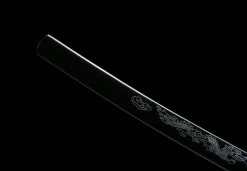
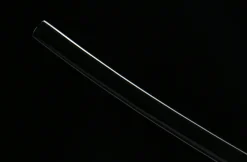
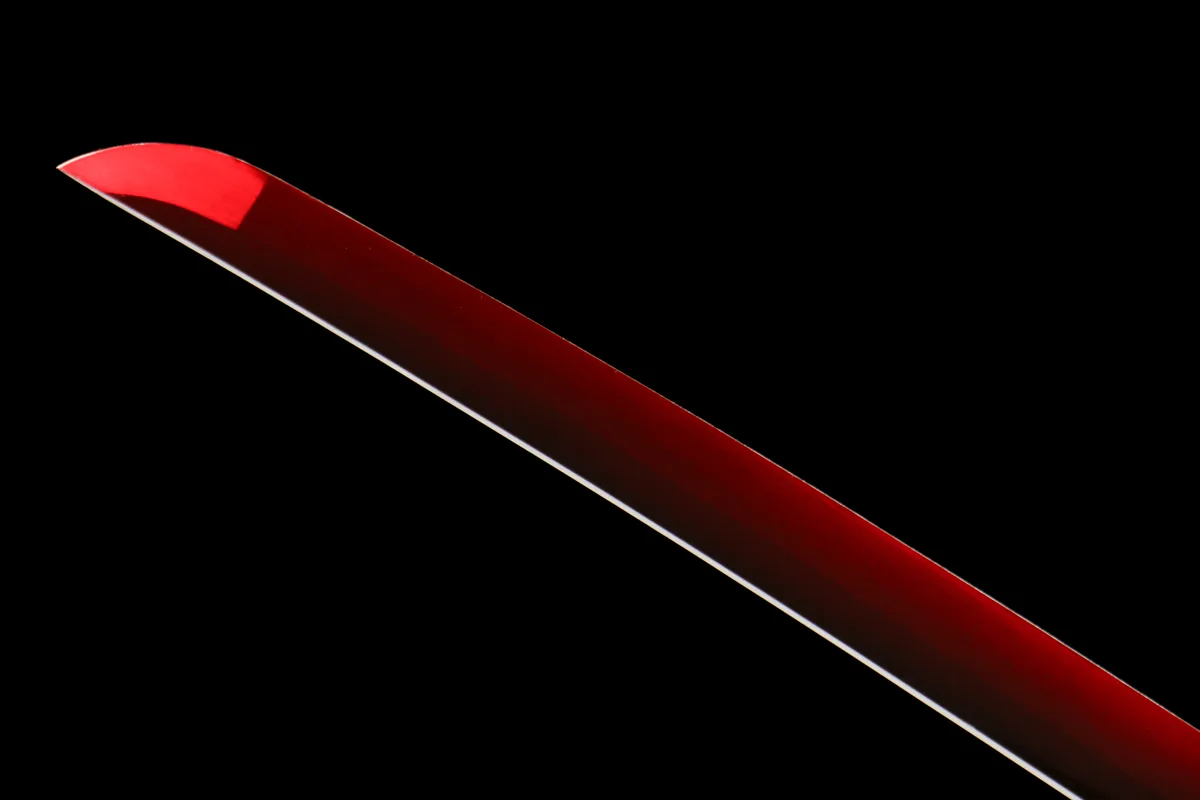
A 烤黑红 finish – heat-oxidized black bleeding into deep arterial red along the flat – gives the 血樱 Blood Blossom a blade face unlike anything a raw polish produces. It earns its name visually and then backs it up in the hand: 1065 high carbon steel, oil quenched and tempered, shaped into a full shinogi-zukuri (ridgeline) profile built for the practitioner who cuts regularly and expects the blade to stay in service.
Specifications
| Blade Steel | 1065 High Carbon Steel (烤黑红 heat-oxidized black-red finish) |
| Total Length | 103.0 cm / 40.6 in |
| Blade Length | 72.0 cm / 28.3 in |
| Blade Width | 3.2 cm |
| Weight | 950 g / 33.5 oz |
| Heat Treatment | Oil Quench & Temper |
| Fittings | Zinc Alloy |
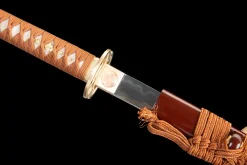
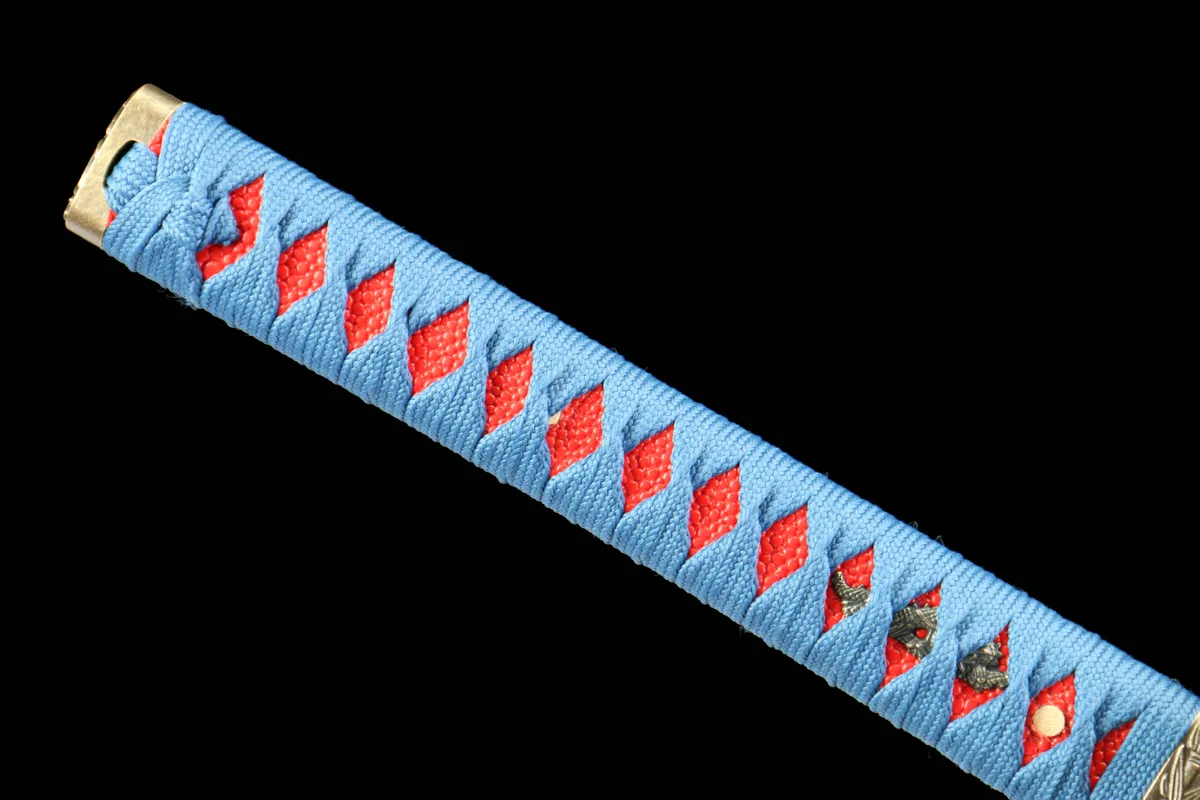
| Handle | Cotton Ito Wrap |
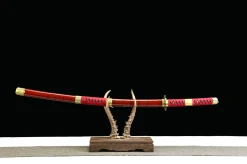
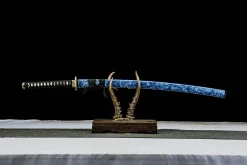
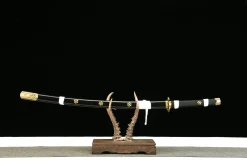
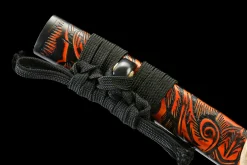
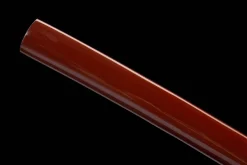
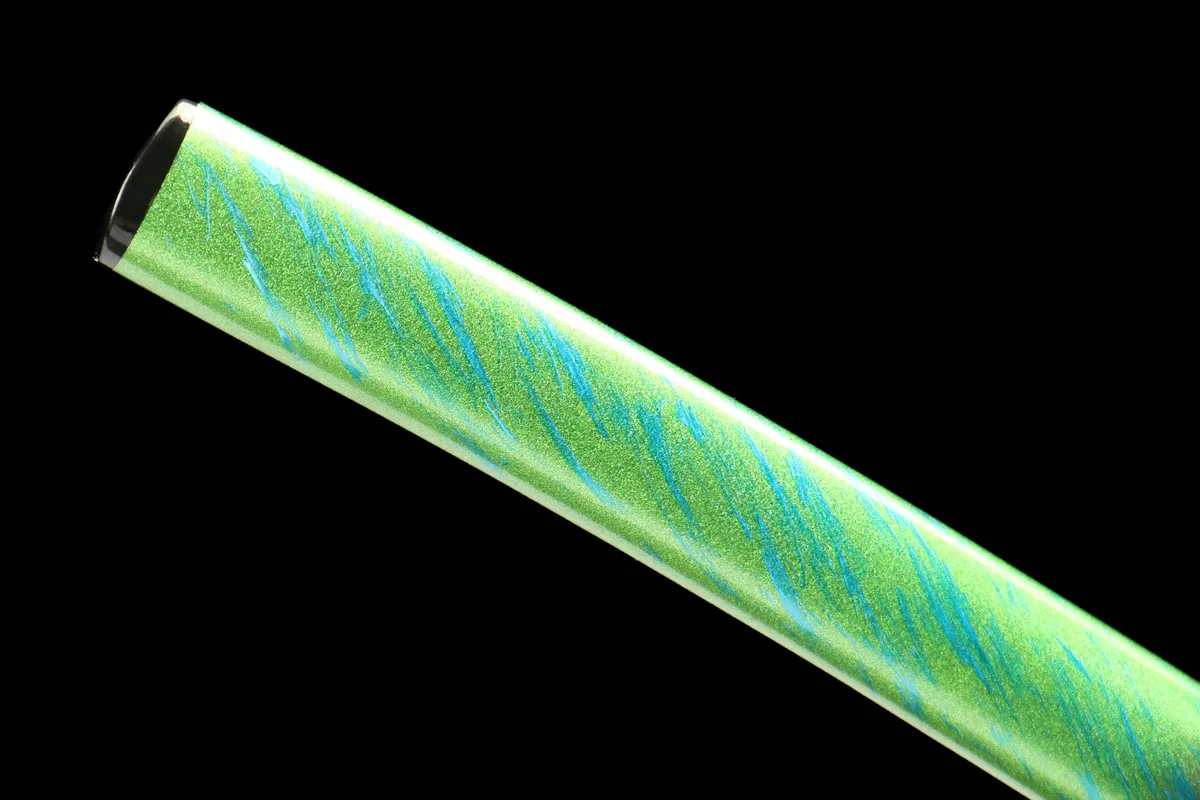
| Sheath | Green Bark Wood (Aohada) |
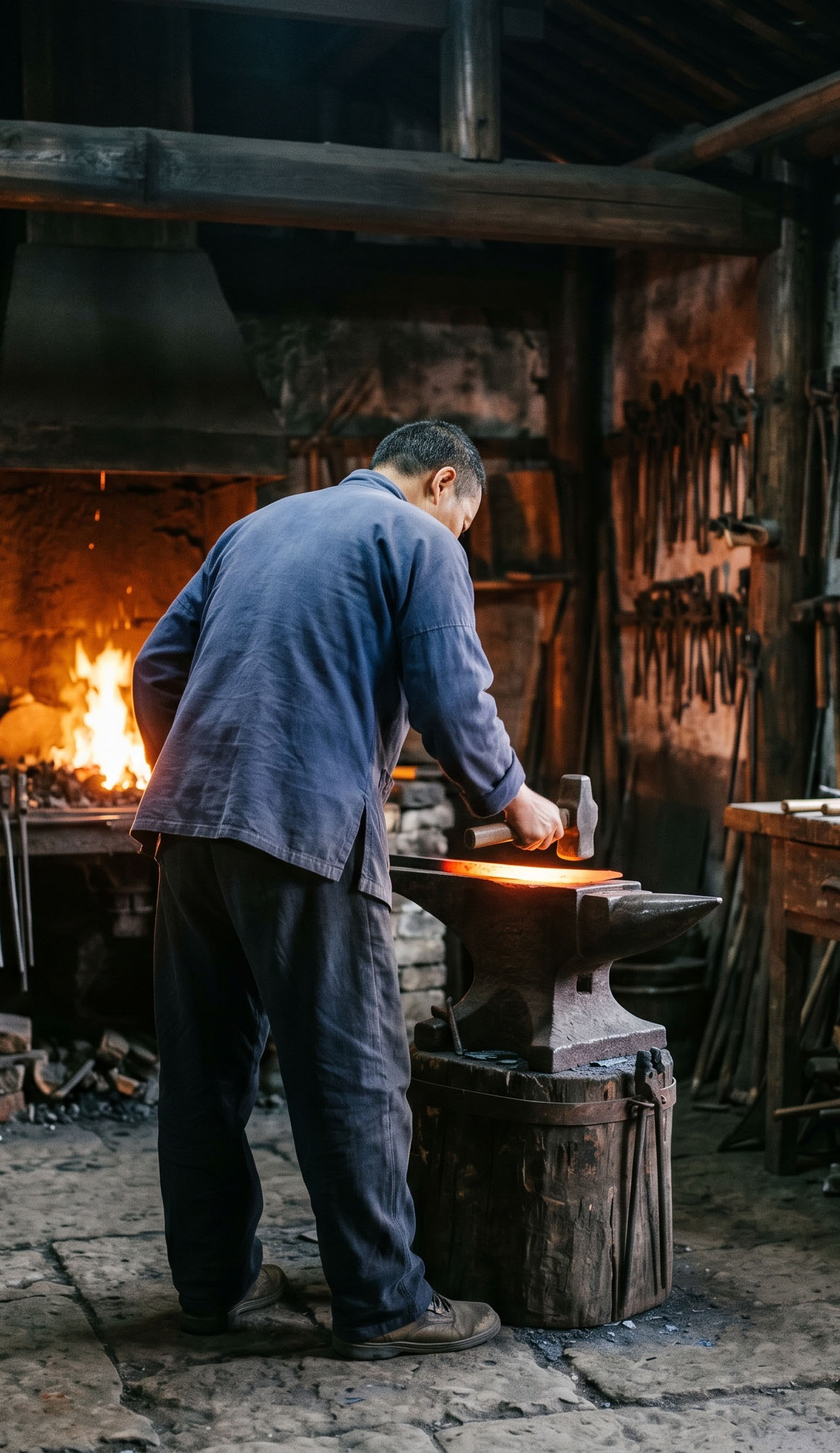
Forged in Longquan
Longquan has been forging blades for over two and a half millennia. The 1065 steel used in the Blood Blossom is not an accident of availability – it is a deliberate choice for practitioners at the working end of the spectrum. Carbon content high enough to achieve and hold a sharp, durable edge; low enough to maintain the toughness that stops a blade from fracturing under the torsional load of a hard cut. Oil quenching followed by a controlled temper removes the brittleness that comes with an overly hard blade, leaving you with a cutting tool that flexes within its limits rather than shattering past them.
The 烤黑红 oxidized finish is applied through a controlled heat process that produces the two-tone shift from charred black at the spine to red-brown toward the edge bevel. This is not paint or coating – it is the steel itself, oxidized at temperature. It will evolve with use and maintenance, and that evolution is appropriate for a tool blade.
Weight, Balance, Draw
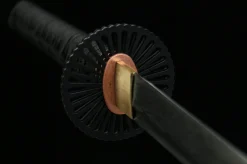
At 72 cm, the blade sits at the longer end of conventional daito (long sword) territory. The 27 cm tsuka (handle) is long enough for a full two-hand grip with genuine separation between your hands, which translates directly into rotational control at the point of cut. Cotton ito (handle wrap) grips dry or wet – no gloss, no slide. The aohada saya (green bark wood sheath) draws with a single clean pull, no catch, no slop. The 3.2 cm blade width at the base narrows through the shinogi-zukuri ridgeline in a taper that keeps the tip responsive without sacrificing spine rigidity.
Keeping It Sharp
After each cutting session, remove residue from the blade with a soft cloth and apply a thin, even layer of choji oil from base to tip. The oxidized finish requires no special treatment beyond keeping the blade oiled and dry. Reprofile the edge on a water stone when it begins to reflect light at the very tip of the bevel – that reflection tells you the edge has folded and it is time to work it back.
| Weight | 1.2 lbs |
|---|---|
| Dimensions | 103.0 × 3.2 × 0.7 in |
| Hamon | Decorative / Acid-Etched |
| Blade Steel | 1065 Carbon Steel |
| Total Length | 103.0 cm |
| Blade Length | 72.0 cm |
| Heat Treatment | Oil Quench & Temper |
| Handle Wrap | Cotton Ito Wrap |
| Sheath Material | Green Bark Wood (Aohada) |
| Fittings | Zinc Alloy |
| Forging Style | Shinogi-Zukuri (Ridgeline) |
Related products