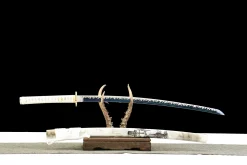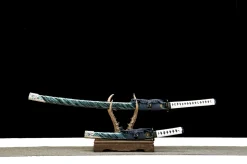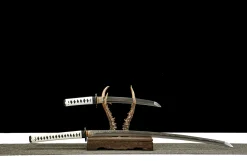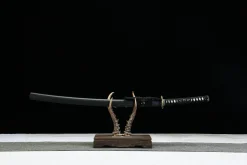








Blood Wind – Hand Forged 1065 Carbon Steel Katana Sword
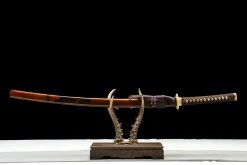
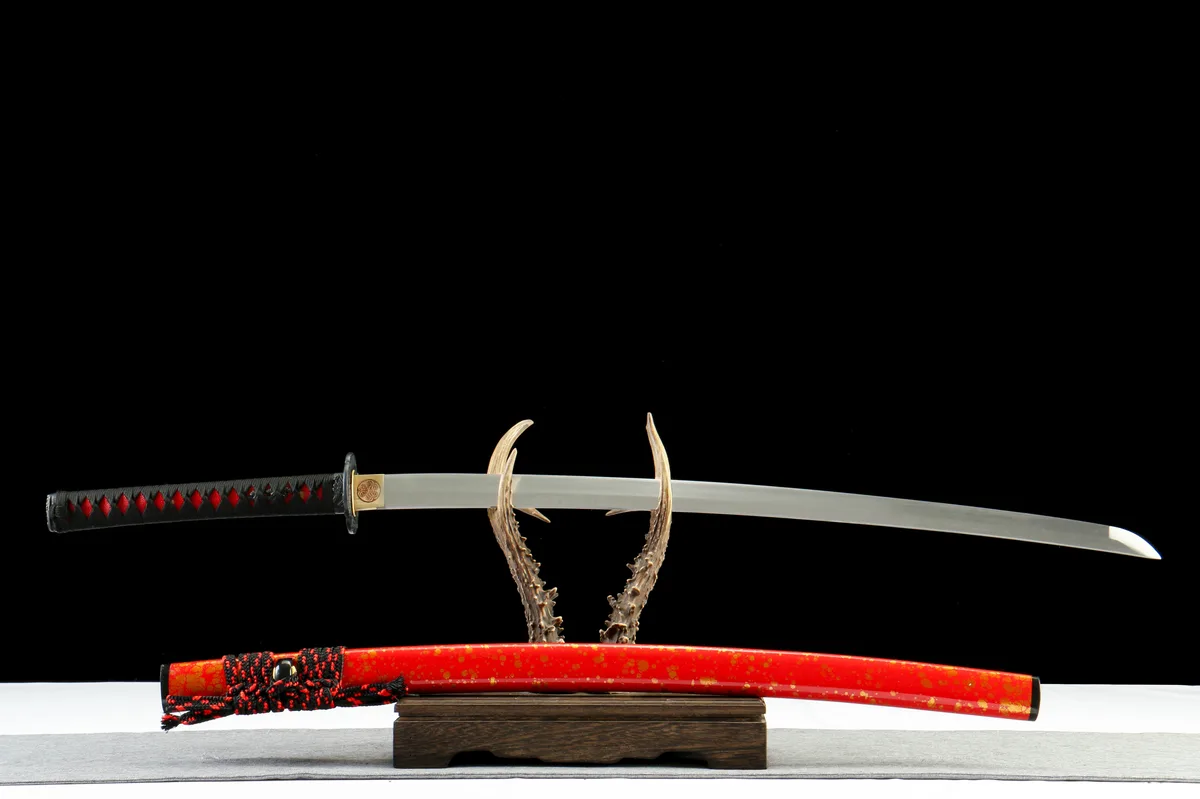
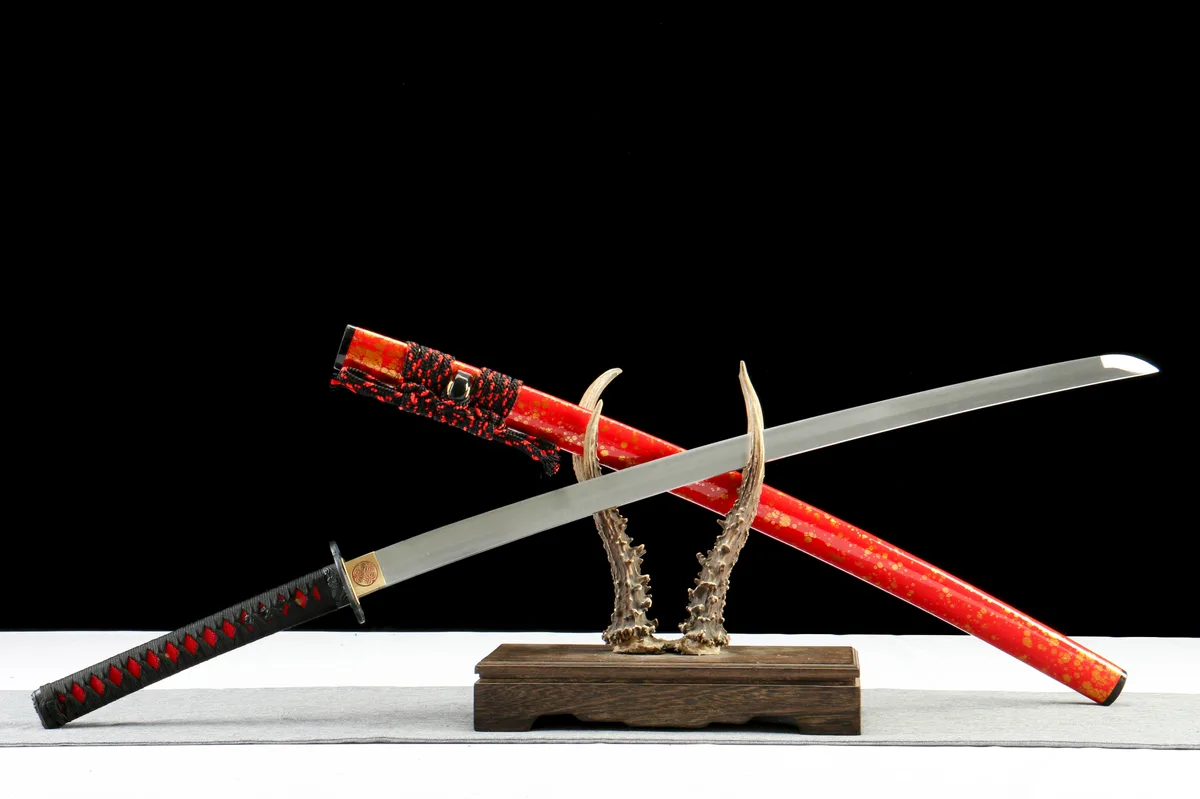
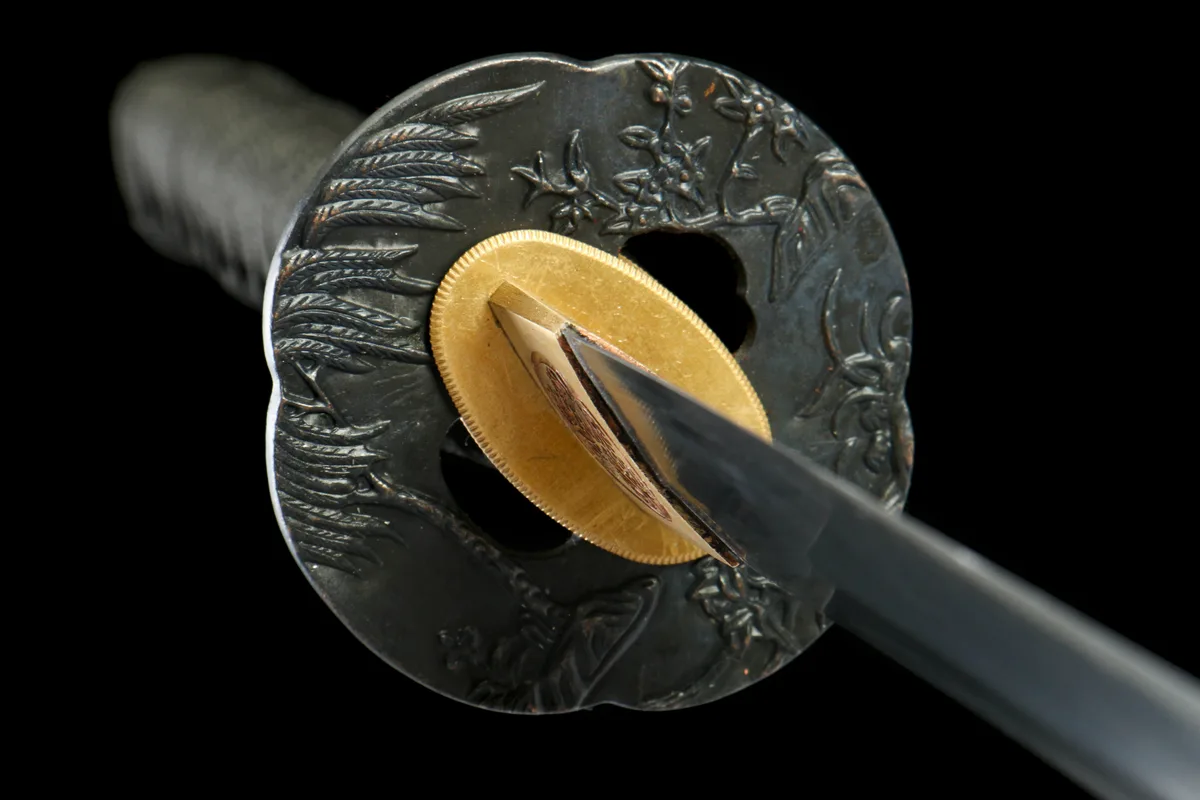
Hand-forged 1065 Carbon Steel katana (102cm total / 72cm blade), crafted in Longquan. Full-tang construction with traditional fittings and hand-lacquered saya.
$219.99
Blood Wind – Hand Forged 1065 Carbon Steel Katana Sword
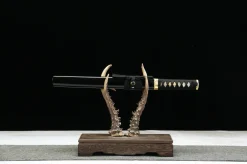
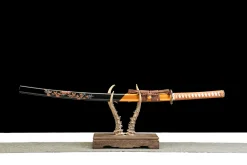
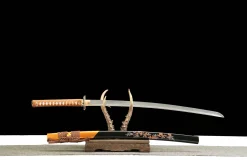
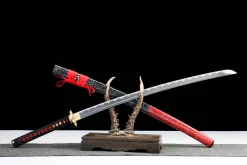
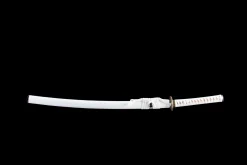
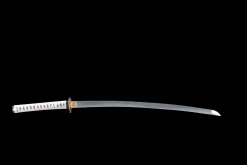
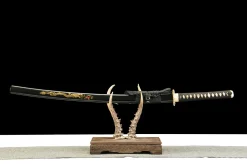
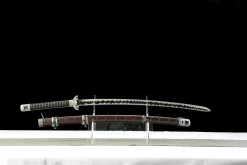
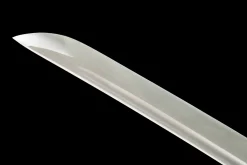
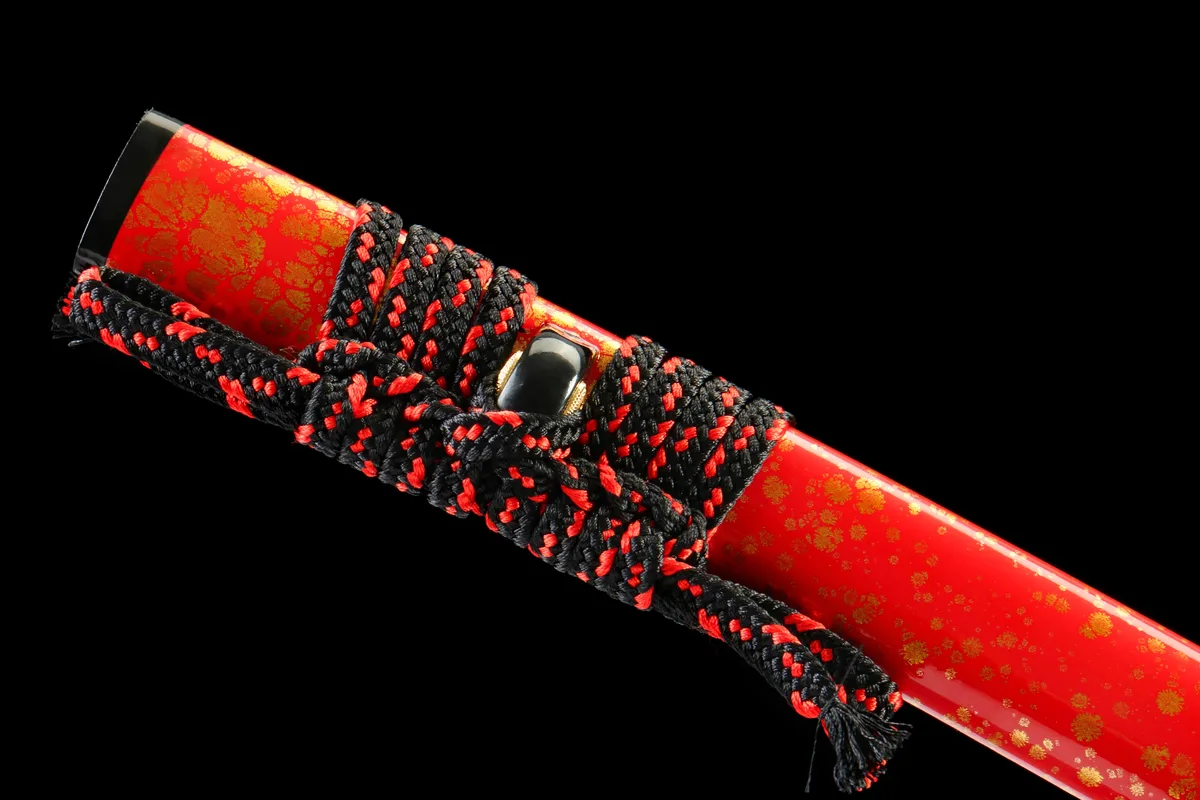
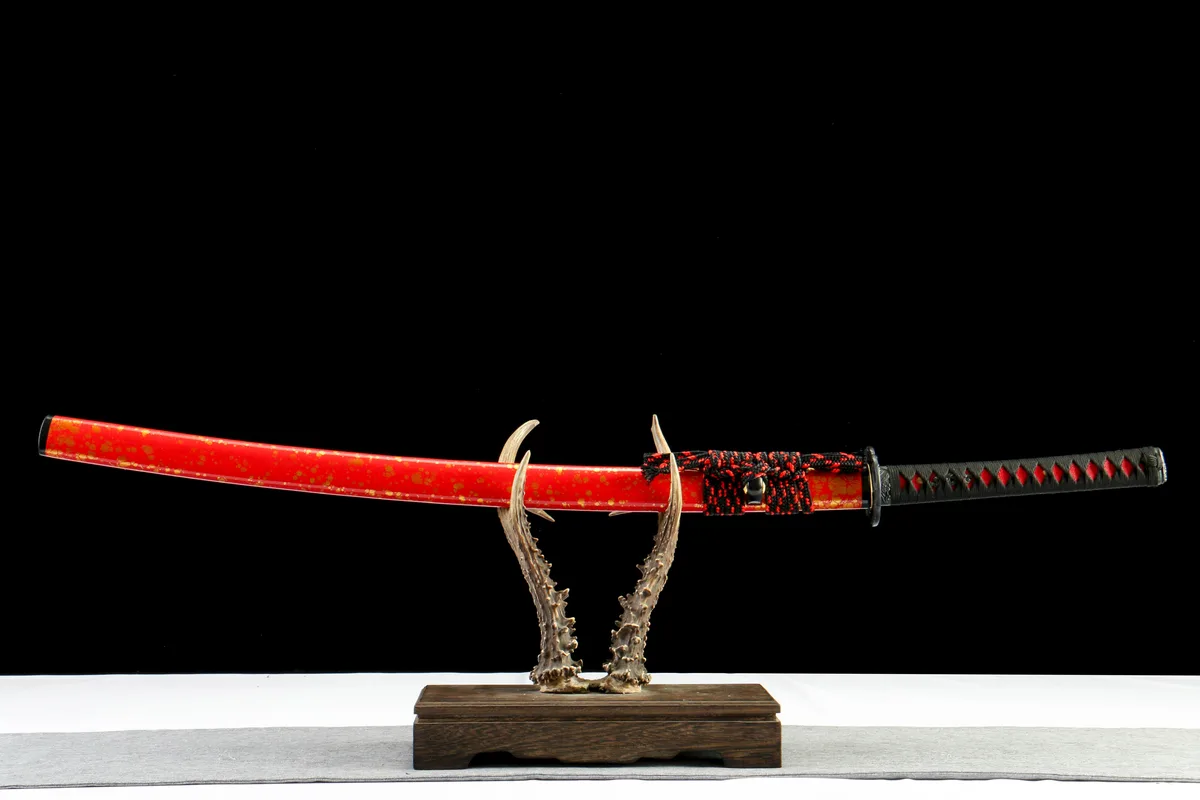
The red lacquer saya on the Blood Wind is finished with a gold-drip detail – a deliberate disruption of the solid red ground that catches light at the edges and moves differently depending on viewing angle. The blade is 1065 high carbon steel, salt-bath heat-treated for uniform hardness from spine to edge across all 72 cm, forged in shinogi-zukuri (ridgeline) profile. It is a working blade with a saya that commands attention, and the 0.7 cm spine geometry behind the edge makes it clear which function comes first.
Specifications
| Blade Steel | 1065 High Carbon Steel |
| Total Length | 102.0 cm / 40.2 in |
| Blade Length | 72.0 cm / 28.3 in |
| Blade Width | 3.2 cm |
| Blade Thickness | 0.7 cm |
| Weight | 1040 g / 36.7 oz |
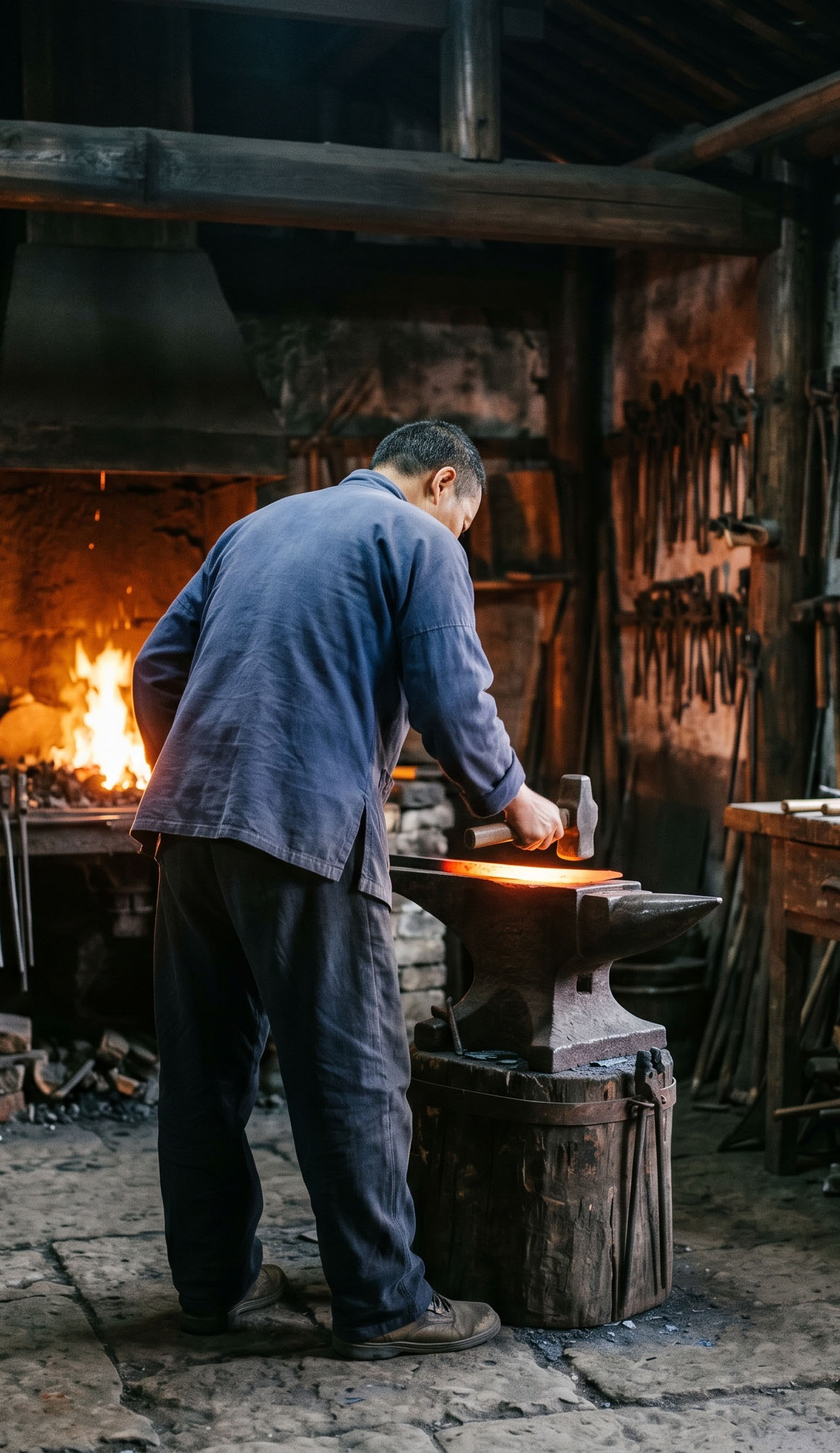
| Heat Treatment | Salt-bath furnace, constant-temperature heat treatment |
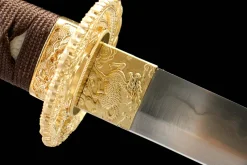
| Fittings | Zinc Alloy |
| Handle | Cotton Ito wrap over Genuine Rayskin |
| Sheath | Hardwood, High-Gloss Lacquer |
What the Steel Does
1065 high carbon steel is an established material for functional katana because it handles the full range of stresses a working blade encounters without requiring obsessive maintenance or special handling. The carbon content is high enough to harden properly under heat treatment – in this case the 马沸炉 恒温热处理 process, a constant-temperature molten salt-bath treatment used in Longquan that produces uniform hardness across the entire blade cross-section, not just at the surface or edge. The result is a blade that responds predictably under load: the edge holds, the spine flexes rather than cracks, and the geometry at the shinogi (the blade’s raised ridgeline) stays intact through extended use.
The shinogi-zukuri profile is not decorative. The raised ridgeline divides the flat and the beveled section of the blade, creating a cross-section that resists the lateral bending forces that cause permanent set or fracture in poorly profiled blades. At 3.2 cm wide and 0.7 cm at the spine, the Blood Wind is proportioned for sustained performance – not the thin, light profile of a blade optimized only for speed, but the geometry of a blade built to absorb what it encounters and keep working.
The Feel of It
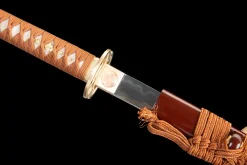
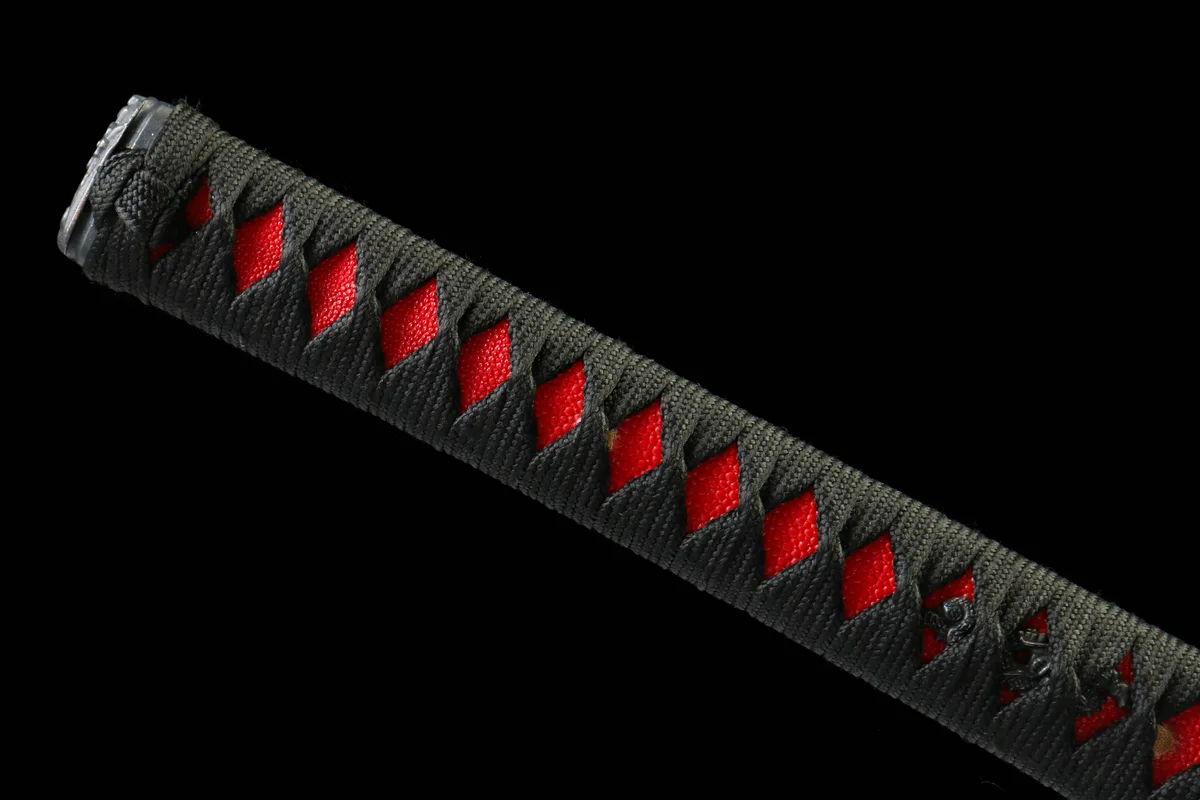
Red cotton ito over genuine same-kawa (rayskin) wraps the 26 cm tsuka (handle), the ito crossed in the traditional diamond pattern with consistent tension from the kashira (pommel cap) to the tsuba (handguard). The rayskin beneath is a structural component, not decoration – its nodulated surface grips the cotton from below and keeps the entire wrap from rotating under torque. Drawing from the red-and-gold lacquered hardwood saya, the blade clears the koiguchi (scabbard mouth) cleanly, the lacquered interior smooth enough that the draw does not drag against the steel’s surface but fitted tightly enough at the habaki (blade collar) that the blade does not rattle or shift when sheathed.
Care Instructions
Wipe the blade with a clean cloth and apply choji oil or food-grade mineral oil after every use, ensuring full coverage from habaki to kissaki (tip). The red-and-gold lacquered saya is hardwood with a high-gloss finish – clean only with a soft dry cloth and avoid moisture contact at the koiguchi, where standing water can migrate onto the blade. Inspect the ito wrap at the diamonds closest to the tsuba, where wear typically begins first, and rewrap before looseness develops into movement.
| Weight | 1.32 lbs |
|---|---|
| Dimensions | 102.0 × 3.2 × 0.7 in |
| Hamon | Decorative / Acid-Etched |
| Blade Steel | 1065 Carbon Steel |
| Total Length | 102.0 cm |
| Blade Length | 72.0 cm |
| Heat Treatment | 马沸炉 恒温热处理 |
| Handle Wrap | Cotton Ito + Genuine Rayskin |
| Sheath Material | Hardwood (High-Gloss Lacquer) |
| Fittings | Zinc Alloy |
| Forging Style | Shinogi-Zukuri (Ridgeline) |
Related products