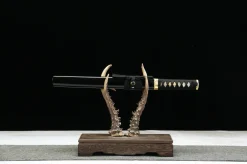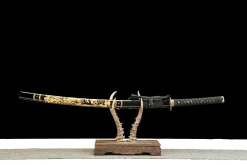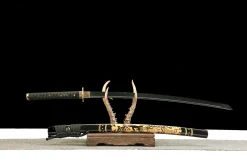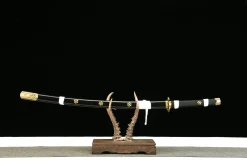

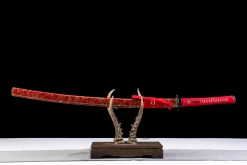
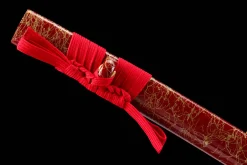

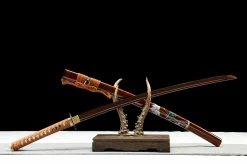
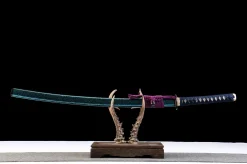






Celestial Jade – Hand Forged Artisan Hand-Forged Steel Katana Sword
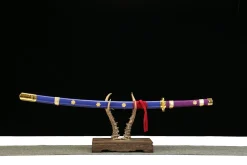
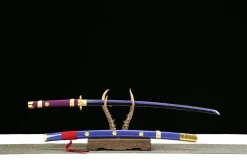
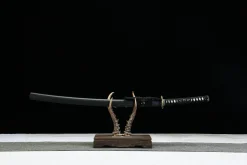
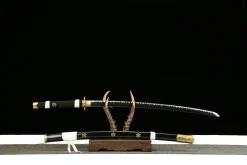
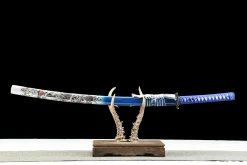
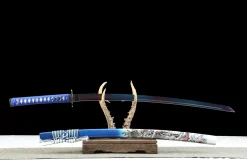
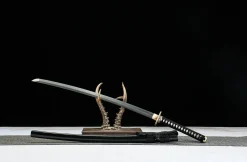
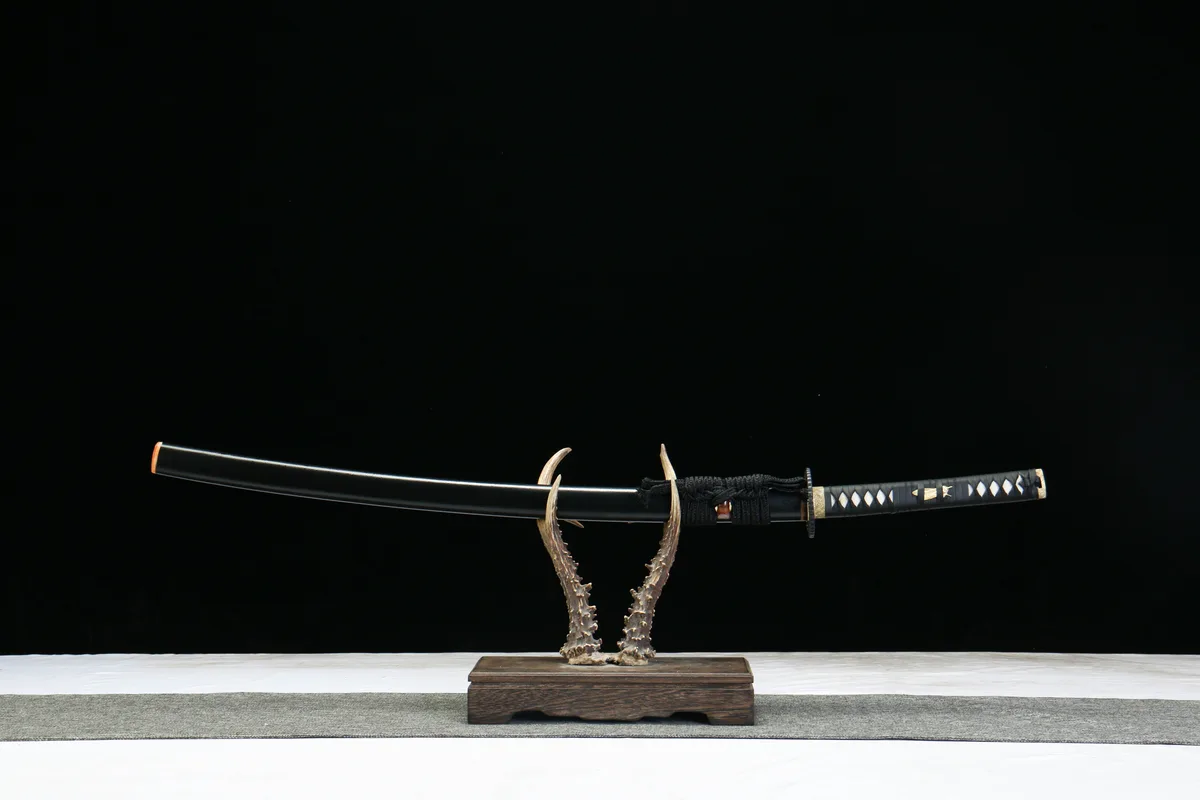
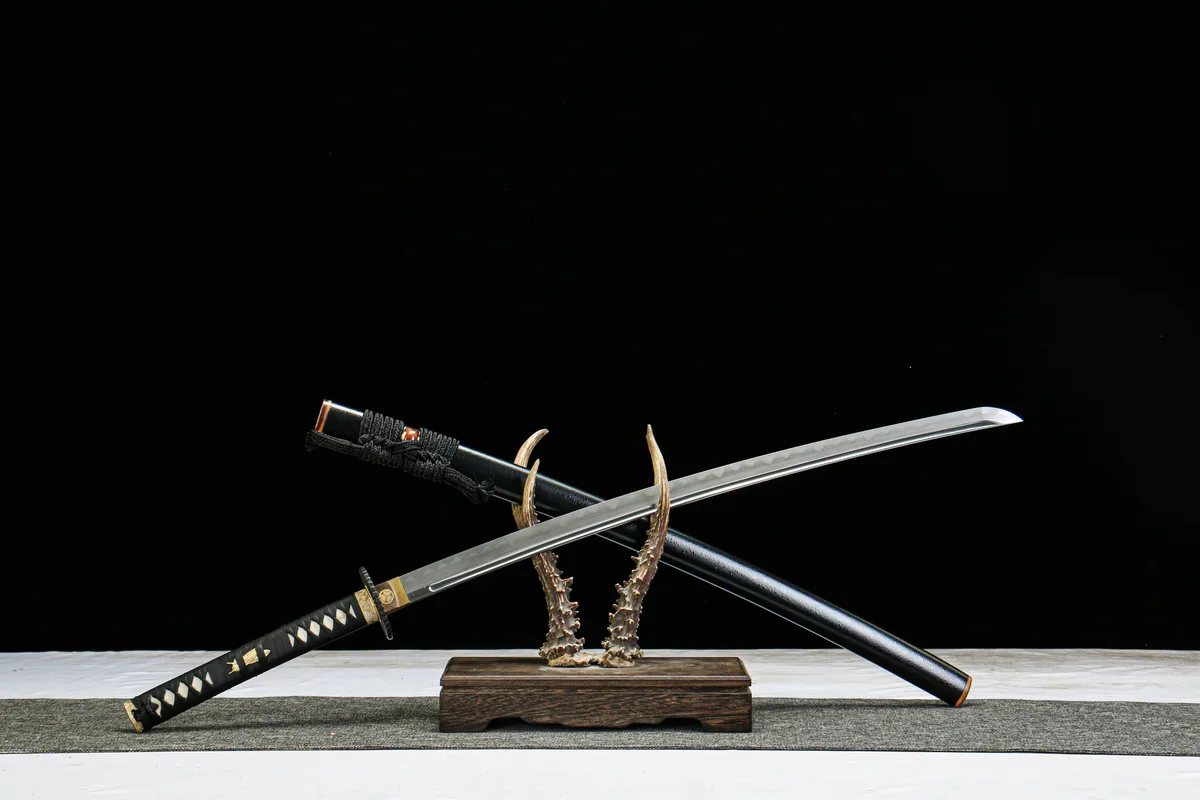
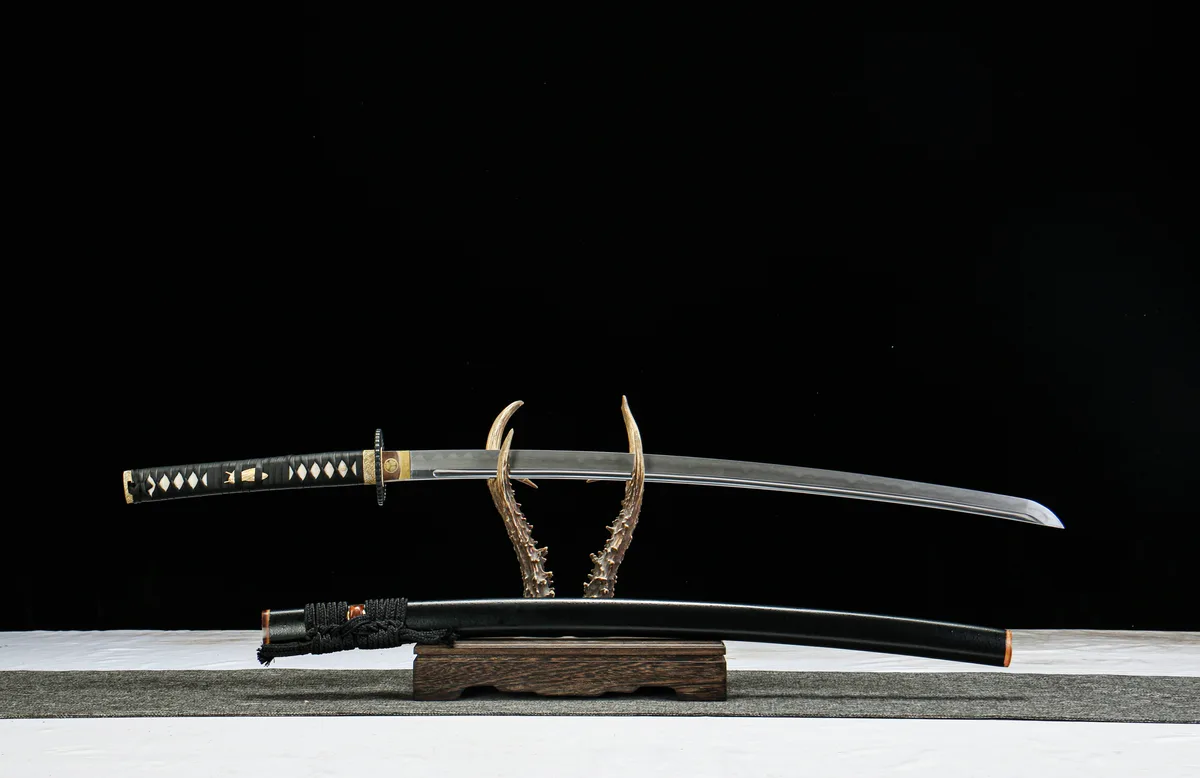
Hand-forged Artisan Hand-Forged Steel katana (103cm total / 72cm blade), crafted in Longquan. Full-tang construction with traditional fittings and hand-lacquered saya.
$2,724.99
Celestial Jade – Hand Forged Artisan Hand-Forged Steel Katana Sword
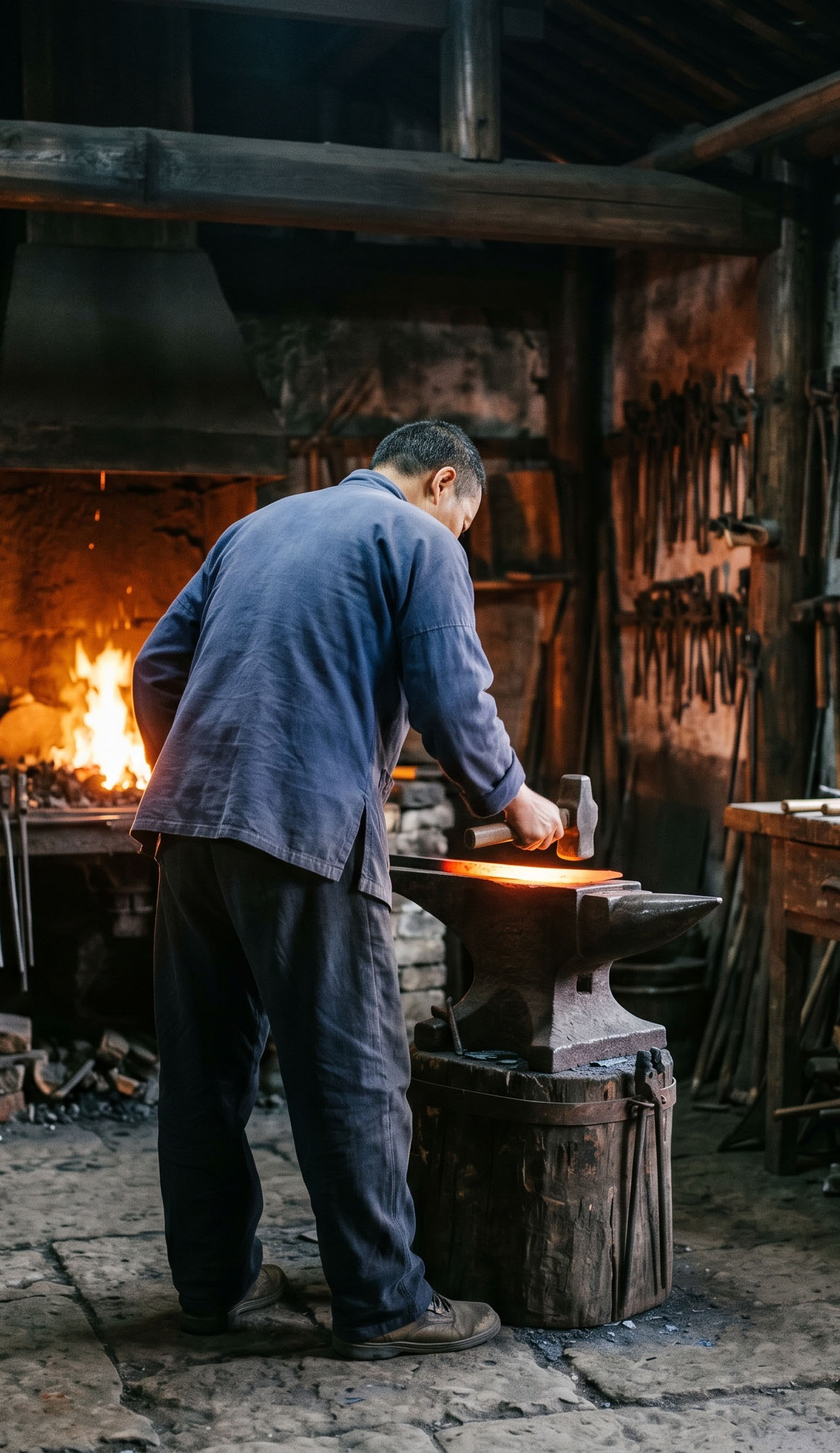
The Chinese term 自炼钢夹钢 translates literally as self-smelted sandwich steel – a construction method in which the smith begins not with purchased bar stock but with iron ore reduced and refined in-house, then forge-welds that self-smelted steel around a harder edge core to produce a blade with differentiated hardness built into its cross-section. This is not a common process in contemporary production. It requires the smith to control the entire metallurgical chain from raw material forward, and the result is a blade whose character reflects choices made at every stage of that chain. The Celestial Jade (天璇) is that blade.
Specifications
| Blade Steel | 自炼钢夹钢 (Self-Smelted Sandwich / Clad Steel) |
| Total Length | 103.0 cm / 40.6 in |
| Blade Length | 72.0 cm / 28.3 in |
| Blade Width | 3.2 cm |
| Blade Thickness | 0.7 cm |
| Weight | 950 g / 33.5 oz |
| Heat Treatment | Oil Quench & Temper |
| Fittings | Iron (装) |
| Handle | Cotton Ito Wrap |
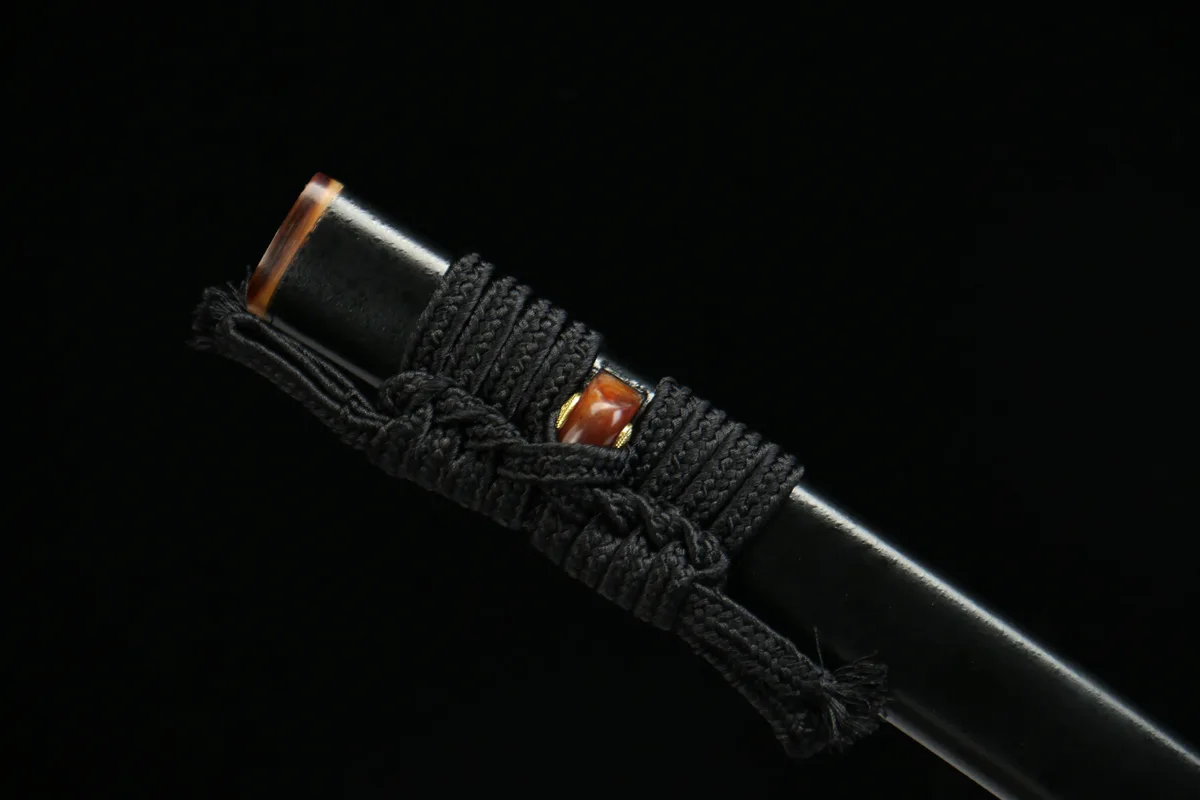
| Sheath | Green Bark Wood (Aohada) |
Steel & Construction
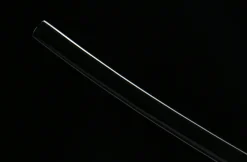
The jia gang (夹钢) – sandwich steel or clad steel – construction places a harder, higher-carbon edge steel between softer jacket layers of the self-smelted body steel. The softer outer material absorbs shock and provides the blade’s structural resilience; the harder inner core reaches and sustains the edge hardness that cutting performance demands. This is the same principle that underlies Japanese tamahagane construction and traditional Chinese bladesmithing practice alike: heterogeneous construction achieves what no single uniform alloy can. The transition zone between the two steel types, visible as a faint line running the length of the blade when the surface is polished, is a direct record of that forge-weld boundary.
The oil quench and temper heat treatment applied to a jia gang construction produces a blade with a genuine hardness differential between edge and spine – the edge exits the quench at a meaningfully higher Rockwell value than the jacket steel, while the spine retains the toughness to resist the bending forces that a uniformly hard blade would meet with fracture. The shinogi-zukuri (ridgeline) profile adds geometric stiffness to the structural advantage already built into the steel, and the iron fittings – selected here over brass or zinc for their visual austerity and compatibility with the blade’s serious character – are finished to a dark oxide that will deepen with age.
Handling
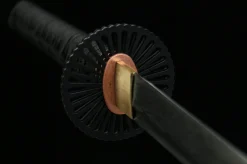
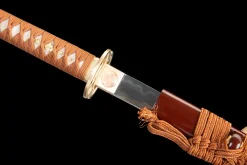
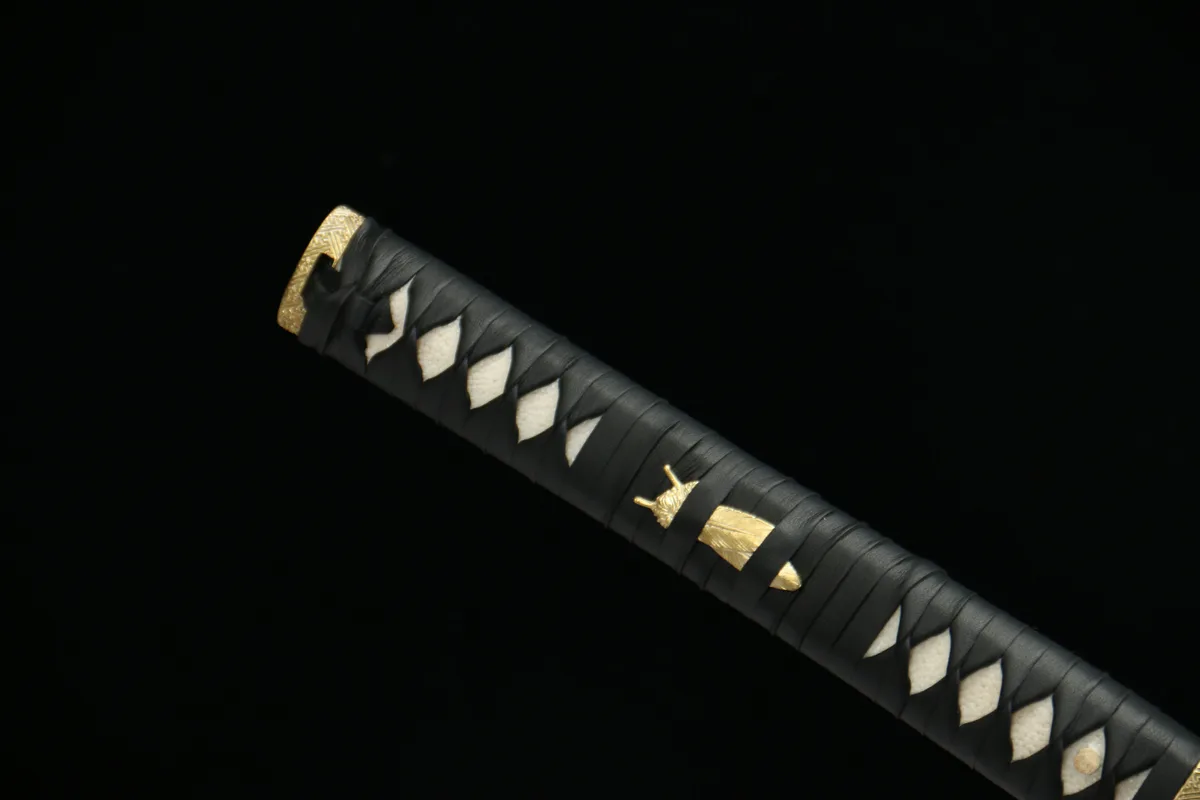
The 27 cm handle is wrapped in cotton ito using the traditional diamond pattern, producing a series of raised lozenges across the grip surface that register precisely under the fingers of both hands. The full katana handle length distributes the two-hand grip evenly, and the cotton wrap neither slips with moisture nor compresses out of shape with sustained use. Drawing from the green aohada (bark wood) saya, the 72 cm blade clears cleanly – aohada is a naturally low-friction wood that releases the blade without the hesitation that a tight lacquered saya can produce. The shinogi-zukuri geometry is immediately present in hand: the raised ridgeline is palpable through the ito wrap when your thumb rides the back of the handle, and it tracks through motion with the directional certainty that characterizes a well-forged ridgeline blade. The iron tsuba (hand guard) sits flush and solid at the transition between handle and blade – no movement, no play.
Care Instructions
Apply choji oil (clove-mineral oil, the traditional preservative for carbon steel Japanese blades) to both flat faces and the shinogi after each handling session, using a soft cloth or traditional uchiko ball – fingerprint acids are particularly damaging to the polished surface of a jia gang blade where the steel types meet, as differential reactivity can produce uneven oxidation at the weld boundary. The iron fittings will develop a natural dark patina over time; this is correct and should not be polished away. Store horizontally in the saya in a stable, low-humidity environment, and re-oil every three months during extended storage.
| Weight | 1.2 lbs |
|---|---|
| Dimensions | 103.0 × 3.2 × 0.7 in |
| Hamon | Decorative / Acid-Etched |
| Blade Steel | Artisan Hand-Forged Steel |
| Total Length | 103.0 cm |
| Blade Length | 72.0 cm |
| Heat Treatment | Oil Quench & Temper |
| Handle Wrap | Cotton Ito Wrap |
| Sheath Material | Green Bark Wood (Aohada) |
| Fittings | Iron, (装) |
| Forging Style | Shinogi-Zukuri (Ridgeline) |
Related products