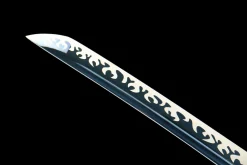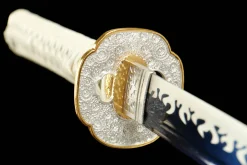


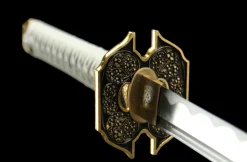
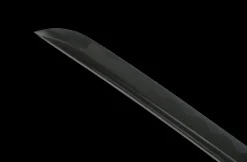





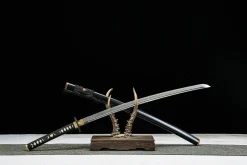
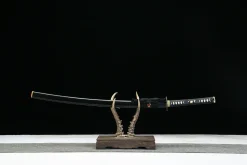
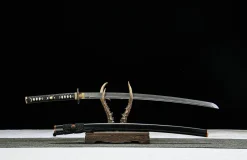


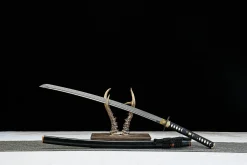
Celestial Jade – Hand Forged Carbon Steel Katana Sword
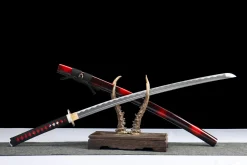
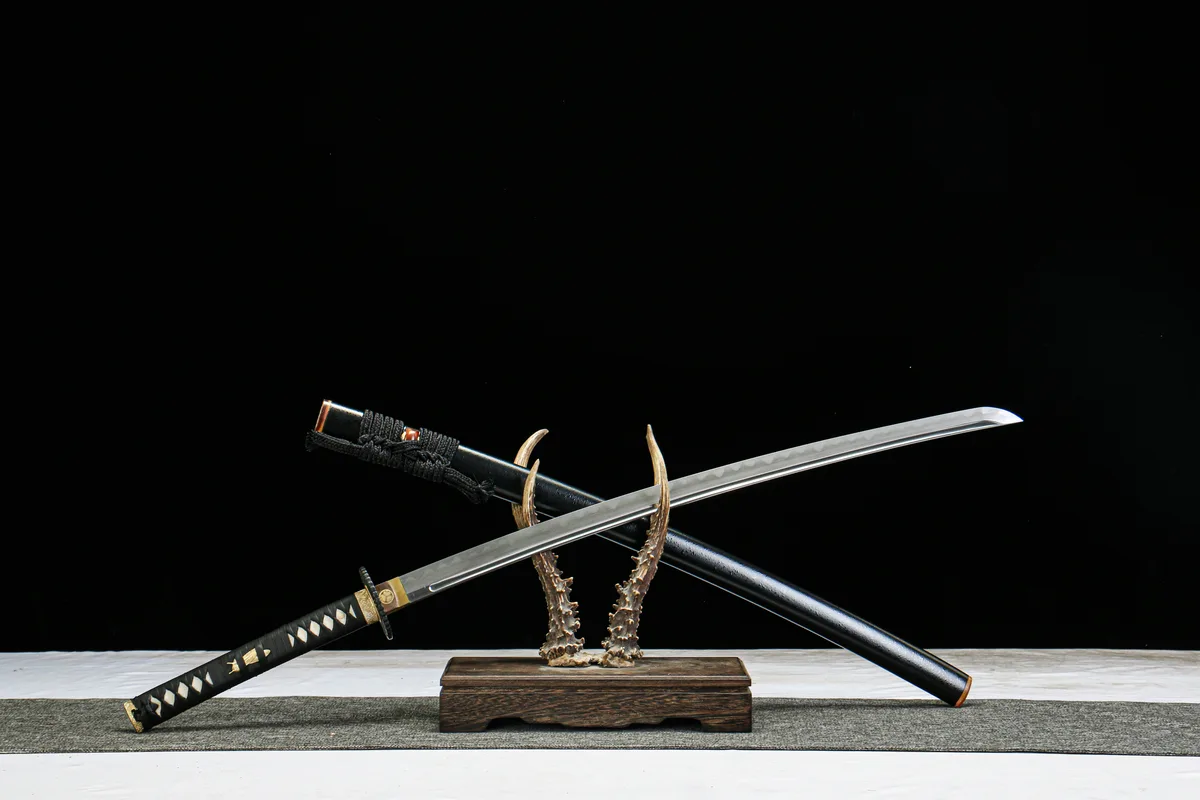
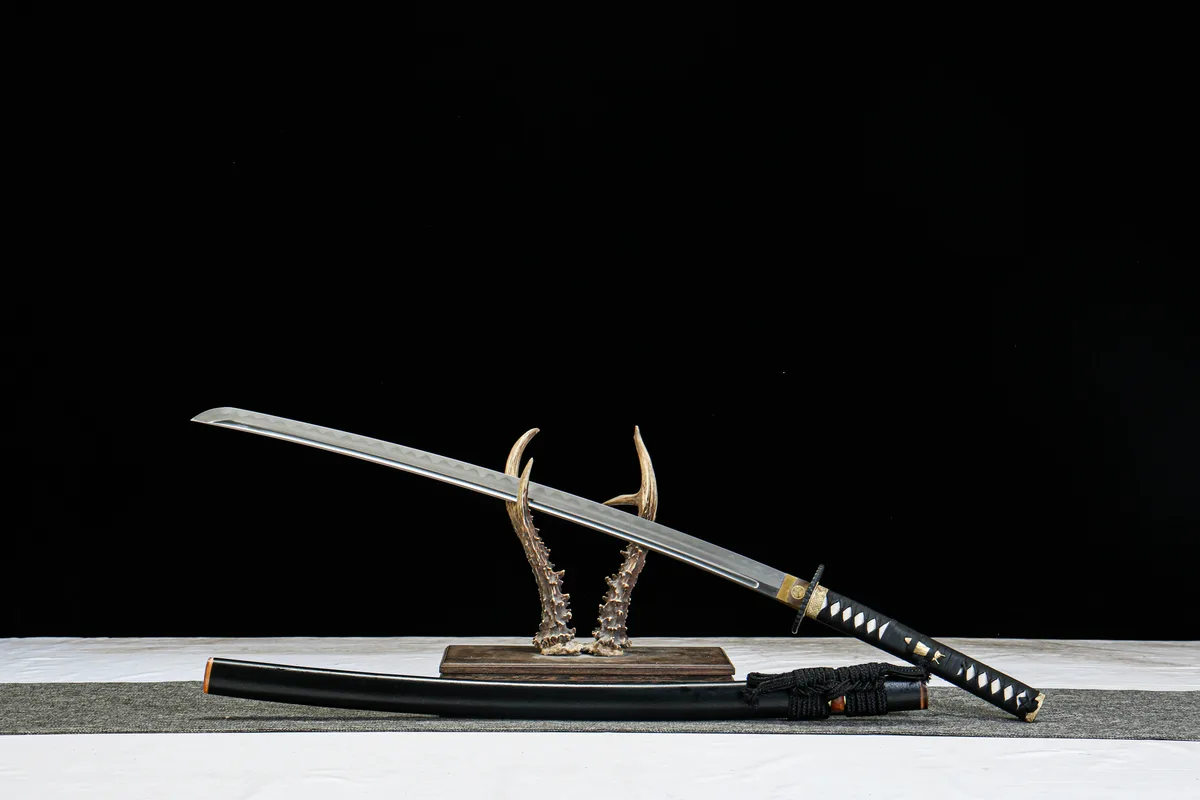
The Celestial Jade (天璇) is a luxury-tier katana forged from 自炼钢夹钢 — a self-smelted composite steel produced by Longquan’s master smiths using traditional techniques that predate modern metallurgy — making this one of the most historically authentic blades available from the world’s oldest sword-making city at any price. Named for 天璇, the second star of the Big Dipper revered in Chinese cosmology as a celestial navigator, this $1,175 sword is guided by the same principles: clarity of purpose, perfection of form, and the courage to take the long path when the short one will not do. This is the sword for those who understand the difference.
Specifications
| Blade Steel | 自炼钢夹钢 (Self-Smelted Composite Steel) |
| Total Length | 103.0 cm / 40.6 inches |
| Blade Length | 72.0 cm / 28.3 inches |
| Blade Width | 3.2 cm |
| Weight | 950 g / 33.5 oz (net) |
| Heat Treatment | Oil Quench & Temper |
| Fittings | Iron (装) |
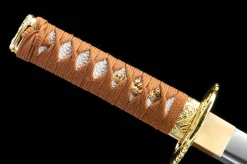
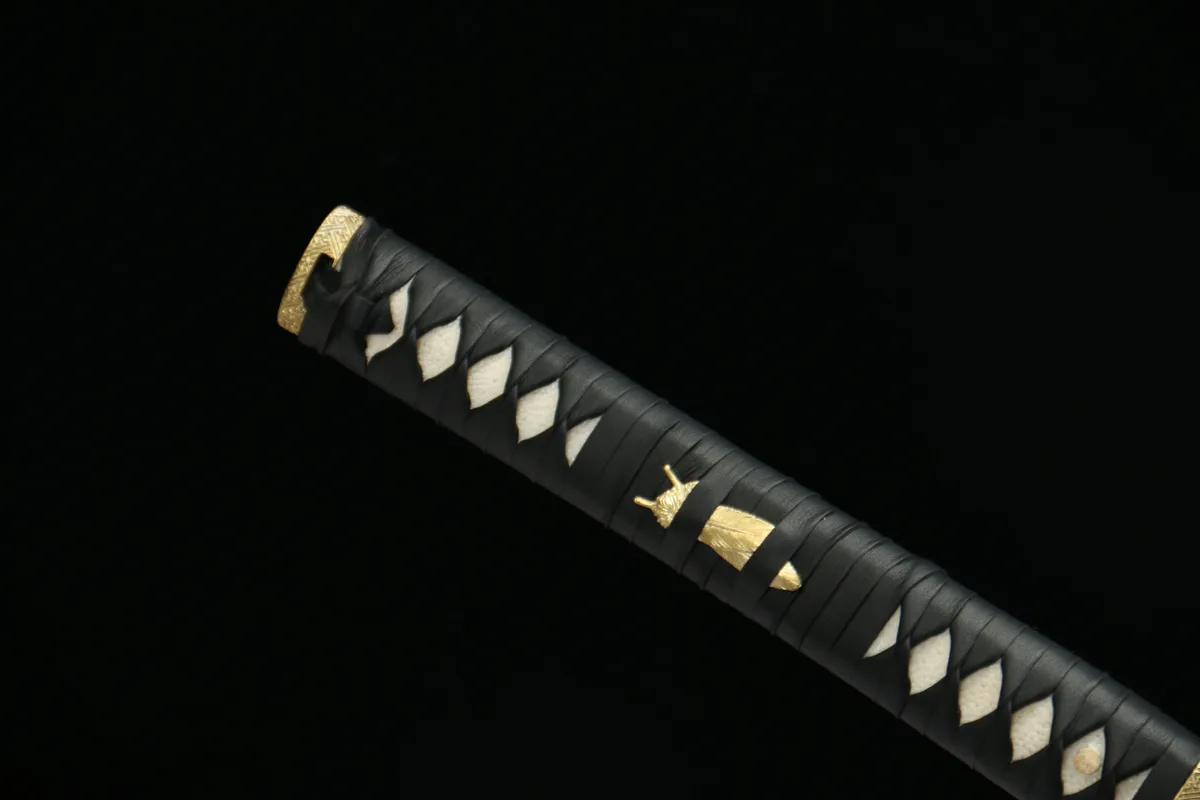
| Handle | Cotton Ito Wrap |
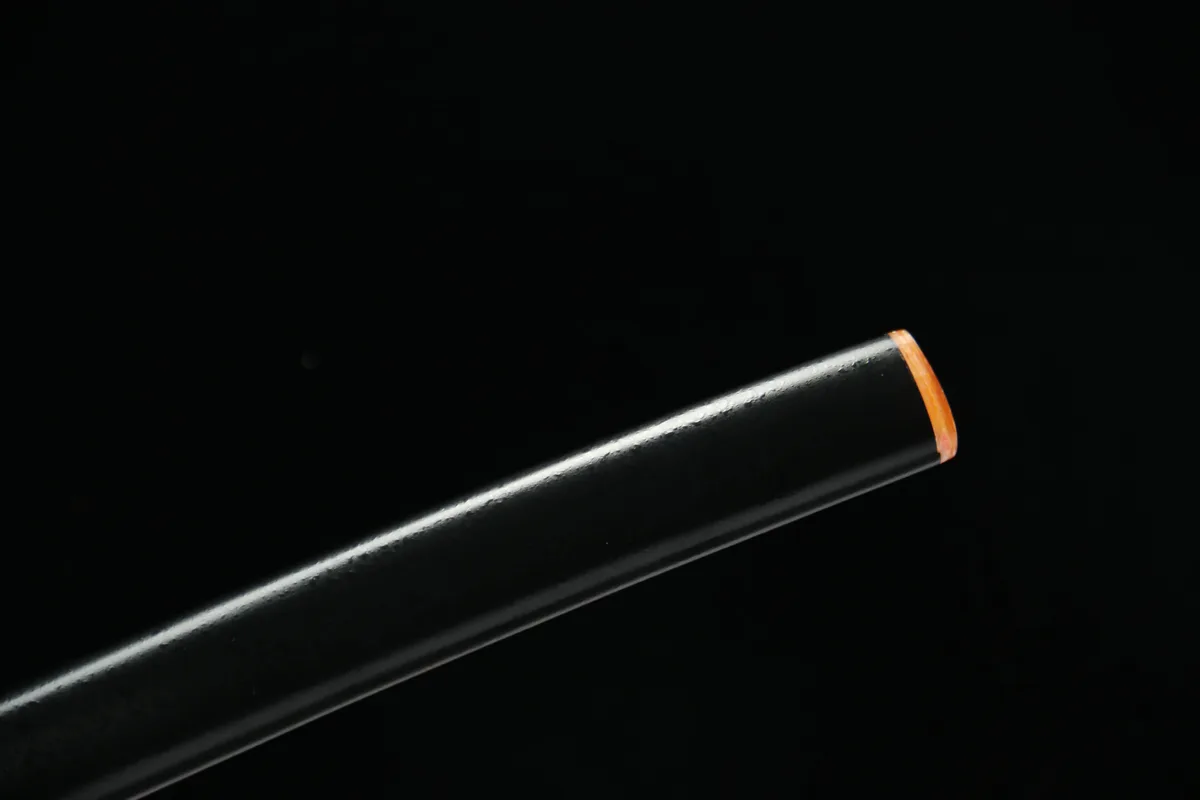
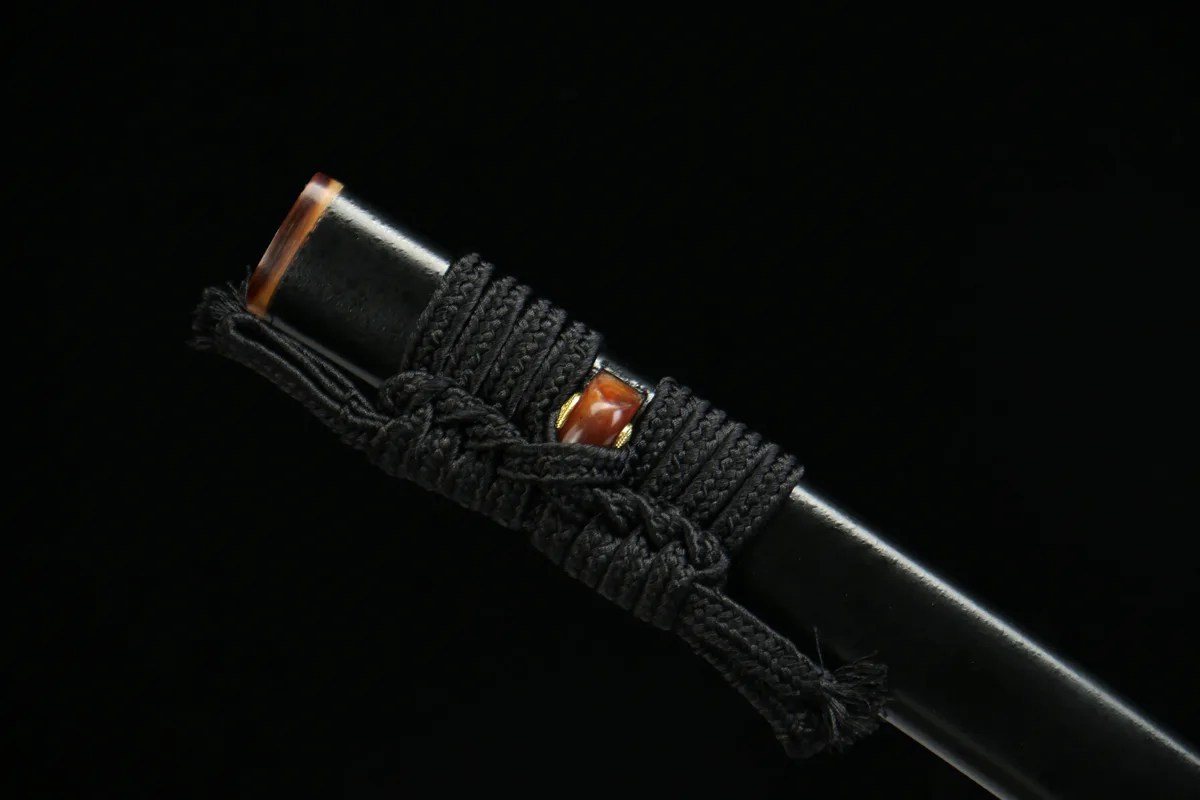
| Sheath | Green Bark Wood (Aohada) |
Craftsmanship & Materials
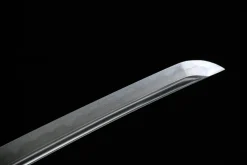
自炼钢夹钢 translates literally as “self-smelted sandwiched steel” — a composite construction in which a master smith begins not from commercially produced steel stock but from raw iron and carbon sources that are smelted and refined in-house, then forge-welded into a composite billet. In this construction, a hard high-carbon core steel (hagane) provides the razor edge and structural stiffness, while softer, more ductile steel wraps around it (kawagane) to absorb shock and prevent catastrophic fracture. This is the fundamental architecture of the greatest Japanese blades in history — and producing it from self-smelted stock rather than pre-refined modern steel requires a depth of metallurgical knowledge and hammer-time that very few smiths in the world still possess. Longquan is one of the last places on Earth where this tradition remains alive and practiced at a production level.
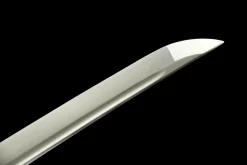
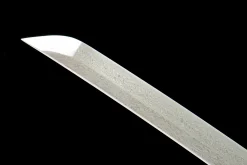
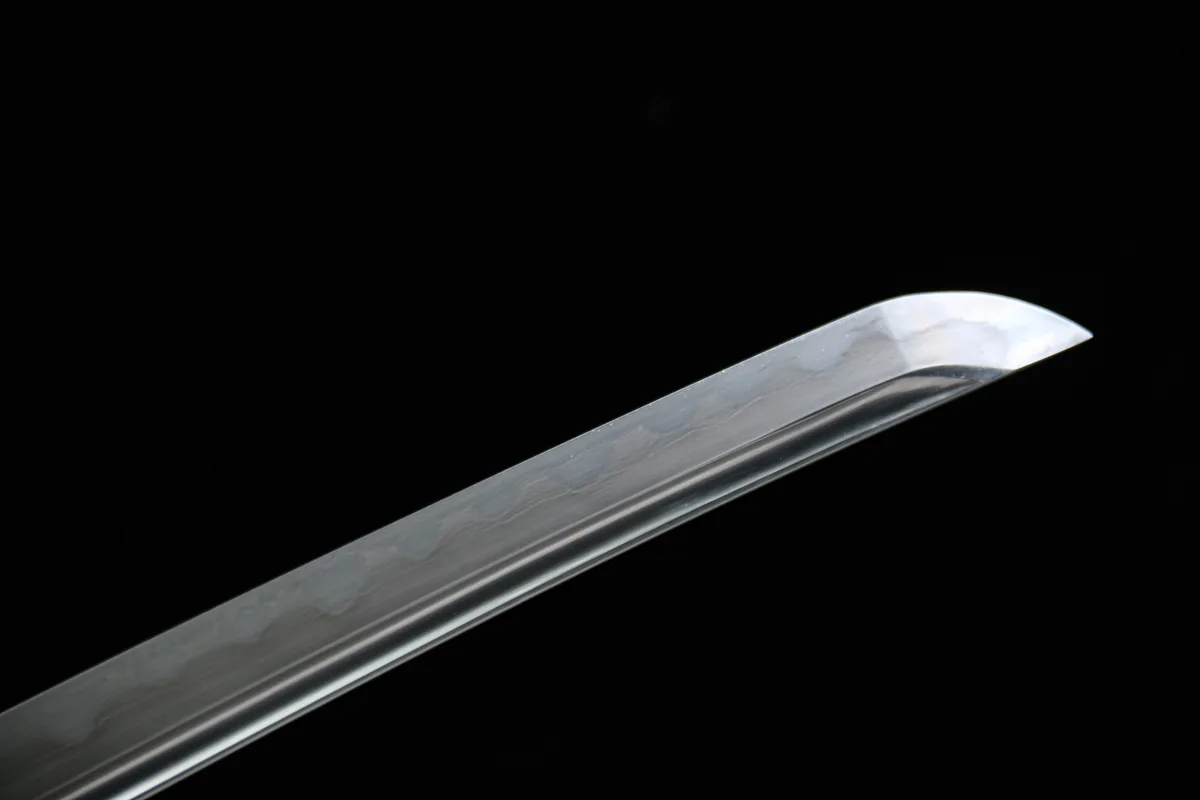
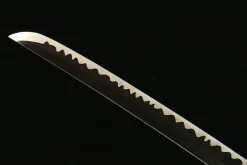
The shinogi-zukuri ridgeline geometry of the Celestial Jade is not merely aesthetic — it is the ideal profile for a composite steel blade, as the ridgeline separates the cutting-edge geometry from the flat of the blade, reducing friction during a cut and allowing the hard core steel’s edge to do its work without the wider flat dragging against the medium. The oil quench and temper process, applied after careful normalizing cycles to relieve stress from the forge-welding process, produces a blade whose hardness gradient follows the composite structure: hardest at the edge, progressively tougher toward the spine.
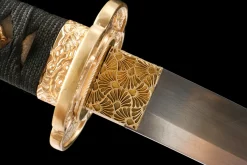
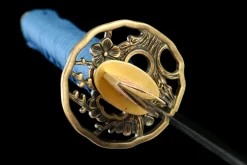
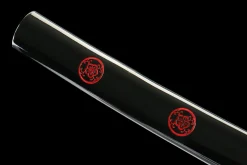
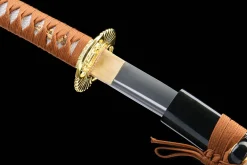
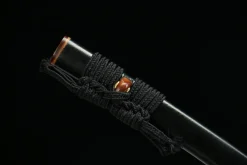
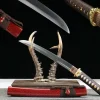
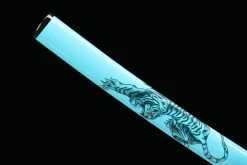
The iron fittings (装) chosen for the Celestial Jade are not a compromise — they are the correct choice for a blade of this historical authenticity. Iron hardware, used on Japanese swords throughout the Edo period and before, provides a weight and gravity entirely absent from modern casting alloys. Over years of ownership, the iron tsuba and furniture will patina in response to its environment and its owner’s hands, becoming more singular with time. The green aohada saya and cotton ito wrap complete the sword with restrained elegance: nothing here competes with the blade itself, because nothing should.
Perfect For
- Serious collectors and connoisseurs who understand the difference between commercially produced carbon steel and master-smelted composite construction and are willing to invest accordingly
- Advanced tameshigiri and cutting practitioners seeking a blade whose composite steel architecture provides both world-class edge performance and genuine structural resilience
- Students of Japanese sword culture (nihonto) who want the closest living approximation of classical Japanese blade construction available from a Chinese master-forge tradition
Care & Maintenance
Self-smelted composite steel demands the care its origins deserve: wipe the blade dry and apply high-grade camellia oil (choji oil) after every session, paying particular attention to the shinogi ridge and the kissaki tip where geometry changes can trap moisture. Because the composite construction creates a steel with two distinct carbon gradients meeting at internal weld lines, any surface rust should be addressed immediately with the finest available polishing medium rather than left to penetrate — the integrity of those weld boundaries is the blade’s structural foundation. Have this sword professionally polished if the surface develops significant scratches or pitting; a blade of this quality and provenance deserves the attention of a skilled togishi (polisher) rather than amateur remediation.
Frequently Asked Questions
What is 自炼钢夹钢 (self-smelted composite steel) used in the Celestial Jade katana?
自炼钢夹钢 translates to self-smelted composite (sandwich) steel — a premium construction where the swordsmith produces steel in-house through traditional smelting, then forge-welds a hard high-carbon cutting edge steel between layers of softer, tougher steel. This replicates the classical Japanese tamahagane construction principle: the hard edge retains a razor-sharp cutting edge while the soft body absorbs shock and resists breaking. At $1,175, this process represents genuine artisan-level craftsmanship rarely found outside specialty smiths.
What does composite (san-mai or laminated) blade construction mean for the Celestial Jade?
The Celestial Jade’s 夹钢 (composite) construction sandwiches a hard, high-carbon steel core or edge between more ductile outer steel layers. This differential construction gives the blade the best of both materials: a hard edge capable of taking and holding a very sharp edge, and a tough outer body that flexes and absorbs impact without shattering. This is the same fundamental principle behind traditional Japanese swordsmithing and distinguishes the Celestial Jade from single-steel production katanas at any price level.
Is the Celestial Jade katana worth $1,175 compared to swords at $200–$400?
The Celestial Jade occupies a fundamentally different tier than $200–$400 Damascus or spring steel katanas. Its self-smelted composite steel construction requires a master smith to produce the base steel and perform multi-stage lamination forging — a process that cannot be replicated by production factories. You are paying for genuine artisan construction, iron fittings, and a blade with structural sophistication comparable to historically significant Japanese swords. For serious collectors and advanced practitioners, this represents fair value for a true custom-class katana.
How do the iron fittings on the Celestial Jade reflect its luxury tier?
The Celestial Jade features iron fittings (装), which are standard for premium and artisan-grade Japanese swords. Iron is denser and more authentic to traditional Japanese sword construction than copper or zinc alloy, develops a dignified patina, and holds tightly without deformation over decades of handling. On a $1,175 sword built with self-smelted composite steel, iron fittings complete a cohesive package of high-quality components — every element of the Celestial Jade reflects intentional craftsmanship rather than cost-cutting.
Is the Celestial Jade katana suitable for advanced cutting and tameshigiri?
Yes. The Celestial Jade is purpose-built for serious functional use. Its self-smelted composite steel construction — hard edge steel laminated within tough outer steel — produces a blade that holds an exceptionally sharp edge while resisting the shock and lateral stress of heavy tameshigiri. At standard katana dimensions (72 cm blade, 950g) with iron fittings and cotton ito wrap, it is structurally complete for advanced cutting practice. It also functions as a significant collector piece given its artisan-level construction.
| Weight | 1.2 lbs |
|---|---|
| Dimensions | 103.0 × 3.2 × 0.7 in |
| Sword Type | Katana |
| Blade Steel | Carbon Steel |
| Total Length | 103.0 cm |
| Blade Length | 72.0 cm |
| Heat Treatment | Oil Quench & Temper |
| Handle Wrap | Cotton Ito Wrap |
| Sheath Material | Green Bark Wood (Aohada) |
| Fittings | Iron, (装) |
| Forging Style | Shinogi-Zukuri (Ridgeline) |
Related products


1065 Carbon Steel
1045 Carbon Steel

High Carbon Steel

1045 Carbon Steel

1045 Carbon Steel
Black Heaven Feather – Hand Forged 1045 Carbon Steel Katana Sword


Damascus Steel

1045 Carbon Steel