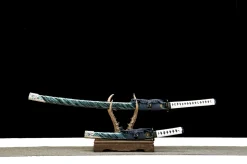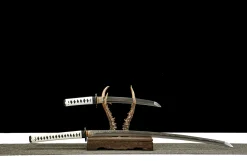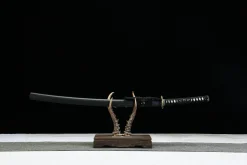
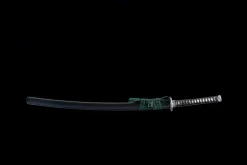
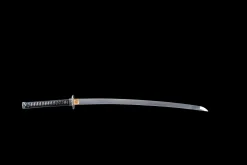
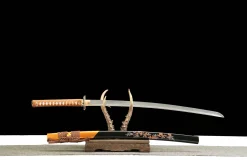
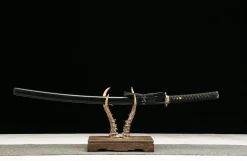
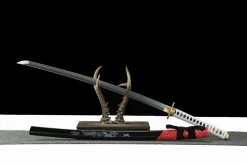








Cloud Deep Unknown – Hand Forged High Carbon Steel Tanto Sword
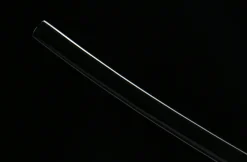
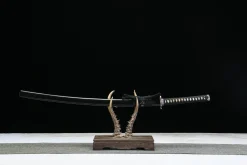
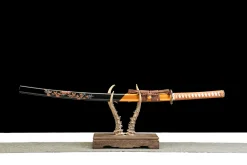
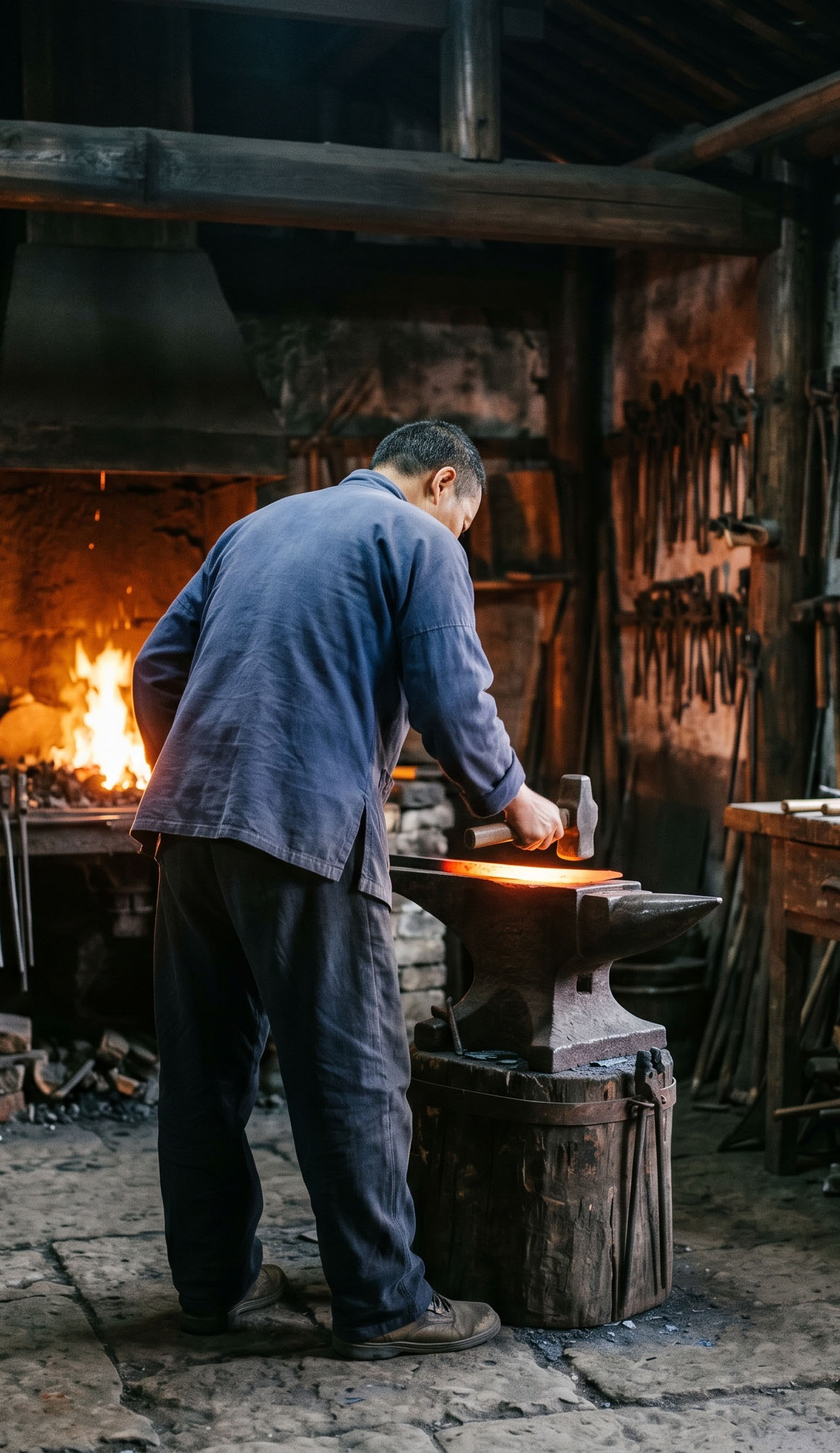
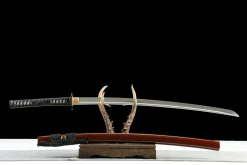
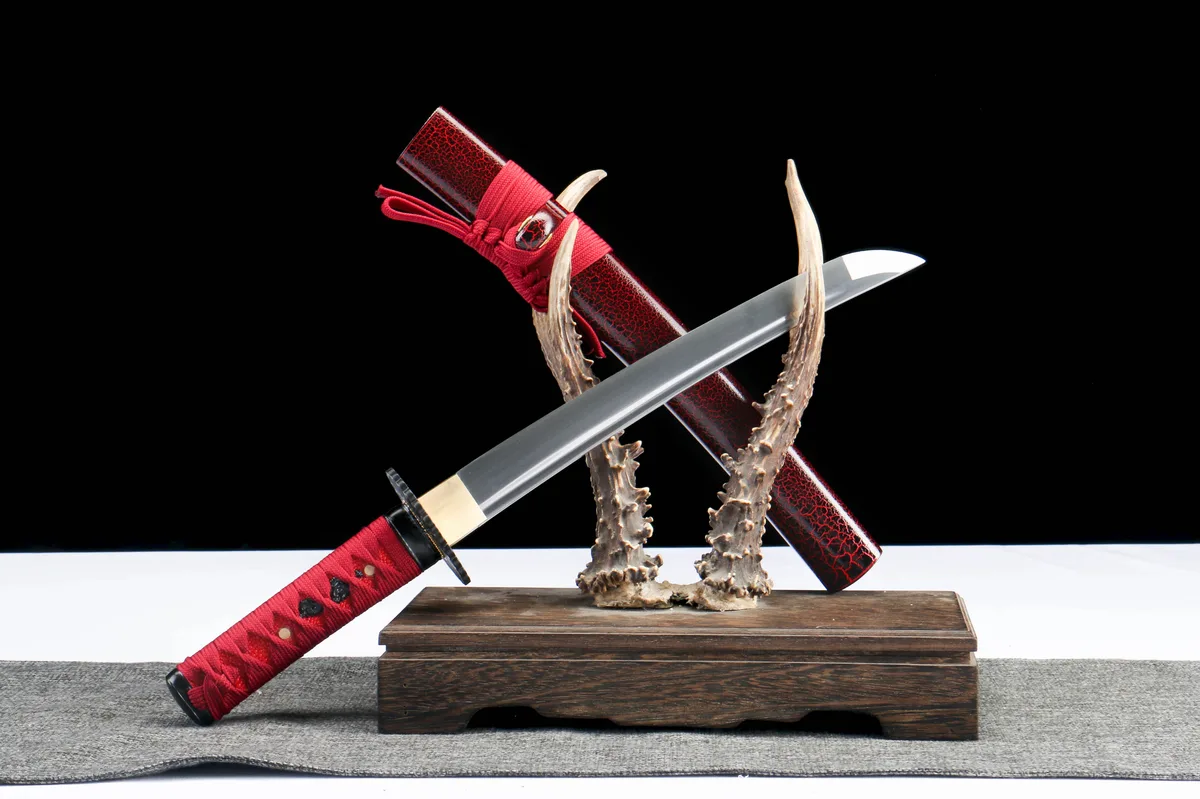
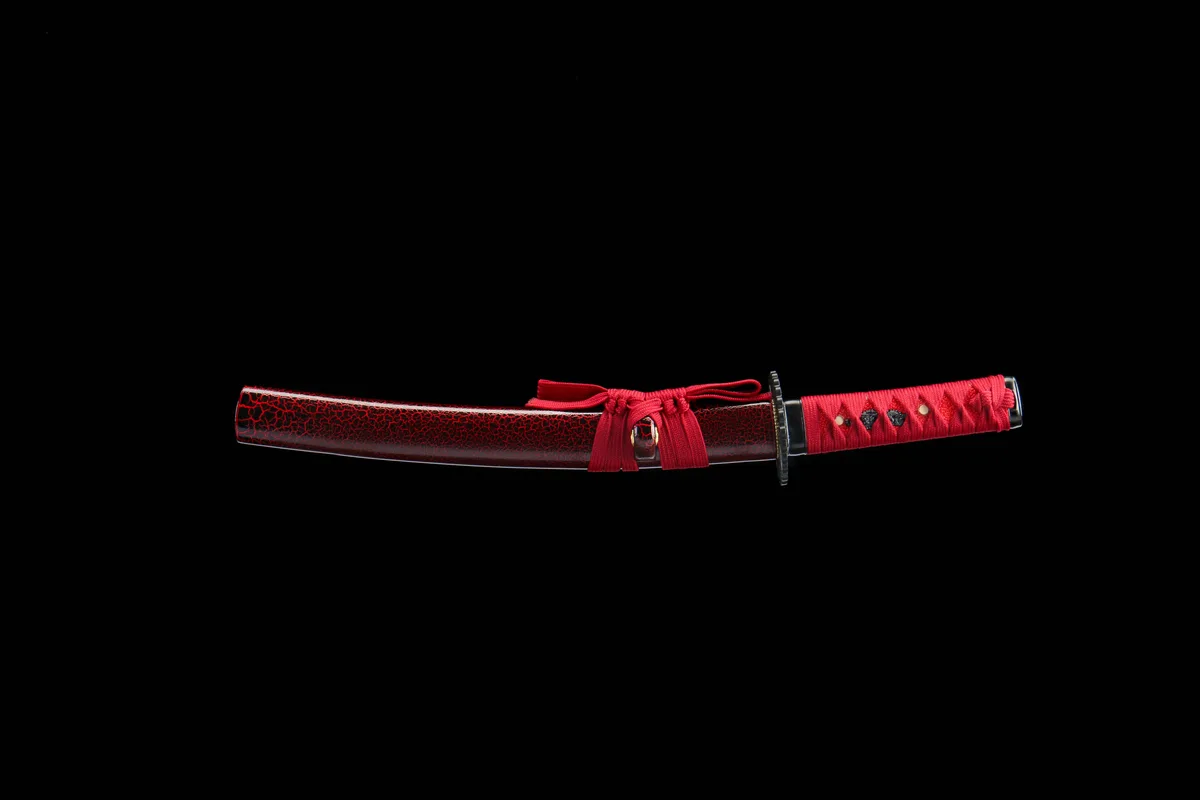
Hand-forged High Carbon Steel tanto (52cm total / 32cm blade), crafted in Longquan. Full-tang construction with traditional fittings and hand-lacquered saya.
$149.99
There is a line in classical Chinese poetry – 云深不知处, “deep in the clouds, the place is unknown” – and this tanto carries that name without irony. It is a working blade that does not announce itself. The 1060 carbon steel is here to function, and at 32 cm it reaches the upper boundary of tanto length without crossing into wakizashi territory, which gives you a draw arc that is short, deliberate, and committed.
Specifications
| Blade Steel | 1060 Carbon Steel |
| Total Length | 52.0 cm / 20.5 in |
| Blade Length | 32.0 cm / 12.6 in |
| Blade Width | 3.2 cm |
| Blade Thickness | 0.7 cm |
| Heat Treatment | Temper |
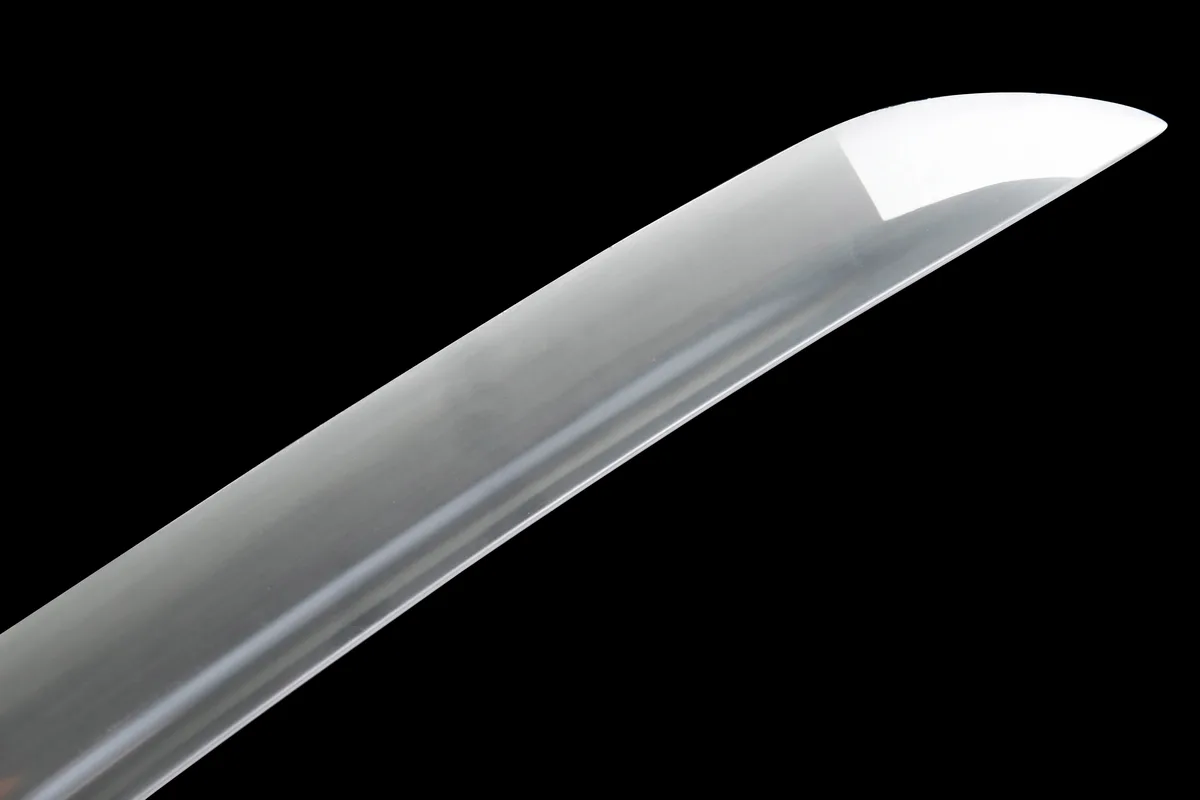
| Forging Style | Shinogi-zukuri (ridged blade geometry) |
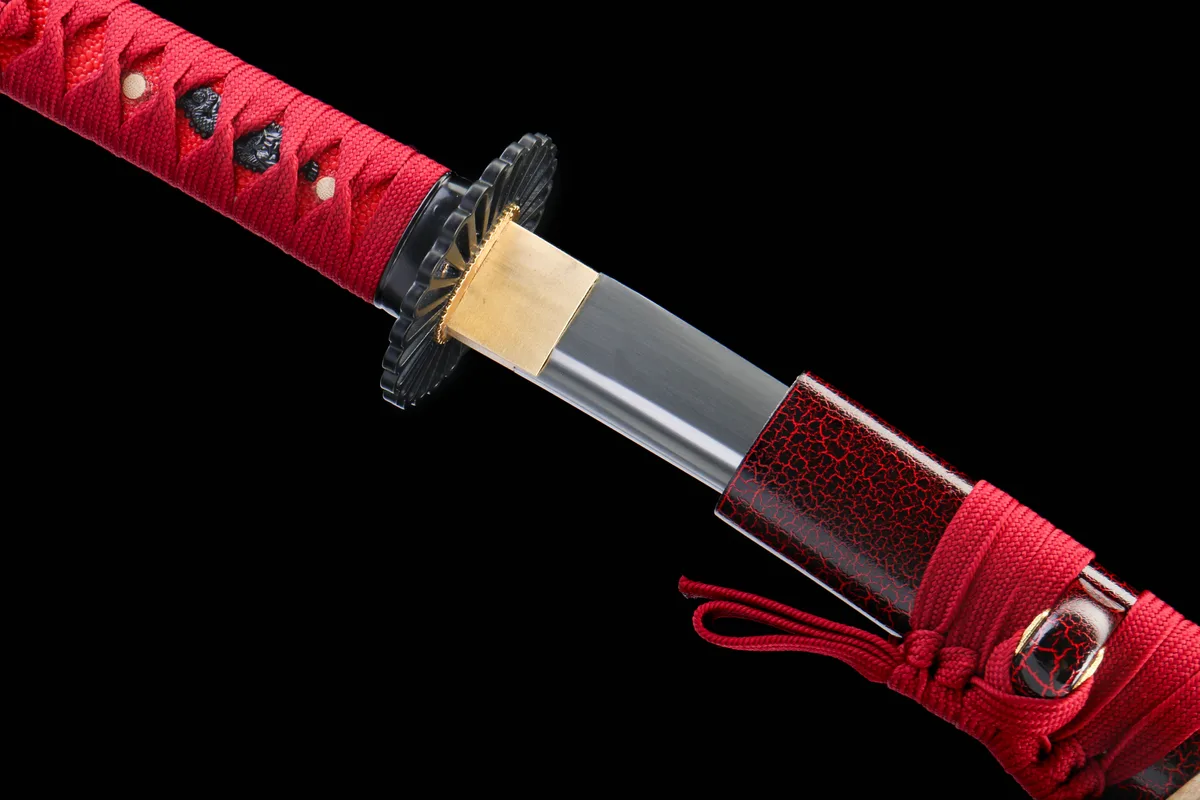
| Fittings | Iron |
| Handle | Cotton Ito Wrap |
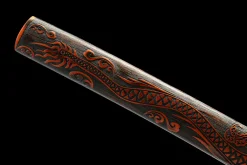
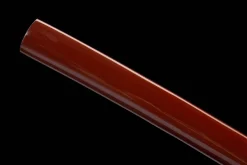
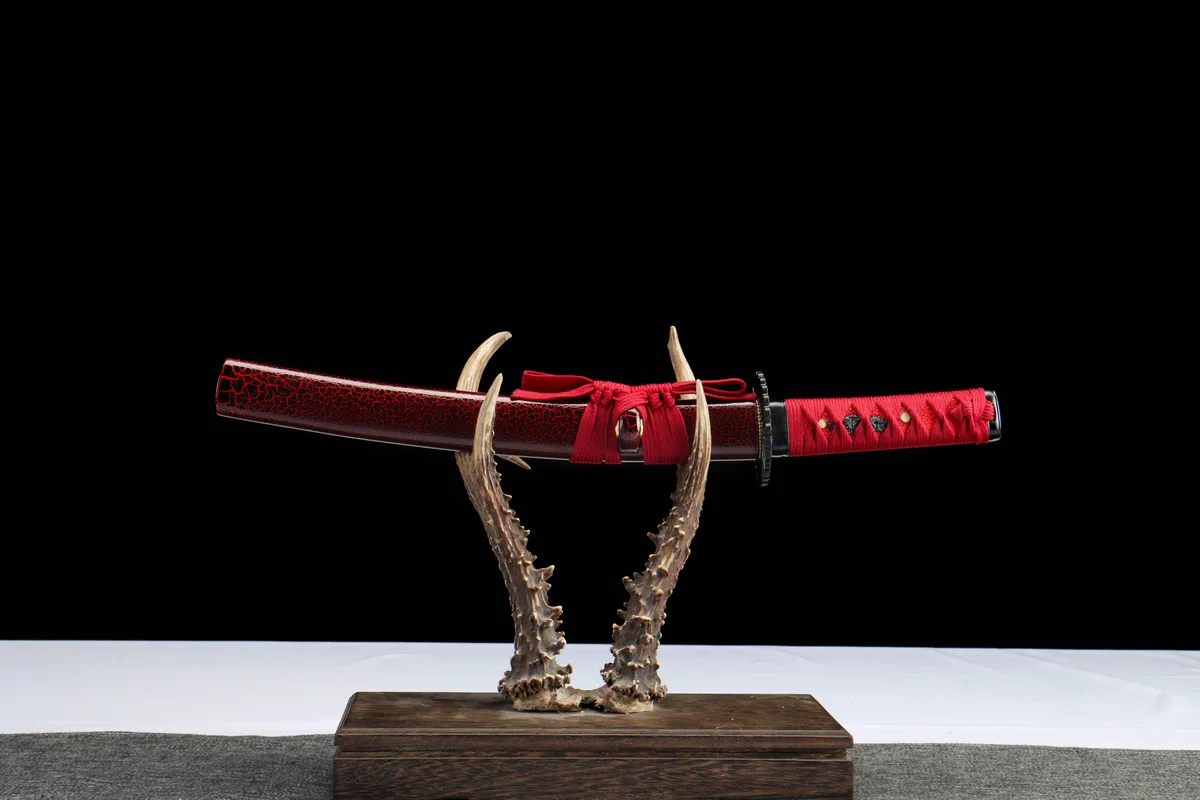
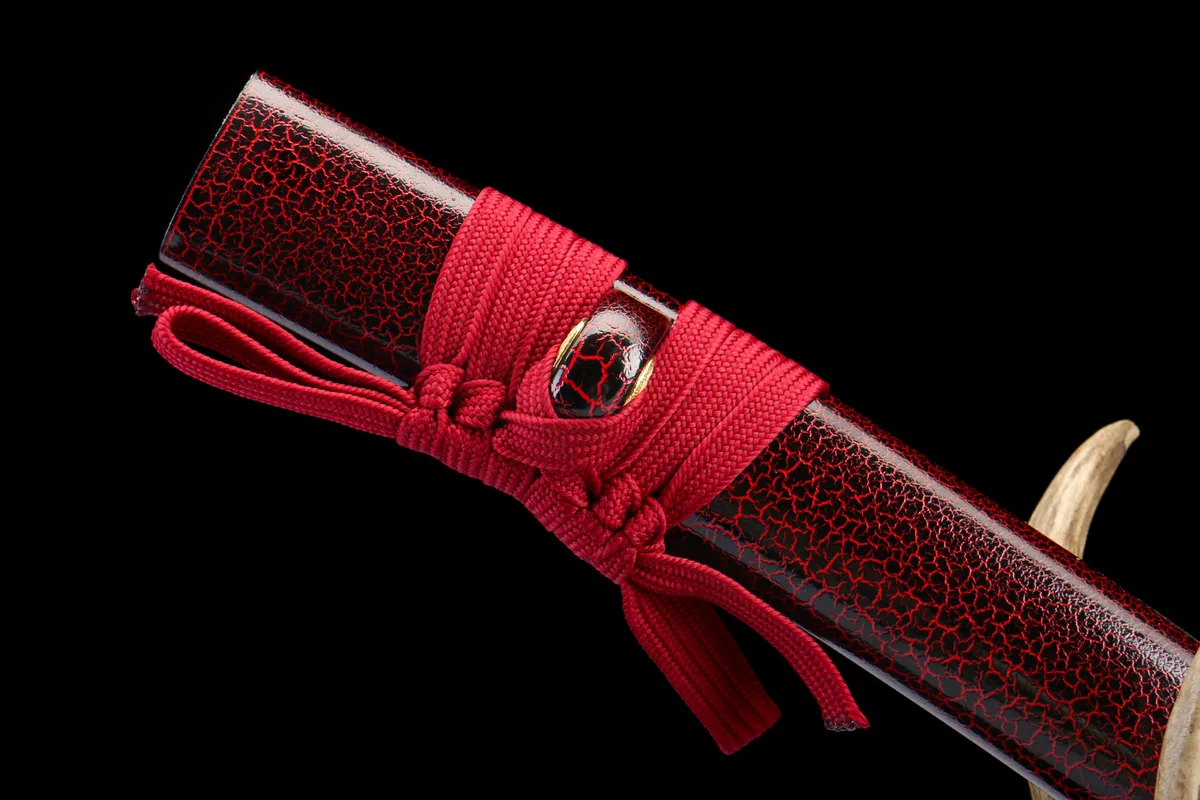
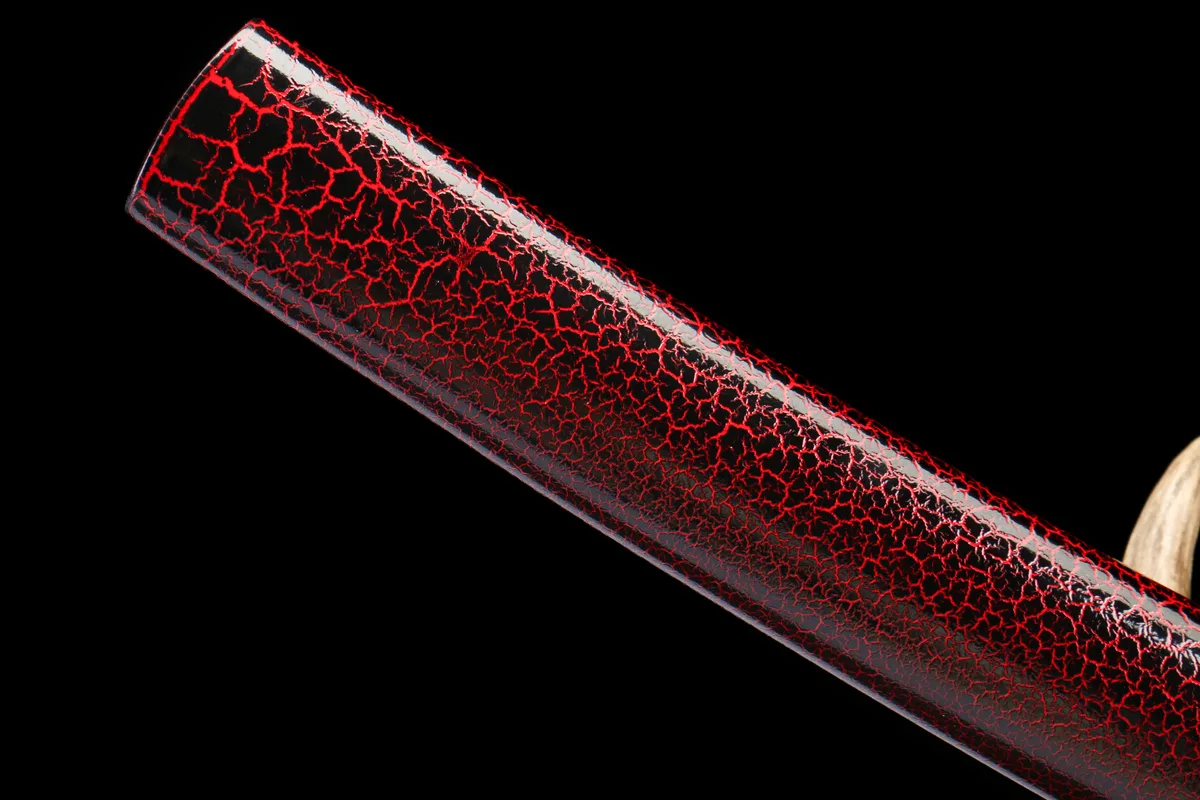
| Sheath | Solid Wood, Piano Lacquer Finish |
Forged in Longquan
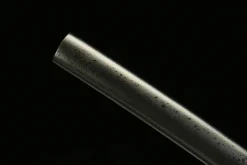
1060 carbon steel sits at a practical midpoint in the high-carbon spectrum – hard enough to hold a working edge, tough enough to resist the lateral stress that shorter blades encounter when force is concentrated close to the hand. At 0.6% carbon content, it responds well to tempering, arriving at a hardness that gives the edge real bite while keeping the spine from becoming brittle. Our smiths in Longquan have worked this steel for decades, and the shinogi-zukuri (ridged blade) geometry on this tanto reflects that experience: the ridge line is set to balance stiffness in the spine against a clean primary bevel that reaches the edge without wasted geometry.
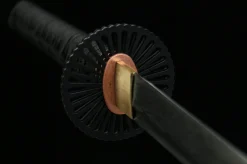
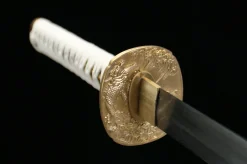
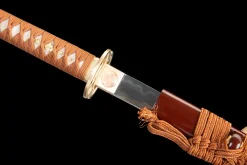
The iron fittings – guard, collar, and pommel – are fitted without play. Iron is the traditional choice here, and it has practical merit: it seats tighter over time rather than loosening, and its surface develops a natural patina that becomes part of the blade’s character rather than a maintenance problem.
Weight, Balance, Draw
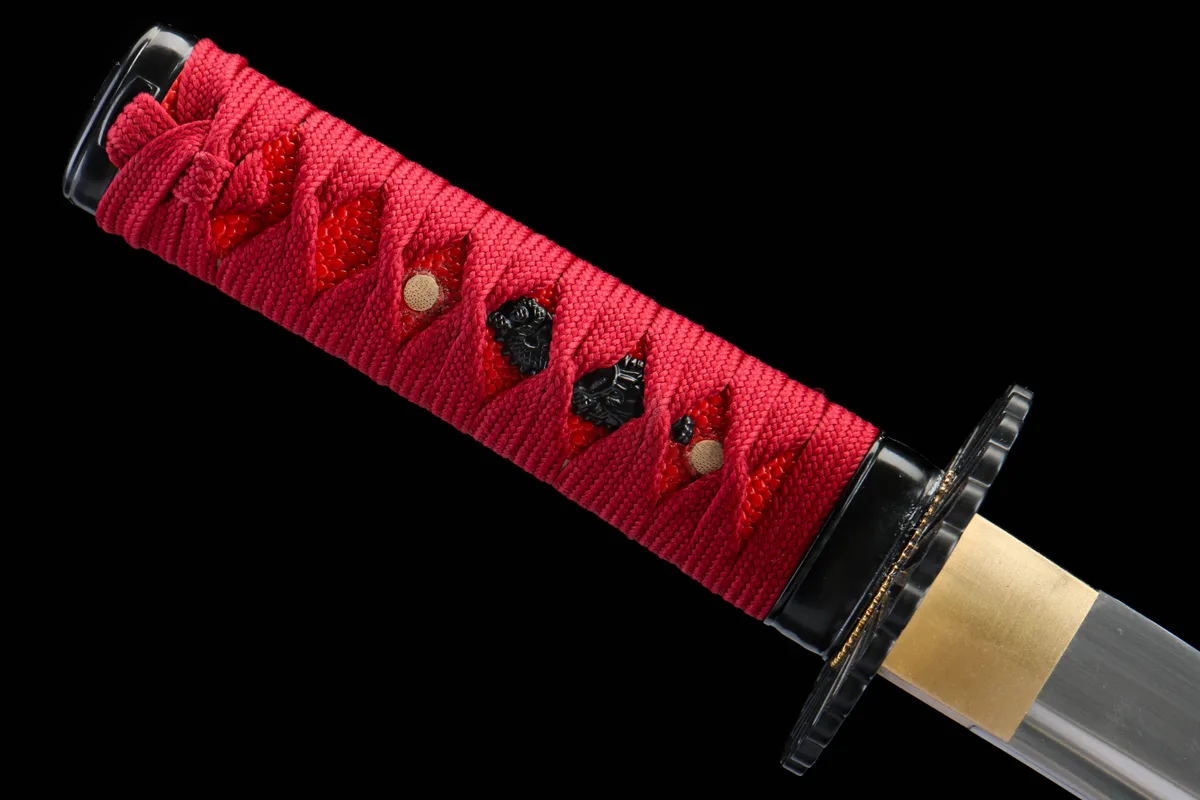
The 17 cm handle on the Cloud Deep Unknown is wrapped in cotton ito – the traditional interlaced cord pattern that builds grip without bulk. At tanto scale, grip security matters in a different way than on a full katana: there is less counterbalance from a long handle, so the wrap quality and the tightness of the wrap layers matter directly to control. The cotton here is firm and even, with no soft spots in the diamond panels. The draw from the piano-lacquered solid wood saya is smooth and clean – the wood is finished to a tolerance that resists sticking in humidity without being so loose that the blade shifts during carry.
Keeping It Sharp
After use, wipe the blade clean with a dry cloth and apply a thin coat of choji oil (clove-based mineral oil used in traditional Japanese blade maintenance) to prevent surface oxidation. The 1060 steel will develop minor surface patina over time – this is normal and does not affect edge integrity. Re-sharpen with a progression of water stones, finishing on a 2000-grit minimum to restore the edge geometry established at the forge.
| Weight | 0.9 lbs |
|---|---|
| Dimensions | 52.0 × 3.2 × 0.7 in |
| Hamon | Decorative / Acid-Etched |
| Blade Steel | High Carbon Steel |
| Total Length | 52.0 cm |
| Blade Length | 32.0 cm |
| Heat Treatment | Temper |
| Handle Wrap | Cotton Ito Wrap |
| Sheath Material | 实木钢琴烤漆 |
| Fittings | Iron |
| Forging Style | 鎬造 |
Related products