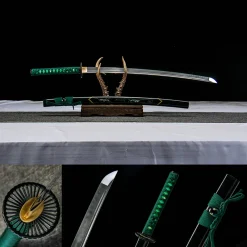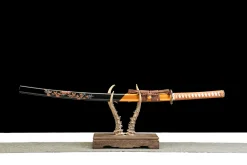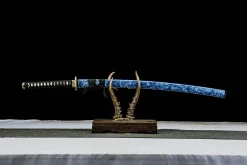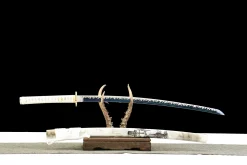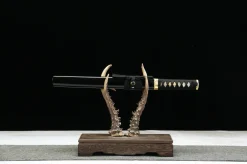
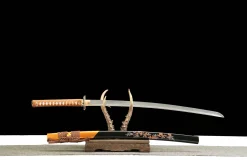
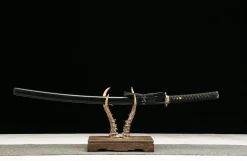
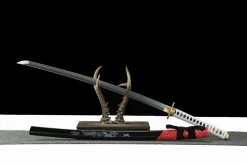








Crimson Edge – Hand Forged 1065 Carbon Steel Katana Sword
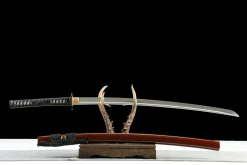
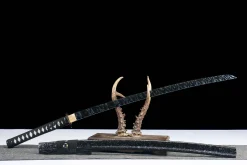
Hand-forged 1065 Carbon Steel katana (102cm total / 72cm blade), crafted in Longquan. Full-tang construction with traditional fittings and hand-lacquered saya.
$219.99
Crimson Edge – Hand Forged 1065 Carbon Steel Katana Sword
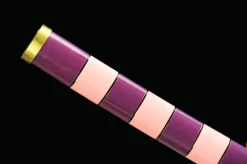
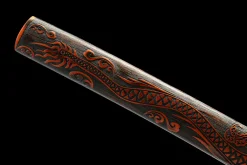
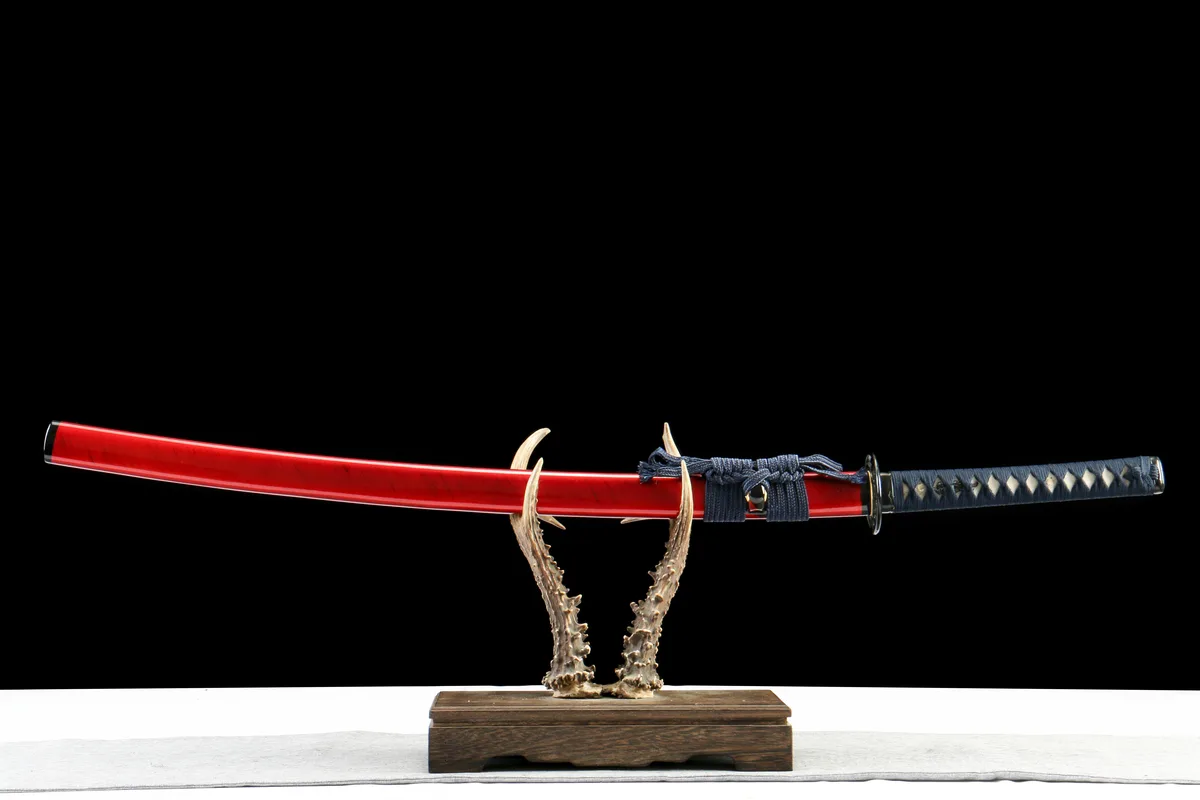
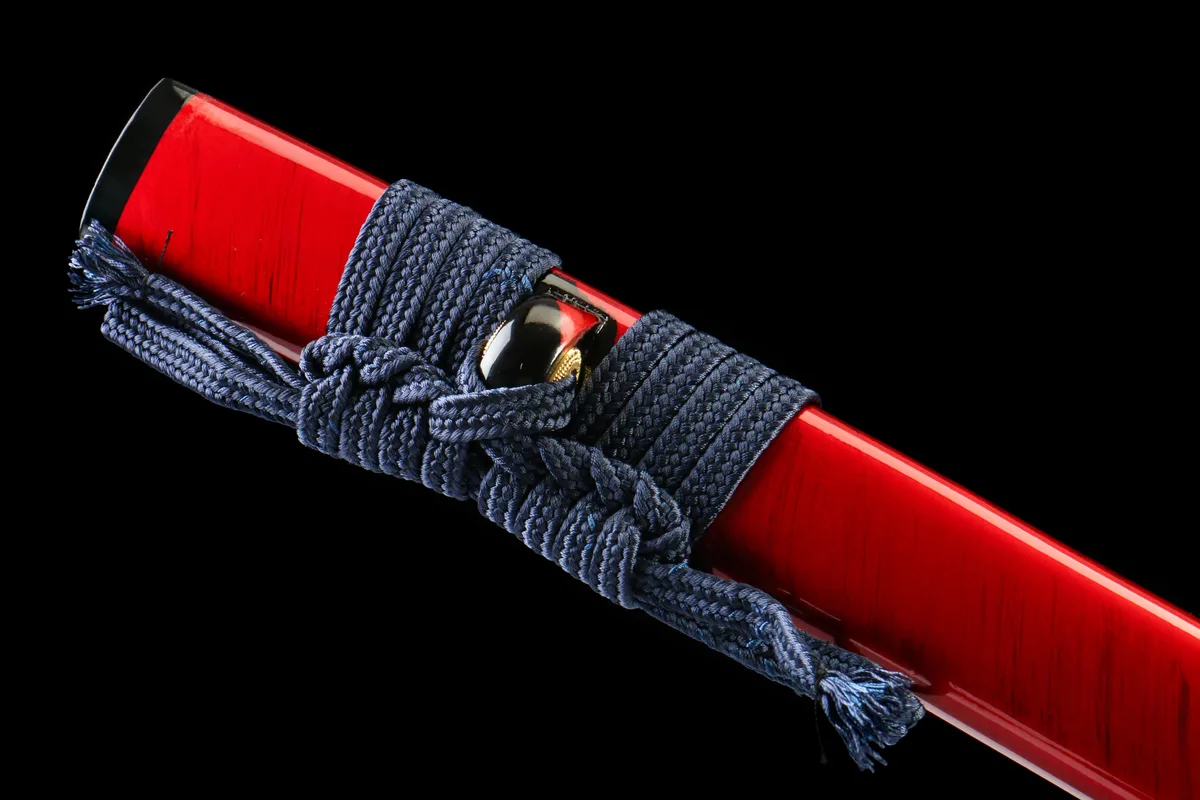
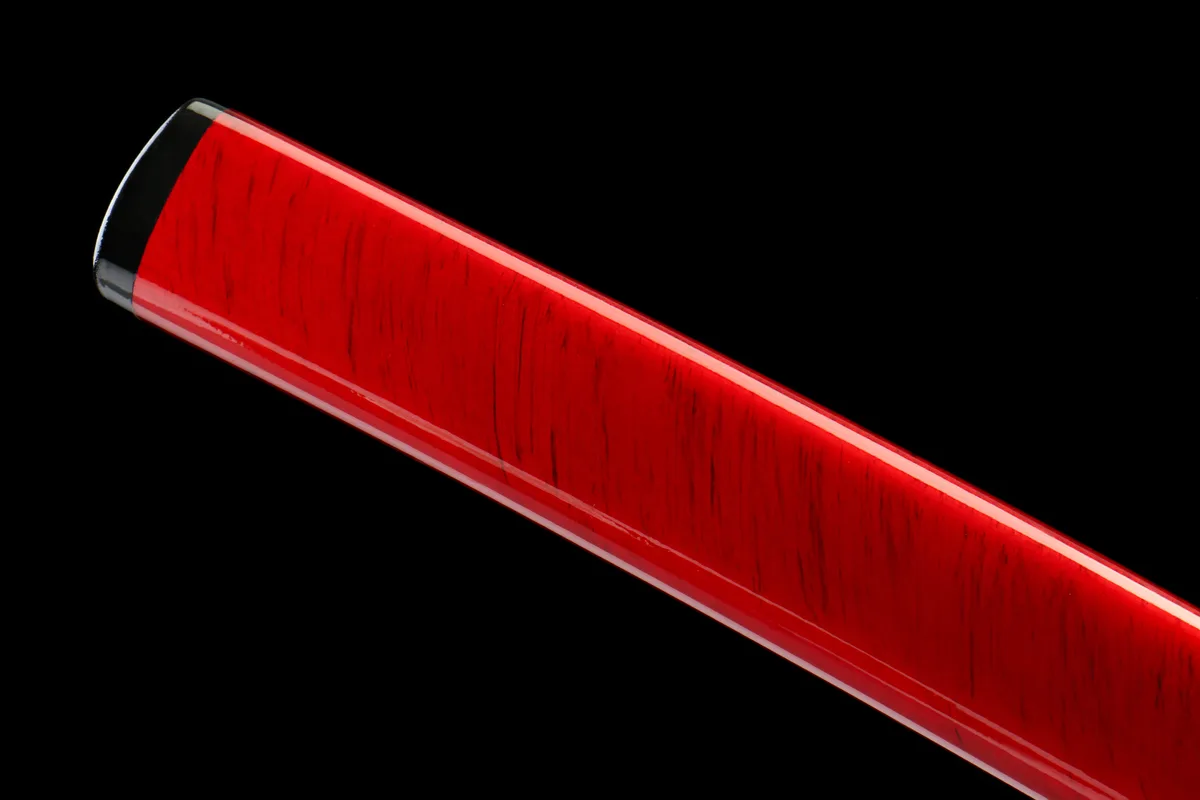
The name references color, and the color is not accidental – a deep crimson saya (sheath) on a full 102.0 cm katana reads with a directness that matte or understated finishes do not. But this is a working blade built on shinogi-zukuri (ridgeline) geometry in 1065 high carbon steel, and the saya’s visual weight is secondary to what the blade itself does.
Specifications
| Blade Steel | 1065 High Carbon Steel |
| Total Length | 102.0 cm / 40.2 in |
| Blade Length | 72.0 cm / 28.3 in |
| Blade Width | 3.2 cm |
| Blade Thickness | 0.7 cm |
| Weight | 1040 g / 36.7 oz |
| Heat Treatment | Constant Temperature Furnace (Uniform Hardening) |
| Fittings | Zinc Alloy |
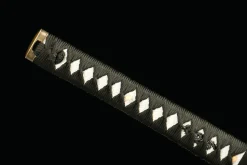
| Handle | Cotton Ito + Genuine Rayskin |
| Sheath | Hardwood (High-Gloss Lacquer) |
Steel & Construction
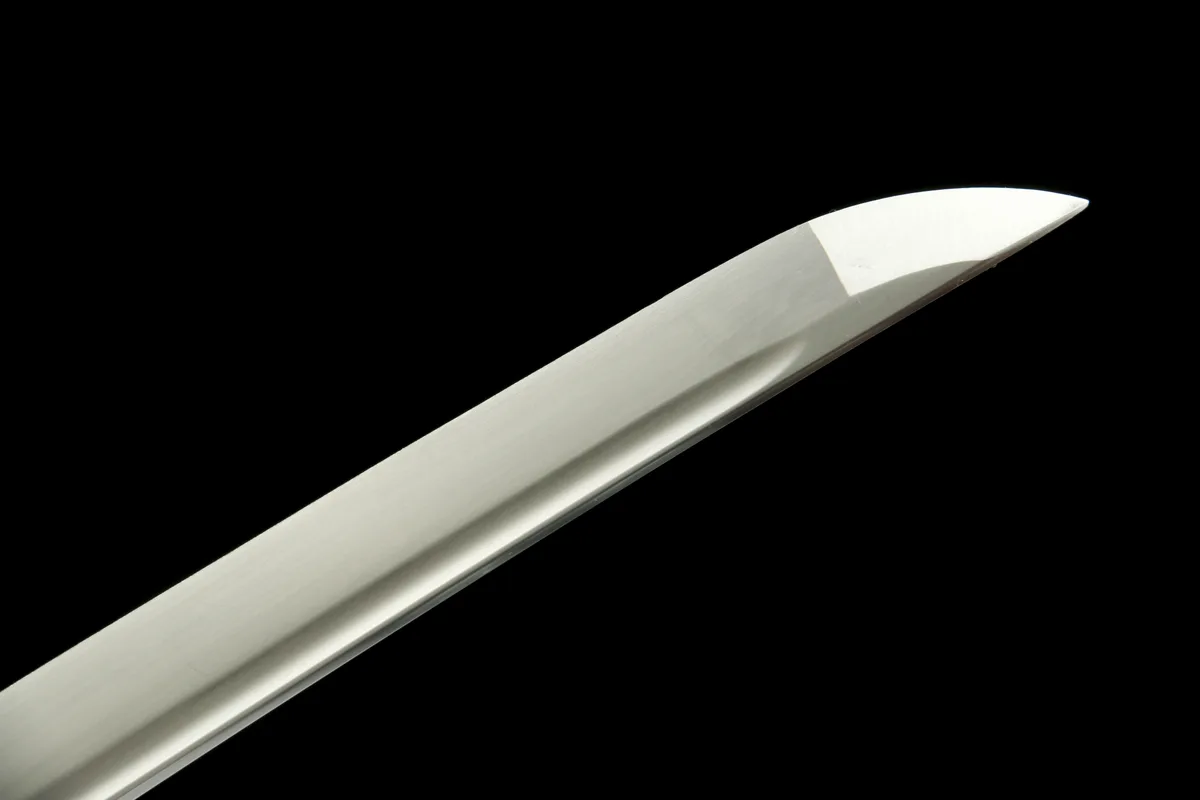
1065 high carbon steel hardened through constant temperature furnace treatment – a uniform, controlled process that brings the blade to consistent hardness across the full cross-section – is the workhorse specification for a practitioner who needs a blade that performs reliably, holds an edge through repeated sessions, and does not require the careful handling protocols that clay-tempered high-carbon blades demand. The steel itself, at 0.65% carbon, achieves hardness sufficient for real cutting edge retention without the brittleness risk that pushes into the higher carbon ranges. At 0.7 cm spine thickness, there is material depth here that absorbs rather than flexes catastrophically under lateral load.
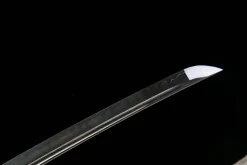
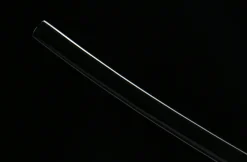
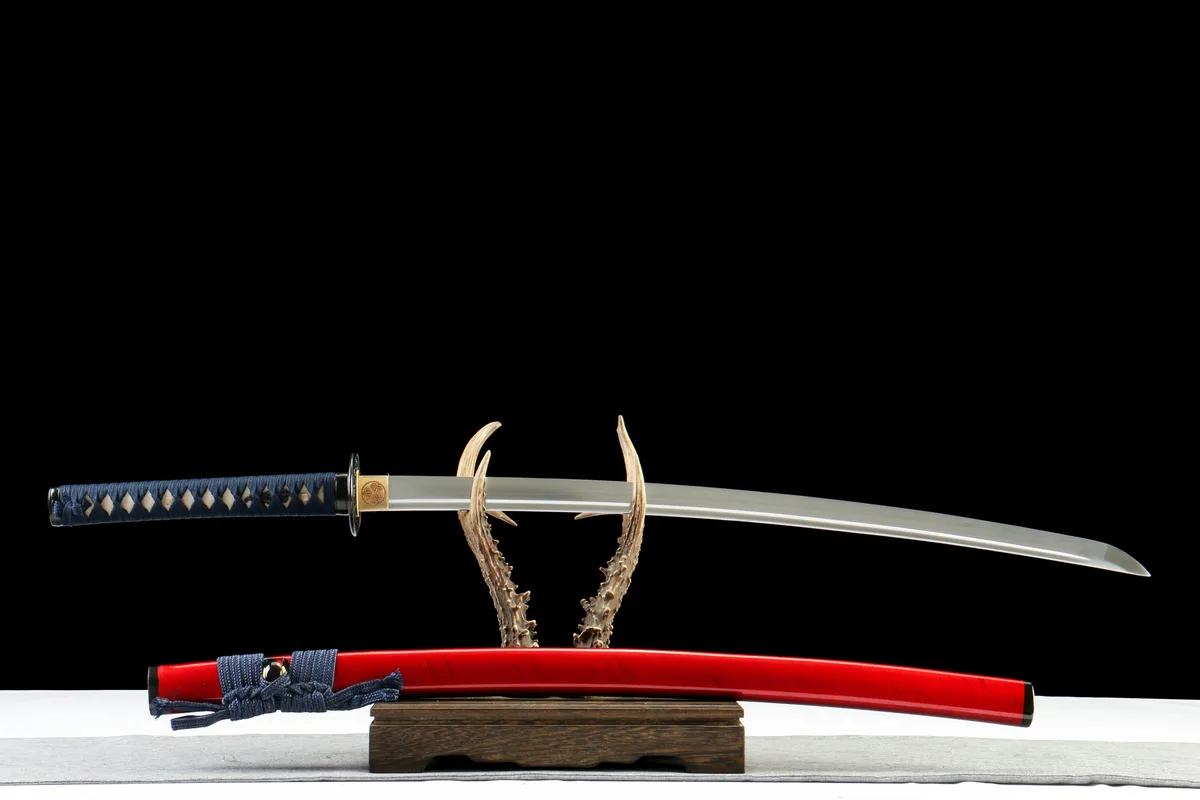
The shinogi-zukuri profile – a ridgeline blade with a defined shinogi (the raised edge running longitudinally) separating the shinogi-ji (upper flat) from the ha (cutting edge bevel) – is the classical functional geometry of the Japanese longsword. It is built this way because the ridge distributes stress efficiently and the geometry rewards correct technique. The Crimson Edge does not deviate from this.
Handling
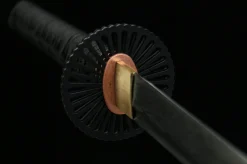
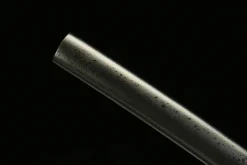
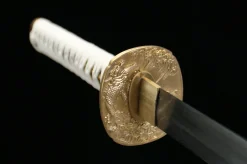
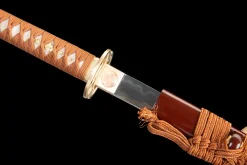
Seventy-two centimeters of blade demands a handle that answers it, and the 26.0 cm tsuka (handle) here does exactly that – cotton ito wrapped tight over genuine rayskin same, the rayskin’s nodular surface providing grip that does not shift under sweat or repeated draw-and-return. The high-gloss lacquered hardwood saya releases the blade cleanly on the draw with the koiguchi (sheath mouth) fitted to the specific blade width of 3.2 cm. At 102.0 cm total, the full draw from a standard standing position clears without obstruction and the blade presents at the extended length a full katana requires.
Care Instructions
Wipe the blade clean after every session – moisture and fingerprint oils are the primary threats to carbon steel at this carbon range. Apply choji oil (traditional clove-mineral oil used in Japanese blade maintenance) in a thin, even coat along the full blade length using a soft cloth or dedicated nuguigami paper. Store in the saya, edge upward, in a location with stable humidity.
| Weight | 1.32 lbs |
|---|---|
| Dimensions | 102.0 × 3.2 × 0.7 in |
| Hamon | Decorative / Acid-Etched |
| Blade Steel | 1065 Carbon Steel |
| Total Length | 102.0 cm |
| Blade Length | 72.0 cm |
| Heat Treatment | 马沸炉 恒温热处理 |
| Handle Wrap | Cotton Ito + Genuine Rayskin |
| Sheath Material | Hardwood (High-Gloss Lacquer) |
| Fittings | Zinc Alloy |
| Forging Style | 鎬造 |
Related products