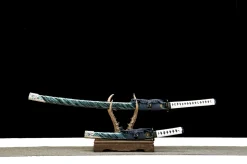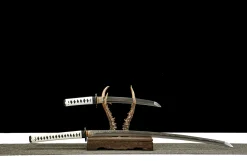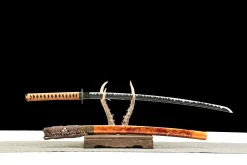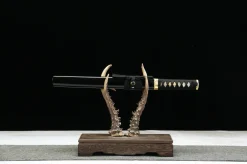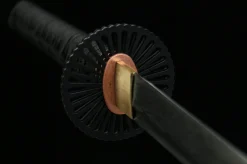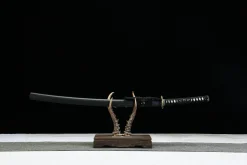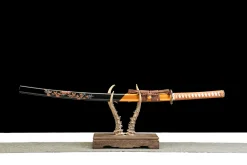
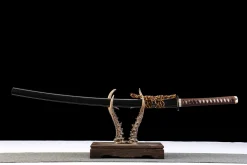


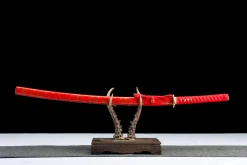
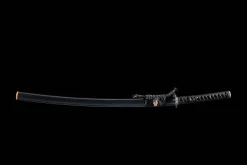


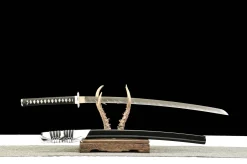

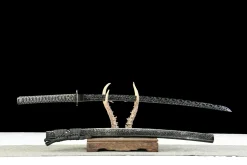


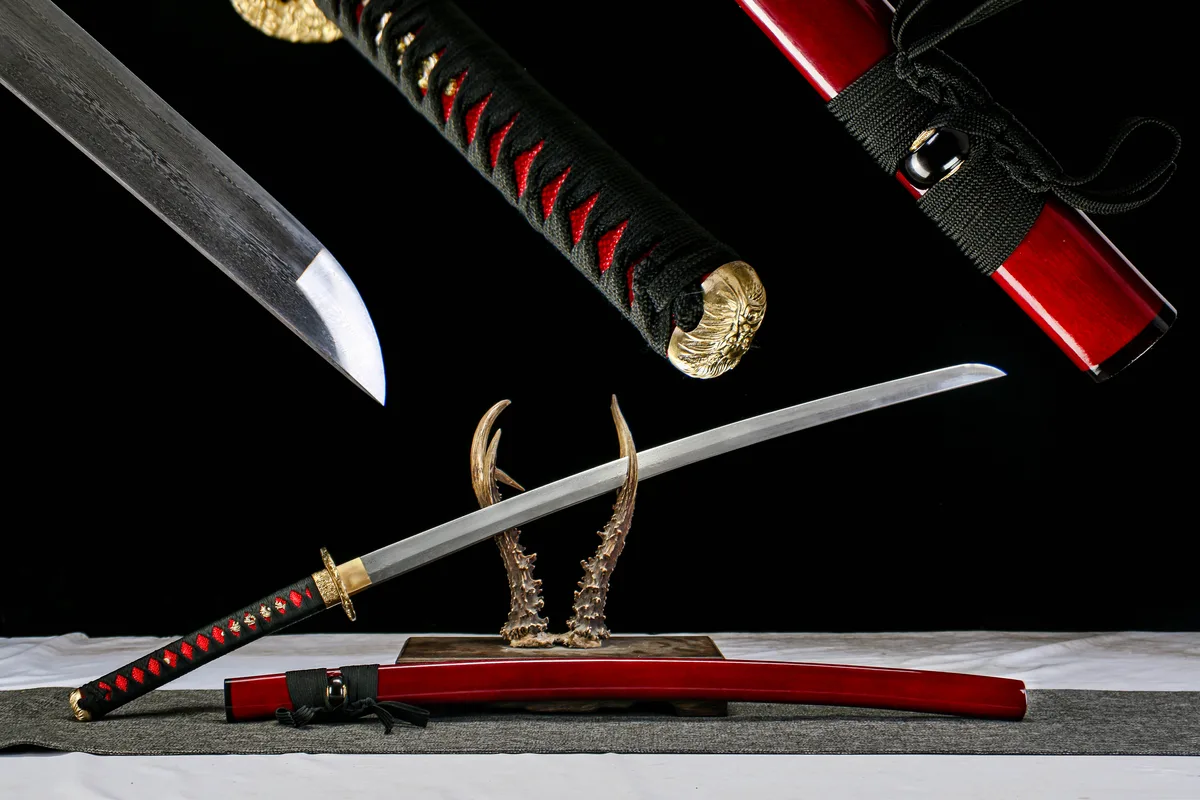




Crimson Flame (之烽) – Hand Forged Damascus Steel Katana Sword
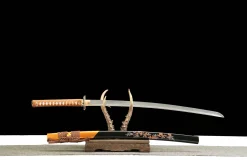
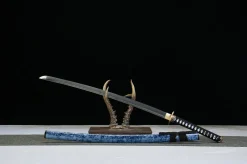
Hand-forged Damascus Steel katana (103cm total / 72cm blade), crafted in Longquan. Hand-folded Damascus pattern steel — each blade carries a unique layered grain from forge to tip.
$329.99
Crimson Flame (之烽) – Hand Forged Damascus Steel Katana Sword
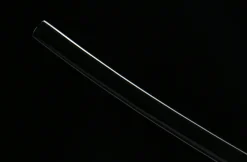
Pattern-welded Damascus does not repeat itself. Every fold line, every boundary where two steels met under the hammer, is singular to this blade – and the Crimson Flame (赤焰之烽, Chì Yàn Zhī Fēng) carries a grain that moves. At rest the surface reads like compressed smoke. Rotate the blade under light and the pattern shifts, the layers catching and releasing the reflection in a continuous, rippling sequence that no two viewers describe the same way.
Specifications
| Blade Steel | Damascus / Pattern-Welded Steel |
| Total Length | 103.0 cm / 40.6 in |
| Blade Length | 72.0 cm / 28.3 in |
| Blade Width | 3.2 cm |
| Weight | 950 g / 33.5 oz |
| Heat Treatment | Oil Quench & Temper |
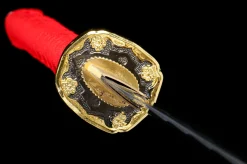
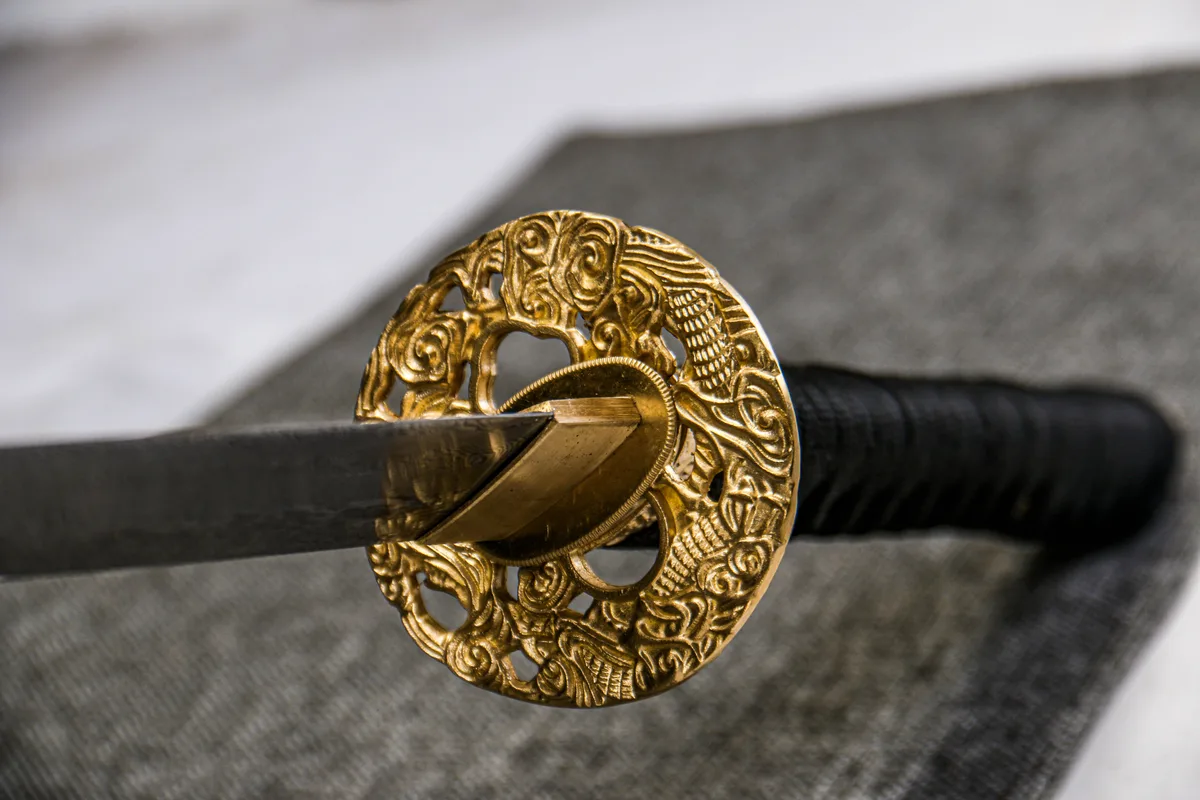
| Fittings | Copper (装) |
| Handle | Cotton Ito Wrap |
| Sheath | Green Bark Wood – Aohada |
What the Steel Does
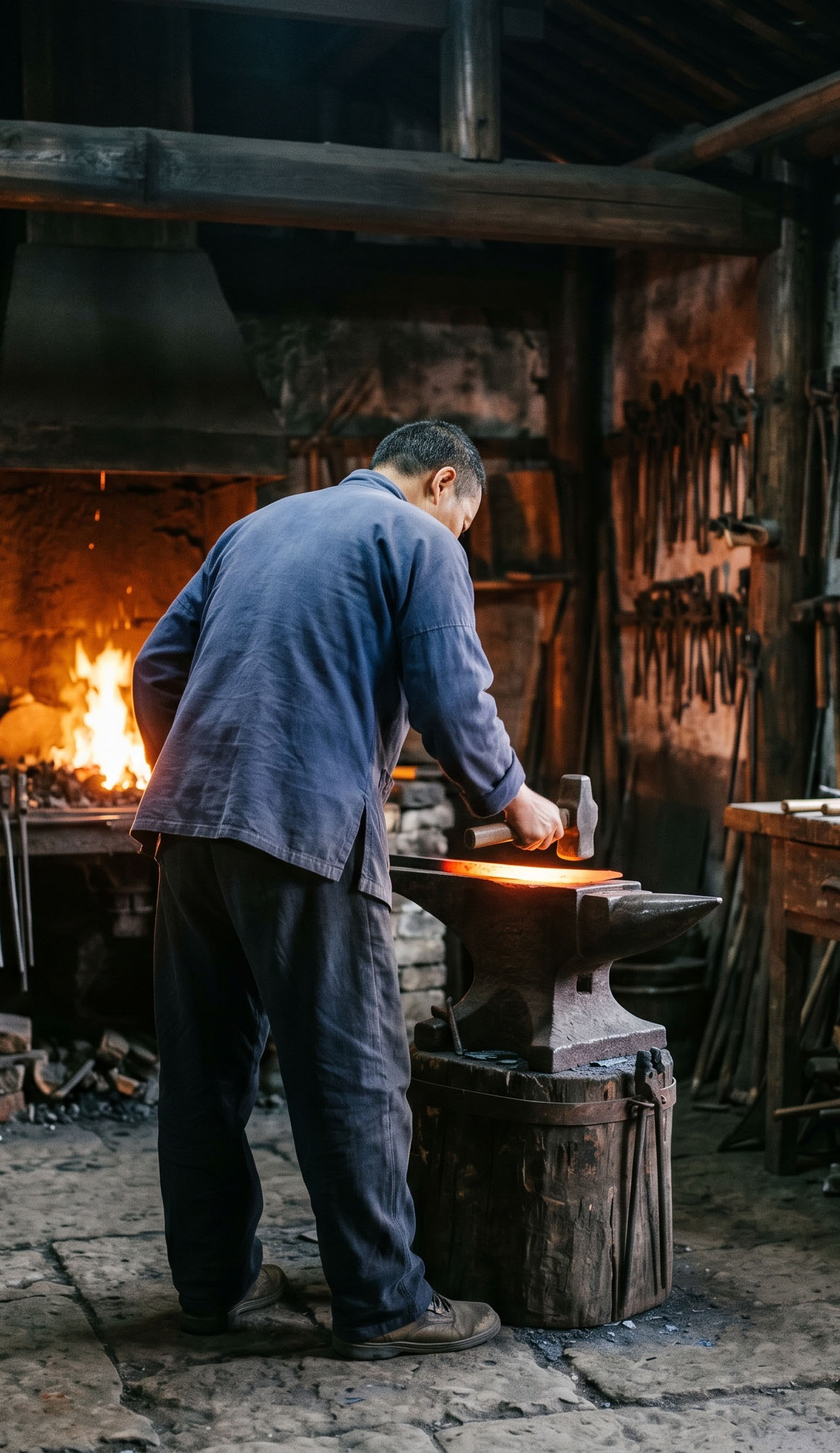
Pattern-welded construction – the technique behind true Damascus – begins with multiple steel billets of differing carbon content stacked, forge-welded, drawn out, and folded repeatedly under controlled heat. The result is a blade composed of hundreds of individual layers, each boundary visible as a line in the finished surface. The Crimson Flame uses this process not merely for its visual yield but because the alternating layers of harder and softer steel produce a composite structure across the full 72 cm blade length. Oil quench and temper locks in the hardness differential achieved during forging while relieving internal stress, leaving the blade stable across the finished piece.
The fold pattern on this blade is the particular achievement here. Longquan smiths orient the layers during forging to produce the characteristic flowing grain that reads differently depending on angle and light source – close to the spine the pattern compresses, near the edge it opens and stretches. No chemical etching is applied post-forge; the contrast between layers is the natural result of differential oxidation revealed through hand polishing, which means the pattern is not a surface treatment. It is the steel itself.
The Feel of It
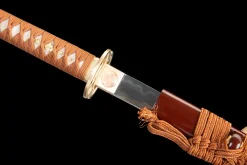
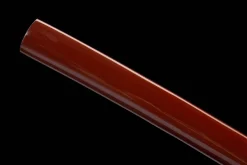
The tsuka (handle) runs 27 cm and is wrapped in tightly diagonal cotton ito – the wrap pattern crosses at regular intervals, creating the raised diamond nodes that give your palm something to register against when you adjust your grip. The green Aohada saya (sheath) is finished bark wood, its surface textured rather than lacquered smooth, so the draw is quiet and controlled. The 103 cm total length sits in the katana’s classical proportion: long enough that the draw from the saya is a deliberate, two-stage commitment, short enough that the blade never feels unwieldy once clear.
Maintenance Notes
Damascus blades require attentive care because the exposed layer boundaries can accept moisture more readily than mono-steel surfaces. Wipe the blade dry after handling and apply a light coat of choji oil (clove-scented mineral oil, traditional for Japanese blades) every few weeks, or more frequently in humid climates. Store horizontally in the saya with the edge facing upward in the classical katana orientation.
| Weight | 1.2 lbs |
|---|---|
| Dimensions | 103.0 × 3.2 × 0.7 in |
| Hamon | Damascus Pattern (No Hamon) |
| Blade Steel | Damascus Steel |
| Total Length | 103.0 cm |
| Blade Length | 72.0 cm |
| Heat Treatment | Oil Quench & Temper |
| Handle Wrap | Cotton Ito Wrap |
| Sheath Material | Green Bark Wood (Aohada) |
| Fittings | Copper, (装) |
| Forging Style | Folded Steel (Pattern Welded) |
Related products