









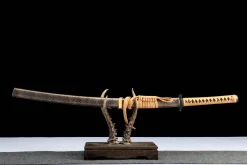

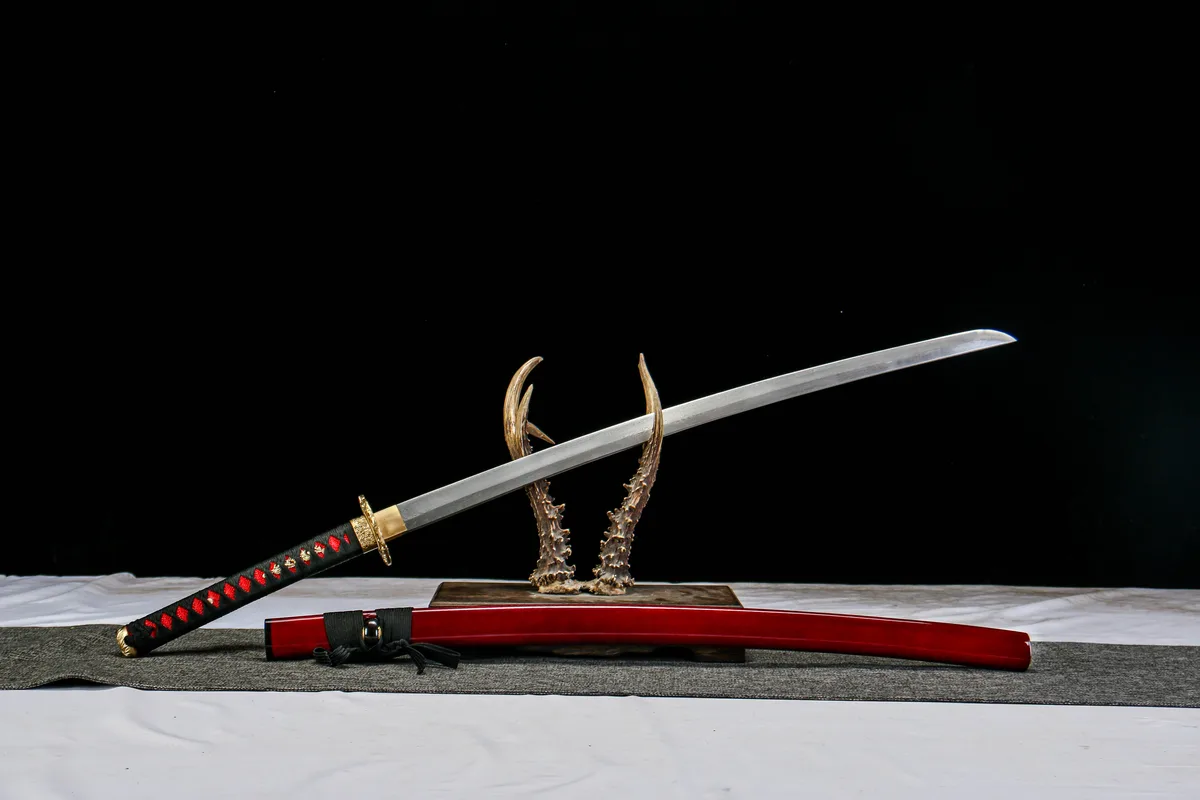







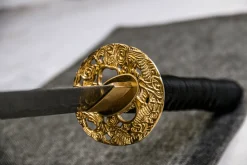


Crimson Flame (之烽) – Hand Forged Damascus Steel Katana Sword
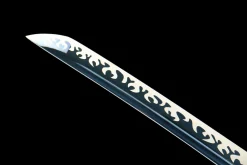
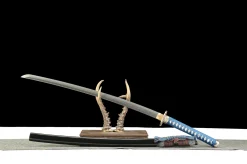
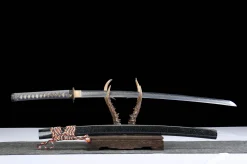
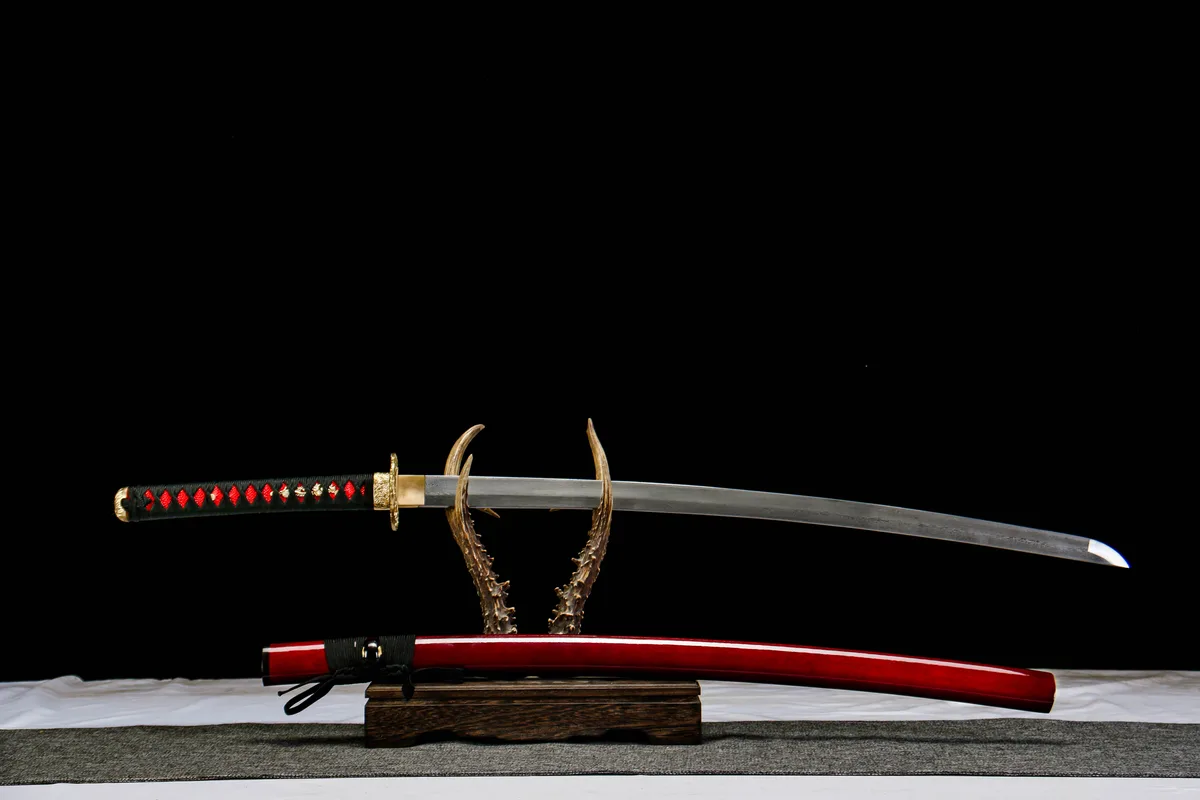
The Crimson Flame (赤焰之烽) is a hand-forged Damascus pattern-welded katana whose blade surface blazes with swirling, fire-like grain patterns — no two are ever identical. Forged in Longquan using centuries-old folding techniques, this 72 cm curved single-edged longsword pairs its mesmerizing steel with warm copper fittings and a striking green bark wood saya for a combination that is as visually arresting as it is historically rooted. At $220, the Crimson Flame delivers collector-grade Damascus artistry at a price that rewards the discerning enthusiast.
Specifications
| Blade Steel | Damascus / Pattern-Welded Steel |
| Total Length | 103.0 cm / 40.6 inches |
| Blade Length | 72.0 cm / 28.3 inches |
| Blade Width | 3.2 cm |
| Weight | 950 g / 33.5 oz (net) |
| Heat Treatment | Oil Quench & Temper |
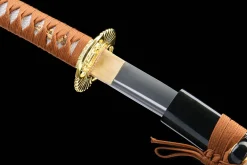
| Fittings | Copper |
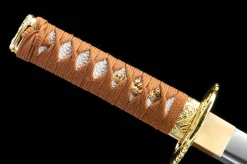
| Handle | Cotton Ito Wrap |
| Sheath | Green Bark Wood (Aohada) |
Craftsmanship & Materials
The Crimson Flame’s blade is the product of patient, repeated forge-welding — layers of high and low carbon steel are stacked, heated to forge-welding temperature, and hammered flat, then folded again. This process, carried out by Longquan smiths whose city has practiced the craft for over 2,600 years, produces the distinctive flowing grain that earns Damascus steel its reputation. The resulting pattern on this blade evokes tongues of fire rising through smoke, which inspired the sword’s name: 赤焰之烽, the Crimson Signal Flame.
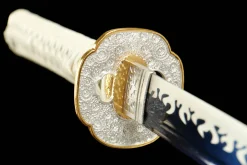
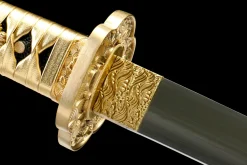
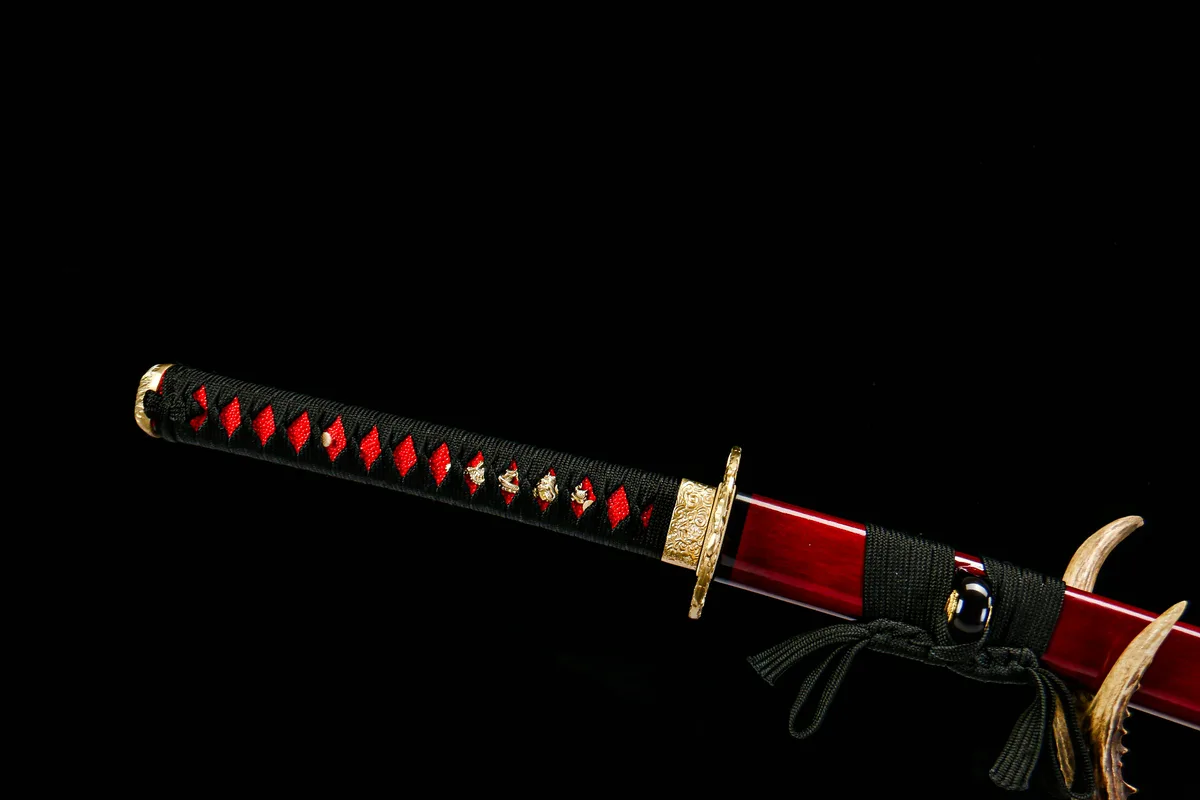
Following shaping, the blade undergoes an oil quench and temper — a process that locks in hardness while preserving enough toughness to prevent brittleness. The copper tsuba and copper fittings complement the warm amber and silver tones of the Damascus surface, their reddish gleam echoing the fiery character of the blade. Cotton ito wraps the tsuka in a firm, traditional diamond pattern over the handle core, providing a secure and comfortable grip.
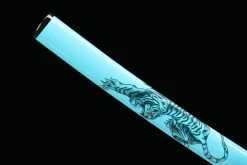
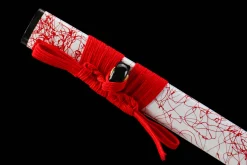
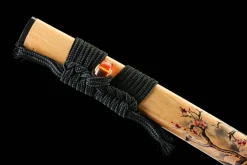
The saya is crafted from Aohada green bark wood, a material chosen both for its visual contrast — the muted natural green setting off the copper hardware — and for its light, durable structure. Each saya is individually fitted to its blade, ensuring a snug, rattle-free draw that protects the pattern-welded surface between uses.
Perfect For
- Collectors seeking a visually unique Damascus blade with genuine Longquan provenance at an accessible premium price point
- Display enthusiasts who want a wall piece whose blade surface changes in appearance with every shift of light
- Gift buyers looking for a meaningful, handcrafted sword with poetic Chinese naming and striking copper-and-green presentation
Care & Maintenance
Damascus pattern-welded steel requires regular maintenance to preserve its signature surface patterning — apply a thin coat of choji oil or camellia oil to the blade after every handling session to prevent oxidation along the weld lines. Avoid prolonged humidity exposure, as the multiple steel layers can develop differential rust if left unprotected. When cleaning, use a soft uchiko powder ball gently along the blade before re-oiling, and never use abrasive materials that could obscure the folded pattern.
Frequently Asked Questions
What is Damascus pattern-welded steel and how is it made?
Damascus pattern-welded steel is created by forge-welding multiple layers of different steels together, then repeatedly folding and manipulating the billet to produce distinctive wavy or flowing surface patterns. The Crimson Flame (赤焰之烽) features this multi-layer folded construction, meaning every blade displays a truly unique pattern. No two Damascus blades look identical, making each Crimson Flame a one-of-a-kind piece with both visual character and layered structural integrity.
What does oil quench and temper heat treatment mean for the Crimson Flame katana?
Oil quenching involves plunging the heated blade into oil rather than water, producing a slightly slower cooling rate that reduces the risk of cracking — particularly important for layered Damascus steel. The subsequent tempering process relieves internal stress and adjusts hardness for a balance of edge retention and toughness. For the Crimson Flame, this treatment ensures the pattern-welded blade is both functional and resilient rather than purely decorative.
Is the Crimson Flame katana battle ready for cutting practice?
The Crimson Flame is a fully functional katana with a 72 cm Damascus pattern-welded blade, 0.7 cm spine thickness, and a 950 g net weight — all within practical cutting parameters. Its cotton ito-wrapped handle and copper fittings add durability. While Damascus katanas are especially prized by collectors for their visual appeal, the Crimson Flame is oil quenched and tempered to handle light-to-moderate tameshigiri cutting practice with proper technique.
What is the green bark wood (Aohada) sheath on the Crimson Flame?
Aohada, or green bark wood, is a traditional Japanese sheath material sourced from the Japanese spindle tree. It features a naturally textured surface with subtle color variation, giving the Crimson Flame’s scabbard an organic, premium appearance distinct from lacquered wood sheaths. The material is lightweight yet sturdy and pairs visually with the blade’s warm copper fittings to create a coherent, high-quality aesthetic presentation.
Is the Crimson Flame worth buying at $220 compared to cheaper Damascus katanas?
At $220, the Crimson Flame sits in the premium entry tier where quality differences become meaningful. Key differentiators over budget Damascus swords (under $100) include genuine copper fittings rather than zinc alloy, real cotton ito handle wrap, an Aohada wooden sheath, and a properly oil-quenched blade. Budget Damascus pieces often use acid-etched patterns on mono-steel. The Crimson Flame’s folded construction and quality hardware justify the price for collectors and intermediate buyers seeking authenticity.
| Weight | 1.2 lbs |
|---|---|
| Dimensions | 103.0 × 3.2 × 0.7 in |
| Sword Type | Katana |
| Blade Steel | Damascus Steel |
| Total Length | 103.0 cm |
| Blade Length | 72.0 cm |
| Heat Treatment | Oil Quench & Temper |
| Handle Wrap | Cotton Ito Wrap |
| Sheath Material | Green Bark Wood (Aohada) |
| Fittings | Copper, (装) |
| Forging Style | Folded Steel (Pattern Welded) |
Related products
Carbon Steel


1065 Carbon Steel


Damascus Steel

High Carbon Steel

1065 Carbon Steel

1065 Carbon Steel
1045 Carbon Steel