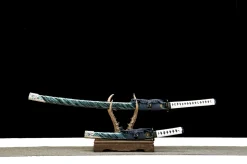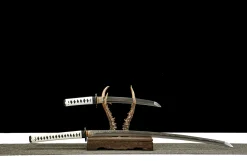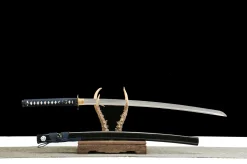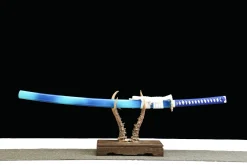




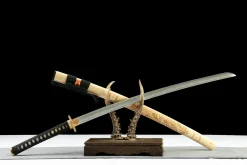
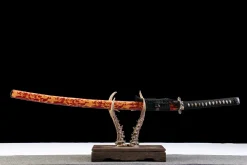




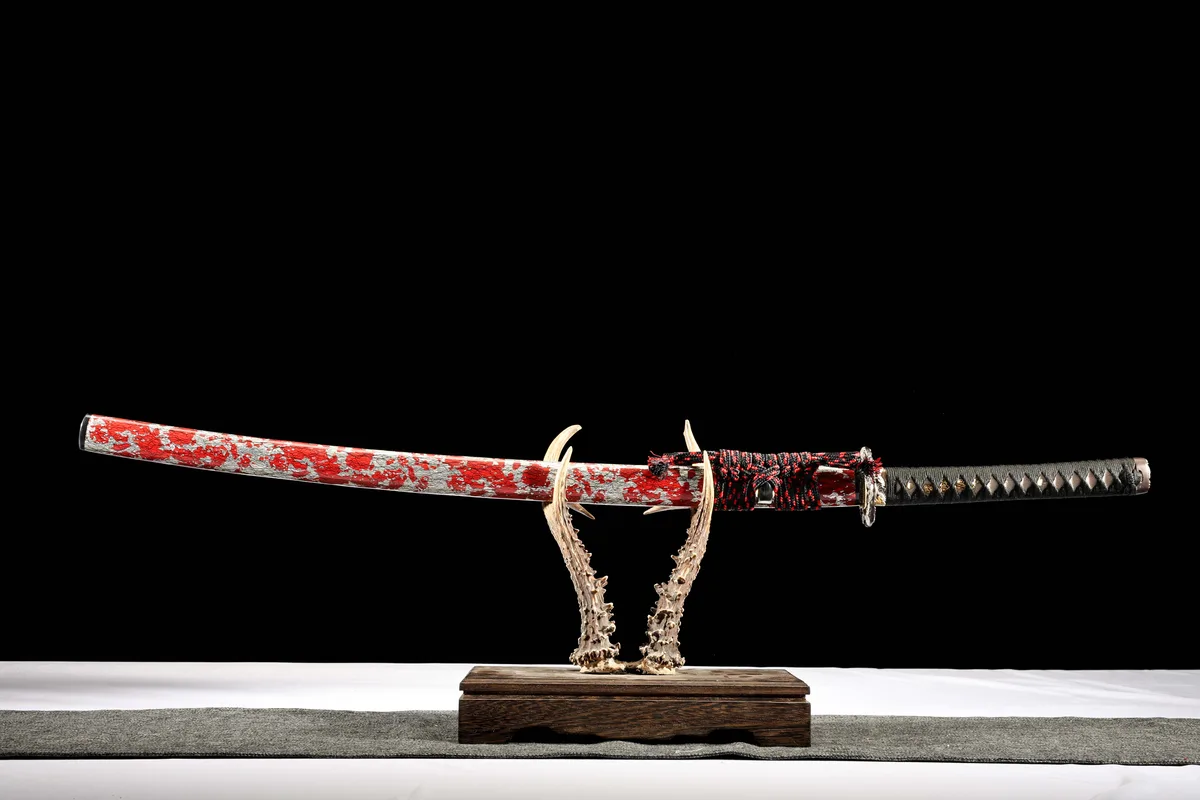


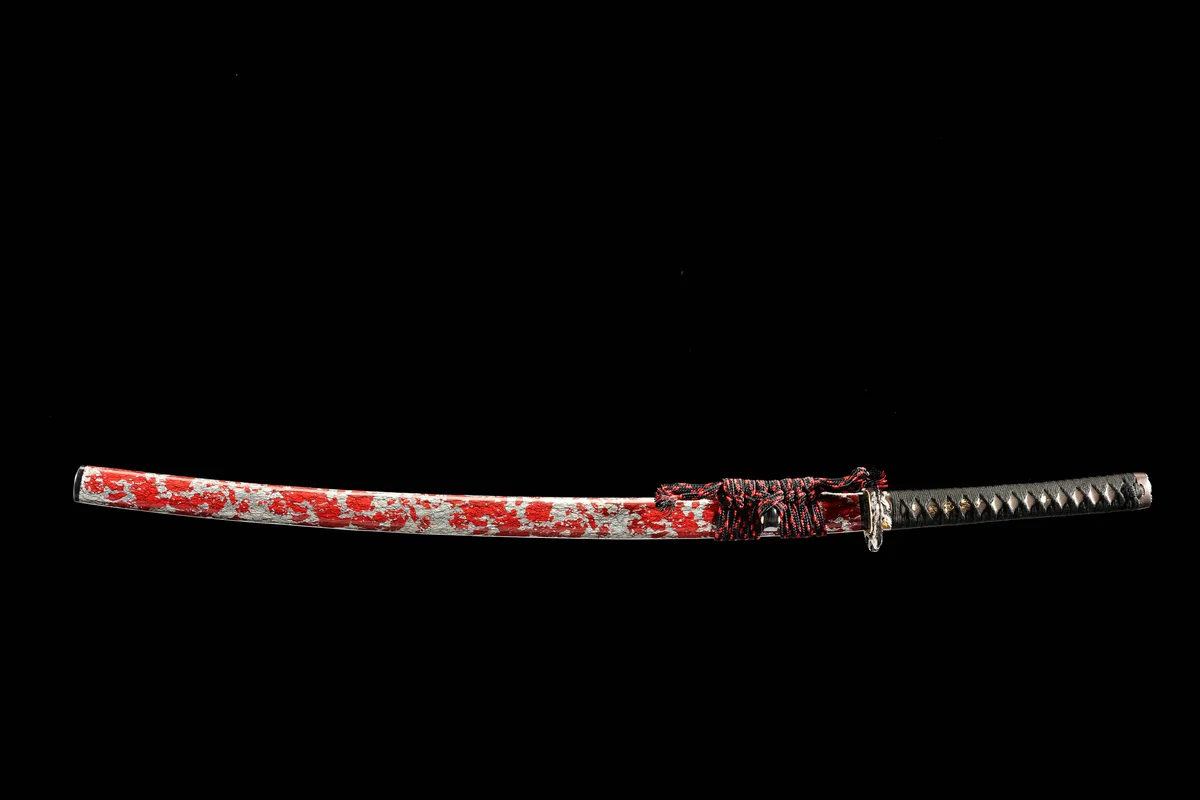
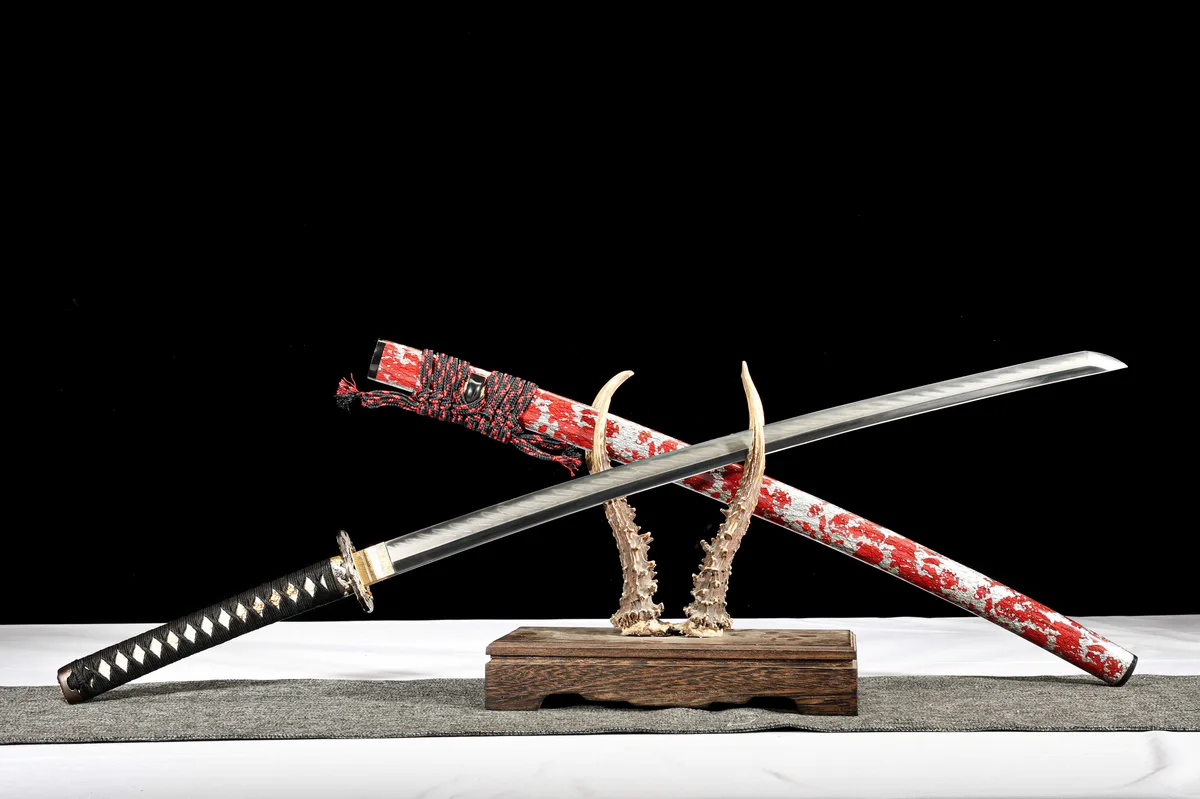

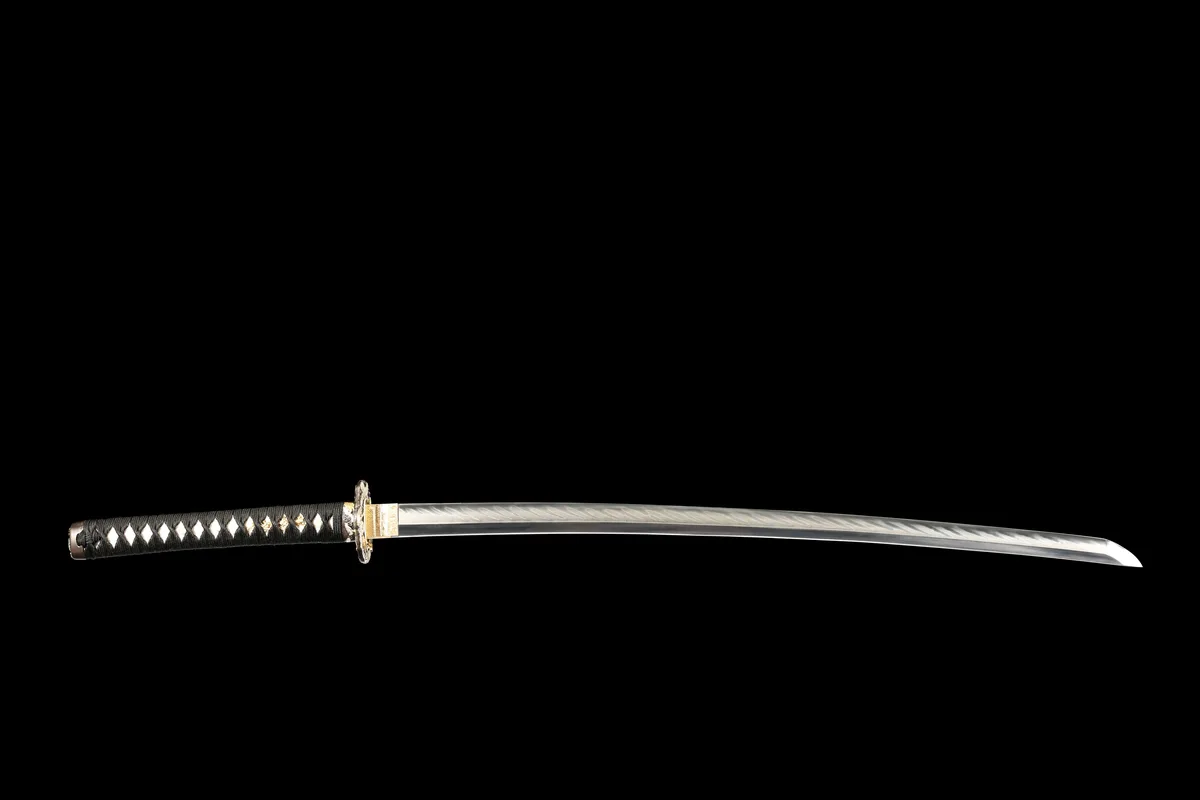
Crimson Flame Cloud Cleave – Hand Forged T10 Tool Steel Katana Sword
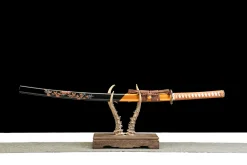
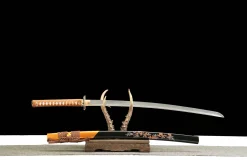
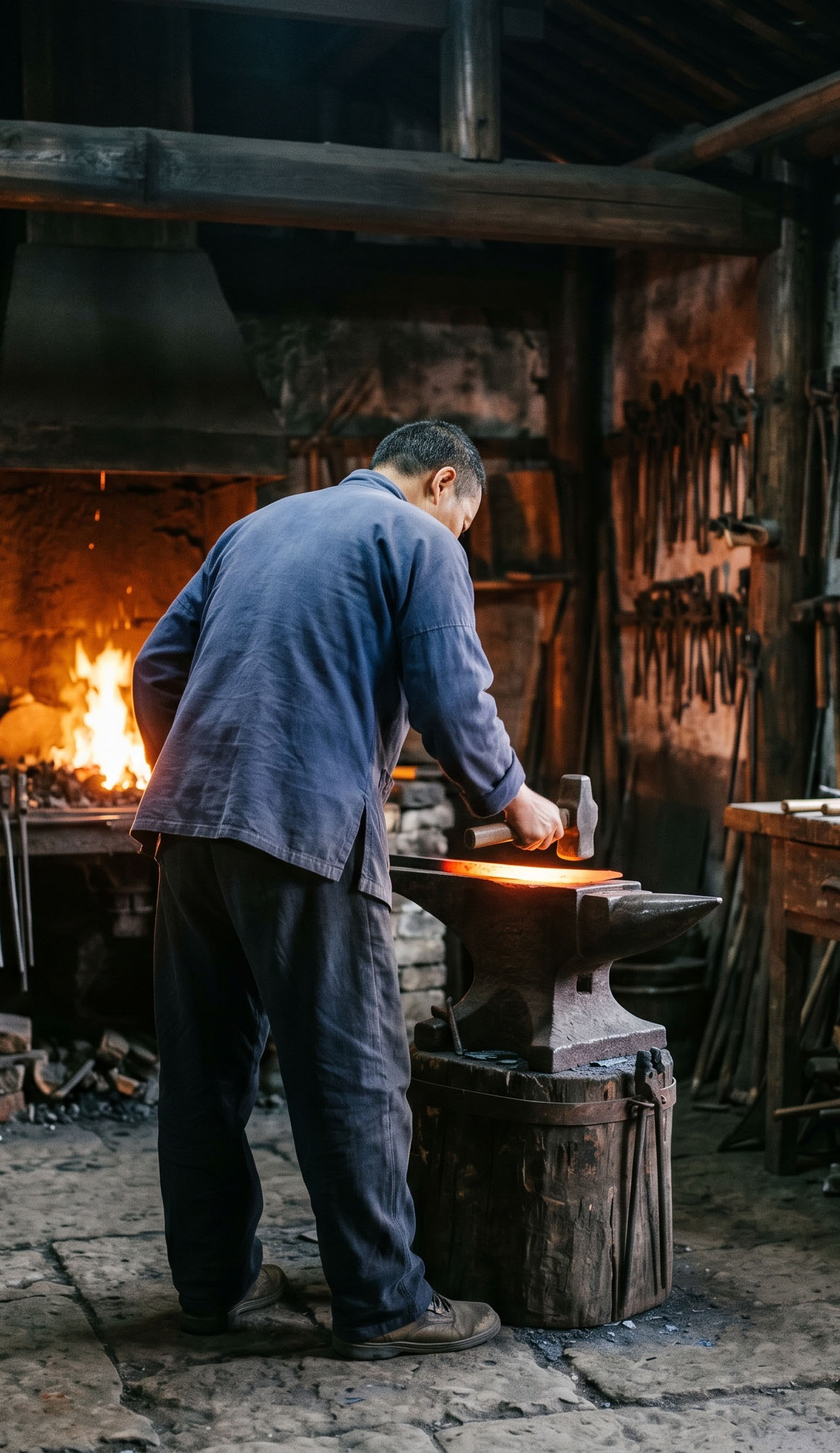
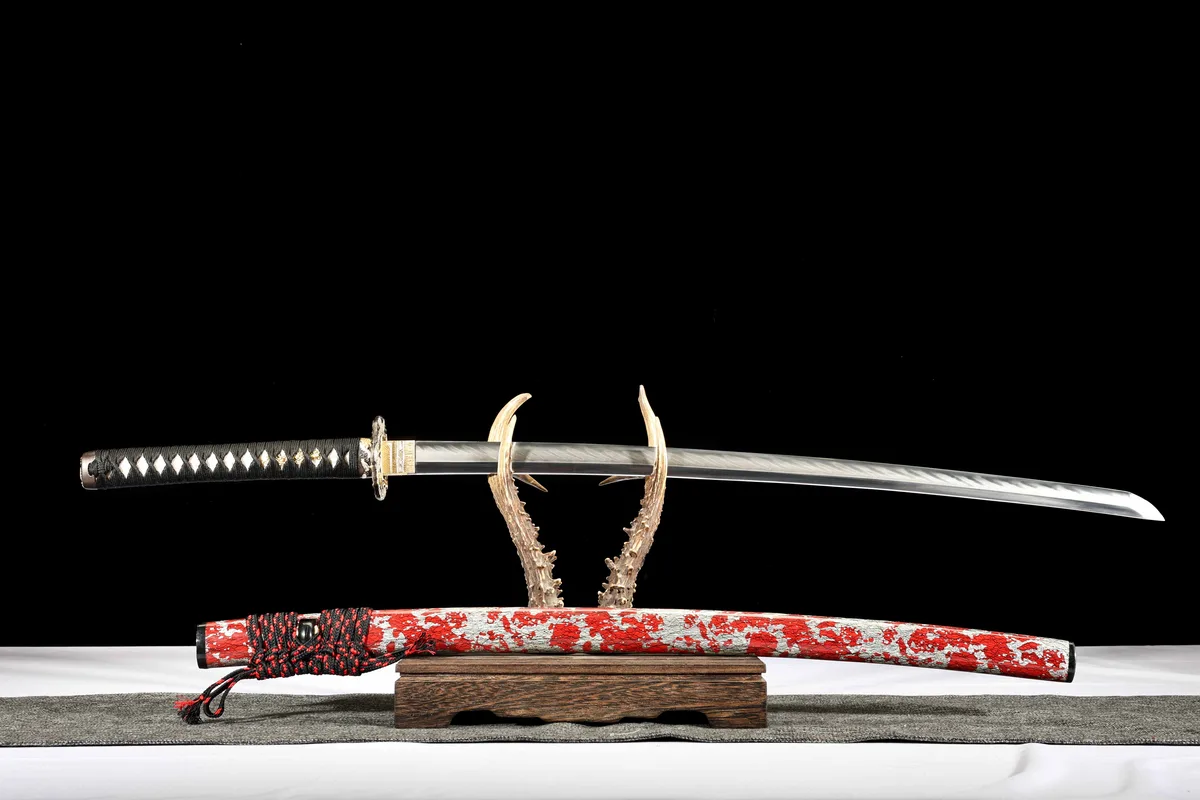
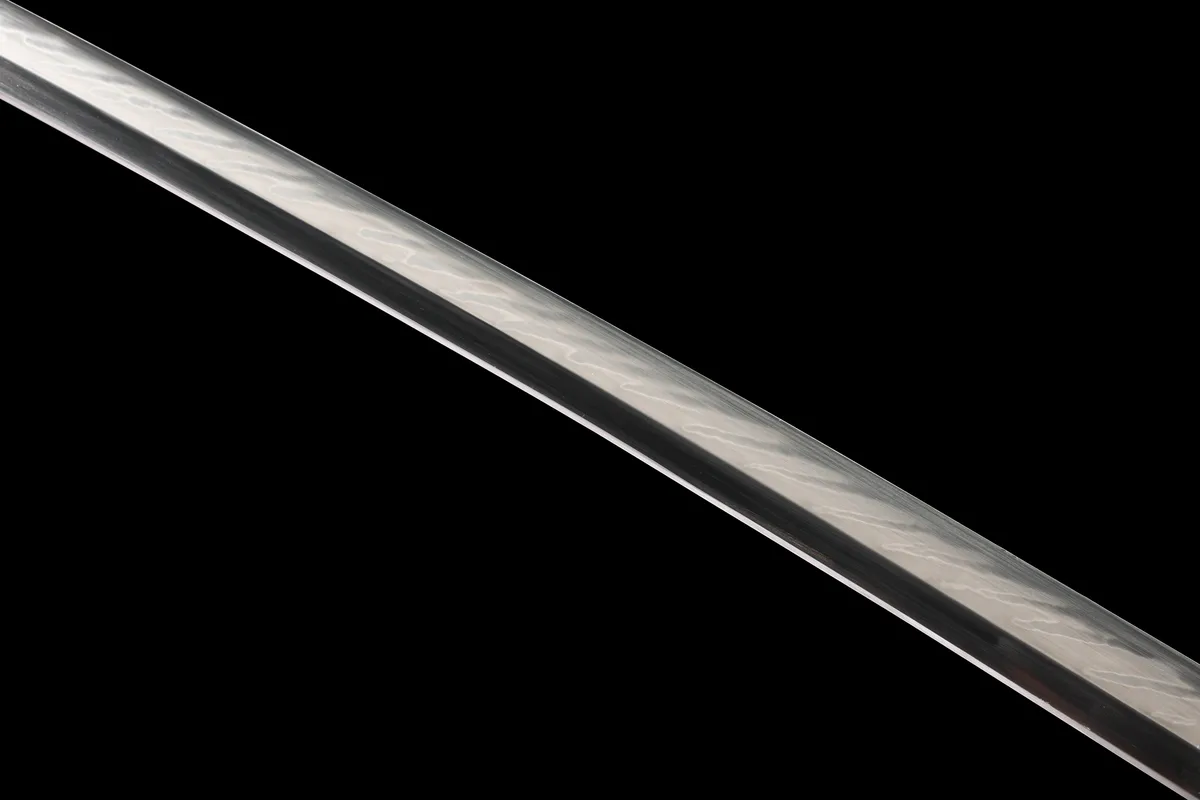
Hand-forged T10 Tool Steel katana (102cm total / 72cm blade), crafted in Longquan. Clay-tempered blade with a genuine hamon line — visible contrast between hardened edge and soft spine.
$1,949.99
Crimson Flame Cloud Cleave – Hand Forged T10 Tool Steel Katana Sword
There is a specific quality to a barb-pattern hamon that no other temper line configuration produces. Where cloud-type or straight hamon tend toward softness and expansion, the 倒刺纹 (dào cì wén – reverse barb pattern) moves with direction: it pulls toward the edge in tight, angled formations that look active even when the blade is still. On a clay-tempered T10 tool steel blade, the nie (the fine grain crystalline activity along the habuchi transition zone) within each barb point reads under raking light as though the steel is alive at its boundary. The Crimson Flame Cloud Cleave is built around that visual argument, and the gold-foil lacquered saya answers it.
Specifications
| Blade Steel | T10 High Speed Tool Steel |
| Total Length | 102.0 cm / 40.2 in |
| Blade Length | 72.0 cm / 28.3 in |
| Blade Width | 3.2 cm |
| Blade Thickness | 0.7 cm |
| Weight | 1040 g / 36.7 oz |
| Heat Treatment | Clay Tempering (Differential Hardening) |
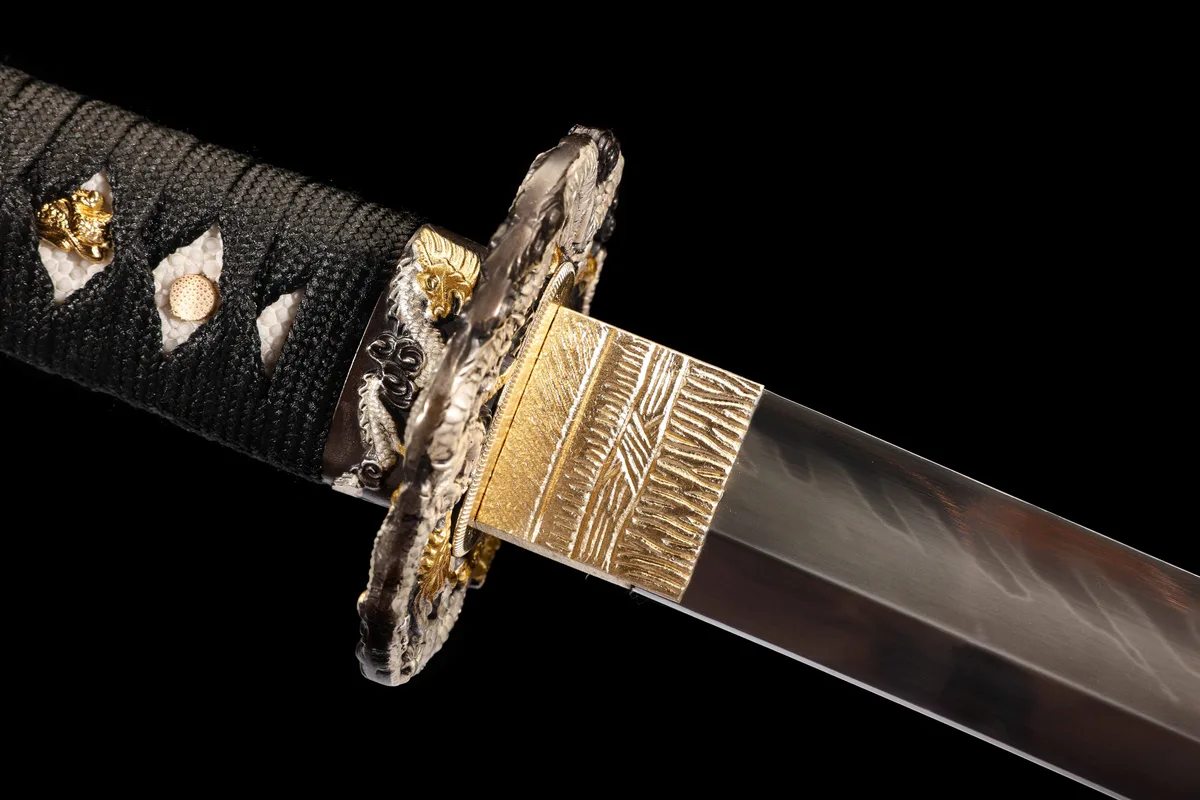
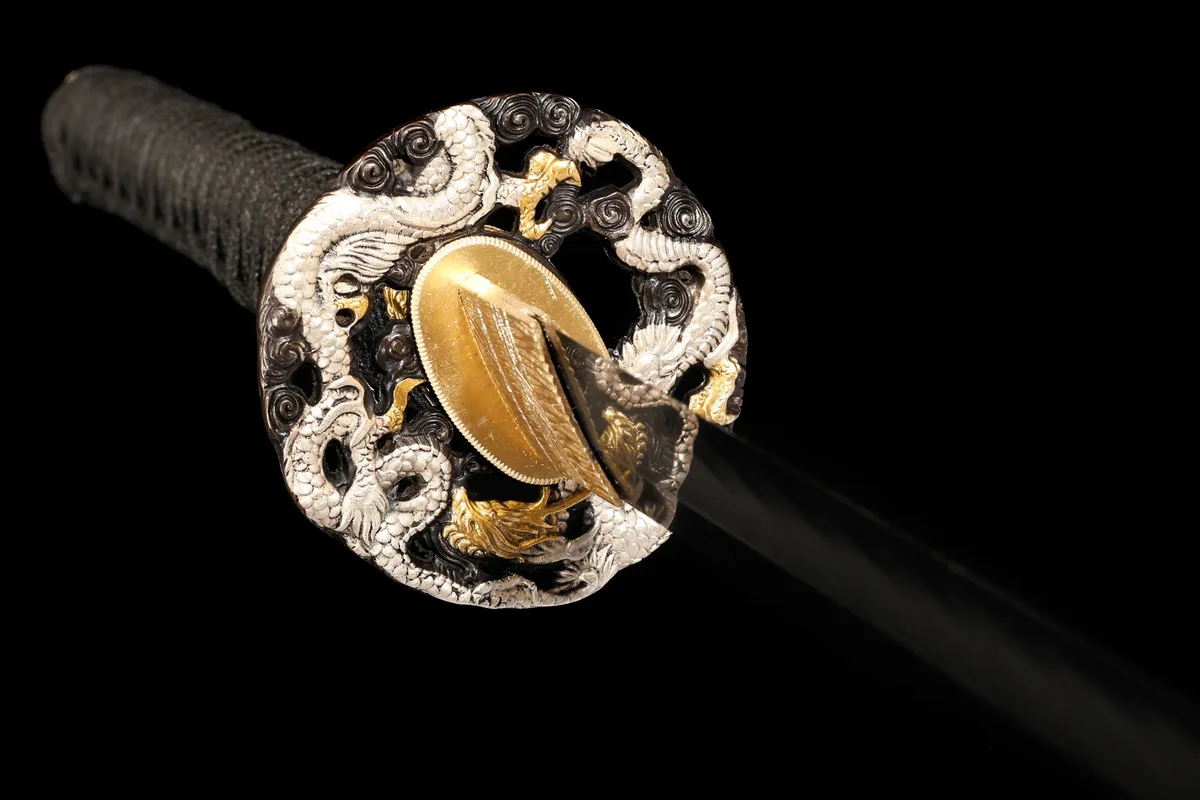
| Fittings | Copper, gold-gilded silver (铜装鎏金银) |
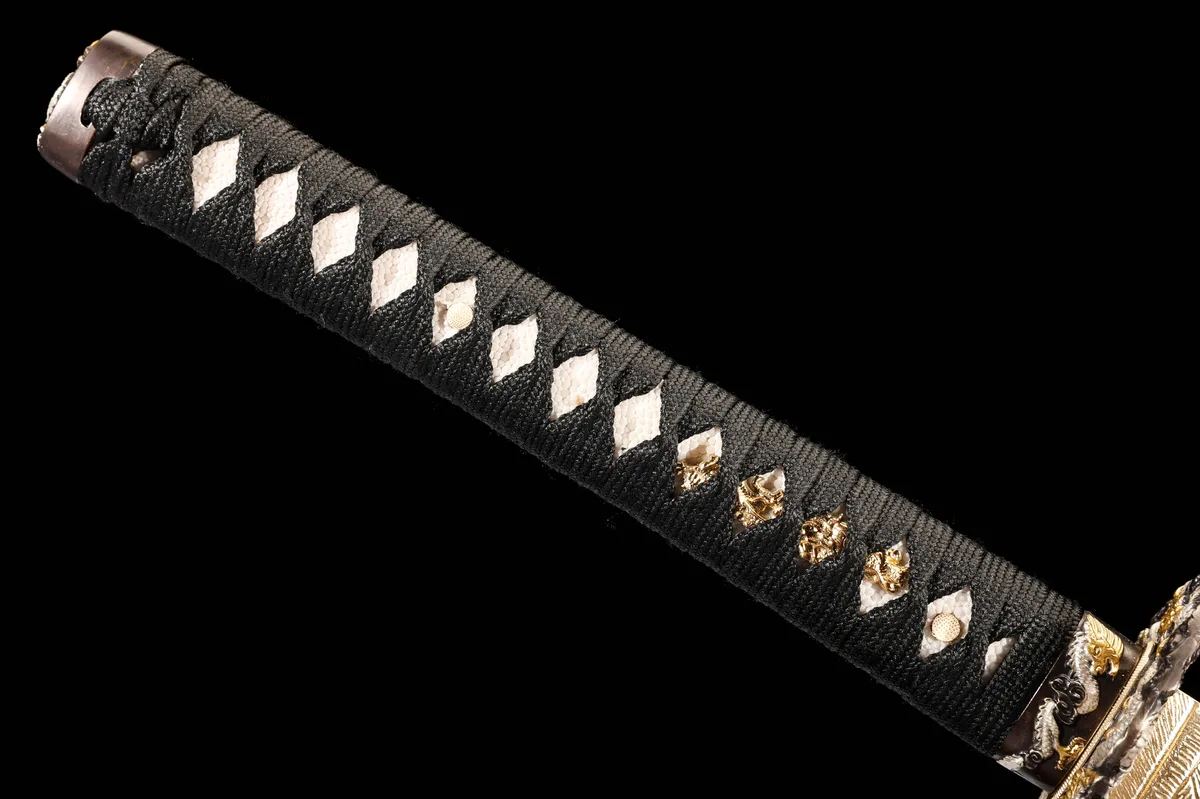
| Handle | Cotton ito wrap over genuine rayskin (same) |
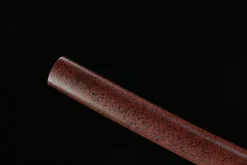
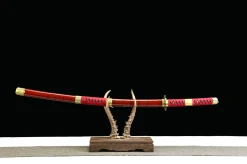
| Sheath | Urushi lacquer, gold foil (大漆 金箔鞘) |
What the Steel Does
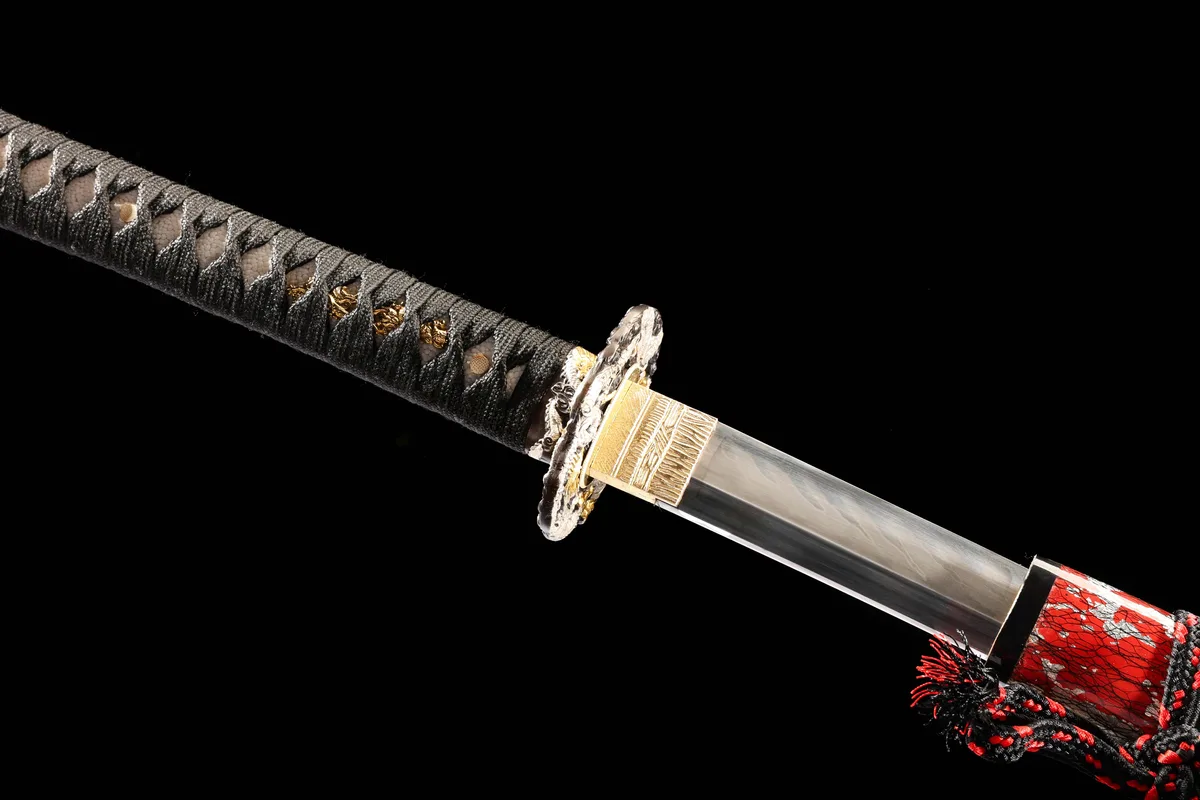
T10 tool steel carries a meaningful advantage over standard 1095 or 1060 when clay tempering is the intended heat treatment: the tungsten alloying element stabilizes the steel at high hardness, resisting the grain coarsening that can make high-carbon steels brittle when pushed toward their upper hardness range. Clay tempering builds differential hardness across the blade’s cross-section – the ha (edge) quenched hard and fast while the mune (spine) retains toughness – and T10’s stability under that process allows the hamon (temper line) to develop with genuine complexity rather than a simple, flat demarcation.
The barb pattern on this blade is not a polishing artifact or an etch effect. It is the direct result of how the clay was applied and how the steel responded to the quench. The yokote line at the kissaki (tip transition) is sharply defined, confirming the hand-finishing work. The shinogi-zukuri (ridge-line) geometry runs cleanly from base to tip, the shinogi ridge establishing a blade cross-section that carries the forging style’s full structural logic into the finished piece.
The Feel of It
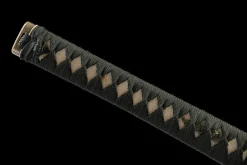
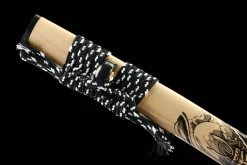
The 27 cm handle is long, deliberately so – wrapped in cotton ito over genuine same (rayskin), the raised nodes of the rayskin locked under the wrapping creating a grip surface that does not compress or shift. Two hands sit on this handle with space to spare, and the wrap tension is consistent from tsuba (guard) to kashira (pommel cap). The 大漆 gold-foil saya draws clean: urushi lacquer over the sheath body creates a slightly firm, smooth koiguchi (sheath mouth) that holds the blade securely without binding, and the gold foil surface catches and scatters ambient light in a way that matte finishes cannot. At 72 cm blade length, the draw commits you to a full arc – this blade does not suggest half measures.
Maintenance Notes
Apply choji oil (traditional clove-mineral blend) to the blade surface after each handling session using a soft cloth or nuguigami (Japanese tissue paper), working from habaki (blade collar) to kissaki. The urushi lacquer saya requires no oiling – keep it away from prolonged direct sunlight to prevent the lacquer from yellowing or delaminating. Re-oil the blade every four to six weeks during storage, and inspect the ito wrap annually for loosening at the handle ends.
| Weight | 1.32 lbs |
|---|---|
| Dimensions | 102.0 × 3.2 × 0.7 in |
| Hamon | Real Hamon (Clay Tempered) |
| Blade Steel | T10 Tool Steel |
| Total Length | 102.0 cm |
| Blade Length | 72.0 cm |
| Heat Treatment | Clay Tempering (Differential Hardening) |
| Handle Wrap | Cotton Ito Wrap 真鱼皮 |
| Sheath Material | 大漆 金箔鞘 |
| Fittings | 铜装鎏金银 |
| Forging Style | 鎬造 |
Related products