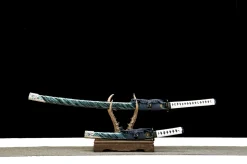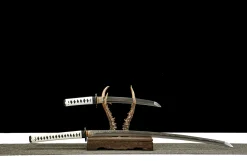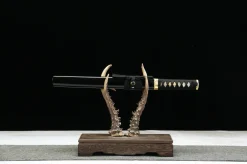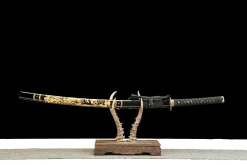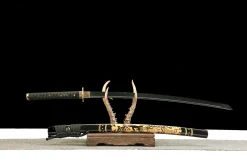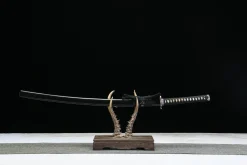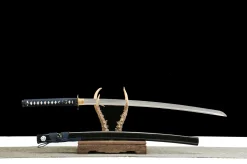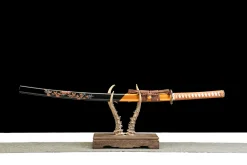
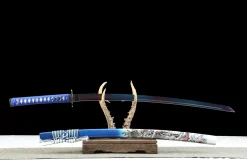
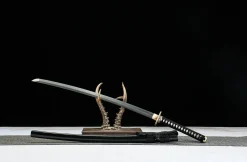

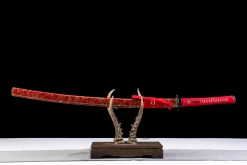
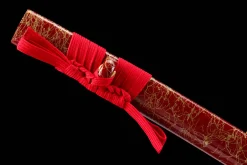

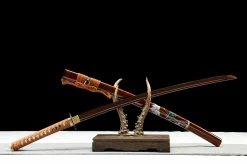
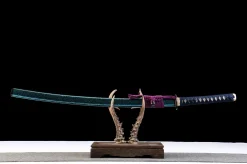





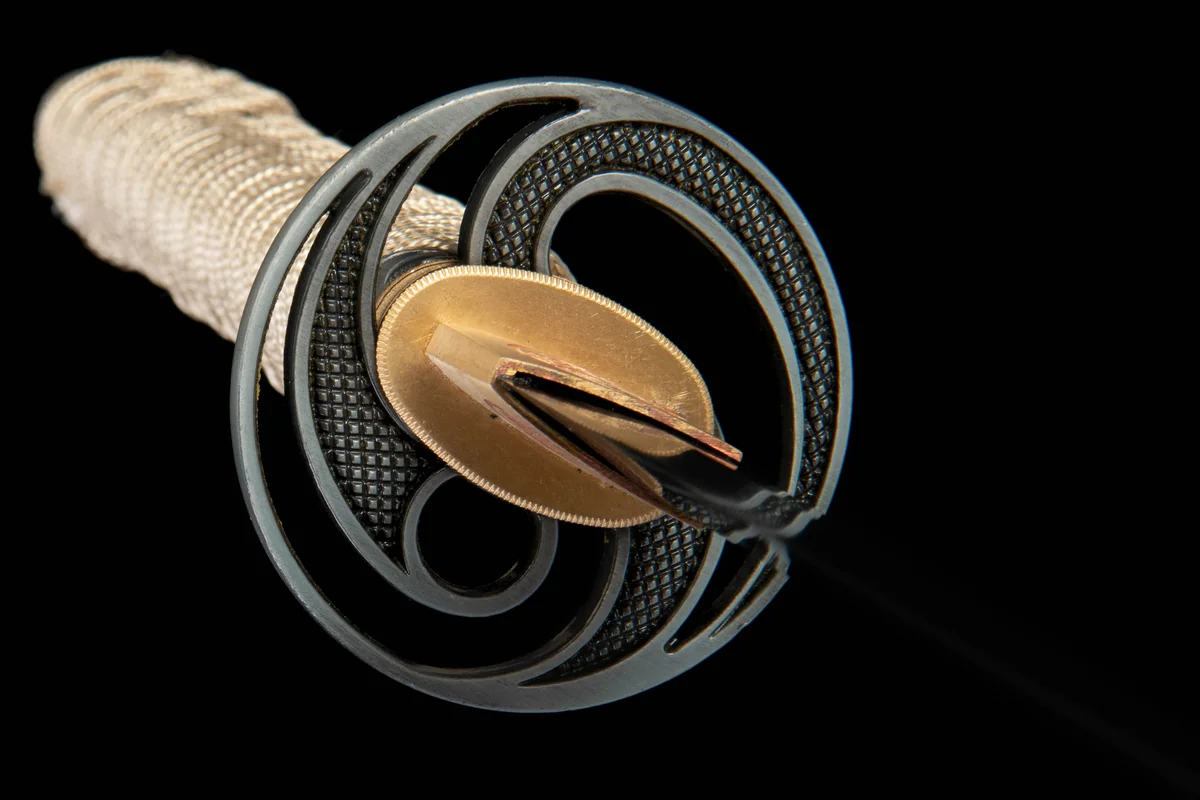

Crimson Oath – Hand Forged 1065 Carbon Steel Katana Sword
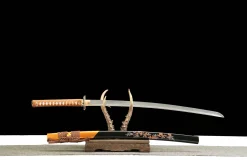
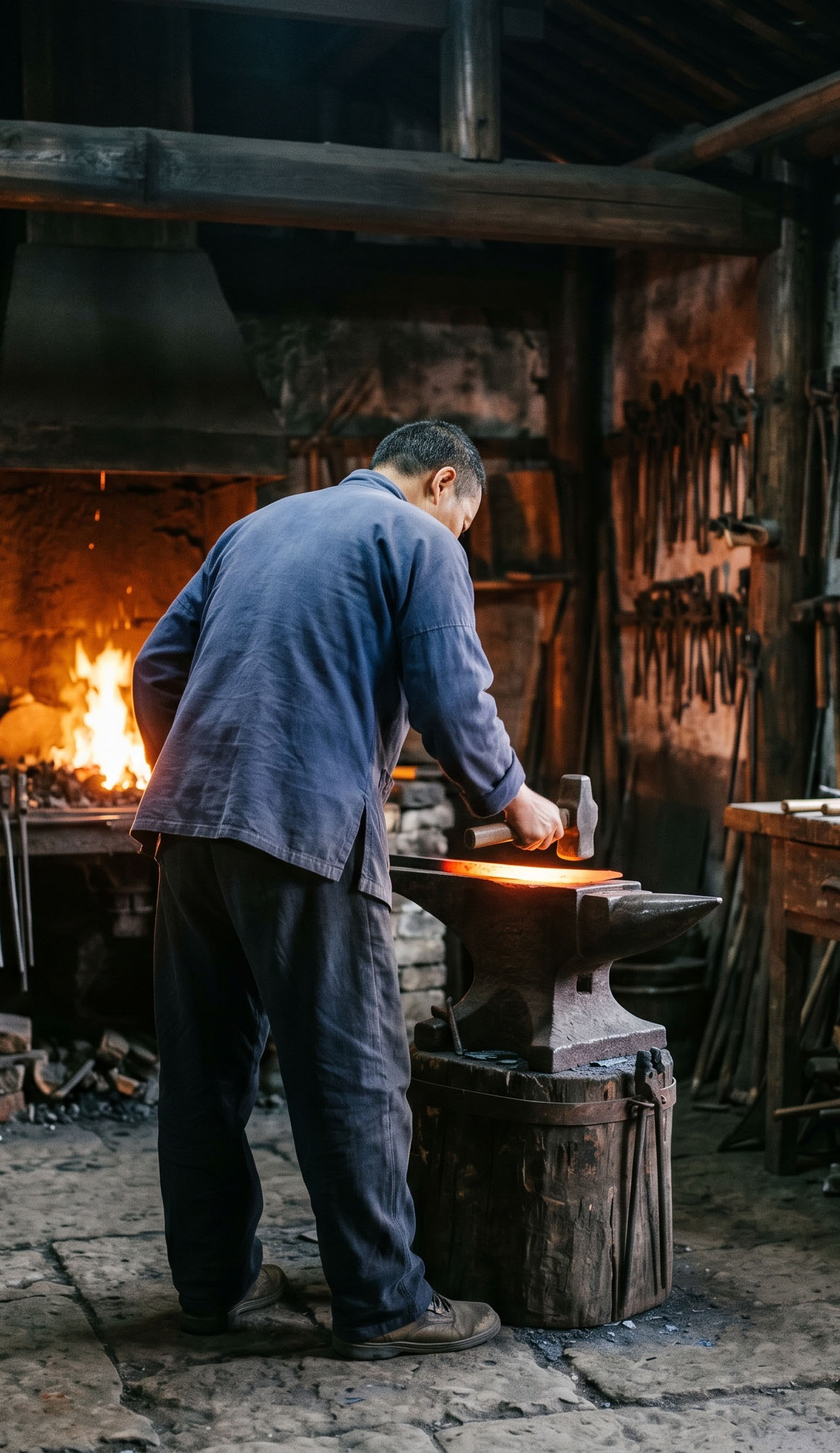
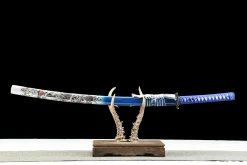
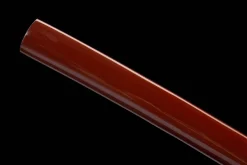
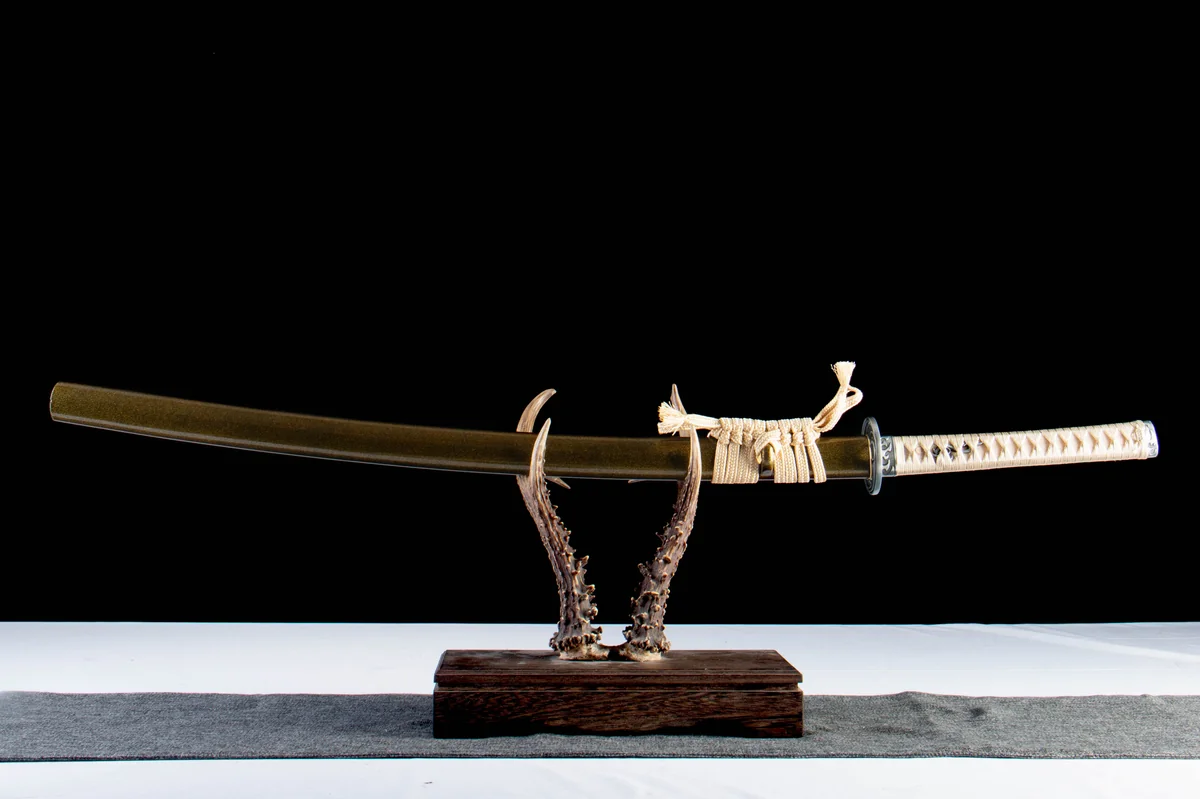
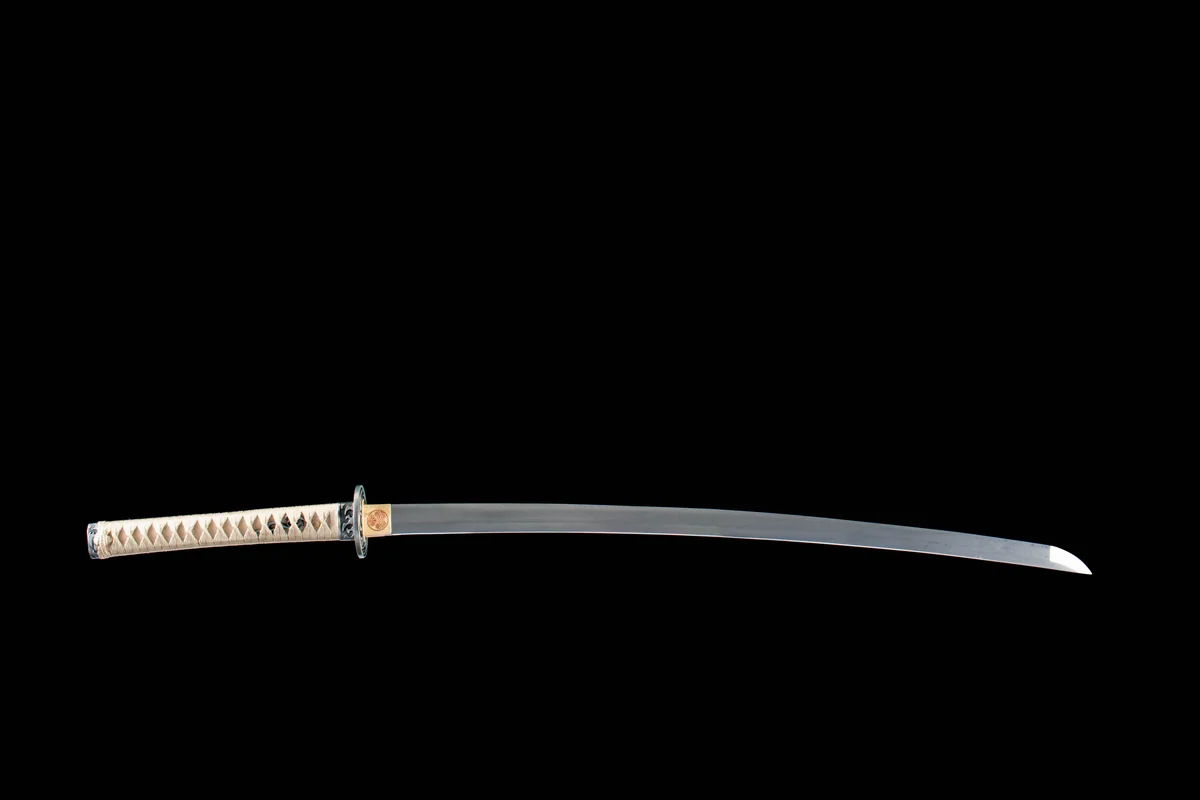
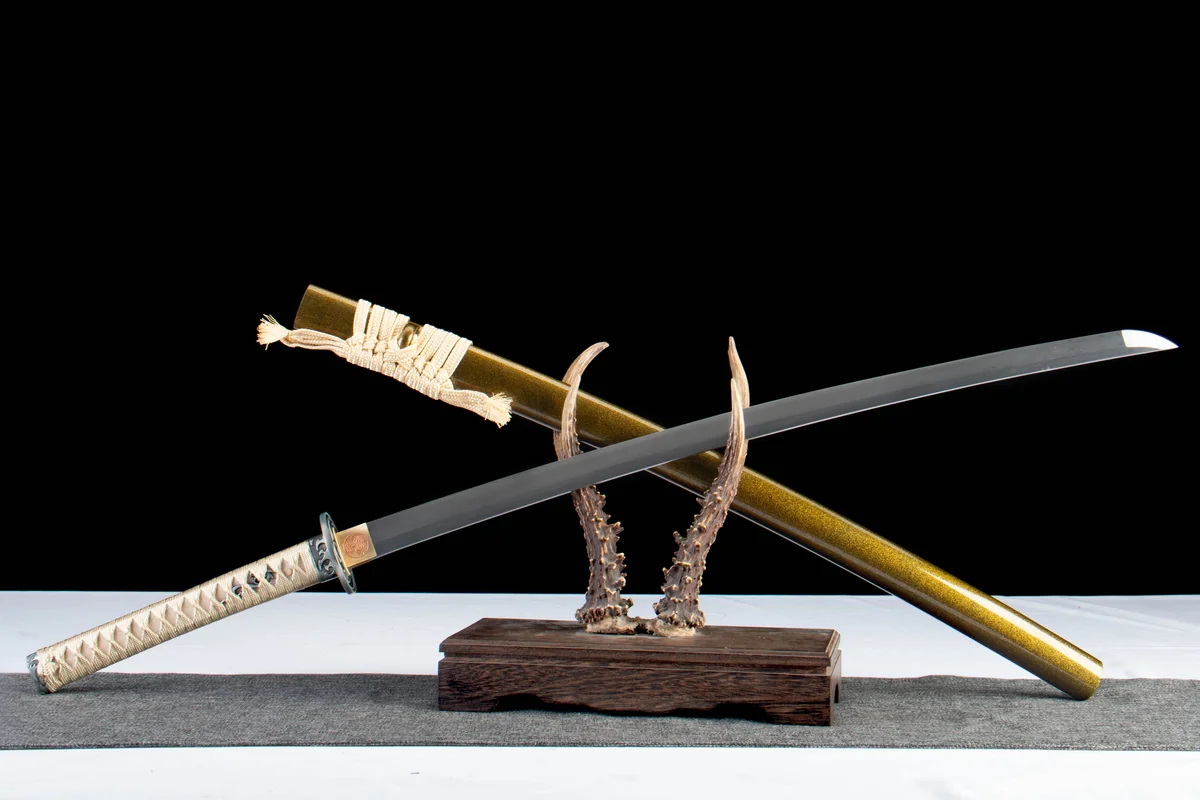
Hand-forged 1065 Carbon Steel katana (102cm total / 72cm blade), crafted in Longquan. Full-tang construction with traditional fittings and hand-lacquered saya.
$209.99
Crimson Oath – Hand Forged 1065 Carbon Steel Katana Sword
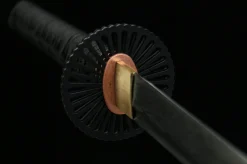
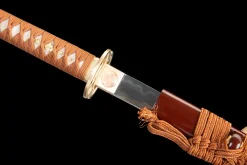
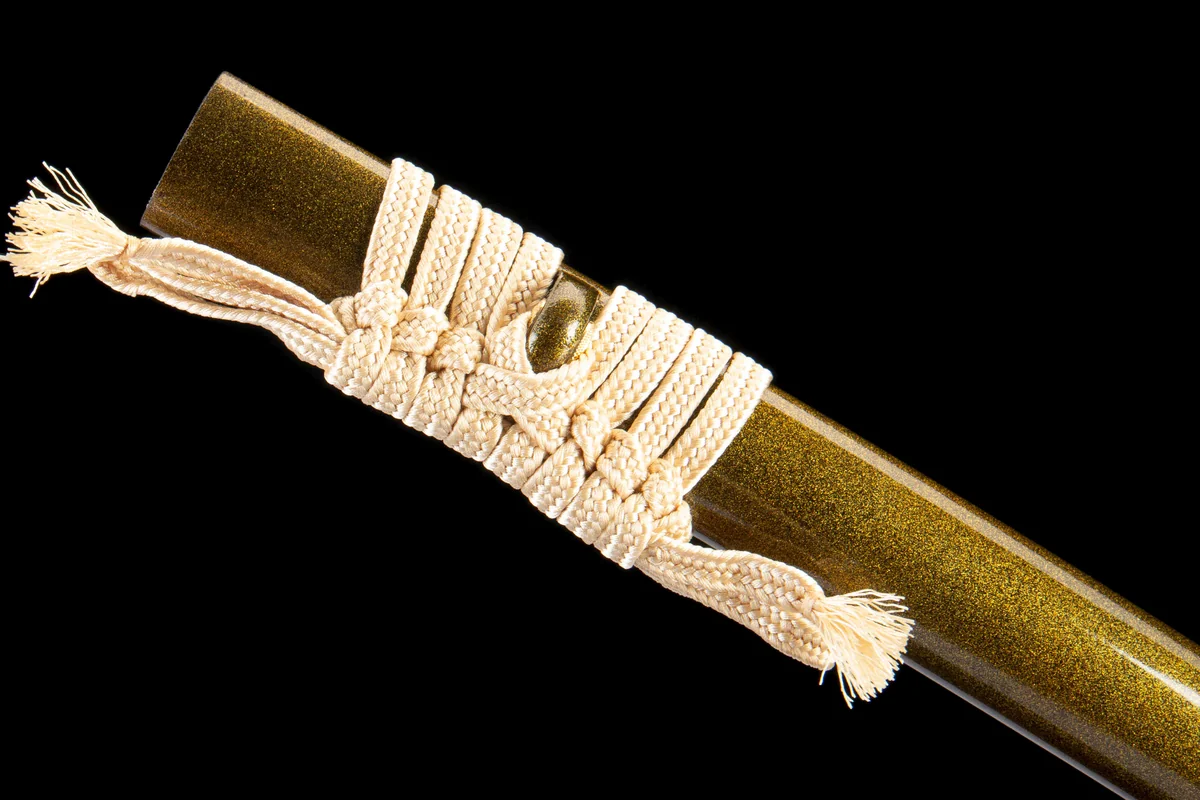
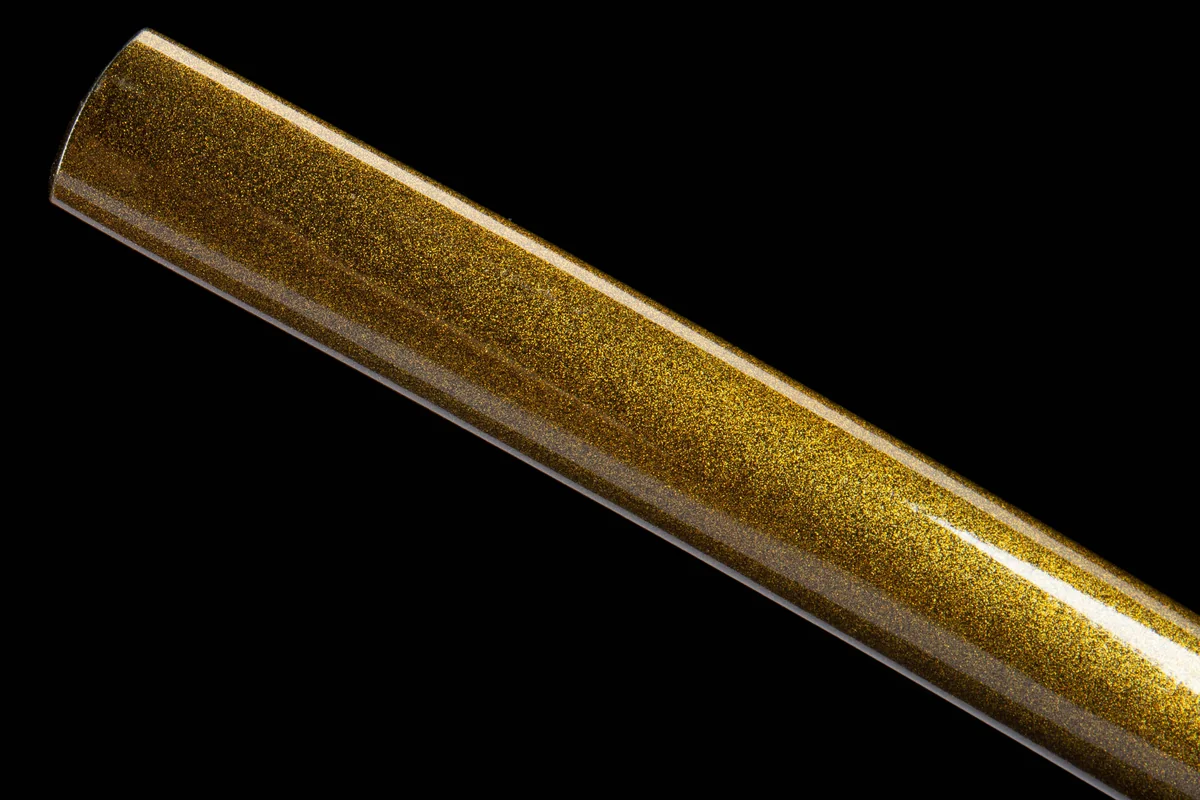
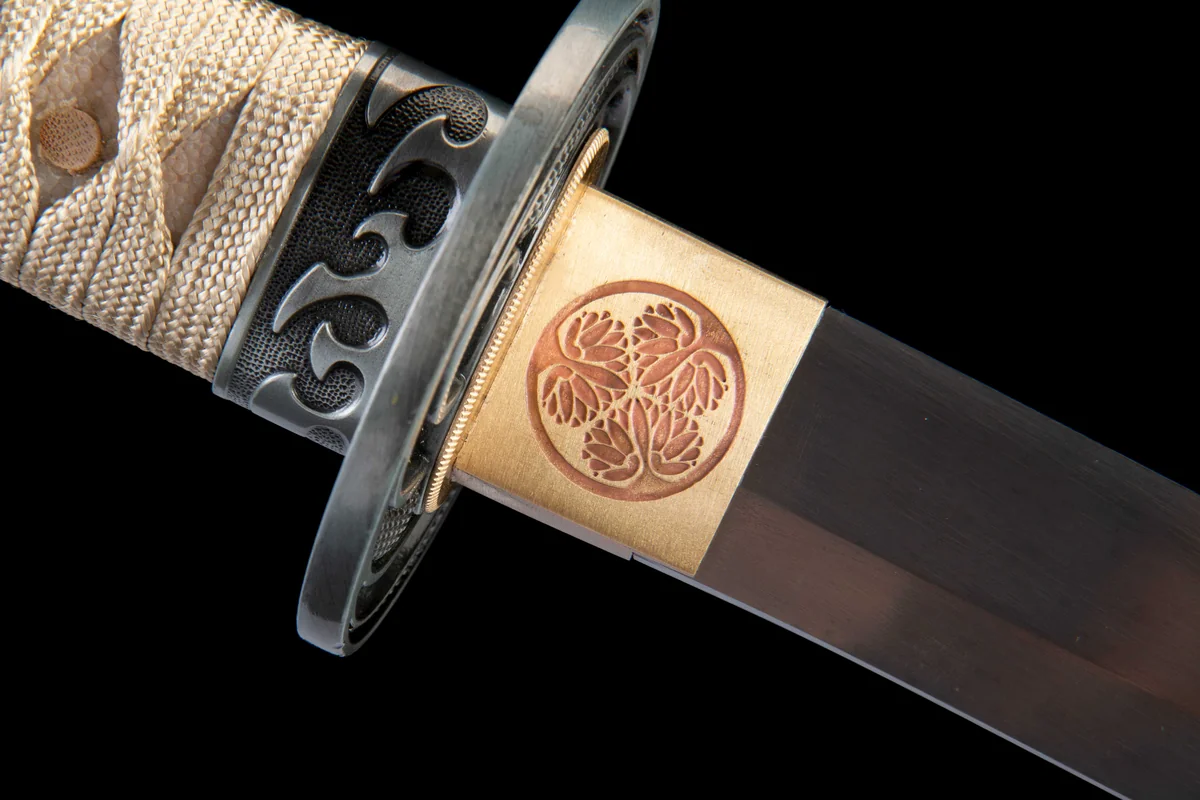
Crimson Oath (绯村之誓) draws on 绯 — deep crimson — and 誓, an oath sworn and kept. The 金梨子风火轮 (gold pear-finish fire wheel) tsuba makes the oath visible: the fire wheel, an ancient symbol of cosmic force and unstoppable momentum, rendered in gold over the classic pear-ground finish. Hand-forged in Longquan from 1065 high carbon steel, this katana is for those who understand the weight of a commitment.
Specifications
| Blade Steel | 1065 High Carbon Steel |
| Total Length | 102.0 cm / 40.2 in |
| Blade Length | 72.0 cm / 28.3 in |
| Handle Length | 27.0 cm / 10.6 in |
| Blade Width | 3.2 cm |
| Blade Thickness | 0.7 cm |
| Net Weight | 1100 g / 38.8 oz |
| Gross Weight | 1300 g / 45.9 oz |
| Heat Treatment | Oil Quench & Temper |
| Blade Profile | Shinogi-Zukuri (Ridged Profile) |
| Tang Construction | Full Tang (Nakago) |
| Fittings | Zinc Alloy Fittings |
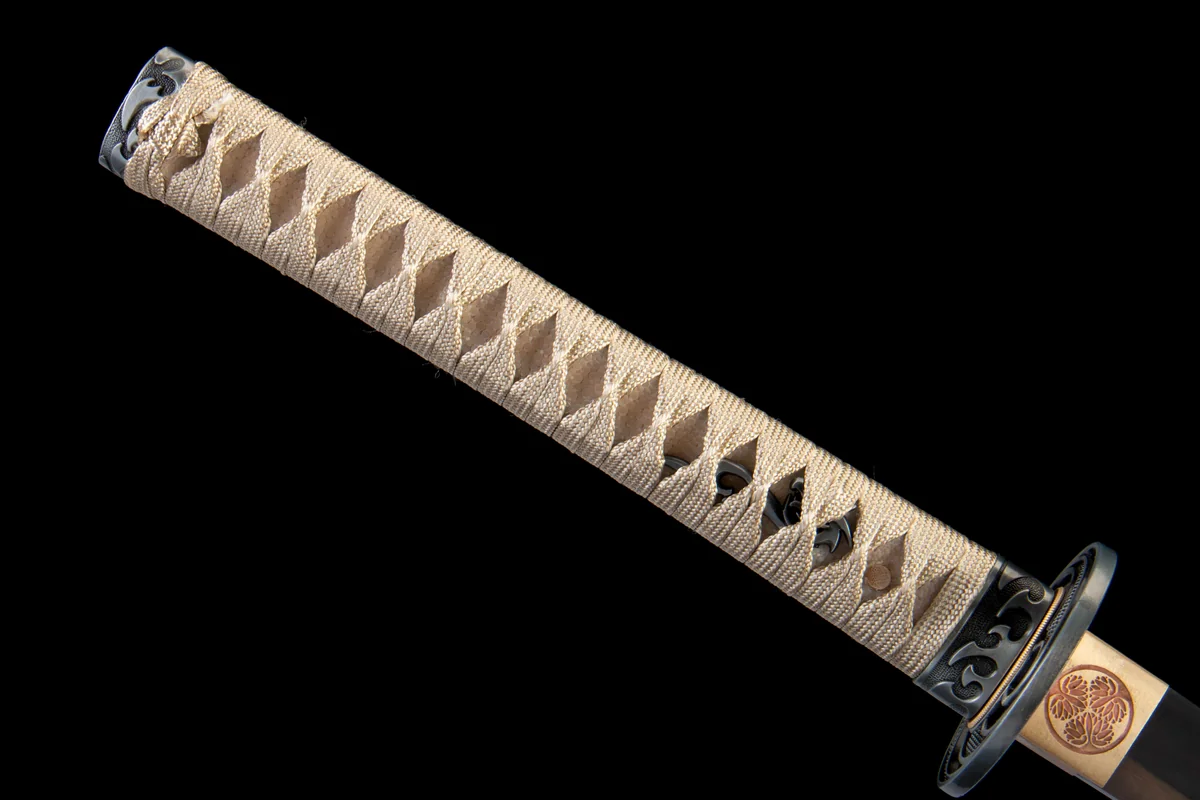
| Handle Wrap | Cotton Ito over Ray Skin (Same) |
What the Steel Does
1065 high carbon steel occupies a precise position in the working blade hierarchy: enough carbon to produce a real cutting edge that holds through extended practice sessions, not so much that the blade becomes brittle under lateral impact. The 0.65% carbon content is calibrated for this balance — oil quenched after forging to manage the cooling gradient, then tempered to lock in toughness and edge-holding capacity. The result is a blade that absorbs the shock of cutting contact through the spine and tang, returns to position without micro-fractures, and can be brought back to a working edge on a waterstone after extended use.
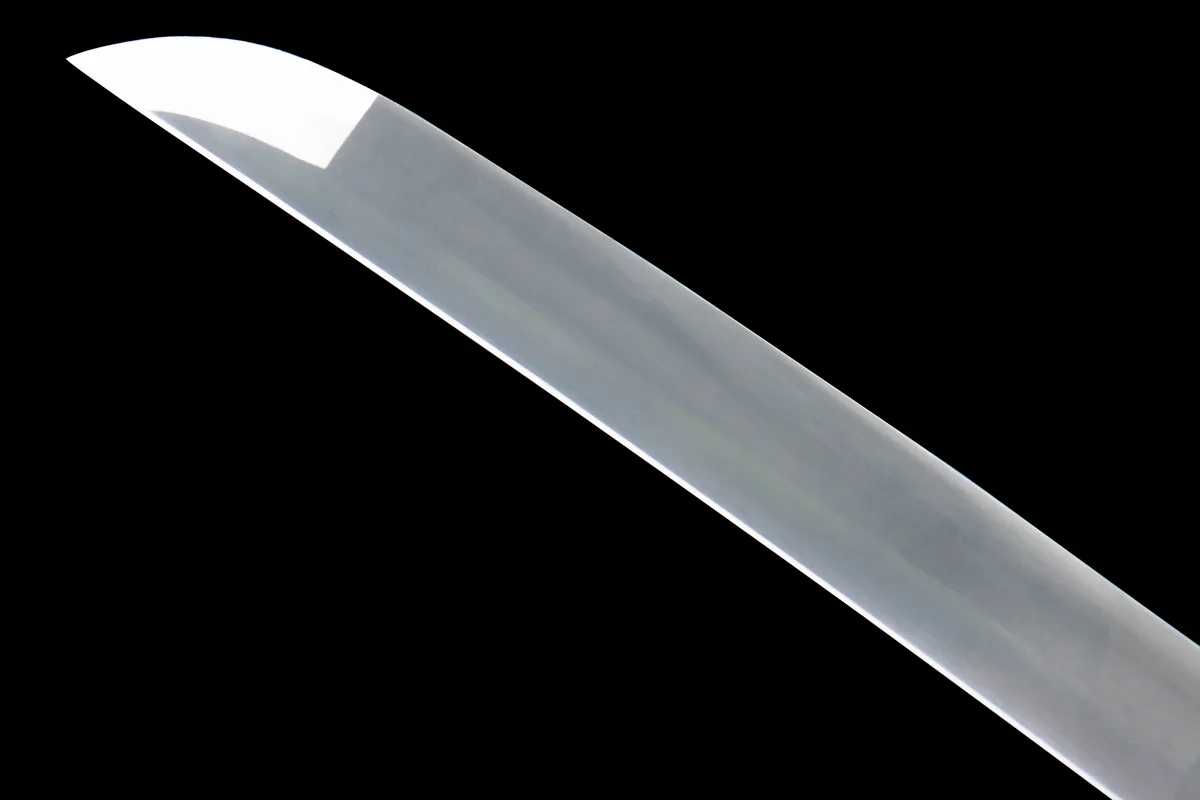
The shinogi-zukuri ridgeline profile is the structural geometry of the classical Japanese sword: the ridge running from habaki to kissaki concentrates cutting force at the edge on the draw, creates a spine that resists lateral flex, and produces the characteristic light play that reveals grind quality. Full-tang construction means the nakago — the blade’s steel tang — extends the entire length of the handle beneath the ito wrap. There is no joined junction; the blade and handle are one continuous piece of steel, locked in place by a bamboo mekugi through the tsuka. This is how a blade designed to actually cut is built.
The Feel of It
The 27 cm tsuka (handle) is sized for genuine two-hand use — your hands have room and separation between them, which is where rotational power in a draw cut originates. Cotton ito wrapping over the ray skin base gives consistent grip whether your hands are dry or not; the diamond pattern raised by the wrap seats naturally in the palm and indexes your grip position without requiring conscious adjustment between cuts. At 102 cm total with a 72 cm blade, the geometry is classical daito (long sword): the reach, the arc on the cut, and the balance point are all where experienced practitioners expect them to be.
The sword draws from the saya without hesitation — the koiguchi (sheath mouth) seats the blade snugly enough that the sword carries without rattle or audible movement, and releases cleanly when the draw is initiated. At approximately 1,100g net blade weight, this is the practical weight range where the blade has enough mass to drive through cutting material on a draw cut without requiring additional force from the hands. The balance sits in the lower third of the blade, which is correct for a cutting tool. Two-hand katas, iai practice, and test cutting all fall within the handling envelope this geometry is designed for.
Maintenance Notes
High carbon steel requires active oil maintenance — it will surface-oxidize in humid conditions if left dry, and a carbon steel blade without consistent oiling will show rust spots within weeks in a typical indoor environment. After every handling session, wipe the blade from habaki to kissaki with a clean cloth to remove fingerprint oils and moisture, then apply a thin, even coat of choji oil (traditional clove-infused mineral oil) or neutral camellia oil. Wipe down to a thin film — pooled oil is not more protective and attracts dust. Store horizontally in the saya in a stable, low-humidity environment away from prolonged direct sunlight.
Check the blade surface monthly even when the sword is not in active use — the habaki (blade collar) area is where moisture collects preferentially, and early surface oxidation caught at this stage cleans off with an oiled cloth. The cotton ito handle wrap should be kept dry; do not store the sword sheathed in a high-humidity environment without periodic inspection. The fittings are durable and do not require maintenance beyond keeping dry and free from cleaning chemicals.
| Weight | 1.3 lbs |
|---|---|
| Dimensions | 102.0 × 3.2 × 0.7 in |
| Hamon | Decorative / Acid-Etched |
| Blade Steel | 1065 Carbon Steel |
| Total Length | 102.0 cm |
| Blade Length | 72.0 cm |
| Heat Treatment | Temper |
| Handle Wrap | Cotton Ito Wrap 真鱼皮 |
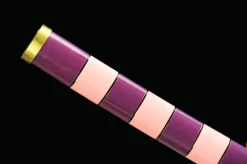
| Sheath Material | 实木钢琴烤漆 |
| Fittings | Alloy |
| Forging Style | 鎬造 |
Related products