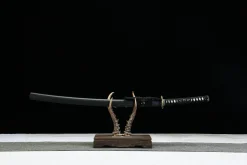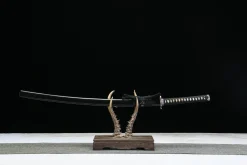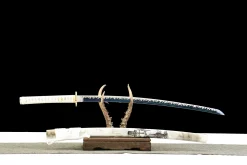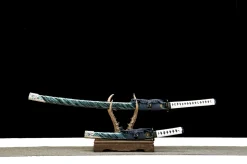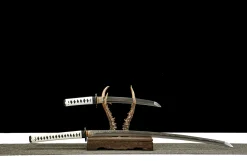



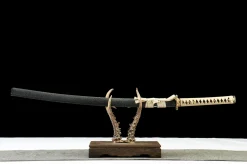


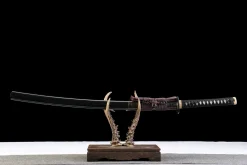









Damascus Iron – Hand Forged Premium Damascus Steel Chinese Dao Sword
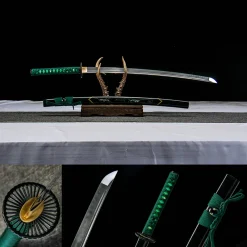
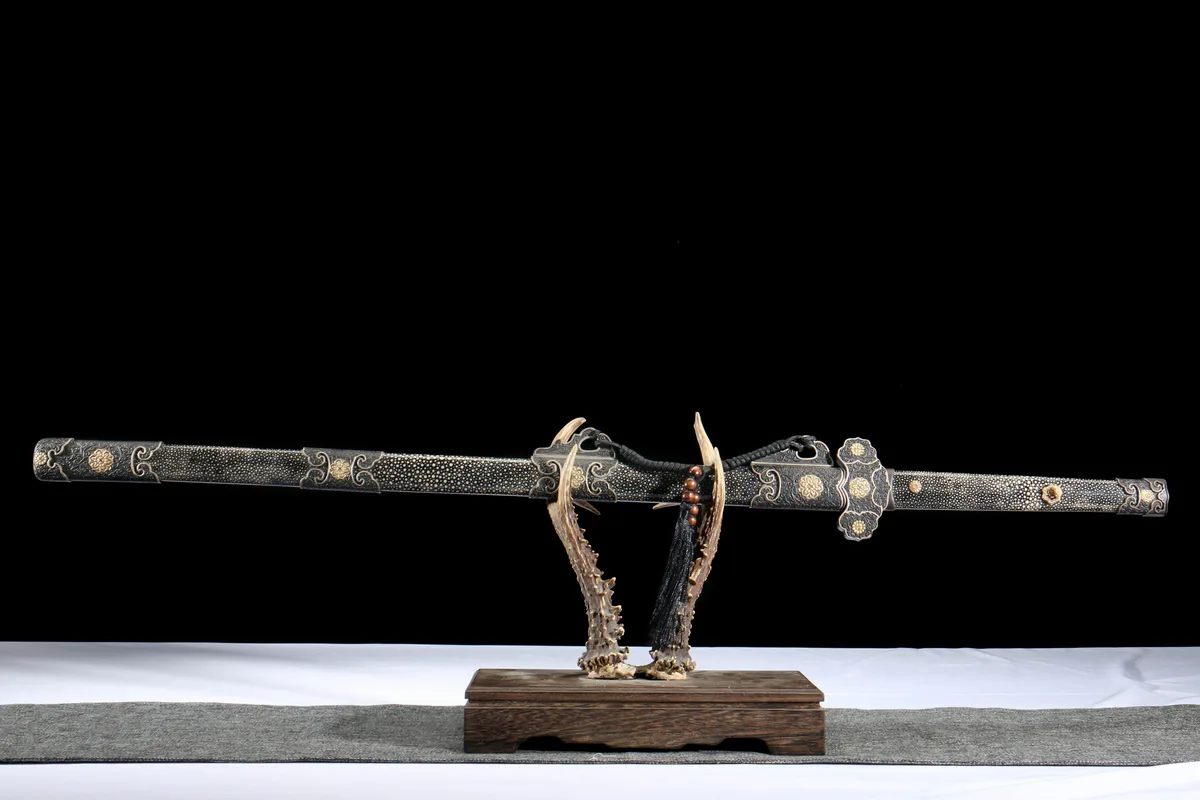
Hand-forged Premium Damascus Steel chinese dao, crafted in Longquan. Hand-folded Damascus pattern steel — each blade carries a unique layered grain from forge to tip.
$2,974.99
Damascus Iron – Hand Forged Premium Damascus Steel Chinese Dao Sword
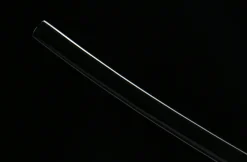
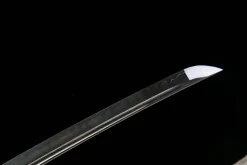
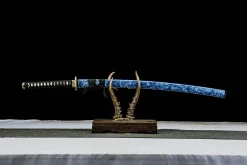
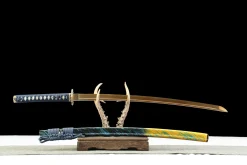
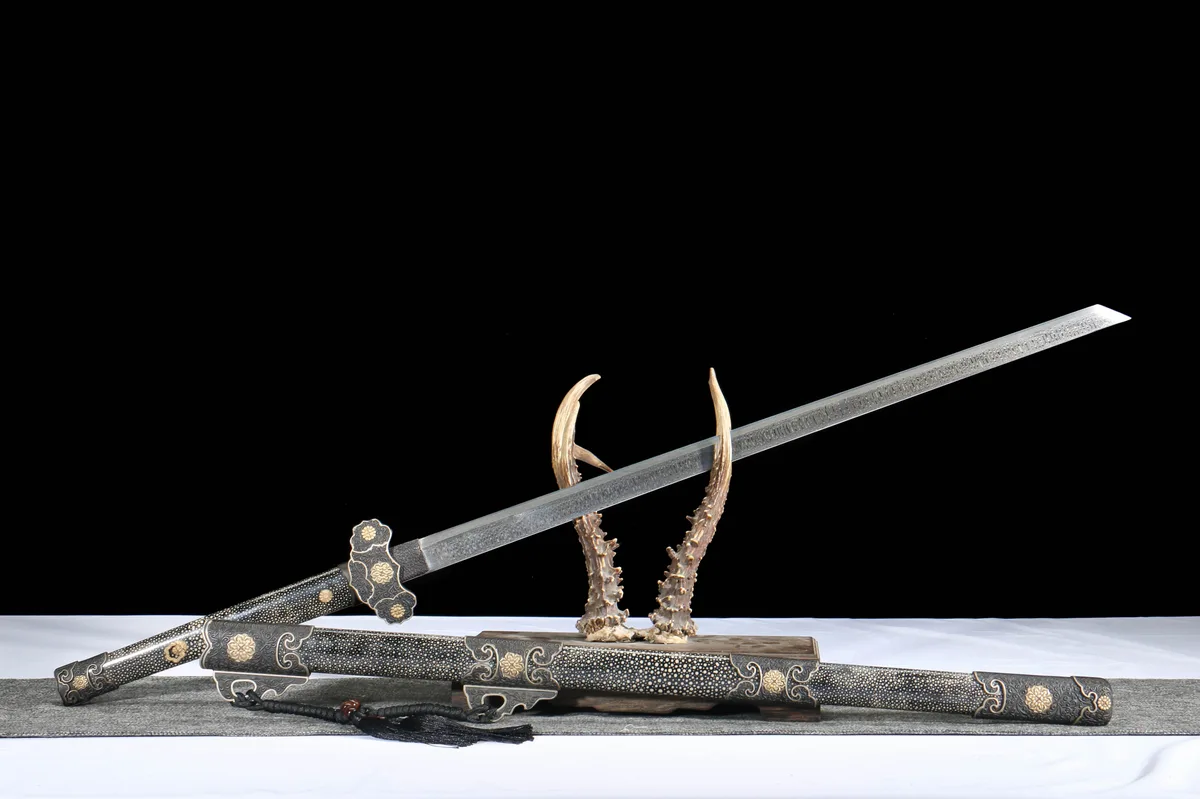
The 天梯纹 – tianti wen, the Heavenly Ladder pattern – does not announce itself at first glance. It builds. As the blade rotates in light, the stacked horizontal banding inherent to this specific Damascus fold sequence rises and falls across the surface, each layer catching and releasing differently depending on the angle, the source, the distance. This is a Tang Dao – a Chinese saber form descended from the straight and curved swords carried by Tang Dynasty soldiers – rendered in a Damascus construction that treats the blade surface as a record of everything the forge did to make it.
Specifications
| Blade Steel | Damascus Steel, Heavenly Ladder Pattern (天梯纹) |
| Weight | 950 g / 33.5 oz |
| Heat Treatment | Pattern-Welded / Folded Steel |
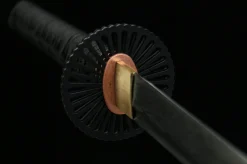
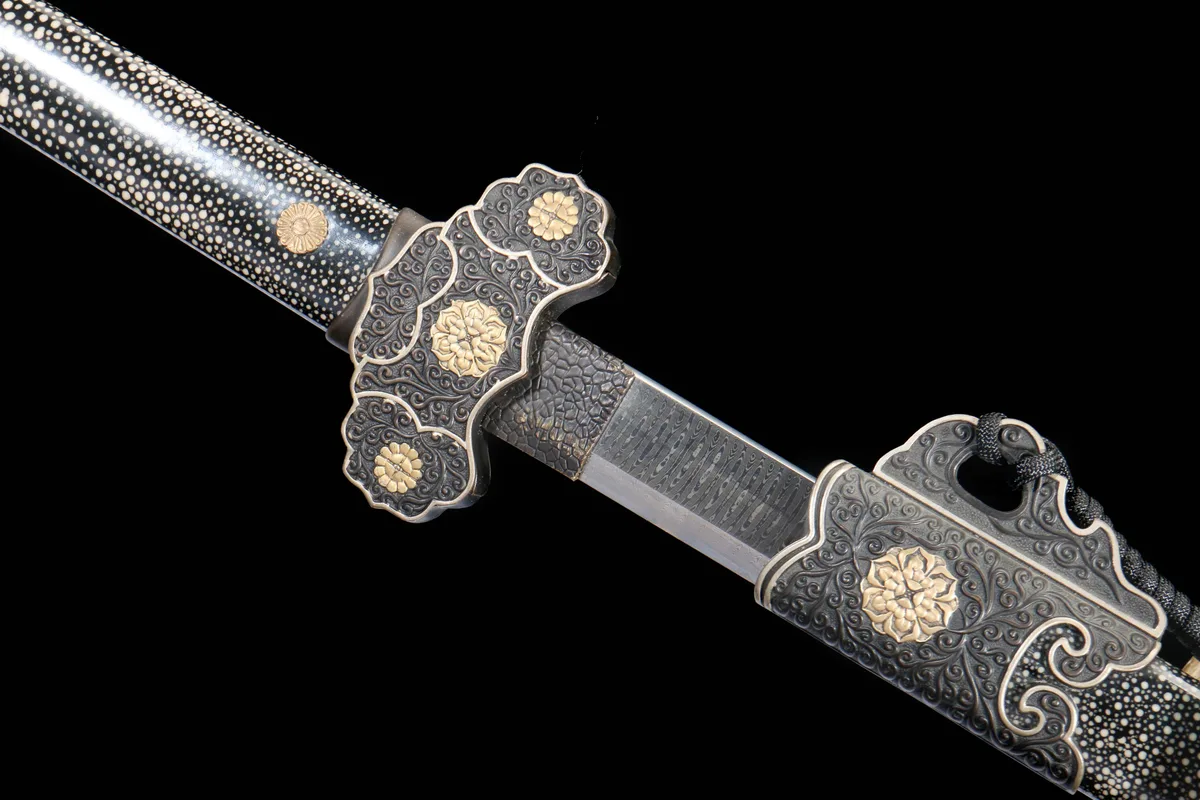
| Fittings | Copper, Gold and Silver Gilded |
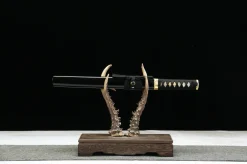
| Handle | Genuine Rayskin (Same) |
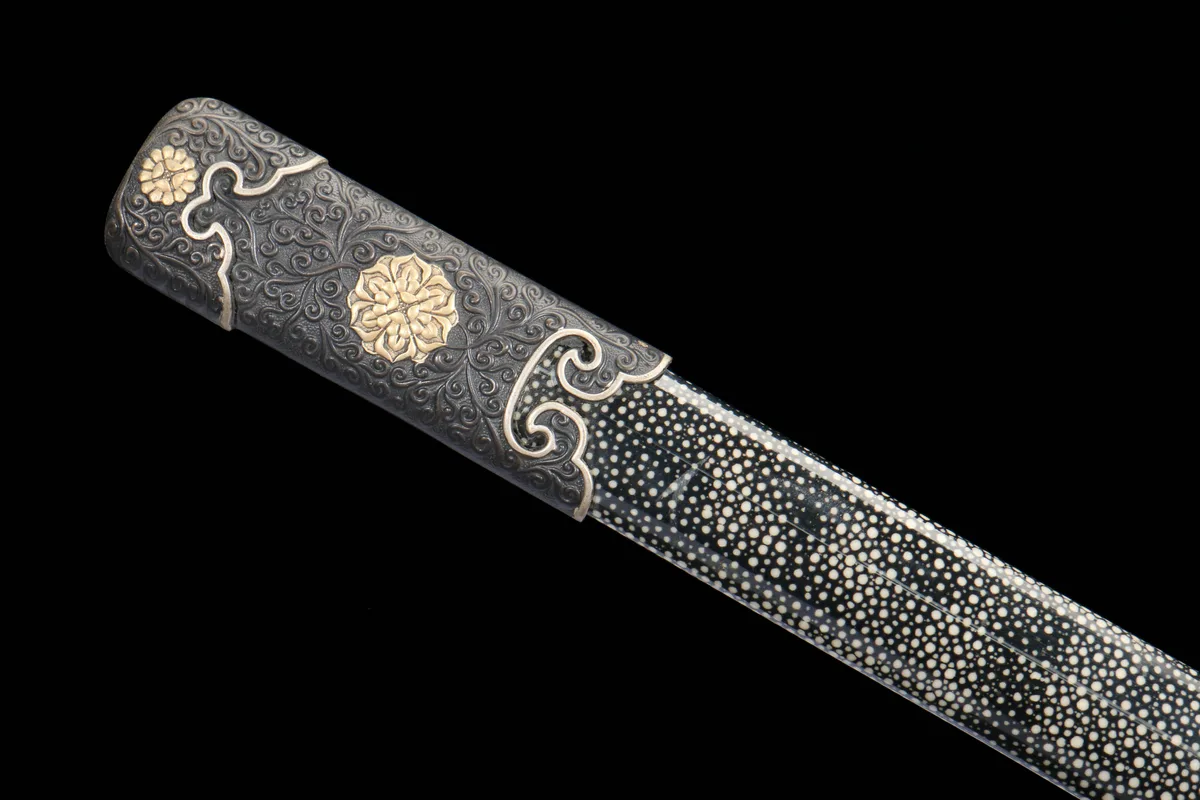
| Sheath | Genuine Rayskin (真鱼皮) |
Forged in Longquan
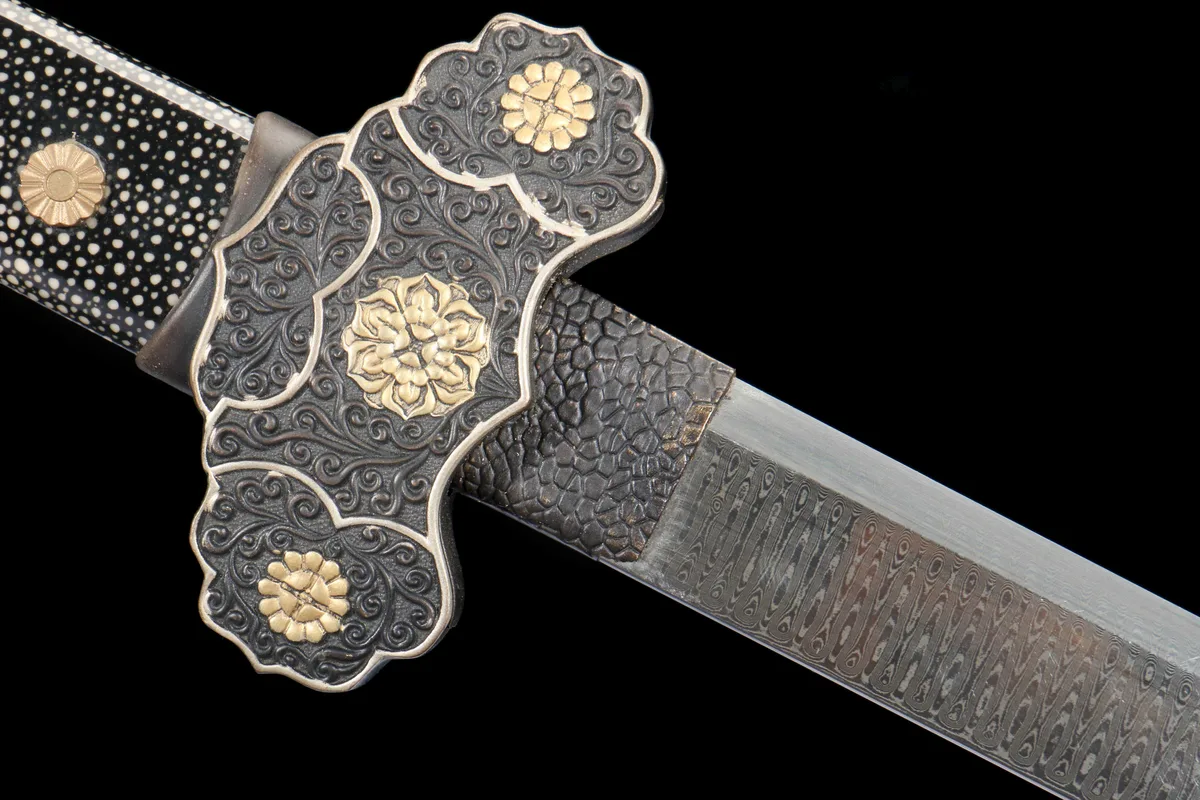
Pattern-welded Damascus begins as separate steel billets – typically high and low carbon steels – that are forge-welded together at temperature, then drawn, folded, and welded again. The Heavenly Ladder pattern in particular results from a process of strategic lateral cuts made perpendicular to the billet’s length before the final draw-out: those cuts open the stacked layers outward in sequence, creating the rung-like horizontal banding that defines the tianti wen character. What you see on the finished blade is not a print or an etch alone – the pattern is structural, three-dimensional, running through the full cross-section of the steel. The acid etch applied during finishing selects for carbon differential, darkening the high-carbon layers and leaving the lower-carbon bands bright, making the ladder visible to the eye.
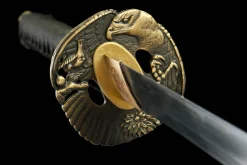
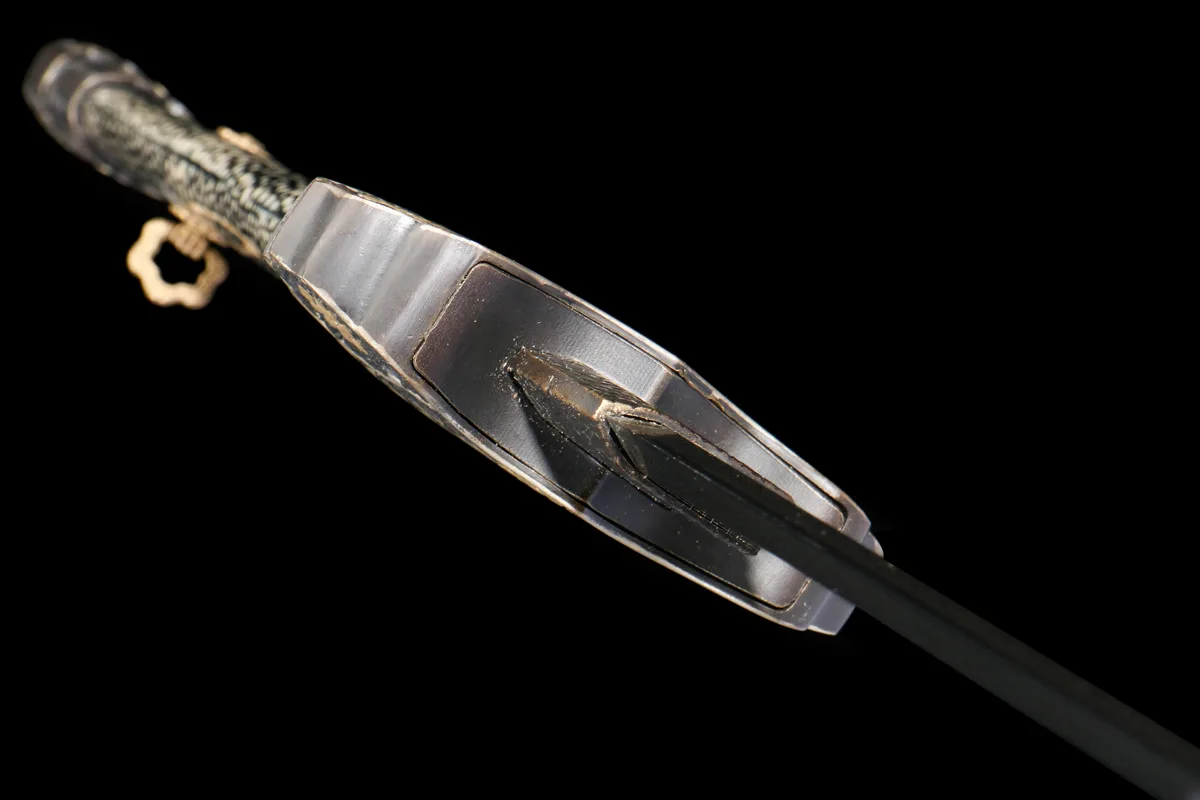
The fittings here are copper with gold and silver gilding – a combination that holds up against tarnish while providing the tonal contrast the blade’s own surface demands. Against Damascus that ranges from near-black to silver-bright, gilded copper fittings do not compete. They frame.
Weight, Balance, Draw
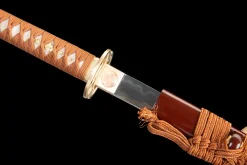
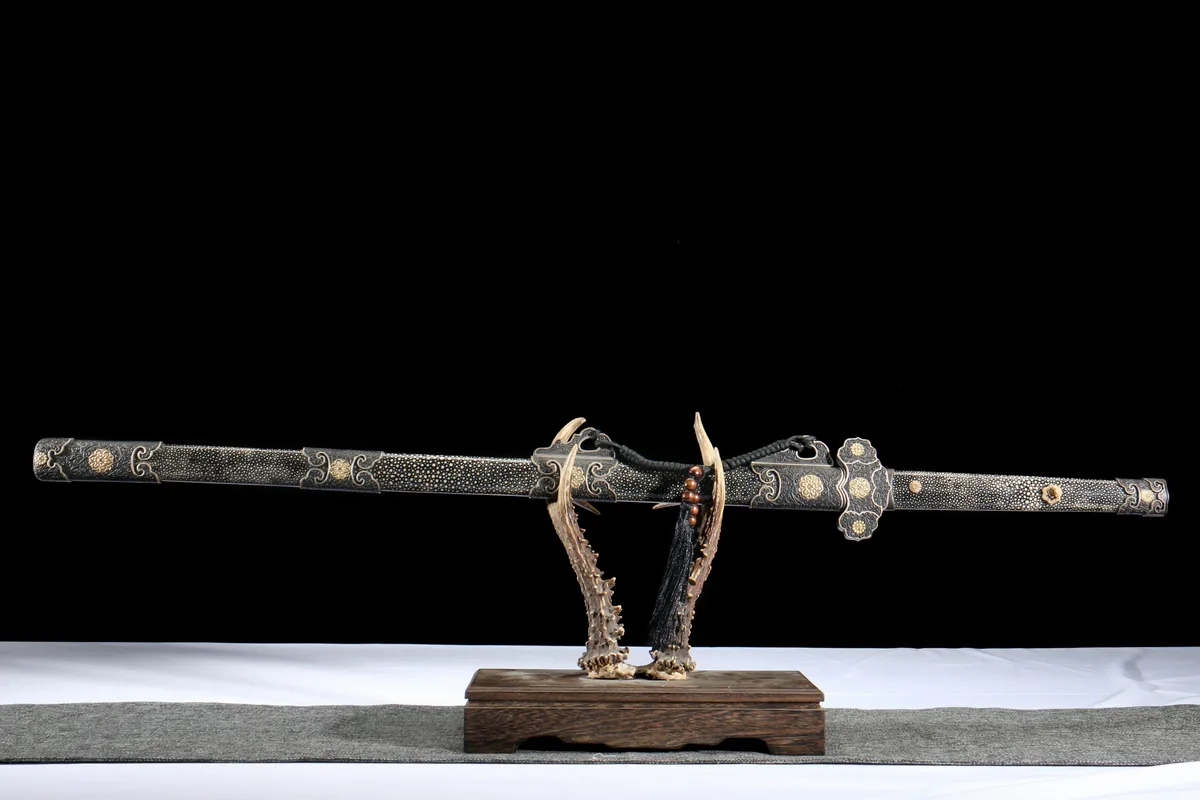
The genuine rayskin covering on both the handle and the saya is a material choice that rewards touch. On the handle, rayskin in its unsmoothed state presents a fine nodular surface – it does not slip. The sheath in matching rayskin (真鱼皮) gives the entire piece a material consistency that signals deliberate construction rather than assembled components. The Tang Dao geometry, broader at the base and arcing through the curve to the tip, means the draw carries the blade in a natural sweeping arc from the scabbard – a motion the form was designed around over a thousand years of Chinese saber tradition.
Keeping It Sharp
Damascus steel requires diligent moisture management – the layered structure, while visually striking post-etch, can accumulate oxidation at the layer boundaries if left damp. Wipe the blade dry after any handling and apply a light mineral oil coat before storage. The rayskin sheath and handle should be occasionally conditioned with a small amount of leather or natural skin conditioner to prevent drying and cracking.
| Weight | 1.2 lbs |
|---|---|
| Hamon | Damascus Pattern (No Hamon) |
| Blade Steel | Premium Damascus Steel |
| Total Length | None cm |
| Blade Length | None cm |
| Handle Wrap | Genuine Rayskin (Same) |
| Sheath Material | 真鱼皮 |
| Fittings | Gold & Silver Gilded Fittings, Copper |
| Forging Style | Folded Steel (Pattern Welded) |
Related products