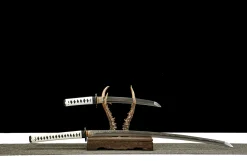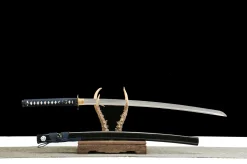










Dark Cloud Slash – Hand Forged T10 Tool Steel Katana Sword
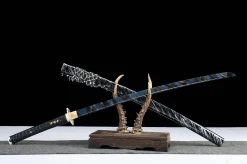
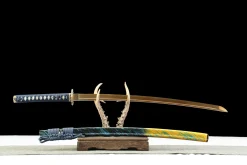
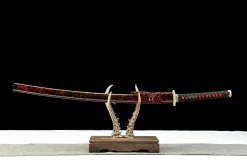
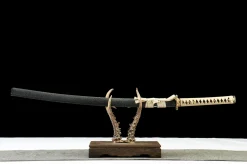
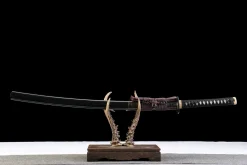
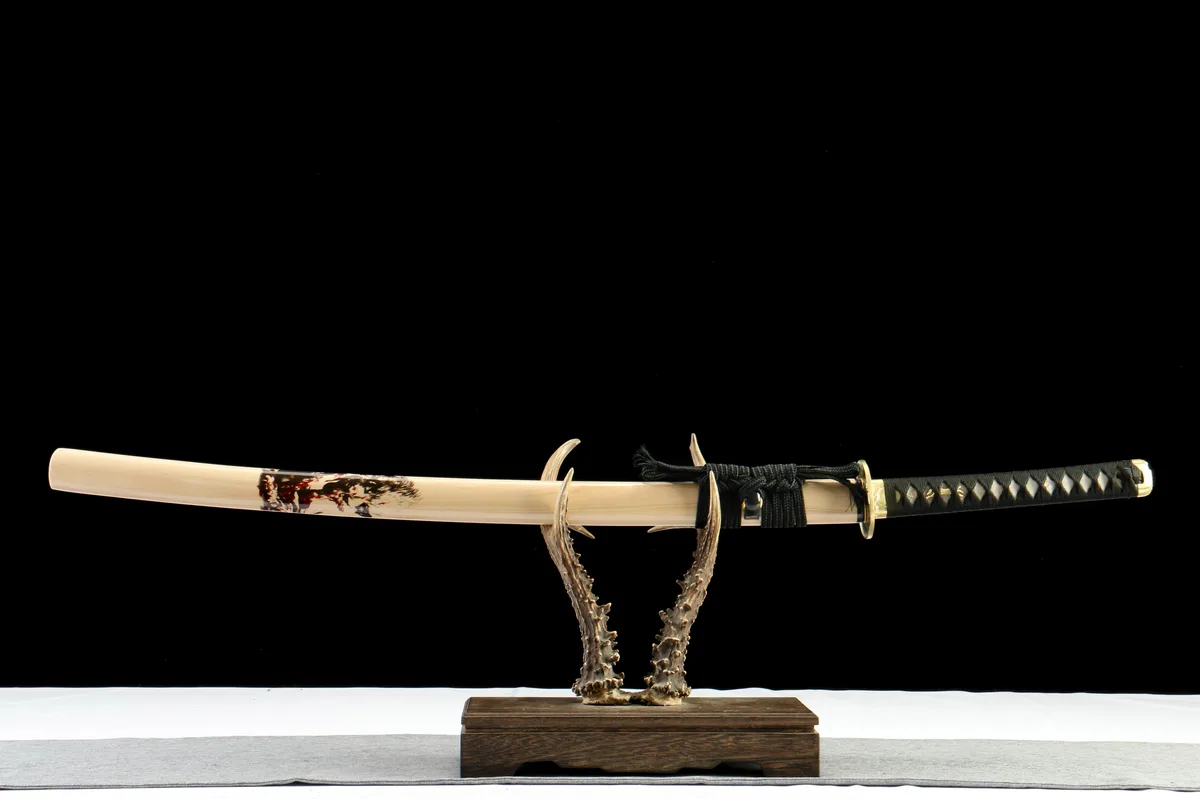
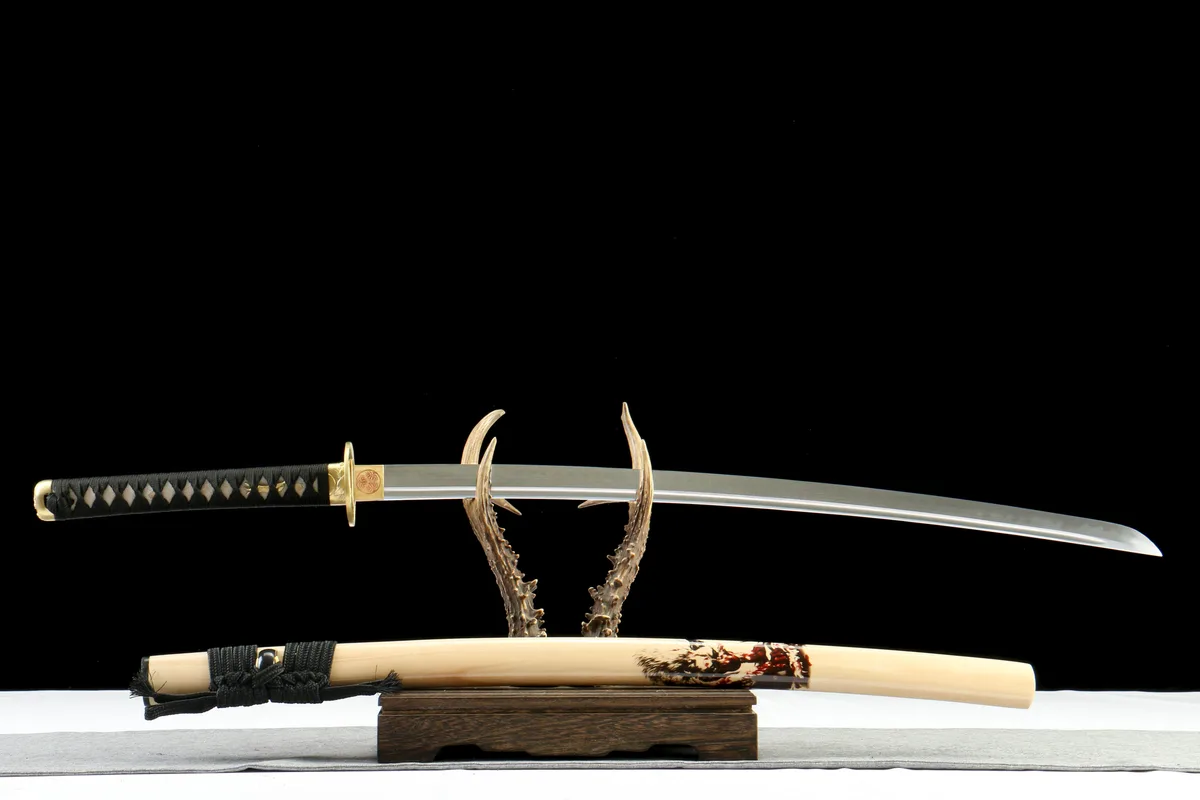
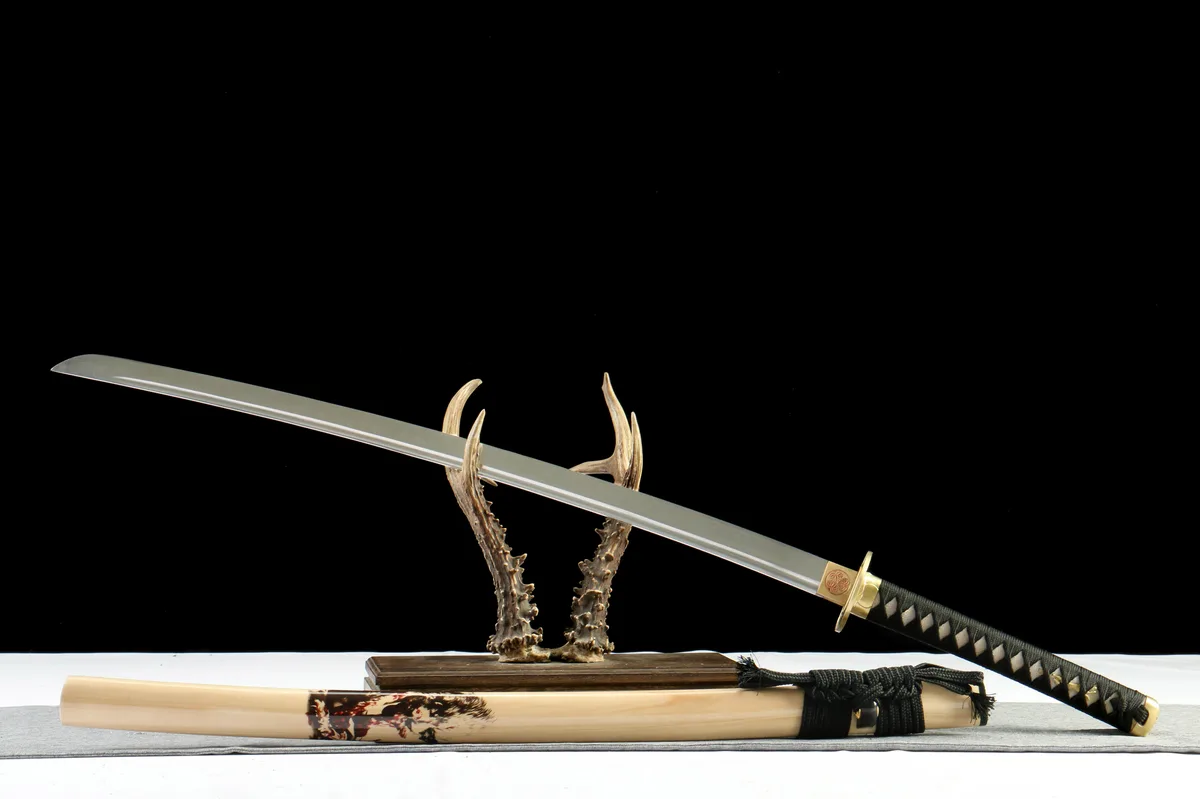
Hand-forged T10 Tool Steel katana (102cm total / 72cm blade), crafted in Longquan. Clay-tempered blade with a genuine hamon line — visible contrast between hardened edge and soft spine.
$479.99
Dark Cloud Slash – Hand Forged T10 Tool Steel Katana Sword
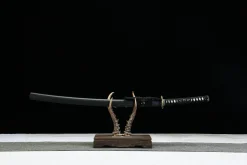
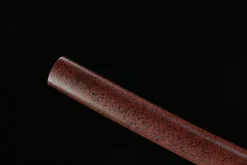
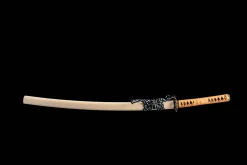
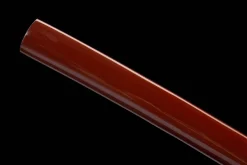
There are clay-tempered T10 blades with lacquered sayas in high-gloss black, and there are clay-tempered T10 blades with natural wood sayas that let the grain of the hardwood stand beside the grain of the steel. The Dark Cloud Slash is the latter – an unvarnished hardwood saya paired with copper fittings and a blade whose hamon was shaped by fire and clay, not by grinding. What makes this blade singular among T10 katana in the shinogi-zukuri tradition is the juxtaposition: raw wood, warm copper, and a temper line that runs its own course down the length of the polish.
Specifications
| Blade Steel | T10 High Speed Tool Steel |
| Total Length | 102.0 cm / 40.2 in |
| Blade Length | 72.0 cm / 28.3 in |
| Blade Width | 3.2 cm |
| Blade Thickness | 0.7 cm |
| Weight | 1040 g / 36.7 oz |
| Heat Treatment | Clay Tempering (Differential Hardening) |
| Fittings | Copper |
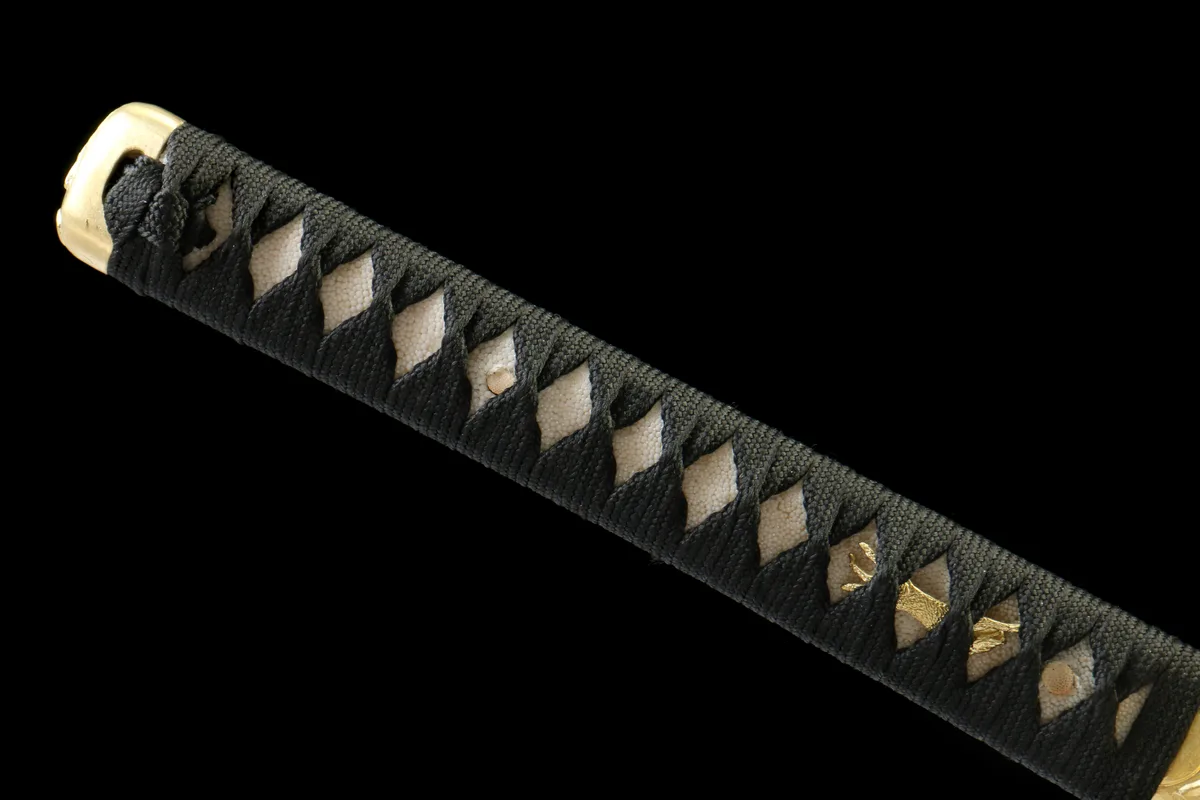
| Handle | Cotton Ito wrap over Genuine Rayskin (Same) |
| Sheath | Hardwood, High-Gloss Lacquer |
Steel & Construction
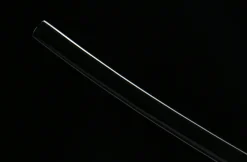
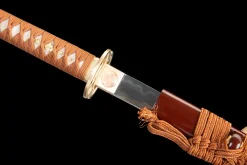
T10 tool steel is alloyed with approximately 1.0% tungsten – a grain-stabilizing addition that produces tighter carbide distribution at the hardened edge, greater abrasion resistance in use, and a steel that responds to clay tempering with hamon activity that is both sharper in outline and richer in detail than plain high-carbon alternatives. The clay-tempering process – tsuchioki, in the Japanese terminology – involves packing refractory clay along the mune (spine) and allowing the ha (edge) to remain exposed before the quench. The differential cooling rate creates two distinct steel structures in the same blade: a hard martensitic ha in the upper HRC 60 range, and a softer, tougher pearlitic mune that absorbs lateral shock without brittleness. The habuchi – the precise boundary between these zones – is where the visible hamon forms, and in T10 it arrives with nie activity: fine martensitic particles suspended at the transition that catch directional light as a luminous, textured scatter. No clay-tempered blade produces the identical hamon twice.
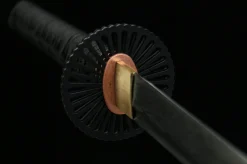
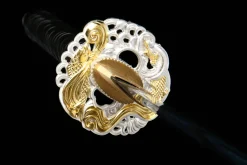
The shinogi-zukuri forging profile – defined by a raised shinogi ridge running the full length of the blade – gives the Dark Cloud Slash the classic Japanese ridgeline geometry: a flat ji (body surface) above the shinogi, and a hamaguri-ba (clamshell) convex bevel below it toward the edge. This geometry is not incidental to performance; it directs cutting forces along the most structurally efficient path through the cross-section. Copper fittings – tsuba (hand guard), fuchi (handle collar), kashira (pommel cap) – are fitted against the habaki (blade collar) and tsuka (handle) with the tighter tolerance that copper’s relative softness permits. Their warm reddish tone against the steel grey of the blade and the natural wood of the saya creates a material palette that is specific to this sword and would read differently in iron or brass.
Handling
The tsuka runs 26.0 cm – enough length that in a full two-handed grip, the lower hand sits at the kashira end without crowding the upper hand’s index position. Cotton ito wraps the handle in the traditional diamond pattern over genuine same (rayskin), whose raised nodule surface transmits through the wrap and indexes each finger’s position without requiring conscious grip adjustment. The draw from the lacquered hardwood saya is deliberate – the koiguchi (sheath mouth) fits the blade with the close tolerance expected of a fitted hardwood construction, releasing cleanly under intentional draw pressure and holding without rattle at rest. The 72.0 cm blade clears the saya in a single, unobstructed arc, and the transition from noto (sheathing) to deployment carries the unhurried certainty of a blade fitted to its scabbard with precision.
Care Instructions
After each use, apply a light coat of choji oil (clove-infused mineral oil) to the full blade surface using nuguigami (cleaning paper) or a soft cloth, wiping from habaki to kissaki (tip) in single strokes – never back-and-forth across the edge. T10 is not stainless, and the areas near the habaki and at the kissaki are most vulnerable to early oxidation. The hardwood saya should be kept away from sustained humidity; the wood will swell against a fitted sheath and create binding that damages the lacquer interior over time.
| Weight | 1.32 lbs |
|---|---|
| Dimensions | 102.0 × 3.2 × 0.7 in |
| Hamon | Real Hamon (Clay Tempered) |
| Blade Steel | T10 Tool Steel |
| Total Length | 102.0 cm |
| Blade Length | 72.0 cm |
| Heat Treatment | Clay Tempering (Differential Hardening) |
| Handle Wrap | Cotton Ito + Genuine Rayskin |
| Sheath Material | Hardwood (High-Gloss Lacquer) |
| Fittings | Copper |
| Forging Style | 鎬造 |
Related products