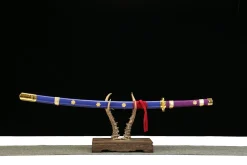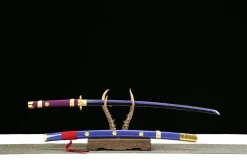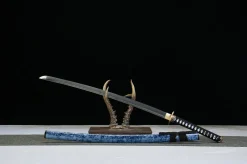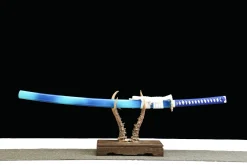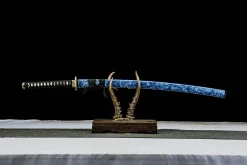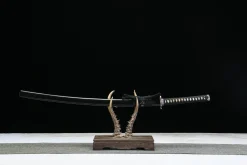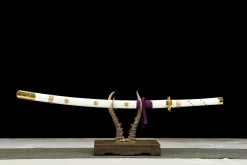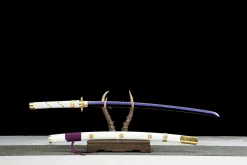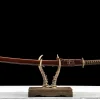
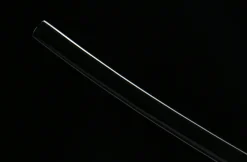
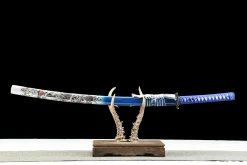
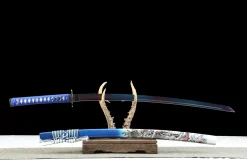
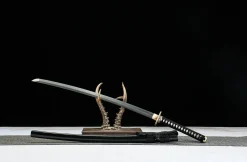

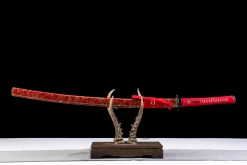
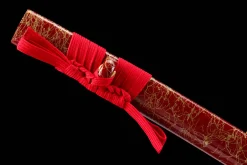

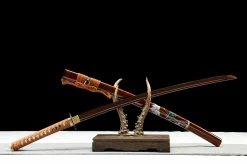
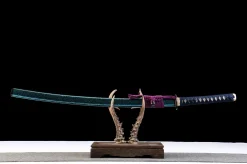




Dark Edge – Hand Forged 1065 Carbon Steel Katana Sword
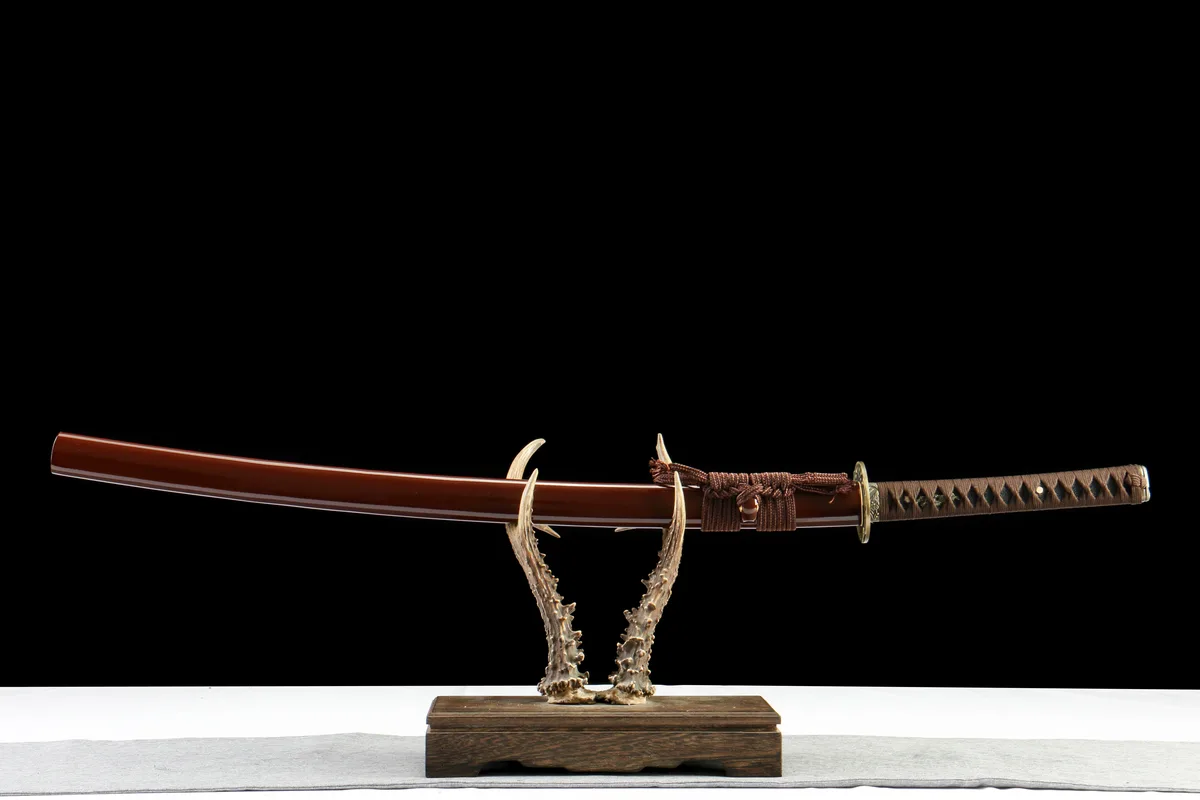
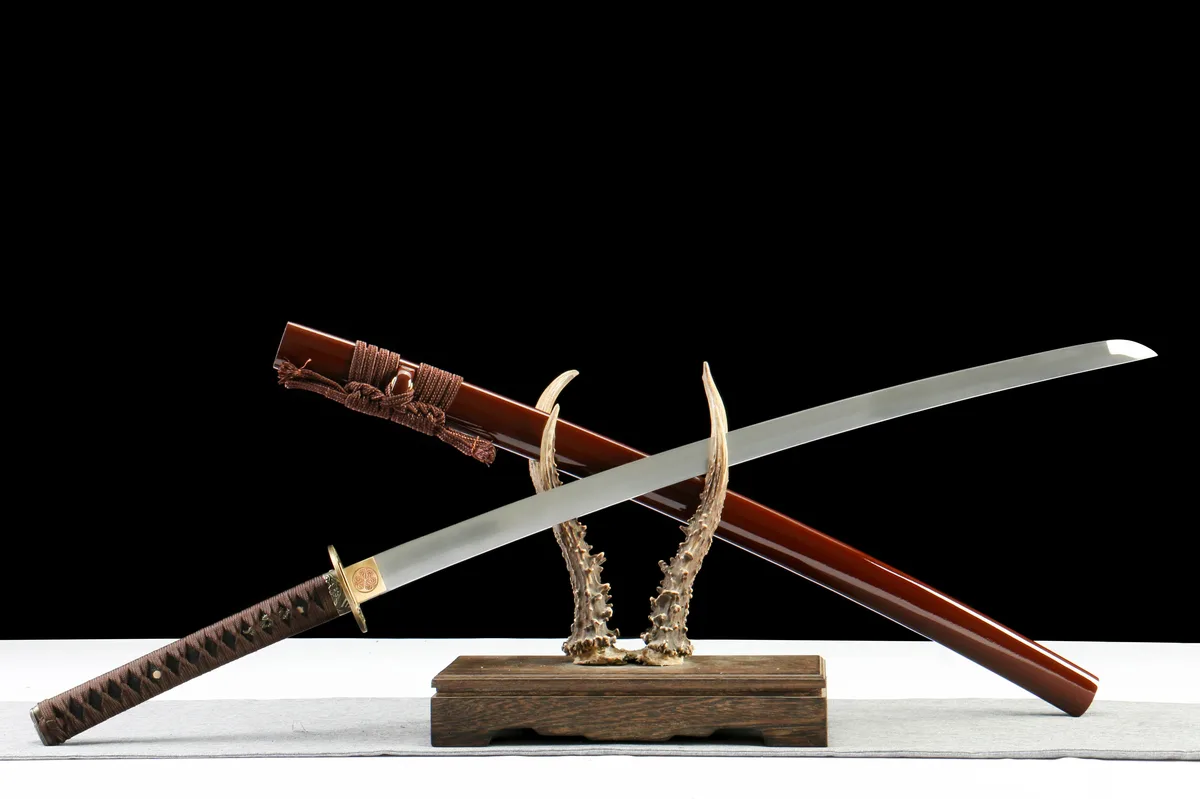
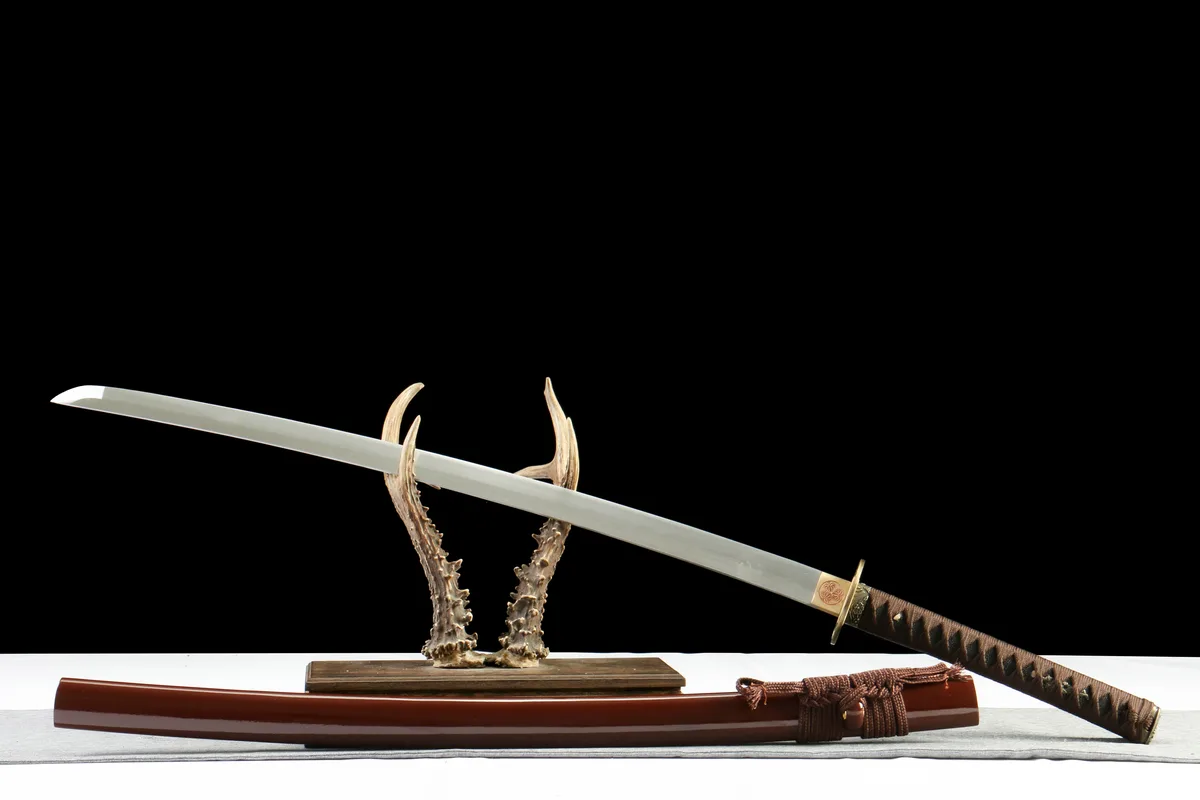
Hand-forged 1065 Carbon Steel katana (102cm total / 72cm blade), crafted in Longquan. Full-tang construction with traditional fittings and hand-lacquered saya.
$219.99
Dark Edge – Hand Forged 1065 Carbon Steel Katana Sword
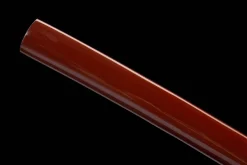
Where the Crimson Edge makes its presence known, the Dark Edge works in a lower register. The wine-dark lacquer of the saya sits without announcing itself, and the blade that comes out of it is built to the same functional specification – 1065 high carbon steel, shinogi-zukuri geometry, constant temperature furnace treatment – as a practitioner who trains regularly and needs a katana that does not require excuses.
Specifications
| Blade Steel | 1065 High Carbon Steel |
| Total Length | 102.0 cm / 40.2 in |
| Blade Length | 72.0 cm / 28.3 in |
| Blade Width | 3.2 cm |
| Blade Thickness | 0.7 cm |
| Weight | 1040 g / 36.7 oz |
| Heat Treatment | Constant Temperature Furnace (Uniform Hardening) |
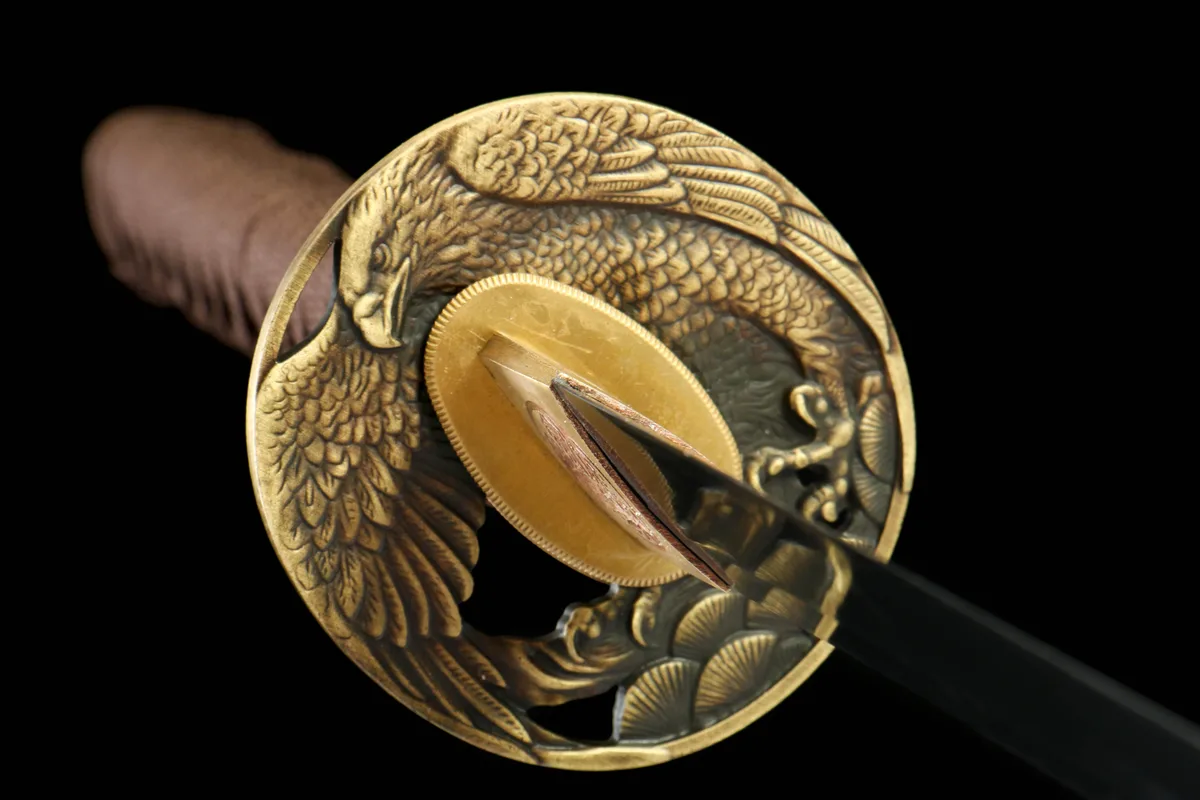
| Fittings | Zinc Alloy |
| Handle | Cotton Ito + Genuine Rayskin |
| Sheath | Hardwood (High-Gloss Lacquer) |
What the Steel Does
1065 high carbon steel treated through a constant temperature furnace process comes out of the quench at a consistent hardness across the entire blade – no differential, no intentional soft spine, just a uniform steel structure that a practitioner can rely on to behave predictably under stress. The carbon content at this range gives the edge the hardness it needs to take and retain a working geometry without crossing into the territory where the steel becomes difficult to re-sharpen in the field. At 0.7 cm spine thickness across a 72.0 cm blade, the Dark Edge has the structural depth to hold its geometry through the kind of use that thinner production blades begin to show fatigue against.
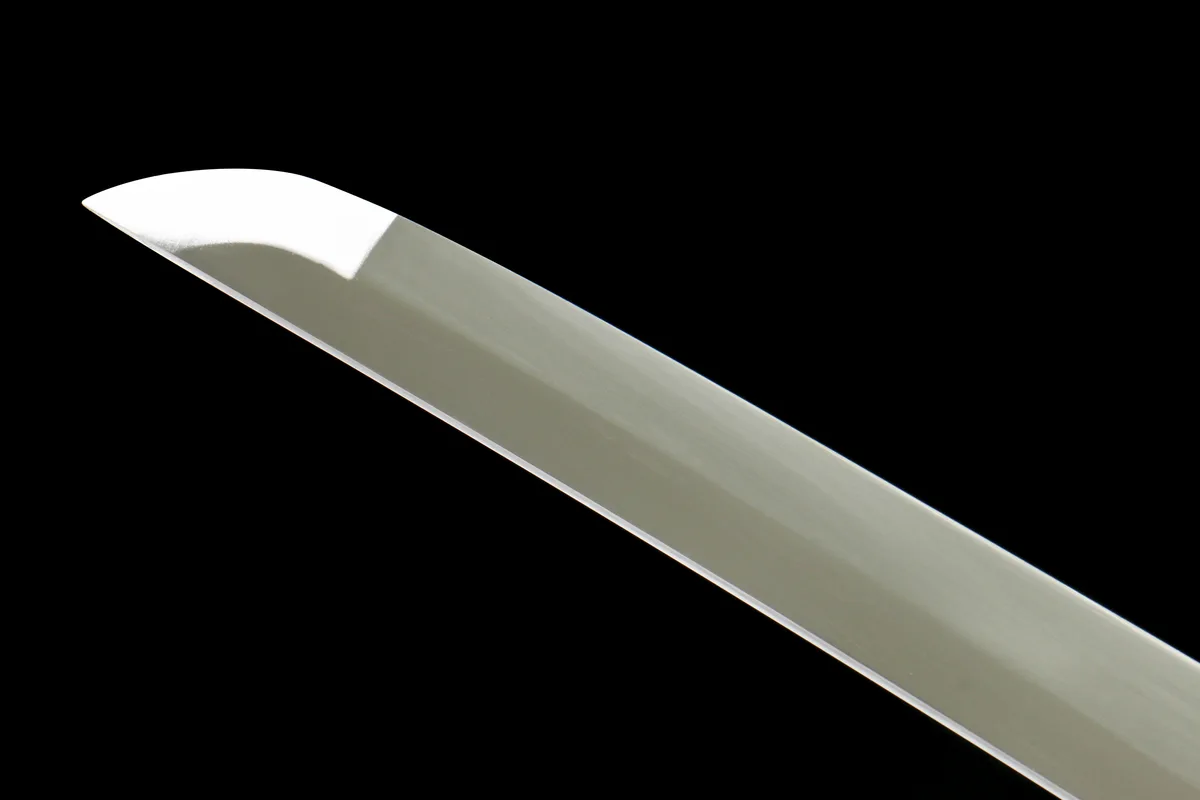
The shinogi-zukuri (ridgeline) profile is not a stylistic choice at this tier – it is the functional standard because the ridge running the blade’s length adds rigidity to the cross-section at the precise point where cutting loads concentrate. The ha (cutting edge) bevel below the shinogi line presents cleanly and maintains its geometry because the blade behind it is built correctly.
The Feel of It
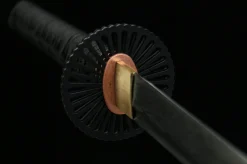
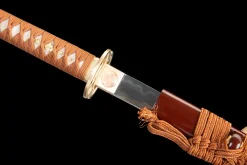
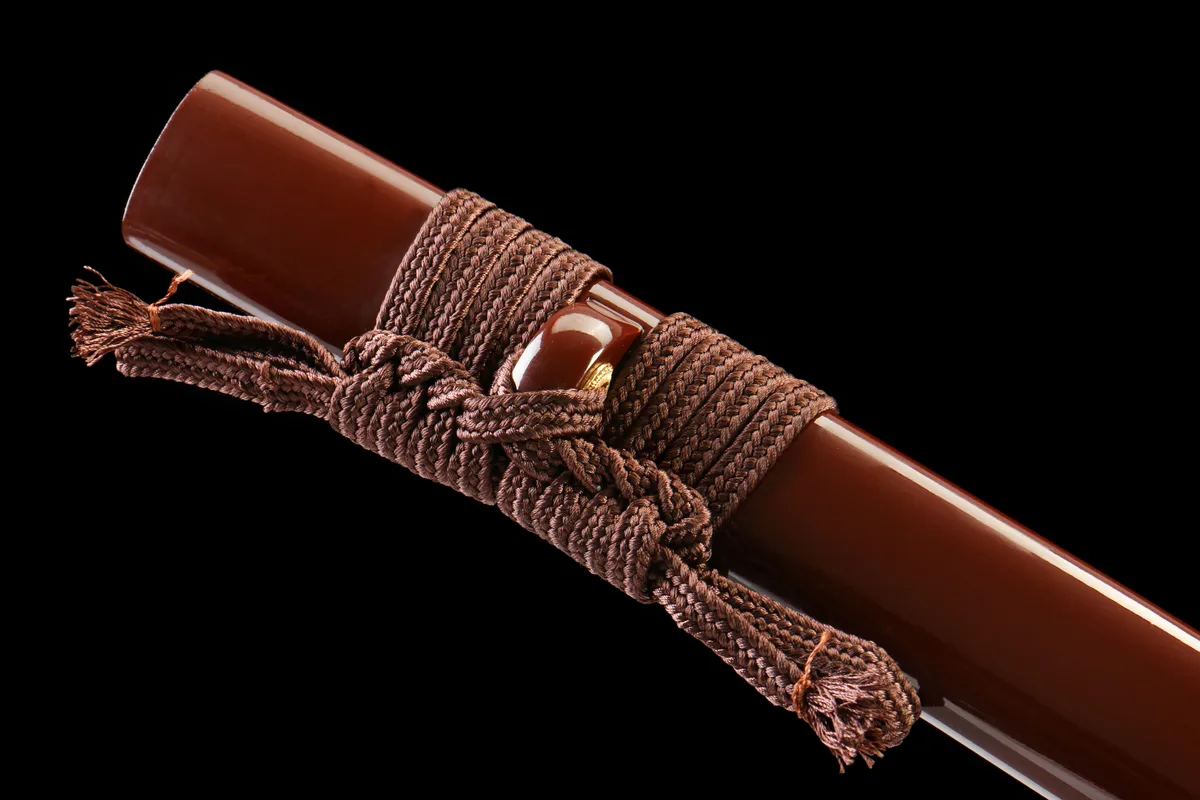
The tsuka (handle) runs 26.0 cm, wrapped in cotton ito over genuine rayskin same – the rayskin’s surface pressing through the wrap at each ito intersection, creating a tactile map of the handle that the hand learns after a few sessions. The wine-dark lacquered hardwood saya pulls through the obi (belt) without catching and the koiguchi (sheath mouth) holds the blade in place without excess friction on the draw. At 102.0 cm total length, the full extension from a right-side carry draws the kissaki (blade tip) clear at the standard reach of a standing practitioner, and the blade’s 3.2 cm width through the shinogi-zukuri section reads in the hand as a blade with presence – not delicate, not oversized, but correctly proportioned for the length it carries.
Maintenance Notes
Carbon steel at 1065 will begin to oxidize within hours of exposure to moisture or skin oils if left untreated – wipe the blade dry immediately after handling and apply a light coat of choji oil or food-grade mineral oil using a soft cloth. Re-sharpen on water stones as needed, working from a coarse grit to refine, finishing on a polishing stone to restore the edge geometry. Store in the saya in a stable, low-humidity environment.
| Weight | 1.32 lbs |
|---|---|
| Dimensions | 102.0 × 3.2 × 0.7 in |
| Hamon | Decorative / Acid-Etched |
| Blade Steel | 1065 Carbon Steel |
| Total Length | 102.0 cm |
| Blade Length | 72.0 cm |
| Heat Treatment | 马沸炉 恒温热处理 |
| Handle Wrap | Cotton Ito + Genuine Rayskin |
| Sheath Material | Hardwood (High-Gloss Lacquer) |
| Fittings | Zinc Alloy |
| Forging Style | 鎬造 |
Related products