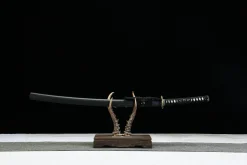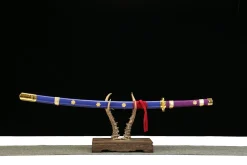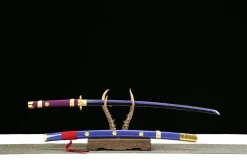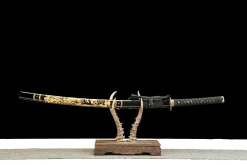


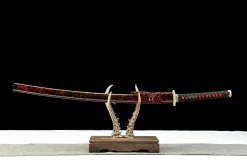

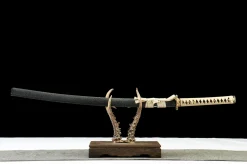


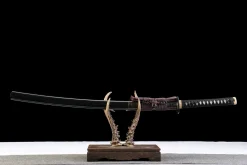




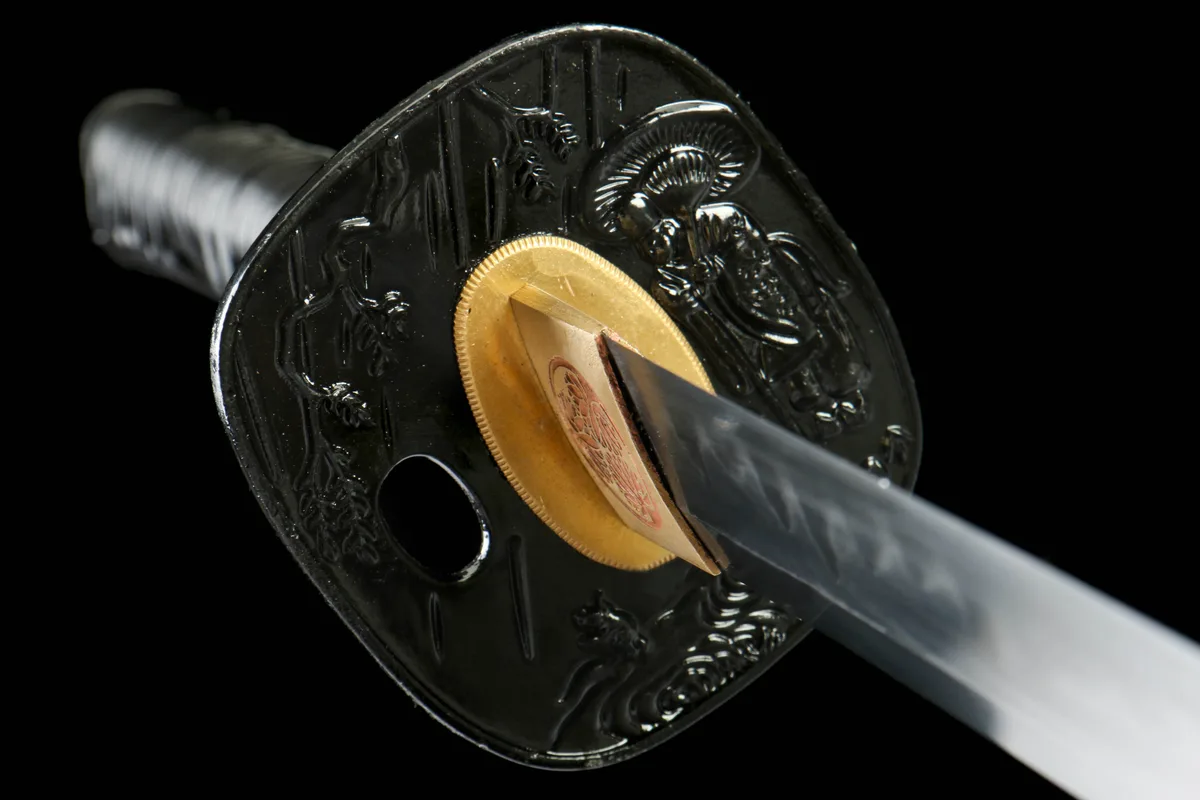

Dark Gleam Slash – Hand Forged T10 Tool Steel Katana Sword
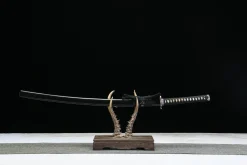
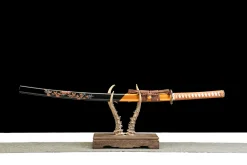
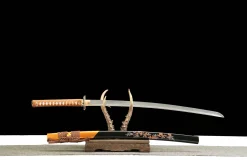
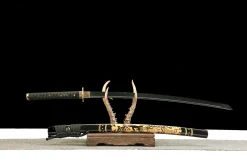
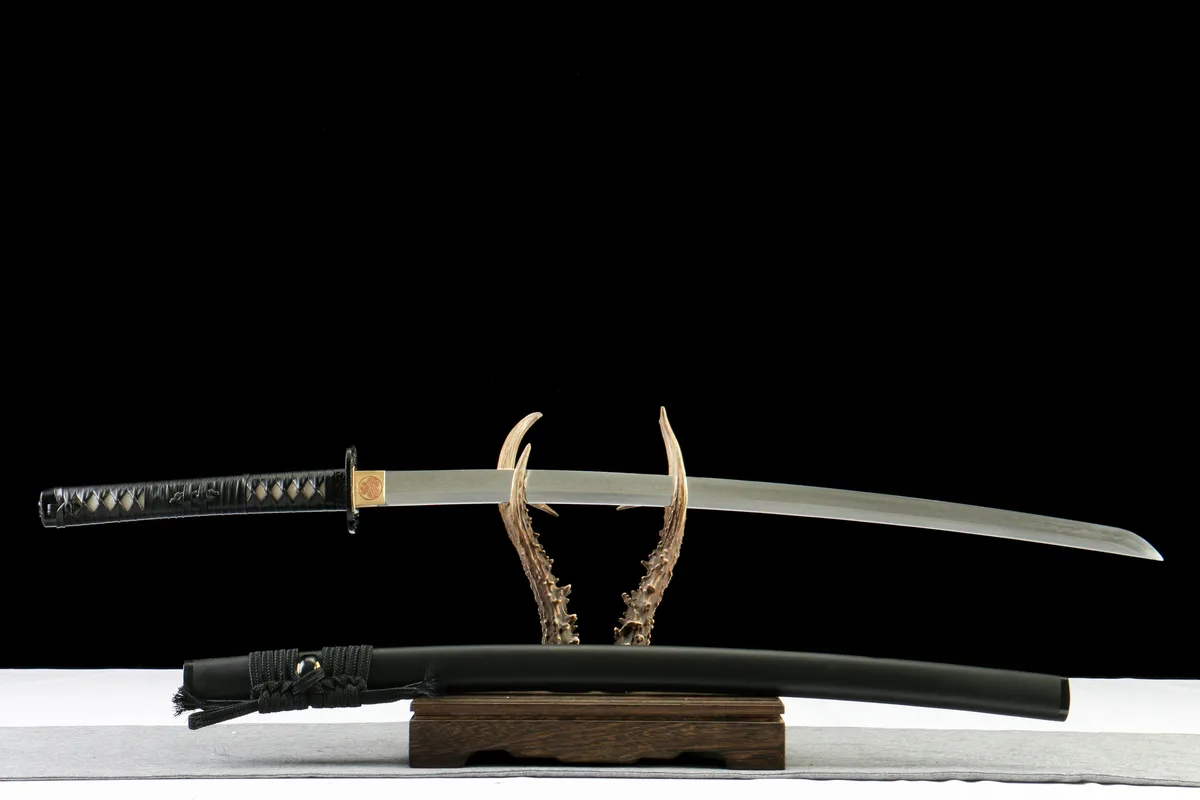
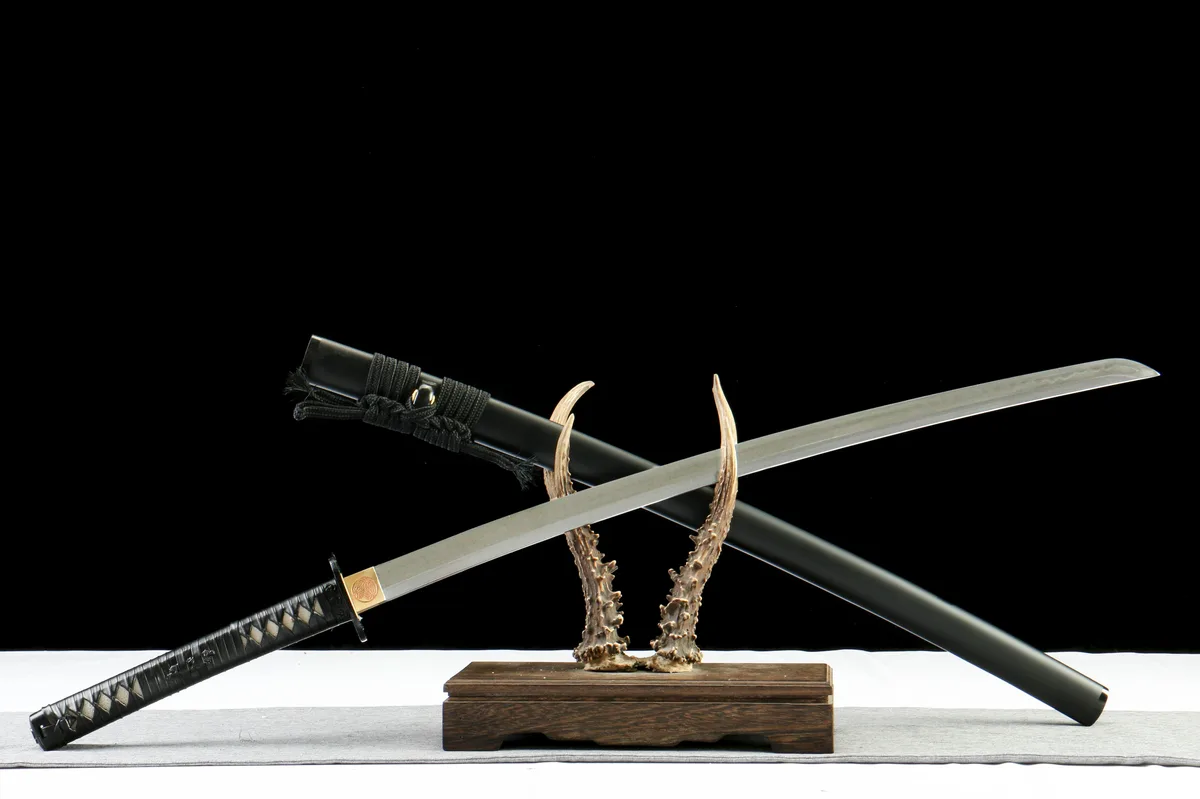
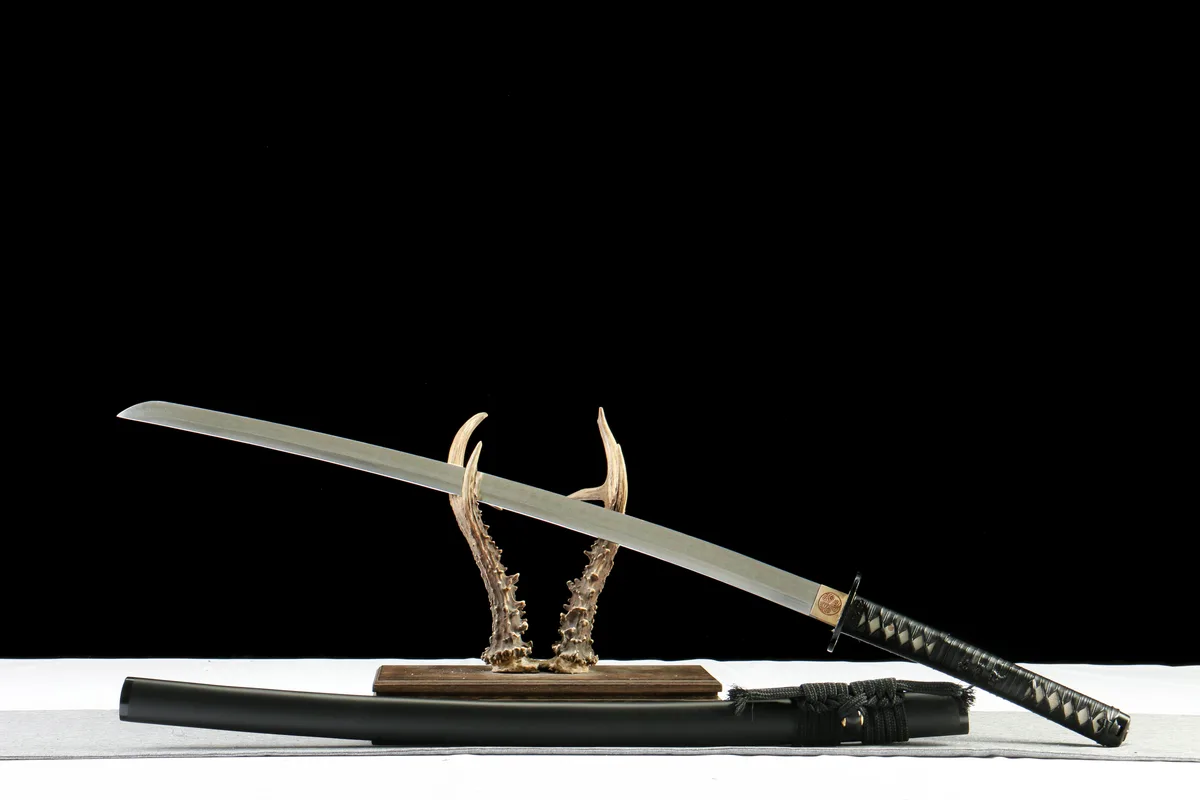
Hand-forged T10 Tool Steel katana (102cm total / 72cm blade), crafted in Longquan. Clay-tempered blade with a genuine hamon line — visible contrast between hardened edge and soft spine.
$429.99
Dark Gleam Slash – Hand Forged T10 Tool Steel Katana Sword
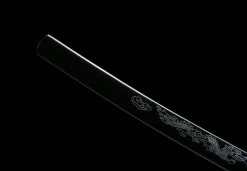
The hamon on this blade does not settle. Under direct light it churns – nie crystals (the martensitic grains visible at the temper boundary) scattering across the transition zone in a pattern that shifts as the angle shifts, never resolving into a clean line, never repeating itself exactly. That restless, active boundary is the signature of T10 tool steel meeting clay tempering at full expression. The Dark Gleam Slash is ground to a matte black finish along the flat, which forces the hamon to read as the only bright element on the blade – a deliberate contrast that makes the temper line impossible to ignore.
Specifications
| Blade Steel | T10 High Speed Tool Steel |
| Total Length | 102.0 cm / 40.2 in |
| Blade Length | 72.0 cm / 28.3 in |
| Blade Width | 3.2 cm |
| Blade Thickness | 0.7 cm |
| Weight | 1040 g / 36.7 oz |
| Heat Treatment | Clay Tempering (Differential Hardening) |
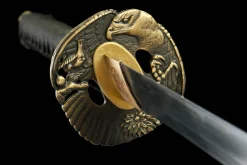
| Fittings | Zinc Alloy |
| Handle | Cotton Ito + Genuine Rayskin |
| Sheath | Hardwood (High-Gloss Lacquer) |
Steel & Construction
T10 is not a general-purpose high-carbon steel. The tungsten content in its matrix raises hardness ceiling and dramatically improves wear resistance – the edge holds longer under use and the steel responds to clay tempering with a sensitivity that lower-alloy steels cannot match. The clay is applied to the spine (mune) before the quench, insulating it and allowing it to cool slowly into a tough, flexible structure. The edge (ha), exposed to the full quench, hardens into the high-Rockwell zone where fine carbides hold a keen bevel without brittleness. The result is a single blade carrying two different microstructures, bonded along the habuchi – the transition boundary where hard and soft meet. On the Dark Gleam Slash, that boundary is wide and active, the nie (individual bright crystals) dense enough to see individually in good light, the overall line following a gentle toran – wave pattern – between ha and ji (the body of the blade).
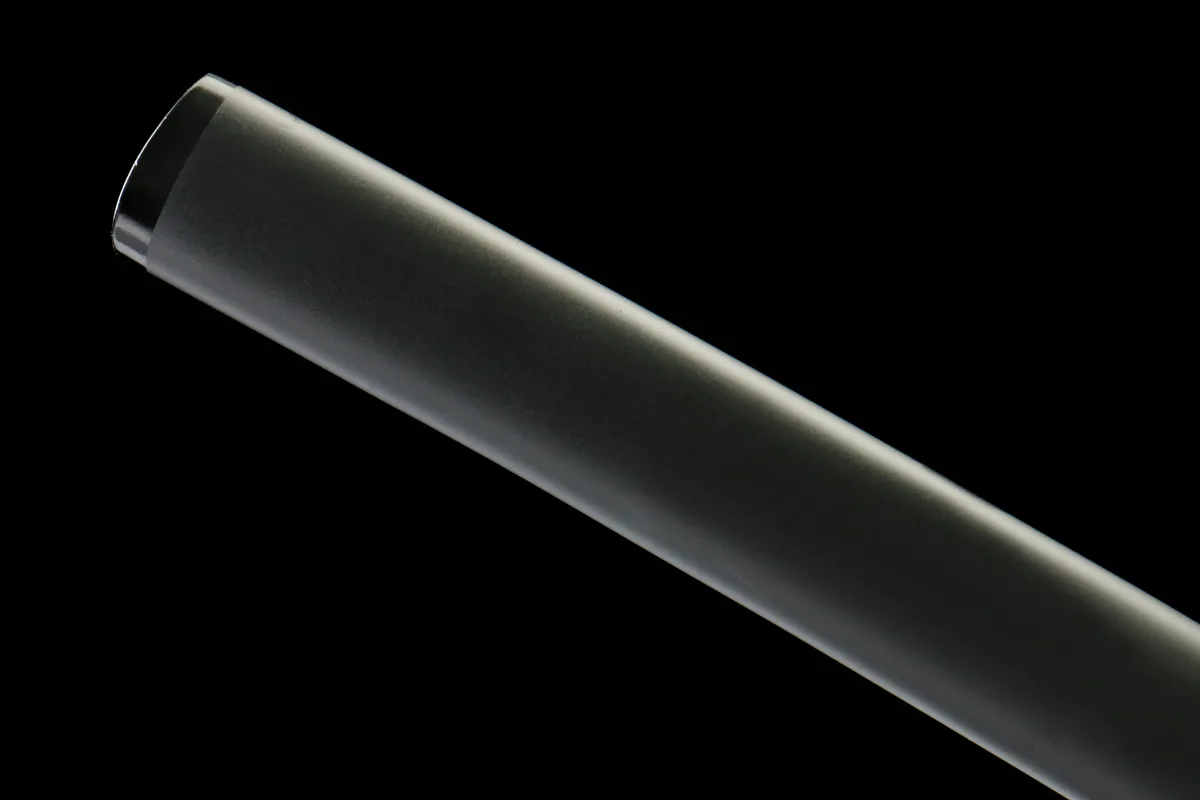
The shinogi-zukuri (ridgeline) geometry runs the full length of the 72 cm blade. This cross-section – flat spine, angled shinogi ridge, hollow or flat hi below – is the classical katana profile for a reason. It distributes mass efficiently along the blade spine while keeping the edge geometry thin enough to cut cleanly. The matte black finish on the ji surface is achieved through controlled oxidation and stone finishing, leaving the steel’s surface grain visible under close inspection while absorbing rather than reflecting ambient light. The polish on the ha and hamon area is brought up separately, making the temper line appear to float against the dark ground.
Handling
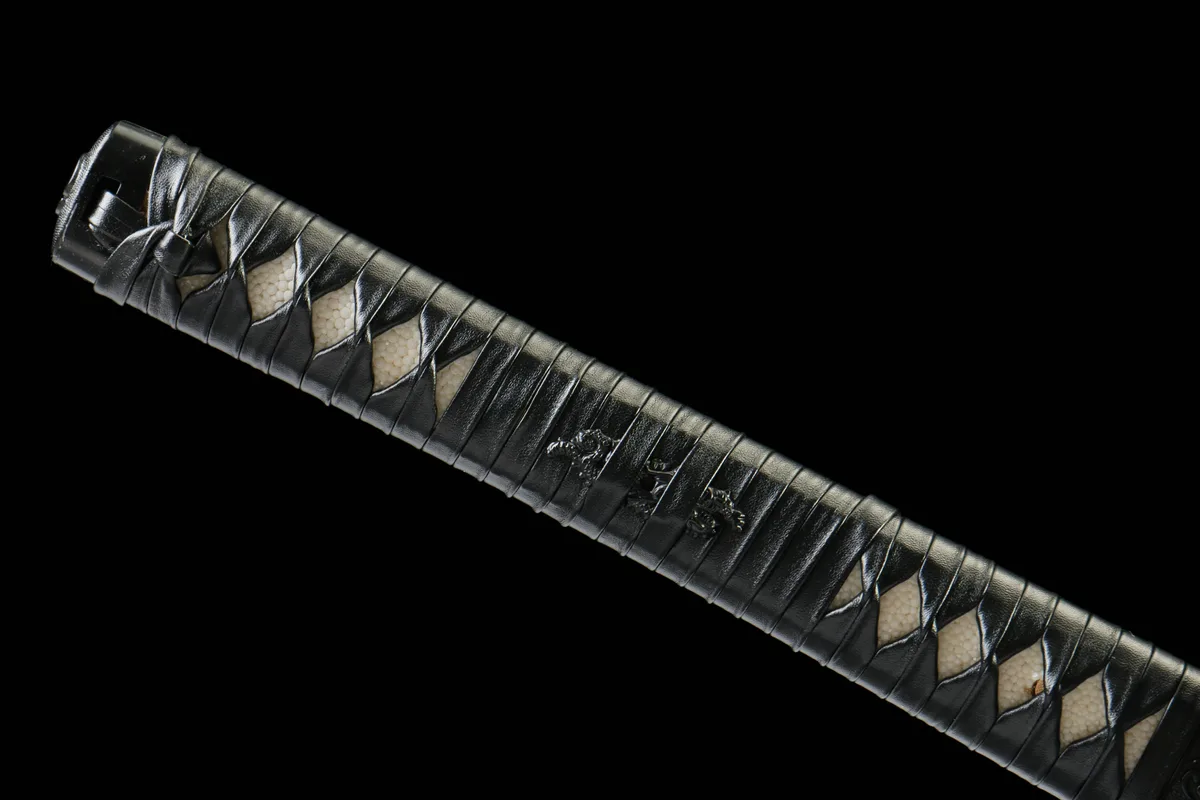
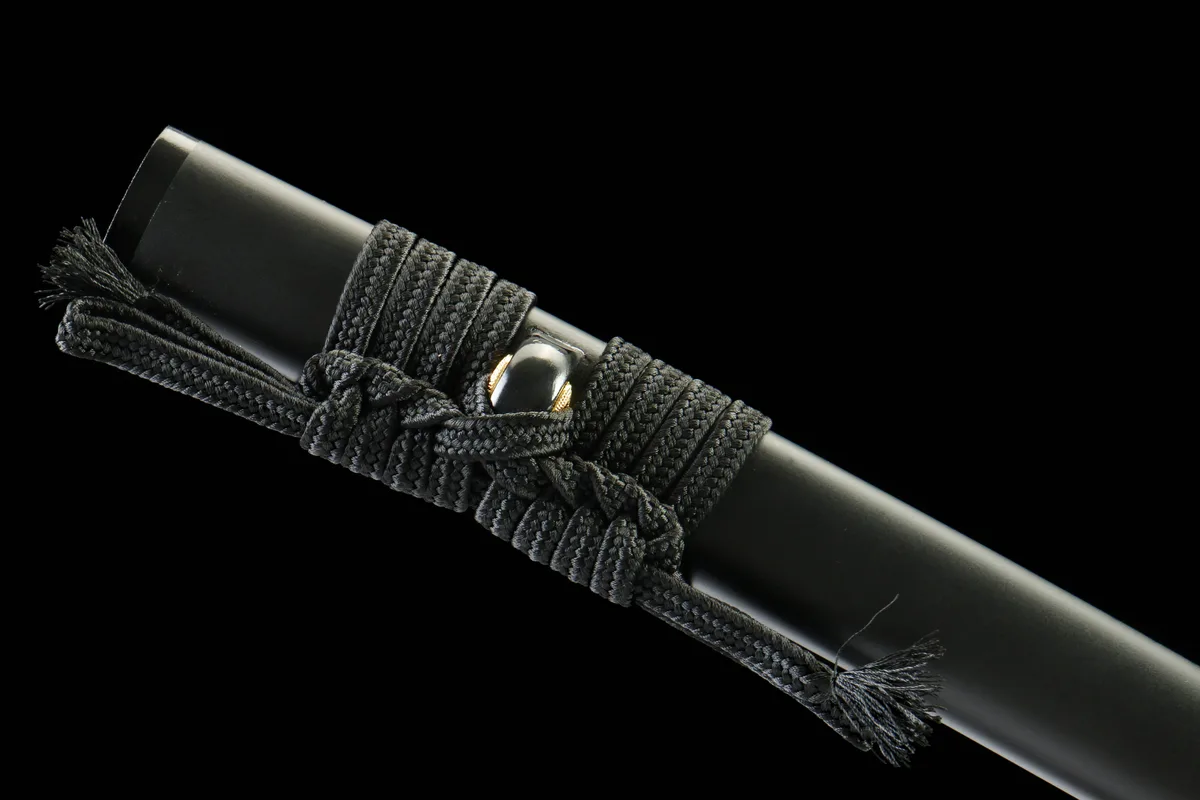
The tsuka (handle) runs 26 cm – long enough for a secure two-handed grip with room to spare. The genuine rayskin (same, pronounced “sah-may”) underneath the cotton ito provides a substrate that does not compress under grip pressure; the small nodules of the ray’s skin lock into the underside of the wrap and prevent any rotation in the hand even when the grip loosens. The cotton ito is wound in the traditional diamond pattern, leaving the same nodules partially exposed at each lozenge gap – you feel them against the palm on the draw. The draw itself is from a high-gloss lacquered hardwood saya; the lacquer coat provides a smooth, consistent resistance on the way out, and the koiguchi (mouth of the sheath) fits closely enough that the blade seats with audible, tactile confirmation when seated fully home.
Care Instructions
T10 is a high-carbon steel with no corrosion resistance – wipe the blade clean after every handling session using a soft cloth and a light application of choji oil or mineral oil. The matte finish on the flat is more susceptible to fingerprint corrosion than a polished surface, so avoid bare-hand contact with the ji. Store horizontally in the saya in a low-humidity environment, and re-oil every 60 to 90 days if the blade is not in regular use.
| Weight | 1.32 lbs |
|---|---|
| Dimensions | 102.0 × 3.2 × 0.7 in |
| Hamon | Real Hamon (Clay Tempered) |
| Blade Steel | T10 Tool Steel |
| Total Length | 102.0 cm |
| Blade Length | 72.0 cm |
| Heat Treatment | Clay Tempering (Differential Hardening) |
| Handle Wrap | Cotton Ito + Genuine Rayskin |
| Sheath Material | Hardwood (High-Gloss Lacquer) |
| Fittings | Zinc Alloy |
| Forging Style | Shinogi-Zukuri (Ridgeline) |
Related products