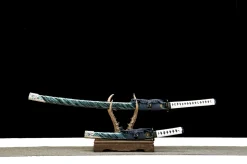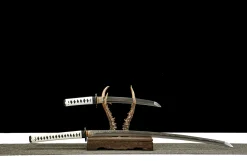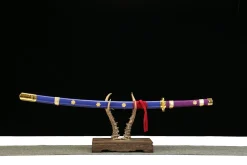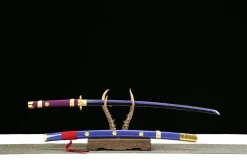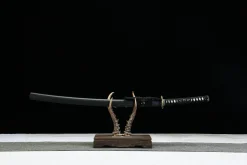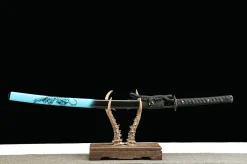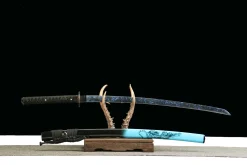









Dark Gold – Hand Forged T10 Tool Steel Katana Sword
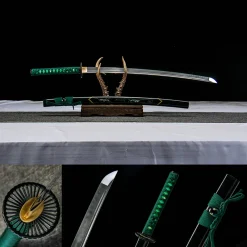
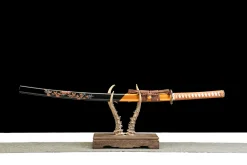
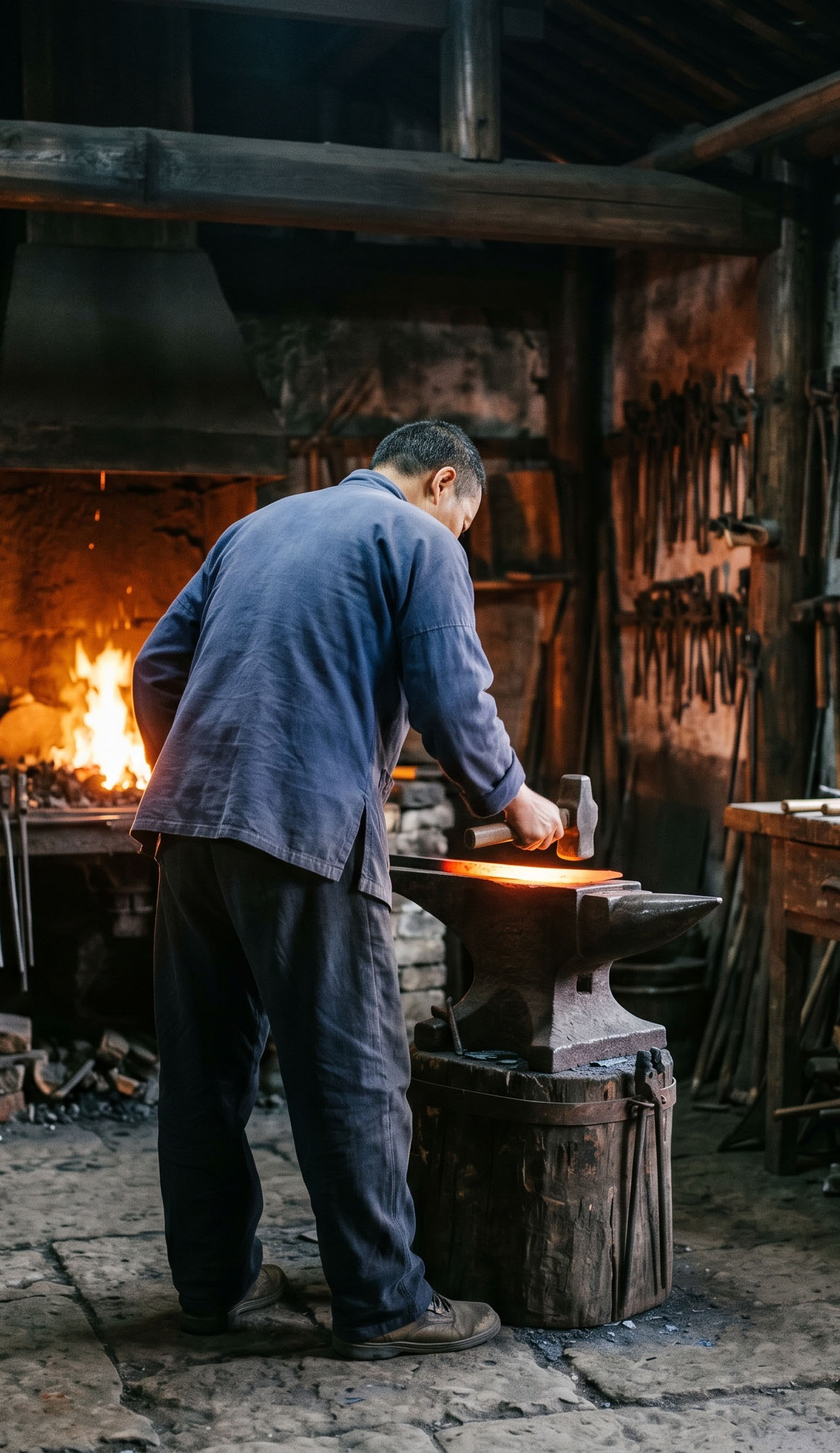
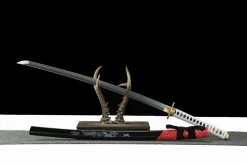
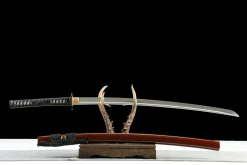
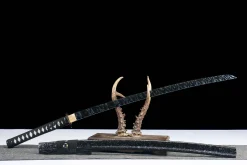
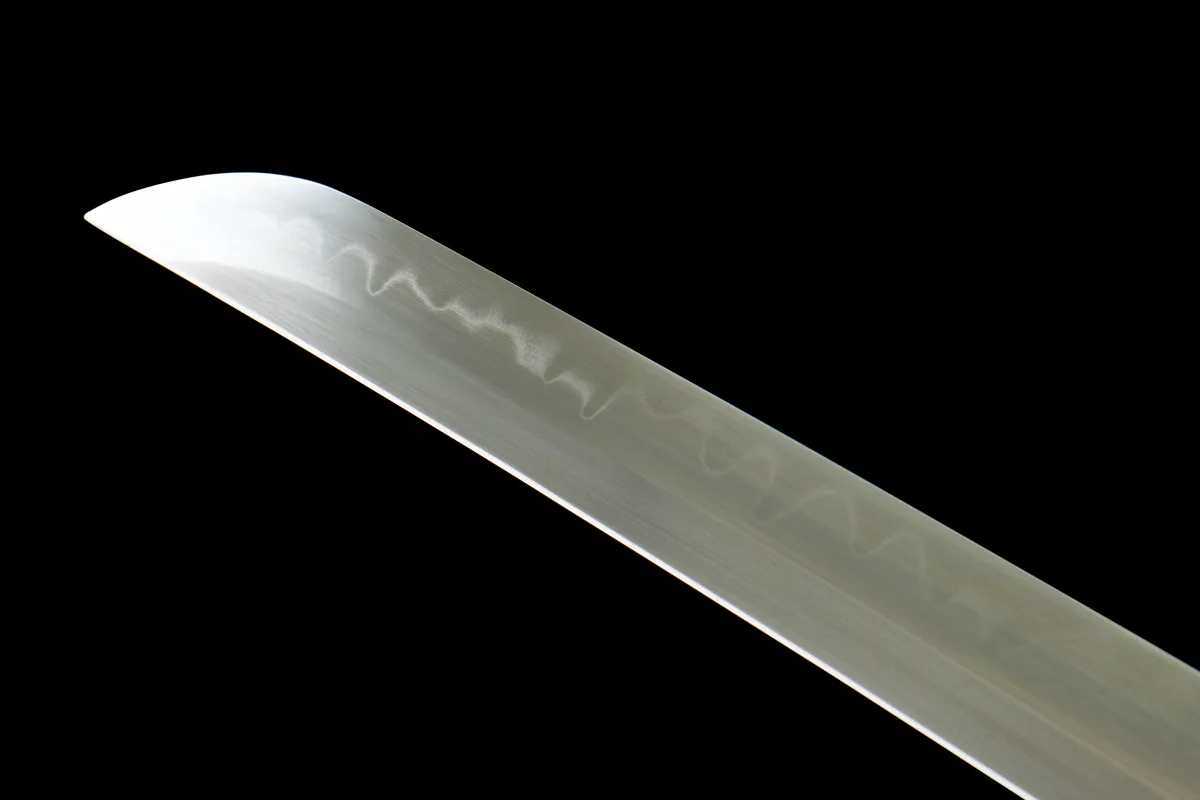
Hand-forged T10 Tool Steel katana (102cm total / 72cm blade), crafted in Longquan. Clay-tempered blade with a genuine hamon line — visible contrast between hardened edge and soft spine.
$429.99
Dark Gold – Hand Forged T10 Tool Steel Katana Sword
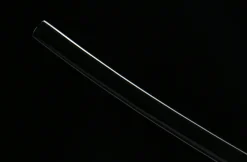
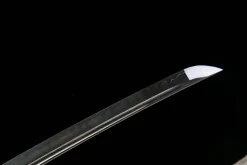
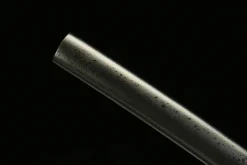
T10 tool steel does not forgive a careless hand – and the smith who finished this blade knew it. The hamon on the Dark Gold runs in a deep, irregular notare (a gentle wave pattern along the temper line), punctuated with clusters of nie – the crystalline granular activity visible just inside the habuchi (the boundary edge of the hamon) that separates a clay-tempered blade from every surface-hardened imitation on the market. The Chinese name, 滴金烧刃, translates loosely as “dripping gold temper,” and it earns that name: the transition zone catches light and releases it in warm, scattered points that read like embers held in steel.
Specifications
| Blade Steel | T10 High Speed Tool Steel |
| Total Length | 102.0 cm / 40.2 in |
| Blade Length | 72.0 cm / 28.3 in |
| Blade Width | 3.2 cm |
| Blade Thickness | 0.7 cm |
| Weight | 1040 g / 36.7 oz |
| Heat Treatment | Clay Tempering (Differential Hardening) |
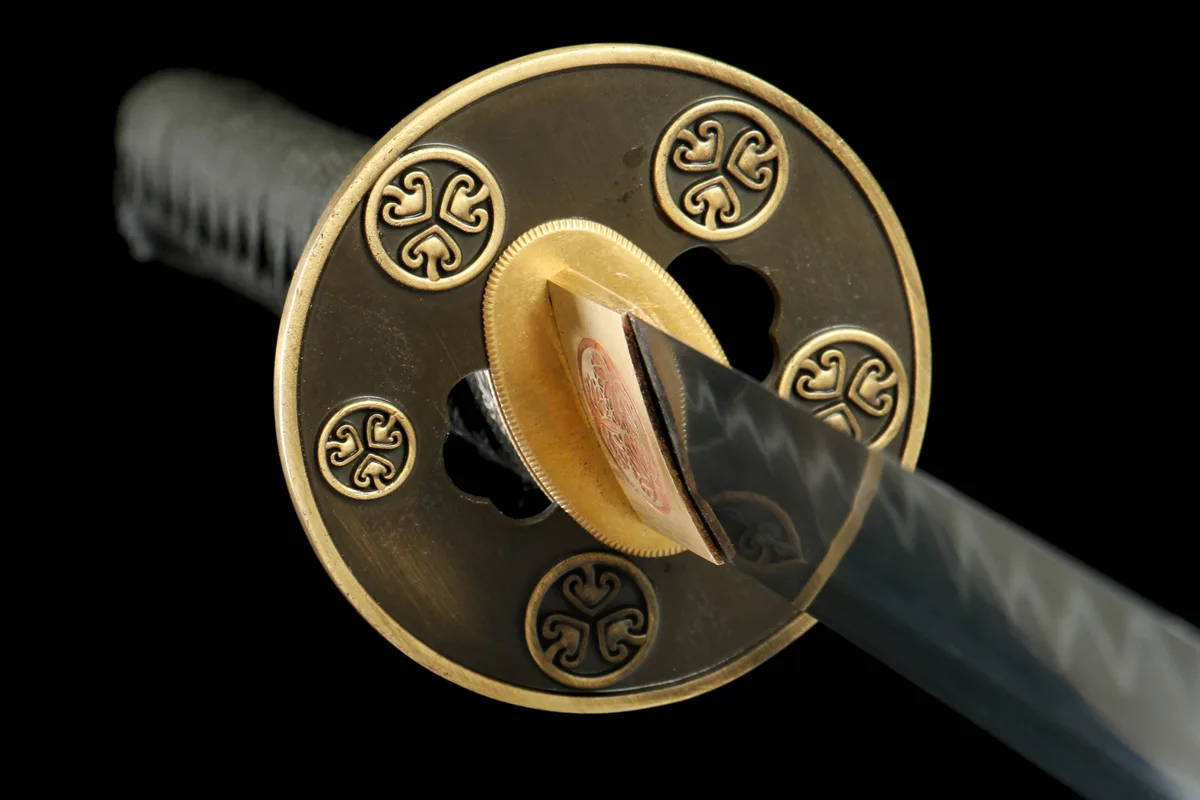
| Fittings | Zinc Alloy |
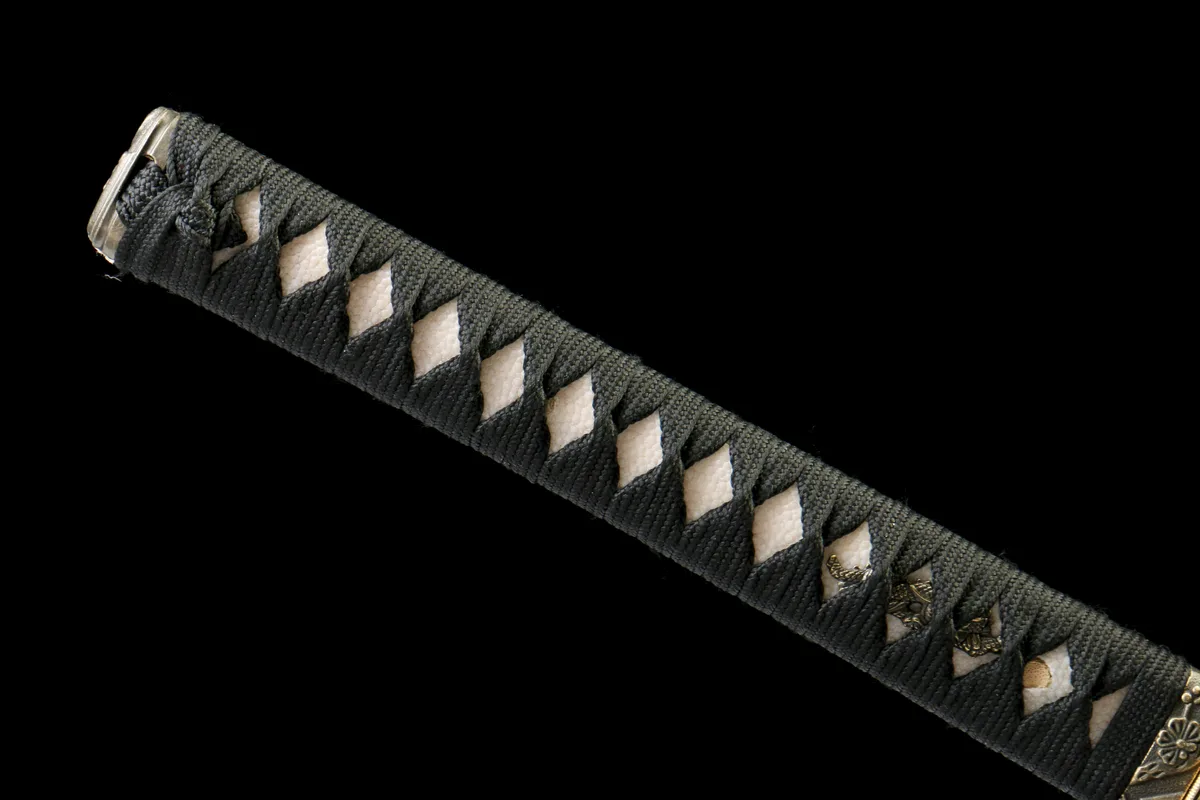
| Handle | Cotton Ito + Genuine Rayskin |
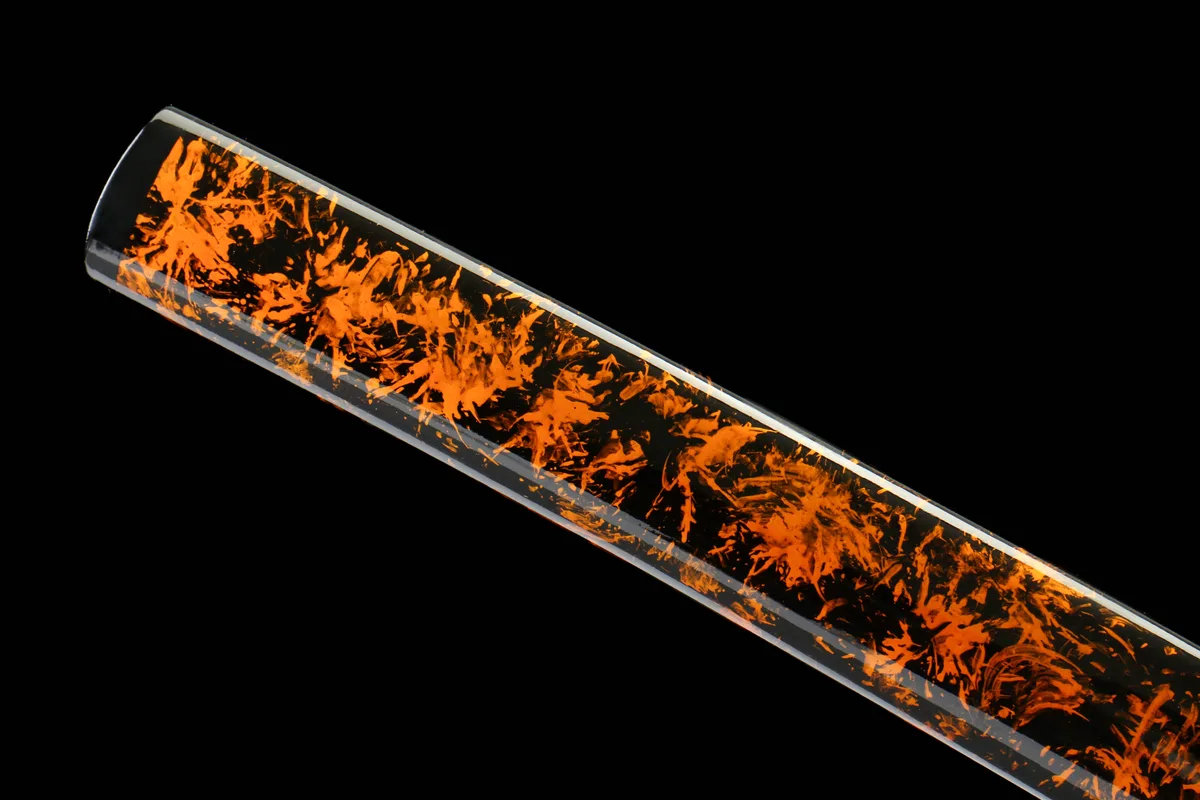
| Sheath | Hardwood, High-Gloss Lacquer |
Steel & Construction
T10 is a tungsten-bearing tool steel – the tungsten content tightens the grain structure and pushes wear resistance beyond what standard high-carbon steels can offer at comparable hardness levels. The edge emerges from differential hardening with a rockwell hardness reading in the mid-to-upper 50s at the ha (cutting edge), while the mune (spine) remains considerably softer and resilient. This gradient is not cosmetic. It is the mechanical principle that allows a blade of this geometry to absorb lateral stress without catastrophic failure – and it is the same principle Japanese swordsmiths have relied upon for centuries. What distinguishes T10 in a clay-tempered application is the visual richness of the resulting hamon: the tungsten-influenced grain responds to the quench with unusual activity, and the nie and nioi (the mist-like glow at the habuchi boundary) are both present and readable on this blade without magnification.
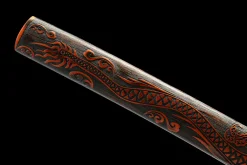
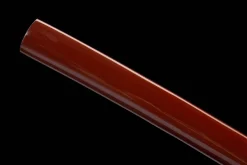
The shinogi-zukuri (ridgeline) profile gives the blade its characteristic cross-section: a central ridge running the length of the blade divides the flat of the ji (body surface) from the angled niku (the shoulder leading to the edge bevel). This geometry is not decorative tradition – it is the structural solution that keeps a blade of this length rigid under torsional load while keeping the edge geometry acute. The high-gloss lacquered hardwood saya (scabbard) mirrors the warm tones of the temper line, the finish deep enough to reflect the blade on the draw.
Handling
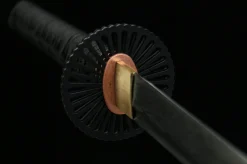
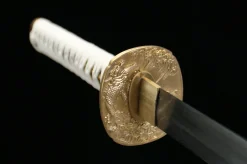
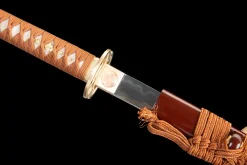
The 26 cm tsuka (handle) is wrapped in a traditional diamond-pattern hishigami cotton ito over genuine rayskin (same) – the same nodule texture on the ray panels creates resistance points beneath the wrap that lock the hand in place without the grip needing to tighten. At 72 cm of blade, the Dark Gold sits at the longer end of standard katana geometry, and the tsuka length compensates: two hands find their natural spacing without adjustment, the rear hand clearing the kashira (pommel cap) comfortably. The draw from the high-gloss saya is clean and quick – the lacquered interior surface offers minimal resistance, and the koiguchi (scabbard mouth) is fitted tightly enough to hold the blade secure without slowing the release.
Care Instructions
After any handling, wipe the blade with a clean, lightly oiled cloth – fingerprints carry moisture and acid that act on high-carbon steel within hours. Apply a thin coat of choji oil (clove-based mineral oil, traditional for Japanese blade care) every few weeks, or more frequently in humid climates. Keep the blade seated in the saya when not in display to protect the edge geometry and limit oxidation exposure.
| Weight | 1.32 lbs |
|---|---|
| Dimensions | 102.0 × 3.2 × 0.7 in |
| Hamon | Real Hamon (Clay Tempered) |
| Blade Steel | T10 Tool Steel |
| Total Length | 102.0 cm |
| Blade Length | 72.0 cm |
| Heat Treatment | Clay Tempering (Differential Hardening) |
| Handle Wrap | Cotton Ito + Genuine Rayskin |
| Sheath Material | Hardwood (High-Gloss Lacquer) |
| Fittings | Zinc Alloy |
| Forging Style | Shinogi-Zukuri (Ridgeline) |
Related products