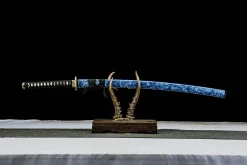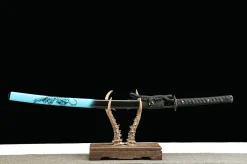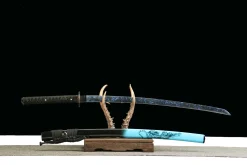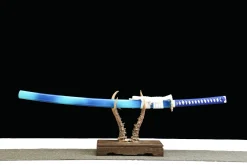
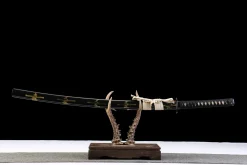










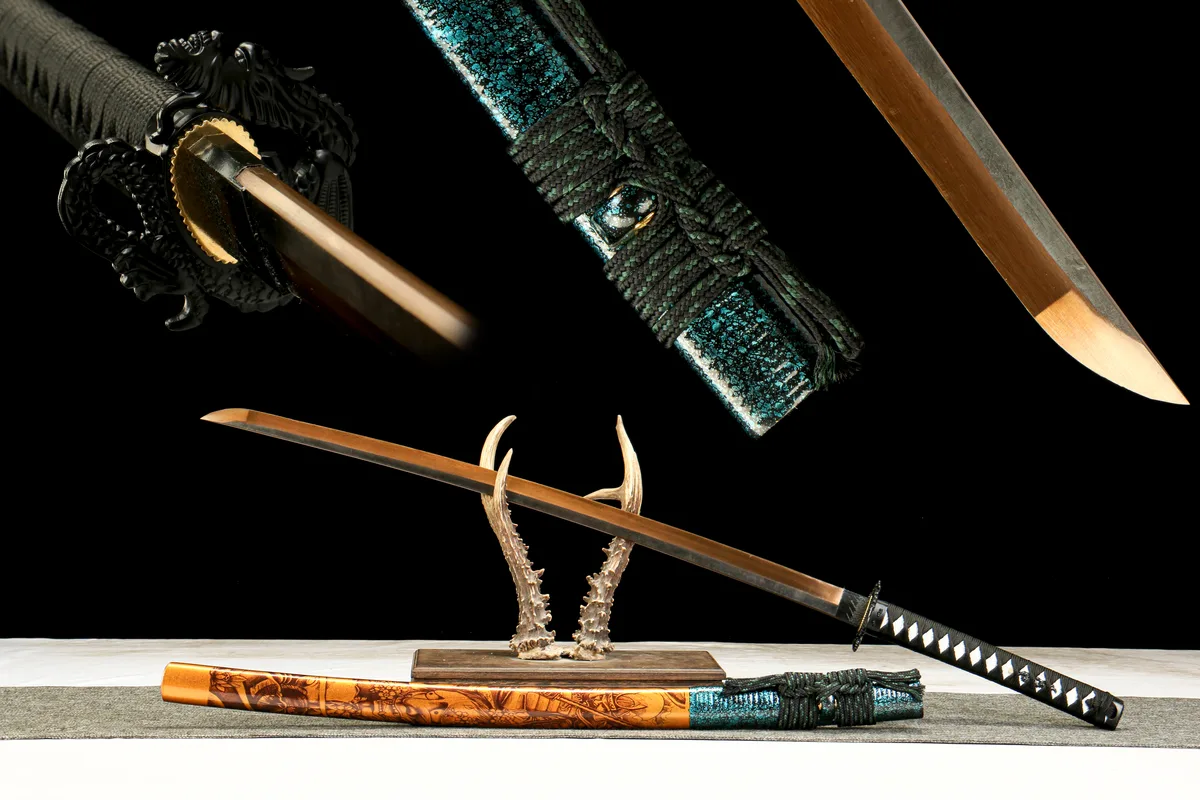
Dark Gold Radiance – Hand Forged T10 Tool Steel Katana Sword
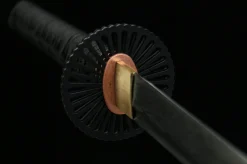
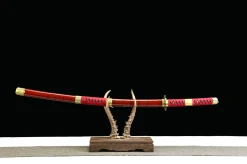
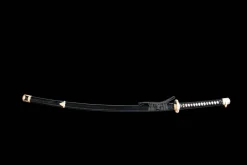
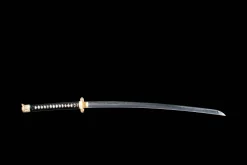
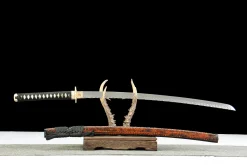
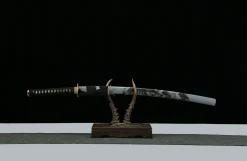
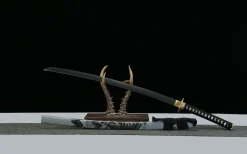
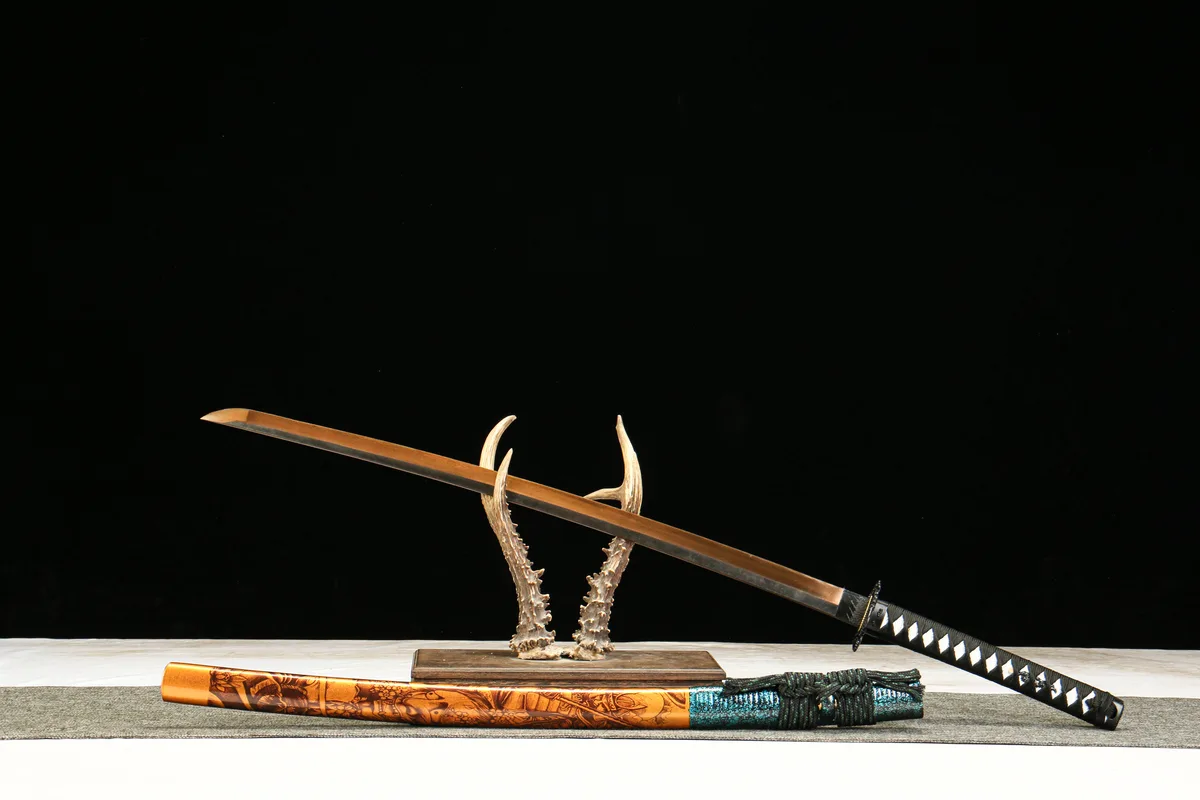
Hand-forged T10 Tool Steel katana (103cm total / 72cm blade), crafted in Longquan. Full-tang construction with traditional fittings and hand-lacquered saya.
$269.99
Dark Gold Radiance – Hand Forged T10 Tool Steel Katana Sword
T10 tool steel was developed for applications that destroy ordinary high carbon steel – cutting tools, dies, forming surfaces where edge retention under sustained stress is the only metric that matters. Applying it to a katana blade and finishing it with 烤金, a heat-coloring process that pulls the surface through oxidation into a deep gold-bronze tone, produces a functional blade that does not apologize for either of its qualities: it cuts, and it looks like nothing else on the rack.
Specifications
| Blade Steel | T10 High Speed Tool Steel (烤金 heat finish) |
| Total Length | 103.0 cm / 40.6 in |
| Blade Length | 72.0 cm / 28.3 in |
| Blade Width | 3.2 cm |
| Blade Thickness | 0.7 cm |
| Weight | 950 g / 33.5 oz |
| Heat Treatment | Oil Quench & Temper |
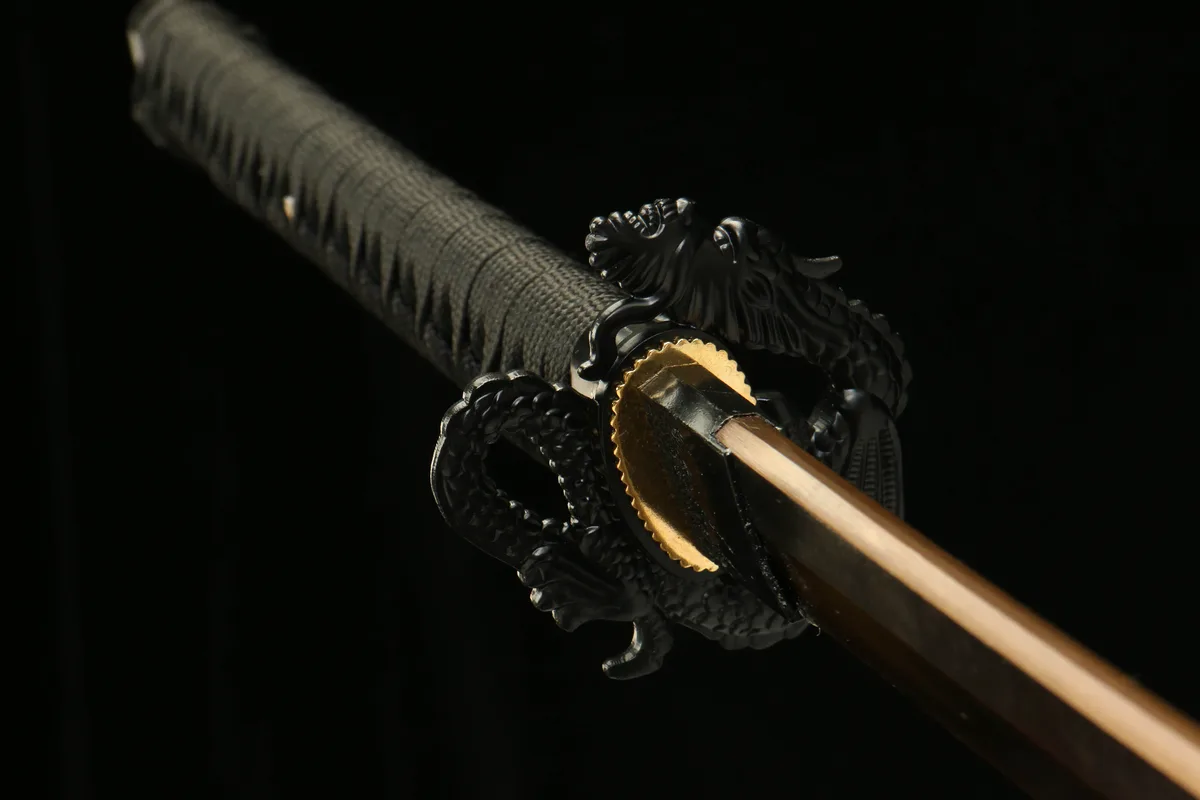
| Fittings | Alloy |
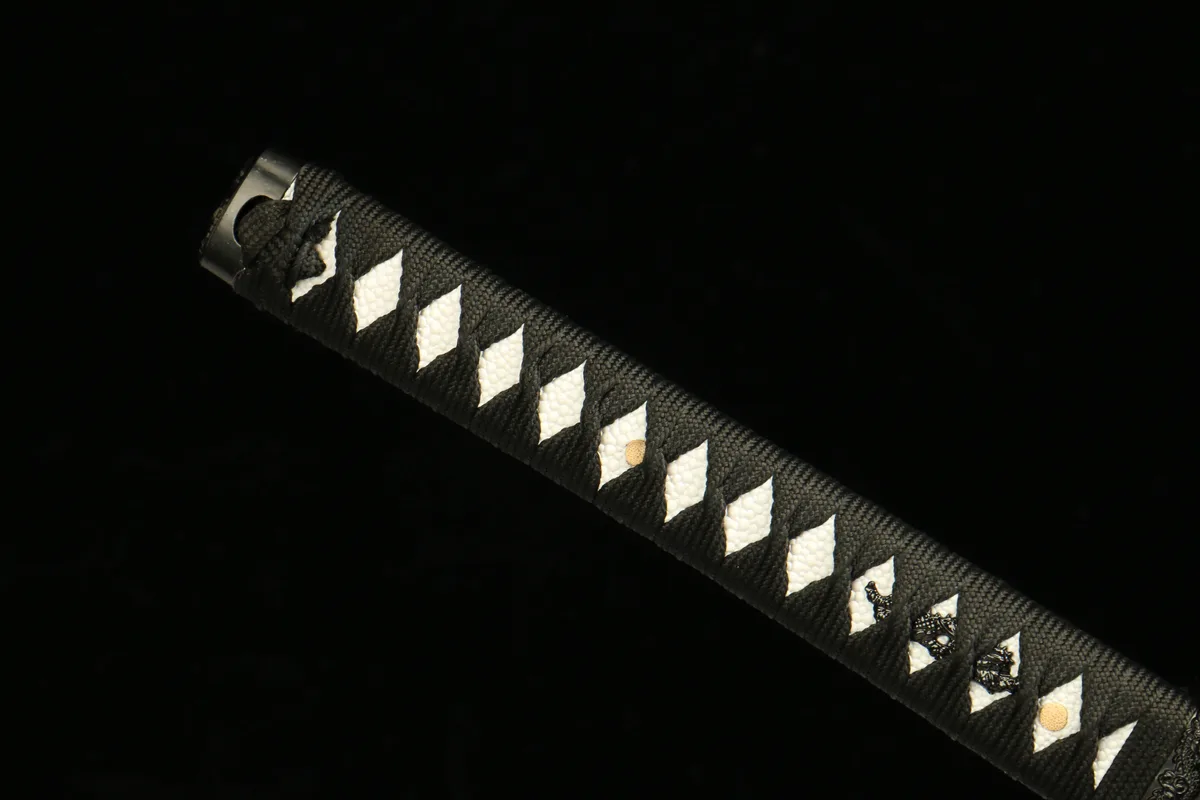
| Handle | Cotton Ito Wrap |
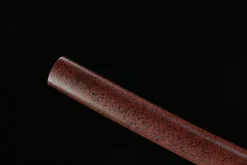
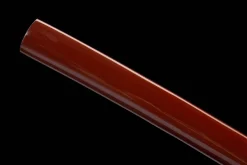
| Sheath | Green Bark Wood (Aohada) |
What the Steel Does
T10 is a tungsten-alloyed tool steel. The tungsten content – roughly 8-9% in standard T10 composition – forms tungsten carbides within the steel matrix that resist abrasion at the edge bevel more aggressively than plain high carbon steel of equivalent hardness. The practical consequence is a blade that holds its edge geometry through more cutting sessions before requiring sharpening, and maintains its edge more cleanly under the repeated lateral micro-stresses that accumulate during tameshigiri (test cutting) practice. Oil quenching from the correct austenitizing temperature produces edge hardness in the practical range for katana geometry – hard enough that the bevel holds its angle, not so hard that the edge is fragile. The temper cycle after quenching relieves quench stress from the martensitic structure and brings toughness back to a functional level.
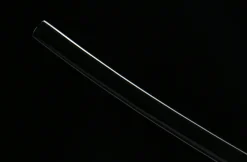
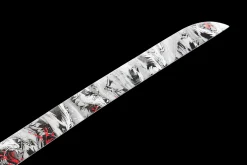
The 烤金 finish – a controlled heat oxidation applied after grinding – produces a gold-bronze surface tone across the flat and spine of the blade. This is not a coating or plating; it is a transformation of the steel surface itself through controlled thermal oxidation. The finish will wear at the edge zone through normal use and sharpening, which is expected – the cutting edge is ground to bright steel regardless. Across the flat and spine, the 烤金 tone holds, and under training hall lighting it gives the Dark Gold Radiance its name in a way that is immediately apparent.
The Feel of It
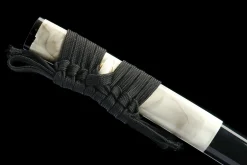
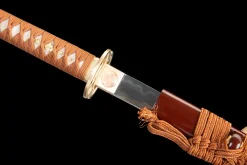
The 27 cm handle wrapped in cotton ito gives a secure, consistent grip across both hand positions – the wrap is tight enough that there is no shift or creep during repeated cuts. The aohada saya – green bark wood with a natural surface texture – draws cleanly, the blade exiting without drag as the habaki (blade collar) clears the koiguchi (saya mouth). In hand, the shinogi-zukuri profile of the 72 cm blade is immediately legible: the ridgeline is distinct under the fingers when the blade is indexed, the transition from the thick ji flat to the thinner edge bevel is precise, and the kissaki (blade tip) is ground to a geometry consistent with the rest of the edge work rather than an afterthought.
Keeping It Sharp
T10’s tungsten carbide content makes it slightly more demanding to sharpen than plain 1065 or 1095 – plan for more time on the coarse and medium stones before the burr forms cleanly, then finish on a 3000-grit or higher surface. Oil the blade after every session; the 烤金 surface on the flat is more reactive to moisture than polished steel and should not be left uncoated. The aohada saya interior should be inspected periodically for any debris that could contact and scratch the blade surface during storage.
| Weight | 1.2 lbs |
|---|---|
| Dimensions | 103.0 × 3.2 × 0.7 in |
| Hamon | Decorative / Acid-Etched |
| Blade Steel | T10 Tool Steel |
| Total Length | 103.0 cm |
| Blade Length | 72.0 cm |
| Heat Treatment | Oil Quench & Temper |
| Handle Wrap | Cotton Ito Wrap |
| Sheath Material | Green Bark Wood (Aohada) |
| Fittings | Alloy, (装) |
| Forging Style | Shinogi-Zukuri (Ridgeline) |
Related products