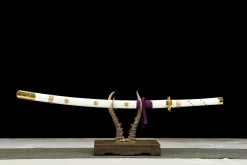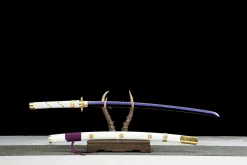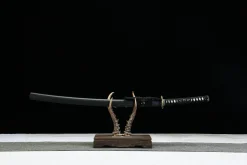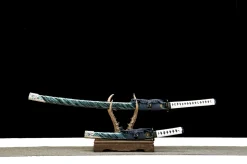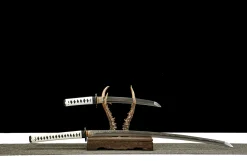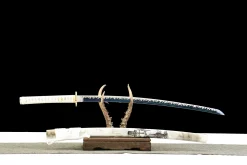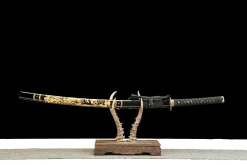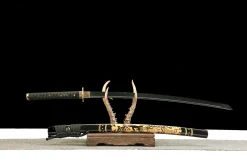




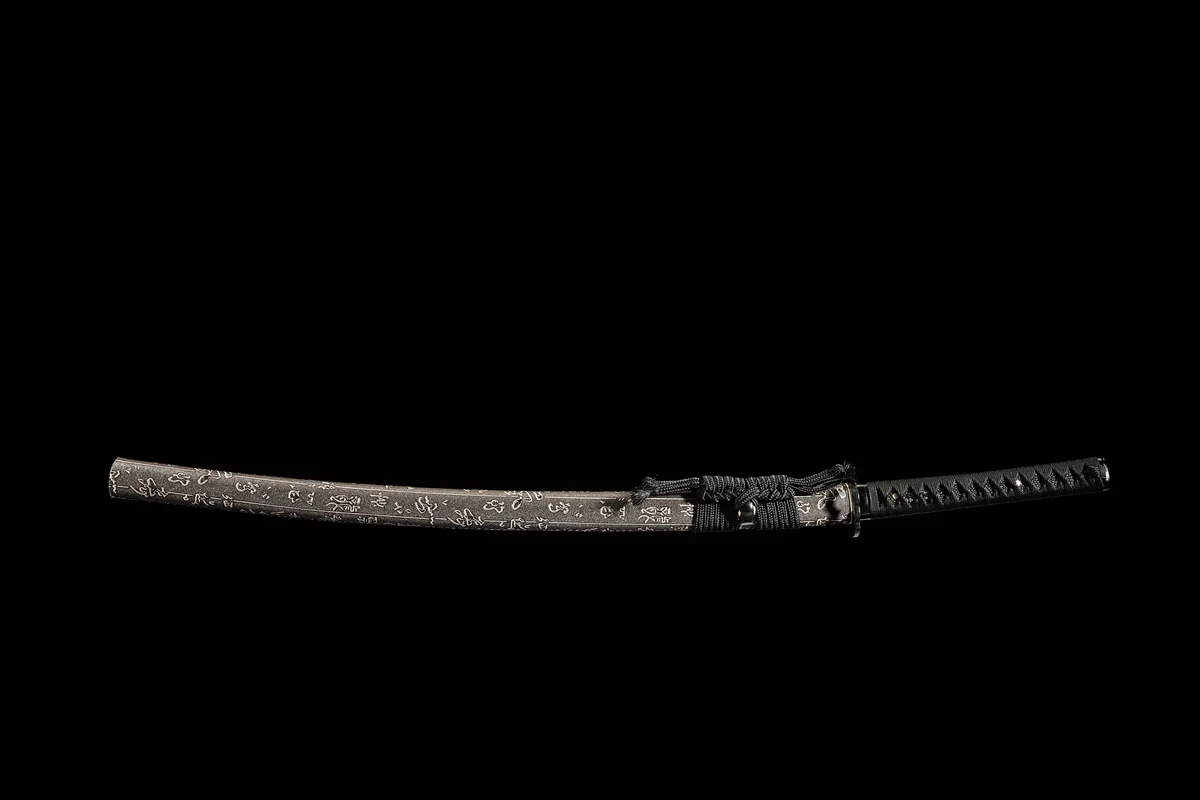




Dark Gold Shadow Break – Hand Forged Damascus Steel Katana Sword
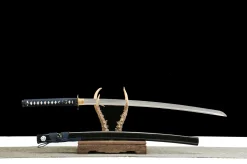
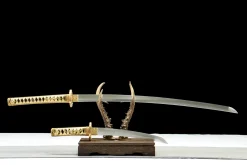
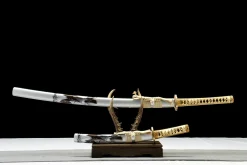
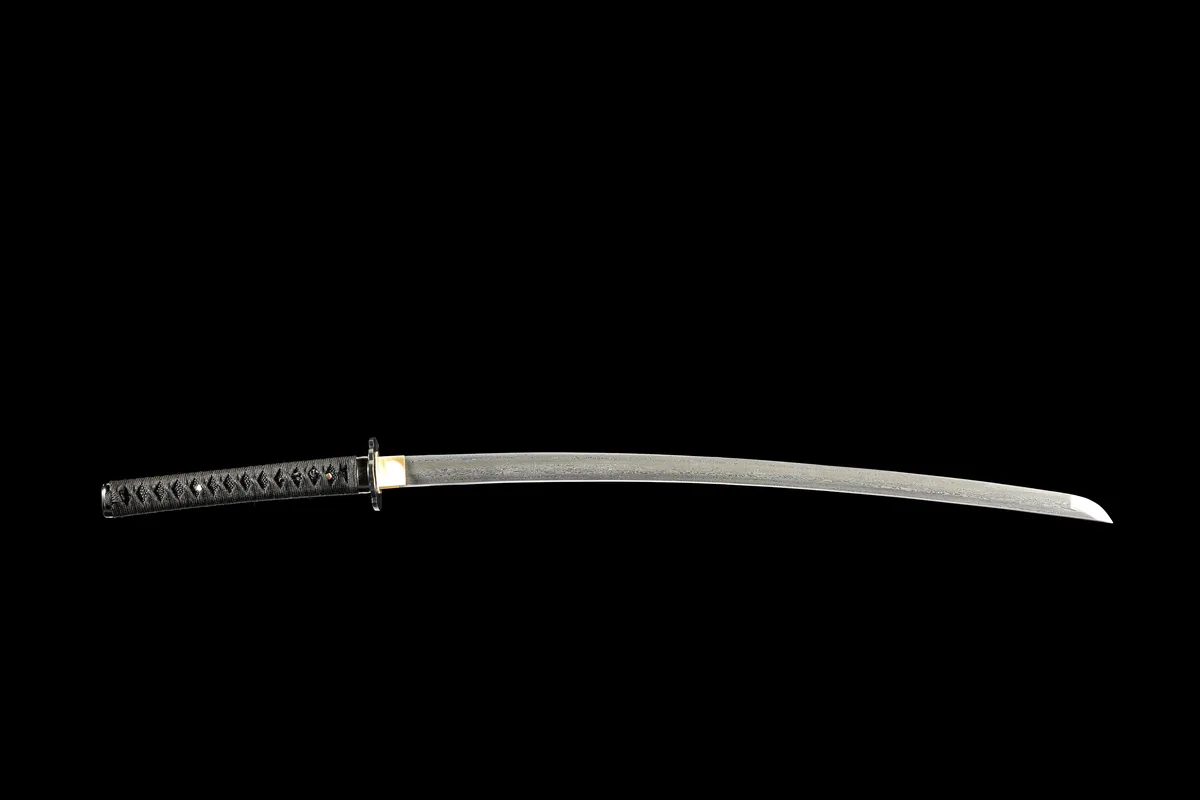
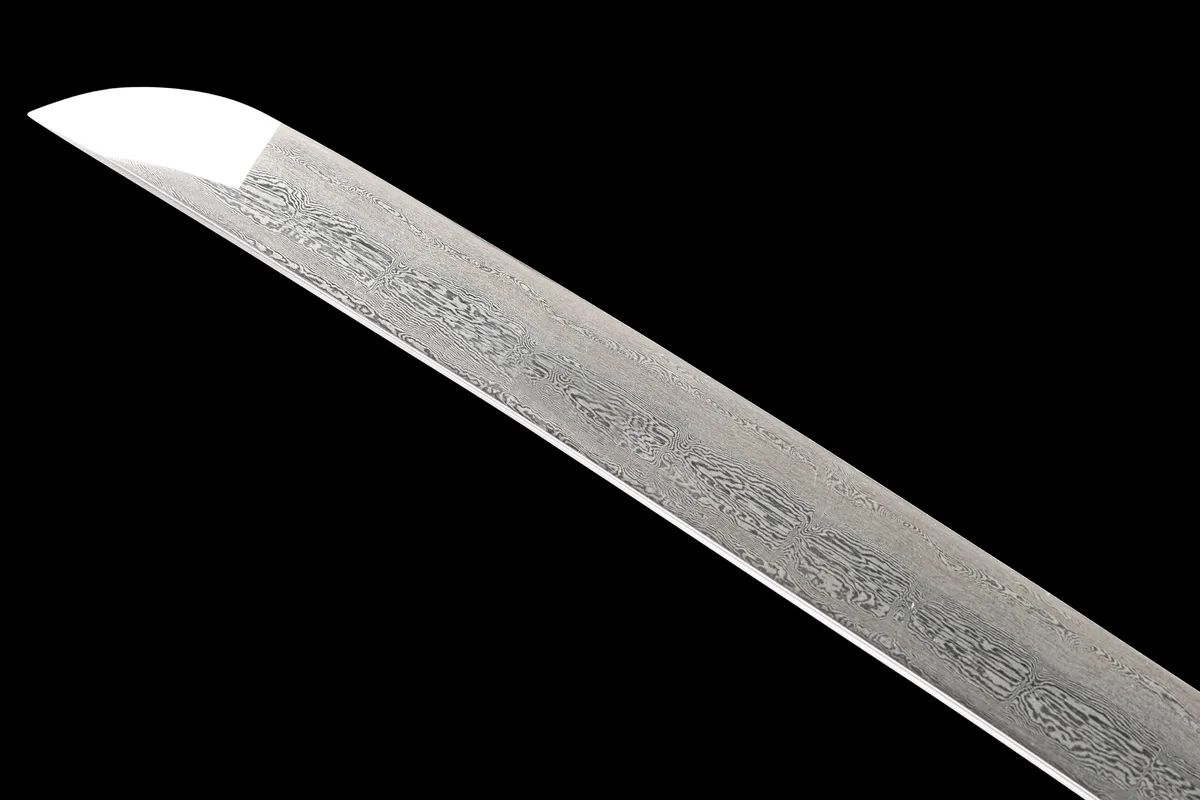
Hand-forged Damascus Steel katana (102cm total / 72cm blade), crafted in Longquan. Hand-folded Damascus pattern steel — each blade carries a unique layered grain from forge to tip.
$309.99
Dark Gold Shadow Break – Hand Forged Damascus Steel Katana Sword
Among Damascus katana, the axe-head flower pattern – 斧头花纹 – stands apart from the more common feather and ladder variants because it does not flow. It repeats. Forged through a process of cross-sectional cuts into the welded billet that expose the internal layer geometry as a series of flared, angular nodes, the axe-head pattern reads as tessellated at close range and as a continuous textural field when the blade is viewed at arm’s length. Set that surface into a shinogi-zukuri geometry with a hardwood piano-lacquer saya and iron fittings, and the result is a blade that presents itself as deliberately austere – the pattern doing all the work the ornamentation refuses to do.
Specifications
| Blade Steel | Damascus Steel, Twist / Axe-Head Flower Pattern (斧头花纹) |
| Total Length | 102.0 cm / 40.2 in |
| Blade Length | 72.0 cm / 28.3 in |
| Blade Width | 3.2 cm |
| Blade Thickness | 0.7 cm |
| Weight | 1040 g / 36.7 oz |
| Heat Treatment | Temper |
| Fittings | Iron |
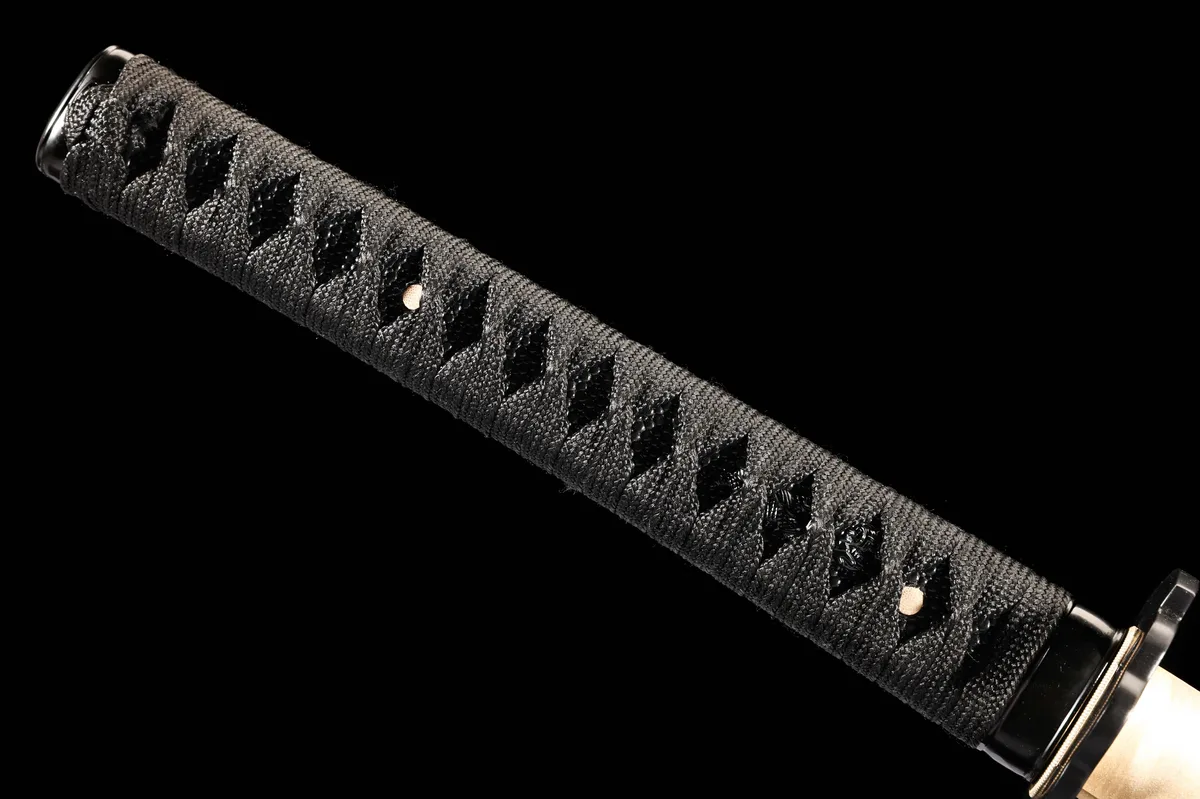
| Handle | Cotton Ito Wrap |
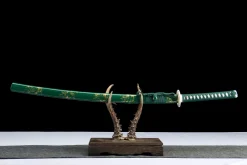
| Sheath | Hardwood, Piano Lacquer Finish (实木钢琴烤漆) |
What the Steel Does
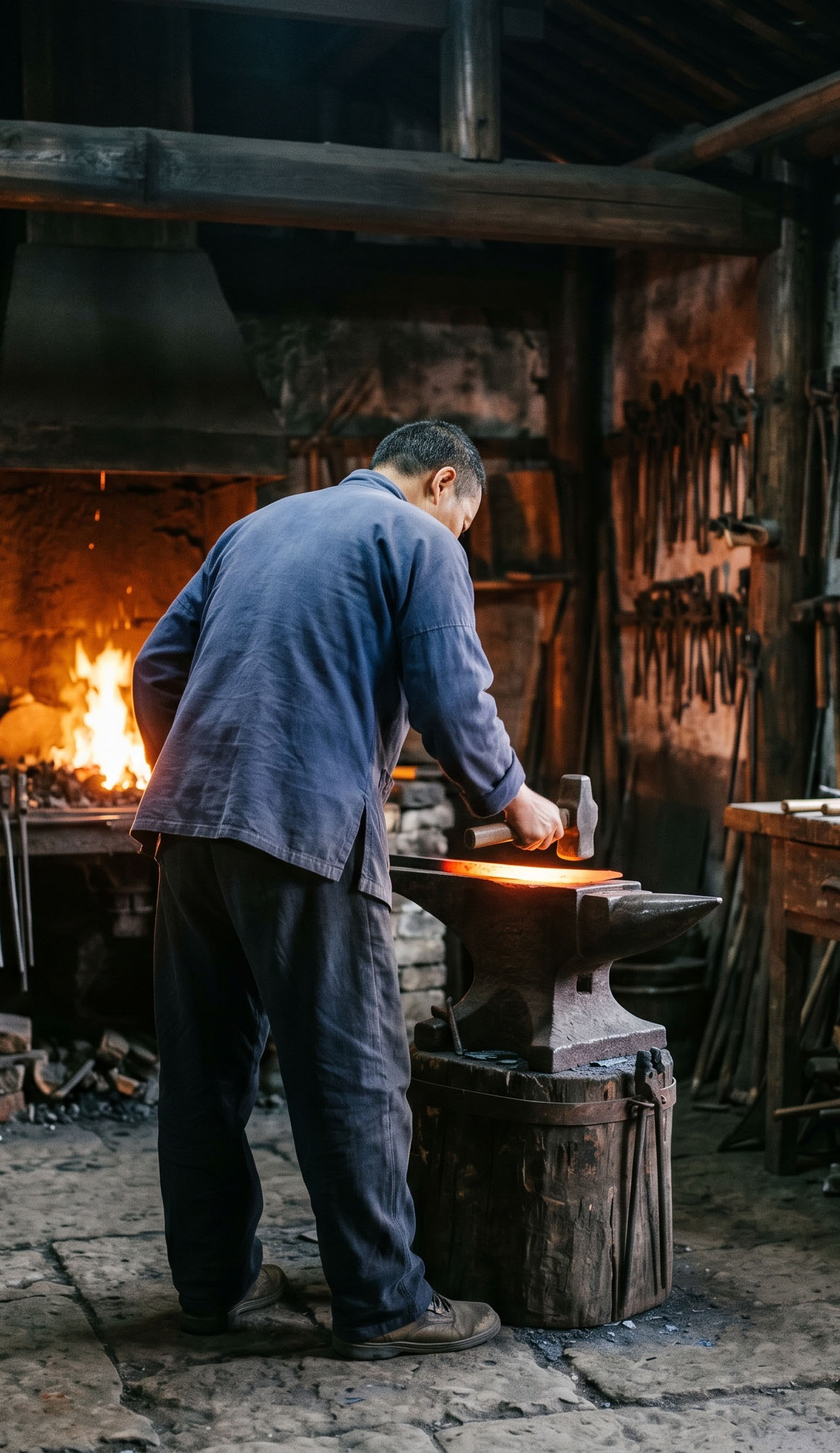
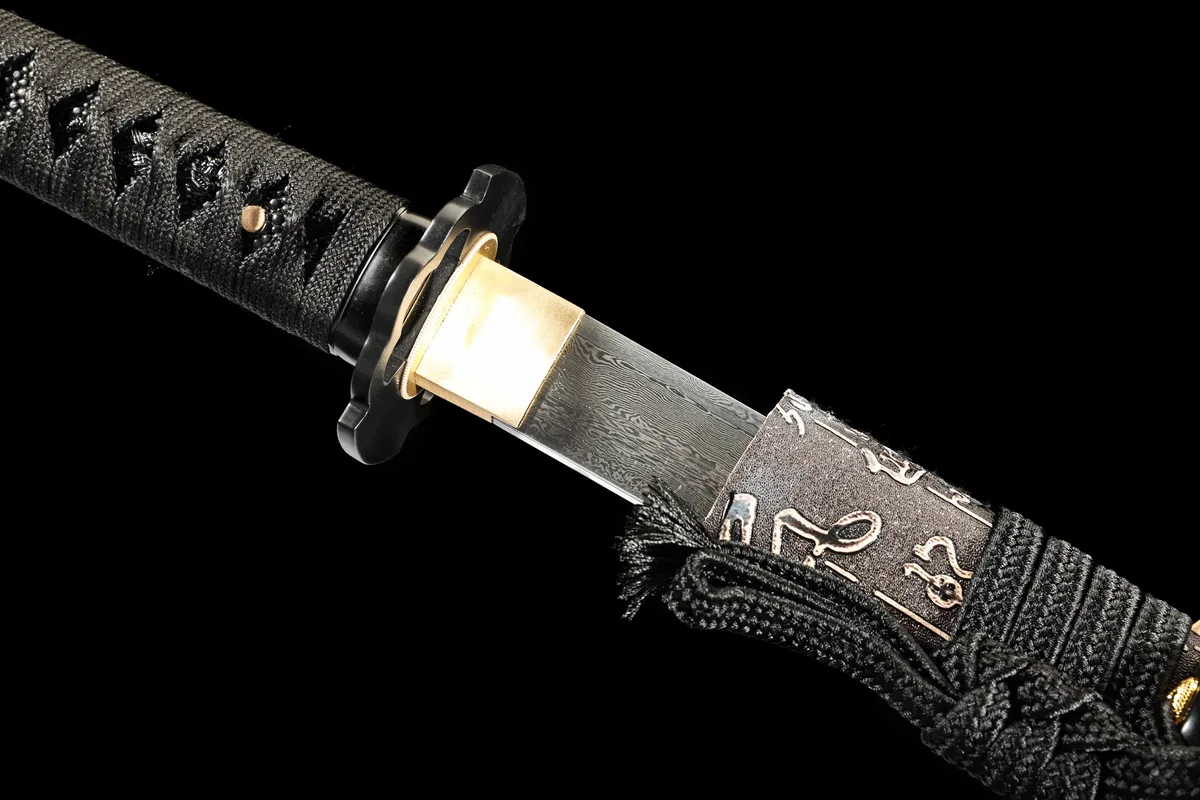
The axe-head flower pattern in Damascus construction results from a specific manipulation of the twist-pattern billet: after the steel layers are forge-welded and twisted to build the spiral grain, the smith makes a series of angular cross-cuts into the billet face before the final elongation. Those cuts, when drawn out, open into the characteristic flared node shapes – visually similar to the head of a broad axe seen from above. The result is a pattern that has both directionality and repetition, which is rarer in Damascus work than purely flowing grain structures. After forging, acid etching selects for carbon differential across the weld layers, bringing the pattern to the surface. Every blade in this pattern class is unique – the placement and density of the nodes shifts with each forging run.
The iron fittings are a considered choice against this blade. Iron patinates over time in a way that bronze or brass do not – developing a dark, quiet surface that will eventually read as continuous with the darker zones of the Damascus etch. These fittings will change, and the change will suit the blade.
The Feel of It
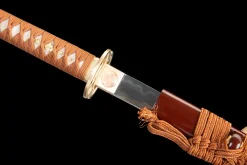
The 27.0 cm handle wrapped in cotton ito offers a firm, slightly textured grip – the diamond pattern of the wrap giving defined reference points for both hands in a two-handed grip. Drawing from the piano-lacquered hardwood saya, the blade emerges with a clean, frictionless release, the lacquer surface providing a consistent fit that neither grabs nor rattles. At 72.0 cm of blade in shinogi-zukuri geometry, the blade has presence in hand – the ridgeline geometry felt along the flat of the spine when repositioning the grip.
Maintenance Notes
Damascus steel requires consistent oil maintenance – after handling, wipe the blade clean and apply a thin coat of mineral or choji oil to prevent oxidation forming at the weld layer boundaries. The piano lacquer saya is durable but not impervious to impact; store the blade horizontally or in a dedicated stand to avoid contact marks on the finish. Re-oil the blade at regular intervals if stored in a low-humidity environment.
| Weight | 1.32 lbs |
|---|---|
| Dimensions | 102.0 × 3.2 × 0.7 in |
| Hamon | Damascus Pattern (No Hamon) |
| Blade Steel | Damascus Steel |
| Total Length | 102.0 cm |
| Blade Length | 72.0 cm |
| Heat Treatment | Temper |
| Handle Wrap | Cotton Ito Wrap |
| Sheath Material | 实Hardwood钢琴烤漆 |
| Fittings | Iron |
| Forging Style | 鎬造 |
Related products