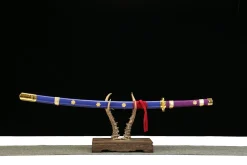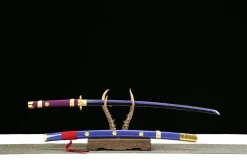

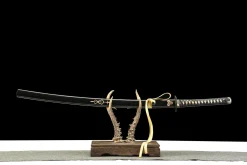

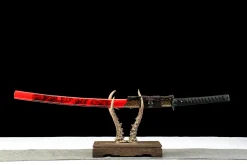


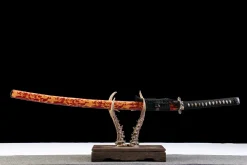








Dark Gold Weave – Hand Forged T10 Tool Steel Katana Sword
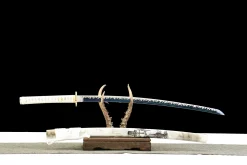
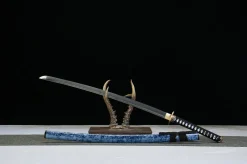
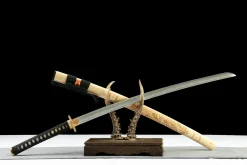
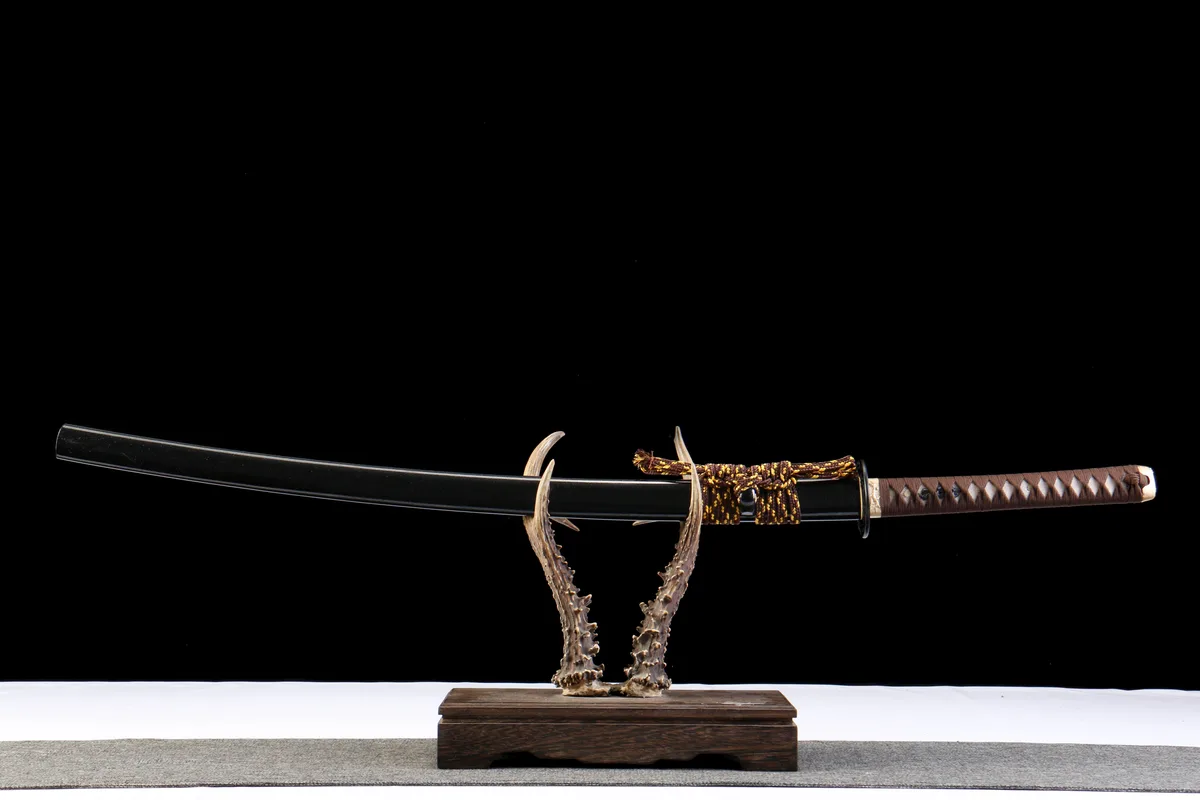
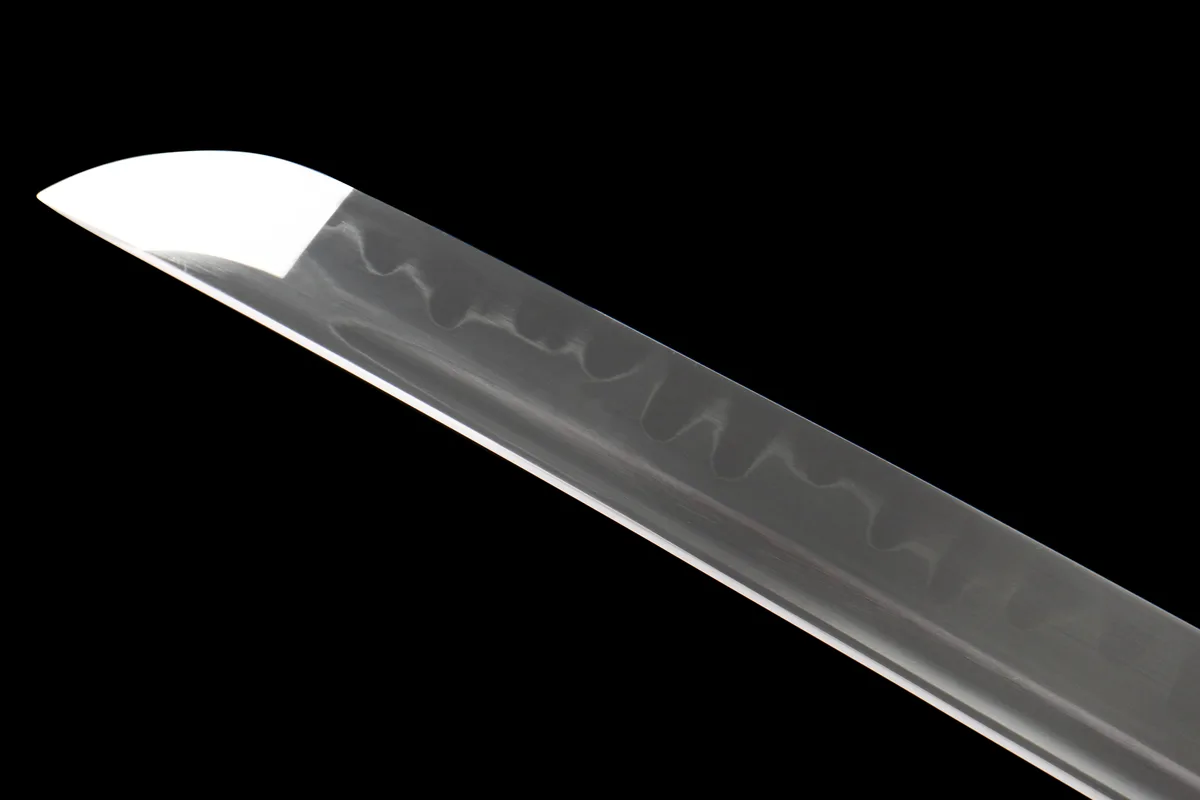
Hand-forged T10 Tool Steel katana (102cm total / 72cm blade), crafted in Longquan. Clay-tempered blade with a genuine hamon line — visible contrast between hardened edge and soft spine.
$459.99
Dark Gold Weave – Hand Forged T10 Tool Steel Katana Sword
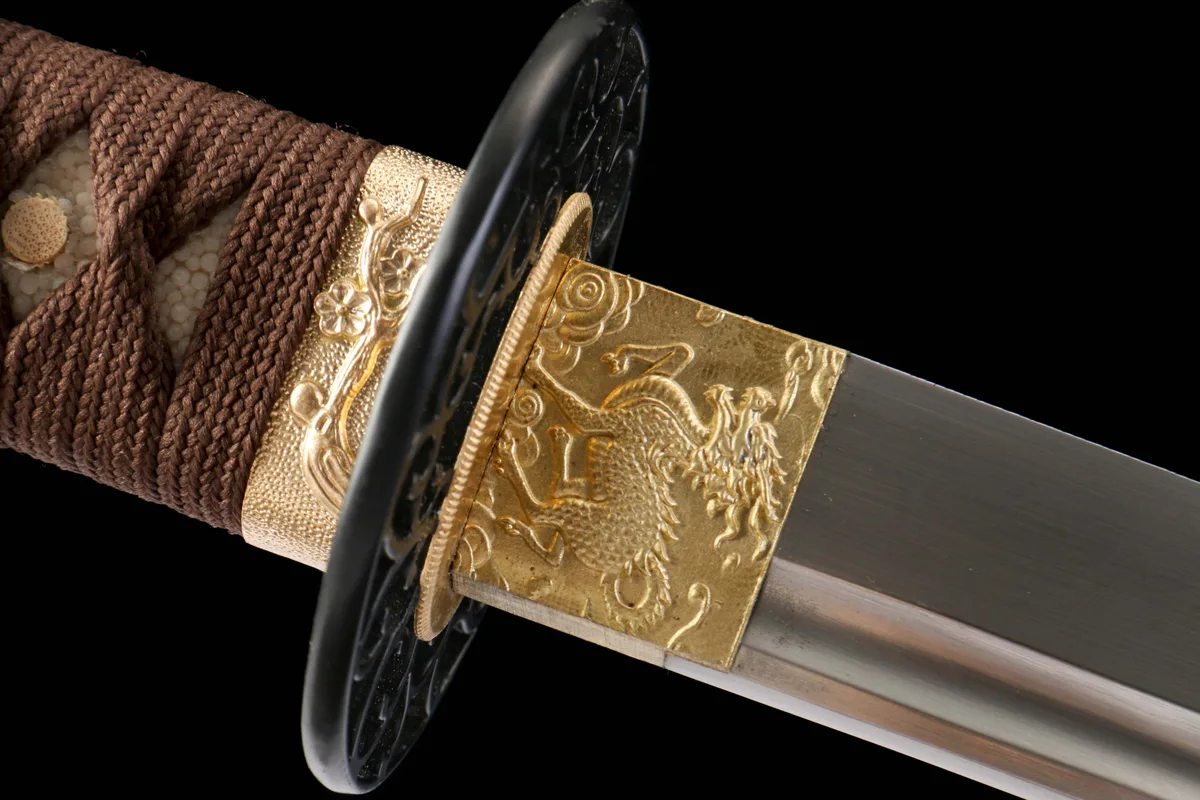
The name announces the blade before you see it. Dark Gold Weave is a T10 clay-tempered katana forged in shinogi-zukuri (ridge-line) geometry, the classical raised-spine profile that has defined the Japanese longsword for centuries. The iron fittings are kept deliberately austere – every visual decision here directs your eye to the one thing that earns its authority: the hamon that runs the full 72 cm of this blade, active and restless and impossible to replicate exactly twice.
Specifications
| Blade Steel | T10 High Speed Tool Steel |
| Total Length | 102.0 cm / 40.2 in |
| Blade Length | 72.0 cm / 28.3 in |
| Blade Width | 3.2 cm |
| Blade Thickness | 0.7 cm |
| Weight | 1040 g / 36.7 oz |
| Heat Treatment | Clay Tempering (Differential Hardening) |
| Fittings | Iron |
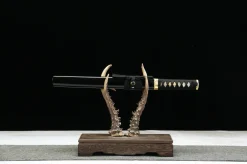
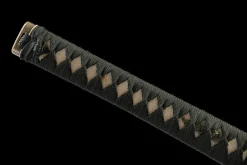
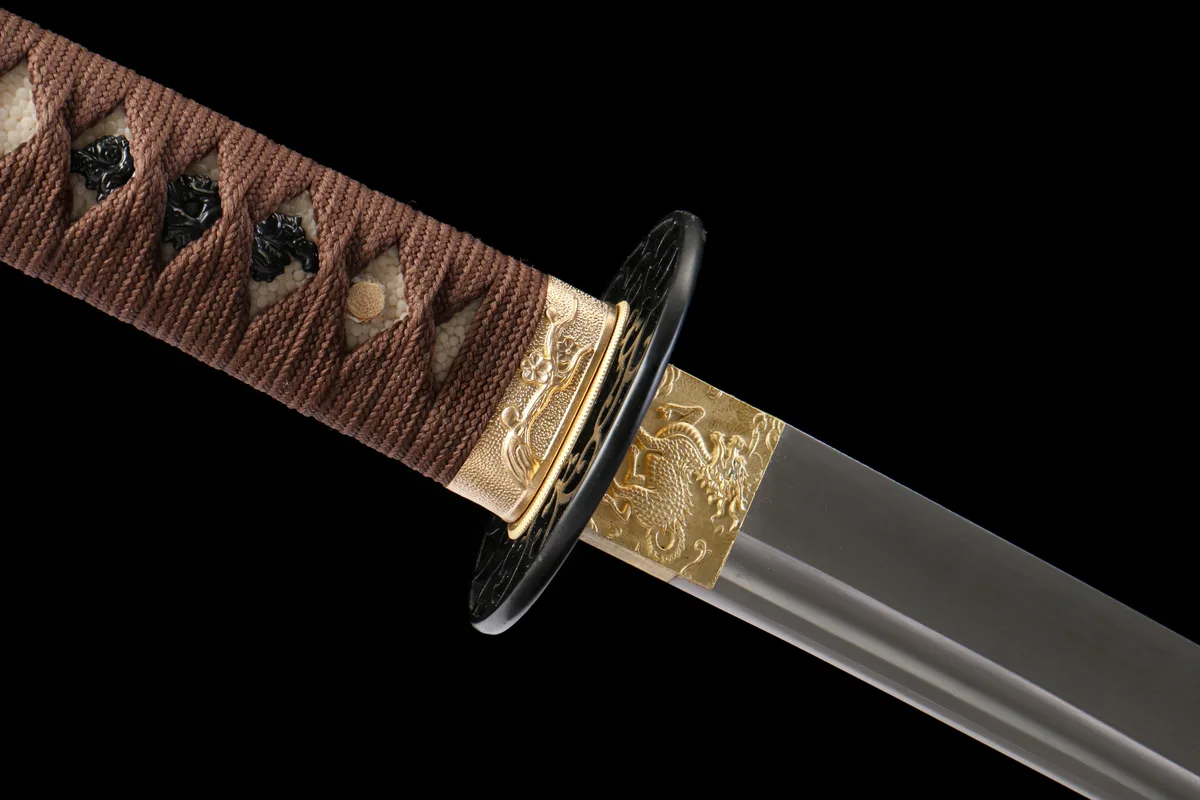
| Handle | Cotton Ito + Genuine Rayskin |
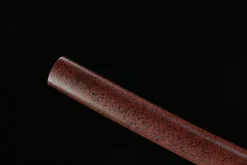
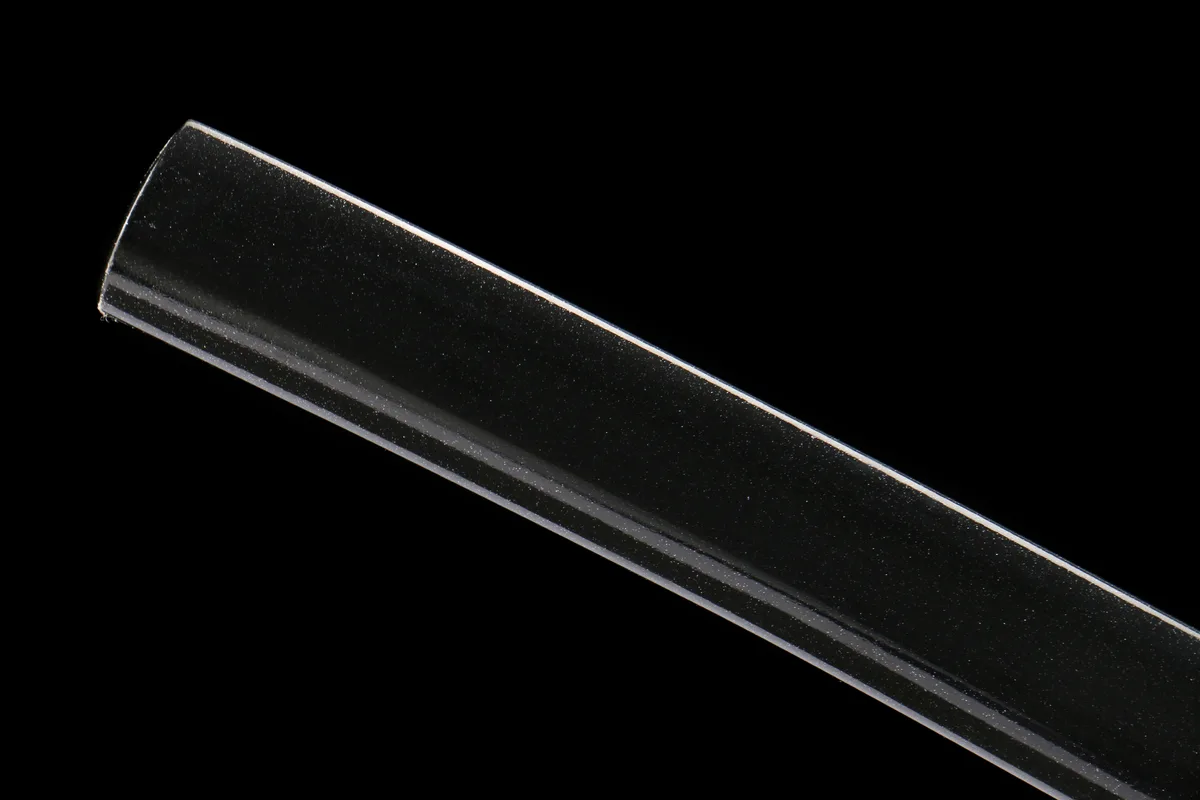
| Sheath | Hardwood, High-Gloss Lacquer |
The Steel
T10 tool steel is not simply high-carbon steel with a different label. The tungsten content – small in proportion but significant in effect – tightens the grain structure and increases wear resistance at the edge. When this alloy is brought to temperature and quenched with clay on the spine, the differential cooling produces a hardened ha (cutting edge) that sits in the Rockwell 60-62 range, while the mune (spine) remains in the mid-40s – tough enough to absorb lateral stress without fracturing. This is the same metallurgical logic that Japanese swordsmiths worked toward through centuries of empirical refinement. Here it is executed with modern consistency and measured precision.
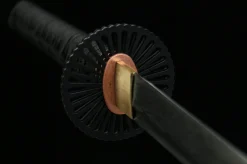
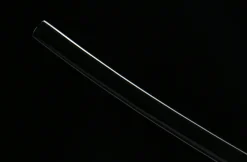
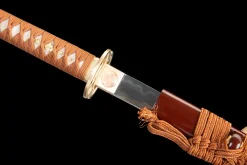
The hamon on this blade is the detail that will hold your attention longest. Clay tempering on T10 produces nie – the visible crystalline activity in the transition zone between hard and soft steel – and on this particular blade, the habuchi (the hamon’s border) shows the irregular, cloud-like activity that collectors describe as gunome or notare. No two firings produce the same line. What you see on this blade will not appear on any other blade with this name. The dark oxidized iron of the tsuba (hand guard) and fittings creates a tonal frame that lets the bright steel of the hamon read cleanly against the blade’s polished surface.
In Your Hands
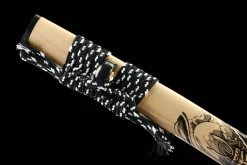
The tsuka (handle) runs 26 cm, wrapped in cotton ito over genuine rayskin (same) in the traditional diamond pattern that provides purchase under any condition. The same-gawa nodes press through the ito at each open diamond, creating a grip texture that is tactile and immediately readable to the hand. The 102 cm overall length places this in the standard daito (long sword) range. Draw from the high-gloss lacquered hardwood saya is clean and controlled – the koiguchi (mouth of the sheath) fitted precisely enough to hold the blade secure with a whisper of resistance that releases without binding.
Care
After each handling session, wipe the blade with a soft, lint-free cloth to remove fingerprint oils. Apply a light coat of choji oil (clove-scented mineral oil, traditional blade preservative) every few months, or more frequently in humid climates. Keep the blade seated in the saya when not in use to protect the edge geometry and the polished surface.
| Weight | 1.32 lbs |
|---|---|
| Dimensions | 102.0 × 3.2 × 0.7 in |
| Hamon | Real Hamon (Clay Tempered) |
| Blade Steel | T10 Tool Steel |
| Total Length | 102.0 cm |
| Blade Length | 72.0 cm |
| Heat Treatment | Clay Tempering (Differential Hardening) |
| Handle Wrap | Cotton Ito + Genuine Rayskin |
| Sheath Material | Hardwood (High-Gloss Lacquer) |
| Fittings | Iron |
| Forging Style | 鎬造 |
Related products