

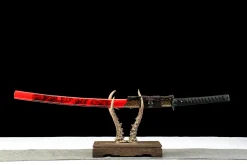


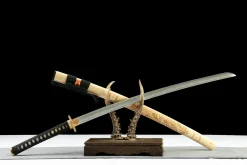
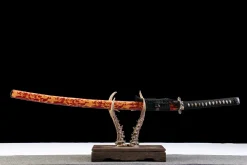



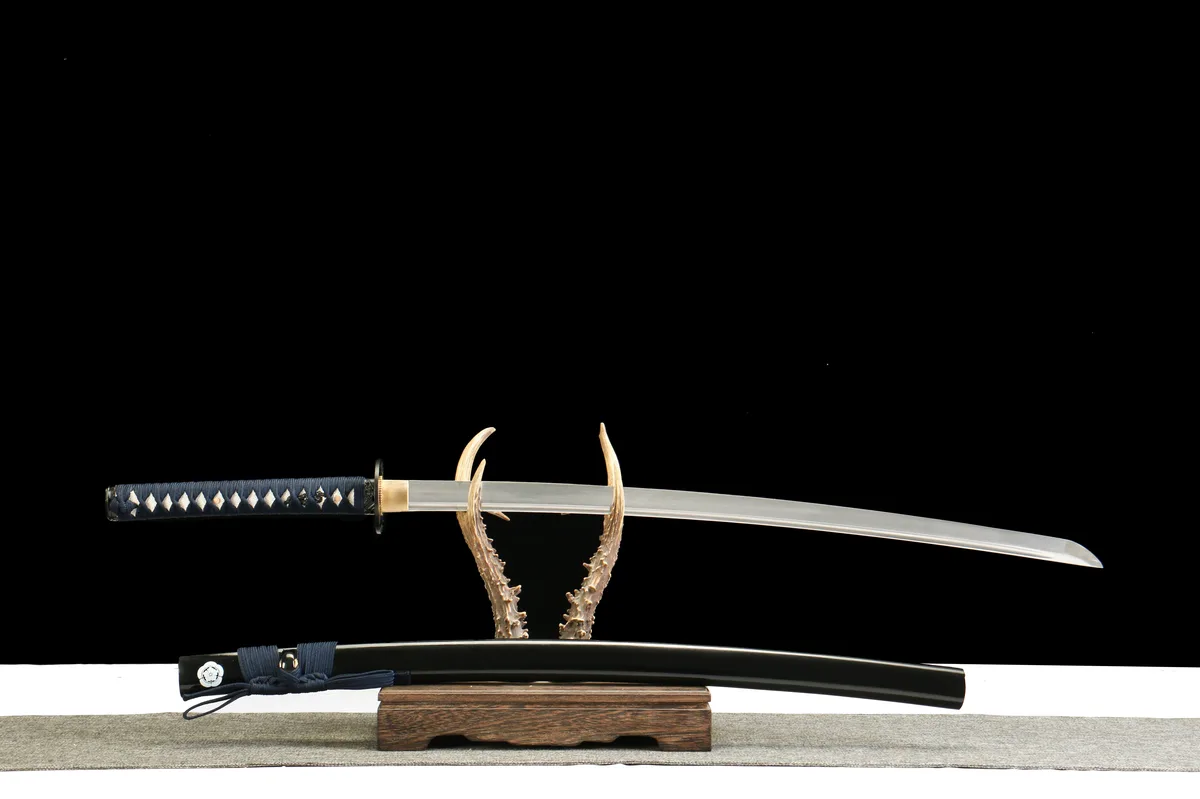


Dark Tide – Hand Forged 1065 Carbon Steel Katana Sword
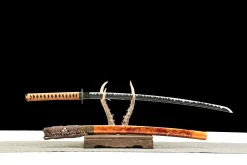
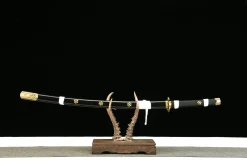
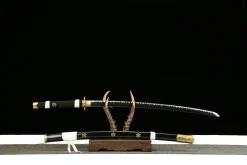
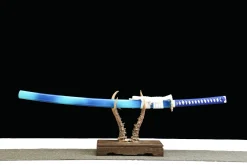
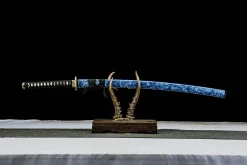
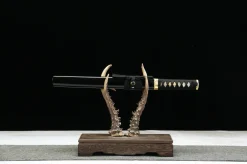
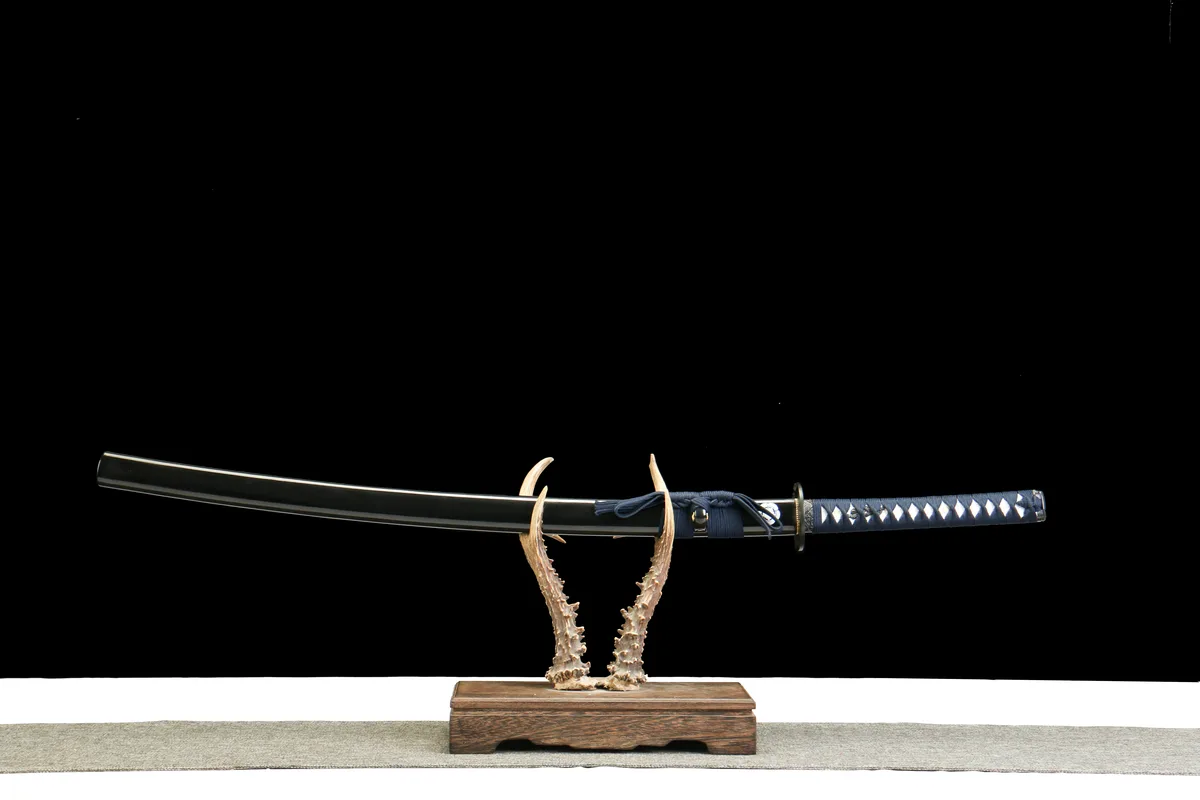
Hand-forged 1065 Carbon Steel katana (103cm total / 72cm blade), crafted in Longquan. Full-tang construction with traditional fittings and hand-lacquered saya.
$199.99
Dark Tide – Hand Forged 1065 Carbon Steel Katana Sword
1065 high-carbon steel occupies a deliberate position in the blade steel spectrum – harder than the structural steels, tough enough under sustained lateral stress to avoid the brittleness that plagues higher-carbon alloys when pushed hard. The Dark Tide is built at that exact balance point, and it shows in how the blade is set up from edge to spine.
Specifications
| Blade Steel | 1065 High Carbon Steel |
| Total Length | 103.0 cm / 40.6 in |
| Blade Length | 72.0 cm / 28.3 in |
| Blade Width | 3.2 cm |
| Weight | 950 g / 33.5 oz |
| Heat Treatment | Oil Quench and Temper |
| Fittings | Iron |
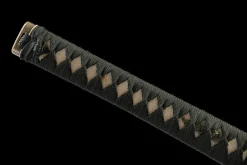
| Handle | Cotton Ito Wrap |
| Sheath | Green Bark Wood (Aohada) |
What the Steel Does
1065 steel – 0.65% carbon by weight – oil-quenches to a Rockwell hardness in the range well-suited for edge retention without sacrificing the toughness that a working blade demands. The oil quench, compared to a water quench, produces a controlled, even thermal draw-down that reduces the risk of warping and internal stress fractures during the hardening phase. The subsequent temper cycle at controlled temperature brings the edge back from maximum brittleness to a hardness that will hold geometry under repeated stress rather than chipping or rolling. This is a blade that has been heat-treated for use, not for appearance.
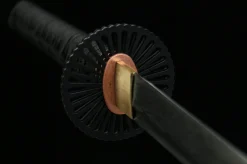
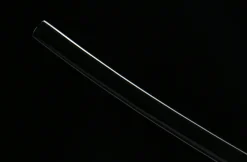
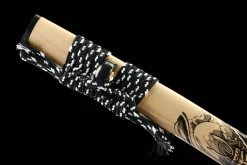
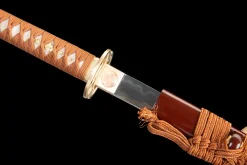
The shinogi-zukuri profile – the ridgeline cross-section that defines the traditional katana geometry – gives the Dark Tide its edge bevel geometry and its structural cross-section. The shinogi (ridge line) provides a thicker spine-side cross-section for rigidity while allowing the ha (edge side) to be thinned down to a capable edge geometry. The iron fittings – tsuba (handguard), fuchi (collar), and kashira (pommel) – are appropriate for a working blade. Iron tsuba have historical precedent precisely because iron handles impact and repeated use without the failure modes of softer alloys.
The Feel of It
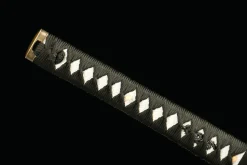
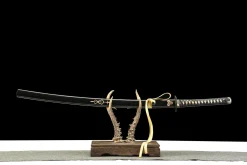
The 27.0 cm tsuka (handle) is wrapped in cotton ito in the traditional lozenge pattern, and at that handle length, the grip gives both hands room to seat properly – the rear hand controlling power, the forward hand controlling direction. The cotton ito is wound tightly, each diamond lozenge firm and defined under the fingers with no lateral play. The draw from the green aohada saya is positive and clean, the blade clearing the saya mouth without drag. At 72.0 cm of blade length, the Dark Tide has the reach geometry of a full katana, and the shinogi-zukuri profile means that geometry is not wasted – the blade is set up to move through a proper arc rather than to sit still.
Maintenance Notes
Wipe the blade with a clean cloth after every session, removing moisture and skin oils before they have time to initiate oxidation on the carbon steel surface. Re-apply a light coat of choji oil after cleaning, particularly if the blade has been handled extensively or exposed to any humidity. Inspect the edge geometry periodically – 1065 steel holds its edge well, but a blade that is used should be maintained on a regular schedule with appropriate sharpening tools.
| Weight | 1.2 lbs |
|---|---|
| Dimensions | 103.0 × 3.2 × 0.7 in |
| Hamon | Decorative / Acid-Etched |
| Blade Steel | 1065 Carbon Steel |
| Total Length | 103.0 cm |
| Blade Length | 72.0 cm |
| Heat Treatment | Oil Quench & Temper |
| Handle Wrap | Cotton Ito Wrap |
| Sheath Material | Green Bark Wood (Aohada) |
| Fittings | Iron, (装) |
| Forging Style | Shinogi-Zukuri (Ridgeline) |
Related products