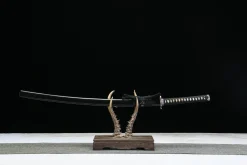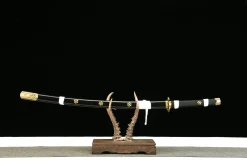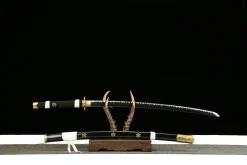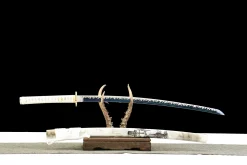








Deep Abyss – Hand Forged T10 Tool Steel Katana Sword
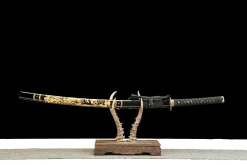
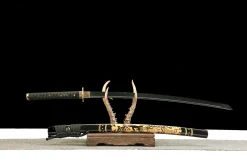
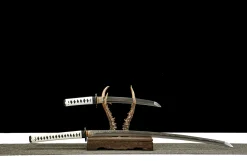
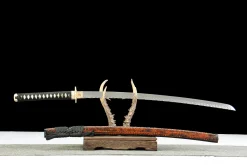
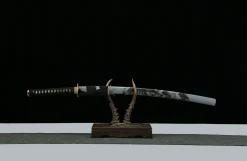
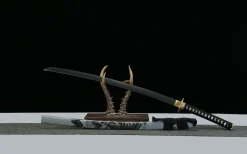
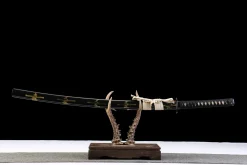
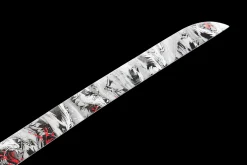
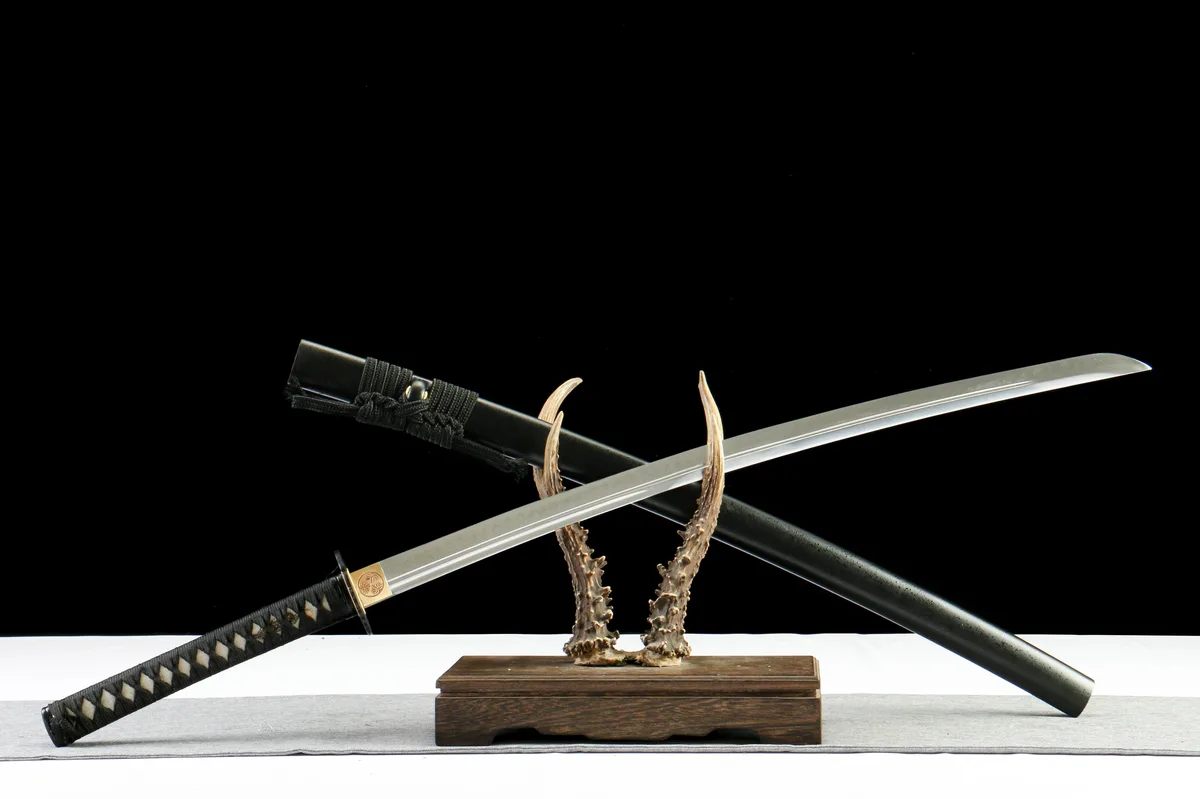
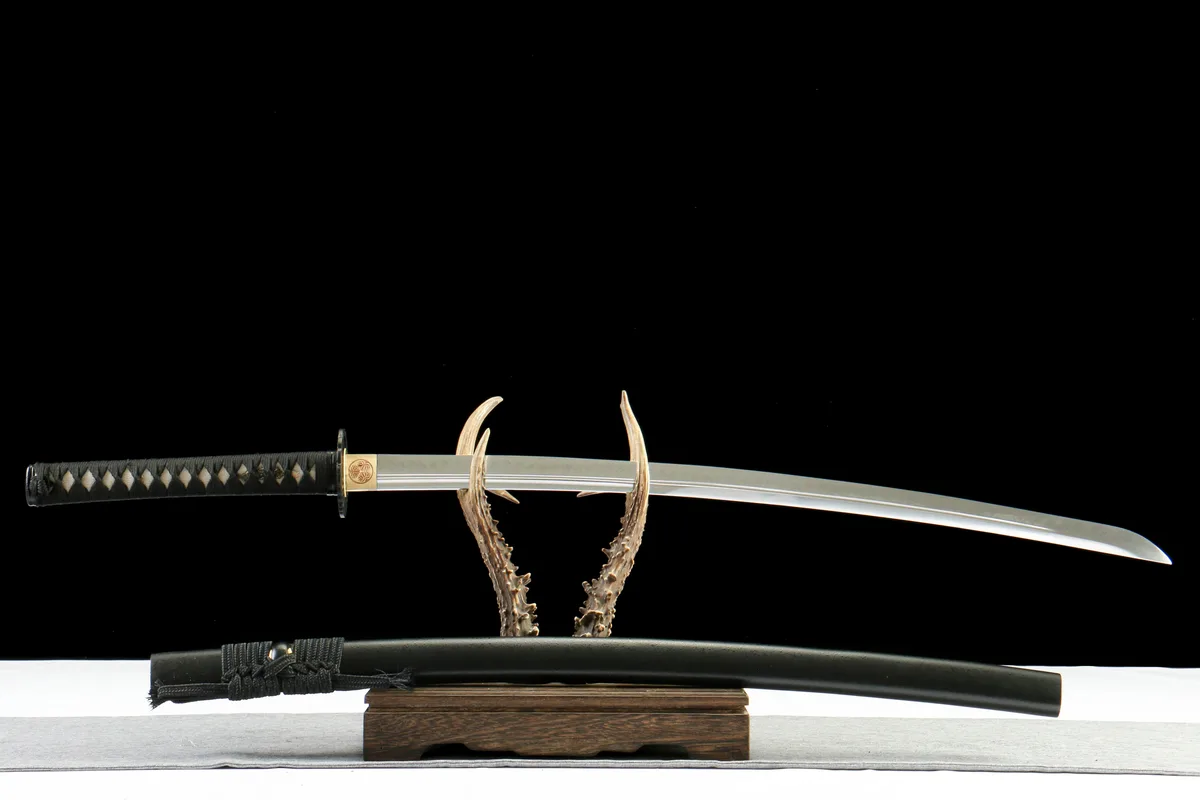
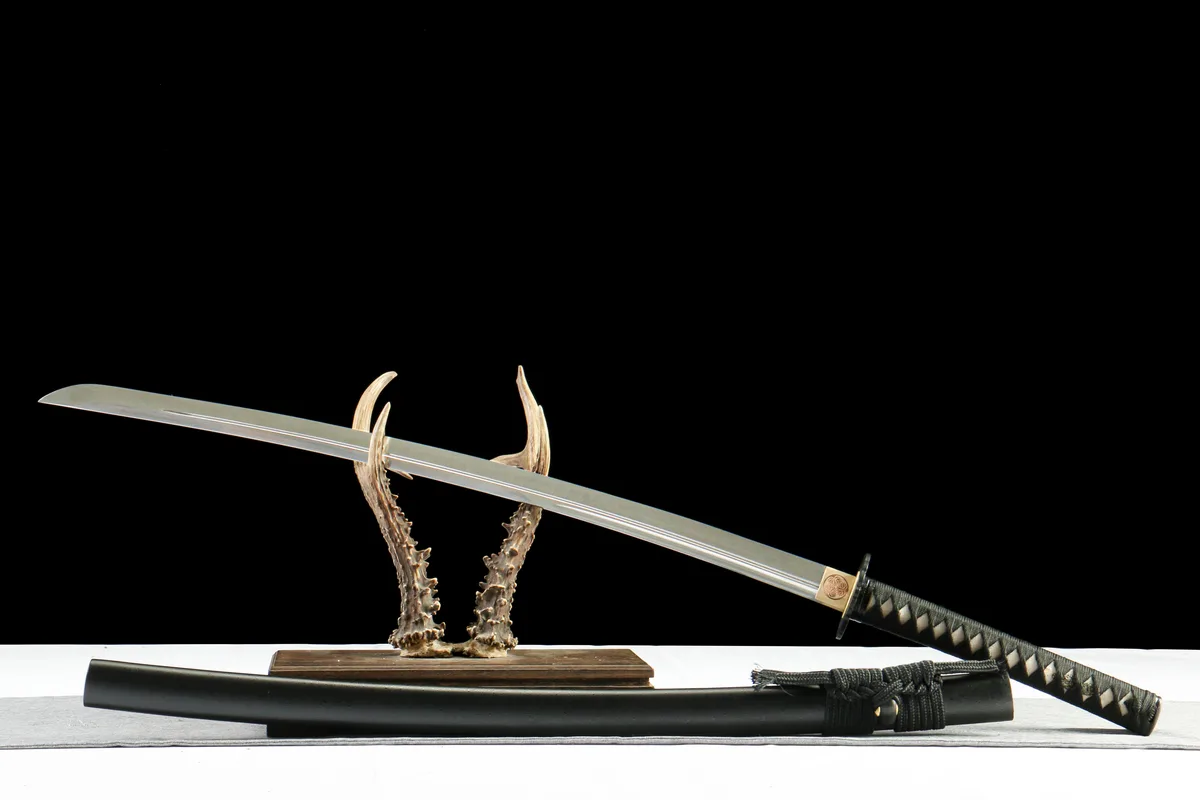
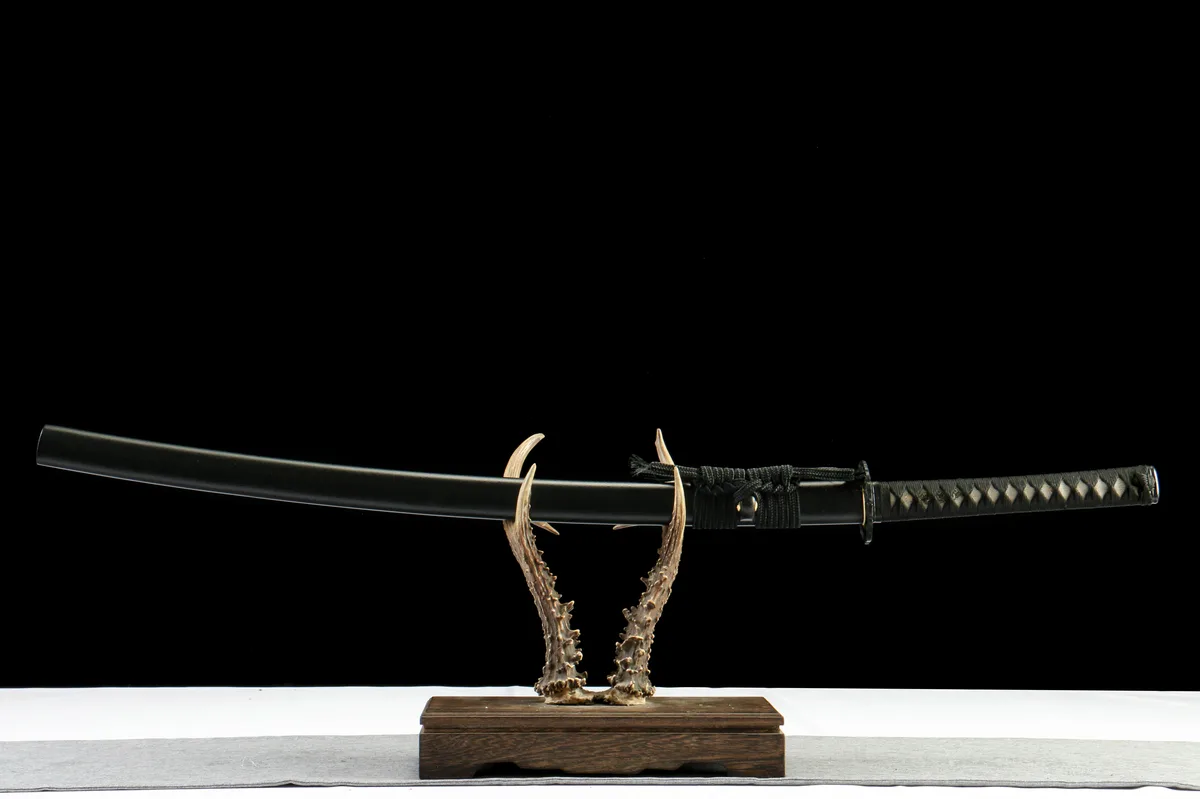
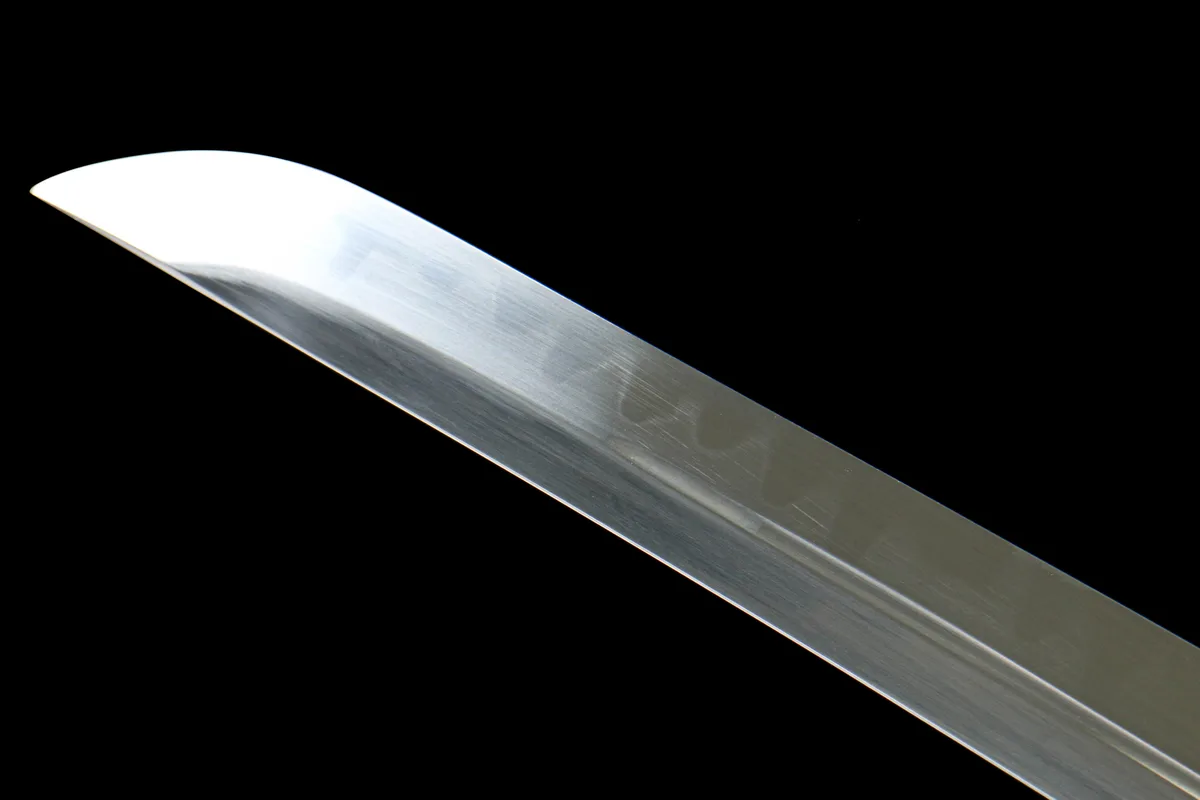
Hand-forged T10 Tool Steel katana (102cm total / 72cm blade), crafted in Longquan. Clay-tempered blade with a genuine hamon line — visible contrast between hardened edge and soft spine.
$419.99
Deep Abyss – Hand Forged T10 Tool Steel Katana Sword
There is a quality of depth that appears in a well-executed T10 clay temper that has no exact equivalent in other production methods – not the flat, even brightness of a machine-polished edge, but a layered visual field where the hamon sits below the surface of the steel like light caught in still water. The Deep Abyss takes its name from precisely this quality. Iron fittings, a high-gloss black saya, and a blade whose hamon reads against dark context: this is a katana built around contrast, restraint, and the kind of craft that reveals itself slowly.
Specifications
| Blade Steel | T10 High Speed Tool Steel |
| Total Length | 102.0 cm / 40.2 in |
| Blade Length | 72.0 cm / 28.3 in |
| Blade Width | 3.2 cm |
| Blade Thickness | 0.7 cm |
| Weight | 1040 g / 36.7 oz |
| Heat Treatment | Clay Tempering (Differential Hardening) |
| Fittings | Iron |
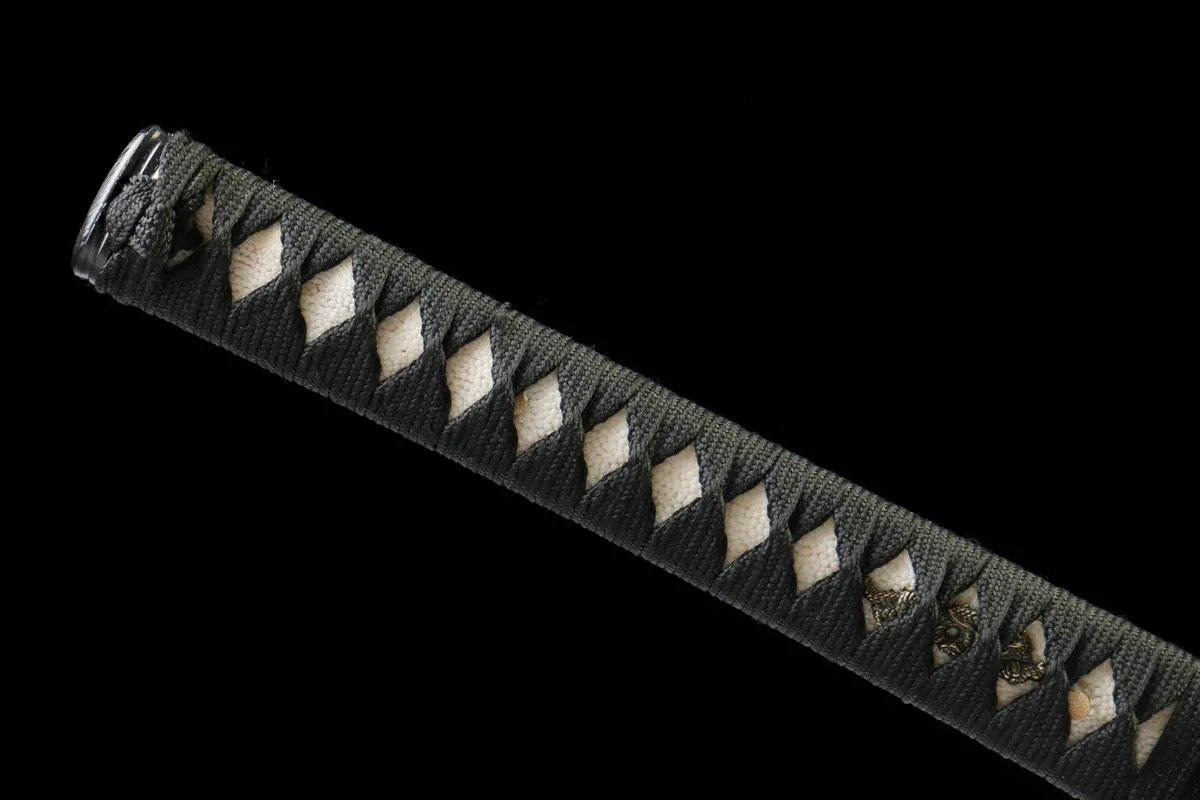
| Handle | Cotton Ito + Genuine Rayskin |
| Sheath | Hardwood (High-Gloss Lacquer) |
Steel & Construction
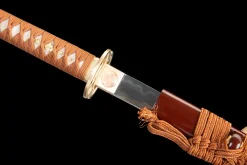
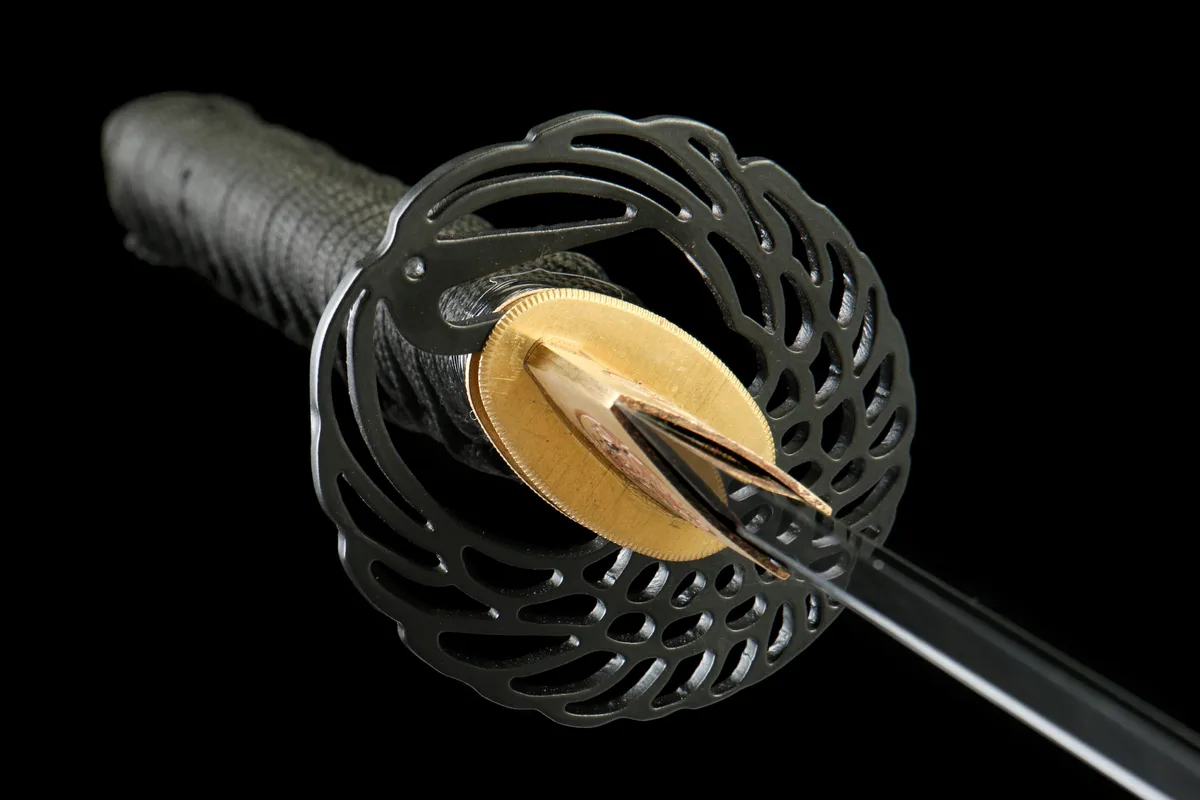
T10 tool steel is tungsten-bearing high carbon steel – the tungsten refines the grain structure and significantly raises wear resistance, which is why T10 occupies a position above standard 1095 or 1060 in serious collector and practitioner discussions. Clay tempering on T10 works the way traditional Japanese swordsmiths understood differential hardening to work: a thick clay coating on the mune (spine) insulates it from the quench, while the exposed ha (edge) drops in temperature rapidly enough to convert to martensite. The result is a blade with a hard, fine-grained edge and a tougher, more impact-resistant spine – not a compromise between hardness and flexibility, but both, simultaneously, in the same piece of steel. The hamon is the visible record of that process. On this blade, the iron tsuba (handguard) and iron fuchi-kashira (handle collar and pommel) carry a restrained, matte-dark presence that frames the polished blade without competing with it.
The shinogi-zukuri (ridgeline) construction – the defining geometry of classical Japanese swordwork – runs the full 72 cm, the shinogi line dividing the ji (body of the blade) from the edge bevel and creating the structural ridge that gives this profile its exceptional resistance to lateral loading. The nie (individual martensite crystals at the hamon boundary) and the overall habuchi (the hamon’s edge zone character) on a T10 blade of this specification tend to be nuanced: not the coarse, high-contrast temper line of a simpler steel, but something finer and more intricate, shifting in apparent width and texture as the angle of light changes across the blade surface.
Handling
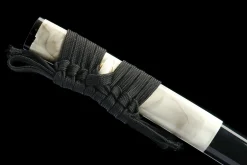
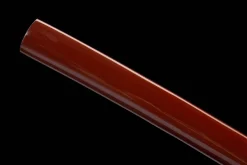
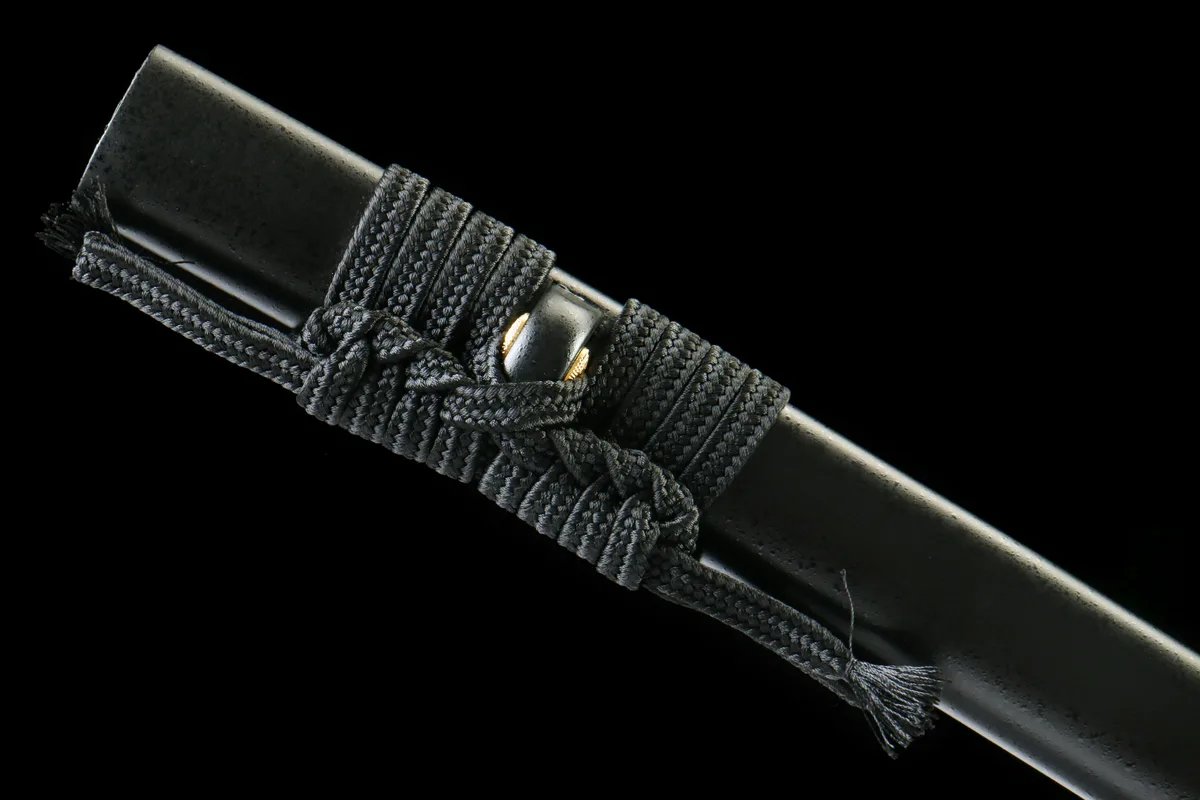
The 26 cm handle on a 102 cm total length places this blade in classical daito proportions. The cotton ito (handle wrap) is seated over genuine same (rayskin) – the rayskin’s calcified nodule surface gripping the underside of the wrap and preventing rotation under load in a way that smooth wood or synthetic materials do not. The diamonds formed by the crossed ito compress slightly at each crossing point, giving the hand consistent tactile reference along the full grip length. The iron tsuba provides a firm, dense forward stop – iron at the guard reads differently from brass or zinc, heavier and more immediate in contact. The high-gloss lacquered saya (scabbard) draws cleanly, the habaki (blade collar) seated with the precise fit that prevents rattle without creating resistance on the draw.
Care Instructions
Apply choji oil or pharmaceutical-grade mineral oil to the blade surface after every session, working from habaki to kissaki (tip) with a soft cloth and removing any excess – a thin, even film is sufficient and preferable to a heavy coat. The iron fittings are susceptible to surface rust in humid conditions; a very light application of oil to the iron components will protect them, and any surface rust that develops on the fittings can be addressed with fine steel wool used gently. Store horizontally in a dry environment, and inspect the blade monthly if kept in long-term storage.
| Weight | 1.32 lbs |
|---|---|
| Dimensions | 102.0 × 3.2 × 0.7 in |
| Hamon | Real Hamon (Clay Tempered) |
| Blade Steel | T10 Tool Steel |
| Total Length | 102.0 cm |
| Blade Length | 72.0 cm |
| Heat Treatment | Clay Tempering (Differential Hardening) |
| Handle Wrap | Cotton Ito + Genuine Rayskin |
| Sheath Material | Hardwood (High-Gloss Lacquer) |
| Fittings | Iron |
| Forging Style | Shinogi-Zukuri (Ridgeline) |
Related products