





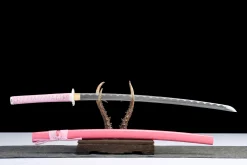



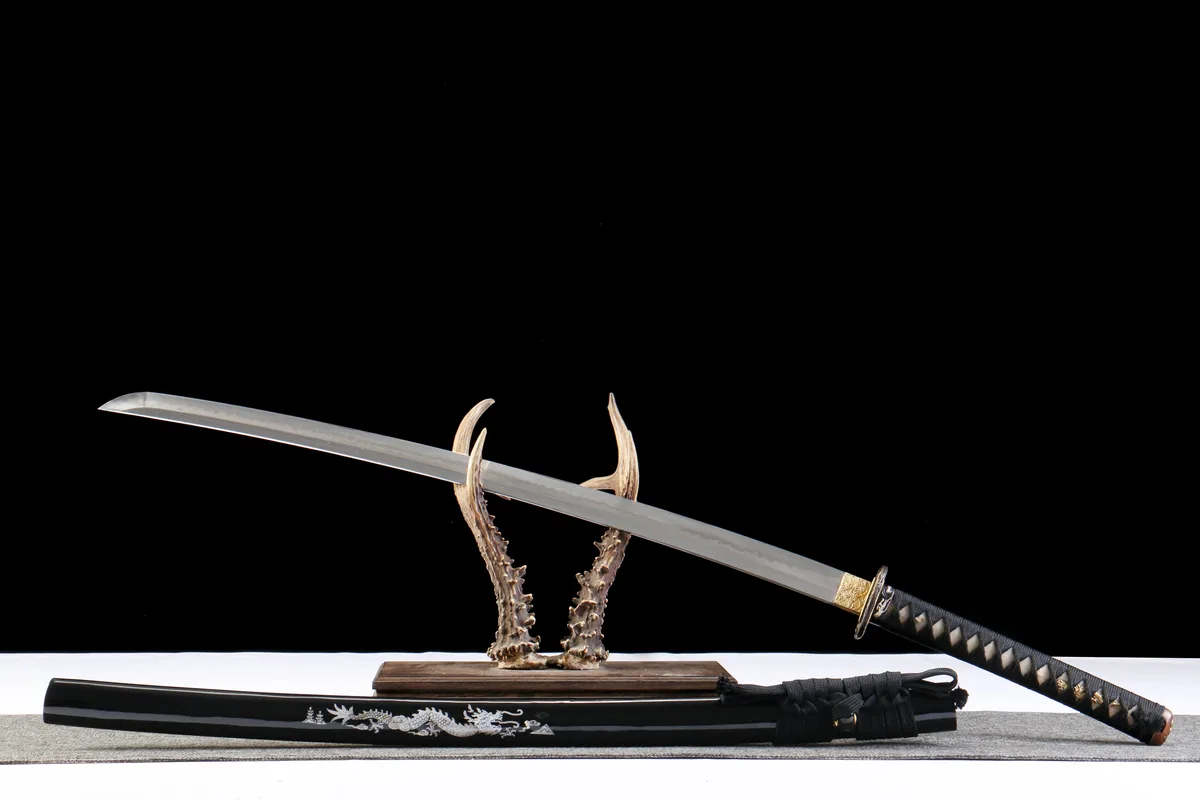


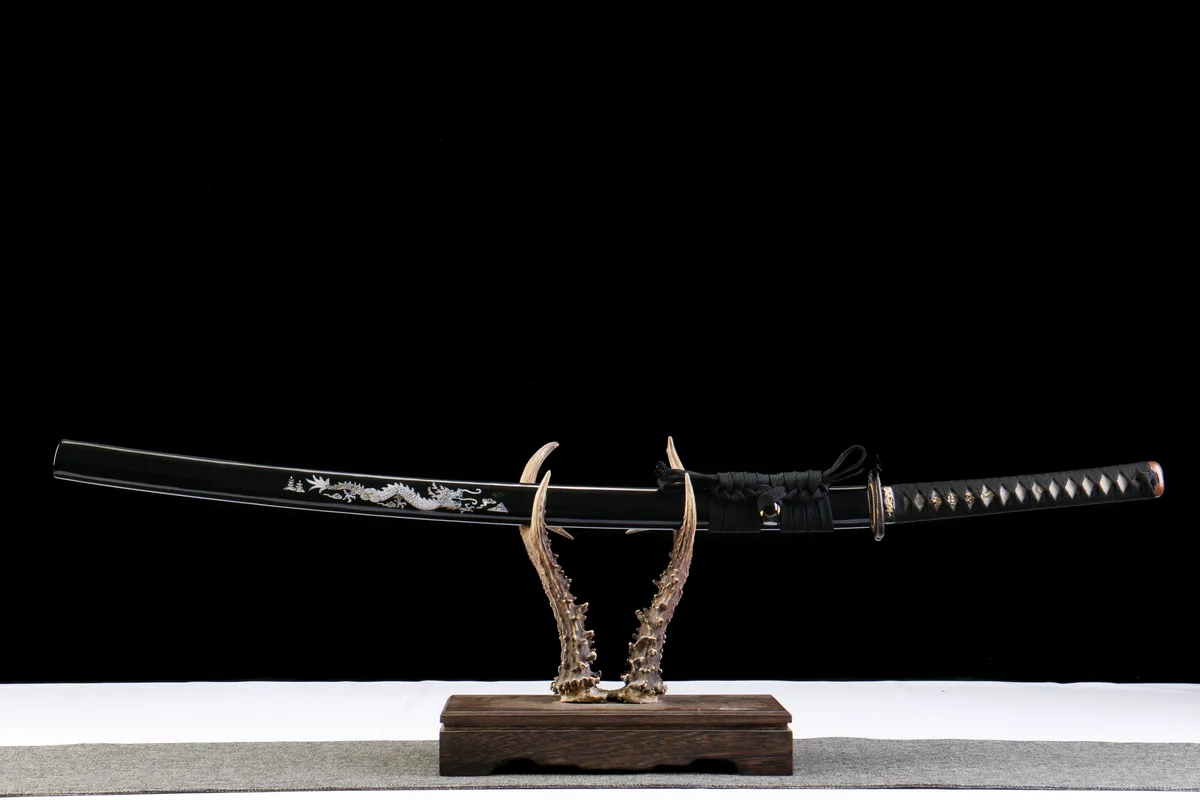




Deep Ocean Gold Thread – Hand Forged T10 Tool Steel Katana Sword
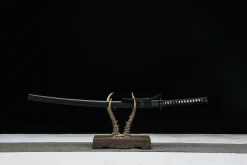
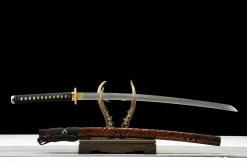
The Deep Ocean Gold Thread is a high-end T10 tool steel katana that earns its $525 price through a breathtaking combination of craftsmanship: a genuine clay-tempered blade with a natural choji hamon (clove-flower temper line) produced through traditional differential hardening, paired with extraordinarily rare gold-and-silver gilt copper fittings (鎏金银) that shimmer like light through deep water. Forged in the classical shinogi-zukuri ridgeline profile — the definitive geometry of the samurai sword — this katana is both a formidable cutting instrument and a display piece of museum-worthy visual sophistication. No two clay-tempered blades are identical; the hamon on your sword exists nowhere else on earth.
Specifications
| Blade Steel | T10 High Speed Tool Steel |
| Total Length | 102.0 cm / 40.2 inches |
| Blade Length | 72.0 cm / 28.3 inches |
| Blade Width | 3.2 cm |
| Weight | 1040 g / 36.7 oz (net) |
| Heat Treatment | Clay Tempering (Differential Hardening) |
| Fittings | Gilt Gold & Silver Copper (鎏金银) |
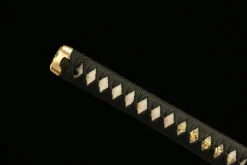
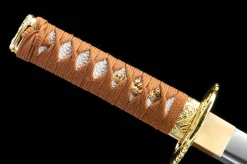
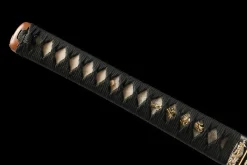
| Handle | Cotton Ito + Genuine Rayskin |
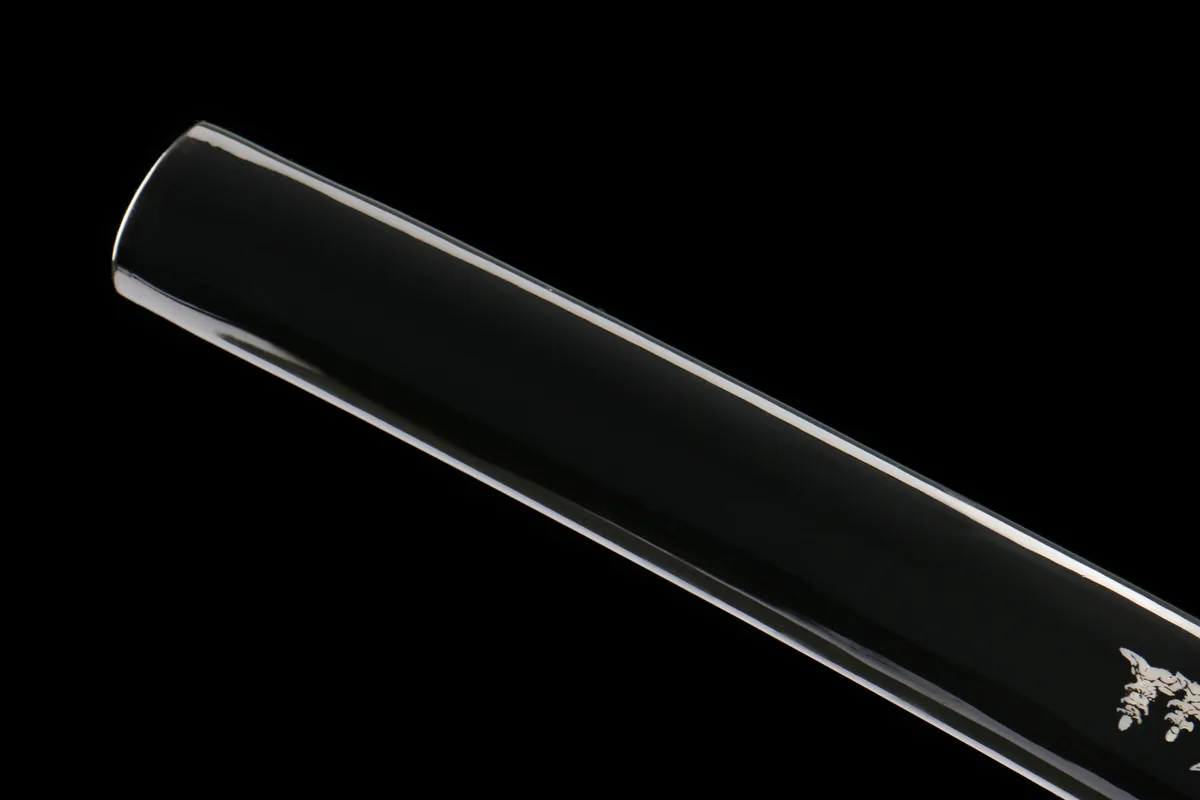
| Sheath | Hardwood (High-Gloss Lacquer) |
Craftsmanship & Materials
T10 tool steel — known in Chinese smithing circles as 碳素工具钢 — is a tungsten-alloyed high carbon steel that occupies the upper tier of functional sword materials. Its elevated carbon content (approximately 1.0%) combined with trace tungsten gives T10 exceptional wear resistance and the ability to take and hold a razor edge far beyond what standard 1060 or 1065 steels can achieve. This superior edge performance comes with a tradeoff: T10 demands more skill from the swordsmith and more attentive care from its owner, making it the steel of choice for intermediate to advanced practitioners who understand and appreciate the commitment they are making.
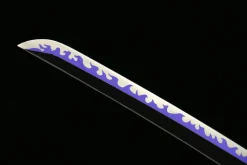
The defining feature of this blade is its authentic clay tempering (土置き, or 覆土焼き in the Japanese tradition). Before quenching, Longquan’s master smiths apply a carefully mixed refractory clay paste in a choji (clove-flower) pattern along the spine and sides of the blade, leaving the edge exposed. When the blade is plunged into the quench, the exposed edge hardens to a high Rockwell C value while the clay-insulated spine remains relatively soft and tough. The boundary between these two zones becomes the hamon — a flowing, organic line of crystalline activity visible under raking light, unique to every single blade that passes through this process.
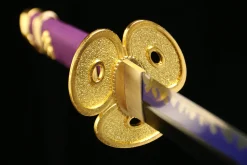
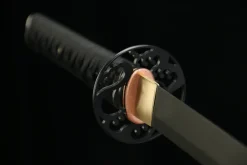
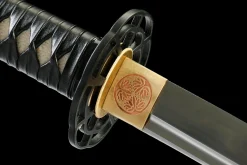
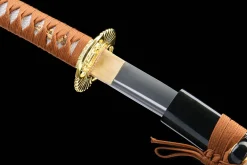
The fittings on the Deep Ocean Gold Thread are the true jewels of this sword. The tsuba, fuchi, kashira, and habaki are crafted from copper and then finished with a traditional liújīn (鎏金) gilding process — an ancient Chinese technique in which gold and silver are dissolved in mercury, applied to the copper surface, and then fired to drive off the mercury, leaving a bonded metallic sheen that does not peel or flake. The result is fittings that glow with warm gold and cool silver simultaneously, perfectly complementing the sword’s lacquered hardwood saya.
Perfect For
- Intermediate to advanced martial artists who have outgrown entry-level steels and are ready for the edge performance and differential hardness that T10 clay tempering provides
- Serious collectors seeking a one-of-a-kind hamon pattern and genuinely rare gilt copper fittings not found at this price point from any other source
- Gifts for the discerning sword enthusiast — the presentation quality of the gold-silver fittings and high-gloss saya makes this an unforgettable gift at the high-end tier
Care & Maintenance
T10 steel’s higher carbon content makes it more susceptible to rust than stainless alternatives — after every use, remove all fingerprints and moisture with a soft nuguigami (wiping paper) and apply choji oil in a thin, even coat before sheathing. The hamon zone, where hardness transitions occur, is particularly sensitive to corrosion if left unprotected. Store the sword horizontally in a low-humidity environment, and re-oil every 30–60 days even when not in active use.
Frequently Asked Questions
What is T10 tool steel and why is it used in high-end katanas?
T10 is a high-speed tungsten-alloyed tool steel with approximately 1.0% carbon content. The tungsten addition improves wear resistance and helps the blade retain a sharper edge longer than standard high carbon steels like 1060 or 1065. The Deep Ocean Gold Thread’s T10 blade, combined with clay tempering, produces a hard, keen cutting edge with a tough, flexible spine — the defining combination sought by serious practitioners and collectors at this tier.
What does clay tempering do to the Deep Ocean Gold Thread’s blade?
Clay tempering (土置き, tsuchidoki) involves coating the spine with clay before quenching, causing differential cooling. The exposed edge hardens rapidly (reaching ~60 HRC), while the clay-insulated spine cools slowly, remaining tough and flexible. This creates the Deep Ocean Gold Thread’s authentic hamon (temper line) — a natural, visible boundary between hard edge and soft spine. This is the same heat treatment used on traditional Japanese nihonto and represents the pinnacle of functional katana metallurgy.
Is the Deep Ocean Gold Thread battle ready and suitable for cutting?
Yes. The Deep Ocean Gold Thread is a fully battle-ready katana. Its clay-tempered T10 steel blade delivers superior edge retention and impact toughness compared to uniformly hardened blades. The genuine rayskin and cotton ito handle provides secure grip during cutting. The gilded copper fittings (铜装鎏金银) are both decorative and structurally sound. This sword is appropriate for serious tameshigiri, iaido, and advanced cutting practice by intermediate to experienced practitioners.
What are the gilded copper fittings (铜装鎏金银) on the Deep Ocean Gold Thread?
The Deep Ocean Gold Thread features copper fittings with gold and silver gilding (鎏金银 — traditional East Asian mercury gilding technique). This process bonds precious metal to the copper substrate, creating a lustrous, corrosion-resistant finish that reflects historical Japanese sword fittings craftsmanship. Far superior to painted zinc alloy, these fittings add significant aesthetic and material value, making this sword equally compelling as a display piece and a functional cutter at the $525 price point.
What do you get spending $525 on the Deep Ocean Gold Thread vs. a $250-$350 katana?
At $525, the Deep Ocean Gold Thread delivers three critical upgrades: (1) T10 steel over 1065 for superior edge retention; (2) authentic clay tempering producing a real, natural hamon and differential hardness; (3) gilded copper fittings (鎏金银) vs. standard iron or plain copper. You’re purchasing both enhanced cutting performance and museum-quality aesthetics. For serious practitioners or collectors wanting a blade that performs and displays at an heirloom level, this investment is well justified.
| Weight | 1.32 lbs |
|---|---|
| Dimensions | 102.0 × 3.2 × 0.7 in |
| Sword Type | Katana |
| Blade Steel | T10 Tool Steel |
| Total Length | 102.0 cm |
| Blade Length | 72.0 cm |
| Heat Treatment | Clay Tempering (Differential Hardening) |
| Handle Wrap | Cotton Ito + Genuine Rayskin |
| Sheath Material | Hardwood (High-Gloss Lacquer) |
| Fittings | 铜装鎏金银 |
| Forging Style | Shinogi-Zukuri (Ridgeline) |
Related products

1045 Carbon Steel
1065 Carbon Steel
1045 Carbon Steel
White Celestial – Hand Forged 1045 Carbon Steel Katana Sword

High Carbon Steel


1065 Carbon Steel

1045 Carbon Steel

1065 Carbon Steel

1045 Carbon Steel
Black Heaven Feather – Hand Forged 1045 Carbon Steel Katana Sword