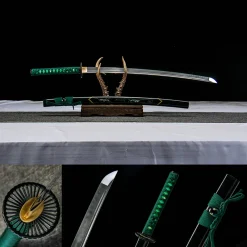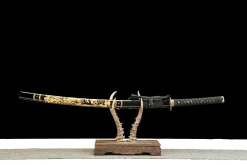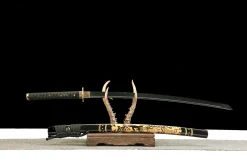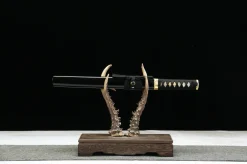


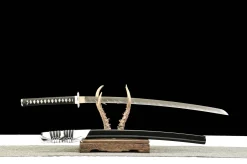

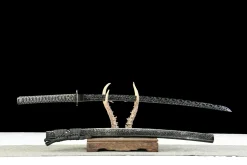



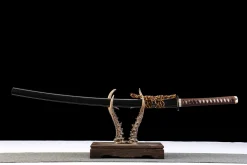




Deep Sea Gold – Hand Forged Clay-Tempered Damascus Steel Katana Sword
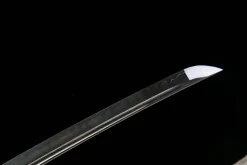
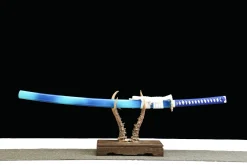
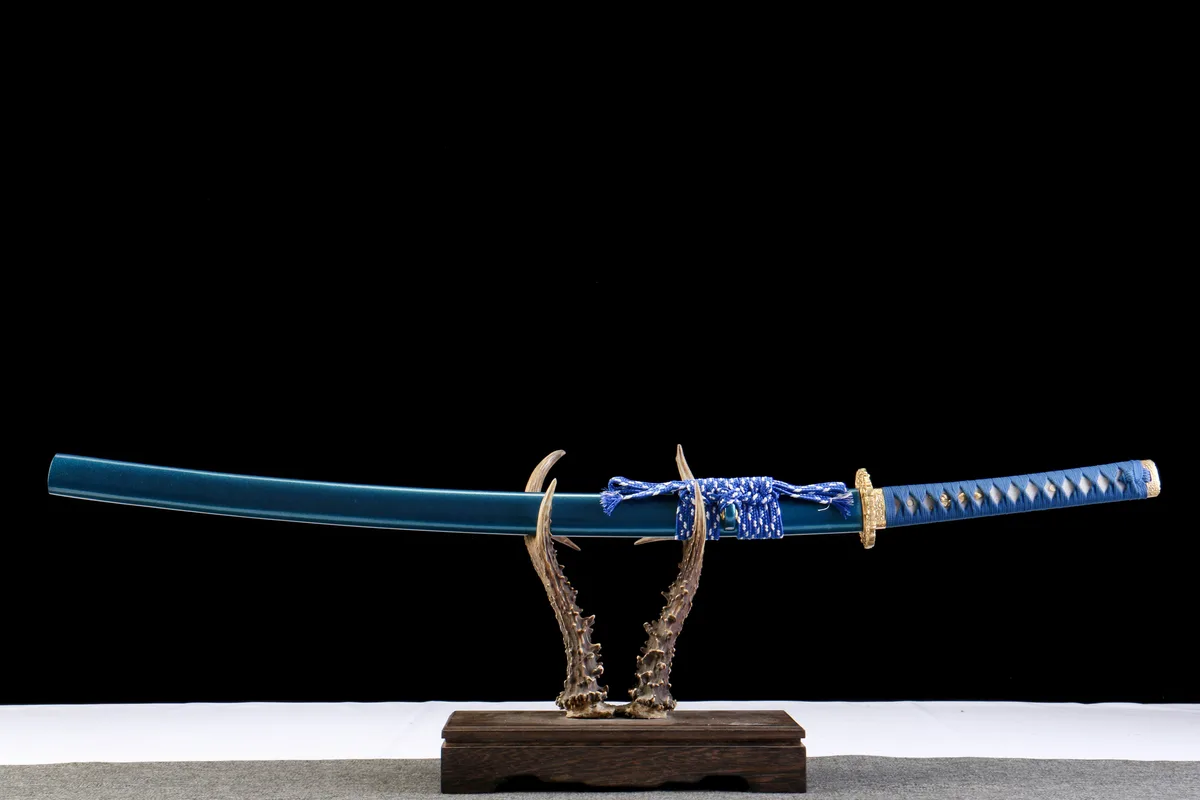
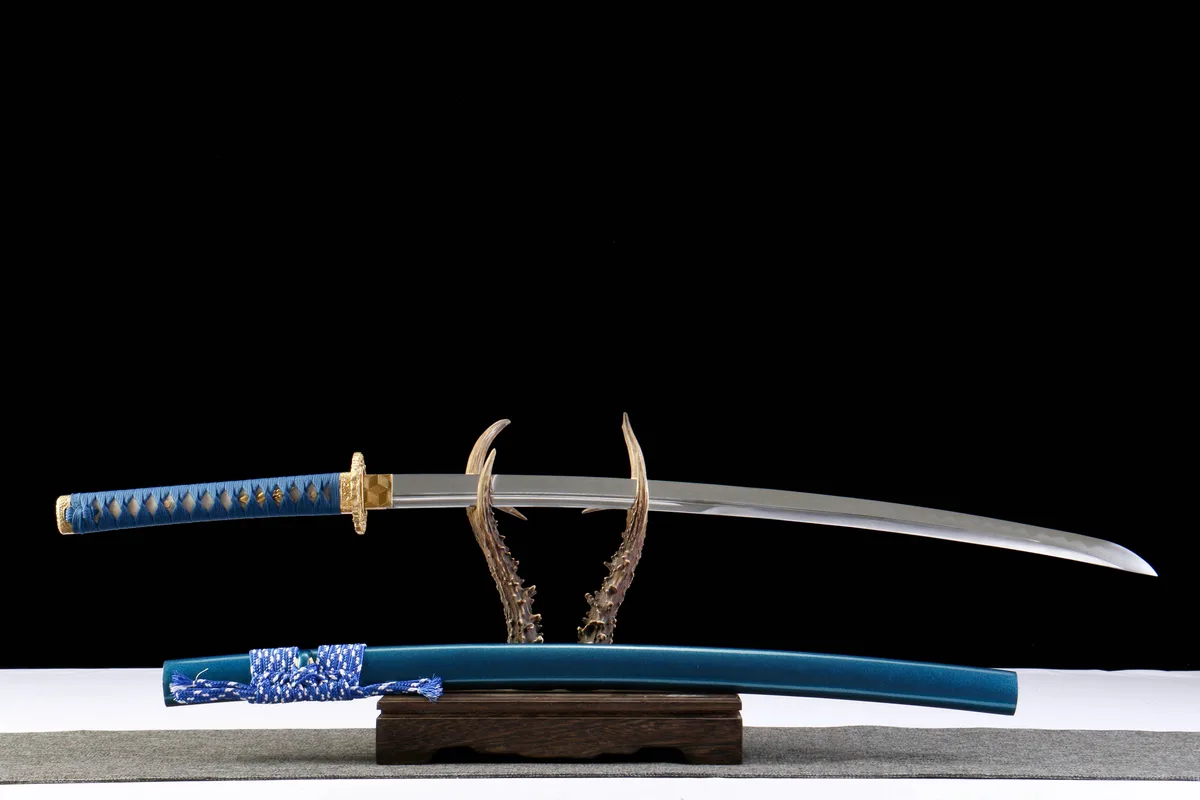
Hand-forged Clay-Tempered Damascus Steel katana (102cm total / 72cm blade), crafted in Longquan. Clay-tempered blade with a genuine hamon line — visible contrast between hardened edge and soft spine.
$599.99
Deep Sea Gold – Hand Forged Clay-Tempered Damascus Steel Katana Sword
The u-no-kubi-zukuri geometry – listed here as 鹈首造, literally “cormorant’s neck” – is one of the rarest forging profiles in the Japanese sword tradition. The blade runs wide and flat from the base, then narrows sharply toward the point in a profile that resembles a bird’s neck diving. It creates an entirely different visual line from the standard shinogi-zukuri, and on a Damascus blade, the pattern-welded grain wraps that geometry in a way that no other construction can produce. This is the blade that makes someone stop walking.
Specifications
| Blade Steel | Damascus / Pattern-Welded Steel |
| Total Length | 102.0 cm / 40.2 in |
| Blade Length | 72.0 cm / 28.3 in |
| Blade Width | 3.2 cm |
| Blade Thickness | 0.7 cm |
| Weight | 1040 g / 36.7 oz |
| Heat Treatment | Clay Tempering (Differential Hardening) |
| Fittings | Copper |
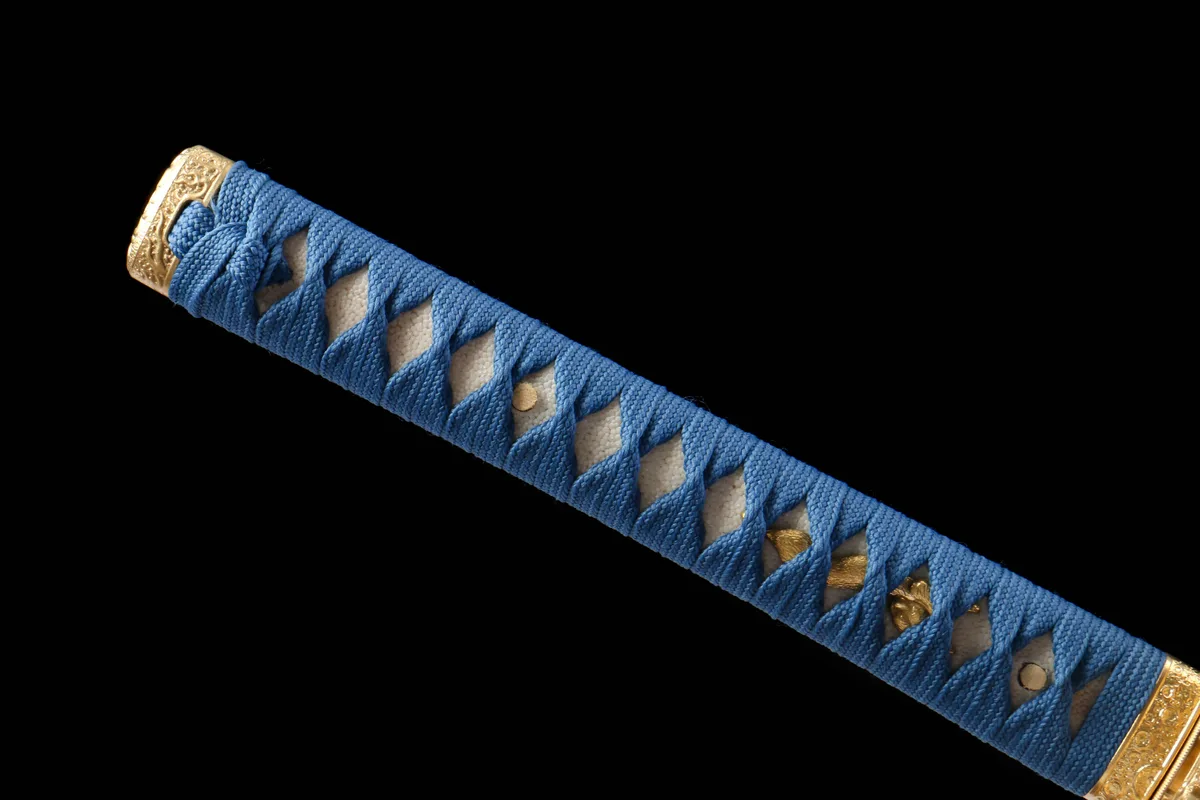
| Handle | Cotton Ito + Genuine Rayskin |
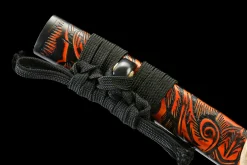
| Sheath | Hardwood, High-Gloss Lacquer |
Steel & Construction
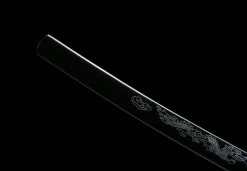
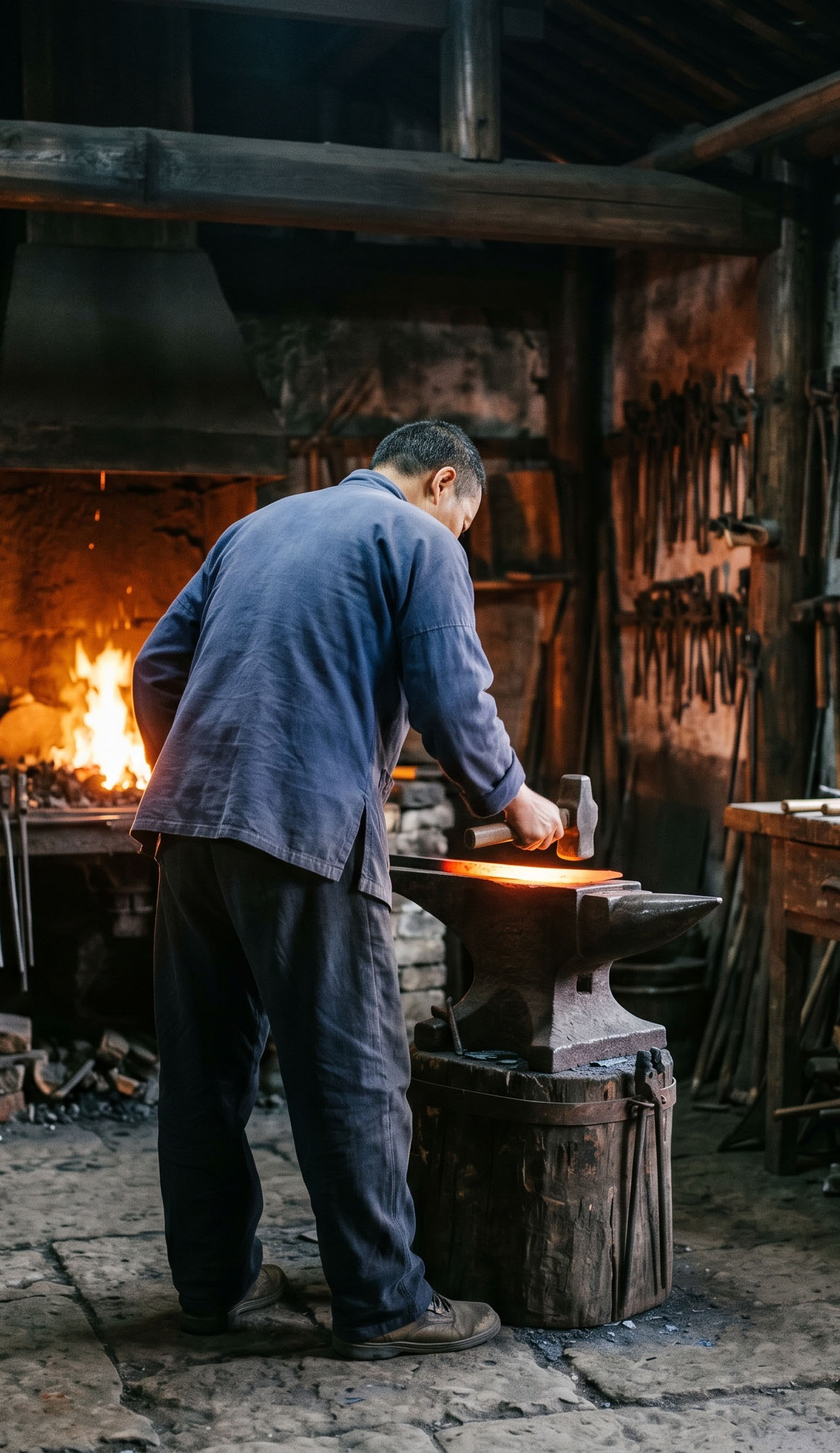
The Damascus used here is pattern-welded steel – multiple layers of high and low carbon steel folded, drawn, and welded under controlled hammer work until the grain becomes the steel’s visual identity. The acid etch that reveals that grain is the final stage of a long process: the high-carbon layers etch dark, the low-carbon layers stay bright, and the pattern that emerges is determined entirely by how the billet was manipulated before it was ever ground into a blade profile. What makes this particular blade’s grain exceptional is the u-no-kubi geometry it rides on. As the blade tapers sharply near the point, the flow lines of the Damascus compress and converge, the pattern tightening toward the tip in a way that reads like current accelerating through a narrowing channel.
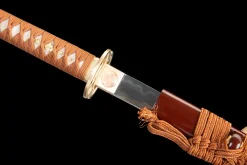
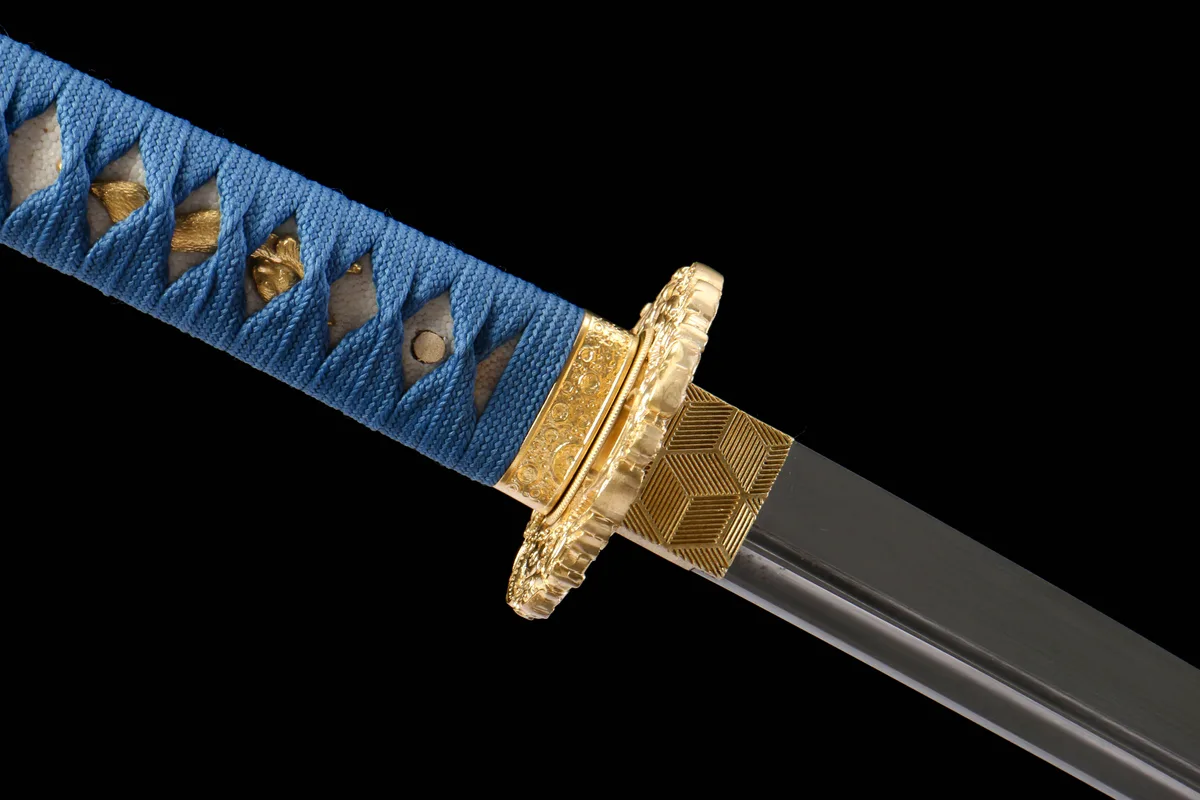
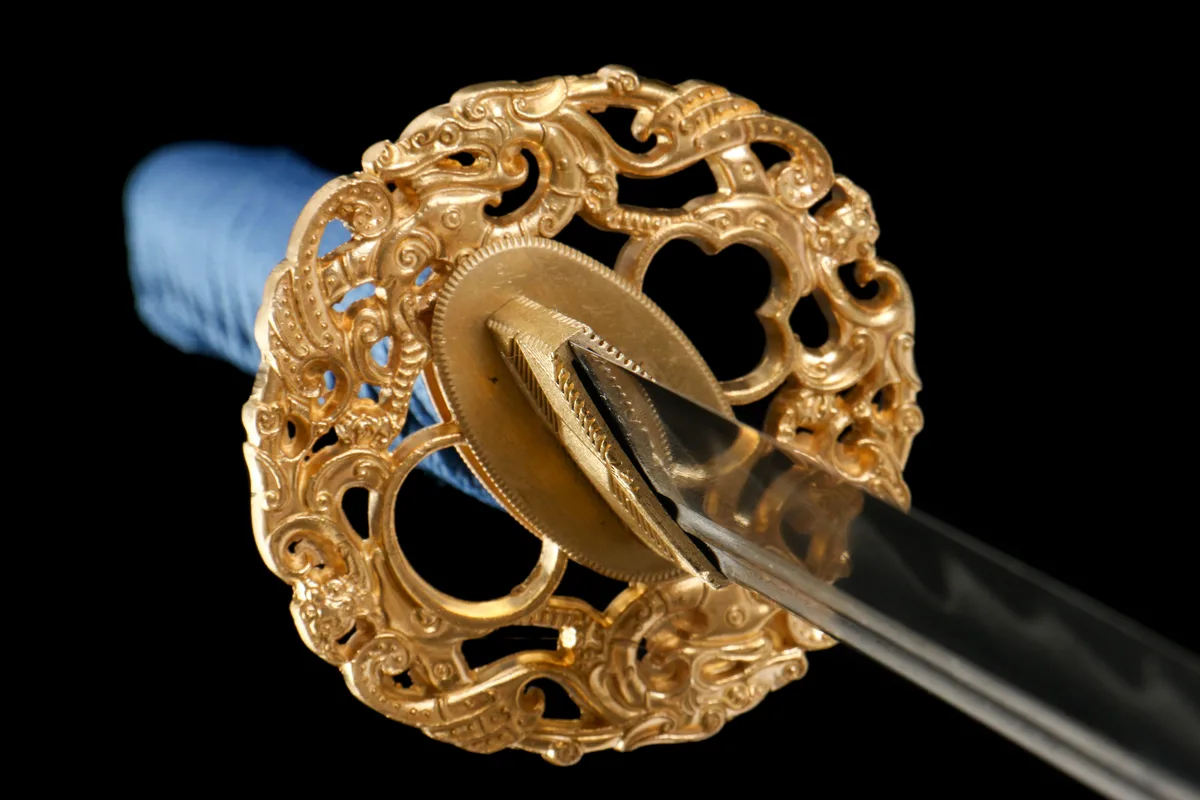
The clay tempering applied to this Damascus blade produces a genuine hamon – the visible boundary line where the edge zone, hardened in the quench, meets the clay-protected spine. On pattern-welded steel, this hamon does not simply overlay the grain: the two interact. The hamon follows the folded layers in places, dips into the valley between a dark layer and a bright one, and creates a visual complexity that a mono-steel blade cannot reproduce. The copper fittings – tsuba (guard), habaki (blade collar), and menuki (handle ornaments) – were chosen for their warm tone, which reads against the etched Damascus without competing with it.
Handling
The 26-centimeter handle is wrapped in cotton ito over genuine same (ray skin), the raised grain of the rayskin pressing through the wrap to give the hand a non-slip surface that engages immediately. At 102 centimeters total length, the Deep Sea Gold is a full katana, and the u-no-kubi blade profile means the balance point sits differently than a standard shinogi-zukuri – the wide flat of the blade through most of its length carries more presence, and the sharp narrowing toward the point means the tip is more responsive. The high-gloss lacquered hardwood saya is finished to a depth that mirrors the light the Damascus blade sends back at you. The draw is clean. The copper habaki seats precisely.
Care Instructions
Damascus and pattern-welded steel require consistent oiling – the exposed grain structure created by acid etching increases the surface area in contact with air and moisture. Apply camellia or choji oil after every handling session and before any storage. Avoid prolonged exposure to high humidity, which will begin to color the etched surface unevenly over time. If the blade develops a light patina in the etched low-carbon layers, this is normal and can be stabilized with light oil rather than removed.
| Weight | 1.32 lbs |
|---|---|
| Dimensions | 102.0 × 3.2 × 0.7 in |
| Hamon | Real Hamon (Clay Tempered) |
| Blade Steel | Clay-Tempered Damascus Steel |
| Total Length | 102.0 cm |
| Blade Length | 72.0 cm |
| Heat Treatment | Clay Tempering (Differential Hardening) |
| Handle Wrap | Cotton Ito + Genuine Rayskin |
| Sheath Material | Hardwood (High-Gloss Lacquer) |
| Fittings | Copper |
| Forging Style | 鹈首造 |
Related products