












Deep Sea Gold – Hand Forged Damascus Steel Katana Sword
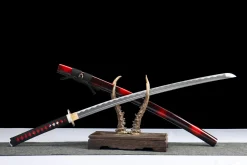
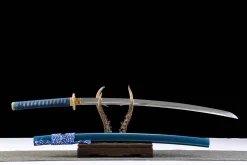
The Deep Sea Gold katana is the singular piece in our collection where Damascus pattern-welded steel meets clay tempering — a technically ambitious combination that produces both the flowing layered patterns of forge-welded Damascus and a genuine differential-hardened hamon along the cutting edge, all housed in a rare unokubi-zukuri (鹈首造) blade geometry that makes this katana immediately identifiable to any serious collector. Priced at $400 with copper fittings, genuine rayskin handle, and a high-gloss lacquered saya, the Deep Sea Gold represents a convergence of technical achievement and visual drama that is virtually impossible to find at this price tier. This is not a sword you choose — it is a sword that chooses you.
Specifications
| Blade Steel | Damascus / Pattern-Welded Steel |
| Total Length | 102.0 cm / 40.2 inches |
| Blade Length | 72.0 cm / 28.3 inches |
| Blade Width | 3.2 cm |
| Weight | 1040 g / 36.7 oz (net) |
| Heat Treatment | Clay Tempering (Differential Hardening) |
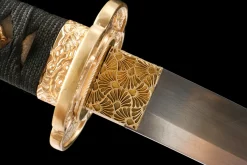
| Fittings | Copper |
| Handle | Cotton Ito + Genuine Rayskin (Same) |
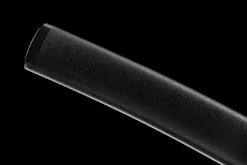
| Sheath | Hardwood (High-Gloss Lacquer) |
Craftsmanship & Materials
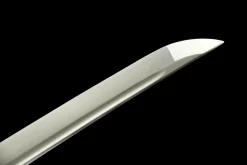
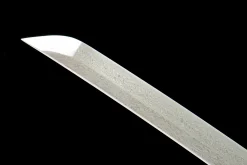
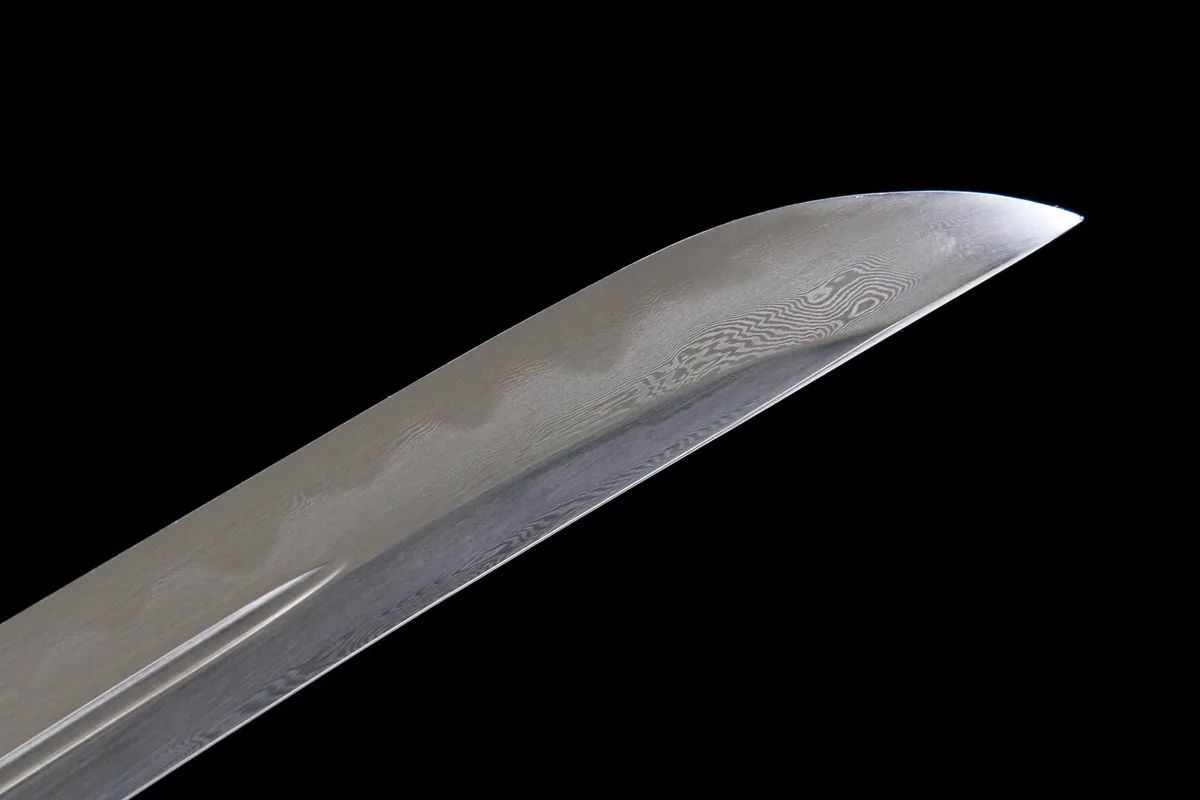
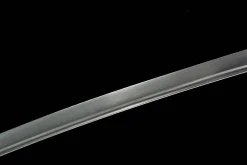
Damascus pattern-welded steel is created by folding and forge-welding multiple layers of high and low carbon steel together — a process that, in Longquan’s workshops, may involve dozens to hundreds of distinct layers. The visual result is the unmistakable flowing grain pattern visible across the blade’s flat — a topographic map of the smith’s labor, unique to every single sword. But the Deep Sea Gold’s smith took this already complex process one step further: after forging and grinding the blade into the distinctive unokubi-zukuri (cormorant’s neck) profile, the blade was coated with clay and subjected to differential hardening. This is technically demanding with Damascus steel, as the varying carbon content across layers creates unpredictable behavior during the quench — only an experienced smith can reliably pull a clean hamon from pattern-welded material.
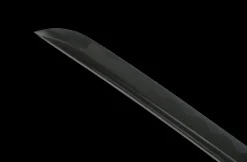
The unokubi-zukuri (鹈首造) geometry sets this katana apart visually and functionally from every other sword in our catalog. Named for the cormorant’s slender neck, this blade style features a distinct step in the shinogi (ridge line) partway down the blade — the upper portion narrows dramatically before widening again at the base, creating a blade profile that is both visually arresting and functionally optimized for thrusting. It is a geometry with deep roots in the Kamakura and Nanbokuchō periods of Japanese sword history, associated with blades made for mounted combat where a piercing stroke could decide a battle.
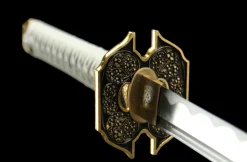
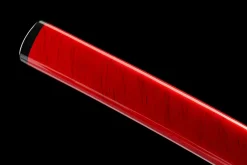
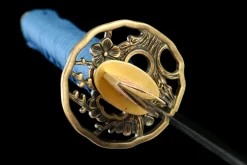
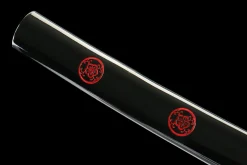
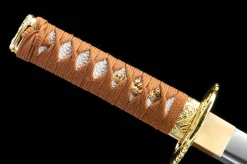
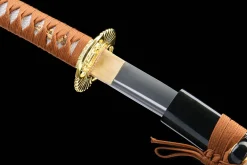
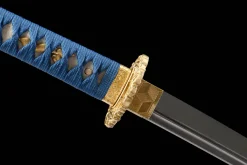
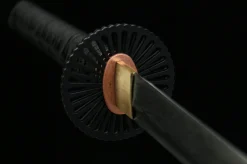
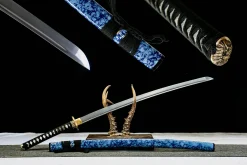
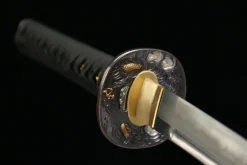
The copper tsuba and fittings develop a natural patina over time, deepening from bright rose to warm amber as the copper oxidizes — a living finish that makes the sword more beautiful with age. The same (genuine rayskin) wrapped beneath the cotton ito gives the tsuka a diamond-textured grip that remains secure even with wet or gloved hands, while the high-gloss black lacquered saya provides a dramatic visual contrast against the copper hardware.
Perfect For
- Intermediate to advanced collectors seeking the rare combination of Damascus patterning and a genuine clay-tempered hamon in a single blade
- Historical enthusiasts drawn to the unokubi-zukuri geometry and its connection to classical Japanese sword-making periods
- Martial artists who want a display-worthy sword that remains fully functional for light cutting practice and kata
Care & Maintenance
Damascus steel requires the same diligent oiling regimen as any high carbon blade — apply choji or mineral oil after every handling session — but the pattern-welded construction means micro-pitting along layer boundaries can trap moisture if the sword is stored unprotected in humid conditions, so keep it lightly oiled and stored horizontally in a cool, dry space. The clay-tempered hamon area is the most delicate zone of the blade; never subject the cutting edge to lateral bending or hard impacts, as the hardened edge is more brittle than the spine. The copper fittings will patina naturally — this is desirable, but if you prefer bright copper, a light polish with a specialist metal cloth will restore luster without damaging the surrounding components.
Frequently Asked Questions
What is Damascus steel and how is it made in the Deep Sea Gold katana?
Damascus steel, also called pattern-welded steel, is created by forge-welding multiple layers of high and low carbon steel together, then folding and manipulating them to produce flowing visual patterns. In the Deep Sea Gold katana, this process creates a blade with a distinctive layered aesthetic while maintaining functional performance. The resulting pattern is unique to each blade, making the Deep Sea Gold as much a work of art as a cutting instrument.
What is the Unokubi-zukuri blade shape on the Deep Sea Gold katana?
Unokubi-zukuri (鹈首造), meaning ‘cormorant neck,’ is a distinctive Japanese blade geometry featuring a prominent ridge that runs along the blade before tapering sharply toward the point, creating a visible step in the blade profile. This style, historically associated with highly specialized cutting swords, gives the Deep Sea Gold an aggressive, purposeful tip geometry that enhances thrusting capability while maintaining the slicing efficiency of a standard shinogi profile.
Does the Deep Sea Gold katana have a real hamon from clay tempering?
Yes. The Deep Sea Gold undergoes genuine clay tempering, meaning refractory clay is applied to the spine before quenching. This creates authentic differential hardness — a harder edge for cutting and a tougher spine for resilience — and produces a visible, natural hamon temper line along the blade. On Damascus pattern-welded steel, the hamon interacts with the layered patterns to create a visually striking and unique appearance on every individual blade.
Is the Deep Sea Gold katana worth $400 compared to standard katana in the same price range?
At $400, the Deep Sea Gold delivers exceptional value by combining Damascus pattern-welded steel, genuine clay tempering, copper fittings, authentic rayskin wrap, and the rare unokubi-zukuri blade geometry. Most katana at this price offer only one or two premium features. Competing blades with Damascus steel alone often lack real clay tempering or use alloy fittings. For buyers wanting maximum visual impact and authentic craftsmanship, the Deep Sea Gold stands out strongly in its tier.
| Weight | 1.32 lbs |
|---|---|
| Dimensions | 102.0 × 3.2 × 0.7 in |
| Sword Type | Katana |
| Blade Steel | Damascus Steel |
| Total Length | 102.0 cm |
| Blade Length | 72.0 cm |
| Heat Treatment | Clay Tempering (Differential Hardening) |
| Handle Wrap | Cotton Ito + Genuine Rayskin |
| Sheath Material | Hardwood (High-Gloss Lacquer) |
| Fittings | Copper |
| Forging Style | 鹈首造 |
Related products

1045 Carbon Steel

Damascus Steel
1065 Carbon Steel

High-End ($400-$800)

High Carbon Steel

1045 Carbon Steel
Black Heaven Feather – Hand Forged 1045 Carbon Steel Katana Sword


1065 Carbon Steel

1045 Carbon Steel