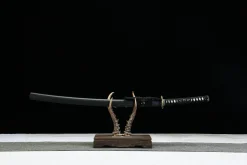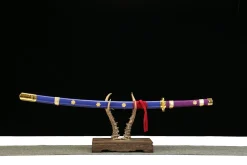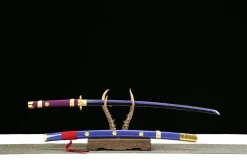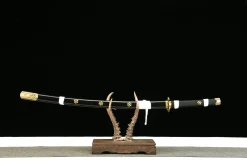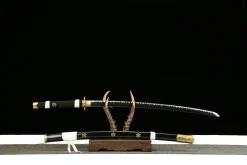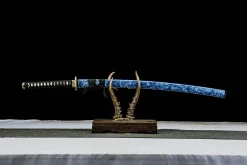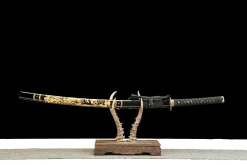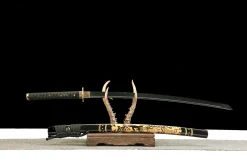


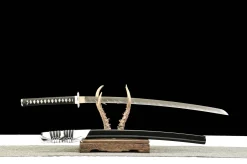

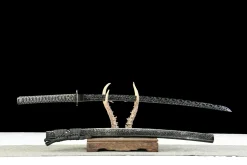



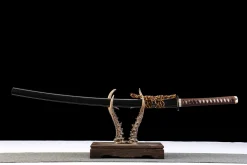






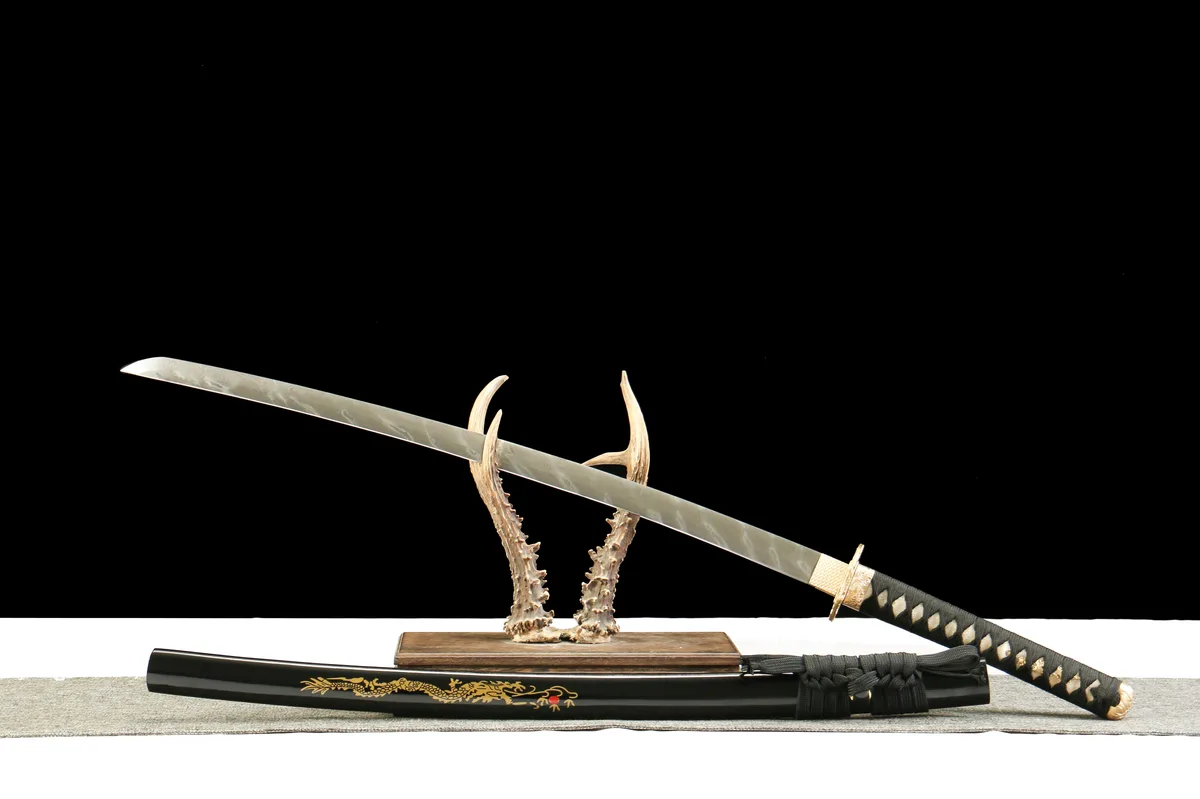

Dragon Amber – Hand Forged Damascus Steel Katana Sword
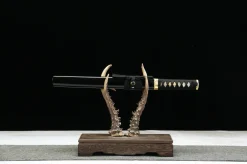
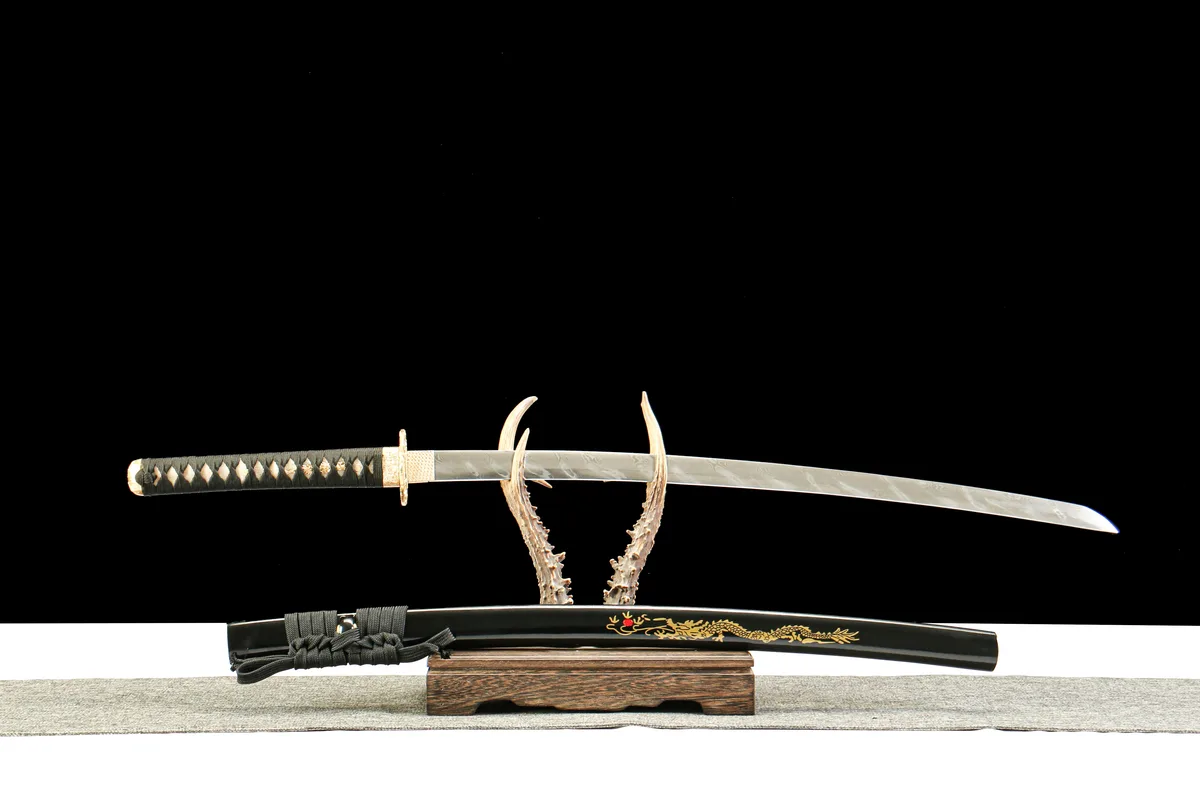
Hand-forged Damascus Steel katana (103cm total / 72cm blade), crafted in Longquan. Hand-folded Damascus pattern steel — each blade carries a unique layered grain from forge to tip.
$499.99
Dragon Amber – Hand Forged Damascus Steel Katana Sword
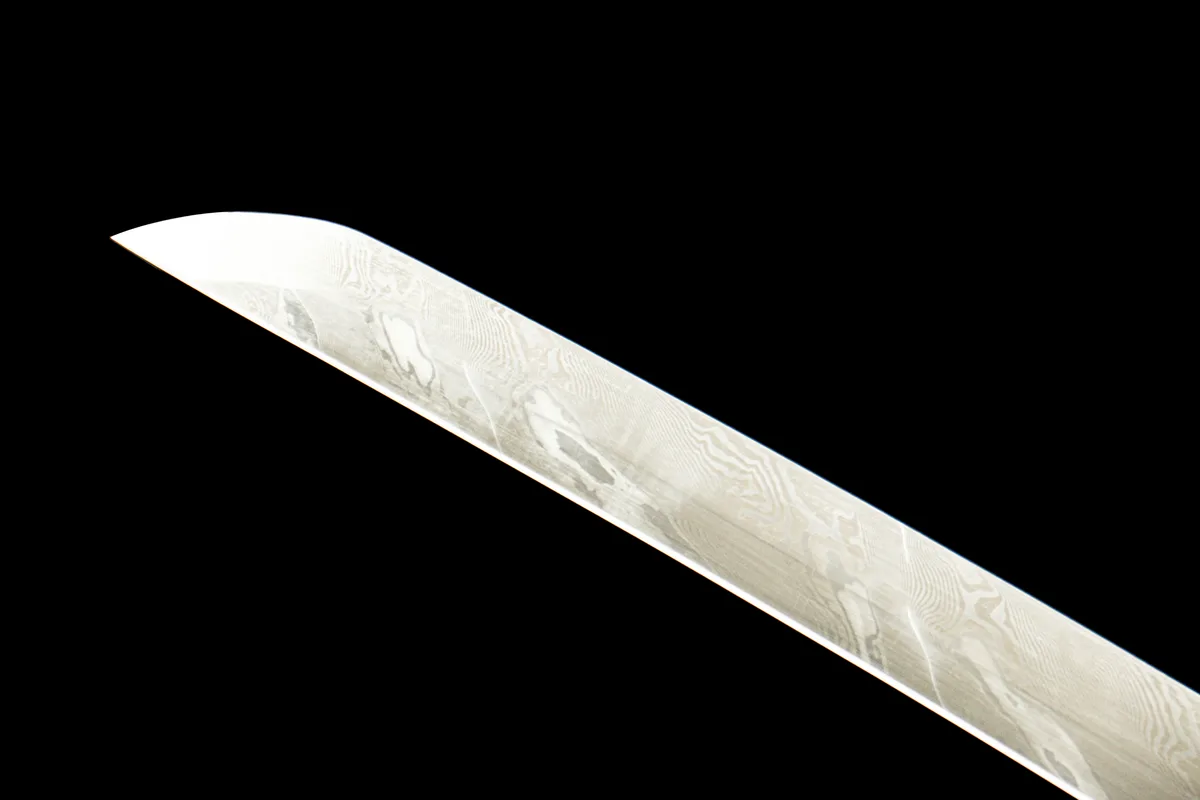
Most Damascus katana in this category use feather or ladder patterns – visually busy, immediately recognizable, and, frankly, common. Dragon Amber – 龙珀 – carries a twist-pattern billet, and twist Damascus behaves differently. The grain does not broadcast itself. It moves.
Specifications
| Blade Steel | Damascus Steel, Twist Pattern |
| Total Length | 103.0 cm / 40.6 in |
| Blade Length | 72.0 cm / 28.3 in |
| Blade Width | 3.2 cm |
| Weight | 950 g / 33.5 oz |
| Heat Treatment | Oil Quench & Temper |
| Fittings | Copper (装) |
| Handle | Cotton Ito Wrap |
| Sheath | Green Bark Wood (Aohada) |
What the Steel Does
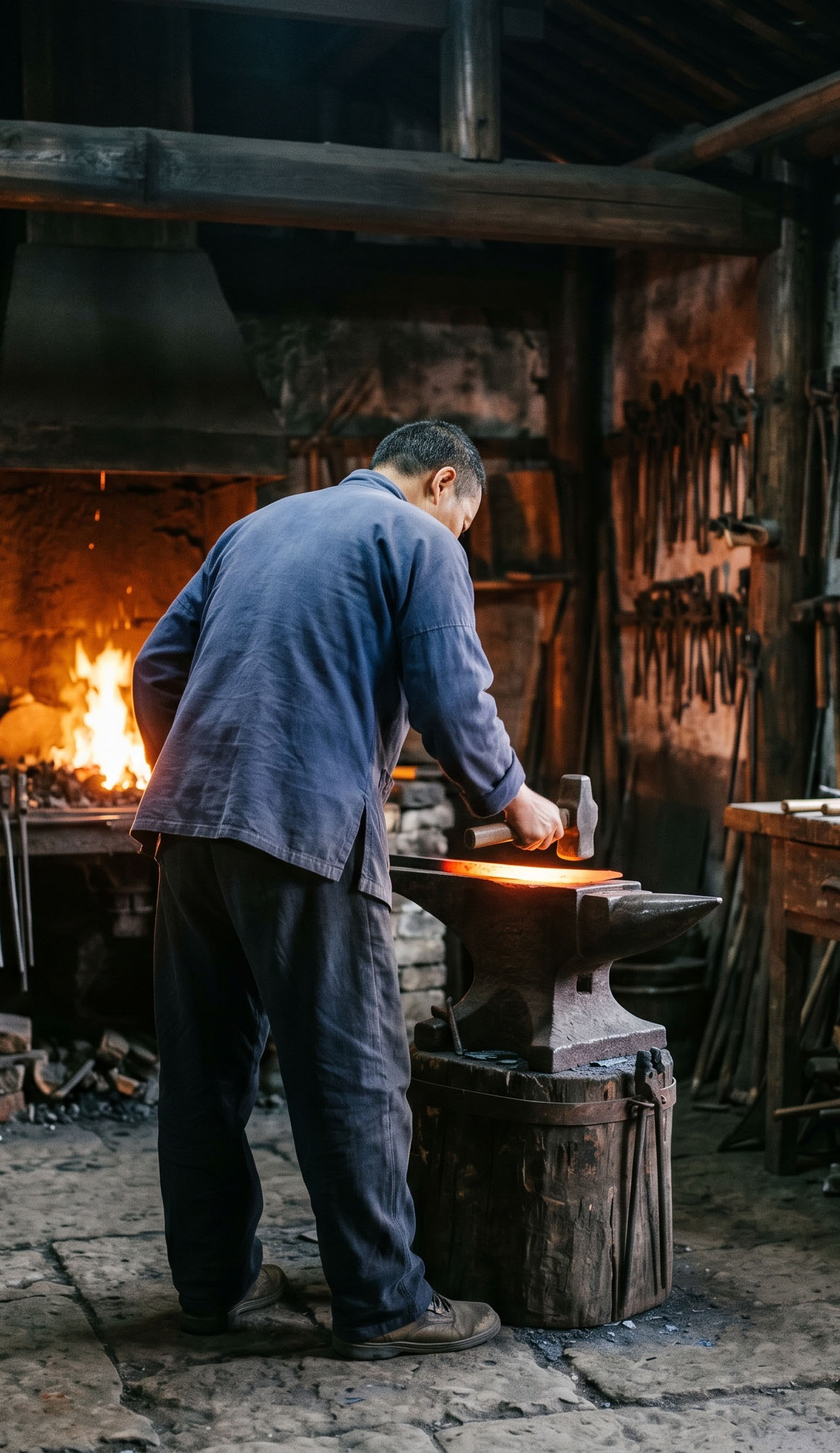
Twist-pattern Damascus is produced by forge-welding multiple layers of high and low carbon steel into a composite billet, then heating that billet to critical temperature and applying a controlled twist before the final forging passes. The helical distortion compresses and stretches the layer boundaries into a spiraling column structure. When the blade is ground and acid-etched, those columns resolve into a flowing, almost topographic grain – tight and dense toward the spine, opening toward the edge. No two billets twist at identical rates. The pattern on Dragon Amber is specific to this blade and will not appear on any other.
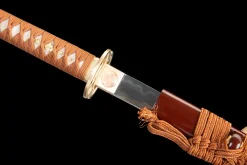
What makes twist Damascus visually distinct from ladder or feather patterns is its behavior under changing light. A feather pattern reads at a distance – it announces itself. Twist grain is more selective. Viewed straight-on, the surface appears almost subdued. Shift the angle by fifteen degrees and the helical structure catches the light in columns, appearing to rise out of the steel before dropping back as the angle changes again. The copper fittings – 装 (zhuang) here indicating the full suite of furniture including tsuba (guard), habaki (blade collar), and fuchi-kashira (handle collar and pommel cap) – were matched specifically to this blade. Copper oxidizes to a warm reddish-brown patina over time, a color that sits in the same tonal family as the etched Damascus surface rather than contrasting against it.
The Feel of It
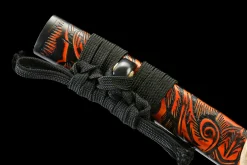
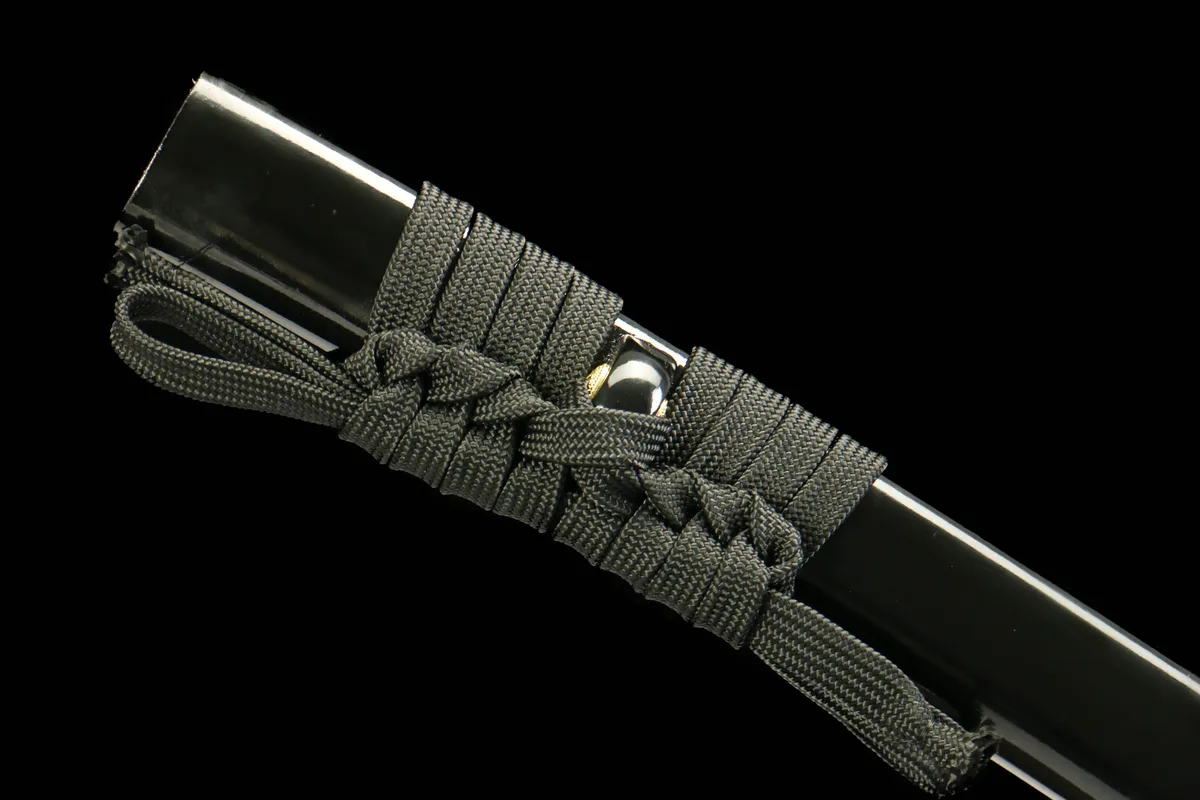
The Aohada saya – green bark wood, cut and lacquered to a quiet matte finish – provides a visual anchor against which the Damascus grain reads clearly when the blade is drawn. The draw itself is deliberate and smooth, with the koiguchi (the saya’s mouth) holding the blade securely. In hand, the 27 cm cotton ito wrap gives a firm, dry grip surface – the diamond-pattern spacing across the handle distributes contact evenly between the palms. At 72 cm, the blade length is authoritative without being unwieldy; the tip arrives where you intend it.
Maintenance Notes
The etched Damascus surface requires regular oiling – choji oil or a light mineral oil applied with a soft cloth every two to three months will prevent oxidation from developing in the layer boundaries. The copper fittings will develop a natural patina; this is expected and desirable, but if you prefer to maintain bright copper, a gentle metal polish on the fittings only (kept well away from the blade) will restore the finish. Store the blade in the saya in a low-humidity environment away from direct temperature fluctuation.
| Weight | 1.2 lbs |
|---|---|
| Dimensions | 103.0 × 3.2 × 0.7 in |
| Hamon | Damascus Pattern (No Hamon) |
| Blade Steel | Damascus Steel |
| Total Length | 103.0 cm |
| Blade Length | 72.0 cm |
| Heat Treatment | Oil Quench & Temper |
| Handle Wrap | Cotton Ito Wrap |
| Sheath Material | Green Bark Wood (Aohada) |
| Fittings | Copper, (装) |
| Forging Style | Folded Steel (Pattern Welded) |
Related products