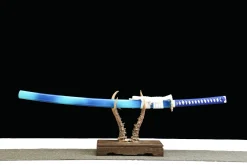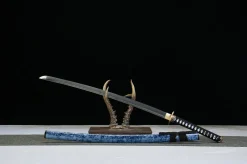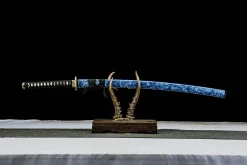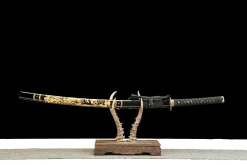


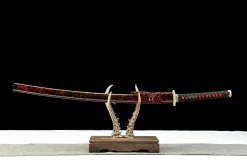

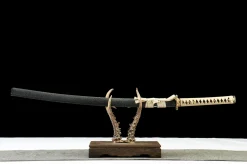


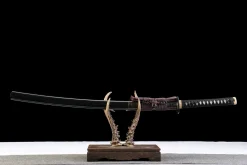







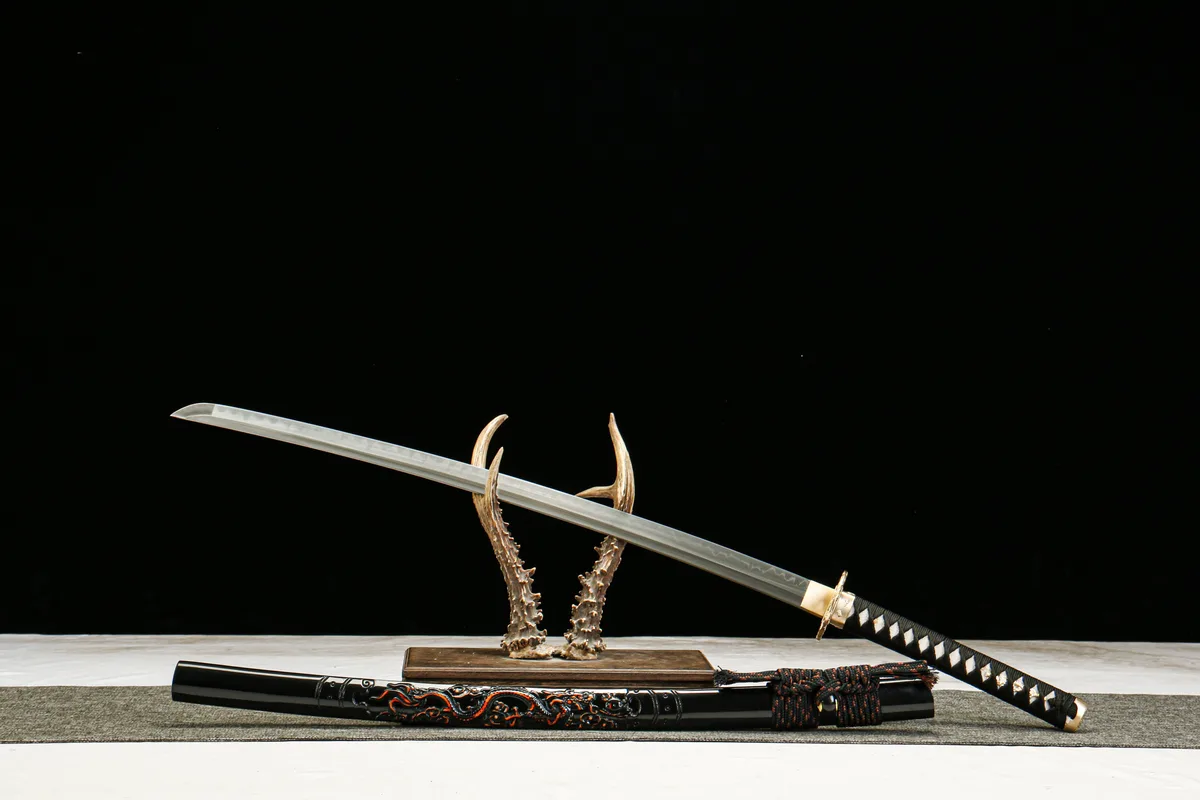


Dragon Palace – Hand Forged T10 Tool Steel Katana Sword
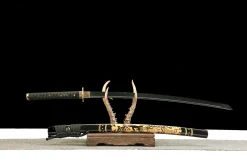
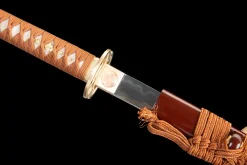
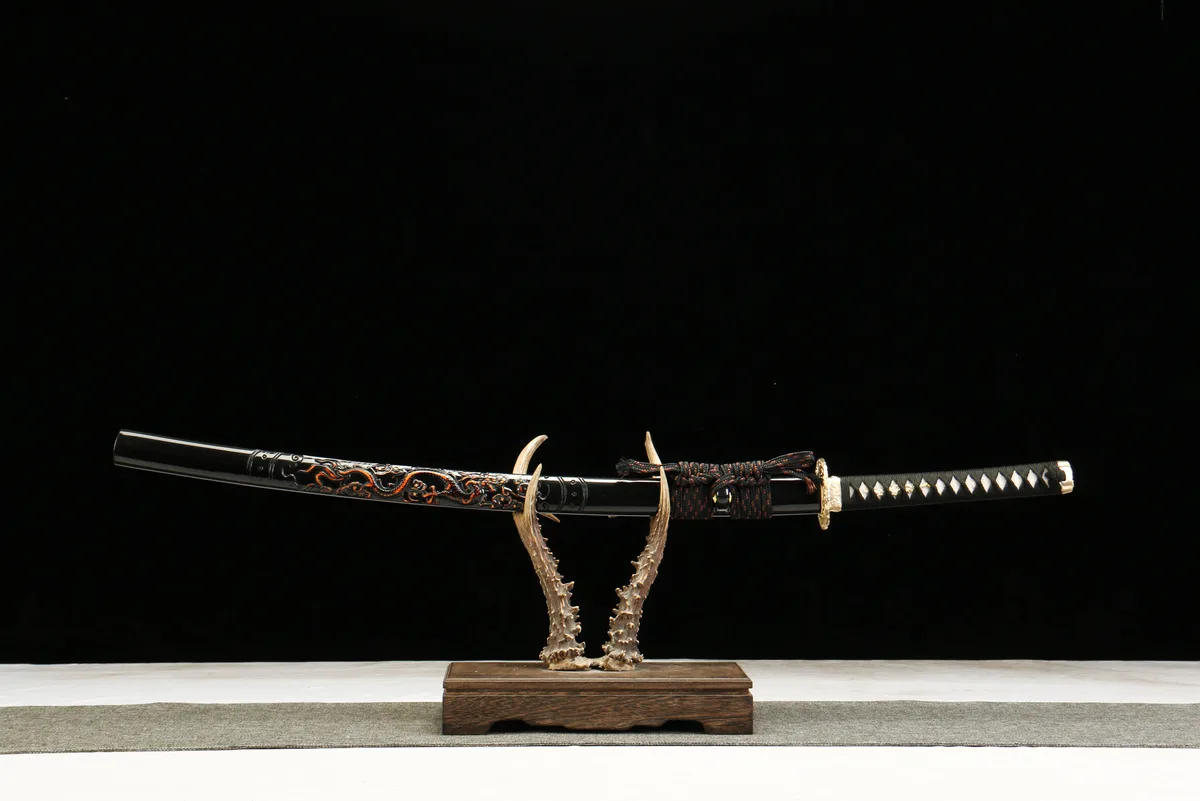
Hand-forged T10 Tool Steel katana (103cm total / 72cm blade), crafted in Longquan. Clay-tempered blade with a genuine hamon line — visible contrast between hardened edge and soft spine.
$599.99
Dragon Palace – Hand Forged T10 Tool Steel Katana Sword
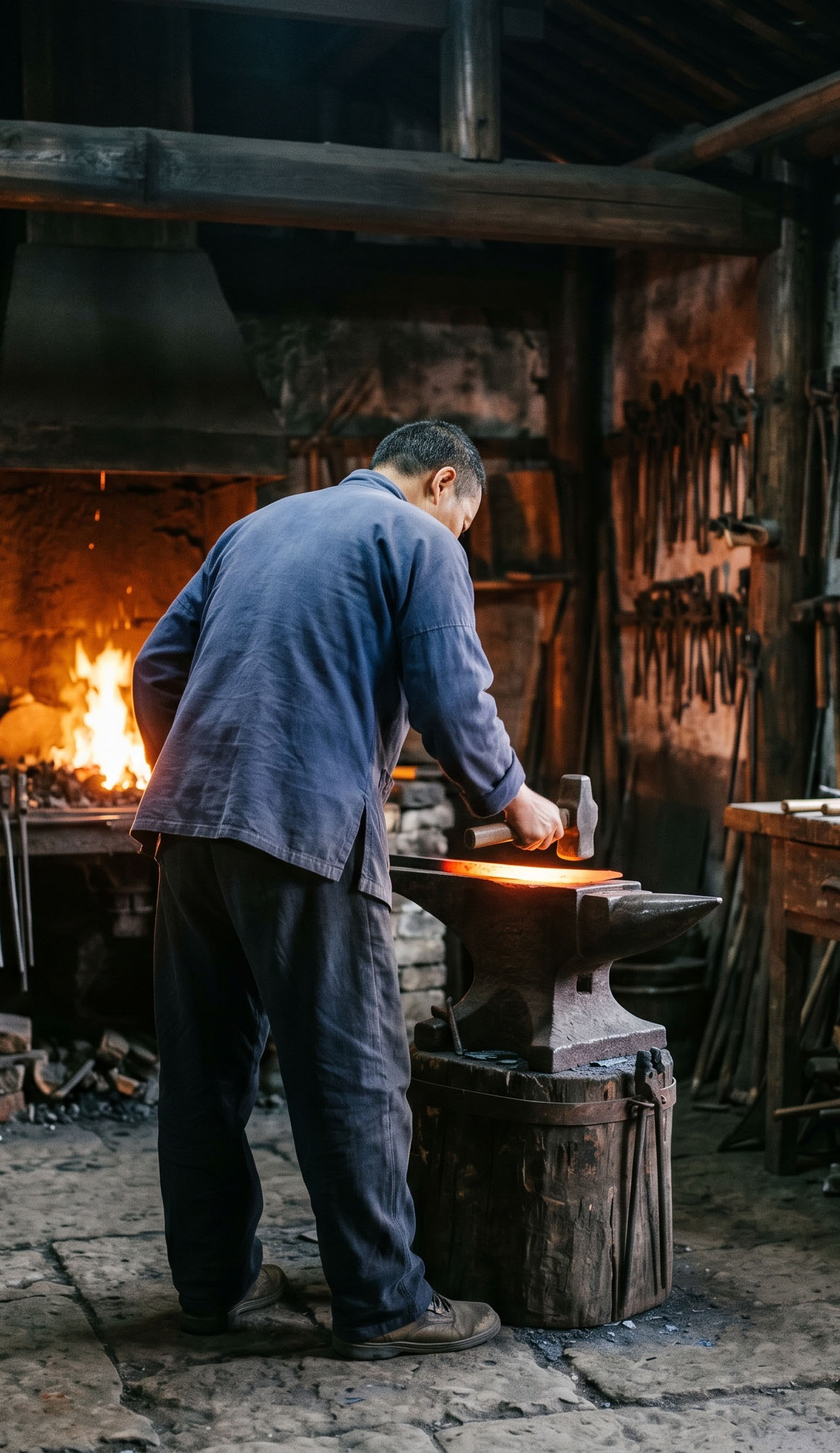
Most T10 blades sold at this tier are heat-treated uniformly – quenched through, hardened edge to spine. The Dragon Palace (龙阙) is not. The clay tempering process used here applies refractory clay to the spine before quench, insulating it from the rapid cooling that hardens the edge, producing two mechanically distinct zones in a single blade. That is what you are getting: a hard edge that holds geometry under load, and a spine with enough residual toughness to flex rather than shatter under lateral stress.
Specifications
| Blade Steel | T10 High Speed Tool Steel, Clay Tempered |
| Total Length | 103.0 cm / 40.6 in |
| Blade Length | 72.0 cm / 28.3 in |
| Blade Width | 3.2 cm |
| Blade Thickness | 0.7 cm |
| Weight | 950 g / 33.5 oz |
| Heat Treatment | Oil Quench & Temper, Differential Hardening |
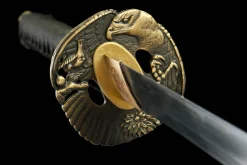
| Fittings | Copper |
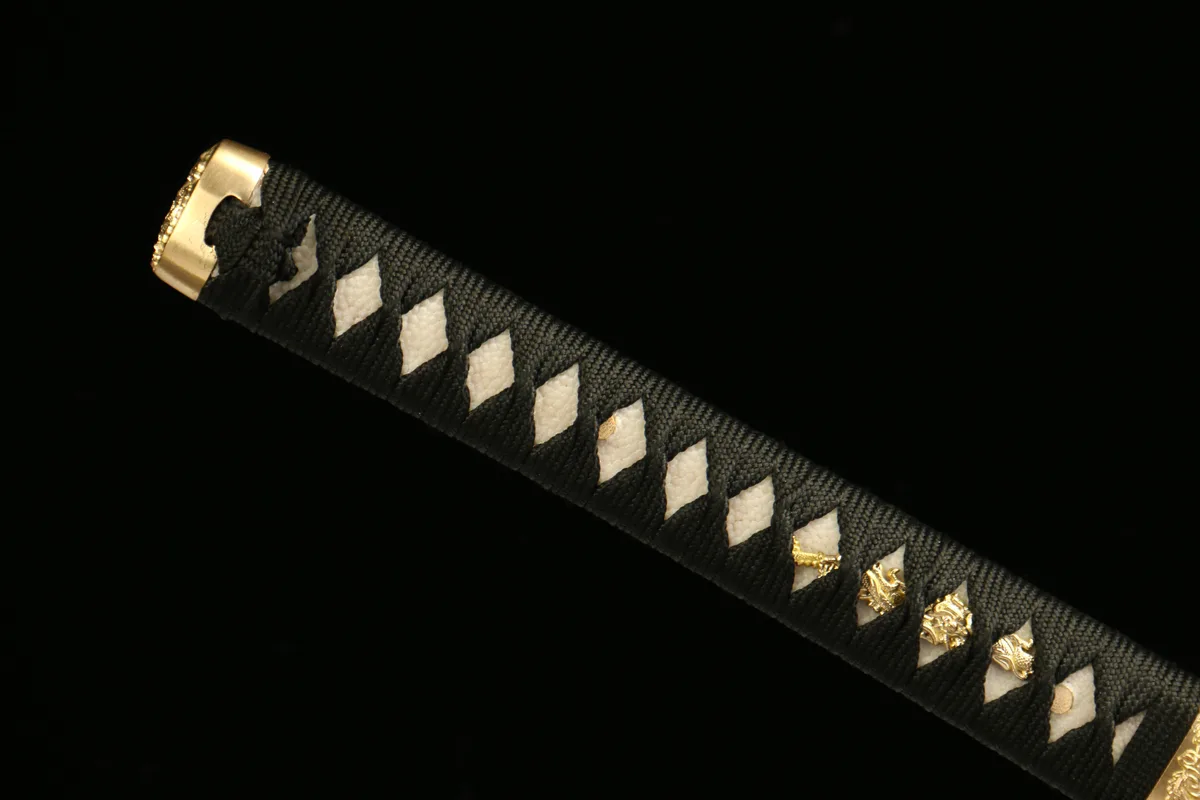
| Handle | Cotton Ito Wrap |
| Sheath | Green Bark Wood (Aohada) |
What the Steel Does
T10 tool steel contains tungsten alongside its high carbon content. That tungsten raises the steel’s wear resistance and hardness ceiling, which is why T10 is a preferred material for serious functional katanas – the edge stays sharp longer under abrasive contact than standard high carbon steels at comparable hardness levels. Clay tempering adds the differential hardness dimension: the hamon (the temper line visible along the blade) marks where the hard zone ends and the tough zone begins. It is not decorative. It is the functional boundary of the heat treatment.
At the edge geometry, 3.2 cm width and 0.7 cm spine thickness gives the Dragon Palace a grind profile that cuts with authority rather than wedging. The copper fittings (装) are a practical choice – copper is harder than zinc alloy, resists deformation at the mekugi-ana (the pin hole through the handle and tang), and does not develop the chalky oxidation that cheaper alloys show under humidity. This is a blade assembled for use, not assembled to the minimum specification.
The Feel of It
The 27.0 cm cotton ito-wrapped handle gives a full two-handed grip with control across both hands. The ito is wrapped in the traditional cross-lace pattern over the handle core, and the intersections are tight – you can feel the raised diamonds clearly through a training glove. Draw from the aohada saya is consistent: green bark wood finished to a snug interior fit, the blade clearing the kissaguchi (scabbard mouth) cleanly without binding. The 72.0 cm blade arc puts the point well forward of center through a committed cut, with reach that justifies the handle length.
Maintenance Notes
After each cutting session, remove all debris with a clean cloth and apply a thin coat of choji oil or mineral oil along the full blade length, edge and flat both. Store in the saya, edge up, in a dry location – T10 will surface-rust faster than stainless if left unprotected. The copper fittings can be wiped clean with a dry cloth and do not require additional treatment under normal storage conditions.
| Weight | 1.2 lbs |
|---|---|
| Dimensions | 103.0 × 3.2 × 0.7 in |
| Hamon | Real Hamon (Clay Tempered) |
| Blade Steel | T10 Tool Steel |
| Total Length | 103.0 cm |
| Blade Length | 72.0 cm |
| Heat Treatment | Oil Quench & Temper |
| Handle Wrap | Cotton Ito Wrap |
| Sheath Material | Green Bark Wood (Aohada) |
| Fittings | Copper, (装) |
| Forging Style | Differential Hardening (Clay Tempered) |
Related products