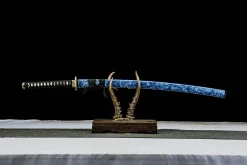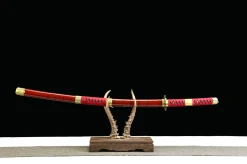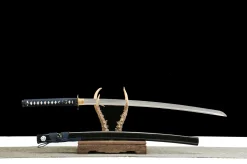
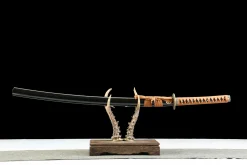


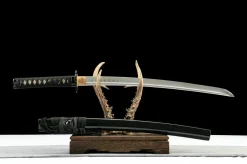
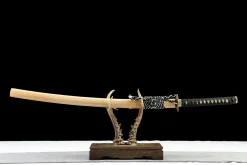


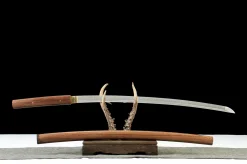





Ember Pattern – Hand Forged Damascus Steel Katana Sword
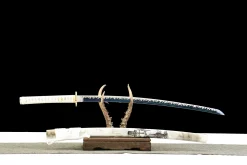
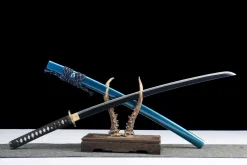
Hand-forged Damascus Steel katana (102cm total / 72cm blade), crafted in Longquan. Hand-folded Damascus pattern steel — each blade carries a unique layered grain from forge to tip.
$409.99
Ember Pattern – Hand Forged Damascus Steel Katana Sword
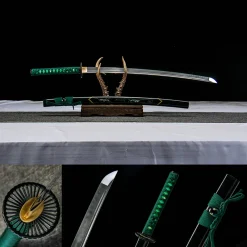
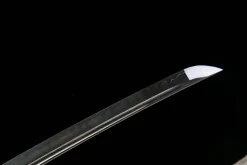
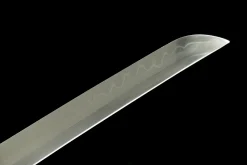
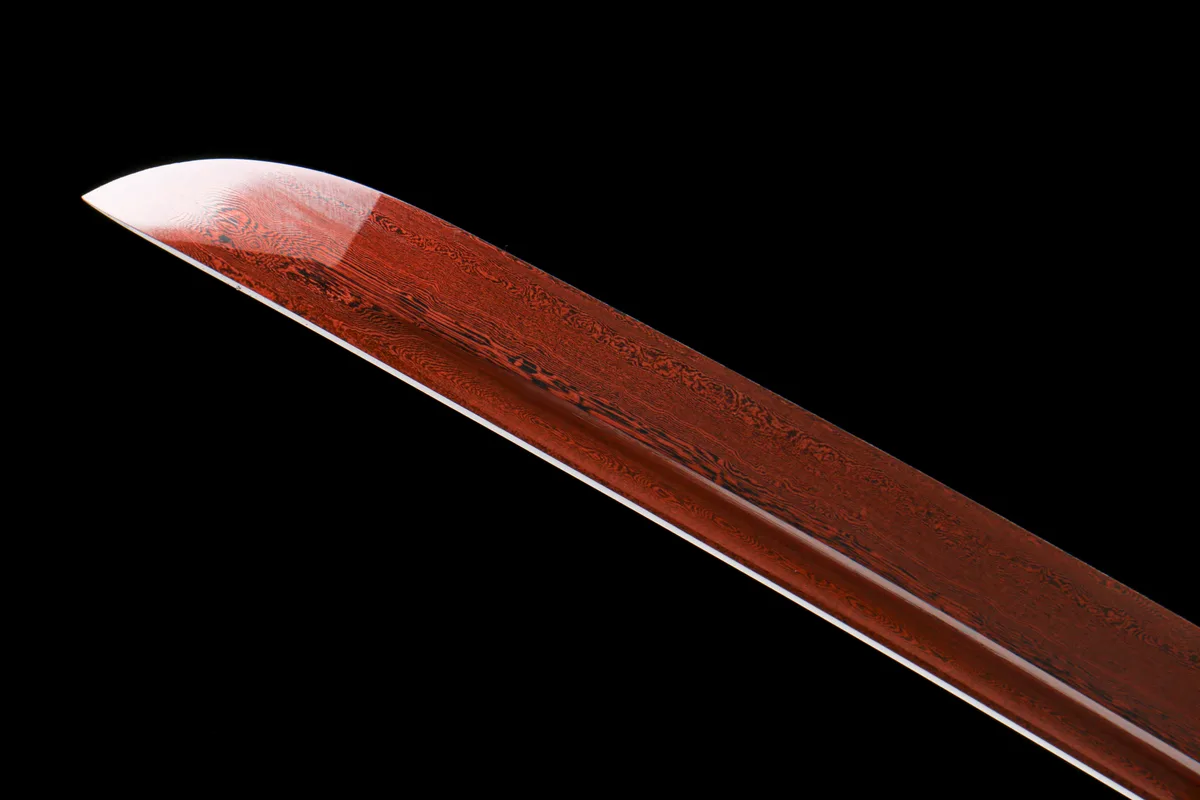
Hold the Ember Pattern blade at a shallow angle to a warm light source and the Damascus surface resolves into layered grain that shifts as you turn it – compression lines, fold boundaries, and the characteristic flow of pattern-welded steel catching the light at different depths simultaneously.
Specifications
| Blade Steel | Damascus / Pattern-Welded Steel |
| Total Length | 102.0 cm / 40.2 in |
| Blade Length | 72.0 cm / 28.3 in |
| Blade Width | 3.2 cm |
| Blade Thickness | 0.7 cm |
| Weight | 1040 g / 36.7 oz |
| Heat Treatment | Salt bath furnace, controlled-temperature hardening |
| Fittings | Iron |
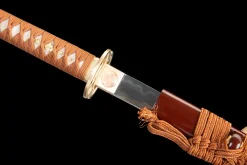
| Handle | Cotton ito wrap + genuine rayskin (same) |
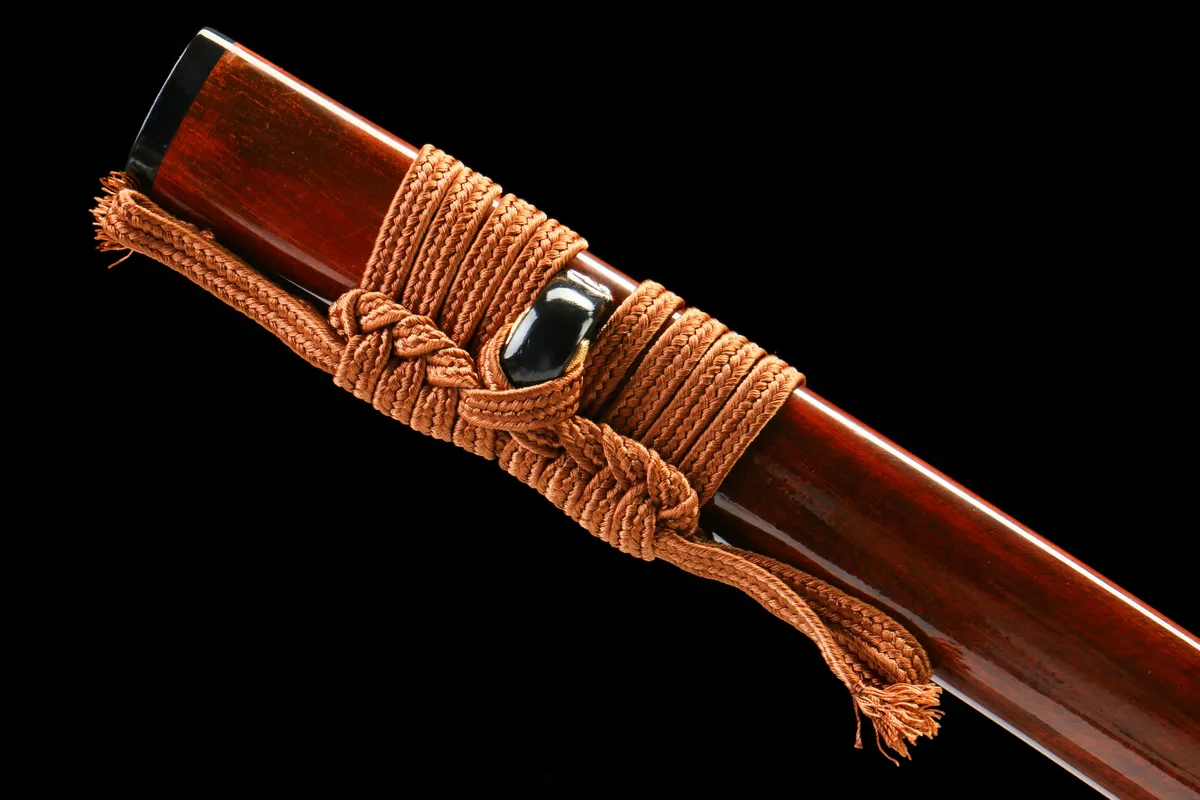
| Sheath | Hardwood, high-gloss lacquer |
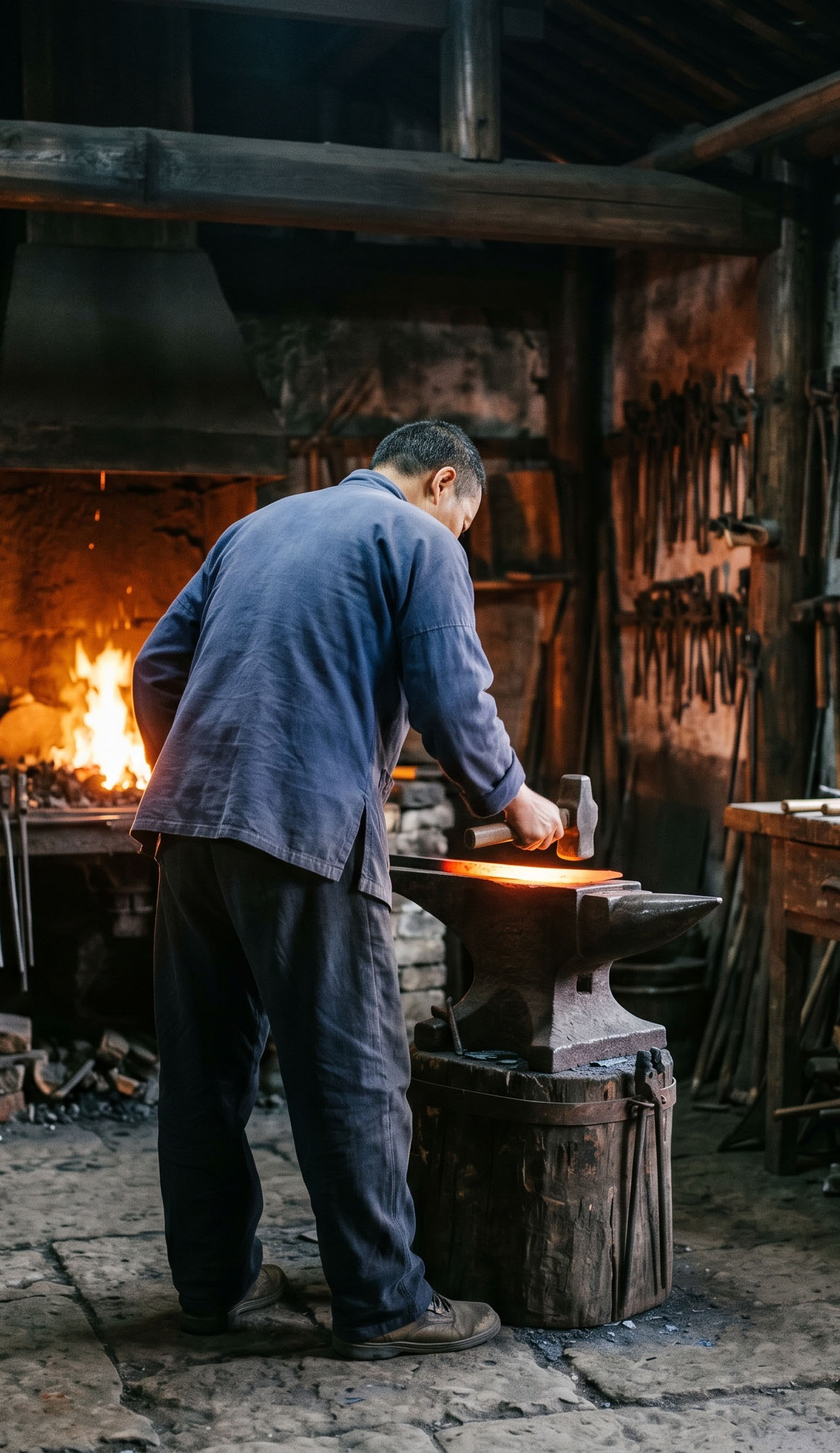
Forged in Longquan
Damascus steel – more precisely, pattern-welded steel – is produced by forge-welding multiple layers of high-carbon and low-carbon steel together, then drawing, folding, and manipulating the billet until the two materials are thoroughly integrated. The resulting grain is not applied to the surface; it runs through the full thickness of the blade. When the steel is etched with acid after grinding and polishing, differential corrosion rates between the two alloys reveal the internal structure as visible contrast – the dark bands and bright lines that make every Damascus blade a record of its own making.
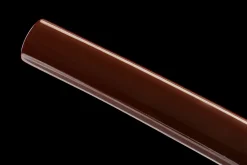
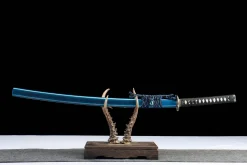
The Ember Pattern name describes what this particular blade looks like: the grain has been worked into a flowing, heat-wave pattern that reads warm even in neutral light. The high-gloss lacquer saya is finished in a tone that complements rather than competes with the blade – its surface acts as a frame, keeping the eye on the steel when the blade is drawn. Iron fittings, fitted precisely, hold everything at the tsuba (handguard) and habaki without visual noise. This blade was processed through salt bath furnace heat treatment at controlled temperature, which keeps the pattern-welded structure intact through hardening.
Weight, Balance, Draw
The shinogi-zukuri (ridgeline) profile gives the blade a defined geometry – a central ridge that separates the flat upper surface from the edge bevel – and this structure keeps the Damascus pattern readable across two distinct planes rather than flattening it into a single surface. The 26 cm handle is wrapped in cotton ito over genuine rayskin (same), the diagonal wrap sitting cleanly over the textured skin beneath. Drawing from the hardwood saya, the lacquer interior releases the blade without drag, and the full 72 cm of Damascus steel comes clear in one motion – the grain visible from habaki to kissaki (point) the moment it catches the light.
Keeping It Sharp
Damascus steel is more reactive than mono-steel and requires consistent oiling after any handling – fingerprint oils will begin surface oxidation within hours in humid conditions. Use choji oil or a neutral mineral oil, applied with a soft cloth, after every use. Re-etch with diluted ferric chloride if the grain pattern begins to flatten from polishing or abrasion – this restores contrast without affecting the steel beneath.
| Weight | 1.32 lbs |
|---|---|
| Dimensions | 102.0 × 3.2 × 0.7 in |
| Hamon | Damascus Pattern (No Hamon) |
| Blade Steel | Damascus Steel |
| Total Length | 102.0 cm |
| Blade Length | 72.0 cm |
| Heat Treatment | 马沸炉 恒温热处理 |
| Handle Wrap | Cotton Ito + Genuine Rayskin |
| Sheath Material | Hardwood (High-Gloss Lacquer) |
| Fittings | Iron |
| Forging Style | Shinogi-Zukuri (Ridgeline) |
Related products