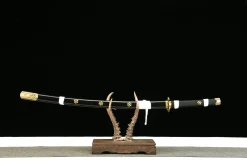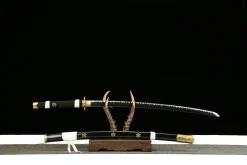
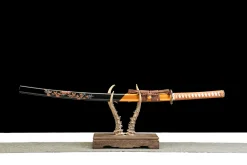
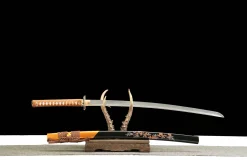
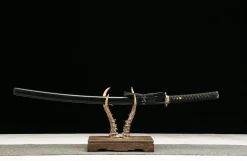
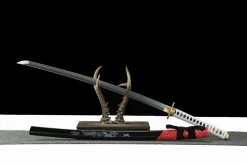




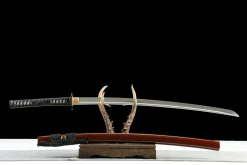

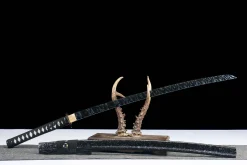
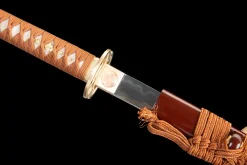
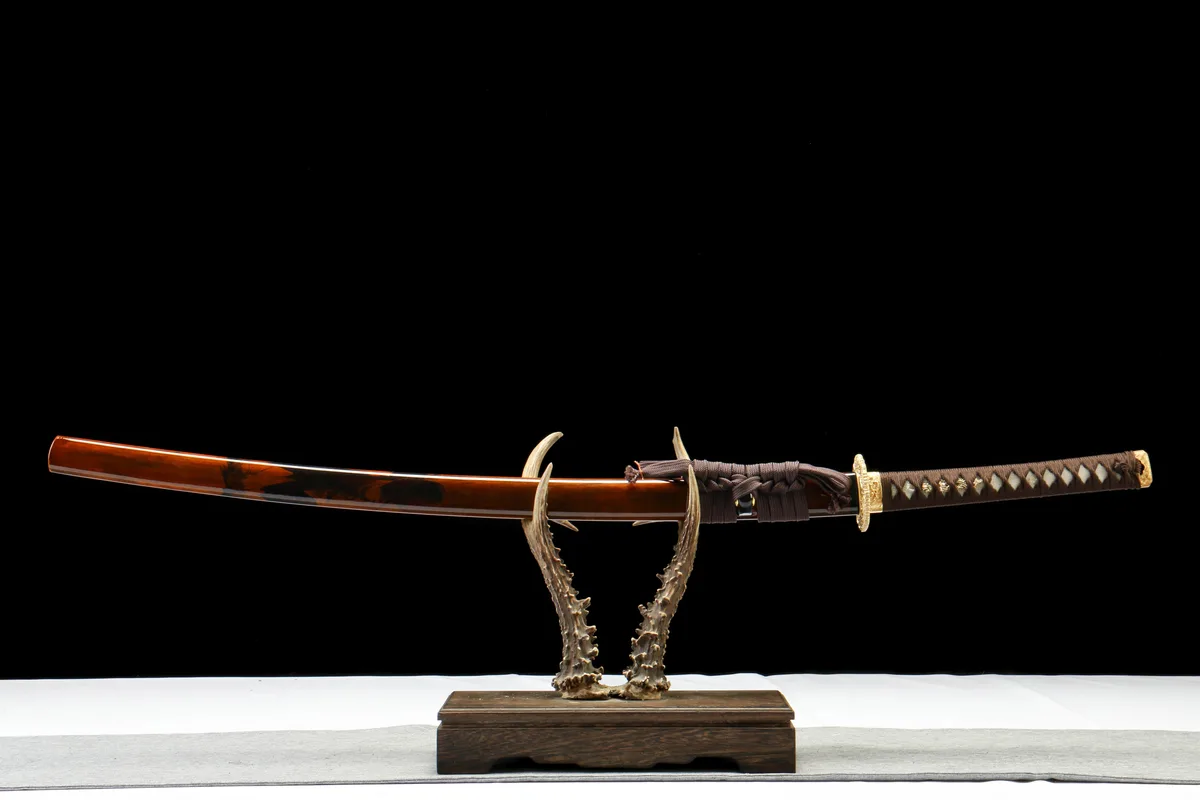



Flame Blade – Hand Forged T10 Tool Steel Katana Sword
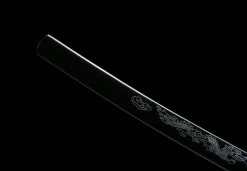
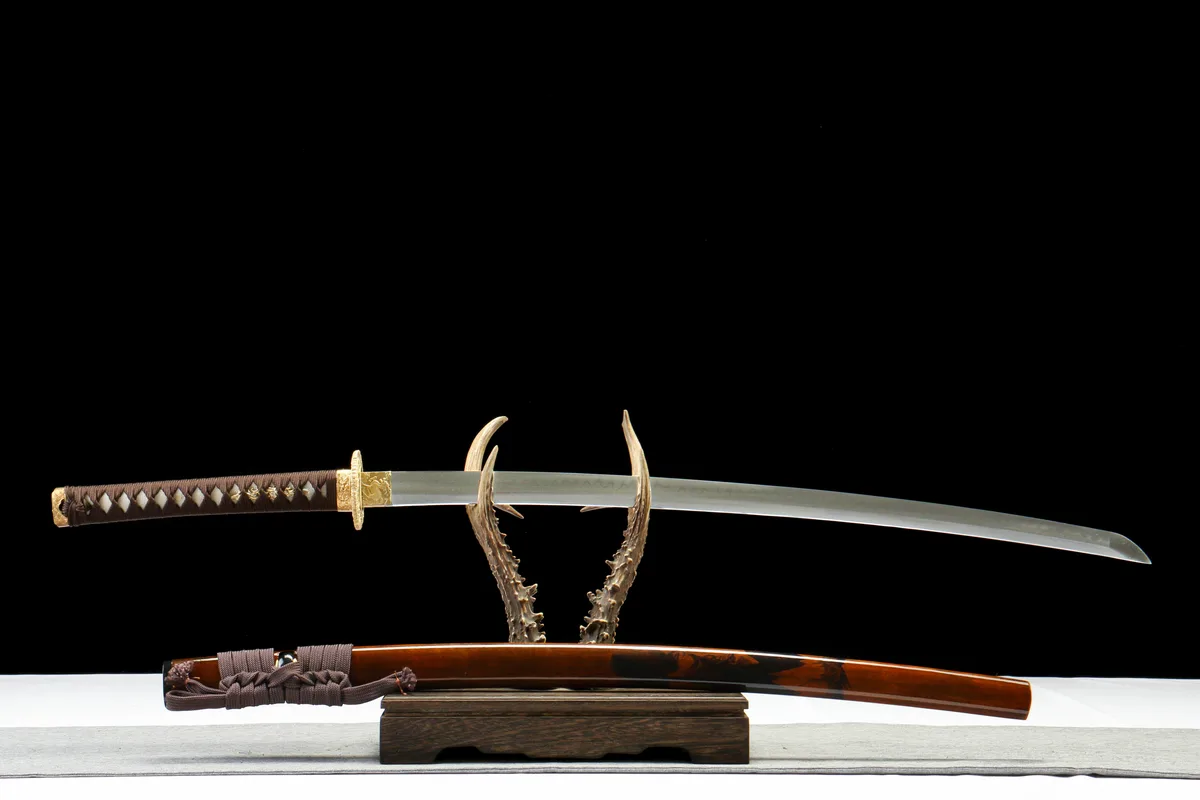
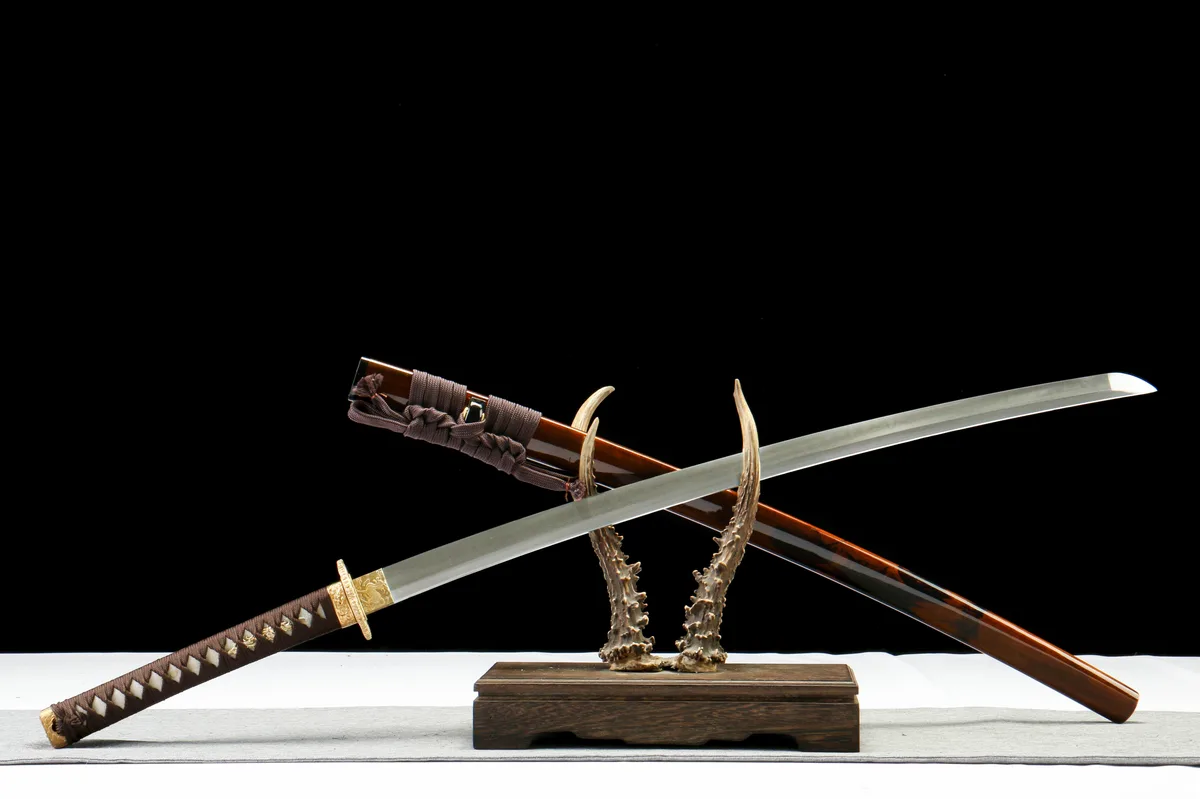
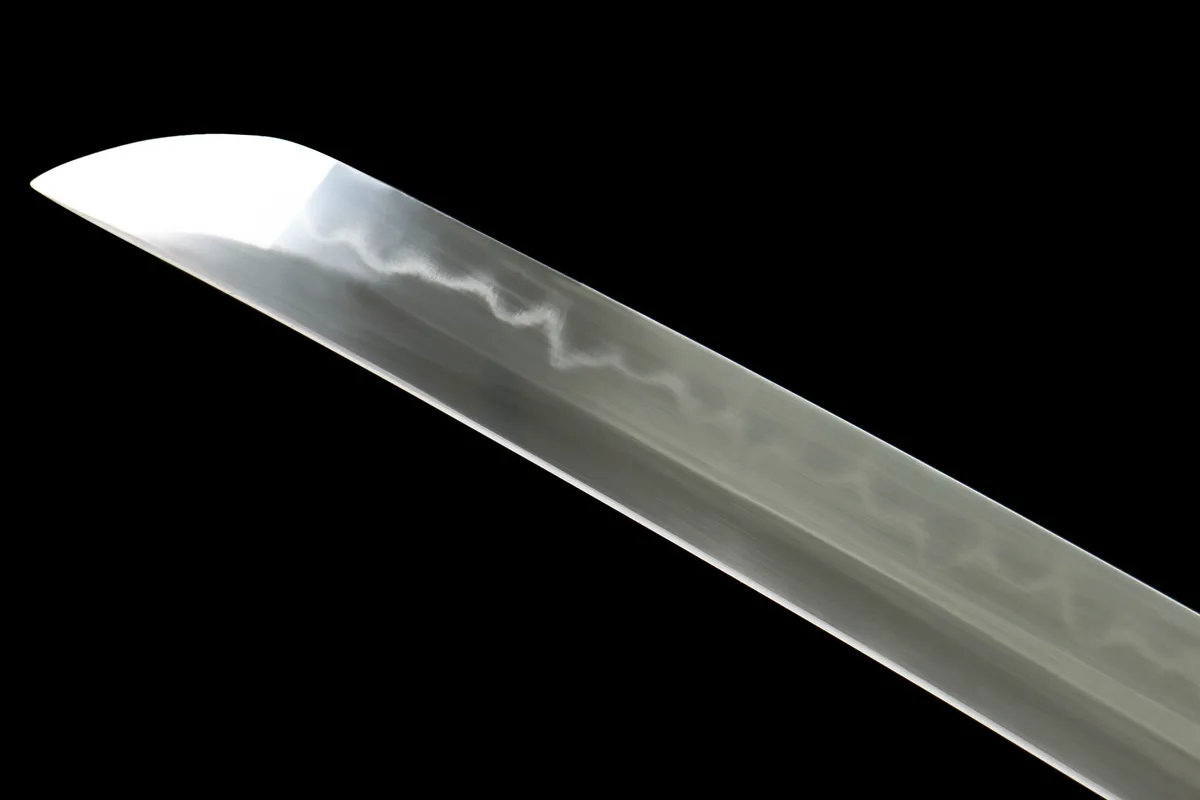
Hand-forged T10 Tool Steel katana (102cm total / 72cm blade), crafted in Longquan. Clay-tempered blade with a genuine hamon line — visible contrast between hardened edge and soft spine.
$489.99
Flame Blade – Hand Forged T10 Tool Steel Katana Sword
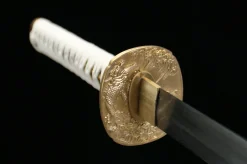
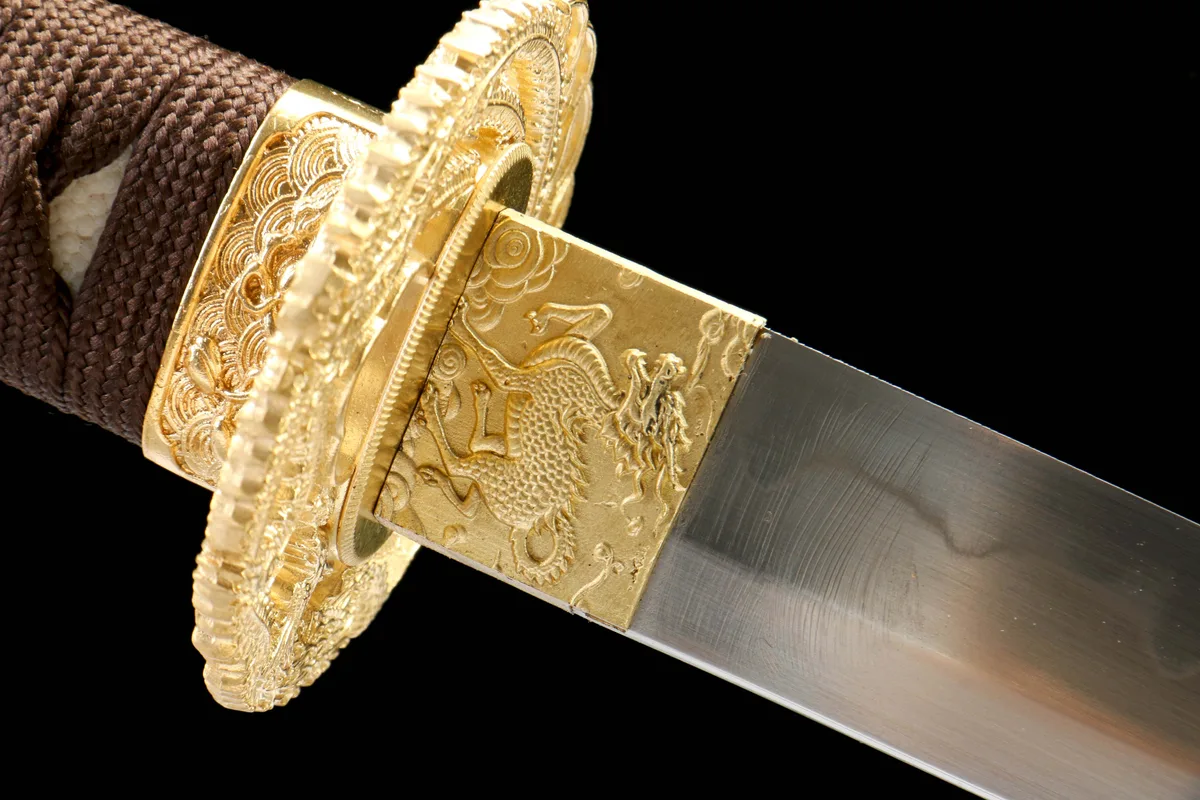
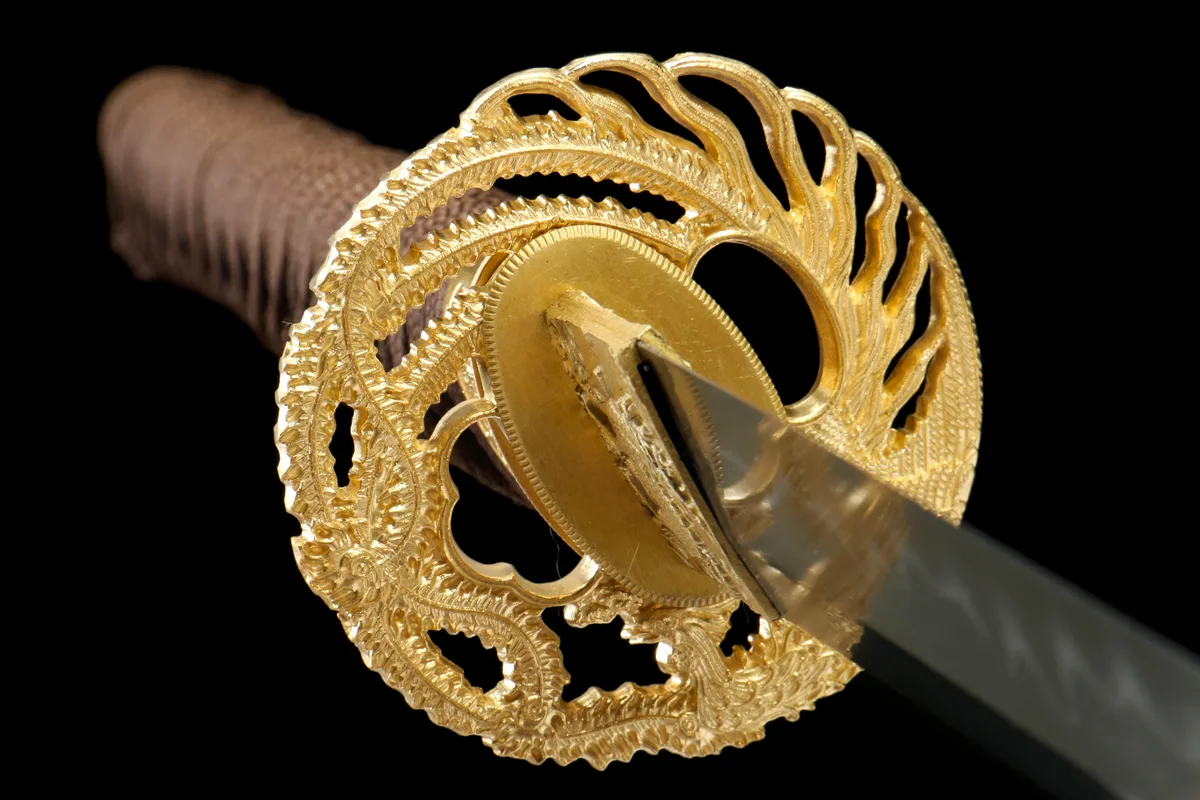
T10 tool steel carries a tungsten addition that most high-carbon blade steels do not – a deliberate alloying choice that tightens grain structure, increases wear resistance at the edge, and gives the smith working the clay-tempering process a steel that responds to differential hardening with exceptional definition. The hamon (temper line) on a clay-tempered T10 blade is not a suggestion – it is a sharp, articulate record of every decision made at the quench. On the Flame Blade, the copper fittings pull that heat-work out of the steel and make it visible across the entire length of the sword.
Specifications
| Blade Steel | T10 High Speed Tool Steel |
| Total Length | 102.0 cm / 40.2 in |
| Blade Length | 72.0 cm / 28.3 in |
| Blade Width | 3.2 cm |
| Blade Thickness | 0.7 cm |
| Weight | 1040 g / 36.7 oz |
| Heat Treatment | Clay Tempering (Differential Hardening) |
| Fittings | Copper |
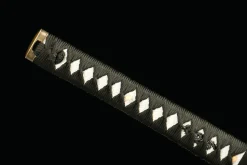
| Handle | Cotton Ito wrap over Genuine Rayskin (Same) |
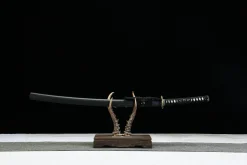
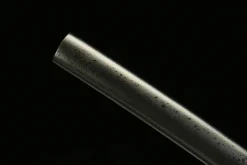
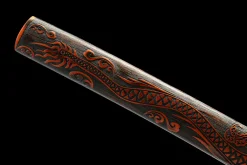
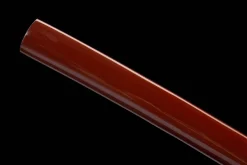
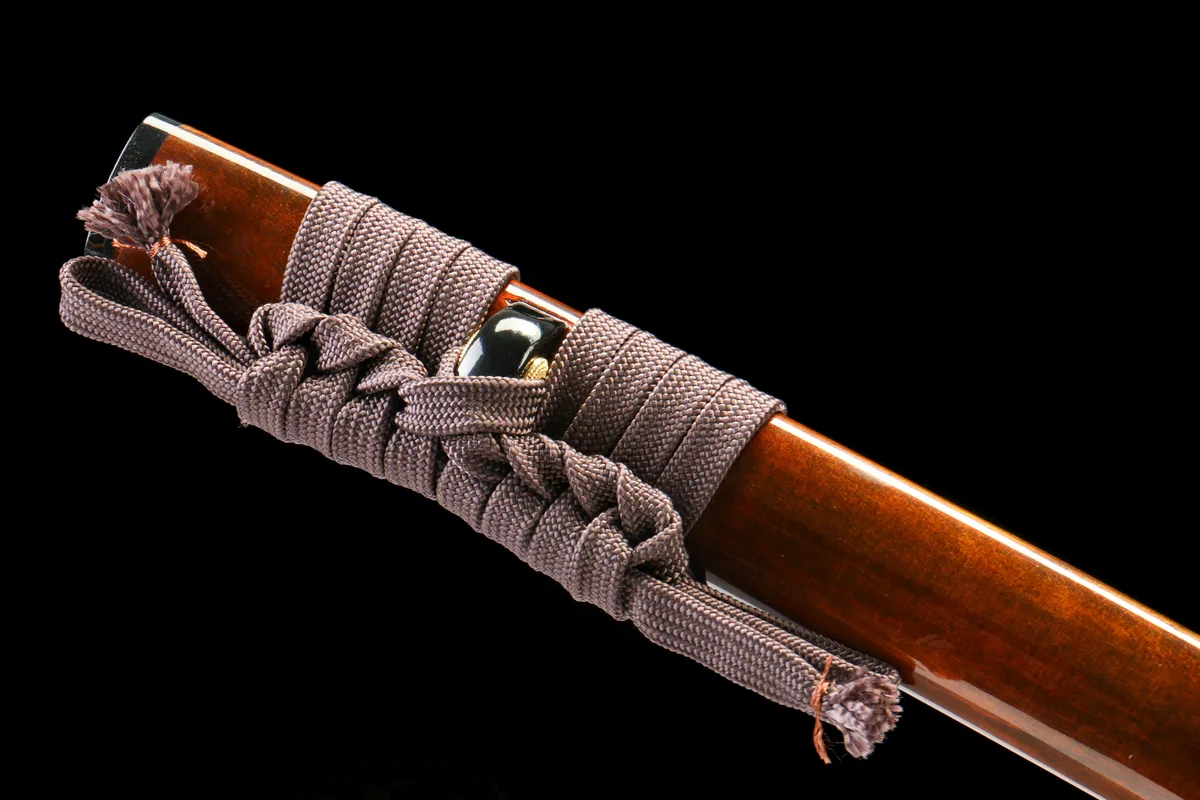
| Sheath | Hardwood, High-Gloss Lacquer |
Steel & Construction
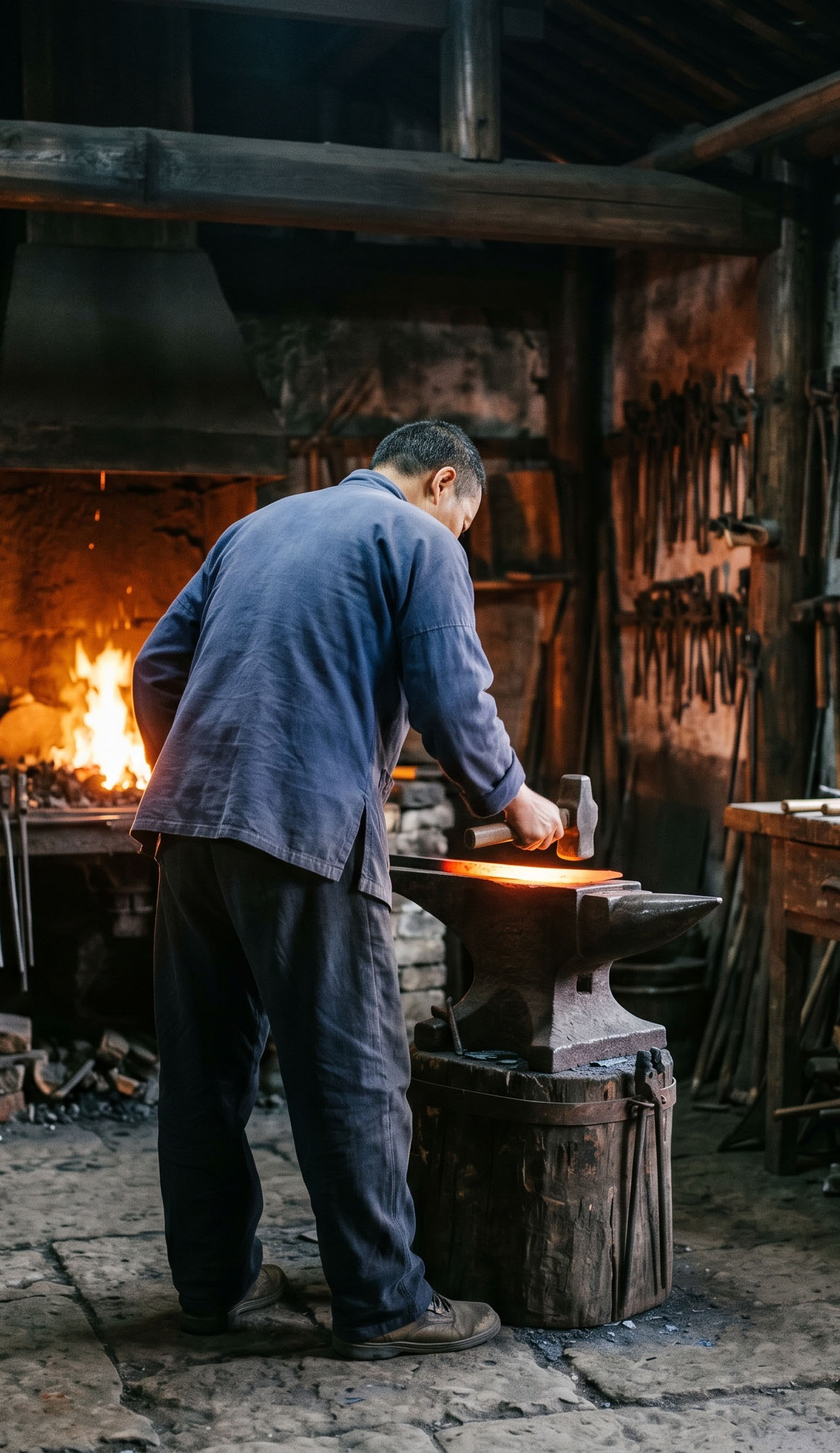
T10’s tungsten content – typically around 1.0% – does something specific that plain high-carbon steel cannot: it stabilizes the carbide structure during heat treatment, producing a finer, more uniform grain at the hardened edge and improving abrasion resistance without the brittleness that very high carbon alone would introduce. When clay is applied to the spine and the blade is quenched, the exposed ha (cutting edge) hardens into the upper HRC 60 range while the clay-insulated mune (spine) retains toughness in the mid-to-upper HRC 40 range. The habuchi – the line where these two zones meet – carries nie in T10 with particular clarity: the martensitic particles at the transition appear as a luminous, textured band against the polished ji (blade body), and in raking light, the activity within the hamon resolves into distinct ashi (feet – activity lines extending from the hamon toward the edge) that are the signature of differential hardening done correctly.
The shinogi-zukuri (ridgeline) geometry reinforces the blade’s structural efficiency – the shinogi ridge running the length of the blade separates the ji from the edge bevel and distributes cutting forces along the optimal geometric path. Copper fittings on a clay-tempered T10 blade are not a decorative afterthought. Copper is softer than iron, which makes it a precision-fittable material: a copper tsuba (hand guard) can be seated against the habaki with tight tolerance, eliminating the rattle that looser-fitted hardware produces. The warm tonal register of copper against the polished silver-grey of the T10 blade and the white or dark ito wrap is a color relationship that the Flame Blade name makes literal.
Handling
Twenty-six centimeters of tsuka (handle) wrapped in cotton ito over genuine same (rayskin) – the rayskin’s surface texture telegraphing through the wrap and creating a grip that locks without clamping. The cotton ito diamond pattern gives each hand a slightly different tactile surface depending on where fingers fall, which is exactly the information a two-handed grip needs for consistent hand placement across repetitions. The 72.0 cm blade draws from the high-gloss lacquered hardwood saya with a clean, single-motion release – the lacquer interior provides just enough surface consistency that the koiguchi (sheath mouth) holds the blade securely but does not drag on the draw. From noto (sheathing) to nukitsuke (drawing cut), the geometry of this sword rewards practiced, deliberate movement.
Care Instructions
T10’s tungsten content does not make it rust-resistant – apply choji oil (clove-infused mineral oil) to the entire blade surface after every session, including the area near the habaki where moisture from the hand concentrates. The copper fittings will develop a natural patina that deepens their color over time; clean with a dry cloth only, and avoid acidic cleaning agents that will strip the patina unevenly. Inspect the mekugi (handle pin) regularly – a tsuka that has developed lateral play should be re-pinned before the blade is used again.
| Weight | 1.32 lbs |
|---|---|
| Dimensions | 102.0 × 3.2 × 0.7 in |
| Hamon | Real Hamon (Clay Tempered) |
| Blade Steel | T10 Tool Steel |
| Total Length | 102.0 cm |
| Blade Length | 72.0 cm |
| Heat Treatment | Clay Tempering (Differential Hardening) |
| Handle Wrap | Cotton Ito + Genuine Rayskin |
| Sheath Material | Hardwood (High-Gloss Lacquer) |
| Fittings | Copper |
| Forging Style | Shinogi-Zukuri (Ridgeline) |
Related products