













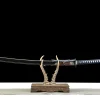
Flame Dragon – Hand Forged Damascus Steel Katana Sword
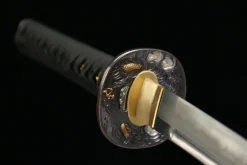
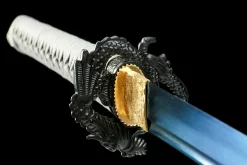
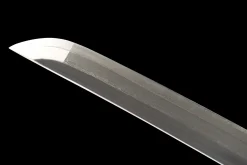
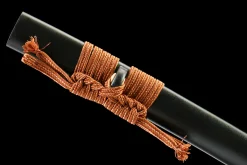
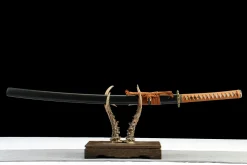
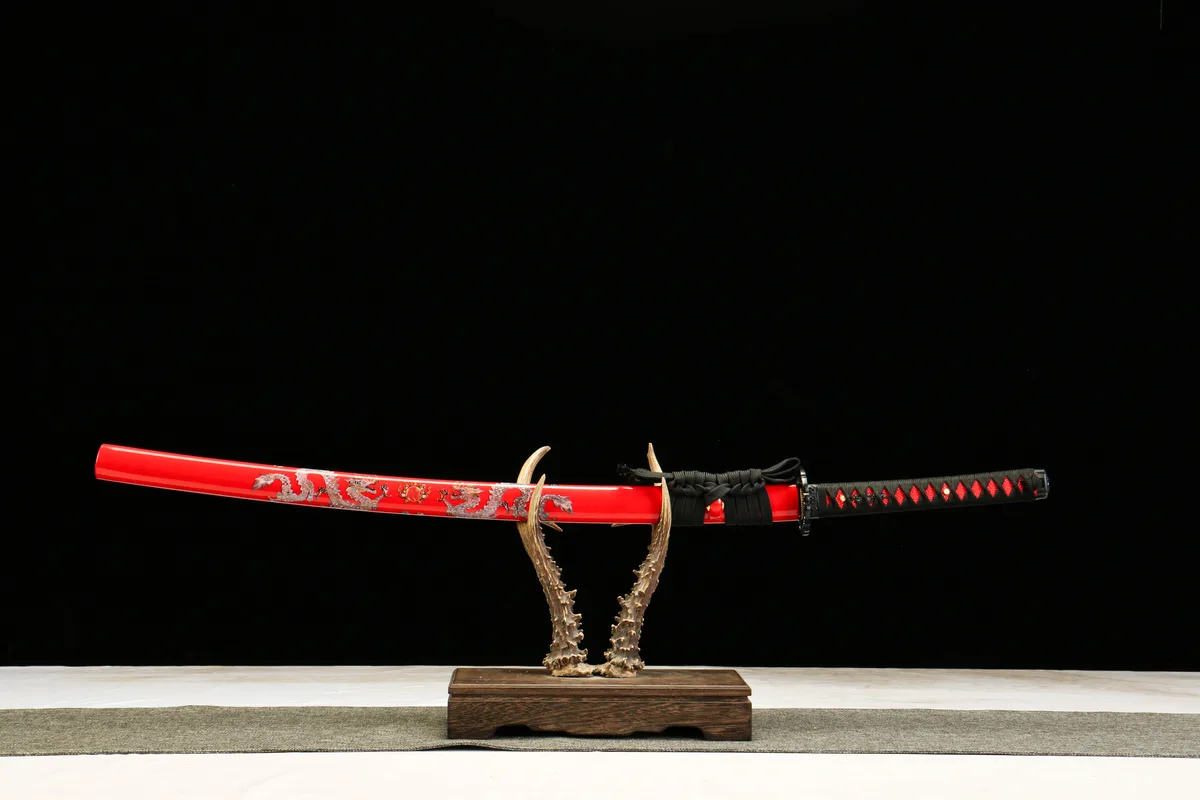
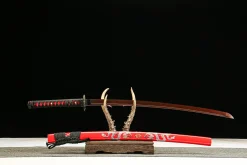
The Flame Dragon katana — 焰龙, the dragon born of fire — is the only Damascus pattern-welded sword in our mid-range collection, bringing the visual drama of layered folded steel to buyers at just $200, a price point where Damascus katana of genuine forge-welded construction are exceptionally rare. The blade’s flowing wood-grain or ladder pattern — revealed through acid etching of the folded steel billet — shifts and breathes along the length of the sword like the scales of a dragon catching firelight, making every Flame Dragon blade visually unique from every other. Paired with a green Aohada bark wood sheath and mounted in shinogi-inspired geometry, this is a sword that announces itself before it is even drawn.
Specifications
| Blade Steel | Damascus / Pattern-Welded Steel |
| Total Length | 103.0 cm / 40.6 inches |
| Blade Length | 72.0 cm / 28.3 inches |
| Blade Width | 3.2 cm |
| Weight | 950 g / 33.5 oz (net) |
| Heat Treatment | Oil Quench & Temper |
| Fittings | Alloy |
| Handle | Cotton Ito Wrap |
| Sheath | Green Bark Wood (Aohada) |
Craftsmanship & Materials
Pattern-welded Damascus steel is produced by forge-welding two or more steels of differing carbon content into a single billet, then folding, drawing, and twisting that billet through multiple heats until hundreds of layers are compressed into a coherent whole. When the finished blade is acid-etched, the differential carbon content between layers reacts at different rates, revealing the hidden topography of the steel as a flowing, flame-like surface pattern. No two Damascus billets produce exactly the same pattern — your Flame Dragon is literally one of a kind.
At the $200 tier, the Flame Dragon represents an exceptional value proposition for Damascus construction. The forging process is identical in principle to far more expensive pattern-welded pieces: the billet is hand-forged, ground to a functional blade profile with a proper shinogi ridgeline geometry, and oil quenched for edge hardness. The combination of a harder steel and a tougher steel in the weld matrix gives pattern-welded blades good real-world performance — the layers resist crack propagation and the harder steel holds an edge through sustained cutting sessions.
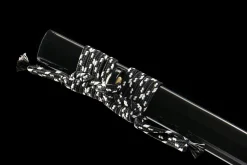
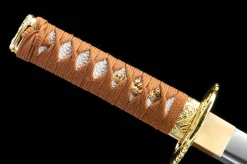
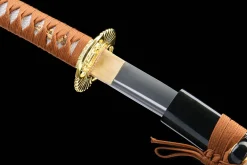
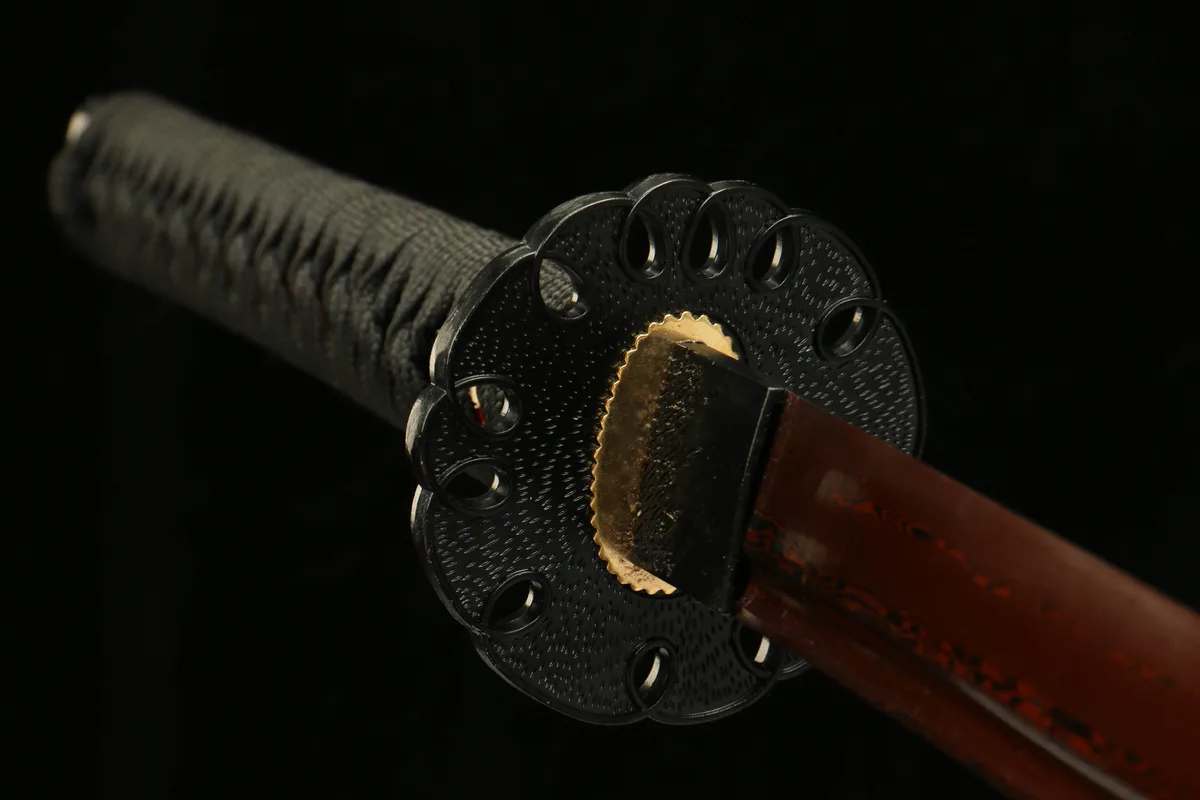
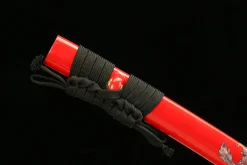
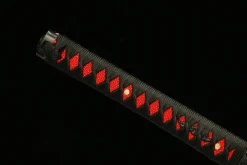
The Aohada bark wood saya provides a rugged, tactile contrast to the elaborate blade surface — its organic texture and natural green-grey tones suggest a sword carried through forests rather than displayed in a palace. Alloy fittings keep the price accessible without compromising structural integrity; the tsuba is solid, correctly sized, and will serve functional cutting practice reliably. Cotton ito wraps the handle in a traditional lozenge pattern, completing a sword whose character is bold, elemental, and unapologetically dramatic.
Perfect For
- Damascus steel enthusiasts who want a genuine pattern-welded katana without the four-figure price tag usually associated with this forging method
- Collectors drawn to visually distinctive blades where the surface pattern itself is part of the artwork
- Intermediate practitioners upgrading from a basic carbon steel katana who want added visual character in their training sword
Care & Maintenance
Damascus pattern-welded steel requires attentive rust prevention because the acid-etched surface is porous and highly reactive to moisture — oil the blade thoroughly after every use or handling session with choji or mineral oil, paying particular attention to the etched valleys in the pattern. To preserve the dramatic surface contrast, avoid using abrasive polishing compounds that flatten the pattern; instead, use fine uchiko powder lightly and re-etch with diluted ferric chloride solution if the pattern fades over years of use.
Frequently Asked Questions
What is Damascus or pattern-welded steel used in the Flame Dragon katana?
Damascus (pattern-welded) steel is made by forge-welding multiple layers of steel together and manipulating the billet to create flowing surface patterns. The Flame Dragon’s blade is crafted this way, producing the distinctive wavy or flame-like visual patterns on the steel surface. Beyond aesthetics, pattern welding creates a blade with alternating hard and soft steel layers, contributing to toughness. Each Flame Dragon blade is visually unique due to the nature of the hand-forging process.
What is Folded Steel (Pattern Welded) forging and how does it affect the Flame Dragon katana?
Folded steel forging involves repeatedly folding and welding a steel billet to distribute carbon evenly and refine the grain structure. In the Flame Dragon, this process creates the blade’s signature Damascus surface patterns while building layers that contribute to resilience. The result is a blade prized for its visual drama — the ‘flame’ pattern that inspired its name — alongside credible functional integrity for display and moderate cutting use at $200.
Is the Flame Dragon katana functional, or is Damascus steel purely decorative on this sword?
The Flame Dragon is functional. Its pattern-welded Damascus blade undergoes oil quench and temper heat treatment, is forged in a practical 72 cm Shinogi-Zukuri configuration, and weighs a balanced 950 g net. At $200, the Damascus steel provides genuine cutting capability in addition to its visual appeal. However, buyers should note that at this price tier Damascus blades prioritize aesthetics alongside function — true performance Damascus at a higher tier offers additional refinement.
Is $200 a good price for a Damascus katana like the Flame Dragon?
Yes — $200 is a competitive entry point for a functional Damascus katana. The Flame Dragon delivers genuine pattern-welded steel, oil-quench heat treatment, cotton ito handle wrap, and a 72 cm blade at a price most Damascus swords cannot match. The trade-off is alloy (rather than copper or brass) fittings and a green bark wood scabbard instead of rayskin. For collectors and enthusiasts wanting Damascus aesthetics with real cutting ability on a budget, the Flame Dragon offers strong value.
| Weight | 1.2 lbs |
|---|---|
| Dimensions | 103.0 × 3.2 × 0.7 in |
| Sword Type | Katana |
| Blade Steel | Damascus Steel |
| Total Length | 103.0 cm |
| Blade Length | 72.0 cm |
| Heat Treatment | Oil Quench & Temper |
| Handle Wrap | Cotton Ito Wrap |
| Sheath Material | Green Bark Wood (Aohada) |
| Fittings | Alloy, (装) |
| Forging Style | Folded Steel (Pattern Welded) |
Related products

1045 Carbon Steel
Damascus Steel

1045 Carbon Steel
1045 Carbon Steel


Damascus Steel
Crimson Flame (之烽) – Hand Forged Damascus Steel Katana Sword

1065 Carbon Steel
1045 Carbon Steel
White Celestial – Hand Forged 1045 Carbon Steel Katana Sword

1045 Carbon Steel