










Fleeting Phoenix – Hand Forged 1045 Carbon Steel Katana Sword
Hand-forged 1045 Carbon Steel katana (102cm total / 72cm blade), crafted in Longquan. Full-tang 1045 carbon steel, hand-fitted koshirae, ready for practice cutting or display.
$179.99
Fleeting Phoenix – Hand Forged 1045 Carbon Steel Katana Sword
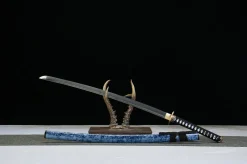
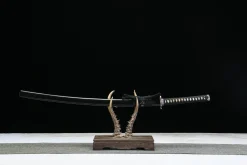
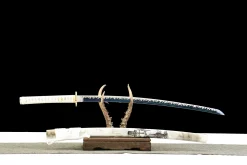
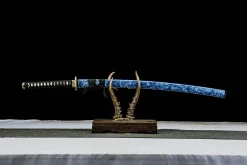
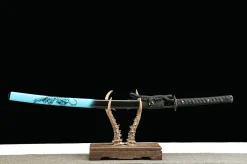
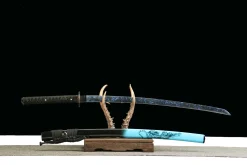
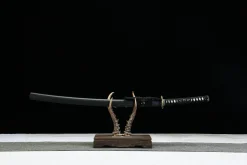
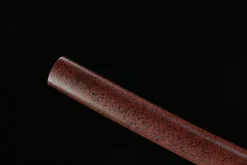
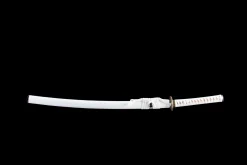
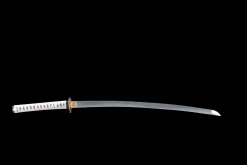
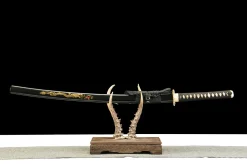
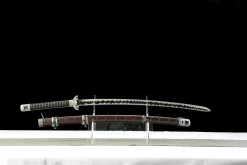
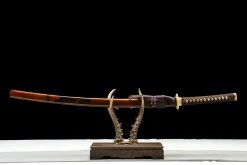
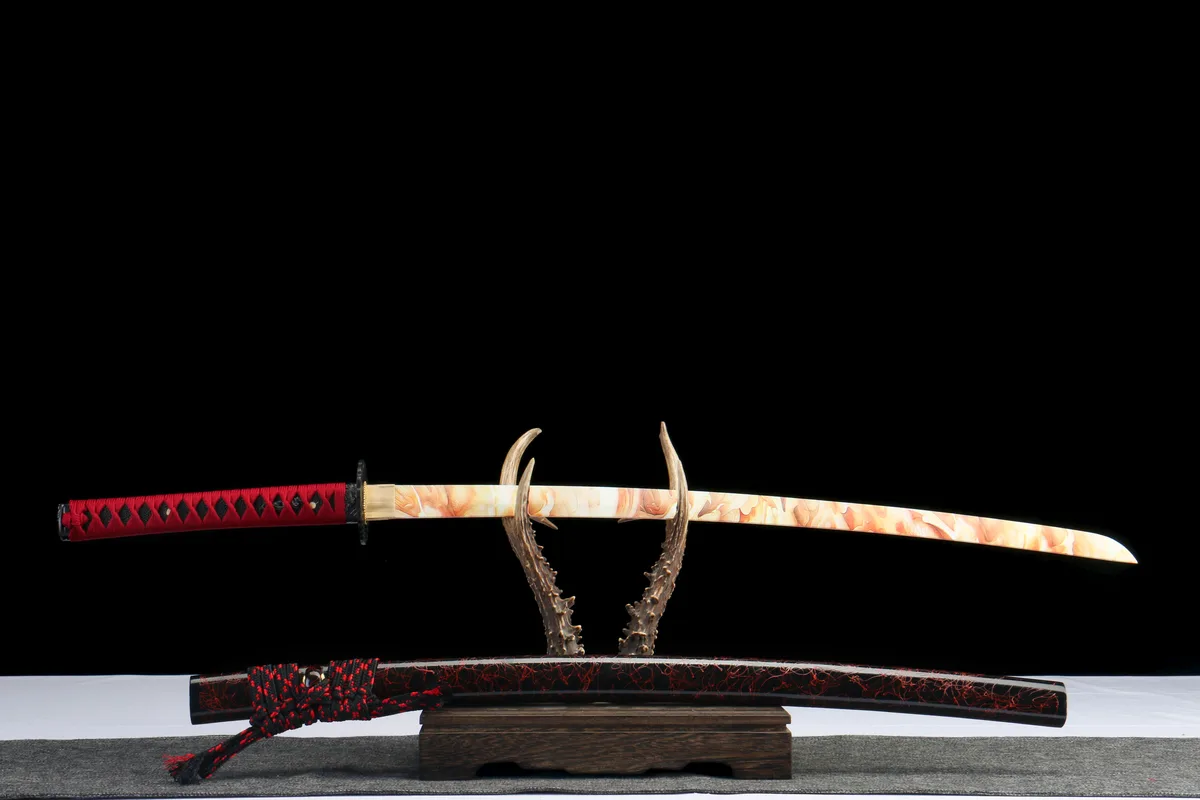
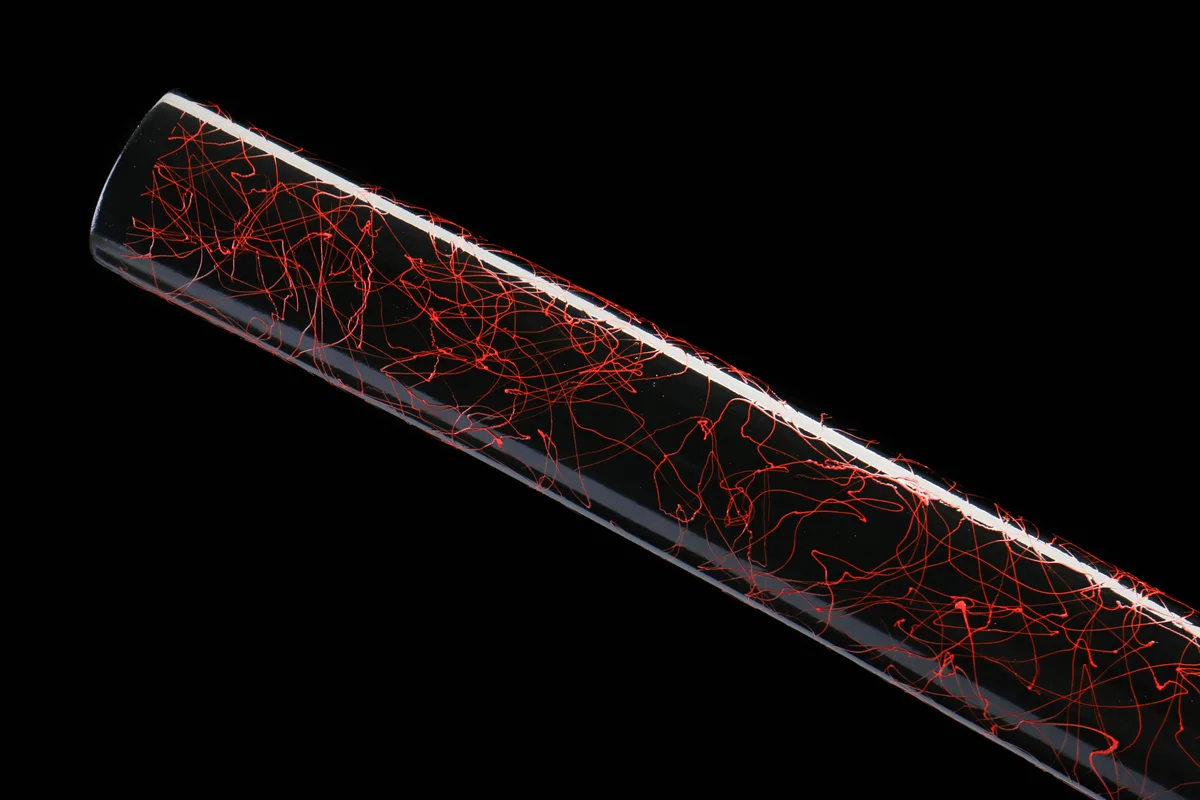
The piano-lacquer saya on this katana has a depth of finish that photographs differently from every angle – edge-on it reads almost black, face-on it throws back a broad, shallow reflection of whatever room it inhabits. That is the character of a well-applied solid-wood lacquer body, and on 惊鸿照影 – Fleeting Phoenix – it sets the stage for the shinogi-zukuri blade above it. The name translates roughly as the shadow-reflection of a startled swan in flight: something vivid, momentary, gone before you fully see it. The blade’s special-process surface finish captures that quality.
Specifications
| Blade Steel | 1045 Carbon Steel, Special Process |
| Total Length | 102.0 cm / 40.2 in |
| Blade Length | 72.0 cm / 28.3 in |
| Blade Width | 3.2 cm |
| Weight | 1040 g / 36.7 oz |
| Heat Treatment | Temper |
| Fittings | Alloy |
| Handle | Cotton Ito Wrap |
| Sheath | Solid Wood Piano-Lacquer Finish |
Steel & Construction
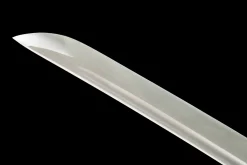
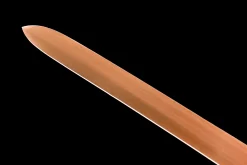
The blade is 1045 carbon steel, tempered and finished through a special process that produces a consistent surface tone across the full shinogi-zukuri (ridged) geometry. Shinogi-zukuri – the profile style used here – means the blade has a distinct central ridge line that divides the upper flat from the lower bevel. It is the defining visual geometry of the classical Japanese katana, and at 72 cm it presents as a long, architecturally clean object. The 3.2 cm width at the base gives the blade genuine visual weight without reading as a broad-bladed piece – the taper toward the kissaki (tip) is gradual and proportionally correct.
The piano-lacquer hardwood saya (scabbard) presents a continuous gloss surface that serves as a neutral foil for the steel above it. Neither competes with the other. Mounted horizontally, the piece reads as a unified object rather than a blade with accessories.
Handling
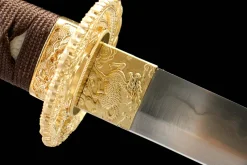
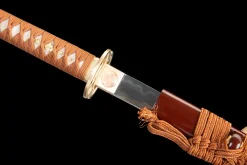
The 27 cm tsuka (handle) – long enough to place both hands comfortably with room between them – is wrapped in cotton ito (cord) in the classic lozenge diamond pattern. The tension is even across the full handle length, and the individual lozenges are crisp at the edges rather than soft or loosely wound. The alloy tsuba (guard) sits flush between saya and tsuka without play. Draw from the piano-lacquer saya is smooth and consistent, the koiguchi (saya mouth) releasing the blade cleanly along its full 72 cm. For display photography, the cotton wrap reads best under warm directional light that picks up the texture of each diamond against the recessed wrap beneath it.
Care Instructions
Wipe the blade with a clean, dry cloth after every handling session – the special-process surface will show fingerprint oxidation if oils are left on the steel. The piano-lacquer saya should be polished occasionally with a clean microfiber cloth and kept away from prolonged exposure to direct sunlight, which will dull the gloss over time. A light application of camellia oil on the blade face every few months will keep the steel surface stable and the finish consistent.
| Weight | 1.32 lbs |
|---|---|
| Dimensions | 102.0 × 3.2 × 0.7 in |
| Hamon | Decorative / Acid-Etched |
| Blade Steel | 1045 Carbon Steel |
| Total Length | 102.0 cm |
| Blade Length | 72.0 cm |
| Heat Treatment | Temper |
| Handle Wrap | Cotton Ito Wrap |
| Sheath Material | 实木钢琴烤漆鞘 |
| Fittings | Alloy |
| Forging Style | 鎬造 |
Related products