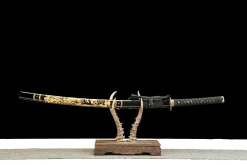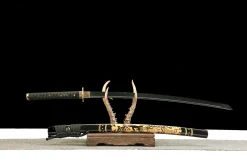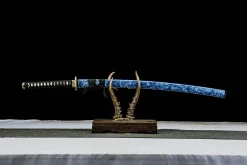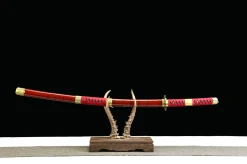

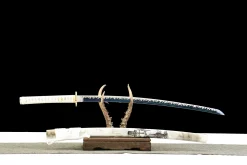
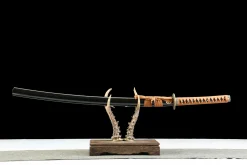


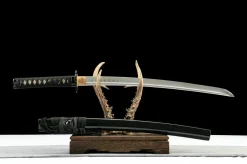
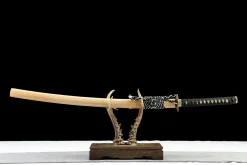


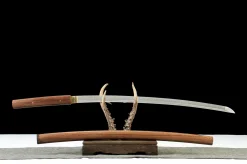



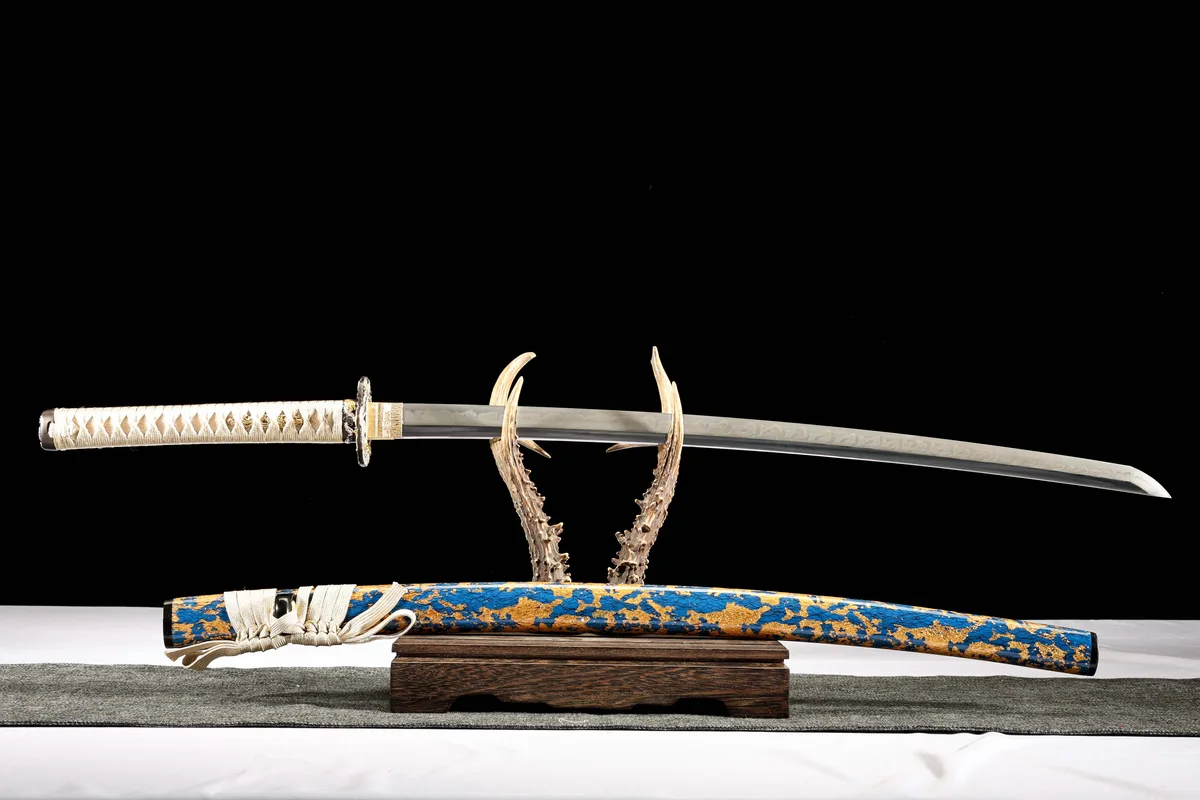

Frost Blossom Drifting Cloud – Hand Forged T10 Tool Steel Katana Sword
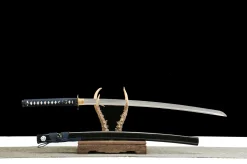
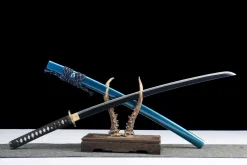
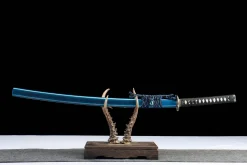
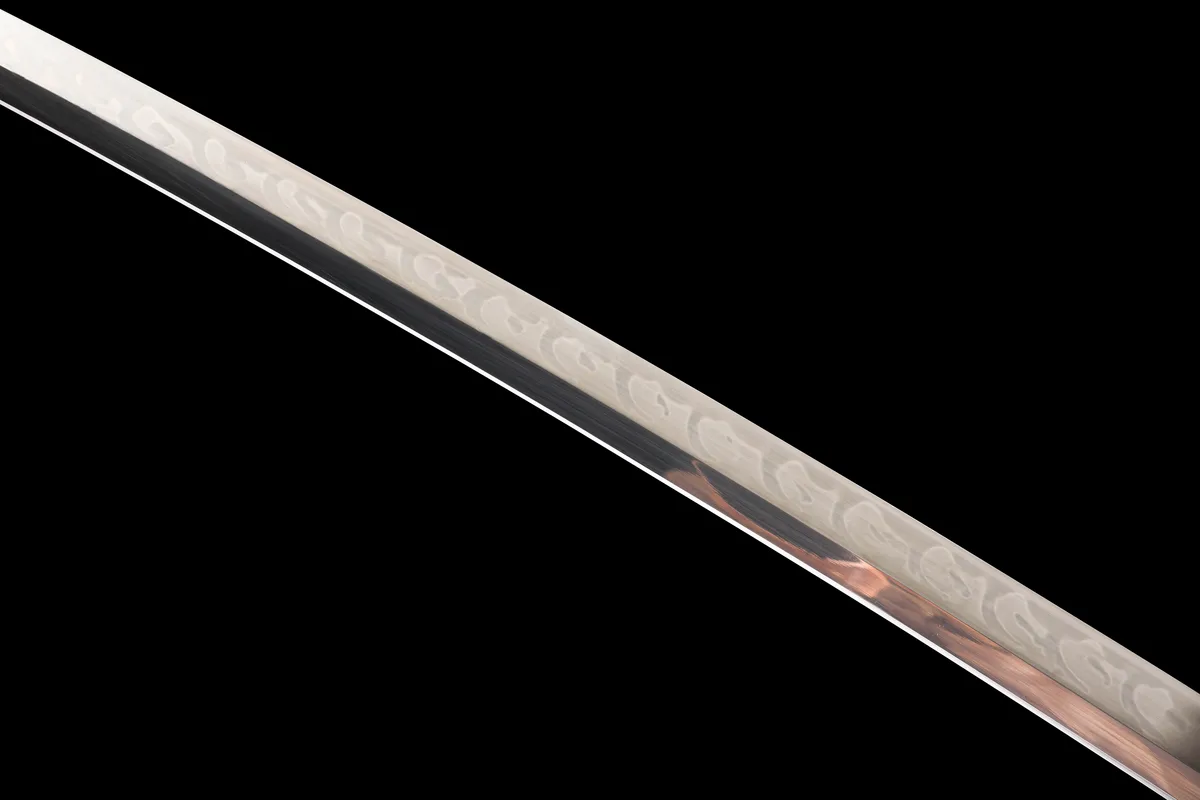
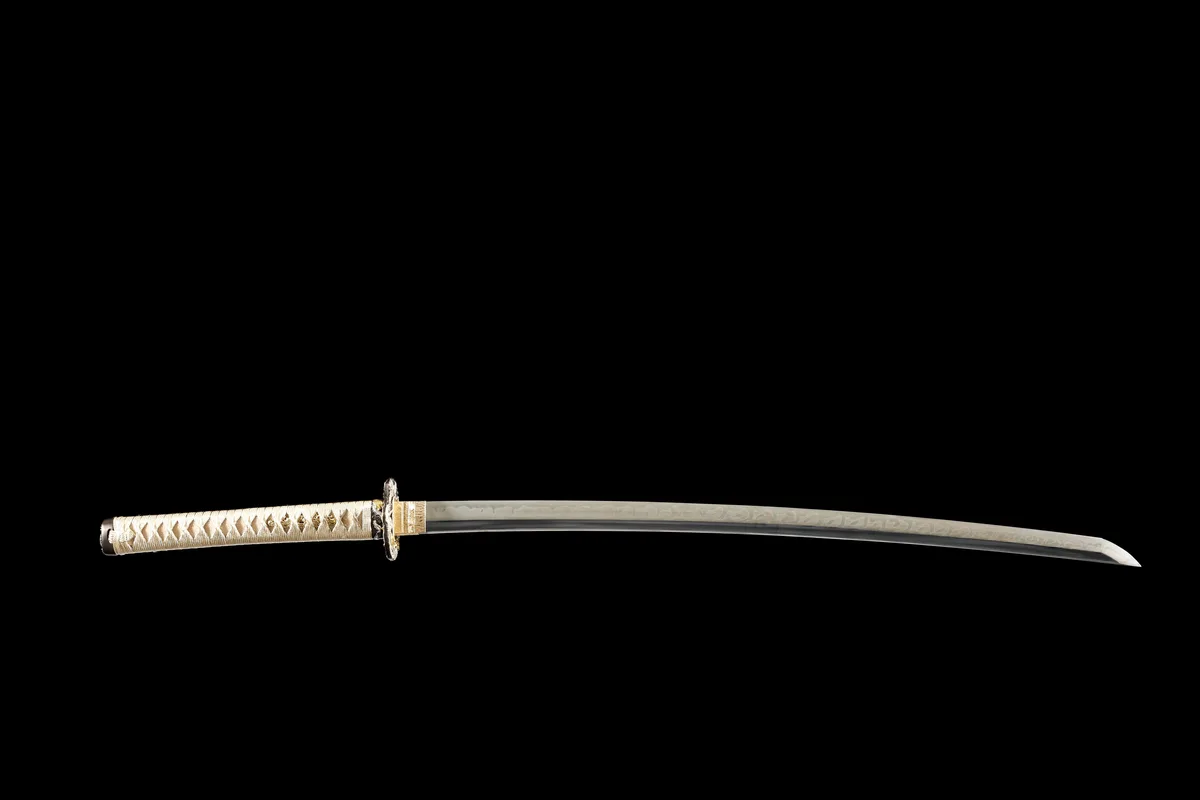
Hand-forged T10 Tool Steel katana (102cm total / 72cm blade), crafted in Longquan. Clay-tempered blade with a genuine hamon line — visible contrast between hardened edge and soft spine.
$1,949.99
Frost Blossom Drifting Cloud – Hand Forged T10 Tool Steel Katana Sword
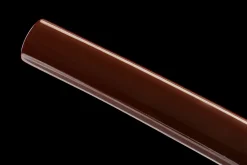
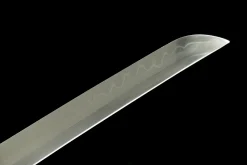
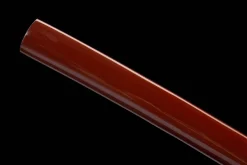
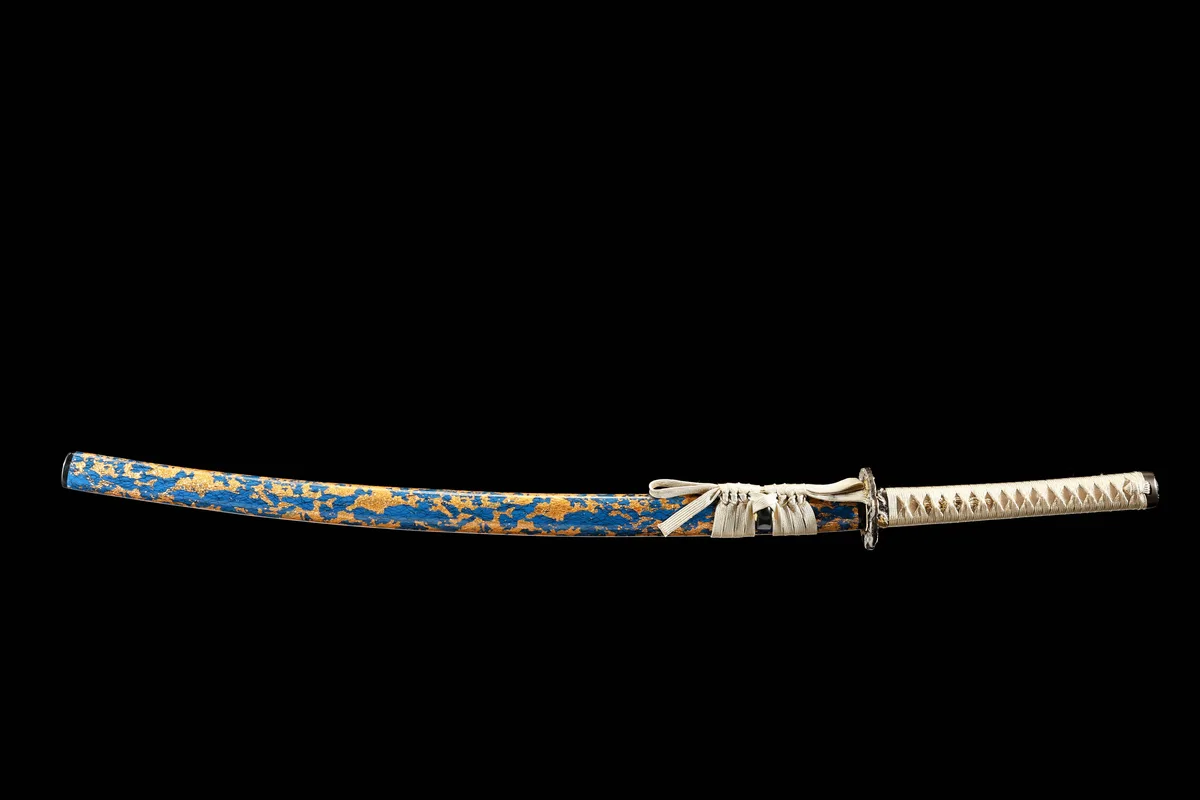
The hamon on this blade does not behave like most. It moves. Traced across T10 tool steel with differential clay tempering, the temper line on the Frost Blossom Drifting Cloud rises and retreats in loose, cloud-drifting formations – nie (the fine crystalline activity visible at the boundary) scattered across the habuchi (the transition zone between hard edge and soft spine) like frost settling on still water at first light. This is a 26-inch shinogi-zukuri (ridge-line geometry) blade finished in the classical tradition, paired with a lacquered gold-foil saya that belongs in no other category but the top.
Specifications
| Blade Steel | T10 High Speed Tool Steel |
| Total Length | 102.0 cm / 40.2 in |
| Blade Length | 72.0 cm / 28.3 in |
| Blade Width | 3.2 cm |
| Blade Thickness | 0.7 cm |
| Weight | 1040 g / 36.7 oz |
| Heat Treatment | Clay Tempering (Differential Hardening) |
| Fittings | Copper, gold-gilded silver (鎏金银) |
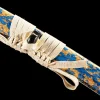
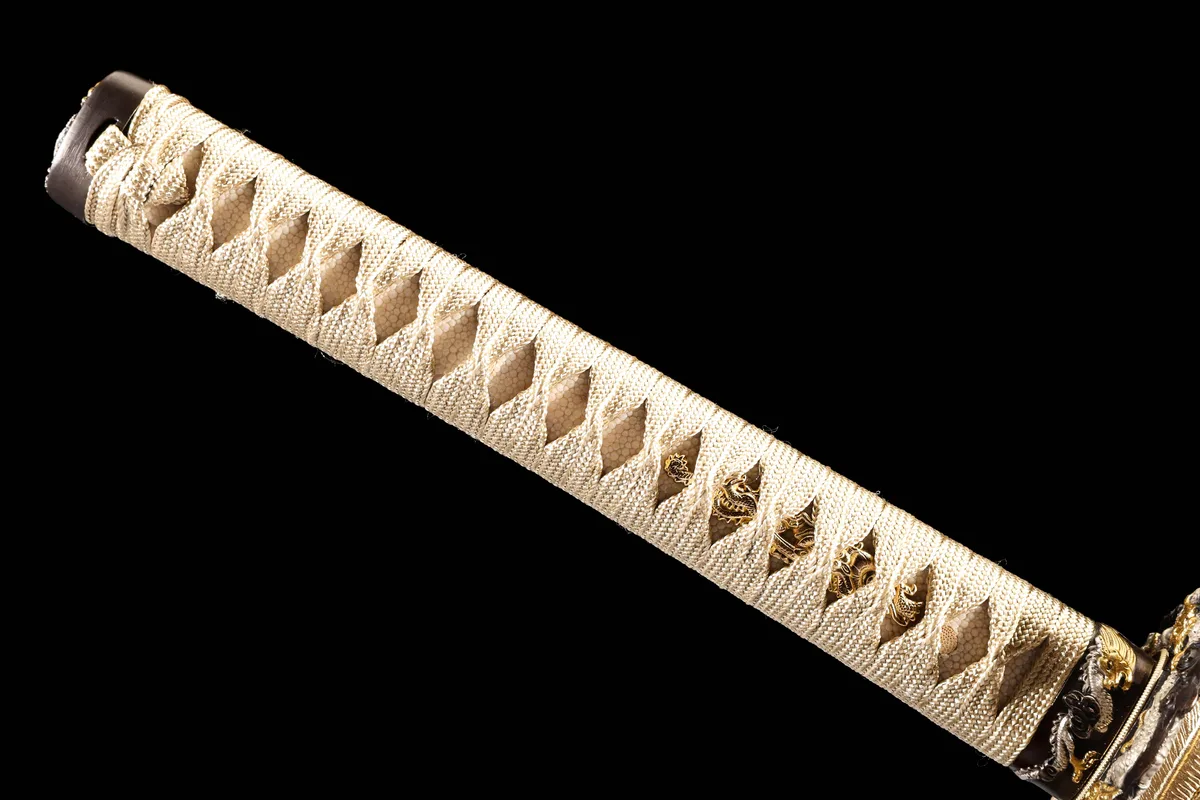
| Handle | Cotton ito wrap over genuine rayskin (same) |
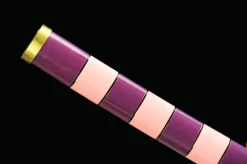
| Sheath | Urushi lacquer, gold foil (大漆 金箔鞘) |
The Steel
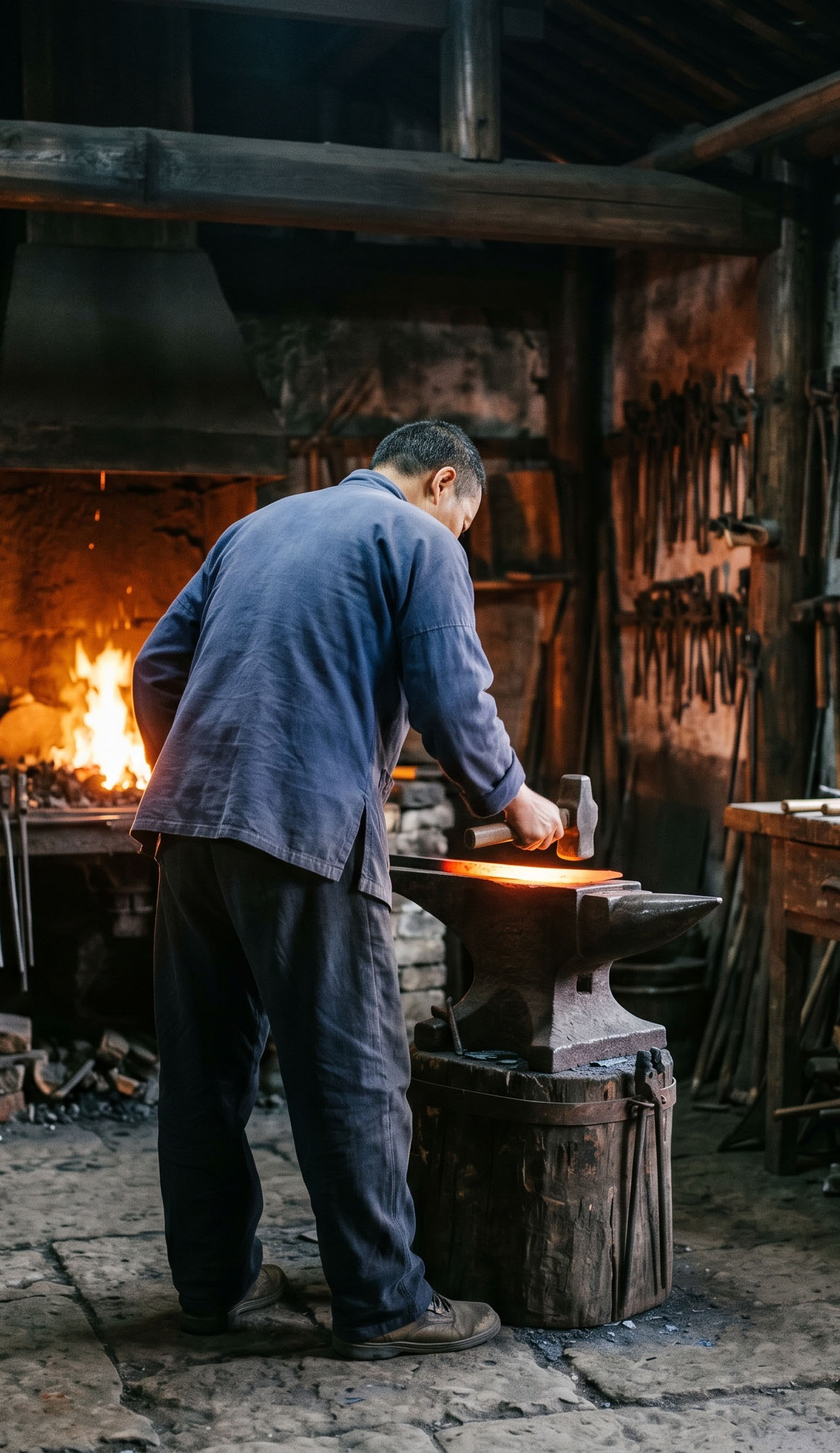
T10 tool steel sits at the serious end of the carbon steel spectrum. The tungsten content in T10 raises hardness potential and wear resistance above what standard high-carbon steels can sustain, and it responds to clay tempering with a level of hamon activity that softer steels simply cannot produce. The clay is applied to the spine before quenching – leaving the ha (cutting edge) to harden rapidly in the quench while the mune (spine) cools more slowly, remaining tough and impact-resistant. That thermal contrast is what creates the hamon (temper line) visible along the blade’s lower half: it is not cosmetic, not etched, not printed. It is structural evidence of differential hardness built into the steel itself.
The yokote line – the crisp demarcation where the blade geometry transitions from the main body to the kissaki (tip) – is cleanly defined on this blade, confirming the hand-polishing work done at the forge. The shinogi-zukuri profile, with its raised central ridge running the blade’s length, is the canonical geometry of the Japanese katana: it distributes cutting force efficiently while maintaining a blade cross-section that resists lateral flex under stress.
In Your Hands
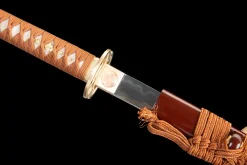
The 27 cm handle is wrapped in cotton ito over genuine same (rayskin), the raised nodules of the rayskin locked under the wrap creating grip that does not shift under the hand regardless of moisture or extended use. The grip is long enough for a confident two-handed hold without crowding the hands together. Drawing from the 大漆 gold-foil lacquered saya, the koiguchi (mouth of the sheath) releases with the precise resistance you expect from a properly fitted lacquered sheath – not stiff, not loose. At 72 cm of blade, the draw arc is deliberate and committed; this is a full-length katana that rewards controlled movement.
Care
Wipe the blade after every handling with a soft cloth lightly coated in choji oil (clove-mineral oil blend) to prevent oxidation on the high-carbon steel surface. The urushi lacquer saya should be stored away from direct sunlight and extreme humidity fluctuation, which can cause the lacquer layer to crack over time. Keep the blade properly seated in the saya when not in use, and re-oil every four to six weeks during storage.
| Weight | 1.32 lbs |
|---|---|
| Dimensions | 102.0 × 3.2 × 0.7 in |
| Hamon | Real Hamon (Clay Tempered) |
| Blade Steel | T10 Tool Steel |
| Total Length | 102.0 cm |
| Blade Length | 72.0 cm |
| Heat Treatment | Clay Tempering (Differential Hardening) |
| Handle Wrap | Cotton Ito Wrap 真鱼皮 |
| Sheath Material | 大漆 金箔鞘 |
| Fittings | 铜装鎏金银 |
| Forging Style | 鎬造 |
Related products