



Frost Edge Untested – Hand Forged 1045 Carbon Steel Katana Sword
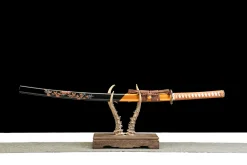
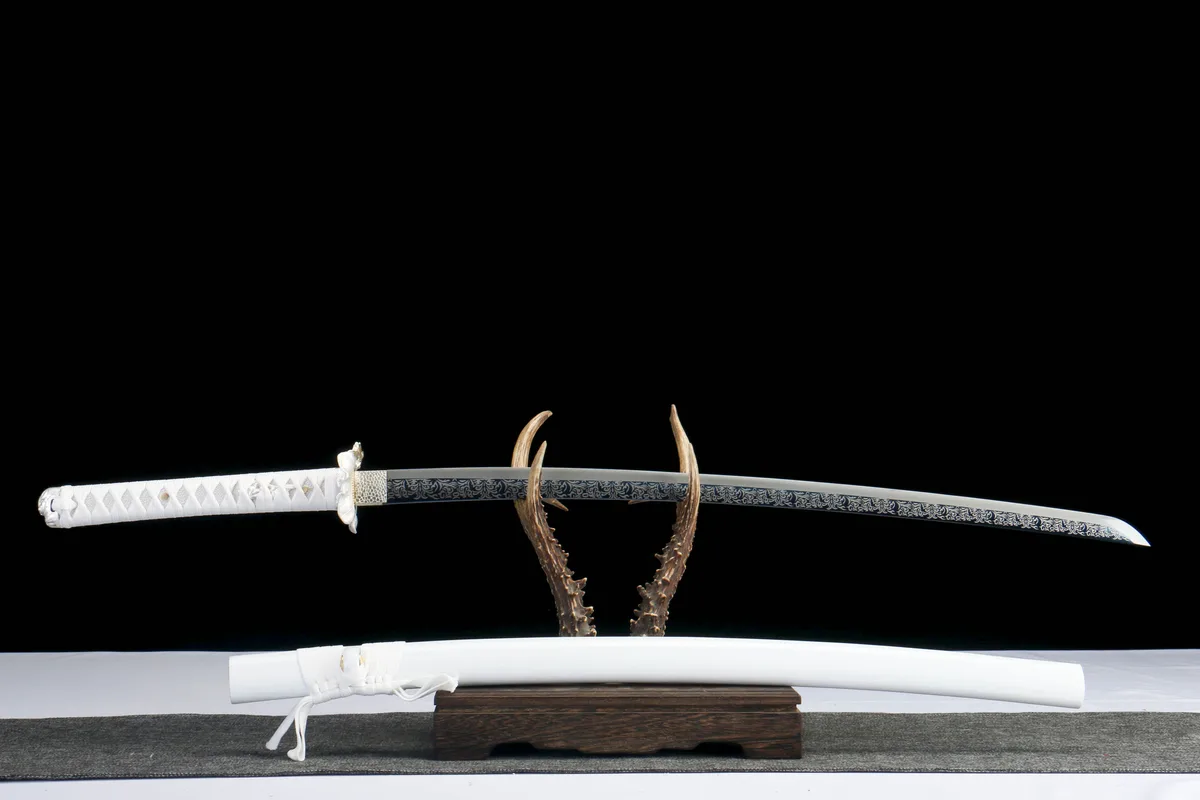
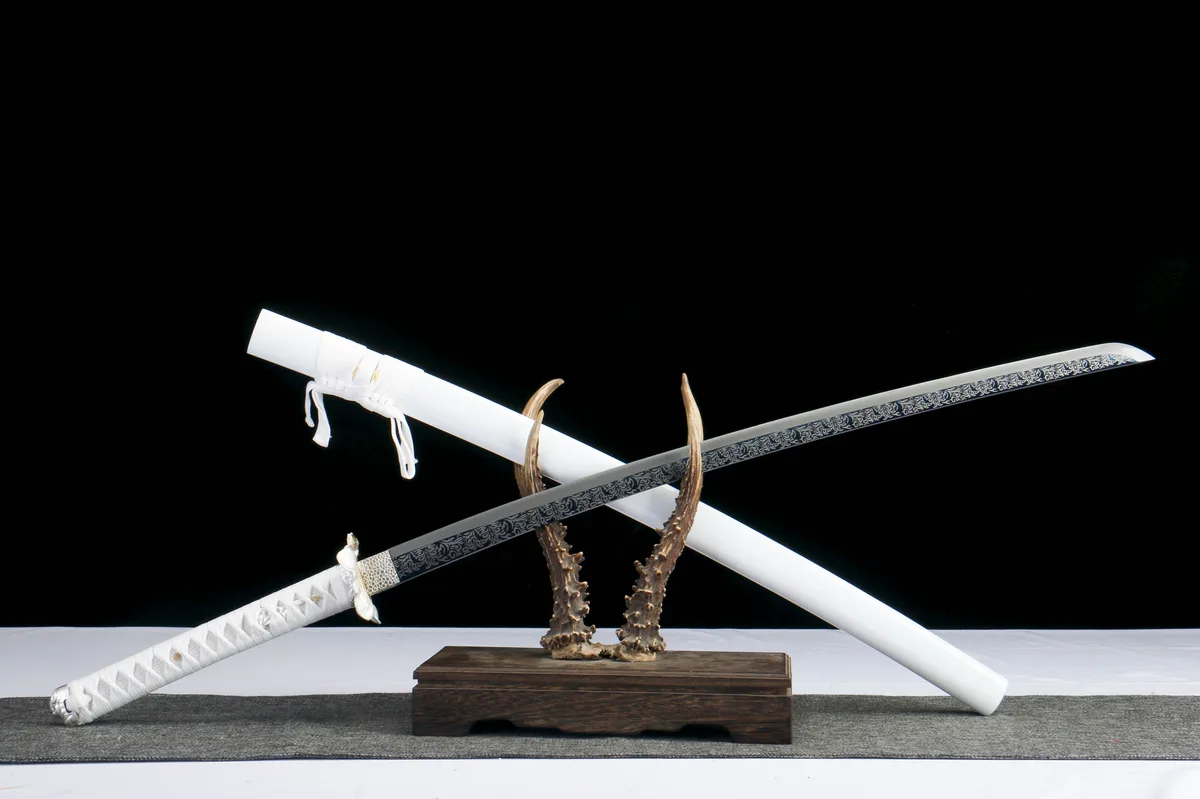
Hand-forged 1045 Carbon Steel katana (102cm total / 72cm blade), crafted in Longquan. Full-tang 1045 carbon steel, hand-fitted koshirae, ready for practice cutting or display.
$179.99
Frost Edge Untested – Hand Forged 1045 Carbon Steel Katana Sword
霜刃未试 – Frost Edge Untested – takes its name from a Tang dynasty line about a new blade still undrawn from its sheath, its edge still cold and clean and theoretical. That image of latent, contained presence is exactly what this piece delivers as a display object: something that looks like it holds a secret it has not yet told.
Specifications
| Blade Steel | 1045 Carbon Steel, Special Process |
| Total Length | 102.0 cm / 40.2 in |
| Blade Length | 72.0 cm / 28.3 in |
| Blade Width | 3.2 cm |
| Weight | 1040 g / 36.7 oz |
| Heat Treatment | Temper |
| Fittings | Alloy |
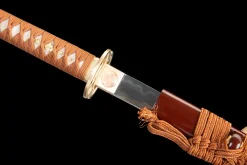
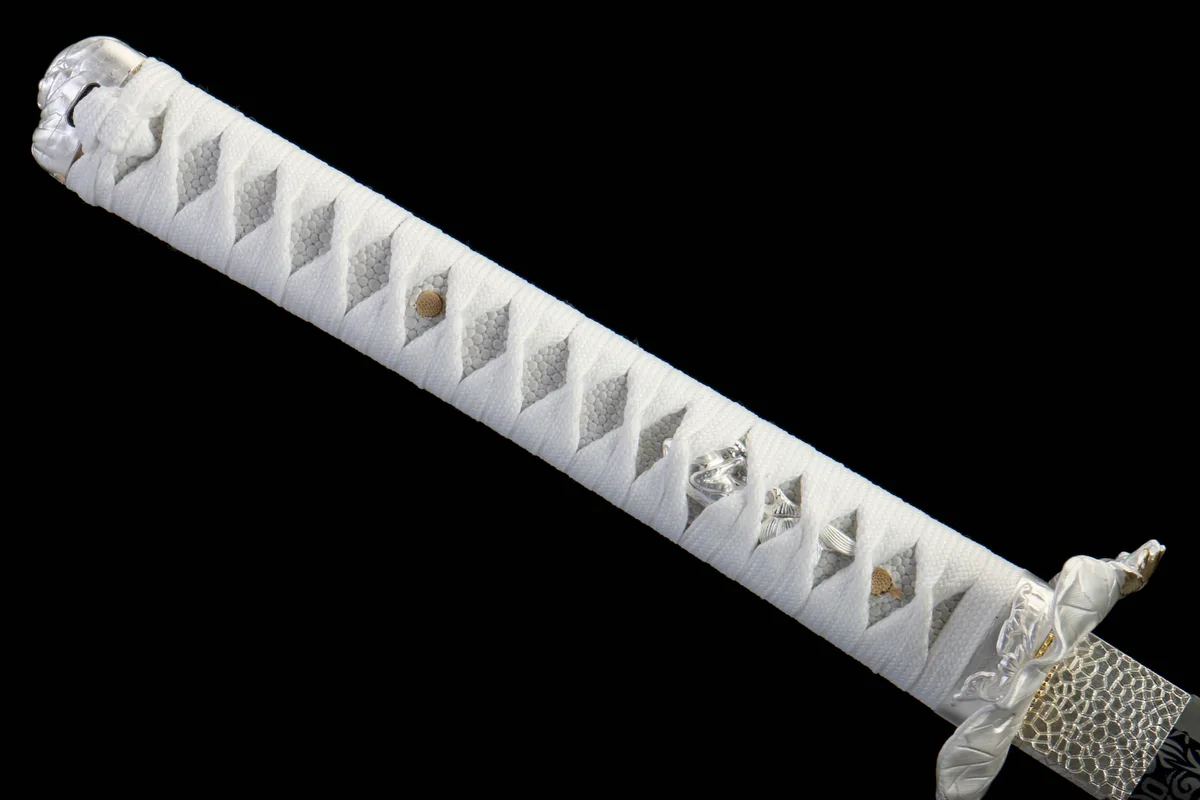
| Handle | Cotton ito wrap |
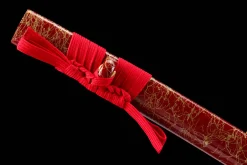
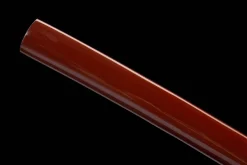
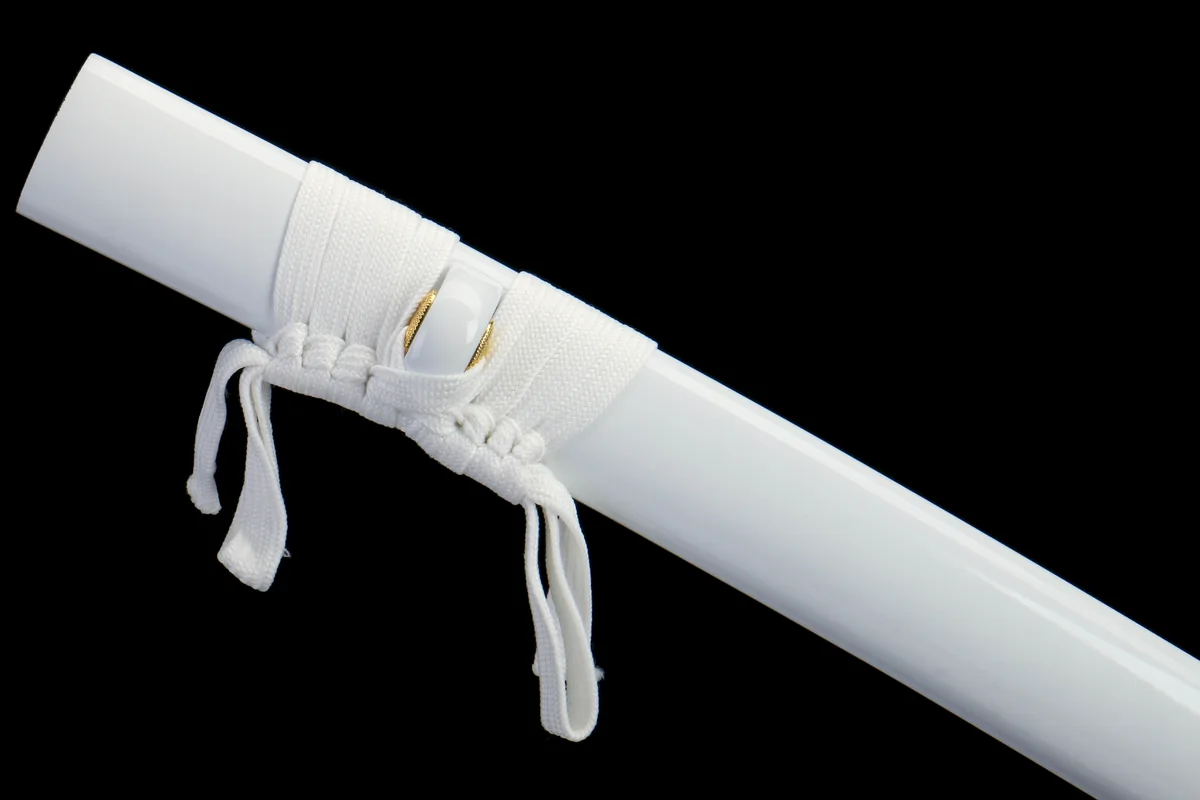
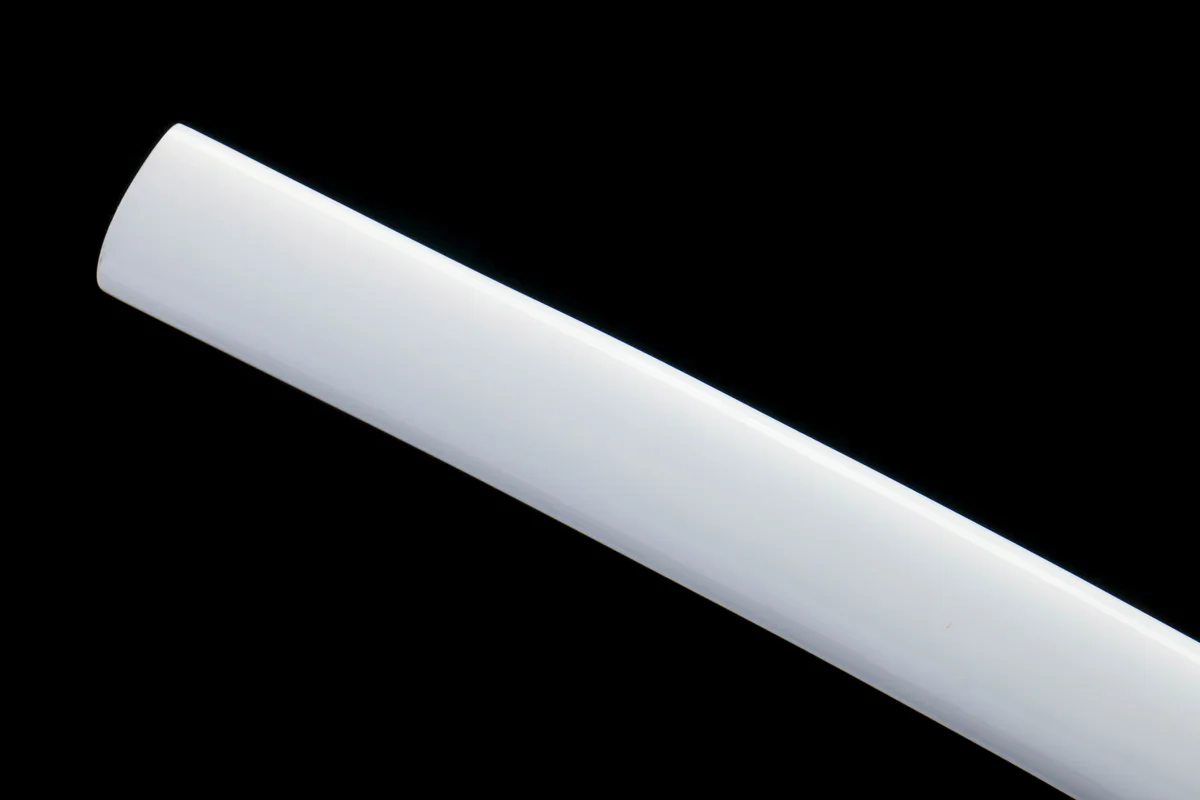
| Sheath | Solid wood, piano lacquer, hollow carved floral relief (实木钢琴烤漆空心花) |
What the Steel Does
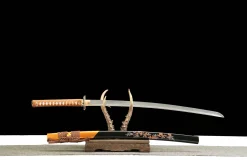
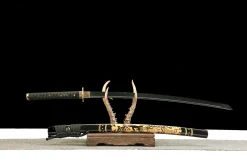
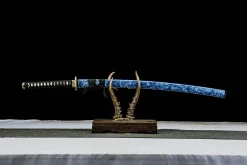
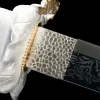
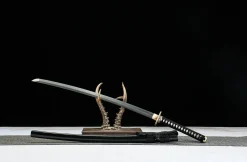
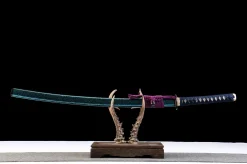
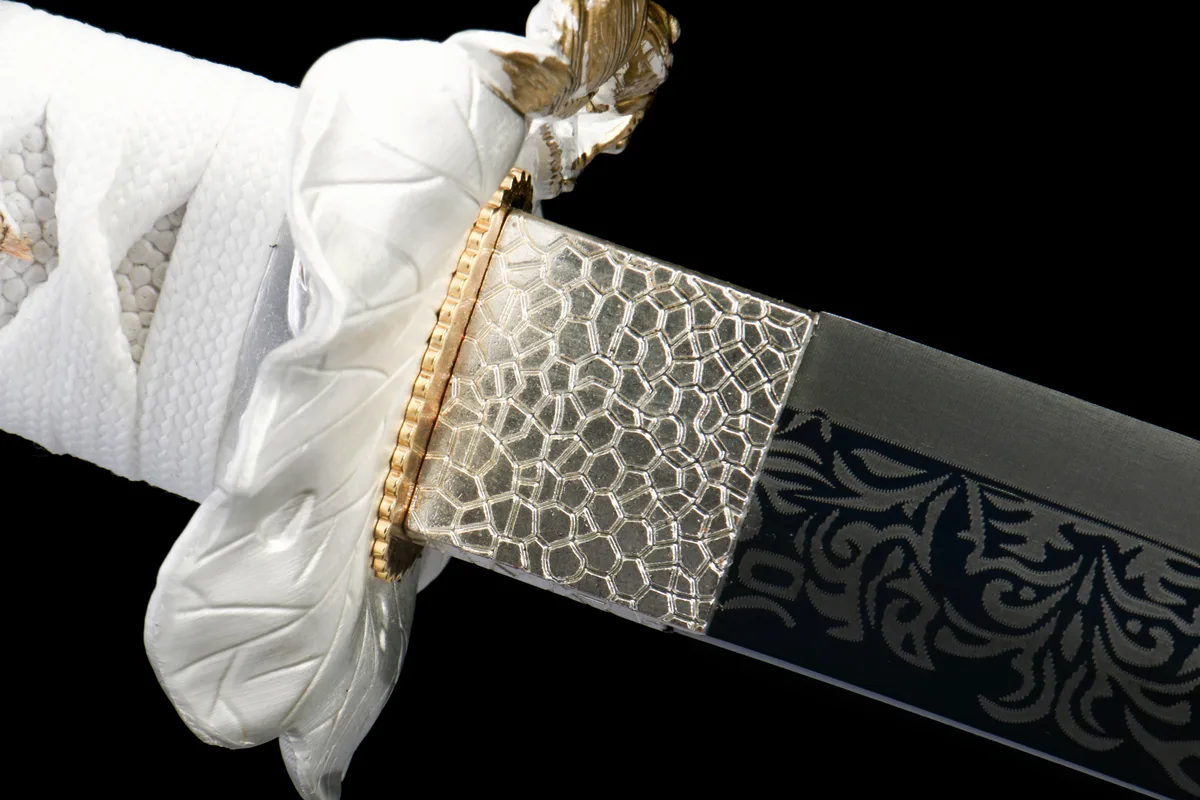
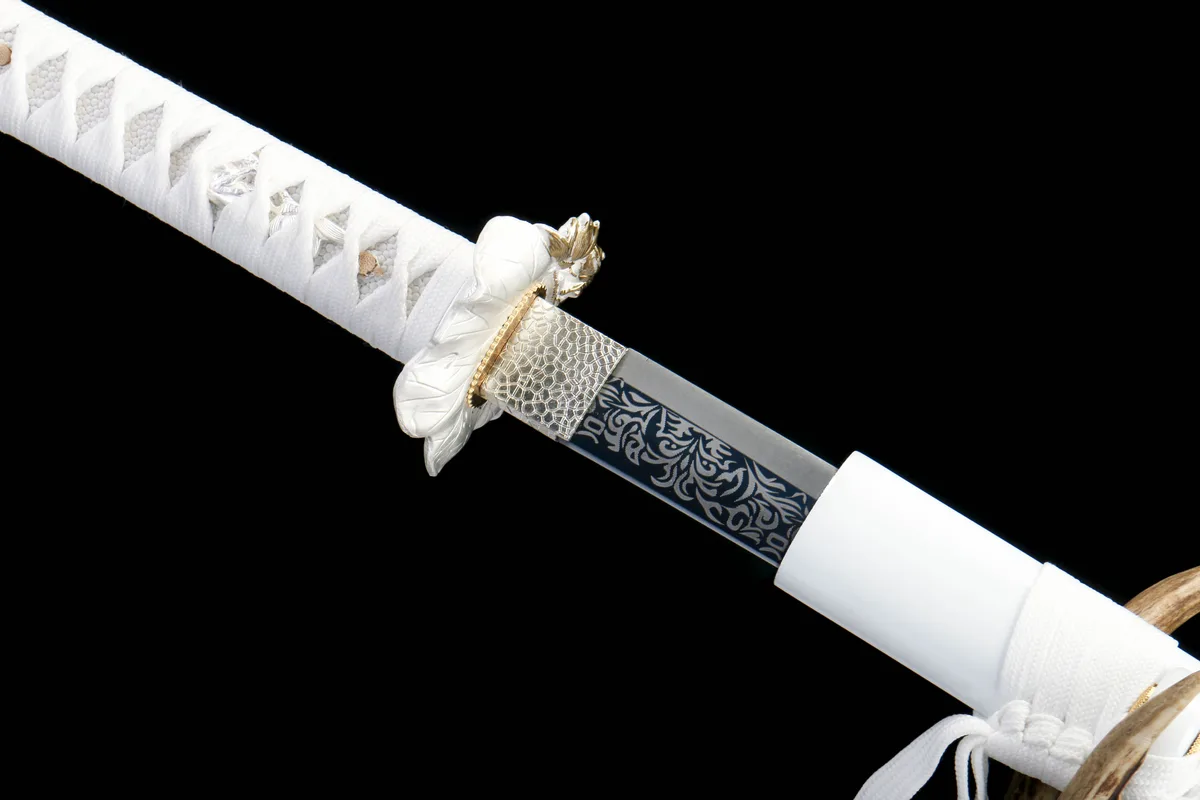
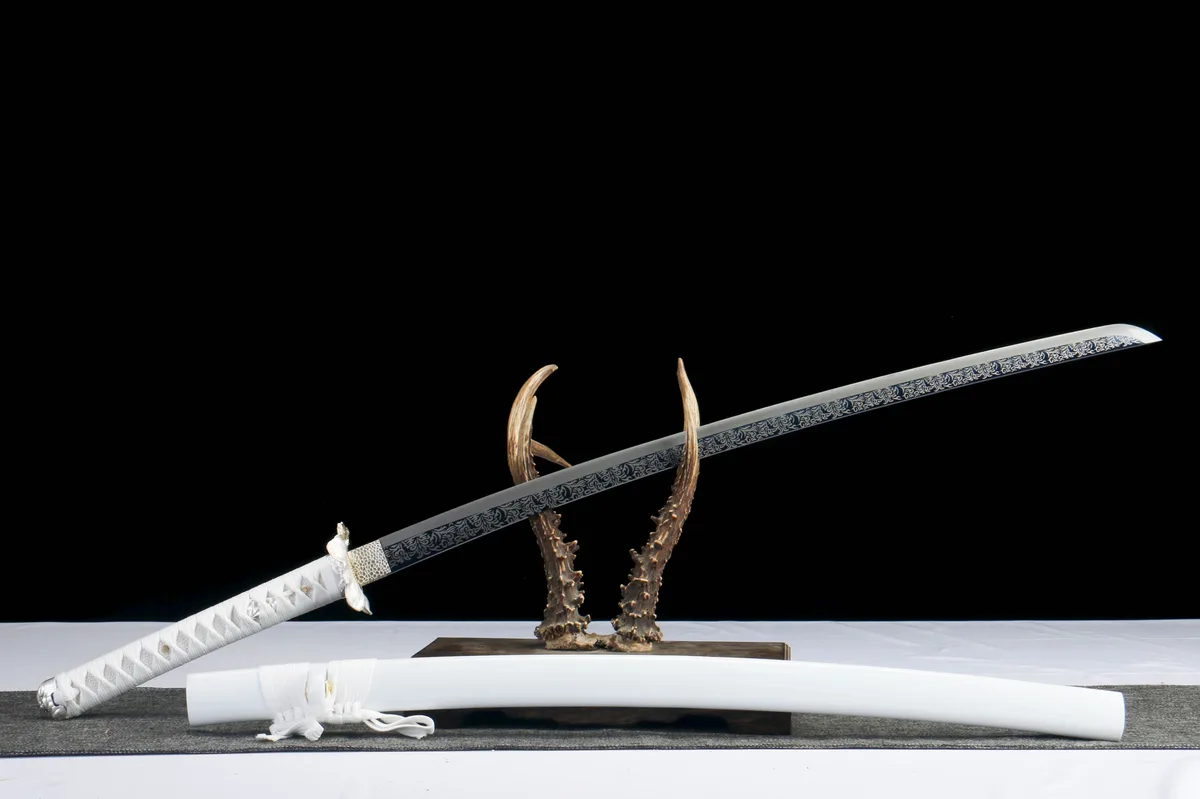
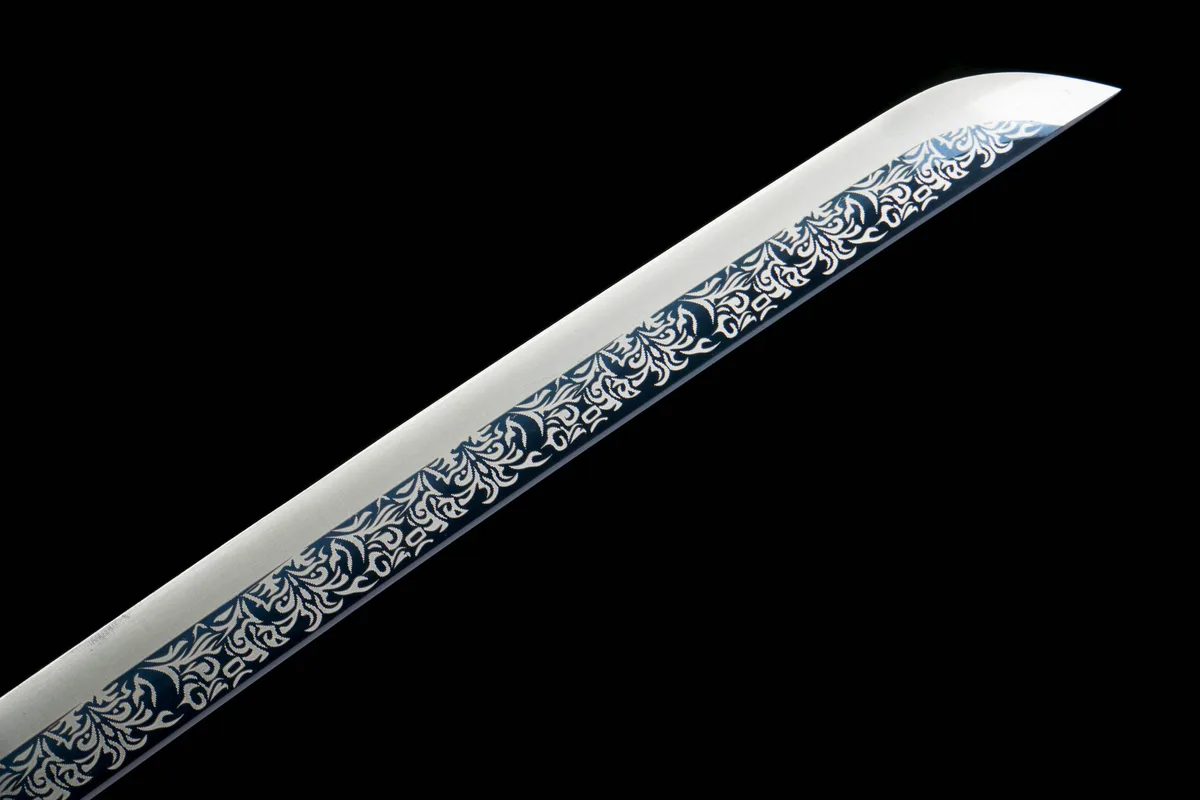
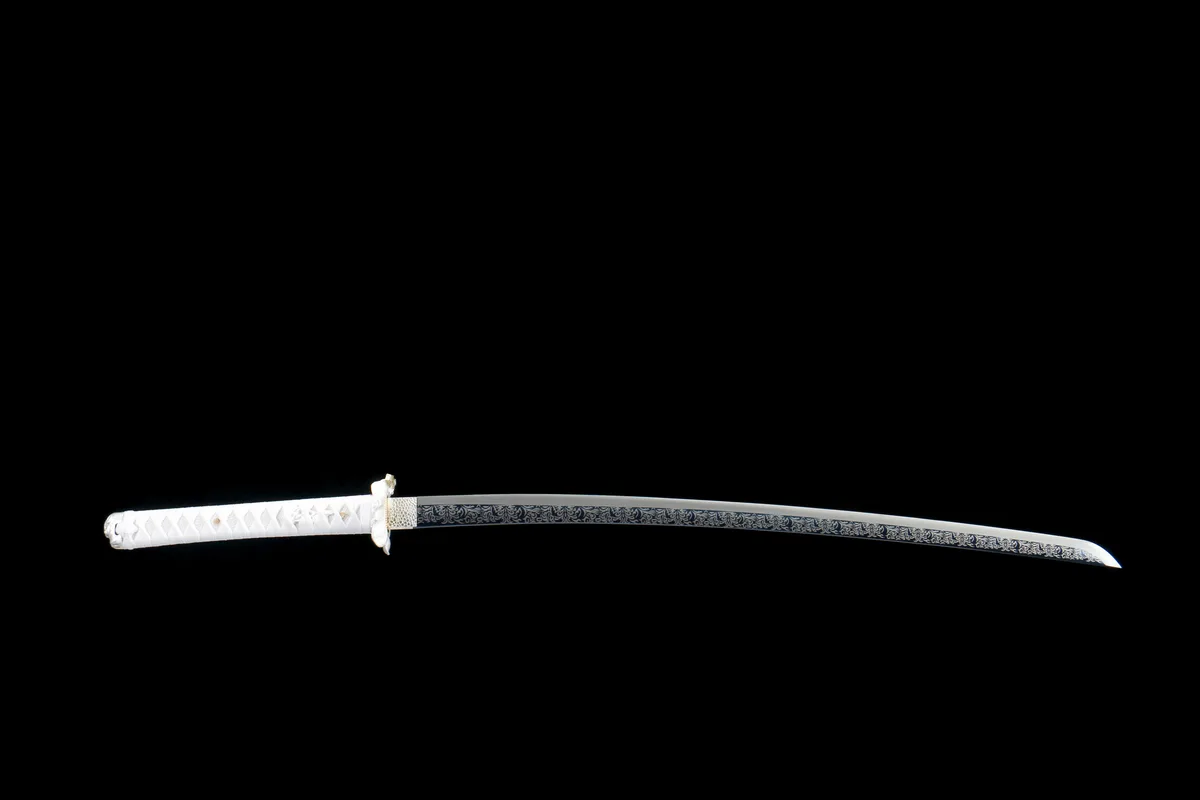
The blade is ground to shinogi-zukuri (鎬造) geometry – the ridgeline profile of classical Japanese katana construction, where a defined shinogi ridge runs the length of the blade separating the flat ji from the angled ha. On this piece, the 1045 carbon steel receives a special surface process that leans into the frost imagery of the name: a pale, cool finish that reads blue-white at certain angles and near-silver at others, depending on the light source. It is not a mirror polish and it is not a blued finish – it occupies a middle register that photographs with unusual clarity and holds the eye in person without the harshness of a fully polished blade.
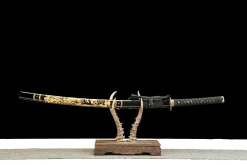
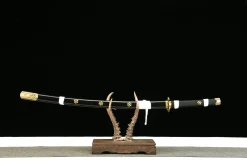
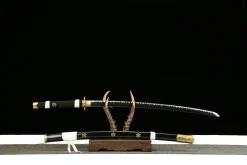
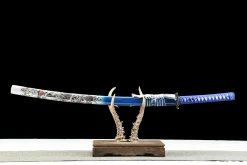
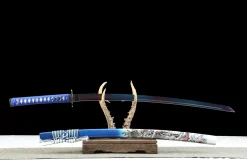
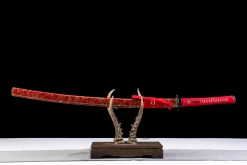
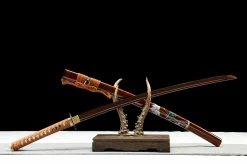
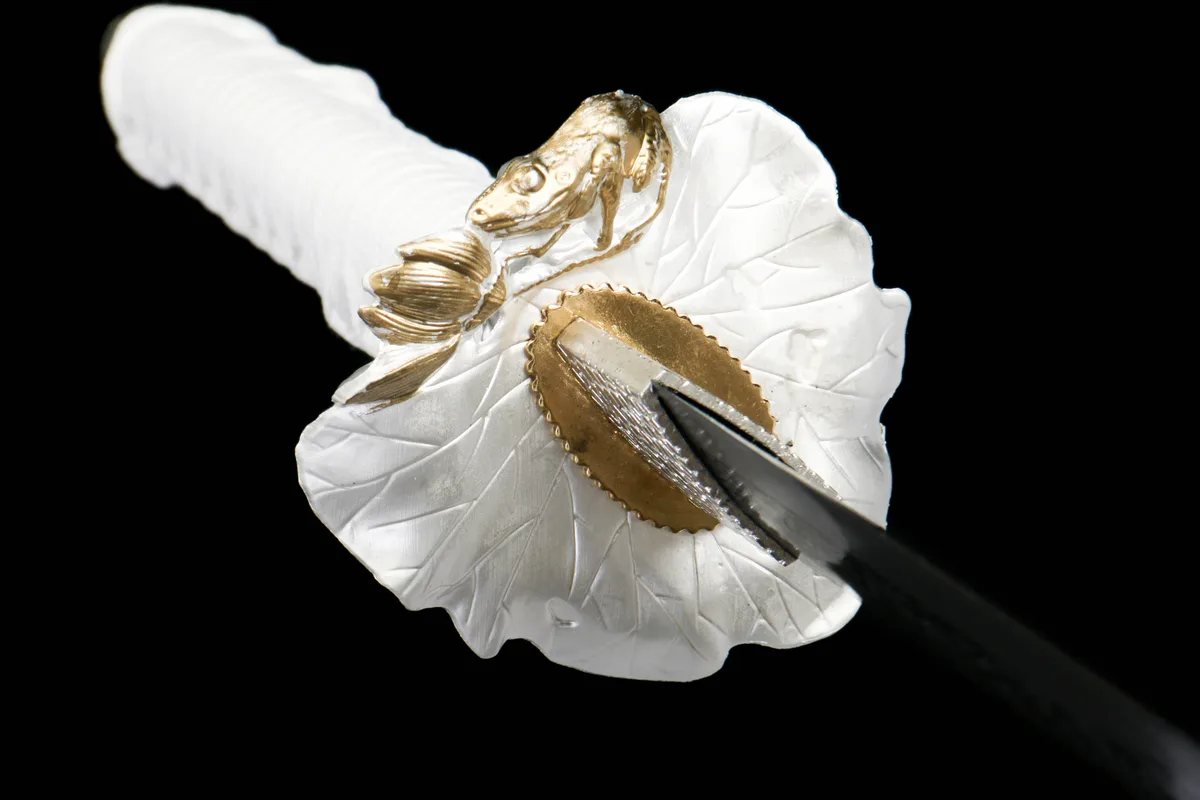
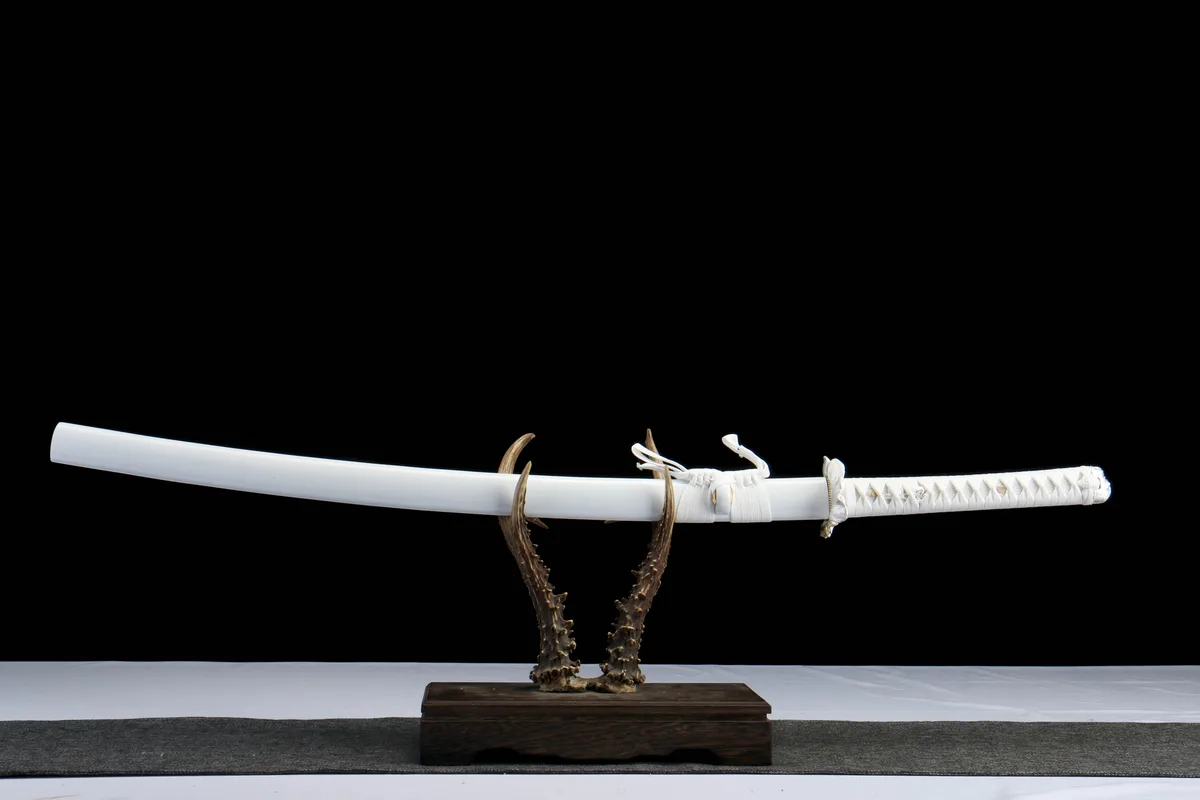
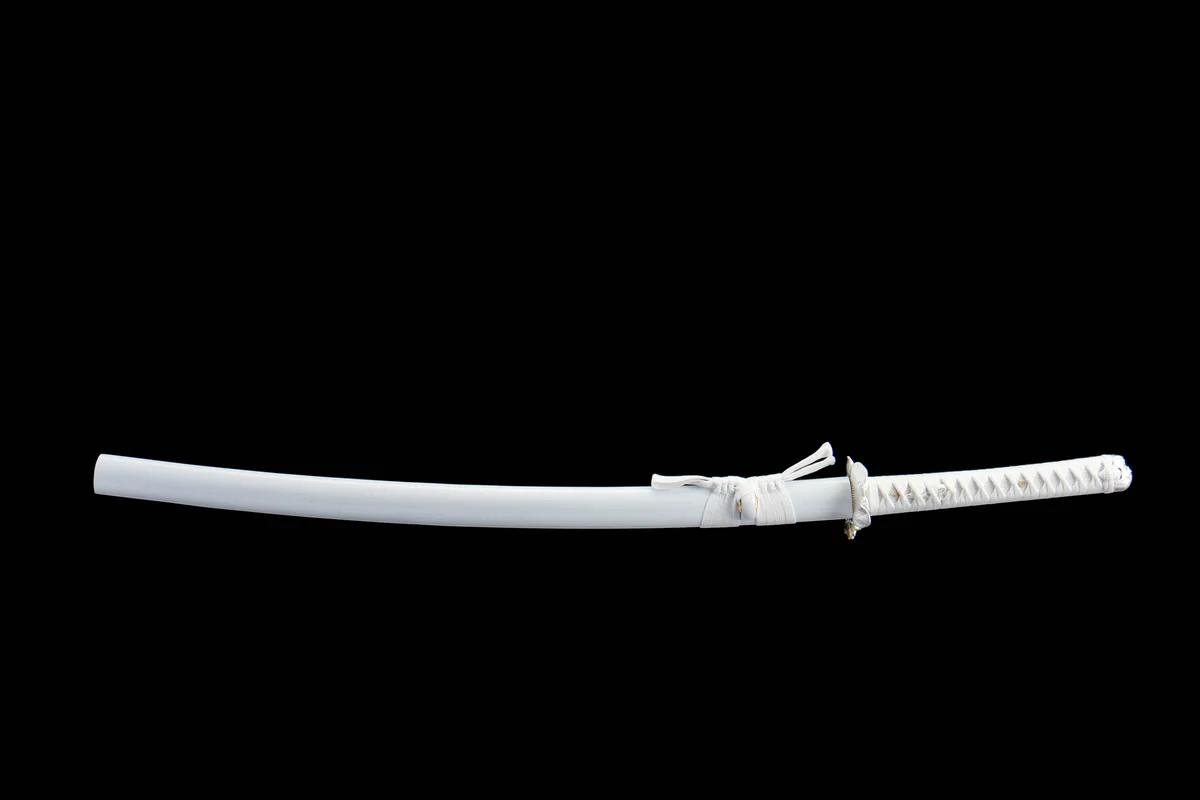
The hollow carved floral saya (sheath) – 实木钢琴烤漆空心花, solid wood with piano lacquer and openwork relief carvings – provides the compositional anchor. The deep lacquer ground and the dimensional carvings create a visual warmth that offsets the cool blade tone, and the alloy fittings bridge those two registers. The piece reads as a composition rather than a collection of components, which is the correct target for a display sword of this character.
The Feel of It
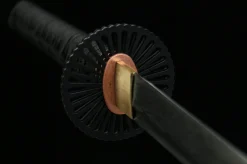
The cotton ito wrap along the 27 cm handle is wound tight and close in the diamond pattern, the crossings raised just enough to define the grip under the hand. The draw from the piano lacquer saya is clean – the solid wood core holds its shape precisely, and the lacquer surface allows the blade to seat and clear without resistance. With the sword drawn and held horizontally against a wall or display surface, the pale blade reads against the dark saya, the 72 cm curve of the shinogi-zukuri profile visible in its full length. Mounted on a horizontal wall stand with the saya beside it, the carved floral relief catches directional light from the side and the depth of the openwork becomes fully visible – the piece earns its name most completely in that configuration.
Maintenance Notes
Apply camellia oil to the blade surface on a soft cloth every few months, working from the spine toward the edge, to preserve the special-process finish against humidity. The piano lacquer saya holds its gloss well with routine dusting using a soft cloth – do not use silicone-based furniture polish, which can cloud the lacquer over time. The hollow carved relief sections respond well to a clean, soft-bristled brush for removing settled dust from the recessed areas.
| Weight | 1.32 lbs |
|---|---|
| Dimensions | 102.0 × 3.2 × 0.7 in |
| Hamon | Decorative / Acid-Etched |
| Blade Steel | 1045 Carbon Steel |
| Total Length | 102.0 cm |
| Blade Length | 72.0 cm |
| Heat Treatment | Temper |
| Handle Wrap | Cotton Ito Wrap |
| Sheath Material | 实木钢琴烤漆空心花 |
| Fittings | Alloy |
| Forging Style | 鎬造 |
Related products