
























Ghost of Tsushima – Hand Forged T10 Tool Steel Katana Sword
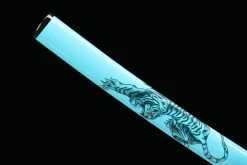
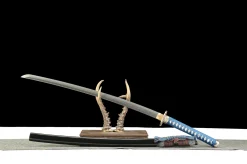
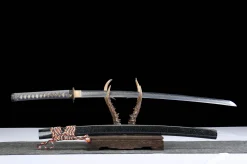
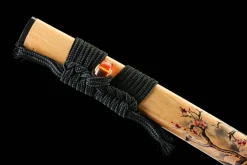
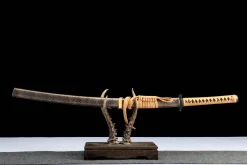
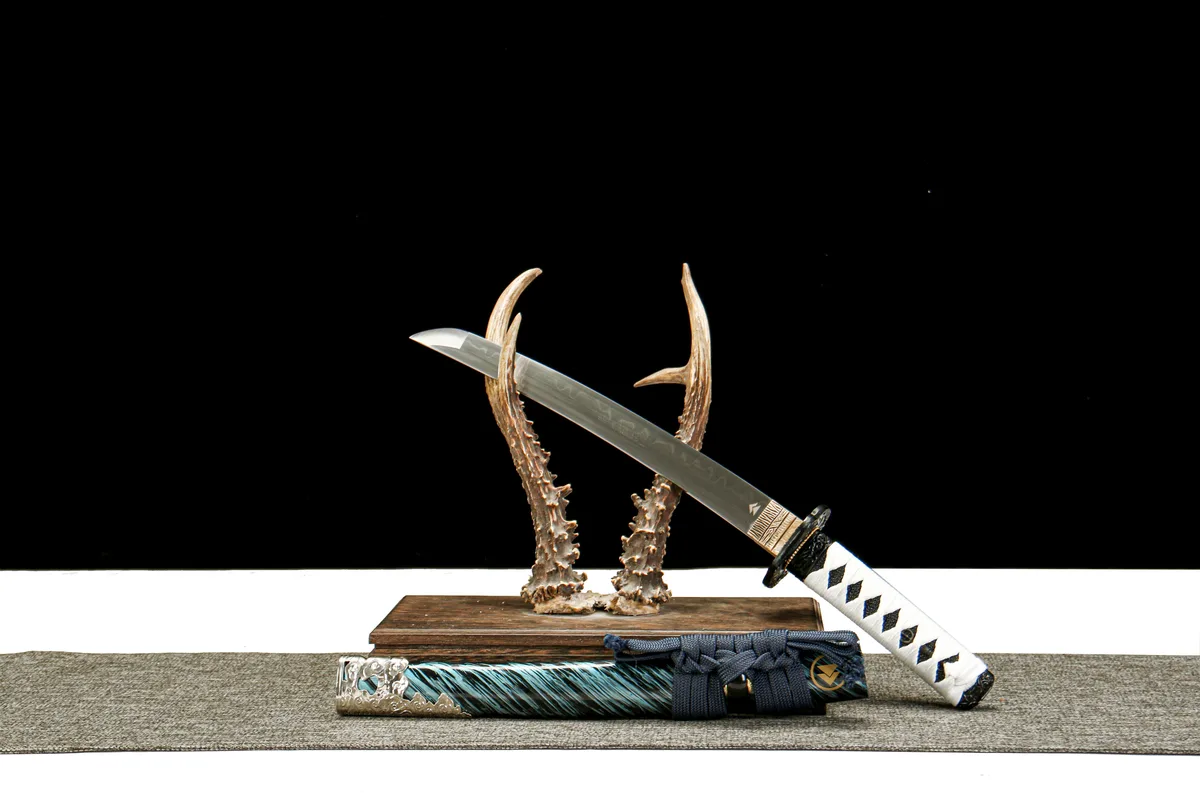
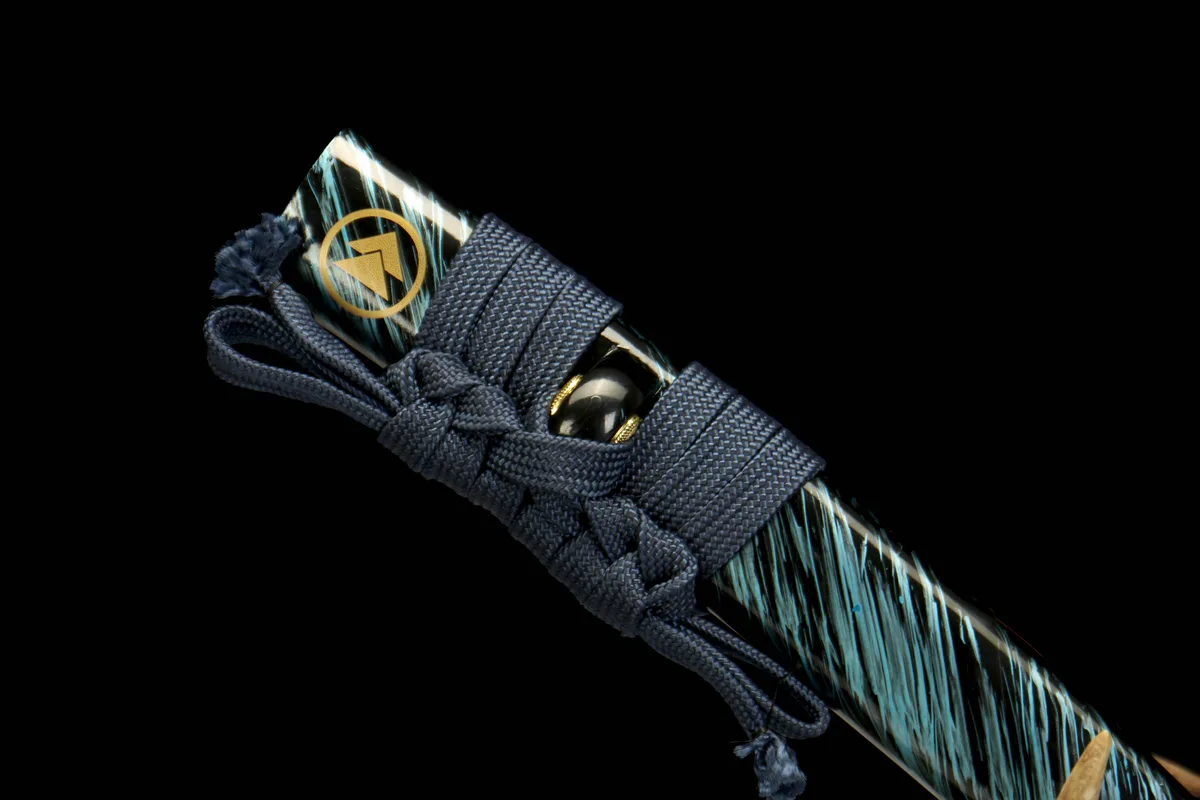
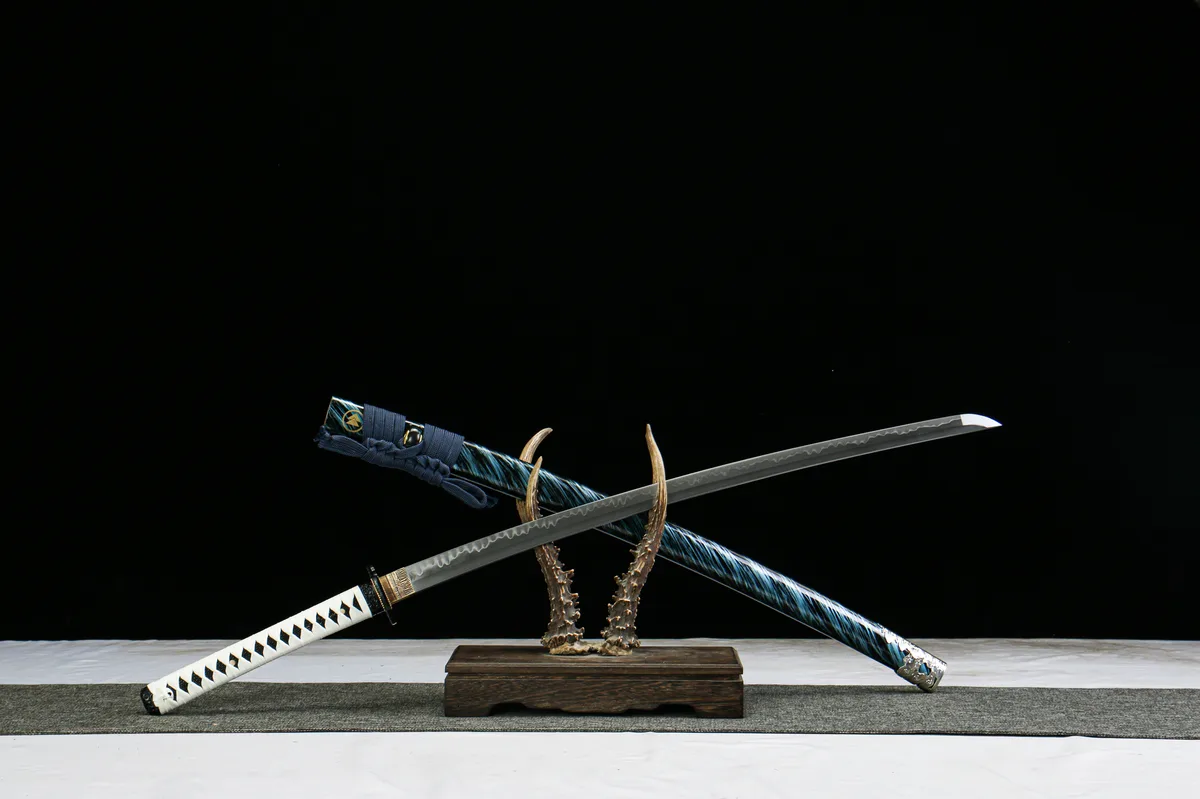
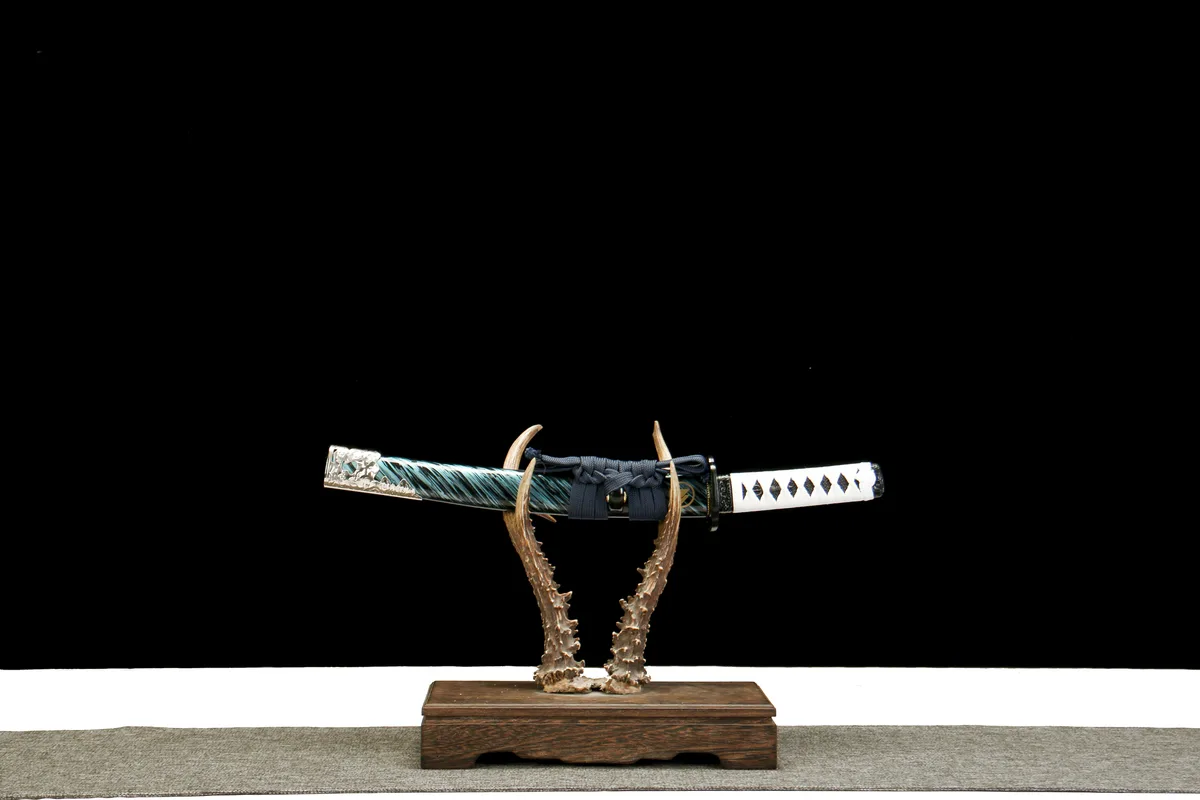
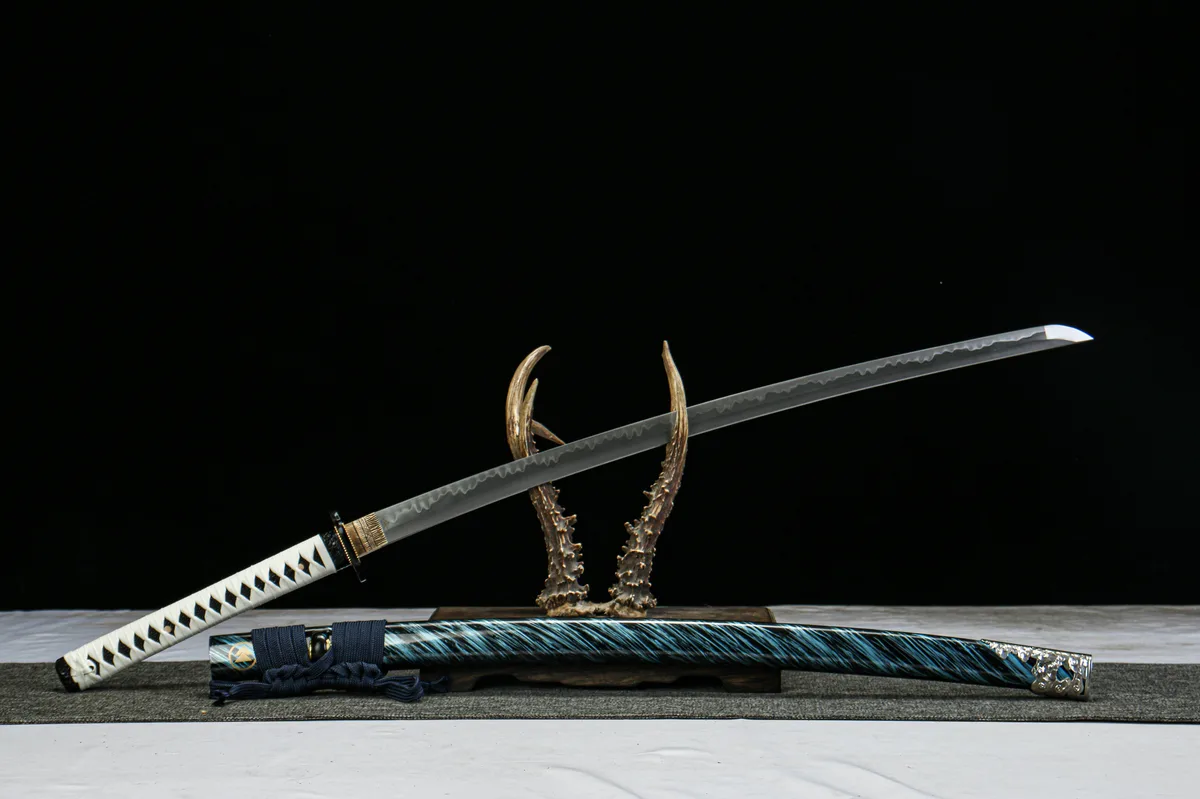
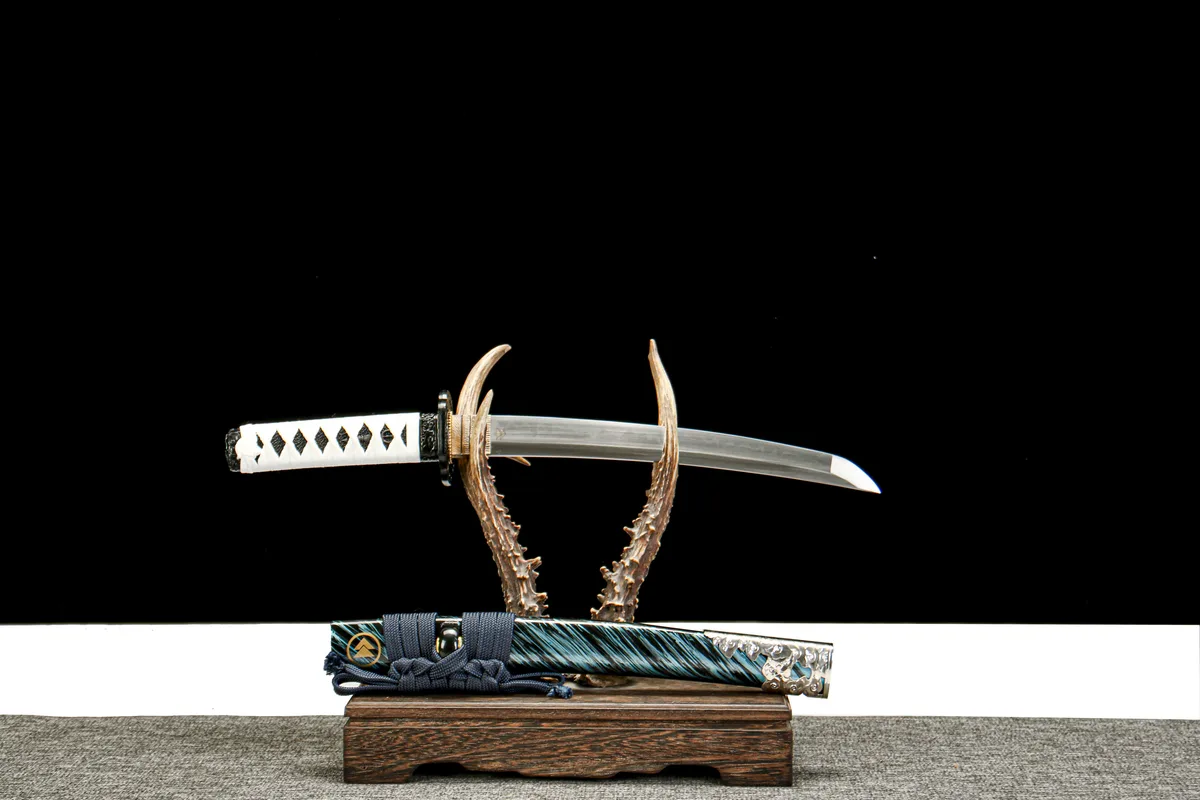
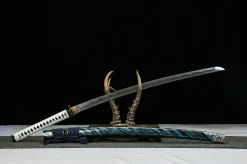
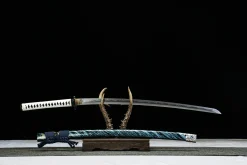
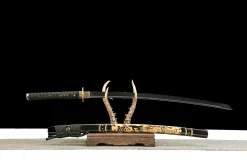
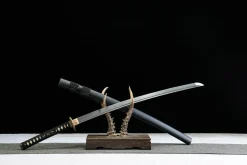
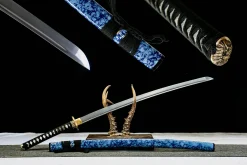
The Ghost of Tsushima — Hamon Edition (对马岛之魂·烧刃款) katana is a full-length, clay-tempered T10 tool steel sword built for fans and collectors who want Jin Sakai’s iconic blade rendered at true katana scale — 103 cm overall, with a genuine differential-hardened hamon that no two swords share. Where the companion wakizashi captures the intimacy of close-quarters combat, this katana version commands the room: a 72 cm blade with the visual authority of a real samurai’s primary weapon, housed in a green Aohada saya. Priced at $250, it brings authentic clay-tempering to a pop-culture tribute at a cost that surprises even experienced buyers.
Specifications
| Blade Steel | T10 High Speed Tool Steel, Clay Tempered (Differential Hardening) |
| Total Length | 103.0 cm / 40.6 inches |
| Blade Length | 72.0 cm / 28.3 inches |
| Blade Width | 3.2 cm |
| Weight | 950 g / 33.5 oz (net) |
| Heat Treatment | Oil Quench & Temper (Clay Tempered / Differential Hardening) |
| Fittings | Zinc Alloy |
| Handle | Cotton Ito Wrap |
| Sheath | Green Bark Wood (Aohada) |
Craftsmanship & Materials
Choosing T10 tool steel for a $250 katana is a statement of intent from the Longquan smiths behind this blade. T10 — a tungsten-enhanced high carbon steel in the 0.95–1.05% carbon range — demands more precise temperature control during forging and heat treatment than the more common 1060 or 1065 steels, but rewards that extra attention with superior edge retention and wear resistance at the cutting edge. For a Ghost of Tsushima tribute piece, where the blade must look extraordinary under display lighting, T10’s capacity to take a mirror-bright polish makes it the natural choice. The steel’s fine grain structure, revealed during the polishing stages, gives the blade a depth and clarity that catches and holds light in a way that plainer carbon steels simply cannot match.
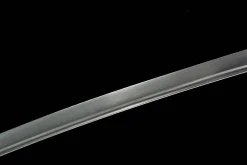
The clay-tempering process applied to this katana is the same differential hardening technique that defined authentic nihonto (Japanese swords) for centuries. Refractory clay is painted thick along the mune (spine) and thinned or removed along the ha (edge) before the blade enters the quench. The result is a hard edge zone approaching HRC 60+ and a tougher, springier spine — exactly the performance duality the samurai depended upon. More visibly, the quench produces the hamon: a natural temper line whose shape, texture, and activity are determined by the clay application and the individual smith’s hand. On this katana, the extended 72 cm blade gives the hamon room to develop fully, creating a display that rewards close study. No two Ghost of Tsushima katanas share the same hamon — each is a document of a single heat-treatment event.
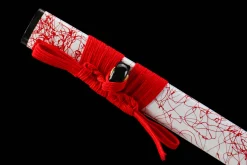
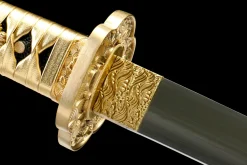
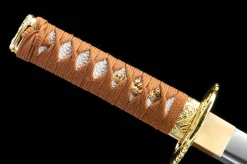
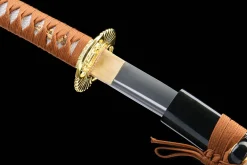
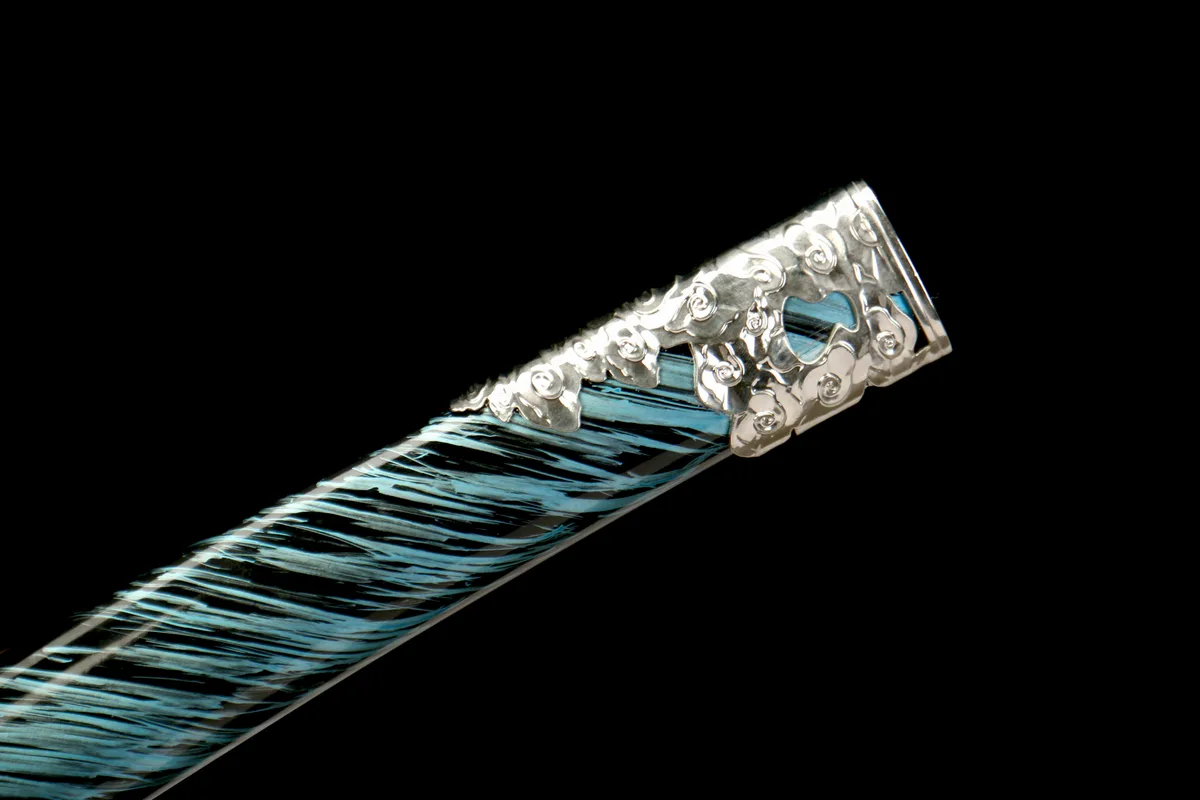
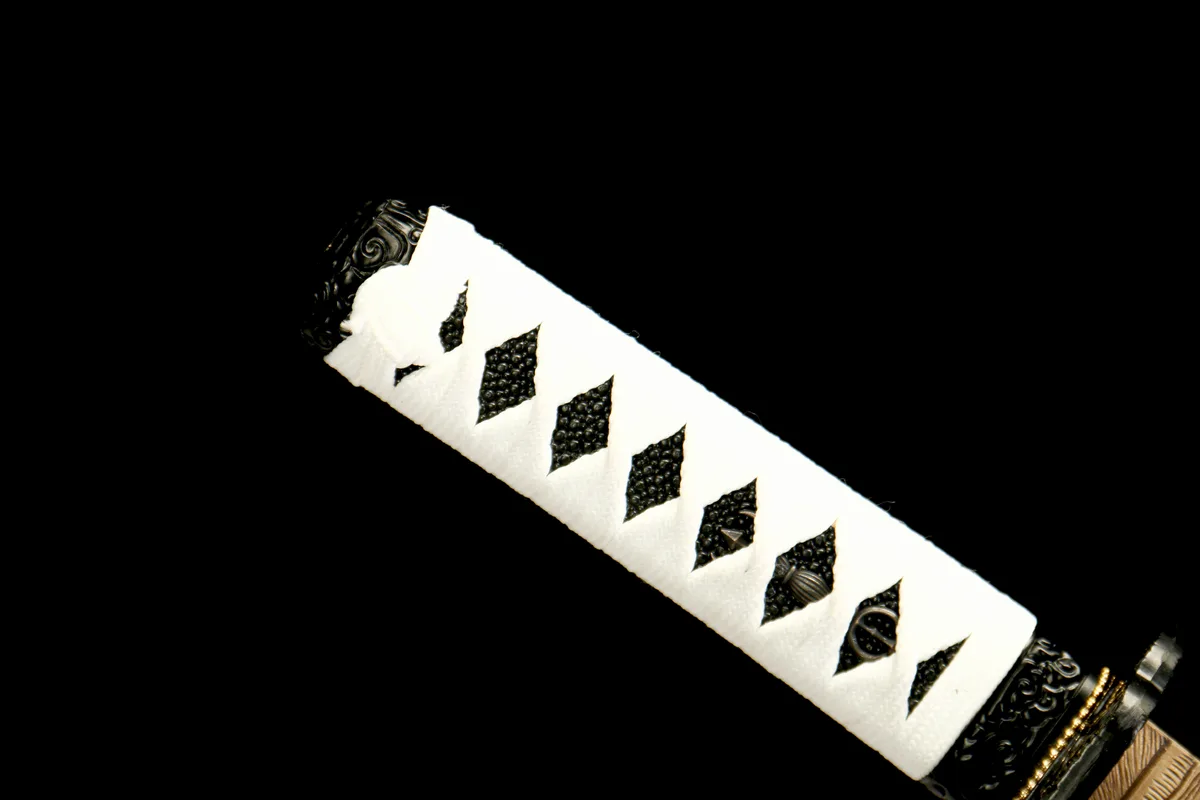
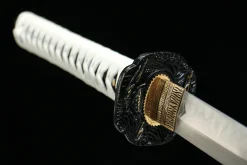
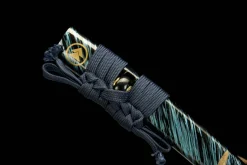
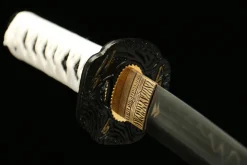
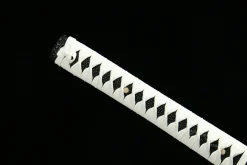
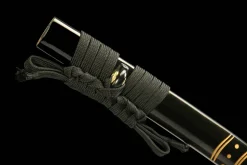
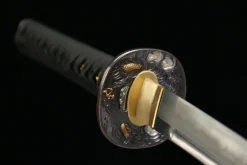
The 30 cm tsuka — slightly longer than the wakizashi version — accommodates a proper two-handed grip in the classical katana manner. Cotton ito is tightly bound over the handle in the traditional diamond pattern, with the wrap’s tension and uniformity reflecting the care taken throughout assembly. The zinc alloy fittings are finished to capture the game’s distinctive aesthetic; while not copper or brass, they are cast and finished to a standard that serves the overall visual design. The Aohada green bark wood saya completes a sword that is, above all else, a unified aesthetic object as much as it is a functional blade.
Perfect For
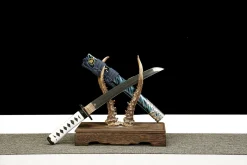
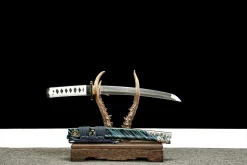
- Ghost of Tsushima players wanting the full daisho experience — pair this katana with the LQS-0003 wakizashi to recreate Jin Sakai’s complete blade set at the correct relative proportions.
- First-time clay-tempered sword buyers — at $250, this is one of the most accessible entry points to genuine differential hardening and a real hamon in a full-length katana.
- Anime and gaming collectors focused on authenticity over budget display pieces — the genuine T10 steel and real hamon ensure this sword holds its own among more expensive collector pieces.
Care & Maintenance
T10 clay-tempered steel is an active, reactive high carbon alloy that demands consistent care: oil the blade thoroughly with choji oil after every session and never store it even briefly without protection on the steel. The hamon line is a zone of metallurgical transition and can show differential rust if moisture reaches it — inspect the temper line specifically when checking the blade each month. The hardened edge, while exceptionally sharp, is more susceptible to chipping than a softer mono-steel edge if used to strike hard or rigid materials; reserve this sword for controlled cutting of appropriate targets and display use rather than heavy contact work.
Frequently Asked Questions
What is T10 tool steel and why does it suit a clay-tempered katana?
T10 tool steel is a high-carbon tungsten steel (approximately 1.0% carbon) known for exceptional hardness and edge retention. Its composition makes it ideal for clay tempering — the differential hardening process central to traditional Japanese sword-making. The Ghost of Tsushima katana uses T10 to achieve a genuine hamon (temper line) and a hard, sharp edge backed by a tough, flexible spine. T10 represents a meaningful upgrade over standard 1065 or 1075 steels for serious collectors.
What is clay tempering and does this Ghost of Tsushima katana have a real hamon?
Clay tempering is the traditional Japanese process of coating the blade’s spine with clay before quenching. The clay insulates the spine so it cools slowly — remaining tough — while the bare edge quenches hard. This creates differential hardness and the authentic wavy hamon (temper line) visible along the blade. The Ghost of Tsushima katana (LQS-0004) features genuine clay-tempered T10 steel, meaning the hamon is a true metallurgical feature, not a cosmetic acid-etched imitation.
Is the Ghost of Tsushima katana battle ready for cutting practice?
The Ghost of Tsushima katana is a functional sword with a clay-tempered T10 blade, full tang, and cotton ito wrap, making it capable of tameshigiri (test cutting) on rolled mats or similar targets. Its 72 cm blade and 950g net weight fall within standard katana parameters. However, the zinc alloy fittings are a noted limitation for heavy use — this sword is best suited for light cutting, martial arts appreciation, and display rather than intensive dojo training.
How accurate is this Ghost of Tsushima katana to the video game design?
This katana (LQS-0004, 对马岛之魂烧刃款) is inspired by Jin Sakai’s primary blade from Sony’s Ghost of Tsushima, incorporating design elements like the green Aohada wood sheath and the clay-tempered blade finish referenced by the ‘烧刃’ (yakiba/clay tempered) designation. It is not an officially licensed Sony product but is crafted as a high-quality tribute piece for fans of the game seeking a functional, display-worthy replica with authentic Japanese sword construction techniques.
Is $250 a good deal for a clay-tempered T10 Ghost of Tsushima katana?
Yes — $250 for a clay-tempered T10 katana is notably competitive. Most clay-tempered T10 katana from reputable makers are priced between $250–$400, making this Ghost of Tsushima version a strong value entry point. The key trade-off is zinc alloy fittings instead of copper or brass, which is typical at this price for themed swords. Buyers prioritizing blade quality and heat treatment over premium fittings will find this an excellent value in its tier.
| Weight | 1.2 lbs |
|---|---|
| Dimensions | 103.0 × 3.2 × 0.7 in |
| Sword Type | Katana |
| Blade Steel | T10 Tool Steel |
| Total Length | 103.0 cm |
| Blade Length | 72.0 cm |
| Heat Treatment | Oil Quench & Temper |
| Handle Wrap | Cotton Ito Wrap |
| Sheath Material | Green Bark Wood (Aohada) |
| Fittings | Zinc Alloy |
| Forging Style | Differential Hardening (Clay Tempered) |
Related products


1065 Carbon Steel

1045 Carbon Steel

1045 Carbon Steel
1065 Carbon Steel


High-End ($400-$800)
1065 Carbon Steel

1065 Carbon Steel