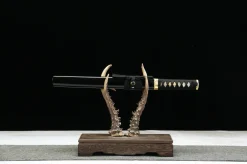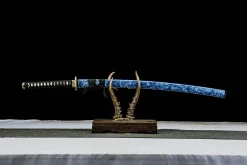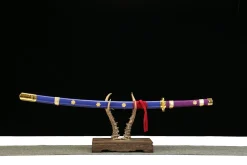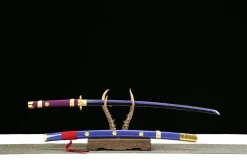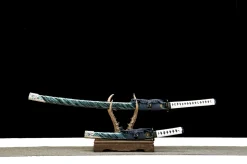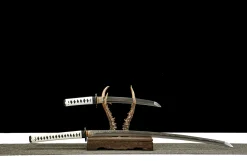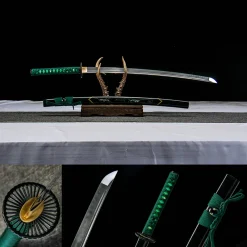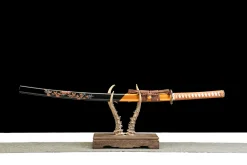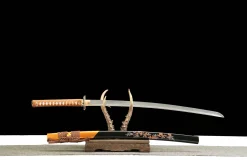

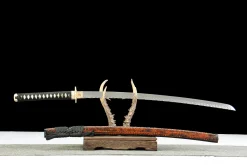

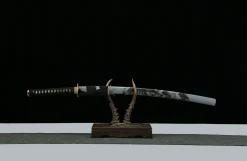
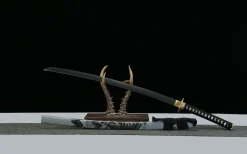


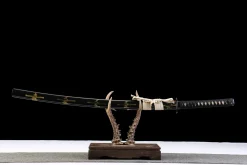





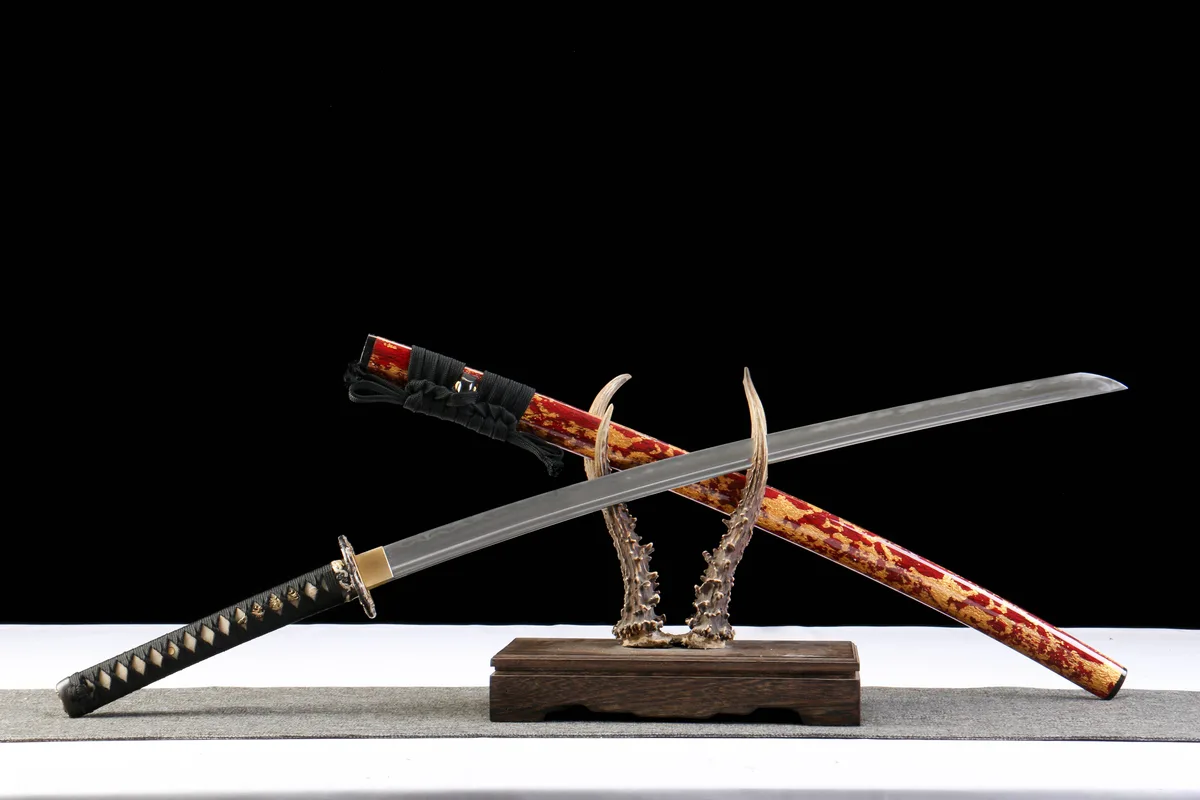
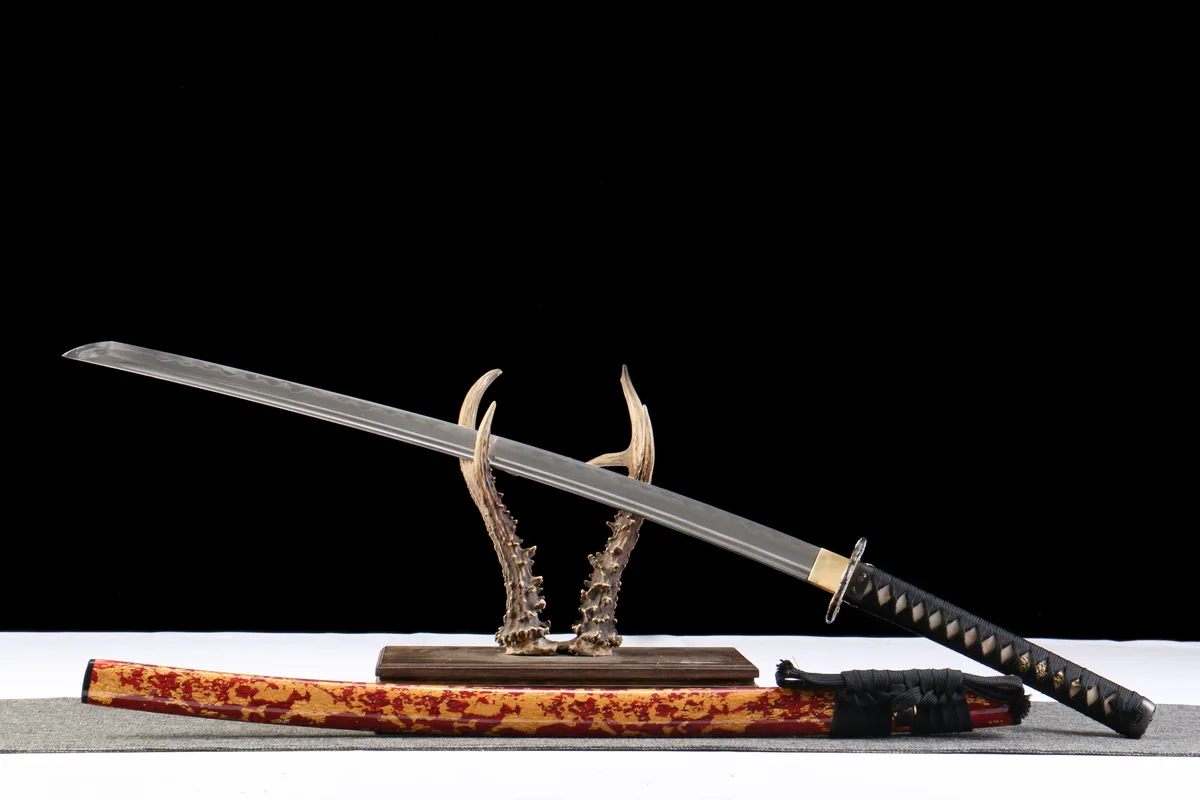

Golden Crimson Wave – Hand Forged Sanmai (Laminated Steel) Katana Sword
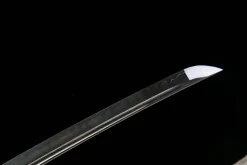
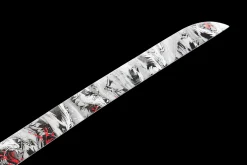
Hand-forged Sanmai (Laminated Steel) katana (102cm total / 72cm blade), crafted in Longquan. Clay-tempered blade with a genuine hamon line — visible contrast between hardened edge and soft spine.
$2,374.99
Golden Crimson Wave – Hand Forged Sanmai (Laminated Steel) Katana Sword
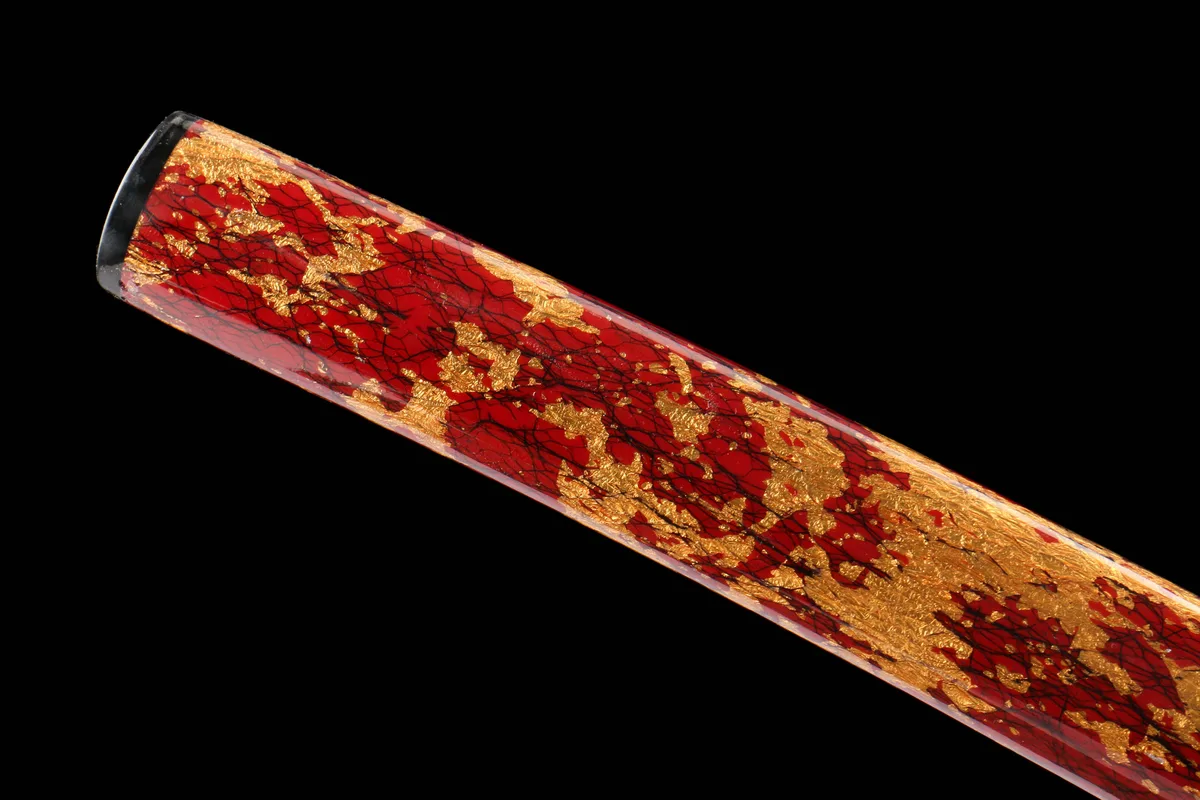
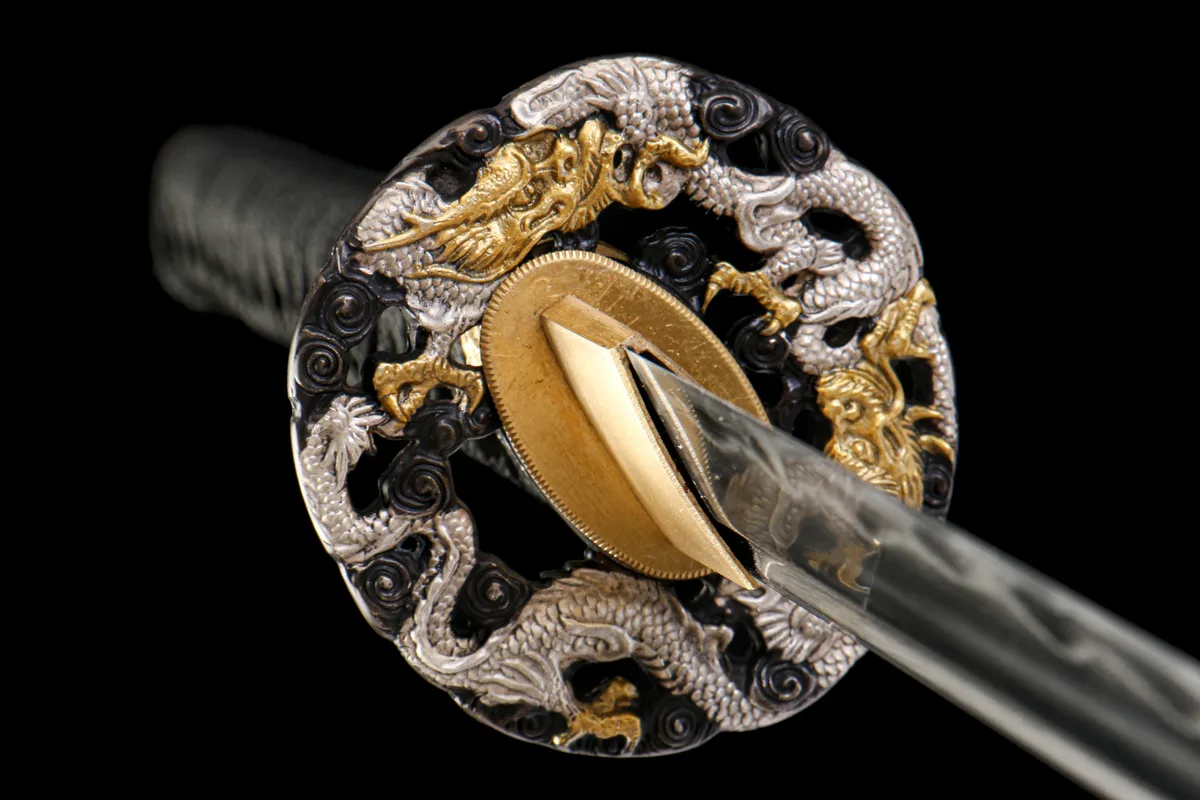
Three-layer composite construction – the 三枚合 (sanmai) forging method – places a hard high-carbon steel core between two outer layers of softer, tougher steel, resolving in a single blade the competing demands of edge hardness and spine resilience that no single homogeneous alloy can fully satisfy. Clay temper it, and you add a real hamon to a blade that was already structurally differentiated. Sheath it in hardwood lacquered with gold-foil baked finish, fit it with gilded silver copper fittings, and the Golden Crimson Wave is something that does not simply sit in a category – it defines one.
Specifications
| Blade Steel | Sanmai (Three-Layer Composite Construction) |
| Total Length | 102.0 cm / 40.2 in |
| Blade Length | 72.0 cm / 28.3 in |
| Blade Width | 3.2 cm |
| Blade Thickness | 0.7 cm |
| Weight | 1040 g / 36.7 oz |
| Heat Treatment | Clay Tempering (Differential Hardening) |
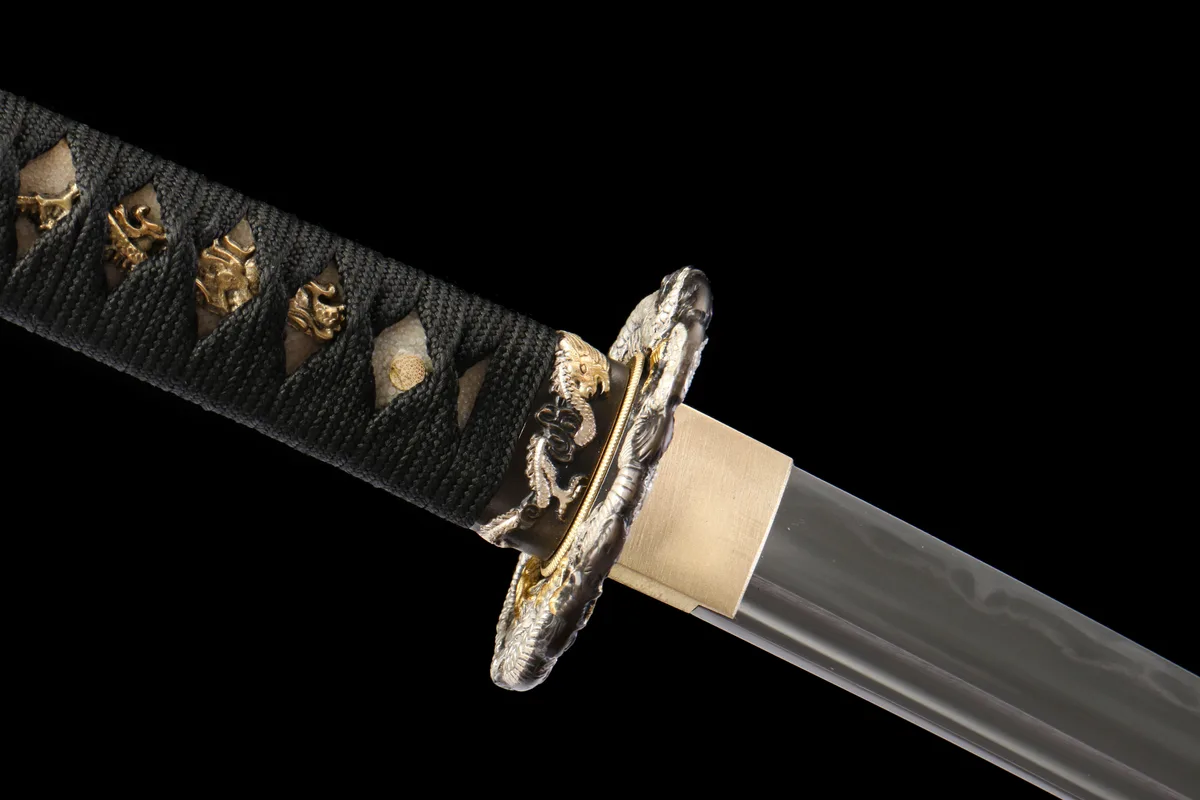
| Fittings | Copper, Gilded Silver |
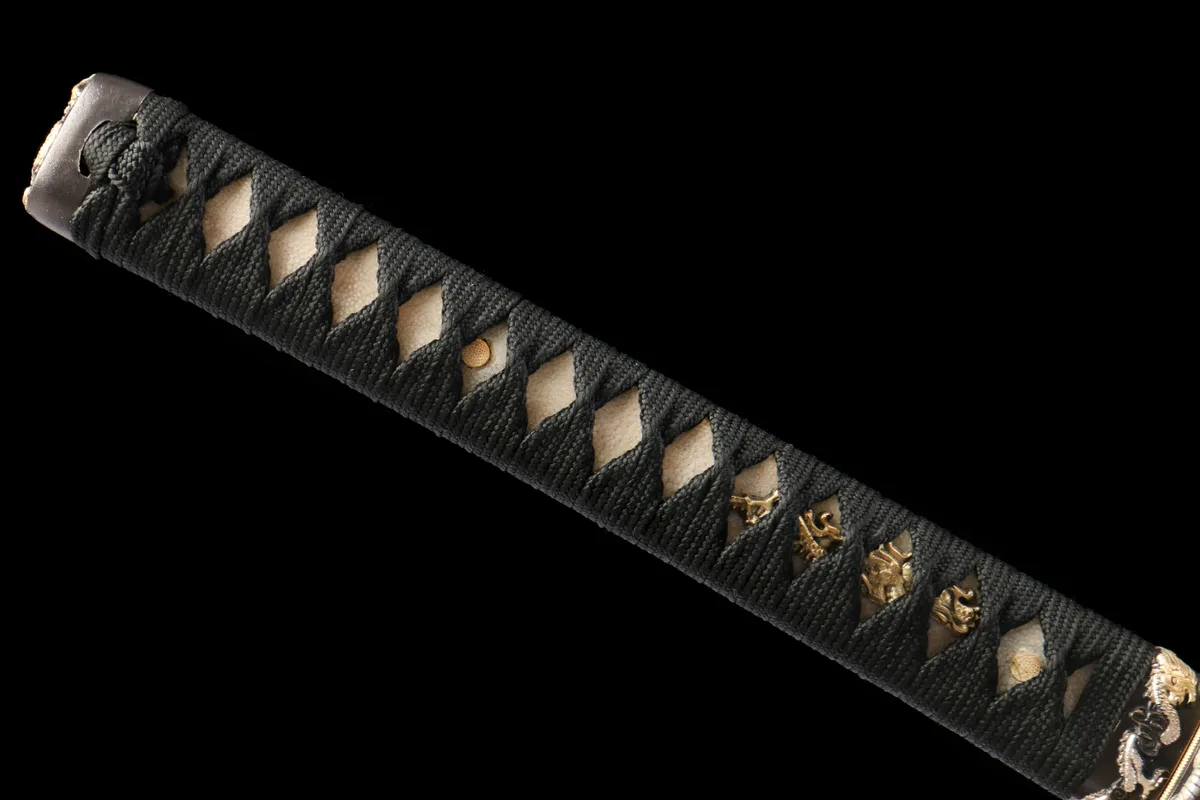
| Handle | Cotton Ito + Genuine Rayskin |
| Sheath | Hardwood, High-Hardness Gold-Foil Baked Lacquer |
Steel & Construction
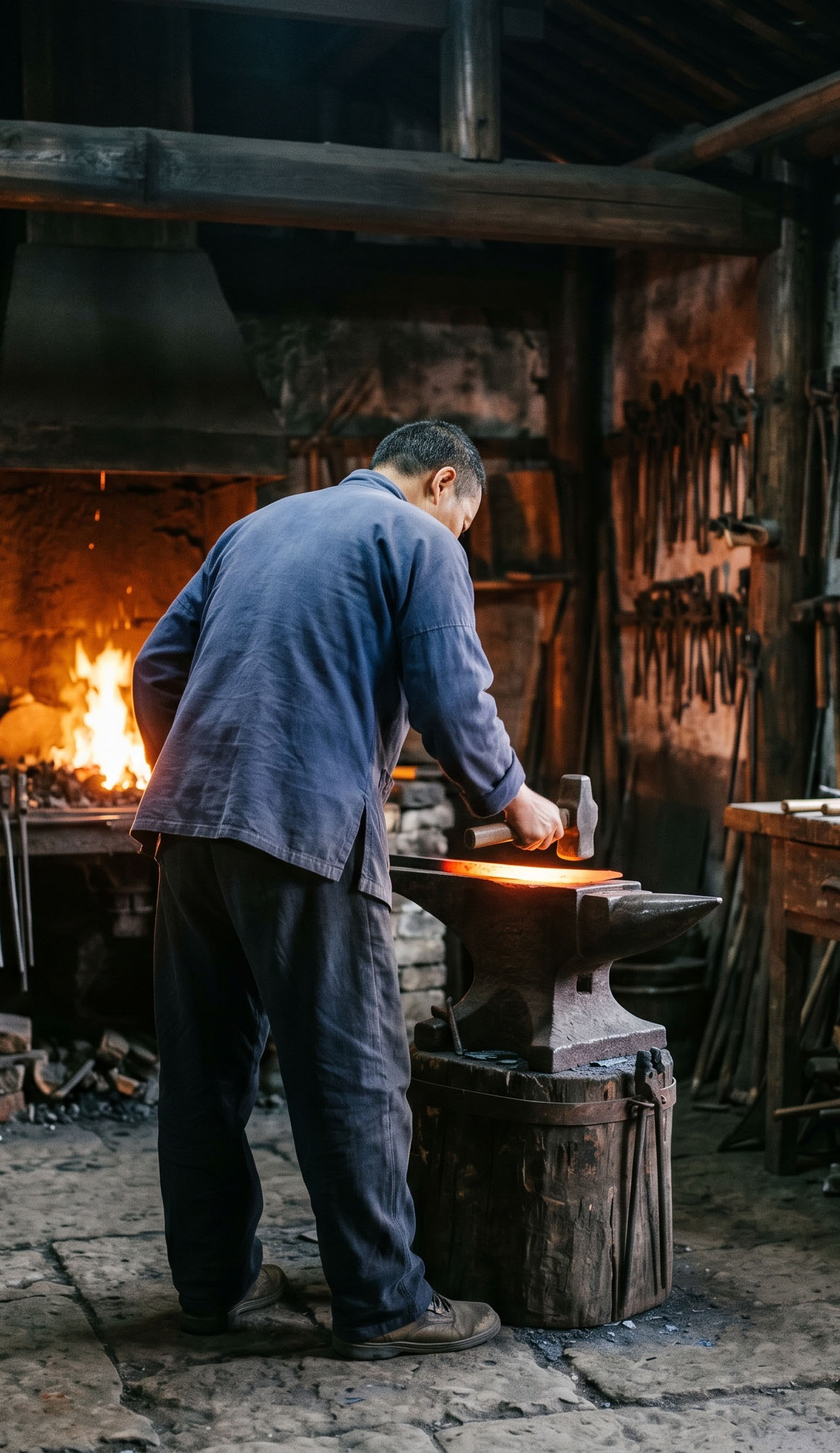
Sanmai (three-layer) construction is the forge-welded architecture used in high-end Japanese-influenced swordmaking when the builder refuses to compromise between sharpness and durability. The hagane (edge steel, high carbon) runs the full length of the cutting edge, capable of being ground to an acute, lasting bevel and brought to the hardness required by clay tempering. The jigane (jacket steel, lower carbon) wraps around the spine and sides, providing the toughness and flex resistance that hard steel cannot. The forge weld between them, when executed correctly, is stronger than either layer in isolation – the boundary is not a weakness but a structural transition.
Clay tempering this composite billet introduces the hamon (temper line) – the visible boundary where the rapid-quenched edge transitions to the slower-cooled spine. On a sanmai blade, the hamon reads along the ha (cutting edge) as a continuous line that varies in character depending on clay application: the habuchi (the boundary itself) may present as tight and defined (ko-nie, fine crystalline activity) or broader and diffuse depending on the forge’s technique. The nie (individual bright martensite crystals visible in the transition zone under raking light) confirm that the differential hardening reached full depth. This is not a simulated hamon applied by acid or grinding. It is a metallurgical event, permanent and unrepeatable.
Handling
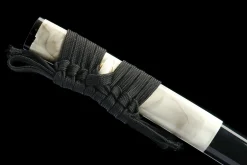
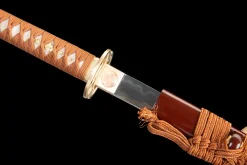
The 26 cm handle gives a full two-hand grip with genuine rayskin (same) under cotton ito wrap – the rayskin’s nodular surface preventing any rotation in the palm, the ito locking the hand into the grip without requiring a death grip from the user. The gilded silver copper fittings carry warmth against the hand at the tsuba (guard) and fuchi (collar). The gold-foil baked lacquer saya is not merely decorative – the high-hardness baked finish resists chipping and abrasion through regular draw-and-sheathe cycles in a way that standard air-dried lacquer does not. The 72 cm blade draws cleanly, the shinogi-zukuri (ridgeline) geometry presenting the hamon in full as the blade clears the koiguchi (the saya mouth). Hold it under a single directed light source and count the nie along the habuchi. What you see is the record of the quench, written in steel.
Care Instructions
A clay-tempered sanmai blade requires the same disciplined oil maintenance as any high-carbon steel, with particular attention to the transition zone along the hamon, where the differential surface texture of the habuchi holds moisture. Wipe the blade clean with a soft cloth after every handling session and apply a thin, even coat of choji oil (traditional clove-based preservative oil) from spine to edge. For the gold-foil saya, avoid contact with sharp objects and do not store in humidity above 70% – the lacquer resists abrasion but the foil beneath is sensitive to moisture intrusion at any breach in the finish.
| Weight | 1.32 lbs |
|---|---|
| Dimensions | 102.0 × 3.2 × 0.7 in |
| Hamon | Real Hamon (Clay Tempered) |
| Blade Steel | Sanmai (Laminated Steel) |
| Total Length | 102.0 cm |
| Blade Length | 72.0 cm |
| Heat Treatment | Clay Tempering (Differential Hardening) |
| Handle Wrap | Cotton Ito + Genuine Rayskin |
| Sheath Material | Hardwood(高硬度金箔烤漆) |
| Fittings | 铜装鎏金银 |
| Forging Style | 鎬造 |
Related products